For brands comparing packaging formats, wholesale kraft pouch packaging usually earns a hard look for one reason that keeps repeating in buyer meetings: it can lower freight, reduce storage strain, and still present well enough for retail shelves without the weight or breakage risk of jars, tins, or rigid cartons. That matters most after the first purchase order lands. The packaging is no longer a concept. It is inventory, warehouse space, and a line item in landed cost.
Flexible pouches often take up a fraction of the cubic volume of rigid packs, so the savings are not limited to the per-unit quote. They show up in pallet counts, carton efficiency, labor, and the amount of air shipped around the product. For food, supplements, coffee, pet treats, and dry goods, that shift can change how a brand forecasts orders and allocates cash.
The catch is that pouch buying rewards precision. Fill weight, seal structure, barrier performance, closure style, artwork coverage, and order volume all push the final price in different directions. Match those variables to the product, and wholesale kraft pouch packaging becomes a practical purchase. Guess on them, and the discount can vanish into reprints, spoilage, or rushed freight.
Why Wholesale Kraft Pouch Packaging Saves Space and Cost
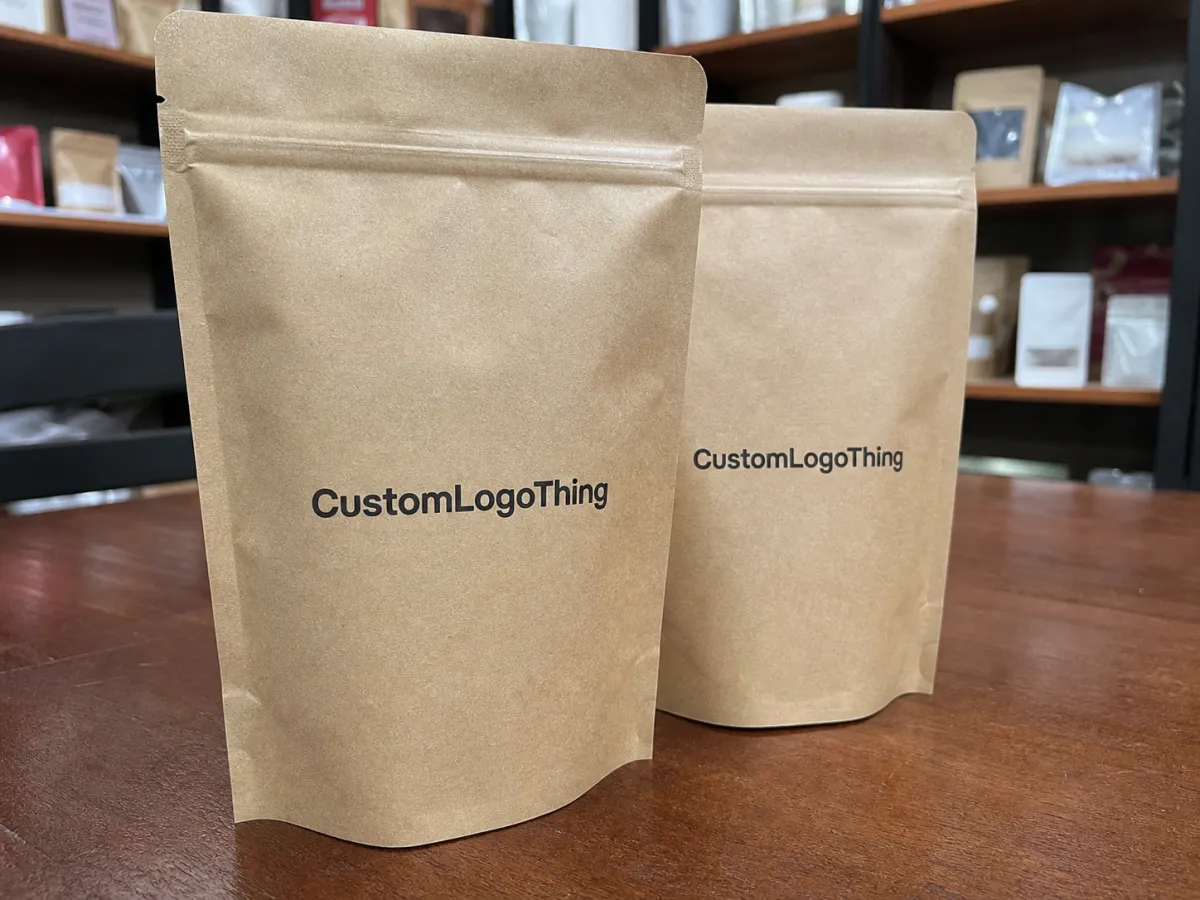
The space argument is easy to verify. A case of pouches occupies far less room than the same count of rigid containers, and that difference compounds across receiving, storage, and outbound shipping. Fewer pallets mean fewer forklift moves. Fewer cartons mean less shelf pressure in the warehouse. The savings are often visible before print is even considered.
There is also a labor benefit that buyers sometimes underestimate. Flexible packaging is easier to stage, stack, count, and move through a filling line. That does not sound dramatic until a team is handling hundreds or thousands of units a day and every extra touch slows the line. In practice, compact packaging reduces friction in the parts of the operation nobody puts on a sales page.
Cost still depends on the structure. A bare-bones pouch may look inexpensive, but if it fails to protect the product, the real cost rises fast. Moisture ingress can ruin crisp snacks. Weak seals can leak powders. Poor oxygen barrier can flatten aroma in coffee long before the inventory turns. Savings only count if the product arrives in sellable condition.
- Lower freight volume: less dead space in cartons and pallets.
- Lower storage burden: easier to count, shelve, and stage.
- Less handling damage: no glass breakage or dented metal.
- Cleaner shelf presentation: kraft texture supports a natural, premium look.
That is why the best buy is not the lightest pouch or the cheapest print run. It is the pouch that fits the product's shelf life, handling pattern, and brand position at the volume being ordered. If those pieces line up, the economics make sense. If they do not, the packaging becomes an avoidable expense instead of a working asset.
Choosing the Right Kraft Pouch Style for Your Product
Pouch style should follow product behavior, not branding instinct. Stand-up pouches are common for snacks, coffee, tea, and dry goods because they display well and work across a wide range of fill weights. Flat pouches suit single-serve items, samples, refill packs, and supplements. Gusseted bags are useful for bulk dry products that need a simpler shape. Flat-bottom pouches offer more stability and more shelf presence, which is why they often show up in premium retail packaging.
Match the format to how the product lives
Coffee behaves differently from granola. Coffee needs aroma control, often a one-way valve, and a tighter barrier to oxygen. Granola cares more about moisture and crush resistance. Protein powders need wide openings and a zipper that survives repeated use. Pet treats may need a hang hole for peg display. Dry supplements usually require clear label space and a seal that remains consistent after opening and reclosing.
That is why a pouch mockup can be misleading. The shape may look right on screen and still fail in use if the opening is awkward or the gusset does not support the fill weight cleanly. For wholesale kraft pouch packaging, function should lead style, not the other way around.
Closures and add-ons should earn their keep
Most buyers narrow the choice to a few features:
- Resealable zipper: useful for multi-use snacks, coffee, powders, and refill products.
- Tear notch: gives a clean first open without compromising the main seal.
- Heat seal: adds tamper evidence and helps protect shelf life.
- Hang hole or euro slot: supports peg display in retail settings.
- Degassing valve: important for freshly roasted coffee that releases gas after packing.
Each add-on improves usability, but each one also adds cost, setup complexity, or both. A buyer who trims features that do not support the product can often protect margin without changing the package's core function.
Windows help, but they also constrain the structure
A window can improve trust in categories where shoppers want to see the product. It can also become a problem if it grows too large, cuts into seal zones, or squeezes out barcode and code-date space. A bigger window is not automatically a better design. In some structures, it reduces barrier performance and forces the film layer to do more work than it should.
That is why window placement should be checked against the dieline before artwork is approved. If the product needs freshness protection, the visible area should be limited to what the structure can support. The best result is the one that balances visibility with performance, not the one that simply exposes the most product.
Material, Barrier, and Print Specs to Lock Before You Order
A clean spec sheet prevents most of the expensive surprises. At minimum, buyers should confirm the outer kraft layer, inner film, sealant layer, total thickness, finish, and whether the pouch is food-safe for the intended use. If the supplier cannot explain the structure in plain language, that is a warning sign. Good packaging partners can tell you what each layer does and why it is there.
Barrier choice should track the product's biggest risk. Moisture barrier matters for crispy snacks and powders that clump. Oxygen barrier matters for coffee, nuts, and products that lose flavor through exposure. Light barrier matters for ingredients that degrade when exposed to light. Aroma barrier matters for anything that should hold scent or taste after opening. The pouch that looks best on a shelf is not always the one that protects the product best.
For buyers who need a quality benchmark, transport and handling tests can be useful reference points. ISTA guidance can help frame drop and shipping durability, while FSC certification can matter if the kraft face is part of a sourcing story. Neither one replaces product-specific testing. They simply give buyers a sharper vocabulary when asking what the pack can actually withstand.
Print choices affect both price and appearance
Printing is where kraft pouches can look premium without becoming overbuilt. Spot colors are often simpler and cheaper than full process print. Full color offers more design freedom but can increase setup work and proofing time. White ink may be needed if the design depends on bright colors or high contrast over the kraft texture. Matte finishes usually feel more natural; gloss can make graphics pop harder and may suit more retail-driven brands.
There is a tradeoff in every direction. Heavy ink coverage reduces the visible paper texture. Minimal coverage preserves the kraft look but limits art complexity. Both can work. What matters is that the decision is made intentionally, not as an afterthought when the artwork is already near approval.
Artwork handoff details that prevent rework
Send the supplier clean files and clear production notes. The basics are rarely glamorous, but they are where a lot of delays start and end.
- Dieline: confirms panel layout, folds, seal zones, and dimensions.
- Bleed and safe area: keeps text and art from being cut off.
- Barcode placement: keeps scannable areas flat and readable.
- Code-date space: reserves room for batch or expiration marking.
- Compliance copy: leaves enough room for required language.
That list sounds routine, yet it is where many first orders go sideways. A mockup can look correct while the actual structure leaves too little space for text or forces a barcode onto a curved section. Once the press is running, those mistakes become expensive very quickly.
Pricing, MOQ, and Unit Cost Drivers to Compare
Pricing for wholesale kraft pouch packaging usually moves with quantity, size, material stack, print coverage, and any added features such as zippers, windows, or valves. A plain kraft stand-up pouch at volume might land in the low cents per unit. Add custom print, a zipper, a window, and a more complex base structure, and the quote can move into the mid-teens or several tens of cents per pouch. Premium flat-bottom builds or valve pouches can go higher, especially at smaller volumes. Freight, plates, and setup charges can change the final landed number more than buyers expect.
MOQ is often misunderstood. One supplier may quote by pouch style, another by film structure, and another by print method. Two pouches that look nearly identical on paper can have very different minimums because of tooling, material sourcing, or press setup. Ask for the minimum by exact SKU, not by broad product family. That detail matters more than the headline number.
| Option | Typical Use | Relative Unit Cost | Buyer's Tradeoff |
|---|---|---|---|
| Simple kraft stand-up pouch | Dry snacks, tea, refill goods | Lower | Good value, fewer add-ons |
| Resealable pouch with window | Granola, coffee, pet treats | Moderate | Better shelf appeal, higher setup complexity |
| Flat-bottom custom printed pouch | Premium retail packaging | Higher | Stronger shelf presence and more structure |
| Valve pouch with full print coverage | Fresh coffee, aroma-sensitive goods | Higher | Best product protection, more components |
For a test launch, a lower MOQ can be worth a slightly higher unit price if it keeps inventory risk under control. For repeat orders, the math often flips. Larger runs usually reduce the per-unit cost and help stabilize print consistency across batches. Brands that treat the first order as a learning round tend to get more useful quotes on the second and third rounds, because the spec is no longer moving under them.
Before approving a quote, ask what is included. Freight, proofing, plates, sample fees, and special inserts are not always bundled the same way. Compare landed cost, not just the unit price. A low headline quote with hidden extras is not a better deal; it is a delayed surprise.
Production Steps and Lead Time From Proof to Freight
Lead time is a chain, not a single number. Inquiry, quote review, dieline confirmation, artwork proof, sample approval, production, quality control, packing, and shipping all sit on the timeline. If one step slips, the whole order stretches. That is why buyers should separate production time from transit time when comparing suppliers.
Most delays happen before the press starts. Missing dimensions, late compliance edits, unclear artwork, or a proof that comes back with too many changes can add days fast. A supplier that flags conflicts early and returns proofs quickly is often more valuable than one that only offers the lowest quote.
Standard components can move faster. Custom shapes, special finishes, and more complex closures usually add time. Shipping mode matters too. Air freight shortens the wait but raises landed cost. Sea freight reduces freight cost but extends the timeline, and that can matter a lot if the packaging is tied to a seasonal launch or a retail reset.
Clean specs save time because every missing measurement turns into another round of questions, another proof, or another schedule change.
For buyers who want more predictable timing, ask the supplier to confirm milestone dates in writing: proof delivery, approval deadline, production start, quality review, and dispatch window. If the date is vague, the schedule usually will be too. Concrete milestones make it easier to manage launch planning and inventory intake.
What Separates a Reliable Kraft Pouch Supplier
Consistency matters more than a beautiful sample. A reliable supplier can hold pouch dimensions, seal quality, color, and print registration across repeat orders. That matters because a brand does not just buy one run. It buys the ability to reorder without rebuilding the package from scratch each time.
Inventory discipline is another quiet advantage. If a supplier manages components well, a reorder is less likely to get stuck because a zipper profile, film layer, or valve part is out of stock. For seasonal brands, that can determine whether product ships on time or sits waiting while the sales window closes.
Process proof beats broad promises
Ask for documentation instead of slogans. A dependable vendor can usually provide a clear spec sheet, dieline support, prepress checks, and proofing steps. That makes wholesale kraft pouch packaging easier to manage because the buyer can verify details before production begins. The process should be visible, not hidden behind confident language.
Buyer support should also be practical. Fast answers on MOQ, Lead Time, structure tradeoffs, and print limitations save hours. If a supplier can explain why one pouch costs more, or what changes when the barrier is upgraded, the buyer can make a better decision with less back-and-forth. That is more useful than polished sales copy.
It also helps if the supplier can support adjacent formats such as Custom Packaging Products or broader Wholesale Programs. That does not mean everything should come from one place. It simply means the team should understand how the packaging pieces connect across a product line.
Quality control should be specific
For a pouch order to hold up, quality control needs to check more than appearance. Seal strength, zipper function, print alignment, film thickness, window placement, and code-date area all deserve review. If the product is sensitive to moisture or oxygen, the barrier structure should also be matched to the storage reality, not just the visual brief.
A reliable supplier knows where the failure points usually are. A weak seal near the gusset can create leaks. A zipper that tracks poorly can frustrate consumers after the first opening. A barcode printed over a curve may scan badly in retail systems. These are small issues until they are not.
Spec Mistakes That Cause Delays, Reprints, or Waste
The most expensive mistakes are often the plainest ones. Wrong pouch size. Wrong barrier. Artwork approved before the final structure is locked. Those errors can force a new proof, a new plate, or a full rerun if the pouch no longer fits the product or cannot seal the way it should.
Print issues can be just as costly. Low-resolution files, missing dieline marks, barcode placement on a curve, or colors that were never proofed accurately can all create rework. Once production starts, one small mismatch can affect an entire order rather than a single carton. That is why prepress discipline matters so much.
If the product needs food-safe performance, do not assume the outer kraft layer tells you anything useful about the inside. The visible surface is only one part of the construction. If the inner film or sealant layer is wrong, the package may still look clean while failing to protect the product. That is packaging as decoration, not packaging as function.
There are also material limits worth saying out loud. Kraft faces can scuff. Large windows can reduce protection. Very oily products can mark matte finishes. Some products need higher heat resistance or stronger puncture protection than a standard pouch offers. Buyers who plan around those limits usually get fewer surprises later.
How to protect repeat orders
Keep the approved spec, final artwork, dimensions, and supplier notes in one file. Save the exact pouch style, finish, zipper type, and any special instructions for the next run. That reduces the odds that a different teammate, or a different supplier, interprets the design incorrectly. It also makes reorder checks much faster.
For growing SKU counts, that file becomes a control point. It keeps new orders from drifting away from the original spec and helps preserve consistency across seasonal refreshes. A tidy archive is not glamorous, but it prevents avoidable waste.
Next Steps: Request a Quote With Final Specs
The clearest quote request answers the supplier's questions before they have to ask them. Confirm pouch style, size, fill weight, closure, barrier need, print colors, quantity, and delivery location. Add artwork status, sample requirements, and whether you need a production proof before full run approval.
Compare two or three quotes using total landed cost, not only unit price. Freight, setup, added components, and proof charges can change the real number more than buyers expect. That is especially true for wholesale kraft pouch packaging, where two pouches can look similar and still perform very differently once the layers and closures are counted.
If you are buying for snacks, coffee, dry goods, or another shelf-ready category, ask for the dieline early and review it before artwork approval. That one step prevents a lot of avoidable cost. It also gives the team a chance to catch structural issues before they turn into printed inventory.
For brands planning a new run, the best approach is simple: lock the spec, verify the artwork, and then move to production. Wholesale kraft pouch packaging pays off when the details are settled early and the order is built around the product rather than around guesswork.
What is the minimum order for wholesale kraft pouch packaging?
MOQ depends on pouch size, structure, print method, and any added features such as zippers or windows. Ask for the minimum by exact SKU because one style may start much lower than another. If you are testing a new product, request the smallest viable run plus a re-order estimate so inventory planning is less exposed.
Is kraft pouch packaging good for food products?
Yes, provided the inner film and seal structure match the product and shelf-life needs. Confirm food-safe materials, moisture and oxygen barrier, and whether the product needs grease resistance or aroma control. Coffee, snacks, powders, and dry treats often need different specs even if the outer kraft look is similar.
How long does wholesale kraft pouch packaging take to produce?
Lead time includes proof approval, production, quality checks, and freight, so the full timeline depends on how fast artwork is finalized. Missing dieline details and late edits are the most common causes of delay. If you need a faster schedule, ask whether stock components or simpler print methods can shorten the run.
Can I customize the print, zipper, and window on one pouch?
Yes, but each add-on can affect cost, barrier performance, and minimum order requirements. Window size and placement should be checked against seal zones and shelf-life goals before artwork is approved. Request a dieline first so the print and structural features work together instead of competing for space.
What should I send to get an accurate kraft pouch quote?
Provide product type, fill weight, pouch dimensions, closure choice, print colors, quantity, and delivery location. Include compliance needs, barcode placement, and whether you want matte, gloss, or a natural kraft finish. If you are unsure on size, send a sample or current package so the supplier can estimate capacity more accurately.


