Buyer Fit Snapshot
| Best fit | wholesale packaging affordable for every budgeted brand for packaging buyers comparing material specs, print proof, MOQ, unit cost, freight, and repeat-order risk where brand print, material, artwork control, and repeat-order consistency matter. |
|---|---|
| Quote inputs | Share finished size, material target, print colors, finish, packing count, annual reorder estimate, and delivery region. |
| Proofing check | Approve dieline scale, logo placement, barcode or warning zones, color tolerance, and any recyclable or compostable wording before bulk production. |
| Main risk | Vague material claims, crowded artwork, or missing packing details can create delays even when the unit price looks attractive. |
Fast answer: Wholesale Packaging Affordable for Every Budgeted Brand should be specified like a repeatable production item. The safest quote includes material, print method, finish, artwork proof, carton packing, and reorder notes in one written spec.
What to confirm before approving the packaging proof
Check the product dimensions against the actual filled item, not only the sales mockup. Ask for tolerance on folds, seals, hang holes, label areas, and retail display edges. If the package carries a logo, QR code, warning copy, or legal claim, reserve that space before decorative graphics fill the panel.
How to compare quotes without losing quality
Compare board or film grade, print process, finish, sampling route, tooling charges, carton quantity, and freight assumptions side by side. A lower quote is only useful if the supplier can repeat the same color, closure quality, and packing count on the next order.
Wholesale packaging affordable is not a treasure hunt for the lowest sticker price. I have seen enough purchase orders to know that the cheapest quote is often the one with the most expensive second page. Setup fees, artwork corrections, freight surcharges, reprint risk, and delayed launches can quietly turn a bargain into a budget leak. The better approach is to treat packaging like a full-cost decision, because that is what it is.
Custom Logo Things works with brands that want proof before they commit, not wishful thinking. Whether you are sourcing branded packaging, Custom Printed Boxes, product packaging, or retail packaging, the real question is not "Which quote is lowest?" It is "Which option lands on time, protects margin, and does not turn into a mess after approval?" That is where wholesale packaging affordable stops being a phrase and starts acting like a business advantage.
This guide walks through the cost logic, material choices, specification controls, and timing discipline that keep a bulk order from drifting off course. If you are trying to keep wholesale packaging affordable without getting blindsided, the key is simple: fewer assumptions, tighter specs, and a clearer view of landed cost.
Wholesale Packaging Affordable: Why Bulk Savings Can Still Drain Cash
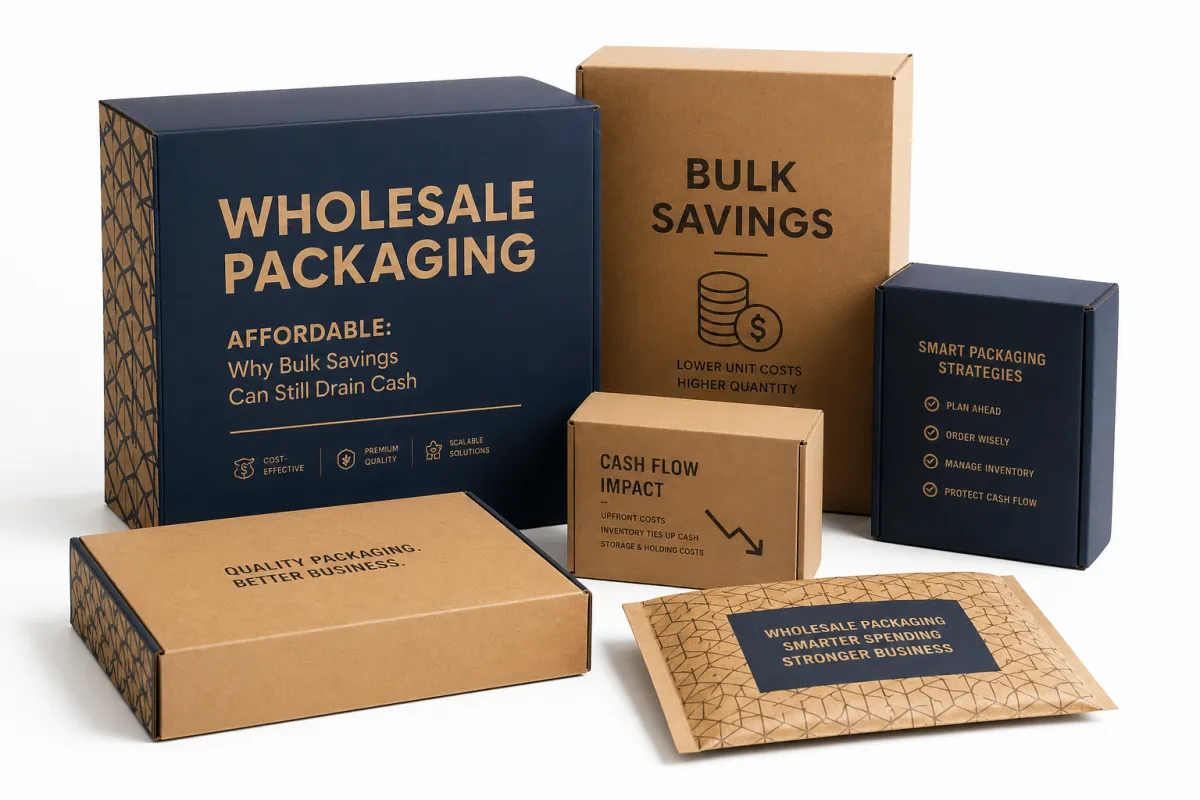
Many procurement teams discover the same ugly truth: a low unit price can still produce a high total cost. In one packaging audit I reviewed, the first quote looked 18% cheaper on paper, yet the final spend ended up roughly 25% higher after setup, proof shipping, color correction, and rush freight were added. That is not unusual. Suppliers can make a per-piece rate look tidy while the real cost hides across the rest of the order. Wholesale packaging affordable only matters if the whole invoice behaves.
The first trap is comparing quotes that are not built on the same assumptions. Does the quote include pre-press? Are proofs charged separately? Is freight embedded or billed later? Are duties, taxes, and customs handling part of the number? If those details are vague, the quote is not really comparable. A reliable wholesale packaging affordable decision starts with landed cost, not a headline unit rate.
Timing can be just as expensive as material. A cheaper run that arrives late can cost more than a slightly higher quote that lands on schedule. Missed launch windows, paused retail conversations, and inventory sitting idle all eat into margin, even though none of that appears on a packing slip. That is why the math has to include time. Packaging that is late is not cheap. It is just delayed pain.
Cash flow pressure shows up fast for growing brands. Bulk orders lock money into cartons, pouches, inserts, and mailers before those items turn into sales. If your sell-through pace is uneven, buying to the lowest MOQ tier can be smarter than chasing the deepest discount. In plain terms, wholesale packaging affordable means matching order size to demand rhythm, not just to a spreadsheet that loves volume.
Use a simple framework before you approve anything:
- Packaging cost per sellable unit = material + print + conversion + freight + scrap allowance.
- Launch cost per marketable unit = packaging + handling + timing risk + replacement exposure.
- Margin protection = leftover margin after packaging-related costs, not just manufacturing cost.
Those formulas are boring, and that is exactly why they work. Good packaging economics usually come from stable materials, repeatable specifications, and limited variation. Creative improvisation sounds fun in a meeting. In production, it usually costs money. I have watched teams say, a bit too casually, "we can fix it later," and then spend two weeks paying for later. The cheaper path is often the one with fewer moving parts.
"A low unit price is pleasant. A low total project cost is better. A low reprint rate is best of all, and buyers only get that last one when the specs are tight."
For a cleaner starting point, begin with your Wholesale Programs and compare projected order size against real unit velocity. That gives you a benchmark before you scale up. Guessing is costly because every assumption turns into a possible correction fee. This is not guesswork if you start with demand data and keep the cost model visible. It is also where wholesale packaging affordable becomes a system instead of a slogan.
One more warning sign: if a supplier cannot explain the pricing jump between a 1,000-piece run and a 5,000-piece run, that is a red flag. Mystery may look like negotiation leverage, but it usually means the quote is hiding something. Wholesale packaging affordable only works when the logic is simple enough to inspect, challenge, and defend.
Product Details: Selecting Items That Actually Scale Without Rework
Packaging formats do not share the same economics, and pretending they do is a nice way to waste money. Flexible pouches, rigid tubs, folding cartons, labels, and paper mailers each carry different tooling, setup, and waste profiles. A structure that looks cheap in a mockup can become expensive once closures, coatings, inserts, or special folds enter the picture. That is why wholesale packaging affordable depends on product-to-format fit, not just ink coverage.
Start with the sales pattern. A subscription product with stable repeat orders can tolerate a different structure than a retail launch with uncertain velocity. A heat-seal pouch may make perfect sense for dry goods or refill packs, while a rigid tub may be worth the added cost if the item is opened repeatedly or needs shelf presence. Paper mailers are great for light ecommerce shipments, but they fail fast if the contents compress too much in transit. Practical fit usually beats visual novelty, every time.
Finish and assembly are where budgets quietly drift. Matte, gloss, soft-touch, foil, windows, tamper-evident features, and nested inserts all add handling steps. More steps mean more setup time, more QA, and more chances for the run to wander off spec. If your brand wants polished presentation, keep the feature list purposeful. Pretty is fine. Overcomplicated is not. That kind of restraint is how wholesale packaging affordable survives multiple reorder cycles.
Material choice should follow the product’s actual stress points. A 10% reduction in basis weight can reduce material spend meaningfully when barrier needs are modest, but only if the lighter substrate still protects the contents. For dry products, a heavy build can be overkill. For food, supplements, cosmetics, and volatile formulas, barrier performance, oxygen transmission, and moisture resistance matter more than visual heft. The wrong material feels inexpensive until it starts causing returns or product spoilage.
I always recommend a tear-down of sample units before a big release. Not a glance. A tear-down. Check seams, panel drift, closure behavior, ink shift, and how the package behaves after a few open-and-close cycles. Those small checks catch a lot. If a supplier cannot provide sample evidence, then you are paying to discover the problem in full production. That is not wholesale packaging affordable. That is paying for avoidable damage with a smile on top.
Here is a format matrix that can help internal conversations move faster:
| Format | Best For | Typical MOQ | Typical Unit Range | Main Cost Risk |
|---|---|---|---|---|
| Flexible pouch | Light retail goods, refill packs, dry foods | 1,000-5,000 units | $0.18-$0.55 | Barrier specs and zipper options |
| Rigid tub | Premium goods, repeat-open items, display-led shelves | 3,000-10,000 units | $0.65-$1.80 | Mold/tooling and decoration cost |
| Paper mailer | Ecommerce shipping, apparel, lightweight accessories | 500-5,000 units | $0.22-$0.75 | Material strength and print coverage |
| Custom printed boxes | Retail presentation, gift sets, subscription kits | 1,000-5,000 units | $0.35-$1.20 | Size changes and finishing upgrades |
Use that matrix as a starting point, not a law. Actual prices move with region, substrate, finish, and market conditions, and any honest supplier should say so. Build a format-and-finish library by SKU before quoting. A documented library turns personal taste into repeatable procurement logic and prevents version drift between the founder, the designer, and the buyer. That is where wholesale packaging affordable gets its legs.
If your team is choosing between retail packaging styles, two questions usually settle the debate: how often do you reorder, and how much physical protection does the product really need? Teams that answer those first usually waste less on their first sourcing cycle. Fewer special cases. Fewer surprises. Less chaos.
Specifications You Must Lock Before You Order
Unclear specs are the fastest route to correction fees. Lock trim size, panel proportions, bleed margins, color profile, barcode placement, and copy position in one spec sheet before review starts. Every flexible field invites interpretation, and interpretation is just another word for paid rework once production begins.
Color management needs a decision early. Define PMS or CMYK rules up front and avoid switching modes halfway through unless there is a very good reason. A four-color process is enough for many jobs, but a premium mark may require spot color consistency across SKUs. The right choice depends on the brand, the substrate, and the level of repeatability you need. A wholesale packaging affordable plan keeps color rules fixed long before press starts.
Substrate details need equal discipline. Ask for measured thickness, gsm where relevant, barrier type, moisture tolerance, and any recyclability evidence the supplier is claiming. If sustainability language appears on pack, treat it as regulated language, not decorative copy. A recycled look is not proof of recycled content. FSC chain-of-custody records are evidence, not branding garnish. For standards references, compare against FSC and packaging.org.
Make quality criteria measurable instead of subjective:
- Weight variance per unit inside agreed tolerance.
- Seal strength for heat-seal and adhesive applications.
- Opening force for child-resistant and tamper-evident features.
- Color delta tolerance against approved proof.
- Print registration within a defined offset range.
Measurement standards sharpen communication. They also make rejection decisions cleaner and fairer because both sides are testing against known limits. That is a lot better than taste debates after production has already begun. Buyers who care about wholesale packaging affordable economics rely on thresholds, not polite guessing. Objective criteria also make supplier comparisons less emotional and more useful.
Compliance checks must happen before artwork sign-off. Food, cosmetics, supplements, and child-focused products each carry different legal language and symbol requirements. A misfiled warning statement, barcode, or ingredient line can trigger resubmission, which is a slow and annoying way to burn cash. Strong suppliers should call out these risks before approval. If they do not, you are absorbing the future cost now, just not all at once.
Filename discipline sounds trivial until somebody uploads the wrong dieline. Use conventions like SKU_name_size_finish_v1 and keep revision dates in one place. The most expensive errors are often simple version mistakes: stale artwork, reversed dimensions, an outdated legal block, or a barcode from the wrong market. A boring naming system often saves more money than a flashy redesign ever will in wholesale packaging affordable work.
For stable margin control, freeze one approved spec per run. Any change after that should trigger a transparent change order with a clear cost impact. That keeps the brand steady and stops silent creep from turning a good estimate into an ugly invoice.
Pricing and MOQ: Break-Even Logic for Sustainable Wholesale Packaging
Build the estimate like a finance team would, not like a mood board would. Total Order Cost = Setup + (Unit Cost x Quantity) + Freight + Duties or Taxes + QA or Correction Allowance. If you leave out the correction reserve, you are just pretending the correction reserve does not exist. The number shows up later anyway. For wholesale packaging affordable planning, every variable belongs in the first draft.
MOQ is a channel decision wearing a cost label. Retail launches may support higher minimums if sell-through is fast and predictable. Subscription products and pre-order models often need smaller starting quantities because demand is still forming. Buying too much to win a lower unit price can simply move savings into dead stock. That is not savings. That is storage with a nicer label.
Ask vendors for three tiers in one quote: low, standard, and stretch. Seeing all three makes the volume breakpoints obvious. In many projects, the best value is not the highest volume. It is the point where unit savings are strong enough to matter but lead time and service quality do not start wobbling. That is usually the sweet spot for wholesale packaging affordable buying.
Here is a quick tier model to pressure-test before approval:
| Order Tier | Example Qty | Unit Cost | Freight Impact | Cash Flow Risk |
|---|---|---|---|---|
| Low MOQ | 1,000 | $0.72 | Higher per unit | Lower inventory risk |
| Standard MOQ | 3,000 | $0.54 | Moderate per unit | Balanced risk and savings |
| Stretch MOQ | 8,000 | $0.41 | Lower per unit | Higher dead-stock exposure |
That table is about optimization, not volume worship. Fast-moving lines can justify a stretch quantity. Slower lines usually do better at the standard level, where stock turns and forecast reality stay closer together. Wholesale packaging affordable is achieved when order size supports both schedule and cash cycle, not when the unit price looks impressive in isolation.
Pressure-test margin with sell-through assumptions. If gross margin sits at 40% and packaging drops from $0.90 to $0.75, the savings help only if the product still moves. A larger order that slows cash, forces discounts, or creates stale stock can erase the gain quickly. Measure margin against saleable units, not warehouse units.
Set aside a correction reserve of 5-10% of expected packaging spend. That reserve pays for proof revisions, first-piece checks, and minor adjustments without turning every issue into a finance emergency. It also keeps the team calmer during vendor negotiation, which matters more than people admit. A buyer with breathing room usually makes a better decision.
If a quote looks unusually good, force a change-impact scenario. Ask how revision fees, tooling changes, and material substitutions are handled before the order is released. If the answer gets fuzzy, you have not seen the full pricing model yet. Transparent suppliers explain the cost of change before production begins, and that protects wholesale packaging affordable goals from being slowly chipped away. The same rule applies to labels, sleeves, cartons, and inserts.
Across multiple SKUs, keep structures limited and intentional. Every unique shape adds setup, tooling, QA, and oversight overhead. A single core package with controlled artwork variations often beats five custom structures that each need separate process attention. Simplify first, customize second. That is how bulk packaging stays predictable, and that is how wholesale packaging affordable scales without turning into a headache.
Process and Timeline: From Sample to Shipment Without Guesswork
A healthy bulk run follows a fairly ordinary sequence: concept brief, file review, digital sample, physical sample, correction loop, production, pre-ship QC, and delivery. Skip one of those links and rework risk rises. The process is not glamorous. It is supposed to be boring. Predictability comes from stage discipline, not from speed tricks or hope. Wholesale packaging affordable outcomes get a lot harder when the timeline turns improvised.
For straightforward packaging, a typical path might look like 2-4 days for concept-to-proof, 3-7 days for physical sample approval, 4-10 days in production depending on quantity and finish, then 2-6 days for QC and handoff. Those are directional ranges, not promises. Complexity, approval speed, material availability, and artwork readiness all move the clock. Late design changes are where schedules usually get punched in the face, because each change creates more rounds and more cost.
Lead-time compression starts with complete submissions. Send legal copy, barcode placement, and dielines in the first pass, then freeze variables before tooling begins. Waiting until sample production is underway often converts a design choice into a delay tax. It can also knock the budget around. A clean wholesale packaging affordable workflow protects both speed and margin.
Track the project with one living sheet. Keep these checkpoints visible:
- File approval status for art and dieline.
- Sample stage for digital and physical proof status.
- Quantity lock confirming final order volume.
- Logistics slot for freight scheduling and handoff timing.
That visibility improves stakeholder communication and prevents panic updates every few hours. Teams often blame the vendor when the actual delay is internal, like a barcode line waiting for signoff or a legal disclaimer waiting on review. The calendar does not care who feels responsible.
Build buffers around seasonality and shipping reality. If your launch date is fixed, count backward from ship day and include customs, carrier volatility, and port congestion risk where applicable. For freight-sensitive SKUs, confirm the right handling and transit test standard, such as ISTA, before final commitment. That check can save you from damage claims later, which is a much less fun conversation than a test plan.
When timelines are tight, simplify the spec. Mixed materials, complex folds, and decorative extras increase variability. A clean structure and disciplined execution can still look premium, and often perform better on press. The cheapest mistake is the one that never happens.
For teams moving quickly on custom printed boxes or product packaging, the safest sequence is sample approval, file freeze, and no late edits. Any post-lock change sounds small in a design meeting and can become large on press. That is where margins quietly disappear in wholesale packaging affordable programs with narrow launch windows.
Why Choose Us for Wholesale Packaging Affordable Reliability
Custom Logo Things builds every quote around full cost visibility. Unit pricing is tied to setup demand, artwork depth, finishing complexity, and order size so you can compare options on total economics, not just on a headline number. That clarity is the core of wholesale packaging affordable decisions, and it makes reorders easier to forecast later.
Project ownership stays in one place from spec alignment through production and QC. Handoff risk drops when one accountable team follows the order from day one to shipment. In fragmented supplier setups, each department can interpret the run a little differently. That kind of drift is costly. One owner keeps the brief, the revision history, and the correction policy lined up.
Pre-production checks are designed to catch issues before the press starts. Standardized approval blocks make sure missing data does not surface mid-run. If your first order needs cost efficiency, we help identify simplifications that reduce waste and complexity without flattening the brand. That is how wholesale packaging affordable pricing stays tied to production reality instead of wishful estimates.
When teams are planning a packaging portfolio, they need a baseline that can scale. The Custom Packaging Products area can anchor those decisions around format and finish. From there, each option is matched to volume, lead-time needs, and budget so the project stays operational rather than aspirational.
Many brands move from one-off launches to a portfolio strategy. Our planning approach supports that shift without forcing a complete redesign every cycle. You can start with a controlled run, learn from sell-through, and expand as demand proves itself. An opening-order discount without a scalable structure often creates a second run that is more painful than the first.
After first production, we share practical feedback: nesting efficiency, artwork simplification, and substrate alternatives that protect identity while lowering total landed cost. That matters because repeatability is what keeps wholesale packaging affordable over time. Good teams treat the first order as a baseline for improvement, not as a sacred object.
From the buyer side, the difference is pretty clear: measurable checkpoints, repeatable pricing, clear timing, and fewer surprises. If your operations need retail packaging that supports growth without random overruns, that framework is where consistency starts. It is also where branded packaging stops behaving like a one-off expense and starts acting like part of the margin model.
How Do You Keep Wholesale Packaging Affordable Without Sacrificing Quality?
The short answer is that wholesale packaging affordable works best when quality is defined before production, not after. Quality does not have to mean expensive finishes or oversized structures. It means the right substrate, the right print method, the right MOQ, and the right approval path. Brands save the most when they remove ambiguity early, because ambiguity is where extra charges breed.
Think of it like buying a car. A stripped-down model may be affordable, but if the engine choice is wrong for your route, fuel costs rise and repairs follow. Packaging behaves the same way. A simple pouch, mailer, or carton can outperform a premium structure if it fits the product, the channel, and the turnover pace. That is the real logic behind wholesale packaging affordable buying.
To keep the balance, use three filters: commercial fit, production fit, and logistics fit. Commercial fit asks whether the package supports the shelf or shipping experience. Production fit asks whether the design can be manufactured with stable tolerances. Logistics fit asks whether freight, storage, and intake constraints stay manageable. If all three pass, you are usually close to a strong buy. If one fails, the quote may look good while the project turns expensive later. Kind of sneaky, but not rare.
Quality control should stay measurable too. A proof that matches the approved file, a sample that survives handling, and a run that arrives on time are not separate wins; they are the same outcome viewed from different angles. That is why wholesale packaging affordable is not a race to the cheapest supplier. It is a test of whether the supplier can protect the final margin and the customer experience at the same time.
Next Steps: Execute an Affordable Bulk Run in 7 Days
Day 1: choose one primary package type and set MOQ bands against your cash conversion cycle. Branching into five designs at once creates a mess of approvals and revision loops. A single version moving quickly is usually better for speed and cost control. It also keeps wholesale packaging affordable decisions visible to the whole team.
Day 2: build a one-page spec pack. Include dimensions, materials, colors, finishes, compliance text, barcode rules, and file revision references. A complete pack reduces revision loops, especially when multiple stakeholders need signoff.
Day 3: request two prototypes with delivery commitments and score both against landed-unit cost, not just against the visible quote. A prototype that looks cheaper but drags out the schedule or adds correction risk can eat the savings fast. The real metric is what the finished package costs once it is approved and delivered.
Day 4: run an internal unboxing and shelf simulation. Keep acceptance criteria objective: fit, seam integrity, color match, drop durability, and label clarity. Broad comments like "it feels off" are not enough to trigger useful corrective action. Specific failures are the only ones worth fixing.
Day 5: select Pricing and MOQ by calculating lowest landed cost per sellable unit against projected sell-through. If the lower MOQ strengthens cash position and still protects margin, choose it. If stretch MOQ stays within your movement window, scale up there. The right level is the one your business can support, not the one that sounds bold in a meeting.
Day 6: finalize logistics in writing. Confirm freight booking, lead time commitment, carton build, and intake constraints at warehouse doors. Many late shipments are actually intake issues rather than manufacturing failures, and those can be avoided once logistics is locked before release.
Day 7: issue the final purchase only after signoffs are complete and the correction reserve is approved. Then monitor milestones, not random status calls. A controlled bulk run may feel plain, but plain is what protects margin, quality, and launch confidence in wholesale packaging affordable programs.
For brands running branded packaging, custom printed boxes, and product packaging across channels, the practical move is simple: lock specs, test one sample path, compare true landed cost, and scale at the right quantity. That path keeps wholesale packaging affordable measurable, repeatable, and far less likely to surprise you later.
How can I tell if wholesale packaging affordable pricing is too good to be true?
Start by listing every exclusion in the proposal: setup charges, die-cut revisions, color setup, courier insurance, and failed-proof handling. Missing line items usually show up later as change fees. Ask for the approved file list and revision policy in writing, then compare at least two suppliers on full landed cost per saleable unit rather than on print unit alone. If the quote cannot explain freight, duties, and correction exposure, it may not really be wholesale packaging affordable.
What MOQ is realistic for wholesale packaging affordable if I need a short launch window?
Use a 6-8 week demand forecast as the baseline, not a year of fantasy volume. Short windows often reward lower MOQ because they reduce holding risk and let you move faster with less cash tied up. Plan a replenishment cadence before first stock is depleted so emergency repricing does not become the only option. In many cases, the most wholesale packaging affordable choice is the one that protects timing, not the one that looks cheapest on day one.
Does affordable wholesale packaging require sacrificing print quality?
No. Quality problems usually come from weak specs or skipped validation steps. A controlled color strategy such as 4+0 or 1+1 on a stable substrate often outperforms a cluttered design stack with loose production rules. Use a printed soft proof plus a physical sample before production lock to protect both aesthetics and budget. That balance is what makes wholesale packaging affordable without making the product look stripped down.
Can I switch materials during a wholesale packaging affordable run without large penalties?
Limited substitutions are possible only when structural and artwork specs stay fixed. Raw material changes can trigger tooling, proofing, and trial waste, so the cost impact should be negotiated before production begins. If material flexibility matters to your brand, request approved fallback options in advance. That kind of planning keeps wholesale packaging affordable even when supply conditions shift.
How do I speed up timeline while staying safe on wholesale packaging affordable orders?
Submit press-ready files before sample requests, and include legal copy and barcode placement in the first submission. Pick suppliers with clear checkpointing and enforce signoff deadlines at each stage. Keep SKU structure stable before pre-press, because late changes may preserve design freedom while costing schedule and margin. A disciplined process is often the fastest route to wholesale packaging affordable results.


