Buyer Fit Snapshot
| Best fit | Wholesale Plastic Mailing Bags for Faster Fulfillment projects where brand print, material claims, artwork control, MOQ, and repeat-order consistency need to be specified before quoting. |
|---|---|
| Quote inputs | Share finished size, material target, print colors, finish, packing count, annual reorder estimate, ship-to region, and any compliance wording. |
| Proofing check | Approve dieline scale, logo placement, barcode or warning zones, color tolerance, closure strength, and carton packing before bulk production. |
| Main risk | Vague material claims, crowded artwork, missing packing details, or unclear freight terms can make a low unit price expensive after revisions. |
Fast answer: Wholesale Plastic Mailing Bags for Faster Fulfillment should be specified like a repeatable production item. The safest quote records material, print method, finish, artwork proof, packing count, and reorder notes in one written spec.
Production checks before approval
Compare the actual filled-product size with the drawing, then confirm tolerance on folds, seals, hang holes, label areas, and retail display edges. Reserve space for logos, QR codes, warning copy, and material claims before decorative graphics fill the panel.
Quote comparison points
Review material grade, print process, finish, sampling route, tooling charges, carton quantity, and freight assumptions side by side. A quote is only useful when the supplier can repeat the same color, closure quality, and packing count on the next order.
One packaging choice can speed up an entire shipping line or gum it up for no good reason. That is why wholesale plastic mailing bags matter. They can trim labor, keep postage predictable, and cut damage without forcing a warehouse into packaging it does not need.
I have watched buyers obsess over carton sizes, label systems, and carrier rates while the actual bottleneck sat in the mailer. A bag that opens cleanly, seals properly, and fits the product without dead space saves seconds on every order. Multiply that across hundreds or thousands of parcels, and the numbers stop being cute.
Apparel, accessories, subscription kits, and lightweight boxed goods are the obvious fit for wholesale plastic mailing bags. They store easily, dispense fast, and stay light enough to protect shipping margin. The right bag balances strength, print quality, size range, and unit cost, so operations can standardize instead of juggling a weird mix of packaging formats. That is the real draw of wholesale plastic mailing bags for brands that want a cleaner packing flow without extra mess.
Wholesale Plastic Mailing Bags: Cut Damage, Not Margin
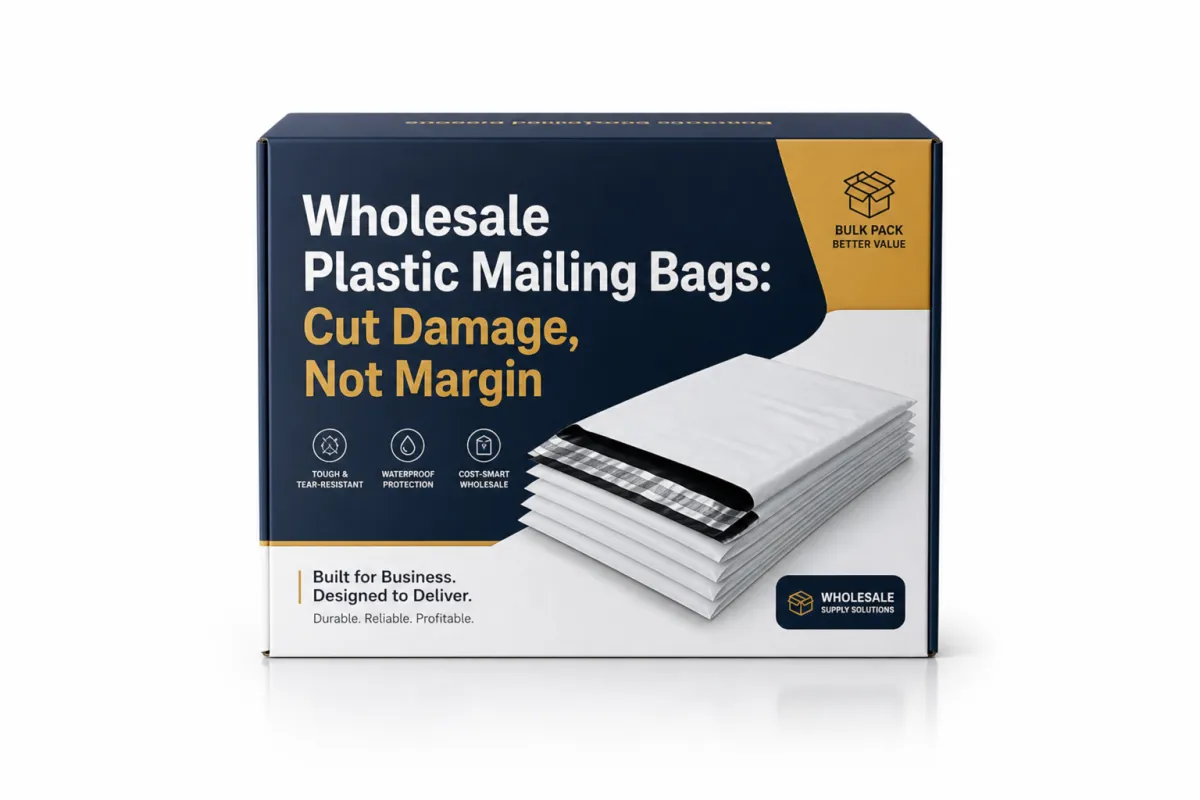
A high-volume shipper rarely loses money on one broken parcel. The damage comes from the pattern: a few extra seconds at pack-out, a few more returns from scuffing or punctures, a few more complaints about the package showing up ugly. wholesale plastic mailing bags help stop that leak because they combine protection and lightweight handling in one simple format.
The annoying part is how often tiny packaging choices push costs the wrong way. Every order line includes a mailer, a label, a seal, and a handling step. If the bag runs too large, film use climbs and the parcel can shift in transit. If the bag is too thin, the material savings can disappear the first time a customer receives a torn shipment. wholesale plastic mailing bags sit right in that middle zone, where a small spec change can affect labor, returns, and carrier charges at once.
From a buyer’s point of view, the value is plain.
- Lightweight shipping that does not add pointless postage weight.
- Fast packing, especially when self-seal closures and easy-open design matter.
- Reliable protection for soft goods, folded garments, and low-fragility accessories.
- Brand presentation that stays clean and consistent at scale.
wholesale plastic mailing bags fit apparel ecommerce, beauty, phone accessories, books, sample programs, and subscription workflows especially well. In those setups, the packaging has to be simple enough for fast packing and sturdy enough to survive normal carrier handling. That is the sweet spot. Nothing fancy. Just useful.
The buyer’s decision should stay grounded. Strength matters, but so do printability, size range, seal performance, and storage efficiency. A warehouse that standardizes on one or two formats can train faster, cut picking errors, and keep replenishment easier to forecast. That is why wholesale plastic mailing bags often beat piecemeal buying once monthly volume starts climbing.
Cash flow matters too, even if people like to pretend packaging is only about the box on the desk. Buying in volume usually lowers the unit cost, but the real savings often show up in fewer rush orders, fewer damage claims, and fewer last-minute substitutions. If the team needs fulfillment to stay predictable, wholesale plastic mailing bags can support the whole operating rhythm instead of just covering a product.
Comparing packaging formats works best when you think in terms of risk and speed. Corrugated mailers add structure, padded mailers add cushioning, and plastic mailers add efficiency. Not every order needs extra bulk. Many only need a clean outer layer that protects the contents and keeps the process moving.
Wholesale Plastic Mailing Bags Product Details
Buyers usually compare a few core product categories before placing an order. wholesale plastic mailing bags are commonly sold as plain poly mailers, self-seal mailers, opaque mailers, clear mailers, gusseted options, and custom-printed versions. Each one serves a slightly different purpose, and the right pick depends on the product mix, the brand goal, and the speed of the packing line.
Plain mailers are the workhorse option. They are light, economical, and easy to stock in volume. Self-seal versions remove the need for extra tape, which helps at busy packing stations. Opaque mailers support privacy for apparel, cosmetics, and marketplace shipments where customers do not want contents visible. Clear mailers are less common for retail branding, but they are useful when product identification matters before opening. Gusseted formats add depth for bulkier items or folded garments that need more room. Custom printed versions turn wholesale plastic mailing bags into a branding surface, which matters a lot for repeat-order businesses.
The material basics are simple, but they matter. Most wholesale plastic mailing bags are made from polyethylene film. That film gets used because it is flexible, water-resistant, and easy to run through high-volume production. Seal strength, tear resistance, and surface finish all affect how the mailer behaves in transit and how it feels at the packing station. A bag that looks fine on a sample sheet can still become a headache if the seal creeps open under pressure or the film scuffs too easily during handling.
Apparel brands usually care most about lightweight, flexible packaging. A folded shirt does not need rigid protection; it needs a mailer that fits well, seals quickly, and keeps the presentation tidy. Marketplace sellers often care about speed above everything else. A mailer that opens cleanly and closes in one motion can save meaningful time across a shift. Fulfillment centers care about stackability, predictable sizing, and feed-friendly storage. Those operations may order wholesale plastic mailing bags in a narrow set of dimensions so packers do not waste time hunting for the right size.
Branding matters too. Custom colors, logos, return instructions, and tamper-evident seals can improve recognition while keeping the package simple to process. That is where a supplier like Custom Poly Mailers can become useful: the point is not decoration for its own sake, but a bag that supports the packing workflow and still looks professional in the customer’s hands.
What should a buyer expect from a wholesale supplier? Consistent dimensions. Stable film quality. Predictable closure performance. Clear documentation for repeat purchasing. Those basics sound ordinary, but they are exactly what keep reorders from turning into a fire drill. If the second lot is subtly different from the first, the warehouse feels it right away.
wholesale plastic mailing bags also vary in print compatibility. Some film finishes take ink cleanly, while others need tighter process control to avoid smudging or dull color. For custom runs, ask whether the artwork will be printed in one color, two colors, or full coverage, because the Price and Lead time can shift fast. In many cases, a simple logo on a clean background gives most of the brand benefit without inflating production complexity.
Specifications That Shape Performance
Spec sheets matter more than glossy sales copy. The key measurements for wholesale plastic mailing bags are width, length, gusset depth, film thickness, seal type, opacity level, and print area. Those details shape fit, shipping reliability, and how smoothly the mailer runs through a packing station.
Width and length are usually the first decision point, but the packed item should drive the choice, not the unboxed product alone. A folded hoodie takes more space than the garment label suggests. Add tissue, inserts, or a return card, and the bag needs extra room for a clean seal. wholesale plastic mailing bags that are too tight can slow packers down because the seal has to be pressed more carefully. Bags that are too large waste material and can look sloppy when the customer opens the parcel.
Gauge and thickness matter just as much. Thicker film usually adds puncture resistance and a better feel in hand, while thinner film reduces cost when the product is lightweight and low-risk. There is no single answer. A premium apparel brand shipping frequent returns may want a heavier film. A low-cost accessory seller might prefer thinner wholesale plastic mailing bags to hold the line on unit economics. The right call depends on product value, carrier mix, and how much abuse the parcel is likely to see before delivery.
Here is a practical way to think about performance:
- Thin film: lower cost, good for light and soft items, best when puncture risk is low.
- Mid-gauge film: the most common balance for ecommerce shipping, especially for apparel.
- Heavier film: better for sharper edges, higher-value contents, or rougher transit conditions.
Testing should matter more than marketing claims. A decent supplier can explain tear resistance, seal adhesion, load testing, and transit durability in plain language. Many brands use internal drop checks or follow ISTA procedures, especially ISTA 3A-style pack-out and transit testing, because those methods show whether the packaging will hold up outside the sample room. That is a better standard than assuming a mailer is strong just because it looks thick.
The other technical issue is compatibility. wholesale plastic mailing bags need to work with your label system, inserter, shipping method, and any retailer-specific packaging rules. If the mailer surface repels labels or the seal interferes with automated handling, the warehouse pays for it in rework. A good supplier should ask about those details before quoting.
Compliance and material claims should stay grounded too. If a supplier says a film is recyclable, clarify the exact conditions. Many plastic mailers are not accepted in curbside recycling, even if they can be recycled through designated store drop-off programs when they are clean and dry. The EPA recycling guidance at EPA is a better reference than vague marketing language. Buyers do not need slogans. They need instructions they can trust.
One more detail that sounds minor until it becomes a problem: print area. A logo placed too close to the seal can distort during closure. A brand mark that sits too low may disappear once the mailer folds. Good art placement keeps the package neat and avoids wasted press runs. That is why wholesale plastic mailing bags should be reviewed as both a shipping tool and a print surface.
| Option | Typical Use | Common Spec Range | Typical Unit Price at Volume | Best For |
|---|---|---|---|---|
| Plain poly mailer | General ecommerce shipping | 2.5-4 mil, standard sizes | $0.05-$0.12 | Low-friction, high-volume dispatch |
| Opaque self-seal mailer | Apparel, accessories, subscription kits | 2.75-4.5 mil, privacy finishes | $0.07-$0.16 | Faster pack-out and cleaner presentation |
| Gusseted mailer | Bulkier folded goods | 3-5 mil, added depth | $0.09-$0.18 | Items that need extra room without switching formats |
| Custom printed mailer | Brand-led fulfillment | 2.75-5 mil, print area based on artwork | $0.11-$0.28 | Repeat orders, retail presentation, brand recognition |
If you compare those options carefully, the cheapest line item is not always the cheapest outcome. A slightly higher-spec mailer can reduce damage and speed packing enough to pay back the difference. That is one reason wholesale plastic mailing bags deserve a proper trial before a large commitment.
Wholesale Plastic Mailing Bags Pricing and MOQ
Pricing usually follows a simple pattern: unit cost drops as quantity rises. The catch is that a real quote includes more than material cost. For wholesale plastic mailing bags, buyers should compare shipping, customization, setup fees, and any plate or tooling charges before deciding which option actually saves money.
Minimum order quantity, or MOQ, shapes the budget more than many first-time buyers expect. Lower MOQs make it easier to test a new size or print design. Higher MOQs usually improve the per-unit rate and create more predictable inventory planning. If your order volume is steady, larger runs of wholesale plastic mailing bags can make sense. If you are still validating product fit or artwork, a smaller run protects cash and reduces the risk of sitting on the wrong spec.
Cost drivers are usually more predictable than people think:
- Thickness raises material usage.
- Size changes resin consumption and shipping carton count.
- Color and opacity affect film and ink choices.
- Print coverage can move pricing more than the base film itself.
- Special features such as tamper-evident seals or gussets add production steps.
A good quote request should include quantity, dimensions, material preference, print requirements, and delivery location. That sounds obvious, but incomplete specs create pricing noise and slow everything down. If a buyer only asks for “mailers,” the supplier has to guess at too much. If the buyer asks for wholesale plastic mailing bags with a clear size target, a defined film thickness, and a print brief, the numbers become far more useful.
Stock and custom runs come with a clear tradeoff. Stock mailers usually ship faster and cost less to start. Custom wholesale plastic mailing bags cost more up front, but they can improve brand consistency and give operations one stable format to reorder. If your team wants a simple path into volume buying, a formal Wholesale Programs page should spell out the MOQ tiers, repeat order structure, and lead-time expectations without hiding behind vague wording.
To keep pricing conversations useful, ask for quotes at multiple quantities. A quote at 1,000 units, 5,000 units, and 10,000 units often shows the breakpoints where the economics improve. Sometimes the jump from one tier to the next is modest. Sometimes it is dramatic. That spread tells a buyer much more than a single headline price for wholesale plastic mailing bags.
“The cheapest packaging is not the lowest-cost packaging. The lowest-cost packaging is the one that keeps packing speed high, returns low, and reordering simple.”
That line captures the financial reality. Packaging buyers do not just purchase film; they purchase flow. When a supplier keeps the quoting process clean and the spec consistent, the buyer gets more certainty on landed cost. That matters most in businesses where wholesale plastic mailing bags are used every day, not once in a while.
For custom orders, do not compare only the starting price. A slightly cheaper quote can hide setup charges, artwork revision fees, or a higher freight bill. If you want the true picture, ask the supplier to separate the costs line by line. A transparent quote on wholesale plastic mailing bags makes budget approval easier and avoids surprises later.
Process and Timeline for Wholesale Orders
The ordering workflow should feel orderly, not improvised. For wholesale plastic mailing bags, the normal path is inquiry, quote, spec confirmation, sample or proof review, production approval, and shipment. Each stage exists for a reason. Skip one, and the risk of rework climbs.
- Request a quote with quantity, dimensions, thickness, color, and print details.
- Confirm specifications so the supplier is pricing the correct format.
- Review samples or proofs before anything is locked into production.
- Approve artwork and layout including logo position and seal clearance.
- Schedule production and shipment around your receiving window.
Lead times depend on whether the order is in stock or custom. In-stock wholesale plastic mailing bags usually move faster because the material and format already exist. Custom orders need more time for artwork setup, proofing, and production. If you are planning a replenishment cycle, do not wait until inventory is nearly gone. Reorder points should account for transit time, warehouse receiving, and the fact that a late shipment can throw off an entire week of packing.
Approval discipline is where many orders stay smooth or become expensive. The proof should confirm size, print placement, seal style, color accuracy, and pack count. If the artwork looks fine on screen but prints too close to the edge, the final bag may not close correctly. If the dimensions are off by even a small amount, a fulfillment team can lose speed on every pack-out. That is why wholesale plastic mailing bags should be treated as a production project, not a casual purchase.
Communication matters more than most buyers admit. A supplier who gives status updates on proofing, production, and dispatch helps the warehouse plan labor and keeps service teams from promising a ship date they cannot hit. The best ordering experience feels boring in the right way. No surprises. No mystery boxes. Just a clean path from sample to delivery.
Timeline planning should also reflect how you use the mailers. If you run a promotional drop or a seasonal apparel launch, order enough volume to cover the peak period plus a safety buffer. For wholesale plastic mailing bags, a 10% to 20% cushion is often sensible when forecast accuracy is not perfect. That buffer costs less than a partial shutdown caused by a packaging shortage.
Here is where operational detail separates good suppliers from average ones. Ask whether they can hold repeat specs on file, whether they can reproduce the same color and film finish on the next run, and whether the same MOQ applies to repeat purchases. Those answers tell you whether the supplier can support you beyond one order. In repeat business, consistency is the asset.
Why Choose Us for Poly Mailer Supply
A strong supplier should act like a process partner, not just a vendor sending a price. Buyers ordering wholesale plastic mailing bags need consistent quality, dependable timing, and straightforward communication when volume rises. If the supplier cannot explain the film spec, the print setup, or the reorder path, the buyer ends up doing the project management twice.
Operationally, the biggest advantages are the unglamorous ones. Dependable sizing means the mailer fits the product the same way every time. Repeatable print quality means the logo does not wander from run to run. Organized account support means reorders can happen without rebuilding the entire spec from scratch. For busy fulfillment teams, that matters more than flashy sales language.
There is a major difference between a supplier that quotes quickly and one that actually understands the job. A knowledgeable team should answer spec questions directly, explain MOQ tradeoffs, and help match the mailer to the shipping profile. If a package needs better puncture resistance, say so. If the order would be fine with a lighter film, say that too. Honest guidance beats upselling a heavier bag just because it sounds premium.
Production discipline matters too. Quality control on seals, film consistency, and print alignment protects the buyer from inconsistent batches that can slow packing lines or trigger returns. A batch with weak seals can create a quiet disaster: the issue may not show up until the parcels are already in transit. That is exactly the kind of problem wholesale plastic mailing bags should help prevent, not cause.
The best balance is usually brand plus efficiency. A mailer should protect the item, move quickly through the warehouse, and still look polished in the customer’s hands. That balance is what makes wholesale plastic mailing bags such a strong choice for ecommerce brands that want practical packaging without sacrificing presentation. They are not trying to do everything. They are trying to do the right thing for the job.
There is also a cost discipline angle. Packaging teams often have to defend every incremental upgrade. The smartest upgrades are the ones that reduce labor, cut spoilage, or improve repeat-order confidence. A custom print can absolutely be worth it if it reduces brand leakage or supports a retail program. If the process is still changing every month, stock wholesale plastic mailing bags may be the better move until the operation settles down.
For buyers comparing suppliers, ask about repeatability across lots. Ask whether dimensions are measured at the same point each time. Ask whether print color tolerances are controlled. Ask whether future runs will match the first order closely enough that your team can store and use them together. Those questions show whether the supplier is ready for sustained volume, which is the real test for wholesale plastic mailing bags.
And yes, the product should still look good. Customers notice packaging even when they do not say anything. A clean, correctly sized mailer suggests care. A sloppy one suggests the opposite. In competitive ecommerce, that visual signal matters more than many brands want to admit.
Next Steps for Ordering Wholesale Plastic Mailing Bags
The next move is practical: choose the item type, measure the packed product, and match those dimensions to a few candidate mailer sizes. That is the fastest way to narrow the field of wholesale plastic mailing bags before you request pricing. Once you have a size shortlist, the rest of the conversation gets much easier.
Before asking for a quote, prepare these details:
- Quantity needed for the first run and the expected reorder size.
- Finished dimensions of the packed item, not just the product itself.
- Preferred film thickness and whether you need extra puncture resistance.
- Color and opacity requirements.
- Print needs, including logo, returns text, or handling instructions.
- Delivery location and target timeline.
If the order is custom, a sample-first approach is usually the safest path. Approve a sample or digital proof before you commit to a full production run. That is especially useful when the size is new, the print is new, or the brand is shifting from plain stock mailers to custom wholesale plastic mailing bags. One proof check can save a pile of waste.
A sensible rollout plan starts with the most common order size. Run a small production test, track packing speed, and confirm that carrier performance stays stable. If the mailer fits well and the team likes how it handles, expand into a full replenishment order. If not, adjust the spec before you scale. That is a much cleaner path than discovering the problem after a large buy-in.
Do not ignore storage and receiving either. A warehouse that buys in volume should confirm where the mailers will live, how they will be counted, and who owns the reorder trigger. The real value of wholesale plastic mailing bags is not only the per-unit price. It is the fact that they can fit into a controlled replenishment process that supports faster fulfillment every week.
For buyers who want custom brand presentation, the usual best practice is simple: keep the design clear, keep the order spec stable, and keep the MOQ aligned with actual usage. If you need repeatable branding, Custom Poly Mailers are a logical next step. If you need volume supply with structured purchasing, the Wholesale Programs page should give you the route into larger orders without wasting time on back-and-forth.
My advice is plain. Measure the packed item, choose the smallest mailer that still seals cleanly, ask for a sample, then compare landed cost across a few quantities. That is how buyers avoid rushed packaging decisions. It is also how teams get more value out of wholesale plastic mailing bags without turning the order into a guessing game.
In the end, wholesale plastic mailing bags are not just a packaging line item. They are a fulfillment tool, a branding surface, and a cost-control lever all at once. If you Choose the Right size, thickness, and print approach, they can make shipping faster and more predictable from the first order through the next reorder. Get the fit right, and the rest of the system behaves a whole lot better.
FAQ
What sizes are most common for wholesale plastic mailing bags?
Common sizes usually cover apparel, accessories, and small boxed goods, but the best choice depends on the packed item rather than the product alone. Measure the finished shipment, including folds, inserts, and any protective wrap, then choose a bag with enough room for a clean seal. That is the most reliable way to avoid overbuying or ending up with a mailer that slows the packer down. For many ecommerce programs, wholesale plastic mailing bags in a small set of standardized sizes are easier to manage than a long list of one-off formats.
Are wholesale plastic mailing bags good for lightweight apparel?
Yes, they are a standard choice for shirts, leggings, and other soft goods because they are light, easy to seal, and efficient to store. Choose thickness based on the product value and transit risk, since lighter-gauge mailers can work well for low-risk items while heavier films add protection. In practice, wholesale plastic mailing bags are often the most practical outer package for high-volume apparel shipments because they keep the line moving. For folded garments, the trick is not overpacking the bag or forcing the seal shut, because that is where the hassle starts.
How do I compare pricing on bulk plastic mailing bags?
Compare unit price, shipping cost, setup fees, and MOQ together instead of looking at a single line item. Ask for pricing at multiple quantities so you can see where the cost breakpoints actually improve your budget. That approach gives you a truer landed cost for wholesale plastic mailing bags and helps prevent surprise charges after the order is already approved. If one quote looks unusually low, check whether the freight or print setup got tucked somewhere less visible.
Can wholesale plastic mailing bags be custom printed?
Yes, many suppliers offer custom printing for logos, brand colors, returns messaging, or handling instructions. Confirm the print area, color limits, proof process, and setup fees before approving the artwork. Custom wholesale plastic mailing bags can strengthen presentation, but the artwork has to be planned around the seal and the pack-out process if you want the result to look professional. A design that looks great on a monitor can still get wonky if it crosses the fold line.
What should I ask before placing a large mailer order?
Ask about dimensions, gauge, seal strength, lead time, reorder availability, and whether samples or proofs are available. Also confirm the supplier's MOQ and whether the same specs can be repeated reliably on future wholesale orders. Those questions protect the buyer from inconsistency, which is one of the few things that can make wholesale plastic mailing bags more expensive than they first appear. If the supplier cannot answer those basics cleanly, keep looking.

