Buyer Fit Snapshot
| Best fit | Custom Retail Boxes Supplier projects where brand print, material claims, artwork control, MOQ, and repeat-order consistency need to be specified before quoting. |
|---|---|
| Quote inputs | Share finished size, material target, print colors, finish, packing count, annual reorder estimate, ship-to region, and any compliance wording. |
| Proofing check | Approve dieline scale, logo placement, barcode or warning zones, color tolerance, closure strength, and carton packing before bulk production. |
| Main risk | Vague material claims, crowded artwork, missing packing details, or unclear freight terms can make a low unit price expensive after revisions. |
Fast answer: Custom Retail Boxes Supplier: Board, Finish, Dieline, and Unit Cost should be specified like a repeatable production item. The safest quote records material, print method, finish, artwork proof, packing count, and reorder notes in one written spec.
Production checks before approval
Compare the actual filled-product size with the drawing, then confirm tolerance on folds, seals, hang holes, label areas, and retail display edges. Reserve space for logos, QR codes, warning copy, and material claims before decorative graphics fill the panel.
Quote comparison points
Review material grade, print process, finish, sampling route, tooling charges, carton quantity, and freight assumptions side by side. A quote is only useful when the supplier can repeat the same color, closure quality, and packing count on the next order.
A Custom Retail Boxes supplier does a lot more than print a carton and ship it out. The right partner shapes how your product survives transit, how it looks on the shelf, and whether a reorder goes smoothly or turns into a mess of fit issues and color drift. For a lot of brands, a custom retail boxes supplier becomes part of the packaging strategy, not just another line on a purchase order.
If you have ever opened a retail box that felt flimsy, looked slightly off-color, or arrived with crushed corners, you already know why this matters. A strong custom retail boxes supplier turns product dimensions, branding goals, and budget limits into a structure that works on a factory line, a warehouse shelf, and in a customer's hands. That is where packaging stops looking improvised.
What a Custom Retail Boxes Supplier Actually Does
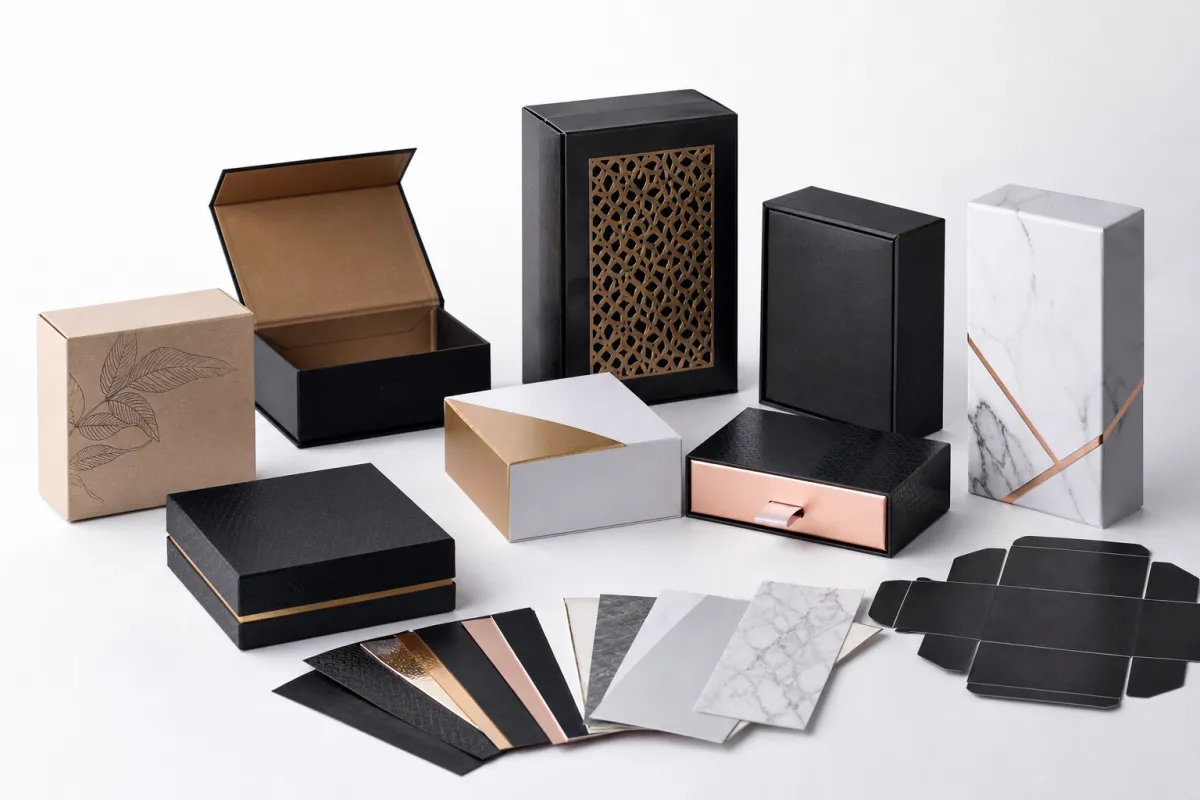
A custom retail boxes supplier takes a real product and turns it into a packaging spec that can be manufactured again and again without guesswork. That sounds simple until you list the variables: product size, weight, shipping method, retail display needs, print coverage, finish selection, and the abuse the carton has to survive before it reaches the shelf. A good supplier treats all of that as one problem, not a pile of disconnected choices.
From a packaging buyer's point of view, the value is in translation. You may know the product needs to fit snugly, stand out under retail lighting, and feel premium. The custom retail boxes supplier converts that into a dieline, board grade, coating choice, and production sequence. That is why packaging design matters so much. The box has to hold up structurally, communicate clearly, and still stay economical enough to protect margins.
There is also a real difference between a supplier, a broker, and a printer. A printer is mostly focused on outputting the job. A broker may connect you with manufacturing capacity. A full-service custom retail boxes supplier is usually closer to a packaging partner because they help with structure, material sourcing, proofing, quality control, and logistics coordination. Not every company covers every step, so asking who owns what prevents a lot of confusion later.
That matters even more when a brand has multiple SKUs. A consistent custom retail boxes supplier can keep a family of custom printed boxes aligned in board thickness, shelf presence, and finish, even when the product sizes change from one item to the next. For a retailer or a brand managing seasonal assortments, that consistency cuts down on rework and keeps the line looking intentional.
In practice, the box is part of the product experience. It is not only a shipping protector, and it is not only a marketing surface. It is both. That is why the right supplier can reduce damage rates, improve shelf impact, and cut the number of packaging surprises during reorder cycles.
If you are comparing starting points, our Custom Packaging Products page is a useful way to review common structures and finishing options before you start quoting a new run.
The cheapest carton is rarely the cheapest packaging decision once returns, crushed corners, weak closures, and shelf complaints are counted.
How a Custom Retail Boxes Supplier Process Works
The process usually starts with intake, and the better the intake, the smoother the job. A custom retail boxes supplier will ask for exact product dimensions, product weight, how the item is packed for shipping, whether the box will be displayed upright or flat, and whether it needs barcodes, safety marks, or retailer-specific labeling. If the product is fragile, odd-shaped, or heavy for its size, that should be on the table from the start. "It'll probably fit" is not a spec.
Structural planning comes next. Here the supplier creates or refines a dieline, which is the flat layout that becomes the box once folded and glued. The custom retail boxes supplier uses the dieline to decide flap depth, locking tabs, tuck direction, inserts, and the way the front panel faces the customer. For a retail box, shelf-facing panels often matter as much as the closure, because a clean front panel can carry the brand message in a few seconds.
Intake and dieline planning
At this stage, the custom retail boxes supplier should be asking questions that sound almost obsessive, and that is a good sign. How much clearance should the insert allow? Will the carton be packed by hand or on a line? Is the product going into a master shipper afterward, or is the retail box doing the main work? Small details like that decide whether the final box feels precise or awkward.
For many projects, a structure based on folding cartons using 18pt to 24pt SBS, or a comparable C1S board, is a common starting point. If the item needs more protection, E-flute or B-flute corrugated may be the better call. A knowledgeable custom retail boxes supplier will explain why one structure saves freight but costs more in print complexity, or why another gives a smoother retail face but offers less crush resistance. That tradeoff is normal. Packaging always has a tradeoff. Anyone promising otherwise is probably skipping something.
Proofing and sampling
Digital proofs help, but they do not show everything. A screen can hide subtle type issues, barcode quiet-zone problems, and the way a solid ink area behaves on a specific board. That is why a serious custom retail boxes supplier will usually recommend a physical sample, a press proof, or a prototype before the full run. Those checks catch fit problems and finish issues while corrections are still cheap.
If the launch is high stakes, ask whether the supplier can provide a production sample or a short-run prototype. Even a small sample can reveal whether soft-touch lamination feels too muted, whether foil registration is clean, or whether the carton opens with too much resistance. From a packaging buyer's view, a sample is not a luxury; it is a risk-control step.
Testing belongs here too. For distribution performance, standards such as ISTA procedures or ASTM-based testing can help simulate drop, vibration, and compression stress. A custom retail boxes supplier that understands those references can often recommend a better board caliper or insert approach before damage shows up in the field.
Production, finishing, and shipment
Once artwork is approved, production moves into printing, die cutting, stripping, folding, and finishing. A custom retail boxes supplier may run offset for cleaner image reproduction at higher volumes, or digital for faster setup and smaller quantities. Finishing steps might include aqueous coating, matte varnish, soft-touch lamination, spot UV, foil stamping, or embossing. Each step adds a different feel and a different cost, so the production plan should match the brand's actual goals instead of trying to cram every option into one box.
Timelines often look better on paper than they do in reality, so ask where the bottlenecks are likely to appear. Artwork revisions, proof approvals, specialty finishing, and freight scheduling are the usual suspects. A straightforward run may take 10 to 15 business days after approval, while a more complex program can stretch beyond that, especially if the custom retail boxes supplier is managing multiple SKUs at once. If a quote sounds unusually fast, ask what has been left out. That question has saved me more than once.
For sustainability-led projects, a supplier should also be able to talk through FSC-certified stock, water-based inks, and coatings that do not create avoidable recycling problems. The Forest Stewardship Council is a useful reference point for fiber sourcing discussions, especially when buyers need documentation for retail or procurement teams.
Custom Retail Boxes Supplier Pricing: What Drives Cost
Pricing is where a lot of buyers get surprised, and the surprises usually come from missing details. A custom retail boxes supplier does not price a job based only on the outside dimensions. They look at board grade, print coverage, number of colors, coating choice, finishing complexity, tooling, and quantity. Two boxes that look similar from across a room can land in very different price bands once the spec is fully written out.
Size is one of the biggest drivers, but not always the biggest. Larger cartons need more board, more ink, and more freight space, yet a small box with heavy print coverage and specialty finishing can cost more per unit than a plain larger box. A seasoned custom retail boxes supplier will usually walk through where the money is going so the buyer can decide which features are worth keeping and which are just adding noise.
Order quantity changes the math quickly. Small runs often carry higher unit pricing because setup, proofing, and die cutting are spread over fewer pieces. In my experience, a simple retail carton at 500 to 1,000 units can land anywhere from about $0.60 to $1.20 each depending on structure, stock, and finish. At 5,000 units, the same style may drop closer to $0.18 to $0.45 each. Those are planning ranges, not promises. A custom retail boxes supplier should be able to tell you where your job sits once the spec is locked.
Tooling and setup should be separated from recurring price. Dies, cutting rules, plates, and sample development are often one-time or limited-use costs. If you compare quotes without isolating those charges, the lowest number can look attractive even though the total program cost is not actually lower. That is one reason buyers ask a custom retail boxes supplier for a clear breakdown instead of one lump sum.
What usually moves the quote
These are the most common cost drivers a custom retail boxes supplier will ask about:
- Board grade: 14pt, 18pt, 24pt SBS, C1S, kraft, or corrugated stock each carry different material and handling costs.
- Print method: digital, offset, and flexographic printing are priced differently depending on run size and color coverage.
- Finish: aqueous coating is usually cheaper than soft-touch lamination, and foil or embossing adds more setup.
- Structure: a straight tuck box is simpler than a lock-bottom carton with inserts and specialty cutouts.
- Freight and storage: bulky cartons can erase savings if the shipment is heavy or warehouse space is tight.
If you need a faster starting point, compare options through Custom Packaging Products so you can see how different structures affect the quote before you send specs to a custom retail boxes supplier.
| Supplier Type | Typical Fit | Approx. Unit Cost | Strengths | Risks |
|---|---|---|---|---|
| Low-touch broker | Simple repeat orders with standard specs | $0.20-$0.40 at moderate volume | Fast quoting, broad factory access | Less control over samples, color consistency, and follow-up |
| Local printer without packaging focus | Basic branded cartons with light finishing | $0.25-$0.55 depending on setup | Close communication, easier pickup and local support | Limited structural guidance and fewer finishing choices |
| Dedicated custom retail boxes supplier | Retail-ready packaging across multiple SKUs | $0.18-$0.45 at volume, higher on short runs | Better structure support, repeatability, and packaging design help | May require more complete specs up front |
Shipping should never be treated as an afterthought. A pallet of nested cartons is not the same as a pallet of flat-packed custom printed boxes, and the wrong estimate can add several cents per unit before the boxes even reach your warehouse. If the project is volume-sensitive, a custom retail boxes supplier should talk openly about freight class, pallet count, and whether flat shipping or regional fulfillment makes more sense.
A low quote can still be expensive. If the board scuffs easily, the color falls apart on a reorder, or the pack fails in distribution, the hidden cost shows up later in returns, reprints, and retailer complaints. That is usually where the better custom retail boxes supplier saves money in a way that is not obvious on day one.
Key Factors to Compare in a Custom Retail Boxes Supplier
Consistency is the first thing I look at. A dependable custom retail boxes supplier should be able to repeat the same color, the same fold behavior, and the same finish quality on a reorder without forcing a redesign. If one run looks strong and the next run arrives with a duller coating or a loose closure, that inconsistency can damage trust faster than a slightly higher unit price ever will.
Material guidance matters too. Some suppliers are comfortable suggesting the right caliper and board construction for the product, while others simply accept whatever you send them. The better custom retail boxes supplier will explain tradeoffs between cost and feel, whether you are aiming for value-driven retail packaging or a more premium presentation with soft-touch lamination, embossing, or a foil accent.
Communication quality is often the easiest way to predict the rest of the experience. Clear quotes, clean sample notes, and direct answers about lead time tell you a lot about how production issues will be handled later. If a custom retail boxes supplier is vague before the order, that rarely improves once the press is running.
What to compare beyond price
- Minimum order quantity: can the supplier support a test launch, or do they only make sense at larger volumes?
- Lead time flexibility: can they handle an accelerated launch without cutting corners?
- Sustainability options: FSC board, recyclable coatings, and lighter-weight material choices should be discussed early.
- Multi-SKU support: if you are launching a line, can they keep all pack sizes visually consistent?
- Sample turnaround: a quick, accurate sample cycle usually means fewer surprises at production.
There is also a practical difference between packaging that looks good in a mockup and Packaging That Works in a store. A strong custom retail boxes supplier understands shelf impact, handleability, and the way the box reads from arm's length under mixed lighting. That is the kind of packaging design thinking that turns product packaging into a real selling tool.
For reference on material recovery and packaging waste context, the EPA recycling guidance is helpful when you are comparing board, coatings, and end-of-life claims. A good supplier should be able to discuss those choices without overpromising. If they make recycling sound magically simple, be skeptical. Paperboard can be recyclable and still be a bad fit if the coating or laminate blocks recovery in your target market.
Step-by-Step Guide to Choosing a Custom Retail Boxes Supplier
The safest way to choose a custom retail boxes supplier is to document the job before you ask for pricing. That means exact dimensions, product weight, packaging orientation, shipping method, display environment, target quantity, and any compliance requirements such as barcodes, recycle marks, or region-specific legal copy. A clear brief usually saves more money than aggressive negotiating ever will.
Then request comparable quotes. Send the same spec sheet to each custom retail boxes supplier so you are comparing apples to apples, not one supplier's premium board against another supplier's economy stock. If one quote includes proofing, one includes freight, and one does not, the true cost can stay hidden until it is too late.
1. Build a packaging brief
Start with the product itself. Measure the item as packed, not just the raw product size, because inserts, poly bags, sleeves, or accessories can change the fit. A custom retail boxes supplier cannot accurately recommend a structure if the dimensions are approximate or if the product only exists in a mockup stage.
Add the retail environment to the brief. Will the box sit in a peg, on a shelf, or inside a display tray? Is the goal a loud shelf presence or a cleaner, more premium branded packaging style? The answer changes the front-panel layout, finish selection, and sometimes even the structural format.
2. Compare samples and proofs
Never approve based on a screen alone if the packaging will carry real retail weight. Ask the custom retail boxes supplier for a sample path that matches the risk level of the launch: digital proof for text and layout, material sample for stock feel, and a prototype or press proof for the final structure when the item is sensitive. That extra step often catches problems with fold lines, barcode placement, or the visual weight of dark ink coverage.
Inspect the sample like a buyer, not like a designer. Does the box open without fighting? Do the corners hold shape? Is the print crisp, especially on small type and regulatory copy? Is there enough panel real estate for the logo, claims, and a clear shelf callout? A custom retail boxes supplier that welcomes those questions is usually worth keeping.
3. Validate timing in writing
Timelines should include artwork submission, proof turnaround, approval dates, production, finishing, and shipping estimates. A custom retail boxes supplier can be very capable and still miss a launch if everyone assumed the sample would only take a day or freight was not reserved early. Put each milestone in writing and build a small buffer for revisions, especially when a product launch depends on retail receiving windows.
- Send a complete brief with dimensions, weight, and finish preferences.
- Request detailed quotes from at least two or three suppliers.
- Review a sample or proof before final approval.
- Confirm lead times, freight terms, and reorder expectations in writing.
A reliable supplier should make the process feel organized, not mysterious. If the partner can explain structure, print, and scheduling in plain language, that is usually a sign they understand how retail packaging behaves in the real world rather than only in a sales deck. That kind of clarity matters more than a polished PDF full of promises.
Common Mistakes When Working With a Custom Retail Boxes Supplier
The first mistake is asking for quotes without enough detail. A custom retail boxes supplier cannot price a job accurately if the board grade is unspecified, the finish is undefined, or the product dimensions are only approximate. Missing details usually come back later as change orders, and change orders are where budget control starts to slide.
The second mistake is chasing the lowest number too aggressively. I have seen buyers save a few cents per carton only to lose much more to weak board, poor stacking performance, or inconsistent print. A custom retail boxes supplier that understands real production tolerances will often give you a quote that reflects the job honestly, even if it is not the cheapest on paper.
Shipping and storage conditions are another common blind spot. If cartons will sit in a humid warehouse, travel long distances, or stack under heavy shipper weight, the structure needs to account for that. A retail box that looks perfect in a sample room can still scuff, warp, or crush if the custom retail boxes supplier was not told how the packaging will move through the supply chain.
Artwork approval is where a lot of preventable issues sneak through. Typography, legal marks, barcode quiet zones, and claims language should be reviewed on the final dieline, not on a loose mockup. A good custom retail boxes supplier will flag layout issues early, but the buyer still needs to verify that the printed box can carry every required element without crowding the design.
Problems that show up later
- Color drift: the first run and reorder do not match because no standard was recorded.
- Weak closure: tuck flaps open too easily during transport or retail handling.
- Scuffing: glossy or dark-ink designs rub during packing and pallet movement.
- Poor fit: inserts leave the product loose, or the board is too tight to assemble quickly.
These are not abstract issues. They are the kinds of problems that create damaged goods claims, wasted labor, and extra customer service work. A knowledgeable custom retail boxes supplier helps you avoid them by asking uncomfortable questions before production starts. That's the job, really: reduce drama before it gets expensive.
What to Do Before You Place an Order With a Custom Retail Boxes Supplier
Before you place an order, put the packaging brief into its final form. That brief should list the exact dimensions, material preference, print finish, target quantity, launch date, and any retailer or regulatory requirements. A custom retail boxes supplier works best from a complete spec, because complete specs reduce assumptions and make the quote more dependable.
Ask for a sample path and a production schedule. You want to know whether the supplier is planning digital proofs, a structure sample, or a full prototype, and how long each step will take. A custom retail boxes supplier that is transparent about proofing and approval milestones is usually easier to work with during a launch, because you can see risk before it turns into delay.
Test one box in the real world before signing off. Put the product inside, open and close it several times, stack it, and look at it under the same lighting where it will be sold. If possible, run it through a small shipping test or at least a drop-and-shift simulation. A custom retail boxes supplier should welcome that kind of practical review because it catches fit and appearance issues while they are still inexpensive to fix.
Checklist before approval
- Exact product dimensions and weight are confirmed.
- Artwork is placed on the final dieline and checked for barcode and legal copy accuracy.
- Material, finish, and print method are listed in the quote.
- Freight terms, lead time, and sample steps are written down.
- Reorder ownership for the dieline and artwork files is clear.
One more thing: ask how reorders are handled. A reliable custom retail boxes supplier should be able to repeat the box without reinventing the job every time, and you should know whether the dieline files stay with your team, the supplier, or both. That matters more than many new buyers realize, especially after the first launch cycle. Reorder friction is the kind of boring problem that turns into a loud one later.
For teams still shaping their pack line, the Custom Packaging Products catalog can help you compare structures and finishes before you commit to a final specification.
The best order is the one you can repeat confidently. If the box can be reordered, scaled, and shipped without surprises, your packaging is doing its job. That is exactly what a dependable custom retail boxes supplier should help you achieve.
Frequently Asked Questions
How do I choose a custom retail boxes supplier for a new product?
Start with suppliers that can show similar structures, material options, and print finishes for products like yours. Compare sample quality, communication speed, and quote transparency before you focus only on unit price. The right custom retail boxes supplier should explain structure, branding, and production timing in a way that fits your launch plan, not just the factory schedule.
What information should I send to a custom retail boxes supplier?
Send exact product dimensions, product weight, quantity, storage conditions, shipping method, and display format. Include artwork files, finish preferences, barcode needs, and any retail compliance details. The more complete the brief, the more accurate the quote, sample, and timeline will be from your custom retail boxes supplier.
How long does a custom retail boxes supplier usually take?
Timing depends on sample needs, artwork readiness, order size, and finishing complexity. Simple runs can move faster, while new structures, specialty coatings, or large production quantities add time. A written schedule with proofing, approval, production, and shipping milestones helps prevent launch delays, and a good custom retail boxes supplier will give you that map early.
Why do custom retail box prices vary so much between suppliers?
Price differences usually come from board grade, print method, finishing, tooling, and order quantity. Some quotes hide setup, freight, or sample costs, which makes the first number look lower than the real total. The best comparison looks at total landed cost, not just the unit price on the quote, and a dependable custom retail boxes supplier will be clear about each piece.
Can a custom retail boxes supplier help with sustainability goals?
Yes, many suppliers can suggest recyclable board, lighter-weight material, or finishes that support sustainability goals. You should still balance recyclability with protection, print quality, and shelf appeal. Ask for material options early so eco-friendly choices are built into the design instead of added at the end, because a thoughtful custom retail boxes supplier can usually find a practical middle ground.

