Buyer Fit Snapshot
| Best fit | wholesale recycled cosmetic pouches for sustainable brands for packaging buyers comparing material specs, print proof, MOQ, unit cost, freight, and repeat-order risk where brand print, material, artwork control, and repeat-order consistency matter. |
|---|---|
| Quote inputs | Share finished size, material target, print colors, finish, packing count, annual reorder estimate, and delivery region. |
| Proofing check | Approve dieline scale, logo placement, barcode or warning zones, color tolerance, and any recyclable or compostable wording before bulk production. |
| Main risk | Vague material claims, crowded artwork, or missing packing details can create delays even when the unit price looks attractive. |
Fast answer: Wholesale Recycled Cosmetic Pouches for Sustainable Brands should be specified like a repeatable production item. The safest quote includes material, print method, finish, artwork proof, carton packing, and reorder notes in one written spec.
What to confirm before approving the packaging proof
Check the product dimensions against the actual filled item, not only the sales mockup. Ask for tolerance on folds, seals, hang holes, label areas, and retail display edges. If the package carries a logo, QR code, warning copy, or legal claim, reserve that space before decorative graphics fill the panel.
How to compare quotes without losing quality
Compare board or film grade, print process, finish, sampling route, tooling charges, carton quantity, and freight assumptions side by side. A lower quote is only useful if the supplier can repeat the same color, closure quality, and packing count on the next order.
Wholesale recycled cosmetic pouches are getting more attention because beauty brands want packaging that protects the formula, travels well, and still supports a cleaner materials story. The format does a lot with a little. It trims material weight, keeps unit cost under control, and leaves room for sharp graphics, practical closures, and a polished shelf presence. For brands under pressure to do more with less, that combination is hard to ignore.
Packaging buyers usually care less about the label on the film than the way the pack behaves in the real world. A pouch that looks responsible but leaks oil, scuffs in transit, or prints unevenly is a bad purchase, full stop. Better results come from choosing the structure, finish, and closure around the product first, then building the brand story on top of packaging that can survive filling lines, freight, retail handling, and the occasional careless toss into a tote bag. I have seen a sample pass every visual check and still fail after the first hot truck ride, which is why the testing order matters so much.
Why wholesale recycled cosmetic pouches are winning shelf space
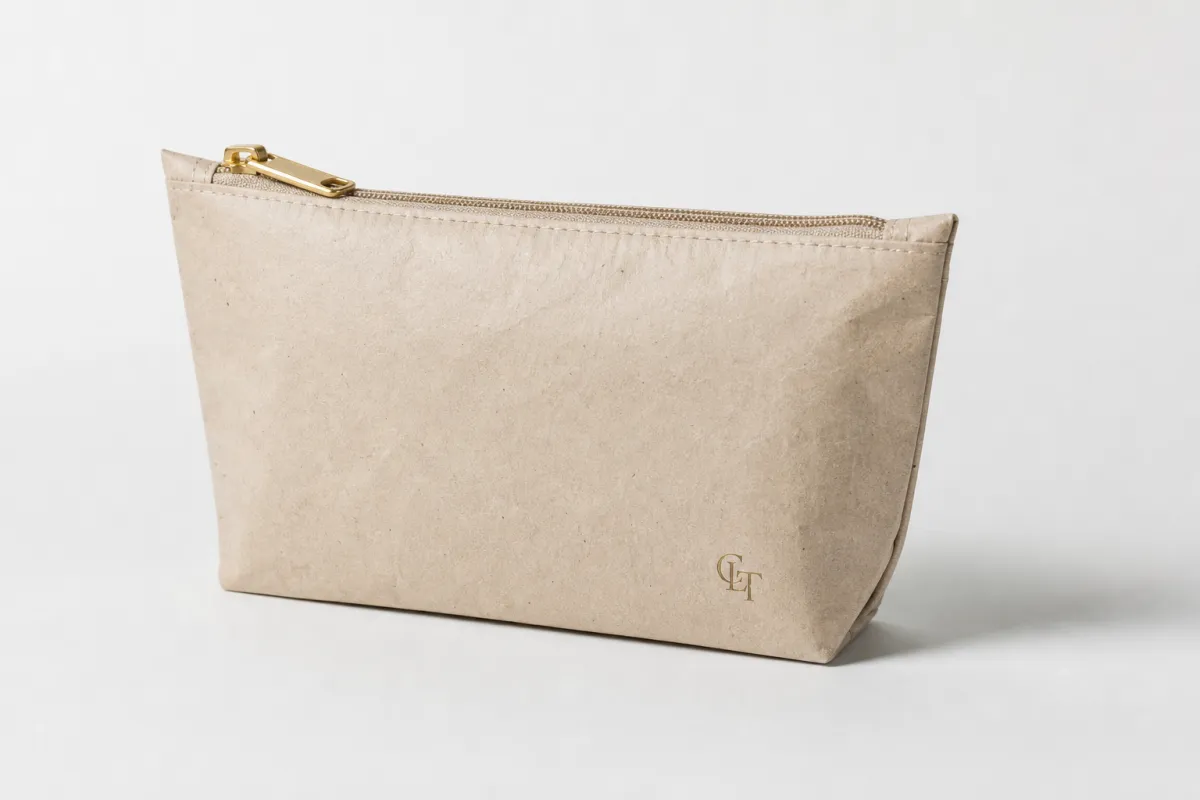
Wholesale recycled cosmetic pouches are winning shelf space because buyers are tired of choosing between appearance and performance. Beauty lines still need tight seals, readable copy, and clean branding, but they also need lighter packouts, fewer breakages, and easier freight handling. A pouch solves several of those problems at once. It uses less material than rigid jars or bottles, nests efficiently for shipping, and can be printed to look premium without demanding a heavy carton or oversized secondary pack.
The economics are not abstract. A jar, cap, insert, label, and carton can turn a small skincare item into a surprisingly expensive object to move. A pouch behaves differently. It is a container and a billboard at the same time, which is a strange little hybrid if you think about it. The brand message sits on the same surface that protects the formula, so every decision touches both performance and presentation. That dual role is why a well-made pouch can feel smarter than a more expensive rigid pack.
The surprise is how refined a pouch can look once the construction is chosen well. Recycled-content film does not automatically mean dull graphics or a blunt, eco-first look that feels thin on shelf. Print method matters. Laminate balance matters. Closure choice matters too. A matte finish can suit a skincare line, while gloss can sharpen mass-market color. Soft-touch details add another layer of polish, especially when the substrate and ink system are matched with care. The film is only one part of the result, and not always the most visible one.
"A recycled-content pouch can still feel premium, but only if the print, closure, and barrier layer are chosen as one package."
Wholesale buying improves the economics in a simple way: the more consistent the program, the easier it is to keep the packaging line under control. If a brand is launching three serums, a cleanser refill, and a travel-size mask, a single pouch system helps the shelf feel organized instead of assembled from fragments. Wholesale recycled cosmetic pouches make that consistency possible across launch sets and restocks. Standardizing pouch size and print setup often reduces setup waste, speeds approval, and lowers the risk of color drift between runs.
The format keeps growing for another reason. Recycled-content pouches can reduce pack weight, improve shipping efficiency, and make merchandising easier for stores that favor hanging displays or compact shelf blocks. For small and growing cosmetic lines, wholesale recycled cosmetic pouches offer a flexible path into retail without committing to glass, heavy pumps, or rigid tubes that can drive up freight and storage costs. Used well, the pouch is not a compromise. It is a piece of packaging engineering that supports the formula, the budget, and the brand story at the same time.
One more reason buyers keep coming back to the format: damaged rigid packaging tends to be visible the moment a carton is opened, while a pouch is usually more forgiving in transit. That matters more than people expect. A tiny improvement in pack density or a small reduction in breakage can change the economics of a whole run, especially once promotions, replenishment, and returns enter the picture.
Wholesale recycled cosmetic pouches: material choices and constructions
Wholesale recycled cosmetic pouches begin with material selection, and that is where many buyers either gain control or create problems they need to fix later. The outer layer might use recycled-content PET, PCR PE, or a paper-based face where the product and barrier needs allow it. Inside, the pouch may rely on a laminated structure built to manage moisture, oxygen, fragrance retention, or oil resistance. For cosmetics, barrier planning is not optional when the formula is sensitive. A pouch only performs as promised when the laminate supports the product, not just the marketing message.
There are several common pouch formats, and each one fits a different beauty use case. A stand-up pouch works well for refill liquids, bath salts, powder masks, and trial-size systems. Flat pouches suit samples and low-volume single-use packs. Gusseted pouches can hold more volume and stand with a little more body. Refill-ready formats often need a stronger zipper and a more durable seal area because they will be opened and closed many times. Wholesale recycled cosmetic pouches can be built in any of these formats, but the right choice depends on whether the pouch is retail-facing, e-commerce only, or part of a refill program.
Finish selection changes the feel of the pouch more than many buyers expect. Matte surfaces can communicate a more natural look, while gloss adds punch and can make bright colors feel sharper. Clear windows help shoppers see the fill level, though on recycled substrates they can also change how the pouch prints and how much of the film's natural tone shows through. Soft-touch and spot effects can add shelf appeal, yet they need to be weighed against cost and the way recycled materials absorb or reflect ink. In real production, wholesale recycled cosmetic pouches often print best when the artwork is adjusted for the actual substrate instead of copied from a rigid pack concept. That part sounds boring, but it is usually where the best-looking jobs are won.
Closures and usability details carry their own weight. Zippers help with reseal performance, especially for powders, masks, or refill products. Tear notches improve the first-open experience. Hang holes support retail display. Rounded corners reduce snagging and make the pouch feel cleaner in hand. For travel-size cosmetics, the seal width and zipper quality need to be strong enough to survive a bag, a drawer, and a few temperature swings. Wholesale recycled cosmetic pouches should be judged on how they close, reopen, and hold their shape after use, not only on how they look in a flat sample.
Here are a few structure decisions that often come up during specification work:
- Recycled-content PET/PE laminations for general skincare and cosmetic refills that need a familiar retail look.
- High-barrier laminates for formulas with oxygen-sensitive actives, fragrance oils, or stronger moisture control needs.
- Mono-material PE options with recycled content where the brand wants a simpler recovery story and the product can tolerate the format.
- Paper-faced constructions for certain dry or low-moisture products when the tactile look matters and the barrier demand is moderate.
That mix of structure, finish, and closure is why wholesale recycled cosmetic pouches should be specified as a system, not as separate parts. A zipper That Feels Premium on a mockup may not seal reliably on a light-gauge laminate. A beautiful matte finish may hide too much of the product color if the substrate is too opaque. A buyer who asks the right questions early usually gets a cleaner result, and the final pouch feels intentionally engineered instead of merely decorated.
There is also a trust issue here. Recycled-content does not automatically mean recyclable, and a paper face does not automatically mean lower impact. The real picture depends on the film layers, the amount of ink coverage, the closure, and the local collection system. If the sustainability story matters to the brand, the structure needs to support that story honestly. Anything else turns into a credibility problem later, and those are annoying to clean up.
Specifications to lock in before you quote recycled cosmetic pouches
Wholesale recycled cosmetic pouches become much easier to price once the spec is clear. The first items to lock in are the pouch dimensions, fill volume, gusset depth, seal width, and closure type. If the pouch is shelf-ready, the structure may need a little more rigidity. If it is refill-oriented, the focus may shift toward reclose performance and ease of dispensing. A 100 ml lotion refill and a 15 g mask sample may share a family resemblance, but they are not the same packaging problem.
Product compatibility should come next. Creams, lotions, balms, powders, masks, scrubs, and fragrance-heavy formulas all behave differently. Oils can soften some materials over time. Moisture-sensitive powders may need a stronger barrier to prevent clumping. Thick creams may need a wider opening or a stronger top seal so filling runs smoothly. Wholesale recycled cosmetic pouches for a water-based cleanser do not need the same build as a balm with richer oils, and that difference can affect both price and failure rate. Clarifying the formula early saves more than time; it saves rework.
Artwork inputs matter just as much as the construction. Buyers should define the print area, number of colors, barcode placement, legal copy, and whether the pouch needs a front window or a full-surface print. Recycled substrates can shift color slightly compared with virgin film, so the artwork team should expect a different visual response on the proof. Wholesale recycled cosmetic pouches usually improve when the art is adjusted to the substrate instead of forcing an exact match to a paper box or glass label. That small adjustment often saves time and improves consistency.
A practical pre-quote checklist makes the buying process cleaner:
- Pouch dimensions and target fill volume.
- Product type, viscosity, and oil or fragrance content.
- Desired closure: zipper, tear notch, slider, or simple heat seal.
- Print method, color count, and finish preference.
- Storage conditions, shipping method, and expected shelf life.
- Whether the pouch needs tamper resistance or travel-friendly protection.
- Any recycling or sustainability claim the brand plans to print.
If the order includes recycled or environmental claims, the wording should be checked against the real material build and the market where the pouch will be sold. For claim language and collection realities, the EPA recycling guidance is useful, and if the pouch uses paper components or paper-based secondary packaging, the FSC standard may matter for the source of that fiber. Shipping validation should match the actual route the packed pouch will travel, especially if cartons face rough handling or e-commerce distribution. Wholesale recycled cosmetic pouches are easier to approve when compliance gets handled before the artwork is locked.
One more practical point: ask whether the pouch will be filled on a vertical line, a manual station, or a semi-automatic system. That detail changes the seal width, film stiffness, and the amount of margin needed near the top. Wholesale recycled cosmetic pouches should fit the filling process as cleanly as they fit the shelf, because a pouch that is hard to fill is always more expensive than the quote suggests. A factory can usually accommodate a lot, but it cannot fully rescue a spec that was never set up for the line.
Wholesale recycled cosmetic pouches pricing, MOQ, and unit cost
Wholesale recycled cosmetic pouches are priced from several inputs, and the biggest mistake buyers make is focusing only on the material line. Material grade matters, but so do film thickness, print coverage, finish, zipper or slider hardware, and custom sizing. A simple recycled-content flat pouch can cost far less than a fully printed stand-up pouch with a zipper and matte finish. Standard sizes usually keep costs steadier because they reduce setup complexity and make lead times easier to hold.
MOQ usually moves with the structure and the print method. Larger runs often lower the unit price because press setup, die costs, and prepress work are spread over more pieces. Smaller runs can still make sense for pilot launches or seasonal kits, but the per-piece cost is naturally higher. Wholesale recycled cosmetic pouches are often most competitive at run sizes where the factory can keep a stable press schedule, which is why buyers usually get better pricing when they can consolidate multiple SKUs into one production plan.
When asking for a quote, buyers should include the basics in one clean message: dimensions, target quantity, artwork status, shipping destination, product type, and any performance requirement that matters. If the pouch needs a stronger zipper, a thicker gauge, or a more demanding barrier, that should be stated up front. Wholesale recycled cosmetic pouches are much easier to quote accurately when the request includes the real use case instead of just the visual idea. A complete brief also reduces back-and-forth and keeps the first proof closer to the final spec.
Here is a practical comparison that many beauty brands find useful when they are balancing budget and performance:
| Format | Typical use | Common spec | Typical wholesale range |
|---|---|---|---|
| Flat recycled-content pouch | Samples, sachets, travel doses | Light-gauge laminate, tear notch, one- or two-color print | $0.06-$0.14 per unit at 5,000 pieces |
| Stand-up pouch with zipper | Refills, powders, masks, cleansers | Recycled-content outer film, resealable zipper, matte or gloss finish | $0.18-$0.38 per unit at 5,000 pieces |
| High-barrier cosmetic pouch | Fragrance-rich or oxygen-sensitive formulas | Barrier laminate, stronger seal area, tighter QC | $0.24-$0.55 per unit at 5,000 pieces |
| Custom refill pouch | Repeat-use consumer refill programs | Higher-fill volume, stronger closure, larger printable area | $0.28-$0.62 per unit at 5,000 pieces |
The numbers above are typical wholesale ranges, not fixed rules, because print coverage, hardware, and structural complexity can move pricing quickly. Still, they give buyers a realistic frame for comparing options. Wholesale recycled cosmetic pouches should be evaluated as total value, not just unit price. A lower-cost pouch that fails in transit, dents the brand image, or creates rework on the filling line usually ends up more expensive than the slightly higher-spec choice that runs cleanly from the start.
Freight efficiency belongs in the comparison too. Pouches usually ship and store more efficiently than rigid packaging, which can offset part of the per-piece cost. If the product line is broad, the savings in carton space, pallet density, and damage reduction can matter as much as the packaging quote itself. For many buyers, wholesale recycled cosmetic pouches become the sensible choice precisely because the savings show up in several parts of the supply chain, not just on the invoice.
One practical test I like to use: compare not only the unit price, but the cost of one damaged case, one line stoppage, and one reprint. The cheap option often stops looking cheap after that math. Packaging is weirdly unforgiving that way.
Production process and timeline for wholesale recycled cosmetic pouches
Wholesale recycled cosmetic pouches usually move through a clear production path: inquiry, specification review, artwork setup, proof approval, sample validation, production, inspection, and packing. The sequence sounds simple. The decision points are not always simple. A clean brief gives the factory what it needs to quote correctly. A clean proof keeps the print aligned. A clean sample review reduces the chance of getting a finished pouch that looks fine on screen but behaves poorly in hand. The process stays manageable when the approval path is organized.
Most delays happen for predictable reasons. Artwork may not be final, claim language may need review, or the structure may need to change after a sample test. If the brand wants to add a new sustainability statement after proof approval, another review cycle may follow. If the formula is more aggressive than expected, the laminate may need a different barrier layer. Wholesale recycled cosmetic pouches usually move faster when those questions are answered before the order is released, because the factory is not forced to pause for design or structural changes midway through the job.
Typical lead times depend on the order size and complexity, but many custom runs land around 12-15 business days after proof approval, with longer windows for more complex print builds, specialty finishes, or tighter barrier requirements. If a sample needs to be made first, that time belongs in the schedule too. Wholesale recycled cosmetic pouches are easier to plan when the buyer gives the production team room to handle proofing, test seals, and final inspection without rushing the process. A compressed schedule can work, but only if the spec is already locked.
A few habits make the timeline much more predictable:
- Approve the dieline early and do not change dimensions after artwork starts.
- Keep the brand messaging consistent across SKUs so one proof can guide the rest.
- Confirm barcode placement, legal copy, and sustainability claims before print.
- Test the sample with the actual formula, not just with water or a substitute fill.
- Share the shipping method so inspection can match the packing route.
Wholesale recycled cosmetic pouches also benefit from a realistic shipping plan. If the finished product will move through retail distribution, pallet configuration and carton protection matter. If it will be shipped direct to consumer, the pouch may need a more careful outer carton spec or an internal sleeve to reduce scuffing. Saving money on the pouch does little good if the last mile ruins the experience.
One useful way to think about the production schedule is to treat the proof as the real start of the clock. Once artwork, structure, and claims are approved, the job becomes much easier to predict. If those inputs keep shifting, the schedule will shift too. Wholesale recycled cosmetic pouches are not slow by nature; they simply reward buyers who make decisions in the right order. That is the part most teams wish they had learned earlier.
Why choose us for wholesale recycled cosmetic pouches
Wholesale recycled cosmetic pouches work best when the packaging partner understands the product, the process, and the commercial pressure behind the order. The right team does not just take a spec and send a quote; it helps translate the formula and the brand goals into a pouch structure that makes sense on the shelf and in the supply chain. For a buyer at Custom Logo Things, that means the conversation can stay practical: what the pouch needs to do, what the budget can support, and where the real tradeoffs sit. Wholesale recycled cosmetic pouches should feel like a packaging decision, not a guessing game.
Strong support starts with material selection. A cosmetic refill that needs a little more stiffness should not be quoted the same way as a sample sachet. A balm with richer oils may need a more careful barrier review than a dry powder. A travel-size line may need reseal performance that stands up to repeated opening. Wholesale recycled cosmetic pouches benefit from a partner who can explain those choices in plain language, then document the spec so the factory, the buyer, and the brand all work from the same plan. That reduces confusion and keeps the result closer to the first approved sample.
Communication matters just as much as structure. Wholesale orders often have multiple moving parts: artwork files, dielines, proofing notes, print colors, closure choices, and shipping details. A good process keeps the buyer informed at each point so there are fewer surprises later. Wholesale recycled cosmetic pouches move more smoothly when sample updates, approval checkpoints, and production milestones are clear from the start. Buyers should not have to chase basic status information; they should be able to see where the job stands and what is needed next.
That is also why consistency across wholesale programs matters. If a brand is ordering multiple pouch styles, the finished set should feel connected even if the sizes differ. The same print logic, the same color discipline, and the same quality expectations should carry across every SKU. Wholesale recycled cosmetic pouches are strongest commercially when the buying process is tidy, the specs are repeatable, and the brand can restock without re-inventing the packaging every time.
Here is the kind of support that usually helps buyers most:
- Practical guidance on recycled-content structures and barrier requirements.
- Print setup help that protects color consistency across replenishment runs.
- Clear sizing advice so the pouch fits the formula and the fill line.
- Wholesale planning that keeps MOQ, unit cost, and lead time in view at the same time.
- Sample and proof communication that keeps the order moving without confusion.
For larger or recurring orders, it also helps to review the broader Wholesale Programs options so the brand can match the pouch plan to the full buying cycle. That is the cleanest path for wholesale recycled cosmetic pouches: define the functional needs first, align the print and finish next, and then place the order with a partner that can keep the process steady from quote to delivery.
Next steps to order wholesale recycled cosmetic pouches
Wholesale recycled cosmetic pouches are easiest to order when the buyer gathers the essentials before asking for a quote. Start with target quantity, pouch dimensions, formula type, artwork files, and any sustainability or retail requirements that must appear on the pack. If the line is still being finalized, give the supplier a range instead of a single number. Wholesale recycled cosmetic pouches can be quoted more accurately when the buyer explains the real usage and not just the visual concept.
It is smart to review at least one sample or proof path before committing to a full production run, especially if the pouch will carry a new formula or a tighter barrier requirement. A sample can reveal things a mockup will not: zipper feel, seal stiffness, print tone, and how the substrate handles the brand colors. Wholesale recycled cosmetic pouches often look good in artwork files and then behave very differently once they are filled, handled, and stacked. A proof or sample is the simplest way to catch that before a full run.
Ask for a quote that separates the assumptions clearly. Material, print, closure, and freight should be shown as separate pieces whenever possible so the buying decision is easy to compare. That makes it simpler to see where cost is coming from and which changes will matter most. Wholesale recycled cosmetic pouches should be evaluated on the same basis as any serious packaging purchase: fit, performance, compliance, and commercial value.
If the spec is locked and the production path is clear, the order can move quickly and predictably. That is the point where the buyer can focus on launch timing, merchandising, and inventory planning instead of reworking the packaging brief. For brands that want cleaner materials without giving up presentation or protection, wholesale recycled cosmetic pouches are a practical choice. Confirm the fit, confirm the budget, confirm the schedule, and move forward once the spec is right. When that happens, wholesale recycled cosmetic pouches become less of a packaging experiment and more of a reliable part of the brand's operating model.
If you need a packaging format that protects the formula, supports shelf presence, and keeps the wholesale order manageable, start with a clean spec, a realistic timeline, and a structure that matches the product. That is the most dependable way to buy wholesale recycled cosmetic pouches with confidence. The shortest path is not always the cheapest one, but it is usually the path with fewer unpleasant surprises.
Are wholesale recycled cosmetic pouches fully recyclable?
Recyclability depends on the exact film structure and the collection systems available in the buyer's market. Some recycled-content pouches improve sustainability without being curbside recyclable, so the claim should match the actual build. If recyclability is a priority, the structure and closure should be reviewed before artwork is approved, because wholesale recycled cosmetic pouches are only as honest as the material system behind them.
What MOQ is typical for recycled cosmetic pouches wholesale orders?
MOQ usually depends on pouch size, print complexity, and whether the structure is standard or fully custom. Using an existing size or common build often keeps the minimum lower and the unit cost more competitive. A quote request should always include target quantity ranges so pricing can be compared accurately, especially when wholesale recycled cosmetic pouches are being balanced against launch budgets and restock plans.
Which recycled material works best for lotions, creams, or powders?
The best material depends on product behavior, especially moisture sensitivity, oil content, and whether the pouch must stand on shelf. Creams and lotions usually need stronger barrier planning than dry powders. A sample review is useful when the formula is new or when the brand wants a specific feel or finish, and that is especially true for wholesale recycled cosmetic pouches that will carry richer formulas.
Can wholesale recycled cosmetic pouches be custom printed?
Yes, most wholesale pouch programs can be printed with brand graphics, product copy, barcodes, and regulatory details. The number of print colors, finish choice, and substrate all affect color consistency and cost. Providing final artwork and dielines early helps avoid proofing delays, which is why wholesale recycled cosmetic pouches are smoother to produce when the design team and packaging team stay aligned.
How long do wholesale recycled cosmetic pouches take to produce?
Lead time depends on sample approval, artwork readiness, production complexity, and current factory load. Simple orders move faster when the spec is clear and no structural changes are needed after proofing. A clean approval process is the best way to keep the timeline predictable, and that is the safest path for wholesale recycled cosmetic pouches when the launch date is fixed and the buying window is tight.
What should buyers test before placing a larger order?
At minimum, test seal strength, zipper function, print adhesion, and how the pouch holds up after filling and shipping. If the product has oils, fragrance, or active ingredients, a short compatibility check is worth the time. I have seen plenty of pouches look perfect on a desk and then curl, crease, or soften in ways that only show up after the formula goes in. That early test can save a lot of grief.


