A cosmetics Logo Patch Beanies Unit Cost review starts with a simple reality: the patch often drives the first impression more than the knit itself. A small logo can make a basic winter item feel finished, giftable, and less like generic promo stock.
That matters in beauty because buyers usually want something restrained, photogenic, and durable enough to live inside a bundle or staff kit. Patch beanies keep working for cosmetics programs because they warm the head, carry the logo, and look intentional in retail, PR, and event settings.
The budget side is where the decision gets real. A beanie can look premium without being expensive, but only if the patch type, knit weight, and packaging are controlled. Add custom yarn, complex tooling, lining, or presentation boxes and the price climbs quickly.
Why Cosmetics Logo Patch Beanies Sell Better Than Flat Branding
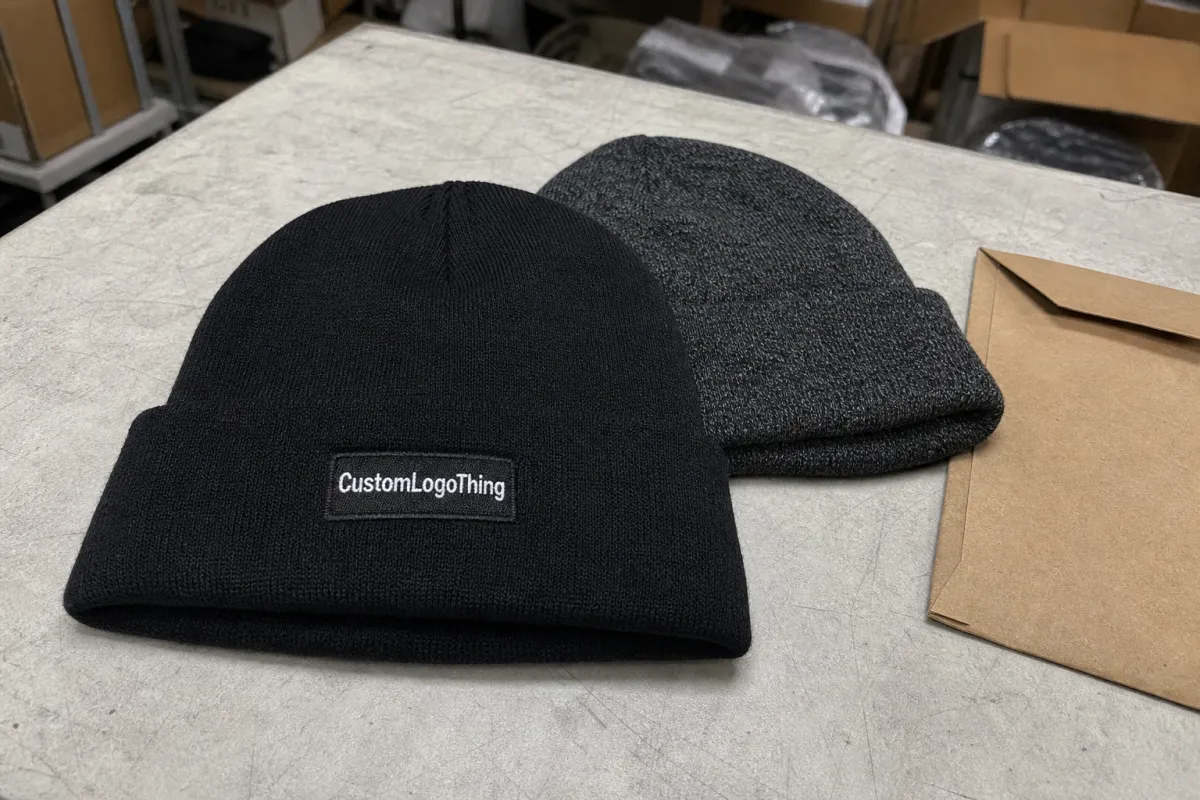
Flat branding is straightforward, but patch branding usually reads better on knitwear. A printed logo can disappear into the texture of the fabric, while a patch creates depth, contrast, and a cleaner retail look.
For cosmetics brands, that matters in photos and in gift boxes. A patch is easier to read at a glance, and it gives the beanie enough structure to feel more like apparel than giveaway merchandise. That small lift is often enough to justify the decoration choice.
There is also a practical retention benefit. A beanie that feels worth keeping gets worn more often, which extends brand impressions. If the print cracks or the decoration looks flat after a few uses, the lower upfront cost does not help much.
A small patch often does more branding work than a large flat print because it adds depth before anyone reads the logo.
Cosmetics buyers usually want the item to feel understated, not loud. A patch can sit quietly on the cuff and still look premium, which helps the beanie work across retail, gift-with-purchase, and employee programs without feeling overdesigned.
Standardizing patch size, placement, and color family across a brand program also keeps the line cohesive. Mixed decoration methods across similar items tend to make the whole bundle look less planned and more patched together.
Patch Materials, Knit Styles, and Placement Choices
Patch material sets the tone. A woven patch is best for fine detail and small logos. An embroidered patch adds texture and a more traditional feel, but it can soften thin lettering. A faux leather patch pushes the beanie toward a premium lifestyle look. A rubber patch reads sportier and more technical.
For cosmetics, the smartest choice is usually the one that matches the rest of the brand system. A skin-care line with muted packaging often looks better with a tonal woven patch than with a glossy, high-contrast badge. A color-forward makeup brand can usually handle bolder contrast or molded detail.
Placement matters as much as material. The front cuff is still the most reliable position because it creates a flat, visible stage. Side-cuff placement feels more editorial. Crown placement can work, but only if the knit holds shape and the logo remains readable when worn.
Beanie silhouette changes the result too. A rib-knit cuffed beanie offers the most stable surface. A slouch beanie feels softer, but the patch can sink into the fold line. Double-layer beanies are warmer and cleaner inside, though they add bulk and can make the decoration look smaller than intended.
- Woven patch: best for fine detail, clean lines, and a tidy premium look.
- Embroidered patch: best for texture-first branding and classic merchandising.
- Faux leather patch: best for a more elevated, lifestyle-driven finish.
- Rubber patch: best for bold outlines, contrast, and a sportier impression.
Fabric Specs That Affect Fit, Warmth, and Shelf Appeal
Fabric is where quotes start to drift if the brief is vague. “A nice beanie” is not a spec. The supplier is pricing yarn type, knit density, finish, stretch, and whether the piece needs lining or special dye control. Common starting points include 100% acrylic, recycled acrylic blends, wool blends, and fleece-lined builds.
Acrylic stays popular because it is consistent and widely available. Recycled acrylic blends support sustainability claims when the rest of the program does too. Wool blends usually feel more premium and warmer, but they sit higher on the price scale and can require tighter shade matching. Fleece lining adds comfort and winter performance, but it also adds bulk.
Fit is not a side note. A crown depth around 8.5 to 10 inches, a cuff height around 2.5 to 3.5 inches, and decent stretch recovery usually produce the most wearable result. Too shallow and the beanie rides high. Too tall and the patch drops lower than planned. Too loose and the knit collapses around the face.
For beauty brands, photo-readability and comfort usually matter more than extreme weather performance. That is why a medium-gauge knit often beats a heavy construction that swallows the logo or looks oversized in pictures.
Durability deserves direct questions. Ask about pilling resistance, colorfastness, and wash behavior. Dark colors are worth checking because dye transfer can ruin the premium look quickly. If the knit loosens after a few wears, the patch position shifts and the whole item starts to look tired.
For bundled shipments, the ISTA standards help when the order needs to survive transit inside cartons or gift sets. They do not choose the beanie for you, but they help prevent approval of a sample that arrives crushed or misshapen.
Cosmetics Logo Patch Beanies Unit Cost Review: Breakdown and MOQ
This is the part buyers need laid out clearly. Unit cost is never just the beanie itself. It usually includes the base knit, the patch, patch attachment, setup, packaging, and freight. Sometimes there is tooling. Sometimes there is a sample charge. Sometimes the quote looks low because one of those pieces is missing.
For a useful cosmetics Logo Patch Beanies Unit Cost review, split the order into base product, decoration, application method, one-time charges, packaging, and shipping. That structure makes it easier to compare suppliers without mixing different scopes.
Quantity changes the per-piece price because setup costs stay relatively fixed. A 300-piece order carries more overhead per unit than a 3,000-piece order, even if the product spec is identical. Buyers still pay for artwork approval, color confirmation, and sampling, and those costs spread out as volume grows.
MOQ also needs careful reading. One minimum may apply to stock beanies only. Another may apply to custom yarn colors. A third may apply to patch tooling. If mixed-color packing is requested, the minimum may shift again. Ask whether MOQ is per design, per color, or per ship-to location.
| Build option | Typical MOQ | Indicative unit cost at 500 pcs | Indicative unit cost at 5,000 pcs | What usually drives the price |
|---|---|---|---|---|
| Stock acrylic cuff beanie + woven patch | 100-300 | $2.20-$4.00 | $1.45-$2.70 | Simple knit, minimal patch complexity, lower setup load |
| Recycled blend + embroidered patch | 300-500 | $3.10-$5.25 | $2.05-$3.55 | Higher yarn cost and a more tactile decoration method |
| Wool blend + faux leather patch | 500-1,000 | $4.50-$7.50 | $3.20-$5.20 | Premium base, stronger presentation value, tighter sourcing |
| Fleece-lined + rubber patch | 500-1,000 | $5.00-$8.50 | $3.75-$6.10 | Extra material, tooling fees, and more assembly time |
These are working ranges, not promises. If a quote comes in well below them, ask what changed: patch size, yarn quality, freight, sample charges, or packaging scope. A cheap quote can still be valid, but only if the spec really matches.
Patch type changes cost in predictable ways. Woven patches are usually efficient at scale. Embroidered patches sit in the middle, though dense stitch counts and multiple thread colors can push them up. Molded rubber patches often add tooling fees, which hurt smaller runs more than larger ones. Faux leather patches can also price up quickly if the shape is custom or the backing needs reinforcement.
Packaging is a quiet margin driver. Individual polybags, size stickers, tissue, belly bands, and insert cards all add material and labor. For a PR mailer, that may be worth it. For a trade show giveaway, it may not be. The right package is the one that fits the channel.
Production Steps, Proof Approval, and Lead Time Expectations
A clean production sequence protects both timing and quality. The usual flow is artwork submission, digital proof, sample or mockup approval, knit production, patch production, patch attachment, inspection, and packing. Skip a step or rush approval, and the risk shifts back to the buyer.
Lead time only means something if the start point is clear. Some suppliers count from deposit receipt. Others count from proof approval. A few count only after sample sign-off. Those definitions are not interchangeable, so an “18-day” promise can quickly become 18 production days plus revisions plus shipping.
Stock beanies with standard patches can move relatively fast. Once custom colors, special patch shapes, or multiple revision rounds enter the job, the calendar stretches. A realistic production window for custom work often sits around 12 to 20 business days after final approval, with freight added separately.
Rush orders are possible, but only with a disciplined brief. Clean artwork, finalized colors, fixed size, and no late changes. The faster the schedule, the less room there is for indecision. Buyers who need the beanies for a launch should work backward from the delivery date, not forward from the order date.
Inspection should be described in plain language. Does the supplier check patch placement against a tolerance sheet? Do they reject loose threads, crooked seams, and shade drift? Is there an AQL standard, or just a visual check? Consistency matters when the beanies will be split across kits or sent to multiple locations.
What a Reliable Supplier Should Document Before You Order
A good supplier gives you enough paper trail to prevent disputes later. That usually means a spec sheet, patch mockup, color references, size notes, packing notes, and a pre-production sample if the order is custom. None of that is fluff. It is what keeps the job aligned with the brief.
Quality control matters more than vague reassurance. A cosmetics brand cannot afford patch drift, cuff height variation, or inconsistent logo sizing across a shipment. Buyers should ask for written confirmation on patch dimensions, placement location, yarn color, and tolerance range before bulk production starts.
Communication should also stay boring in the best way. One point of contact is easier to manage than five people answering different parts of the same question. Revision tracking should be written. Delivery terms should be clear. EXW, FOB, and DDP are not interchangeable, and the landed cost is still fuzzy if the supplier cannot explain the difference.
Repeatability is the real test. A low price on one run helps only if the next run can match it without drama. For cosmetic programs that reorder seasonally or across regions, the supplier should be able to reproduce the same patch, knit, and packing method without reopening every detail.
Check before you approve:
- Patch size, shape, and attachment method
- Beanie color reference and yarn specification
- MOQ by color, design, and packaging format
- Any tooling fees or one-time setup charges
- Packing method and shipment terms
Next Steps: Build a Quote That Gets Accurate Answers
If the goal is a quote that can survive internal review, send a complete brief the first time. Include the artwork file, target quantity, beanie style, patch type, placement, packaging requirements, and shipping destination. The more complete the request, the less room there is for guesswork.
Then compare only like with like: same knit, same patch material, same decoration size, same packing method, same freight terms. Otherwise one supplier will look cheaper simply because they left out the part that actually matters.
The landed cost should also be checked against the campaign calendar. Holiday bundles, launch kits, trade events, and salon promotions all have fixed dates. Saving a few cents per unit is not useful if the shipment misses the window.
A cosmetics Logo Patch Beanies Unit Cost review works best as a sourcing filter, not just a price hunt. It tells you whether the patch style, MOQ, fabric choice, and production schedule fit the brand objective. Lock the spec first, then compare supplier answers.
What drives cosmetics logo patch beanies unit cost up or down?
Quantity, patch complexity, and base beanie quality are usually the biggest factors. Packaging, freight, sample charges, and one-time setup costs can change the landed price quickly.
What MOQ is typical for logo patch beanies?
MOQ is often lower for stock colors and higher for custom yarn, custom dye, or specialty patch builds. Ask whether the minimum applies per color, per design, or per ship-to location.
How long does turnaround usually take after proof approval?
Custom runs commonly need around 12 to 20 business days after final approval, then shipping on top. Sampling, revision rounds, and freight should be built into the schedule from the start.
Can cosmetics logo patch beanies match packaging colors closely?
Yes, but the supplier should reference Pantone values for yarn, patch, and thread whenever possible. Knit materials usually allow a little more tolerance than patch components.
What should I include in a quote request for accurate pricing?
Send artwork, quantity, beanie style, patch type, placement, shipping address, and the required delivery date. A complete brief is the easiest way to get a real cost per piece instead of a rough guess.


