Buyer Fit Snapshot
| Best fit | Wholesale Recycled Paper Bags for Sustainable Brands projects where brand print, material claims, artwork control, MOQ, and repeat-order consistency need to be specified before quoting. |
|---|---|
| Quote inputs | Share finished size, material target, print colors, finish, packing count, annual reorder estimate, ship-to region, and any compliance wording. |
| Proofing check | Approve dieline scale, logo placement, barcode or warning zones, color tolerance, closure strength, and carton packing before bulk production. |
| Main risk | Vague material claims, crowded artwork, missing packing details, or unclear freight terms can make a low unit price expensive after revisions. |
Fast answer: Wholesale Recycled Paper Bags for Sustainable Brands should be specified like a repeatable production item. The safest quote records material, print method, finish, artwork proof, packing count, and reorder notes in one written spec.
Production checks before approval
Compare the actual filled-product size with the drawing, then confirm tolerance on folds, seals, hang holes, label areas, and retail display edges. Reserve space for logos, QR codes, warning copy, and material claims before decorative graphics fill the panel.
Quote comparison points
Review material grade, print process, finish, sampling route, tooling charges, carton quantity, and freight assumptions side by side. A quote is only useful when the supplier can repeat the same color, closure quality, and packing count on the next order.
Wholesale recycled paper bags do a rare thing in packaging: they simplify the waste stream, carry the product well, and still look like a deliberate brand choice. The assumption that recycled paper means flimsy packaging usually falls apart once you look at the spec sheet. A well-made wholesale recycled paper bag can feel sturdy in the hand, print cleanly, and use less virgin fiber than a standard retail bag. Brands moving away from plastic-heavy formats notice the difference immediately. Staff training gets easier. Shelf presentation becomes clearer. Reordering through Wholesale Programs stops feeling like a puzzle.
Buyers care about repeatability, and packaging rewards the same instinct. A fixed size, a consistent handle, and a print layout that works across seasons remove a surprising amount of friction. Wholesale recycled paper bags are not a decorative extra; they are a working format that has to survive carrying, stacking, transit, and daily customer handling. Custom Logo Things can supply that kind of format, but the real advantage comes from choosing a construction that performs the first time and keeps performing on every reorder. I have watched buyers pick the prettiest sample and then wince later when the handles start to complain under real load. That sort of mistake is avoidable, and kinda expensive.
Wholesale Recycled Paper Bags: The Fastest Way to Cut Packaging Waste
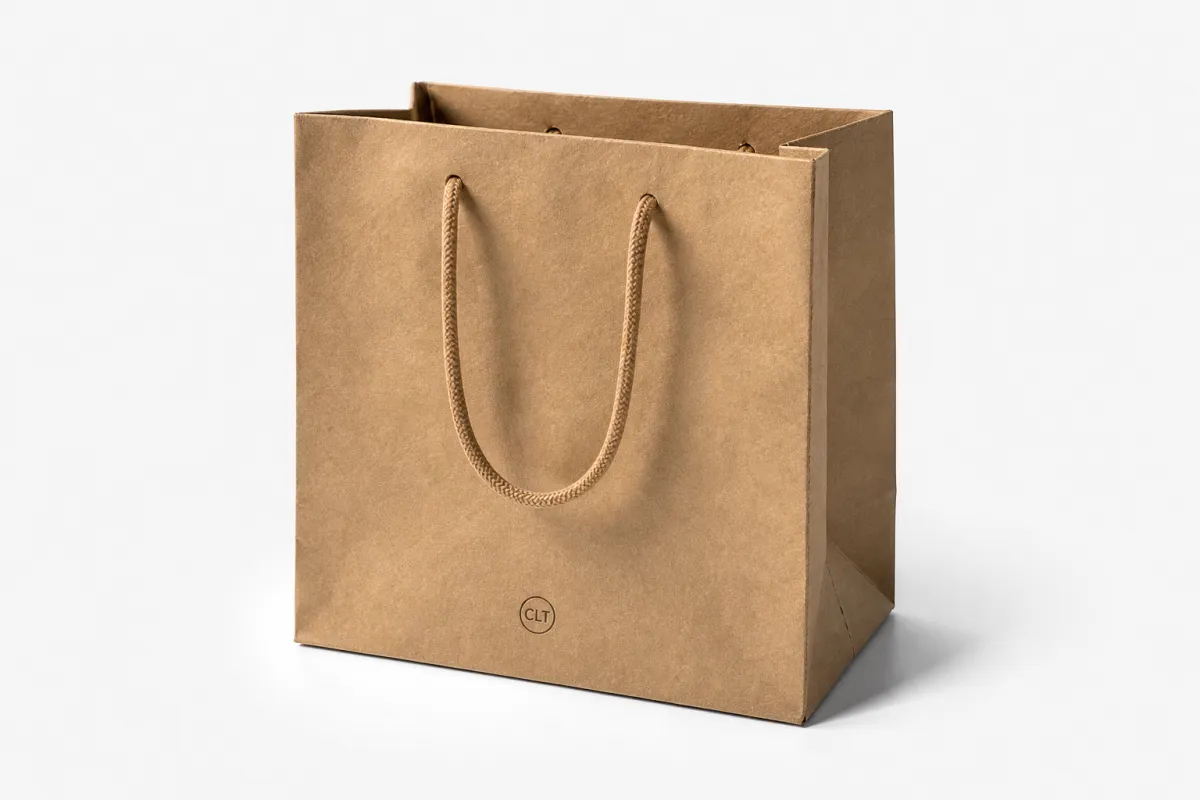
Packaging teams usually turn to recycled paper bags for a practical reason before a philosophical one: they want a cleaner material story without causing operational chaos. That is where wholesale recycled paper bags outclass small, one-off purchases. Standardize the size, standardize the build, and the warehouse has fewer SKUs to juggle. Forecasting gets sharper. Reordering becomes a matter of planning instead of patching. In seasonal retail, that difference shows up fast. A company either glides through the rush or starts hunting for a substitute bag on short notice.
The visual impact matters too. Mixed-material mailers may move products, but they rarely create the same shelf presence as a paper bag with a strong print. Recycled kraft brings texture into the picture. That texture can read as restrained, premium, or even editorial depending on the artwork. Minimal branding works. Bold marks work. One-color logos often work best of all. The point is not rustic charm. The point is that wholesale recycled paper bags can look polished, practical, and brand-ready at the same time.
The operational upside often gets underestimated. Once the format is approved, larger orders usually bring the unit price down while also reducing planning headaches. A retailer using wholesale recycled paper bags for apparel, gifting, and light takeaway can often unify packaging across departments. That cuts confusion for store teams and reduces the number of explanations needed for franchisees and customers. One bag, one set of instructions, one repeatable system. It sounds simple because it is. The hard part is choosing the bag well enough that the simplicity holds up once the doors open and people start grabbing product by the handful.
Wholesale recycled paper bags also support sustainability claims with a simpler story. That story still needs discipline. A paper-based bag is not automatically recyclable everywhere; coatings, inks, handles, and local collection rules all matter. Even so, paper is easier to explain than a laminated or mixed-plastic package. The job is not to chase the shiniest claim. The job is to choose a bag that balances load strength, print quality, and supply reliability.
"The best recycled bag is the one your team can reorder, your customer can carry comfortably, and your brand can explain without a script."
The wholesale piece is what makes the system hold together. A brand buying wholesale recycled paper bags is building a repeatable packaging habit, not just placing an order. The bag has to fit the product. The handle has to feel right. The print has to survive production. The base has to handle the way people actually carry bags, not the way they look under studio lighting. When those details align, packaging stops being a complaint and starts acting like infrastructure.
Some buyers begin with a trial order. Others ask for a spec sheet and a quote through the bulk ordering page before they approve artwork. Both approaches work if the decision is treated like sourcing, not decoration. Wholesale recycled paper bags reward careful planning because the right specification reduces waste in the supply chain as well as in the bin. That is the bit people miss when they think paper packaging is just a nicer wrapper.
Product Details: What Wholesale Recycled Paper Bags Include
At a basic level, wholesale recycled paper bags are made from recycled kraft or recycled paperboard stock and converted into a retail or takeaway format. The technical details decide how far the bag goes. Paper content, thickness, gusset style, handle choice, and bottom reinforcement all change how the bag behaves in the hand. Two samples can look almost identical and still perform very differently once they are loaded.
The build components are easy to separate on paper and hard to ignore in use. Recycled kraft content affects the fiber feel and the print surface. Paper thickness changes tear resistance and the way the bag stands on a counter. Gussets determine internal volume, which is why a narrow bag can look tidy while failing to fit folded apparel or boxed goods. Flat handles usually cost less and pack compactly. Twisted handles often feel better in hand and carry a more premium retail tone. Reinforced tops and glued bottoms add durability, especially if the customer reuses the bag after the first trip home.
Wholesale recycled paper bags show up in several common settings, and each one needs a different mix of size and strength:
- Retail shopping bags: Usually need a clean print surface, dependable handle strength, and room for folded apparel or boxed goods.
- Takeaway packaging: Often benefits from a wider base, paper that handles light moisture better, and an easy carry style.
- Event giveaways: Tend to prioritize presentation and light-to-medium carrying capacity.
- Apparel packaging: Often favors clean lines, moderate paper weight, and a refined print finish.
- Light grocery use: Calls for a stronger bottom, wider gusset, and handles that do not dig into the hand.
Printing is another major decision point. A one-color logo can be crisp and cost-efficient, especially on uncoated recycled kraft where the paper tone already carries visual interest. Full-color branding creates room for photography, gradients, and more detailed marks, though it also adds cost and tightens artwork control. In many cases, wholesale recycled paper bags look strongest when the print is simple and confident. Heavy ink coverage can fight the material instead of working with it.
Color tone matters too. Recycled paper often carries a warmer, more textured look than virgin stock. That is not a flaw. For many brands, the texture is the visual cue that makes the bag feel honest. If a bright white field is central to your identity, ask for bleached or coated options and accept the trade-off that comes with them. If your palette is grounded in natural tones, the recycled surface may already be doing the visual work you need.
For buyers comparing wholesale recycled paper bags across suppliers, one useful question is whether the bag can be customized without redesigning the whole structure. The answer is usually yes. Size, handle type, color, bottom style, print coverage, and recycled content percentage can often be adjusted independently. That flexibility is why the format works for both smaller chains and larger rollouts. The brand stays recognizable while the internal dimensions or strength level shift to match different product lines.
If you need a claim-backed sustainability story, ask for recycled content documentation and sourcing support. Third-party verification matters more than polished marketing language. The FSC chain-of-custody framework is a useful reference point for traceability, while the EPA recycling guidance is a reminder that end-of-life performance depends on composition and local collection rules. Those references help separate real packaging claims from vague ones.
Wholesale recycled paper bags sit in the middle ground between function and brand expression. They are not as fragile as many buyers assume, and they are not as simple as a plain commodity bag. They are a configurable packaging product. Treat them that way and you can tune them to the exact use case instead of accepting an off-the-shelf compromise. In a lot of sourcing conversations, that is where the lightbulb goes on.
Specifications for Wholesale Recycled Paper Bags
The fastest way to compare wholesale recycled paper bags is to focus on the specs that affect actual performance. Paper weight, width, gusset depth, height, handle reinforcement, bottom construction, and print coverage all shape how the bag behaves in a customer's hand. A pretty sample that fails under load is not a win. A plainer bag that carries well and prints cleanly often becomes the better purchase.
Paper weight is usually the first number buyers ask about, and with good reason. A 70gsm recycled kraft bag may work for lightweight garments or giveaways, but it will not feel like a 100gsm or 120gsm version. Heavier stock often improves tear resistance and hand feel. There is a ceiling, though, where extra paper adds cost without solving the real problem. In practice, many wholesale recycled paper bags for retail use land somewhere between 80gsm and 150gsm depending on the product weight and the brand standard.
Handle reinforcement deserves the same attention. A twisted paper handle can work well for apparel or light retail goods, but the attachment points must be strong enough for repeated lifting. Flat handles are often efficient for takeaway formats or lower-cost programs. Heavier goods call for reinforced handle patches or a stronger top fold. These details look small in a spec sheet and matter a great deal in the customer's hand.
The bottom construction is another place where the bag proves itself. Square-bottom construction is common for wholesale recycled paper bags because it helps the bag sit upright and hold boxy products. A glued bottom with an extra fold or reinforcement strip can add durability. If the bag is meant for food service or heavier gifts, that lower panel should be part of the conversation from the beginning.
Here is the spec checklist I would want before approving a production run:
- Paper weight: Often 70gsm to 150gsm, depending on load and presentation goals.
- Bag width: Must fit the product without forcing the gussets open too far.
- Gusset depth: Controls internal volume and stability.
- Height: Should leave enough headroom for closure, handles, and branding.
- Handle style: Flat, twisted, or reinforced paper handles change both cost and feel.
- Bottom structure: Crucial for heavier or boxed goods.
- Print coverage: One-color, two-color, or full-color layouts should match the budget and design intent.
- Recycled content: Ask for the percentage and documentation, not just a verbal claim.
Performance thresholds are more useful than vague labels like "strong" or "premium." A boutique apparel bag may need to carry a folded sweater, scarf, or box without creasing too badly. A takeaway bag may need a wider base and better moisture tolerance. A gift bag may need a cleaner print finish and a more upright profile. Wholesale recycled paper bags should be selected by use case, not by the size chart alone.
Print quality shifts with the substrate too. Recycled stock can show slight variation in tone, fiber speckling, or ink absorption. That is normal. It can even improve the look if the design is built for it. If your logo depends on fine-line work or exact color matching, request proofing and a sample run. The gap between digital artwork and a converted paper bag is where many orders go wrong. A good supplier should review line thickness, small text, and coverage limits before production begins.
Compliance and testing deserve a direct discussion. If the bag will carry food, ask about food-contact suitability, inks, and adhesives. If the bag is part of a parcel kit, ask for distribution testing that reflects transit stress. Wholesale recycled paper bags are not shipping cartons, but the same logic applies: the pack has to survive the trip it will actually take. If a bag will be stacked, dropped, or carried roughly, a supplier familiar with ISTA methods should be able to think in those terms.
It also makes sense to ask for test data or production references tied to ASTM paper methods where relevant. Paper basis weight, tensile performance, and tear resistance are not abstract details. They explain why one bag stays intact and another splits at the handle. Buyers who specify wholesale recycled paper bags with those numbers in mind usually avoid expensive mistakes. That is the difference between a procurement decision and a guess.
The biggest mistake is still the same one: ordering by appearance first and by use case second. The right paper weight, the right gusset, and the right handle style do more for a brand than an elaborate print that only looks convincing in the proof. Wholesale recycled paper bags work best when the spec matches the contents and the carry distance.
Cost, Pricing & MOQ for Wholesale Recycled Paper Bags
Price in wholesale recycled paper bags is driven by a handful of clear variables. Bag size matters because larger formats use more paper and more labor. Paper weight matters because heavier stock costs more and raises freight weight. Handle style matters because reinforcement and assembly take time. Print colors matter because each extra color adds setup and production complexity. Finish matters because coatings, embossing, and special inks increase cost. Order volume matters because larger runs typically reduce the unit price. Shipping distance matters because paper products are bulky enough that freight changes the math quickly.
MOQ, or minimum order quantity, works the same way. Lower minimums help smaller buyers test demand, validate a design, or launch a new line without overcommitting cash. Higher minimums usually unlock better pricing and more flexibility on print, size, or packaging format. If you are buying wholesale recycled paper bags for the first time, the smartest MOQ is not the smallest one on offer. It is the lowest order that still reflects the real spec you plan to repeat.
Comparing quotes only works when the spec is the same. Two suppliers can quote "recycled paper bags" and still be pricing very different products. One may include heavier stock, stronger handles, and a better bottom fold. Another may quote a lighter bag with less print coverage and simpler packing. The cheapest line item can become the most expensive choice once damage, freight, and reorders are counted. That is why wholesale recycled paper bags should be compared on landed cost, not just factory price.
| Option | Typical Spec | Best Use | Relative Cost at 5,000 Pieces | Buyer Notes |
|---|---|---|---|---|
| Plain recycled kraft bag | 80gsm-100gsm, no print, flat or twisted handle | Events, inserts, simple retail use | $0.12-$0.22 per unit | Lowest complexity; useful for testing a size before printing |
| Custom printed recycled bag | 100gsm-120gsm, 1-2 color logo, reinforced bottom | Retail shopping and branded takeaway | $0.18-$0.35 per unit | Most common choice for wholesale recycled paper bags |
| Heavy-duty reinforced bag | 120gsm-150gsm, stronger handles, larger gusset, higher coverage print | Apparel, premium gifts, heavier carry loads | $0.28-$0.48 per unit | Better carry performance; freight may rise because the bags weigh more |
Those figures are directional, not fixed. Smaller orders can cost more per unit. Larger orders can lower the price, but only if the artwork, structure, and packing format stay simple. A high-coverage print or special finish can push a quote above the range above even at volume. That is why a clean quote for wholesale recycled paper bags should list paper weight, handle type, print count, packing count, and delivery terms on the same page.
Another way to judge value is to ask what happens after the first order. If the bag is easy to reorder, easy to store, and easy to explain to staff, the true cost is lower than a cheaper bag that creates confusion. If the bag arrives with inconsistent sizing or weak handles, the hidden cost shows up in complaints and wasted inventory. The better question is not "What is the lowest number?" It is "What is the lowest total cost to keep this packaging format reliable?"
For wholesale recycled paper bags, freight deserves special attention because paper is bulky and weight adds up fast. A quote that looks attractive ex-freight may lose its appeal once it crosses a warehouse or regional boundary. Ask whether the price includes carton packing, palletization, and shipping support. If you are comparing multiple suppliers, compare the same incoterms or delivery terms. That is the only honest way to compare landed cost.
One more point: the cheapest quote is often the one with the least clarity. A precise quote should state what is included, what is not, and what could change after proof approval. That protects both sides. It also makes repeat orders easier because the approved spec is documented. Wholesale recycled paper bags become much easier to manage when pricing is tied to a stable technical brief.
Process, Timeline & Production Steps for Wholesale Recycled Paper Bags
The purchase process for wholesale recycled paper bags is usually straightforward, but the details still matter. First comes the brief: size, use case, target quantity, print artwork, and delivery deadline. Then comes the proof stage, where the supplier confirms the specification, checks the artwork, and flags problems before production starts. After that, Pricing and MOQ are confirmed, materials are sourced, production is scheduled, and the bags move through printing, converting, inspection, packing, and freight booking. Each step can affect quality and timing.
- Share the basic spec: bag dimensions, handle style, recycled content target, and intended product load.
- Submit artwork: logo files, print colors, placement, and any brand restrictions.
- Review the proof: check sizing, line thickness, color notes, and placement before approval.
- Confirm MOQ and pricing: make sure the quote matches the exact spec you approved.
- Move into production: material sourcing, printing, converting, and quality checks follow the approved proof.
- Book freight: packing format and delivery terms should be confirmed before the bags leave the facility.
Timeline depends heavily on complexity. Simple unprinted wholesale recycled paper bags usually move faster because there is less artwork review and fewer production variables. A custom printed run takes longer, especially if the design has multiple colors, tight registration, special finishes, or a new size that has not been produced before. Large quantities also add time because the run itself is longer and the packing stage is more demanding. In practical terms, a straightforward order may move in roughly 12-15 business days after proof approval, while more complex custom orders can take longer. Material availability and shipping method can shift that window.
Production checkpoints should be visible rather than hidden. A good supplier will review files before the run begins. That review should catch problems like low-resolution art, tiny type that will not print cleanly, and colors that may shift on recycled stock. Then comes proof approval. After approval, the supplier should be able to tell you whether the material has been sourced, whether the printing schedule is locked, and whether the packing plan matches the final shipment. With wholesale recycled paper bags, that transparency reduces the chance of avoidable surprises.
Quality control is not a single step at the end. It should happen at several points. Material checks happen before conversion. Print checks happen during the run. Dimensional checks happen after cutting and folding. Final packing checks help ensure that cartons are counted correctly and pallets are labeled the way your warehouse needs them. If your order is high visibility, ask how the supplier handles deviation reports. A vague answer is not reassuring when handle attachment or print shade moves out of range.
Communication often makes the biggest difference. A reliable supplier should provide status updates, ship dates, and a clear warning if artwork, material, or inventory issues affect the schedule. That matters especially for wholesale recycled paper bags because these orders often tie to store openings, seasonal launches, promotions, and product drops. Missing the delivery window can cost more than paying a slightly higher unit price for a supplier who communicates well.
One practical observation stands out: buyers sometimes ask for speed first and clarity second. That usually creates problems. A better sequence is to lock the dimensions, choose the bag construction, approve the proof, and then push the timeline. A sharp spec is faster to produce than a fuzzy one. Wholesale recycled paper bags are easier to manufacture when the front-end decisions are clean.
If you are working with a supplier like Custom Logo Things, ask for a sample pack, a proof review, and a landed-cost estimate before production starts. Those three steps expose most hidden issues early. They also make repeat orders easier because the approved reference is already in place. A purchase that starts with structure and proofing usually ends with fewer surprises than one that starts with a rush order.
Why Choose Us and Your Next Steps
The strongest reason to choose wholesale recycled paper bags through a focused supplier is consistency. Not a flashy claim. Consistency. The size should match the product every time. The handles should feel the same from batch to batch. The print should stay within a predictable range. The cartons should arrive labeled and packed the way your team expects. Buyers remember those details because they either create work or remove it.
Service matters almost as much as the bag itself. Sample support reduces the risk of ordering a bag that looks right on screen but fails in person. Artwork checks catch print issues before they become waste. Responsive quoting makes it easier to compare landed cost. Realistic lead times keep launches on schedule. Those are the traits that separate a usable sourcing relationship from a frustrating one. If a supplier cannot talk through paper weight, handle reinforcement, and packing format, that is a warning sign for any wholesale recycled paper bags order.
For buyers comparing vendors, I suggest a short checklist instead of a long theory session:
- Total landed cost: Include freight, packing, and any setup charges.
- Minimum order: Make sure the MOQ fits your launch or replenishment plan.
- Recycled content: Ask for the percentage and any supporting documentation.
- Bag strength: Confirm paper weight, handle reinforcement, and bottom construction.
- Production transparency: Confirm proofing, inspection, and delivery milestones.
That checklist works because it keeps the comparison grounded in facts. A supplier can promise a "green" solution all day, but if the bag tears, the print is off, or the freight kills the margin, the packaging does not work. Wholesale recycled paper bags should be chosen the way any serious packaging asset is chosen: by cost, performance, and repeatability. Sustainability belongs in the decision, but it is not the only variable.
One useful comparison is between a low-cost recycled bag and a better-specified one. The lower-cost option can be fine for a single event or a short trial. For a retail program, the better-controlled bag often saves money over time because it reduces rework and customer complaints. That is especially true when the bag needs to carry products from a store, through a parking lot, and into a consumer's car. A bag that survives that route is worth more than a bag that only survives the invoice.
If your brand wants a clean purchasing path, start with the basic brief: logo files, target bag dimensions, expected order volume, and delivery deadline. That gives the supplier enough information to quote properly and avoid guesswork. Then ask for the physical details that matter most: paper weight, handle style, recycled content, and print method. With those in hand, wholesale recycled paper bags become much easier to source, compare, and reorder.
For the next step, use the Wholesale Programs page to request a quote, share your artwork, and confirm whether your preferred bag size can be produced at the quantity you need. The tighter the brief, the better the answer. If you want the decision to hold up in real use, not just on a spec sheet, start with a sample, check the handles, and test the loaded bag before you place the full order. That is the simplest way to avoid a costly surprise later on. And yes, it is boring. It also works.
How much do wholesale recycled paper bags usually cost?
Pricing depends on size, paper weight, handle style, print colors, and order volume. For many retail-style runs, wholesale recycled paper bags can land roughly in the $0.12-$0.48 per unit range depending on the specification and quantity. Higher quantities usually reduce the unit cost, but freight and packing should stay in the comparison. Ask each supplier for the same spec so you can compare true landed cost instead of a headline number.
What is the typical MOQ for wholesale recycled paper bags?
MOQ varies by size, print complexity, and manufacturing method. Plain bags often allow lower minimums than fully custom printed bags, and simpler constructions usually have more flexibility. If you are testing demand, start with the lowest MOQ that still reflects the real bag structure you plan to use. That way your test order gives you useful information about wholesale recycled paper bags rather than a special-case sample.
Are wholesale recycled paper bags strong enough for retail use?
Yes, if the paper weight, bottom construction, and handle reinforcement are matched to the load. Retail apparel, gifts, and light groceries are common fit cases for wholesale recycled paper bags. For heavier products, ask for a sample test before placing a large order. A 100gsm or 120gsm bag with a properly reinforced handle usually performs very differently from a lighter bag with the same printed design.
How long does production take for custom wholesale recycled paper bags?
Lead time depends on artwork approval, material availability, order size, and print complexity. Simple orders move faster than multi-color or specialty-finish projects. In many cases, a straightforward run can move in about 12-15 business days after proof approval, while more detailed jobs take longer. Confirm production, packing, and freight timing separately so the delivery date for wholesale recycled paper bags is realistic.
Can I get printed wholesale recycled paper bags with recycled content?
Yes, custom printing is standard on many recycled paper bag formats. You can usually choose one-color or full-color branding depending on budget and design goals. Ask for material and ink details if you need a specific sustainability or compliance claim. A printed bag with recycled content can be a strong fit for wholesale recycled paper bags programs when the spec is clearly documented.
For brands that care about presentation, cost control, and a cleaner material story, wholesale recycled paper bags are a practical purchase, not a symbolic one. The right spec will carry the product, support the brand, and keep reorder planning sane. That is the real test, and it is the standard I would use before placing the next order for wholesale recycled paper bags. If you remember only one thing, make it this: choose the bag that survives the real carry, not the one that only looks good in the mockup.

