Buyer Fit Snapshot
| Best fit | Custom Drawer Boxes Supplier Quote projects where brand print, material claims, artwork control, MOQ, and repeat-order consistency need to be specified before quoting. |
|---|---|
| Quote inputs | Share finished size, material target, print colors, finish, packing count, annual reorder estimate, ship-to region, and any compliance wording. |
| Proofing check | Approve dieline scale, logo placement, barcode or warning zones, color tolerance, closure strength, and carton packing before bulk production. |
| Main risk | Vague material claims, crowded artwork, missing packing details, or unclear freight terms can make a low unit price expensive after revisions. |
Fast answer: Custom Drawer Boxes Supplier Quote: Pricing and MOQ should be specified like a repeatable production item. The safest quote records material, print method, finish, artwork proof, packing count, and reorder notes in one written spec.
Production checks before approval
Compare the actual filled-product size with the drawing, then confirm tolerance on folds, seals, hang holes, label areas, and retail display edges. Reserve space for logos, QR codes, warning copy, and material claims before decorative graphics fill the panel.
Quote comparison points
Review material grade, print process, finish, sampling route, tooling charges, carton quantity, and freight assumptions side by side. A quote is only useful when the supplier can repeat the same color, closure quality, and packing count on the next order.
A Custom Drawer Boxes supplier quote is not a sticker price. It is a spec check with consequences. Two boxes can look identical in a mockup and still land at very different numbers once board thickness, insert style, print coverage, finish, and packing terms are pinned down.
That shows up fast in luxury cosmetics, fragrance, gift sets, and launch kits. A drawer that opens cleanly, a ribbon pull that sits straight, and a rigid board that does not buckle in transit all affect the final price. Leave those details vague and the quote will drift, sampling will drag, and purchasing will end up staring at surprise charges like somebody forgot how packaging works.
From a packaging buyer's point of view, the quote is not just a number. It is a decision tool. A useful quote tells you what structure is being priced, what materials are included, how much the print setup costs, whether inserts are part of the build, and what delivery timing looks like. That is how you compare suppliers without pretending to guess.
A vague quote is cheap for exactly one minute. Then the missing details show up in sampling, revisions, or freight.
Why a Custom Drawer Boxes Supplier Quote Changes Fast
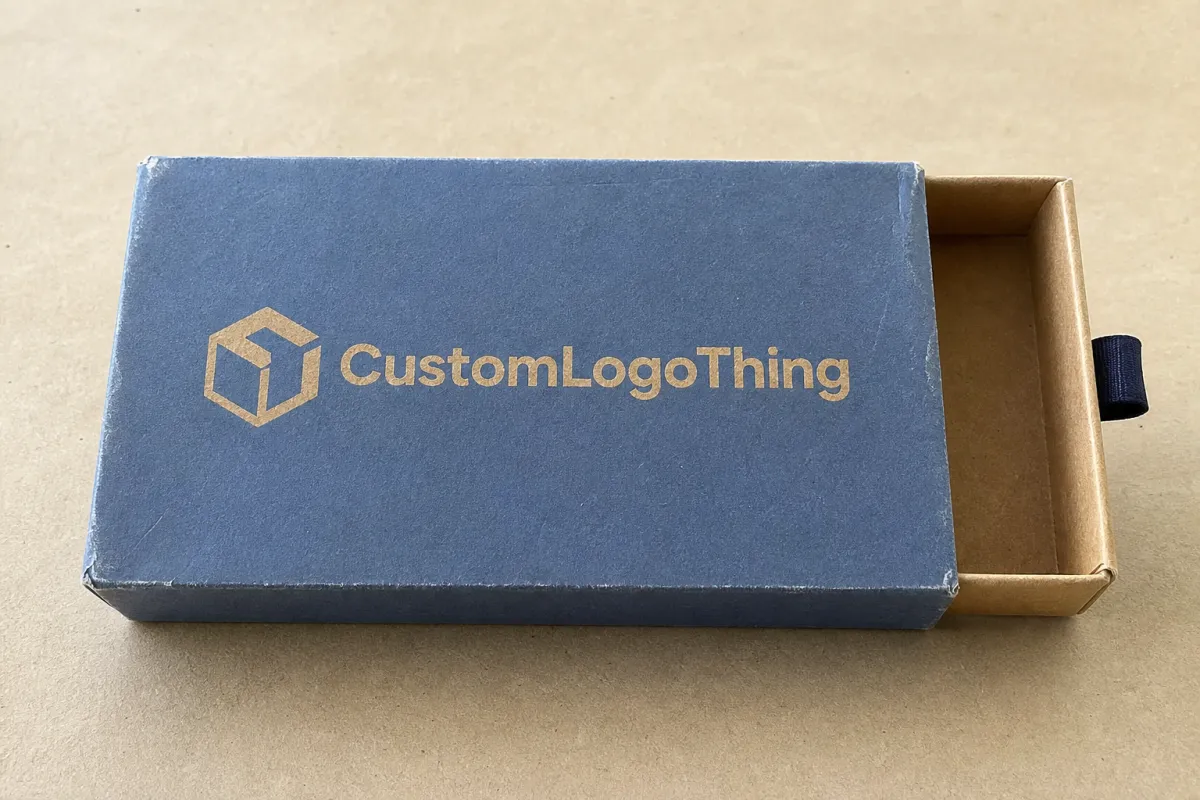
The same-looking drawer box can swing sharply in price because the structure does more work than a folding carton. A rigid drawer box usually has an outer sleeve, an inner tray, a pull tab or ribbon, and often an insert or wrapped board. Every layer adds material, labor, and setup time. If one supplier assumes a 2mm greyboard with paper wrap and another prices a 3mm board with laminated art paper, those are not competing quotes. They are different products.
That gap shows up most often in branded packaging for premium retail programs. A skincare brand may want a matte exterior with foil stamping. A gift set may need a deeper tray, tighter fit, and a printed interior for presentation. A drawer that holds a glass bottle securely is built differently from a drawer that holds a light sample kit. Board grade, tolerances, and insert complexity all move with the product.
Early quoting saves time because it cuts the back-and-forth. It also reduces the risk of a sample that looks polished but fails on fit. A complete quote makes internal sign-off easier because the buyer can show what is included, not what somebody hopes is included. Sales teams like that because the budget stays aligned with the package. Finance likes it because the landed cost is less likely to drift like a bad rumor.
If you need matching Custom Printed Boxes or other branded packaging pieces in the same launch, ask the supplier to price the drawer box as part of the full packaging design set. Coordinated buying usually exposes cost tradeoffs that a single-box quote hides. That is not magic. It is just what happens when one supplier sees the whole packaging job instead of one isolated line item.
Good suppliers will also tell you where the quote can move if the brief changes. A pull ribbon might be included in one estimate and priced as an add-on in another. Inner printing may be treated as standard by one factory and a premium upgrade by another. If the supplier does not spell that out, the quote is not really a quote. It is a guess with a logo on it.
Drawer Box Product Details That Affect the Quote
Before anyone can price a drawer box properly, they need to know what is being built. The outer sleeve, sometimes called the shell, is the visible part that slides over the inner tray. The tray holds the product. The pull tab or ribbon gives the user a way to open the box. Inserts keep the item from rattling around. The wrap material, usually art paper, specialty paper, or printed paperboard, shapes the final look and feel.
That structure sounds simple. It is not. A rigid drawer box with a wrapped greyboard shell feels very different from a paperboard drawer box that is lighter and more economical. A premium laminated version may add soft-touch film, spot UV, or textured paper for a richer handfeel. Those upgrades do more than improve presentation. They change the quotation because they affect machine time, finishing steps, and material waste.
Here is the practical breakdown buyers usually need.
- Rigid drawer boxes use thick board and are common for luxury cosmetics, watches, candles, and gift sets.
- Paperboard drawer boxes are lighter, easier to ship, and better for mid-range retail packaging.
- Premium laminated versions add a more polished appearance with film, foil, or specialty paper wrap.
- Custom inserts can be EVA foam, molded pulp, paperboard dividers, or die-cut card stock.
Optional upgrades often move the quote more than buyers expect. Foil stamping adds setup and material. Embossing or debossing adds tooling and press time. Soft-touch lamination adds a finishing pass and changes the tactile feel. Magnetic closures are more common in rigid setup boxes than standard drawer formats, but some premium builds combine the two. Each choice affects cost and the final buyer experience.
Intent matters too. A box designed for shipping protection needs a tighter internal fit and usually stronger board than a box meant for shelf display only. A subscription packaging program may prioritize weight control and repeatability. A gift presentation box may care more about reveal, drawer glide, and finish texture. That is why one structure does not fit every use case. The box has to match the product and the channel.
If you are comparing drawer options against other Custom Packaging Products, keep the use case front and center. A drawer box for high-end retail packaging should not be judged by the same rules as a plain mailer or a simple folding carton. Structure drives price, and use drives structure. That is the whole chain.
One more detail that affects pricing is tolerance. A tight-fitting drawer for a glass bottle or a cosmetic kit may need more sample iteration than a loose presentation tray. If the box has to slide smoothly but still hold the product firmly, the supplier has to account for product weight, paper stretch, board compression, and final wrap thickness. That is not overengineering. That is avoiding a return problem later.
Material sourcing also matters. A recycled board with visible fibers, an FSC-certified wrap, or a specialty stock with metallic ink behaves differently on press and during assembly. Some buyers care mainly about look. Others need a paper trail for compliance or brand claims. Both are valid, but they do not cost the same.
Specifications You Must Send for an Accurate Quote
If you want a useful quote, send complete specs. Not a vibe. Not a mood board with a logo floating in white space. Exact dimensions are the starting point: length, width, and height of the product, plus the outer box size if you already know it. Add product weight because that tells the supplier whether the tray, insert, and board thickness need to carry more load.
For a clean custom drawer boxes supplier quote, the supplier should also know the structure details. Tell them whether you need an outer sleeve, a pull tab, a ribbon, a finger notch, or an insert. State the board thickness you want, or ask for a recommendation if you do not know it yet. Common rigid board ranges sit around 1.5mm to 3mm, while lighter paperboard options may sit below that depending on the build.
Artwork matters as much as size. Send logo files in a usable format, note the number of print colors, and say whether the design covers the full outside, just a panel, or also the inside. Foil stamping, embossing, spot UV, matte lamination, gloss lamination, and soft-touch all need to be clear up front. If the supplier has to guess, they will price for the safer, more expensive version or come back with a revision later. Either way, you lose time.
Quantity tiers are essential. A 500-unit run and a 5,000-unit run are not the same math, even with the same box design. Setup cost gets spread across fewer pieces at low volume, which pushes unit price up. At higher volume, the per-box cost can drop, but freight, packing, and inventory carrying cost start to matter more. Ask for tiered pricing if there is any chance of a reorder.
Here is a simple spec checklist you can use before requesting a quote.
- Exact product dimensions and weight
- Target outer box size, if known
- Board thickness preference
- Wrap material or paper type
- Print coverage and logo placement
- Finish choice, such as matte, gloss, foil, or soft-touch
- Insert type and product fit requirement
- Quantity tiers and target delivery date
Tolerances deserve attention too. If the packaging must fit a tightly sized product, say so. If the box will ship in a mailer or need to stack on retail shelves, say that too. Those constraints change the build. A supplier cannot price a drawer box responsibly without knowing whether it has to protect glass, survive distribution, or simply look good on display.
Sampling rules should be clear from the first conversation. Ask whether the supplier will send a prototype, a pre-production sample, or a full sample made with the final materials. These are not identical. A prototype can prove size and structure. A final sample can reveal actual print, wrap texture, and finish. If you are launching a premium product, that difference is worth the extra step.
One more point that buyers often skip: delivery terms. If you need the boxes packed a certain way, shipped to multiple locations, or labeled for a specific warehouse, include that in the quote brief. Packaging design is not only structure and print. It is also how the goods get to your team without turning into an admin headache.
If compliance matters, say it early. If the paper needs FSC certification, if inks must meet a certain standard, or if the box has to pass distribution testing, those requirements belong in the first email, not after the sample is approved. Late requirements are the fastest way to create a quote that is technically correct and practically useless.
Pricing, MOQ, and Unit Cost Breakdown
Drawer box pricing is built from a handful of moving parts: material, printing, finishing, insert complexity, packing, and freight. If the quote looks strangely low, one of those parts is probably missing. If it looks strangely high, the supplier may be pricing conservatively because the brief left too much open. Either way, the buyer needs a clean breakdown.
MOQ, or minimum order quantity, matters because setup costs do not shrink just because the run is small. A factory still has to prepare the board, set the print, cut the wrap, assemble the tray, and inspect the finish. Spread those steps over 500 units and the unit cost jumps. Spread them over 5,000 units and the per-box price drops. That is simple math, even if procurement teams wish it came with a nicer soundtrack.
To compare quotes properly, separate unit cost from total order cost. A low unit price can hide expensive sampling, freight, or packaging labor. A higher unit price might still be the better buy if it includes more of the work and reduces your risk. That is why landed cost, not headline cost, should drive the decision.
| Option | Typical MOQ | Typical Unit Price Range | Best For | Main Tradeoff |
|---|---|---|---|---|
| Economy paperboard drawer box | 500-1,000 units | $0.85-$1.80 | Light retail packaging, sample kits, lower-weight products | Lower perceived value and less rigid protection |
| Mid-tier rigid drawer box | 1,000-3,000 units | $1.90-$4.20 | Branded packaging, cosmetics, candles, gift sets | Higher material cost and more setup time |
| Premium laminated drawer box | 3,000+ units | $4.50-$9.00+ | Luxury retail packaging, high-value product packaging, launch kits | More finishing steps, tighter QC, higher freight weight |
Those ranges are typical, not universal. Print coverage, board grade, insert style, and finish can move the number in either direction. A small box with heavy foil and custom foam can cost more than a larger plain drawer. A cleaner build with limited coverage and a simple paper insert can push the number down fast. The structure alone does not decide price. The full specification does.
Watch for hidden cost buckets. Some quotes include assembly, but not final packing. Some include basic artwork setup, but not complex color matching. Others exclude freight until the final invoice. That is why you ask for an itemized quote. If a supplier refuses to break out the line items, you are not looking at a transparent quote. You are looking at a number designed to survive one meeting and fail the next one.
For buyer comparison, use a simple framework:
- Economy for basic shelf packaging and lower-pressure launches.
- Mid-tier for polished branded packaging with a better tactile finish.
- Premium for luxury programs where presentation and drawer action carry real brand weight.
If your product is fragile, heavy, or part of a premium retail packaging line, do not pick the cheapest option just because the unit number looks friendly. Cheap packaging that fails in transit costs more than a slightly better box. That is true whether you sell skincare, jewelry, or curated gift sets.
Compare the same board thickness, finish, insert type, and delivery terms across every quote. If those are different, the unit price is noise.
It also helps to ask the supplier how the quote changes at future reorder quantities. A good partner will show you where the next pricing step drops. That matters for package branding programs that start with a pilot run and scale later. If the supplier cannot explain the breakpoints, they probably do not have a clean pricing model.
For more general packaging reference points, industry groups like ISTA are useful when you need distribution testing guidance, and FSC matters if paper sourcing and chain-of-custody claims are part of your brand requirements. Those details are not decoration. They shape buyer trust, especially in retail packaging and higher-value product packaging programs.
A final pricing note: a quote can look attractive because it omits something obvious to the factory and expensive to the buyer. The most common example is hand assembly for inserts or special packing instructions for fragile products. If your team has ever received boxes packed in a way that created warehouse rework, you already know why this matters.
Process and Timeline for a Drawer Box Quote
A clean drawer box quote usually follows a predictable path. First comes the inquiry. Then the supplier reviews the specs, checks structure, and confirms whether the requested materials and finish are practical. After that, you get pricing. If the design is new or the build is premium, sampling follows. Only after the sample is approved should production lock in.
The quote stage itself can move quickly if the brief is complete. A straightforward custom drawer boxes supplier quote often comes back in 1 to 3 business days once the supplier has dimensions, artwork, quantity, and finish details. If the design is complex, expect more back-and-forth. That is not a delay so much as the supplier making sure the price is real.
Sampling takes longer. A simple sample may be ready in about 5 to 10 business days after approval of the artwork and structural details. A premium sample with special paper, foil, embossing, or a custom insert may take 10 to 15 business days, sometimes longer if revisions are needed. Production then usually runs around 12 to 25 business days after sample approval, depending on order size and finishing load.
Speed depends on the buyer as much as the factory. Complete specs, ready artwork, and quick feedback shorten the schedule. Late revisions, missing dielines, or changes after sample approval slow everything down. If someone changes the insert after the structure is approved, the box may need to be reworked. That is not a surprise. That is just packaging work behaving like packaging work.
Here is the order of operations most suppliers should follow.
- Inquiry and quote request
- Spec review and clarification
- Itemized pricing
- Structural or print sample
- Proof approval
- Production
- Final inspection and shipment
Communication at each stage should be specific. A supplier should tell you when pricing is fixed, when the sample is due, and when production starts. If they are vague about those points, ask directly. Buyers should never have to guess whether a quote is still open, whether a sample includes final materials, or whether production can start without another approval round.
If the drawer box will travel through distribution, ask whether the sample or shipping test follows recognized procedures, including methods used in ISTA testing. If the project is centered on paper sourcing, recycled content, or responsible forest claims, that needs to be part of the brief too. A good supplier should not treat those items as side notes.
Lead time also changes with season. Launch periods, holiday packaging, and end-of-quarter pushes can stretch schedules. That is why a buyer should build margin into the plan. A tight calendar and a premium build are a bad combination unless the supplier has already seen the artwork and structure. Rushing custom printed boxes usually makes them more expensive and less elegant.
One practical habit helps more than most teams expect: freeze the specification before the quote is shared internally. If finance, brand, and operations each see a different version of the box, the approval cycle turns messy. One brief. One sample standard. One set of assumptions. That is how you keep the process from wandering.
Why Choose Us for Your Drawer Box Supply
What buyers need from a drawer box supplier is not mystery. They need consistency, clear quoting, stable materials, and packaging that looks premium without wasting budget. That sounds simple because it is. The hard part is doing it every time. A supplier that understands structure, print, and finishing together can keep the quote aligned with the final box instead of forcing the buyer to reconcile three different versions of reality.
In-house control matters here. When structural design, print, and finishing are handled with fewer handoffs, there is less chance of the brief drifting. The quote stays closer to the actual build. Sample feedback gets resolved faster. Production errors drop. That helps buyers who do not want to explain the same drawer dimensions to three different people while the deadline gets shorter.
It also helps when the supplier can adjust specs before mass production. A strong partner will tell you if a 3mm board is overkill for the product weight, or if a lighter build will still hold up on shelf. They will flag an insert that is too loose, a ribbon that feels flimsy, or a finish that looks expensive in a sample but chips during handling. That kind of feedback saves money because it prevents the wrong box from being ordered in bulk.
For buyers building a full launch kit, matching drawer boxes with other Custom Packaging Products is often smarter than sourcing each piece separately. The design language stays aligned, the measurements stay consistent, and package branding looks intentional instead of patched together. One supplier handling the box family can also cut the number of revisions. That alone is worth something.
There is a difference between a vendor that sells boxes and a partner that helps you make better packaging decisions. The vendor sends a number. The partner asks the right questions: What is the product weight? Does the box need to ship in a mailer? Is the customer opening it in store or at home? Does the finish need to survive fingerprints? Those are the questions that lead to a useful quote and a better final package.
We also know that budget pressure is real. Not every project needs foil, embossing, or a heavy rigid shell. Sometimes the right answer is a clean paperboard drawer box with a disciplined print layout and a simple insert. Other times, the launch calls for a heavier build because the product value justifies it. Honest quoting is about fitting the structure to the job, not pushing the priciest version by default.
That is especially true for gift sets and luxury cosmetics, where presentation is part of the product. The drawer action, the fit, and the finish all contribute to the purchase experience. If one of those elements feels cheap, the whole box feels cheap. Buyers know that. Customers know that. The box does not get a free pass because the logo is nice.
A good supplier also understands what happens after the box leaves the factory. If the product will sit in a warehouse for weeks, slide through distribution, or be opened under bright retail lights, the build needs to account for that. Printing, coating, adhesive choice, and insert tolerances all play a role. That is the kind of practical detail that separates a usable quote from a nice-looking PDF.
Next Steps to Request a Better Drawer Box Quote
Before you ask for pricing, build a short brief. Keep it practical and specific. You do not need a novel. You need enough detail for the supplier to price the right structure without guessing. That usually means dimensions, quantity tiers, product weight, finish choices, insert needs, and a target deadline. If you already know the unboxing style you want, mention that too.
A useful quote request should also ask for itemization. That way you can see what Drives the Cost. Ask whether the price includes sampling, design adjustments, final packing, and freight. If it does not, ask for those numbers separately. Comparing only unit price is a classic way to compare the wrong thing.
For higher-value launches, ask for a sample or prototype before mass production. That is especially smart if the drawer box has a tight fit, a custom insert, or a premium finish that needs to match the brand look closely. A sample costs less than a wrong production run. That is not cleverness. That is just avoiding an expensive mistake.
Here is the short checklist I would send to any supplier before requesting a quote.
- Exact product dimensions
- Order quantity and tier targets
- Product weight and fragility
- Board thickness or structure preference
- Print coverage and logo files
- Finish requests, including foil or soft-touch
- Insert type and fit requirements
- Delivery date and shipping destination
If you want a clean buying conversation, use Contact Us with the checklist above and ask for an itemized custom drawer boxes supplier quote. That gives the supplier enough information to price the box you actually want, not a guessed version of it. It also saves time on both sides, which is usually what everyone says they want before the revisions start.
One last point: compare landed cost, not vanity price. Freight, packing, testing, and sample policy can change the real cost of a project more than a small unit price difference ever will. A quote only works if it reflects the full job. That is why a good custom drawer boxes supplier quote should be detailed, direct, and tied to the exact spec you plan to order.
If you are sending quotes to multiple suppliers, use the same brief every time. Same dimensions. Same finish. Same insert. Same delivery term. That discipline makes the numbers comparable and keeps the conversation honest. If one supplier comes back cheaper because they quietly changed the board or excluded freight, you will catch it before the order, not after.
Frequently Asked Questions
What should I send to get a custom drawer boxes supplier quote?
Send exact dimensions, quantity, product weight, material preference, and whether the box needs an insert or pull ribbon. Include artwork files, print colors, finish requests, and your target delivery date so the quote is usable instead of vague.
Why do drawer box quotes vary so much between suppliers?
Quotes change with board grade, print method, finishing options, and how much labor the structure requires. Freight, sample policy, and MOQ also affect the final number, so two supplier quotes can look similar and still be far apart in real cost.
How does MOQ affect a custom drawer box quote?
A higher MOQ usually lowers unit cost because setup, tooling, and labor are spread across more boxes. If your order is small, expect a higher per-box price and ask whether tiered pricing is available for future reorders.
How long does a drawer box quote and sample usually take?
A clean quote can come back quickly when the specs are complete and the artwork is ready. Sampling and production take longer, especially if the structure is new, the finish is premium, or revisions are needed after proof review.
How can I compare custom drawer box supplier quotes correctly?
Compare the same board thickness, finish, insert type, print coverage, and delivery terms across every quote. Check whether the quote includes sampling, packing, and freight so you are comparing real landed cost, not just a headline unit price.
What is the most common mistake buyers make?
They ask for pricing before the structure is fixed. That usually leads to a low number that changes later, which creates friction with finance and delays approval. A complete brief saves more time than a rushed quote ever will.
If you need a fast, usable custom drawer boxes supplier quote, send the dimensions, quantity tiers, board spec, finish, insert, artwork, and target delivery date in one message. Then ask the supplier to confirm what is included and what is excluded before you compare numbers. That is how you get a quote that can actually be approved, ordered, and turned into a box worth shipping.

