Wine Club Box Sleeves cost less than building a fully custom shipper in most club programs, yet the real decision is rarely about the cheapest line item. The better question is whether the sleeve gives the winery enough visual lift, member excitement, and shipping discipline to justify the spend on every release. In a club environment, that question has to hold up quarter after quarter, not just on a pretty mockup.
That question shows up quickly in a working club operation. The inner carton already does the heavy lifting for protection. The sleeve adds branding, seasonal messaging, and a more polished handoff at a cost that can still fit inside a controlled packaging budget. For buyers comparing options, wine club box sleeves cost is really a discussion about tradeoffs: presentation, repeatability, and how much structure the pack needs in transit.
From a packaging buyer's point of view, the sleeve is doing two jobs at once. It sells the story before the member opens the box, and it keeps that story from feeling generic while the package moves through a carrier network. That is why wine club box sleeves cost cannot be separated from materials, fit tolerance, print coverage, and the shipping environment. A clean rendering is not the same thing as a sleeve that runs smoothly across hundreds or thousands of club shipments.
There is a pricing reality that gets overlooked. A sleeve often costs far less than rebuilding an entire mailer or rigid box from scratch, especially when the underlying shipper already performs well. That is one reason wine club box sleeves cost has become such a useful buying conversation for wineries, ecommerce teams, and direct-to-consumer marketers trying to stretch every packaging dollar without flattening the brand.
The simplest way to think about it is this: the sleeve is a branding layer, not a structural reinvention. The budget drivers are different, the lead times are often shorter, and the quantity breakpoints can be more forgiving than a full custom carton. Even so, wine club box sleeves cost can climb quickly if the design calls for specialty finishes, multiple sizes, or a low-volume order that cannot absorb setup charges efficiently. That part is kinda easy to miss until the quote lands.
Wine Club Box Sleeves Cost: The Hidden Win in Club Shipping
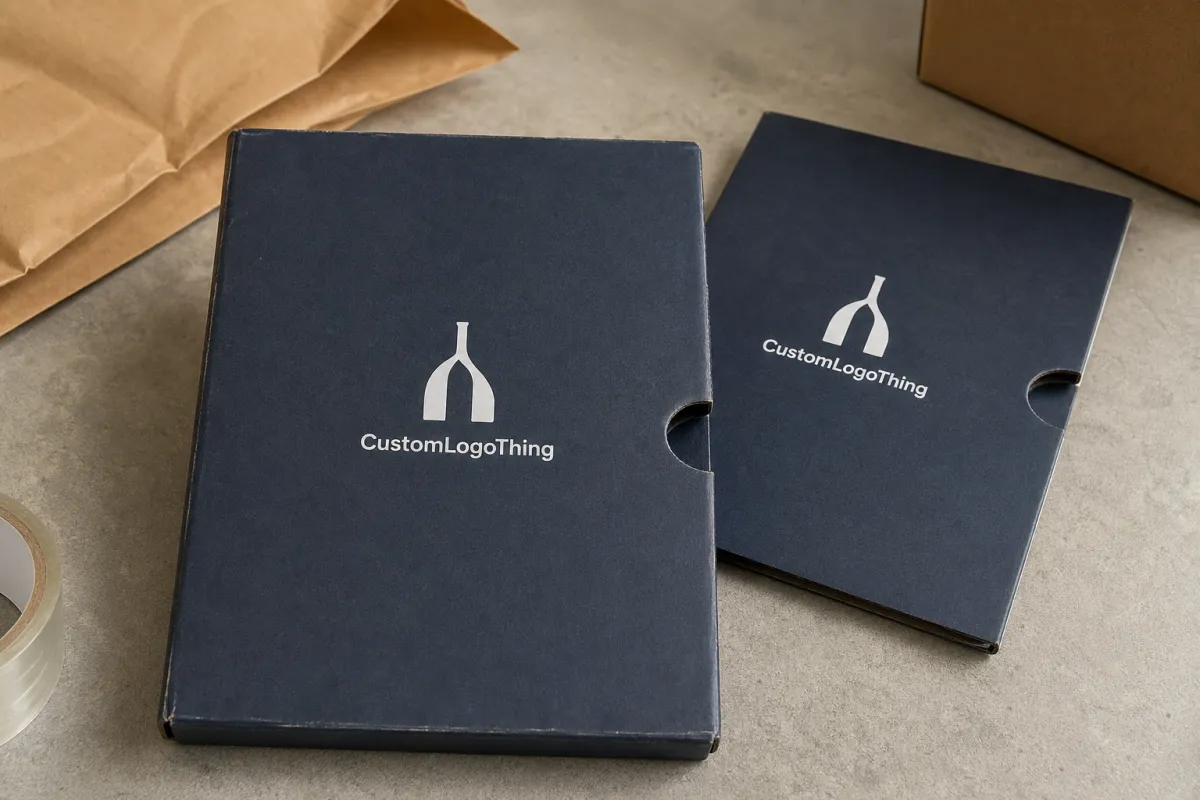
For recurring shipments, wine club box sleeves cost tends to be easiest to justify when the winery already has a proven inner shipper. The sleeve gives the operation a visible upgrade without changing the entire pack-out system. That matters because the shipping carton is usually chosen first for compression strength, bottle protection, and packing efficiency. The sleeve adds the marketing value after those basics are already solved.
That is the hidden win. A club manager can keep the same inner dimensions, the same fill method, and often the same pallet pattern, while still delivering a package that feels more curated. Compared with full custom box construction, wine club box sleeves cost is often the lower-risk route because the expense is concentrated in print, board, and finishing rather than in a complete structural redesign.
In practice, the sleeve also helps the team communicate the theme of a shipment before the box is even opened. Limited-release wines, seasonal selections, and holiday clubs all benefit from that first visual cue. A member who receives a box that looks considered and deliberate is more likely to perceive higher value, even if the carton underneath is a standard mailer. That is why wine club box sleeves cost should be viewed as part branding, part retention tool.
From a comparison standpoint, the sleeve sits in a useful middle zone. A simple label on a corrugated shipper is cheap but often underwhelming. A fully custom-printed shipper can look exceptional, yet it can also raise tooling, freight, and inventory complexity. Wine club box sleeves cost usually lands between those two extremes, which is exactly why many wineries use sleeves for quarterly clubs, gifting programs, and welcome packs.
One more practical point: sleeves can support price tiers. A winery may not need to redesign the whole fulfillment workflow to launch a premium membership level. Instead, the club can use a more refined sleeve, a heavier board, or a specialty finish to signal a higher-value tier while keeping the shipper underneath stable. For many operators, that is the smartest way to control wine club box sleeves cost while still making the package feel distinct.
A sleeve should earn its place by improving the member experience and keeping the line moving. If it only looks nice in a rendering, it is probably overbuilt for the job.
A well-designed sleeve can create a stronger premium impression for a fraction of the cost of reworking the whole box system. That does not mean every sleeve is cheap. It means wine club box sleeves cost is usually easier to defend when the structural shipper already meets transit requirements and the sleeve carries the brand narrative.
What Wine Club Box Sleeves Do for Club Shipments
A sleeve is a branded wrap or outer layer that fits around a mailer, folding carton, or corrugated shipper. It typically goes on after the product is packed and the inner carton is closed. That placement matters, because the sleeve becomes the visible face of the shipment without interfering with the primary structure of the box. When buyers evaluate wine club box sleeves cost, they are really evaluating how much presentation can be added after the functional part of the pack is already complete.
The practical benefits are easy to see. Members notice better shelf appeal at pickup or delivery. Customer service teams get a cleaner brand story on unboxing. Marketing teams gain a surface for release names, tasting notes, QR codes, and seasonal art. In all three cases, wine club box sleeves cost is tied to real business outcomes, not just decoration.
Sleeves work especially well for quarterly shipments, gift memberships, holiday assortments, and limited drops that need a stronger sense of occasion. They also make sense when a winery wants to refresh the look of the club without changing the underlying box dimensions. That is why wine club box sleeves cost often looks attractive to operations teams: it offers visual change without forcing a rebuild of the whole packaging spec.
There is a structural reason sleeves are popular. The shipper underneath is doing the hard work, which means the sleeve can stay thinner, lighter, and easier to print than a fully engineered box. That lower material burden often supports better wine club box sleeves cost at scale, particularly for clubs that ship the same format again and again.
Used well, a sleeve can also support inventory discipline. A winery can hold one core carton style and change the message by swapping sleeve artwork across releases. That reduces the chance of getting stuck with obsolete printed boxes and gives the team more flexibility for promotions. In that sense, wine club box sleeves cost should be compared not only to the look of the package, but also to the cost of carrying multiple box SKUs.
For clubs that need a premium feel but operate with tight fulfillment labor, sleeves can be a smart compromise. They preserve the pack-out rhythm, add a visible design layer, and avoid the complication of replacing a shipper that already passes drop and crush expectations. That is why many wineries treat wine club box sleeves cost as an efficiency question as much as a marketing question.
If you are trying to decide whether a sleeve is the right move, ask a simple operational question: does the current box protect the wine well enough? If the answer is yes, then the sleeve can carry more of the branding load. If the answer is no, then wine club box sleeves cost will not rescue a weak structural pack.
- Best use cases: recurring club drops, welcome kits, gift packs, and limited releases.
- Less effective: shipments that need major structural reinforcement or heavy cushioning upgrades.
- Buyer benefit: faster brand refresh without replacing the full shipper program.
Wine Club Box Sleeves Specifications That Change Cost
The fastest way to understand wine club box sleeves cost is to break it into specification variables. Board stock, caliper, print coverage, finishing, die-cut complexity, and multi-panel construction all affect the final quote. A sleeve printed on a standard SBS or C1S board with simple artwork will usually price differently from one that uses a heavier stock, metallic ink, or specialty coating.
Size is one of the biggest cost drivers because it affects layout efficiency and waste. A sleeve that fits a single bottle-count format is easier to run than one that must work across three different club configurations. If the winery ships two-bottle, four-bottle, and mixed assortment packs, wine club box sleeves cost may rise because each size needs its own die, proofing cycle, and inventory slot.
Print choices matter more than many buyers expect. A one-color or two-color layout keeps press time and setup charges lower. Full-bleed graphics, large solid backgrounds, and multiple special effects usually increase wine club box sleeves cost because they demand tighter control on ink density, drying, and registration. If the art direction is busy, the packaging budget usually feels it.
Finishing can push pricing up in a hurry. Soft-touch lamination, foil stamping, embossing, UV spot coating, and textured varnishes all add appeal, but they also add setup time and processing steps. In many club programs, the smartest spend is not the fanciest finish. It is the finish that supports the brand and holds up in transit without inflating wine club box sleeves cost beyond the target range.
Fit tolerance is another detail that gets overlooked. A sleeve that is too loose looks cheap. One that is too tight can slow packing and crease during application. Good dieline work minimizes that risk, especially for clubs that use a mix of carton suppliers. The tighter the tolerance requirements, the more likely wine club box sleeves cost will reflect prepress attention and proofing effort.
Humidity and refrigeration also matter. Wine does not always leave the warehouse in a dry, perfectly controlled environment. If the sleeves will live in a cool cellar, a refrigerated staging area, or a humid loading dock, board choice and coating selection need to account for that exposure. Otherwise, wine club box sleeves cost may look low on the quote and high in the form of warped panels or scuffed surfaces later.
Artwork complexity can quietly become the largest program expense. The sleeve itself may be simple, but if each release needs fresh graphics, a new SKU count, revised copy, and multiple approval rounds, the labor burden grows. That is why wine club box sleeves cost should be viewed as a program cost, not just a per-piece number.
For teams building a long-term club calendar, the most useful strategy is to standardize what can be standardized. Keep the structure stable. Reuse dimensions. Minimize unnecessary finishes. That is how wineries preserve better wine club box sleeves cost without sacrificing the premium feeling that justifies the sleeve in the first place.
For shipping performance, many packaging teams also reference test protocols from ISTA, and for fiber sourcing they may ask for an FSC-certified option when the supply chain requires documented responsibility. Those details do not automatically lower wine club box sleeves cost, but they do help buyers compare suppliers on more than artwork alone.
Wine Club Box Sleeves Cost, MOQ, and Quote Drivers
Wine club box sleeves cost follows a familiar volume curve. As quantity rises, the unit cost usually falls because tooling, plates, proofs, and press setup are spread across more pieces. The curve is not linear, though. A 500-piece run and a 5,000-piece run do not behave the same way, especially if the print method or finishing changes.
MOQ is one of the first questions buyers ask, and for good reason. A lower MOQ can help a winery test a new membership tier or seasonal design without carrying too much inventory. Yet wine club box sleeves cost usually rises when the run is small because setup charges do not shrink much just because the quantity does. A short order can be sensible and still price higher per piece.
Quote drivers are usually predictable once you know what to ask. Material, print method, number of SKUs, finishing, freight, and repeatability all affect the quote. If a supplier can rerun the exact same file, the exact same size, and the exact same board on a future order, wine club box sleeves cost often improves because the second run is easier to prepare and approve.
Tooling fees are another line item to watch. A custom die has to be made, and that cost may be separate from the print estimate. Some vendors also add setup charges for plates or press calibration. When buyers compare quotes, they should check whether tooling fees, setup charges, sample charges, and delivery are included. Otherwise, the apparent low price can distort wine club box sleeves cost in a hurry.
The most useful buying habit is to compare quotes on identical specs. Same dimensions. Same stock. Same finish. Same quantity. Different assumptions will create fake savings. One vendor may quote a plain sleeve on a lighter board, while another includes a heavier caliper and more detailed print prep. The real answer to wine club box sleeves cost only appears when the line items match.
| Option | Typical MOQ | Typical Cost per Piece | Best Fit | Common Cost Drivers |
|---|---|---|---|---|
| Simple custom sleeve, one-color print | 250-500 | $0.65-$1.20 | Seasonal club drops, test runs | Tooling fees, short-run setup charges |
| Full-color sleeve on standard board | 500-1,500 | $0.90-$1.75 | Recurring memberships, gift packs | Artwork complexity, print coverage, proofing |
| Premium sleeve with specialty finish | 1,000+ | $1.40-$2.80 | High-value tiers, holiday programs | Foil, soft-touch lamination, embossing, extra handling |
| Large-volume repeat program | 5,000+ | $0.18-$0.48 | Established clubs with stable SKU plans | Bulk pricing, lower setup burden, repeat tooling |
That table is not a promise. It is a practical range. Actual wine club box sleeves cost depends on what the sleeve has to do, how it prints, and how often the design changes. A program that reuses the same dieline and artwork pattern usually gets better economics than a club that changes structure every release.
There is also a hidden quantity effect. If a winery orders three separate SKUs in small volumes, each one may trigger its own setup charges and minimum thresholds. In that case, the combined program cost can exceed the price of a larger, more standardized order. This is why buyers should think about wine club box sleeves cost across the full club calendar, not just one shipment at a time.
For many wineries, the best financial decision is not the cheapest sleeve on paper. It is the sleeve that can be repeated, stored, and reordered without surprise cost spikes. That is the point where wine club box sleeves cost becomes manageable instead of reactive.
Production Process and Timeline for Wine Club Box Sleeves
The production sequence usually starts with an estimate and a dieline review. The buyer sends dimensions, bottle count, and artwork intent. The supplier checks fit, stock, and print method before moving into proofing. For wine club box sleeves cost, this early stage matters more than many teams expect because small specification errors can trigger revisions that add time and money later.
From there, the job moves into artwork prep and proof approval. This is where delays often happen. Missing measurements, late copy changes, or color corrections can hold the project up for days. A club schedule tied to a specific ship week leaves little room for error, so wine club box sleeves cost should be paired with a realistic lead-time plan.
Simple repeat runs can move faster than first-time orders. If the sleeve has already been approved, the exact same board and die may be available for rerun, which shortens the path from quote to delivery. New sizes, specialty finishes, and heavier customization add steps. That is why wine club box sleeves cost and turnaround time often move together: the more custom the job, the more places there are for delay.
Most teams should ask for a pre-production sample or press proof if the sleeve will be used in a recurring club program. A sample catches fit issues, print contrast problems, and folding concerns before the full run is made. That may add a small amount of time upfront, but it can protect the broader program from costly rework. In other words, a little more time spent upfront can save a lot more later, and that matters when wine club box sleeves cost is tied to a fixed launch date.
Planning inventory is just as important as production speed. Many clubs ship on a fixed cadence. If the sleeves arrive late, the entire fulfillment calendar can slip. If they arrive too early, the winery may need storage space and inventory tracking. A clean forecast lets the buyer balance wine club box sleeves cost against warehouse reality, not wishful thinking.
Typical timelines vary by complexity, but a straightforward printed sleeve often fits into a 12-15 business day window after proof approval, while more complex jobs can stretch longer. That range is not universal. It depends on press schedule, finishing, freight method, and how quickly the artwork clears. Still, it gives buyers a useful benchmark when comparing wine club box sleeves cost with the actual shipping calendar.
There is a practical lesson here: the cheapest quote is not the best quote if it misses the club ship date. A modest premium for faster turnaround, better communication, or a pre-booked production slot can be worth more than shaving a few cents off the piece price. For wineries, the real cost of a late sleeve is not just the sleeve. It is the downstream damage to the whole program, which is why wine club box sleeves cost should always be judged alongside schedule reliability.
Why Choose Us for Wine Club Box Sleeves
Custom Logo Things is built for packaging buyers who need a clear answer, not a foggy estimate. For wine club box sleeves cost, that means dimensional guidance, straightforward communication, and quotes that reflect the actual build rather than a vague placeholder. The strongest suppliers do not just sell print. They help a buyer avoid the common mistakes that turn a sleeve job into a budget problem.
Experience matters because sleeve programs fail in predictable ways. The wrong board makes the piece feel flimsy. The wrong fit slows fulfillment. The wrong finish adds expense without adding value. A good packaging partner should be able to flag those issues before a purchase order is issued, which makes wine club box sleeves cost easier to forecast and easier to defend internally.
There is also value in repeat-order consistency. A club program usually needs a second run, then a third. If the first order is not documented carefully, those later runs become messy. Clear specs, saved dielines, and stable print settings help preserve the original look and keep wine club box sleeves cost from drifting upward on reorders.
Buyers also benefit from a supplier that can support both short runs and ongoing schedules. Some wineries need a test quantity first. Others need a recurring annual program. The right partner should be able to handle both without changing the answer every time. That flexibility matters because wine club box sleeves cost is often tied to a launch plan, not a one-off purchase.
We also know that wine packaging is not only about visual appeal. It is about handling, freight, and the reality of club fulfillment. That is why we focus on practical specs, clear proofing, and honest range setting. If a finish is likely to raise setup charges without improving member perception, that should be said plainly. The best outcome is not the most expensive one. It is the one that gives the right wine club box sleeves cost for the job.
For wineries and beverage brands, that kind of discipline is what separates a decent quote from a dependable program. It keeps the conversation grounded in unit cost, MOQ, tooling fees, and bulk pricing rather than wishful thinking. And for an operation that ships every quarter, that grounding is worth a lot more than a flashy mockup.
What to Send for a Fast Wine Club Box Sleeves Quote
If you want a quick answer on wine club box sleeves cost, send the facts first. The most useful quote starts with final dimensions, bottle count, substrate preference, artwork files, print colors, quantity range, and delivery location. If any of those details are missing, the estimate will have to assume too much, and assumptions are where pricing usually goes sideways.
It helps to include the club ship date and the repeat schedule. A one-time holiday run is not the same as a recurring quarterly program. Suppliers can price and plan more accurately when they know whether the job is a single release or part of a standing calendar. That detail can make a real difference in wine club box sleeves cost because repeatability often lowers friction.
If the sleeve has to fit an existing box or mailer, send a sample carton or exact dieline measurements. Photos are useful, but they do not replace dimensions. A small mismatch can create wrinkles, loose panels, or application problems on the fulfillment line. Those errors show up fast in the final wine club box sleeves cost if the sleeve must be reworked.
Ask for at least two or three quantity tiers. That gives you a practical view of bulk pricing and helps you see where the unit cost starts to flatten. A 500-piece quote and a 2,500-piece quote tell different stories. A 5,000-piece quote often tells the most useful one. The goal is not to chase the lowest printed number. The goal is to understand how wine club box sleeves cost behaves at the volumes your club can actually support.
Here is a simple checklist you can send with the request:
- Finished size: exact dimensions of the sleeve and the box it wraps.
- Board preference: SBS, C1S, or another specified stock.
- Artwork status: final files, rough concept, or revision stage.
- Print requirements: one-color, two-color, CMYK, foil, or spot coating.
- Quantity range: low, target, and high-volume tiers.
- Delivery details: warehouse address and any receiving constraints.
That package of information gives the quoting team enough to work with and keeps the estimate grounded in real production variables. It also makes comparisons easier if you are collecting bids from more than one vendor. The more closely the quotes match on specs, the more accurately you can judge wine club box sleeves cost.
Send the specs, quantity, and timeline, and you will get a far more useful answer than a generic estimate. If the goal is to place an Order With Confidence, the right starting point is a clear brief, a defined volume, and a realistic schedule. That is how you control wine club box sleeves cost instead of reacting to it, and it usually saves a few headaches too.
How much do wine club box sleeves cost per unit?
Unit cost depends on quantity, board stock, print coverage, finishing, and how many setup steps the job requires. Small runs usually cost more per sleeve because plate, die, and press setup are spread across fewer pieces. The fastest way to compare quotes is to match the same size, stock, and finish across vendors, then look closely at wine club box sleeves cost as a true apples-to-apples number.
What MOQ should I expect for wine club box sleeves?
MOQ varies by material and print method, but custom sleeves usually start higher than a stock insert or label order. Lower MOQs are possible, but they often raise the unit price because production setup is the same. Ask whether the MOQ changes if you use standard dimensions or repeat a previously approved layout, because that can improve wine club box sleeves cost more than a design tweak.
What details do you need to quote wine club box sleeves cost accurately?
Provide finished dimensions, bottle count, substrate, print colors, finish, and total quantity. Include artwork status, delivery address, and whether the sleeve will run once or on a recurring schedule. If the sleeve wraps an existing carton, send a sample box or exact dieline measurements. Those details are the difference between a rough estimate and a dependable wine club box sleeves cost quote.
How long does production usually take for wine club box sleeves?
Timeline depends on proofing speed, artwork readiness, and whether the order uses standard or custom tooling. First-time jobs usually take longer than repeat runs because dimensions and print setup must be approved. Build in extra time before club ship dates so there is room for revisions and freight, especially if wine club box sleeves cost is being compared against a fixed launch window.
Can wine club box sleeves lower packaging spend compared with a full custom box?
Yes, sleeves often deliver a premium branded look without replacing the entire shipper structure. They can be a smart middle ground when the inner carton already performs well in transit. The savings are strongest when the sleeve design is simple and the quantity is large enough to spread setup costs. In that setup, wine club box sleeves cost usually beats a full box rebuild on both budget and speed.

