Wine Club Box Sleeves Material Guide for Better Buying
The wine club Box Sleeves Material guide matters more than most buyers expect, because the sleeve is often the first physical cue a customer gets before they ever lift a bottle out of the carton. A stock that curls at the corners, scuffs in transit, or prints with muddy color can make a carefully built wine club feel cheaper than it is, and packaging rarely gets a second chance once that first impression lands. For most programs, the practical starting point is a 16-24 pt paperboard sleeve, typically around 250-400 gsm, chosen to match the box size, print coverage, and shipping route.
I have watched otherwise strong club programs lose a little of their polish because the sleeve stock was chosen for appearance alone and not for the route it had to survive. That is a frustrating thing to see, since the fix is usually pretty practical: match the board to the box, the print to the surface, and the surface to the trip. In real sourcing terms, that usually means deciding early whether you need coated SBS for sharp graphics, kraft for a natural look, or recycled board with a verified content claim such as GRS if sustainability is part of the brief.
Wine club sleeves do more than decorate a carton. They guard the printed surface, help the outer pack survive stacking and conveyor contact, and carry the brand story through the rougher parts of shipping. The right material keeps color sharp and edges clean; the wrong one can make a premium shipment look rushed, even when the rest of the pack was handled with care. A sleeve printed on 24 pt C1S or C2S board usually holds richer solids and cleaner type than an uncoated sheet, while a 300-350 gsm kraft paper wrap can deliver a more tactile, lower-sheen finish.
From a buyer's point of view, the material choice shapes four things at once: stiffness, print quality, crease behavior, and fit. A thicker board may look luxurious on paper, yet it can crack on the fold or fight the wraparound if the dieline is too tight. A lighter stock can lower cost, though that saving disappears quickly if humidity warps the sleeve or abrasion turns a fresh print dull before it reaches the customer. A practical spec sheet usually includes caliper, basis weight, grain direction, coating type, and finish, because those five items determine most of the real-world behavior.
The practical tradeoff shows up in every wine club Box Sleeves Material guide. Heavier boards and specialty finishes usually improve presentation, but they also raise unit cost, can stretch lead time, and often need more careful die-cutting. Cheaper paper can still perform well, provided the box size, shipping lane, and print coverage all work in its favor. Packaging has too many moving parts to treat any one spec like a magic fix. If the job needs foil, embossing, or soft-touch lamination, expect extra setup and a tighter inspection window before release.
A sleeve can look perfect on a flat proof and still fail in a parcel system. Shipping is the real test, not the mockup.
One detail that gets missed often: the sleeve and the base box have to behave like a pair. A rigid shipper, a telescoping carton, or an insert-heavy box all change the way the sleeve sits, creases, and grips the package. That is why the wine club box sleeves material guide should begin with the actual box and the actual use case, not just the artwork file and a hopeful mockup. The fastest path to a reliable spec is usually a dieline check, a flat sample, and a fit test on the real carton before mass production starts.
How Wine Club Box Sleeves Materials Work in Shipping
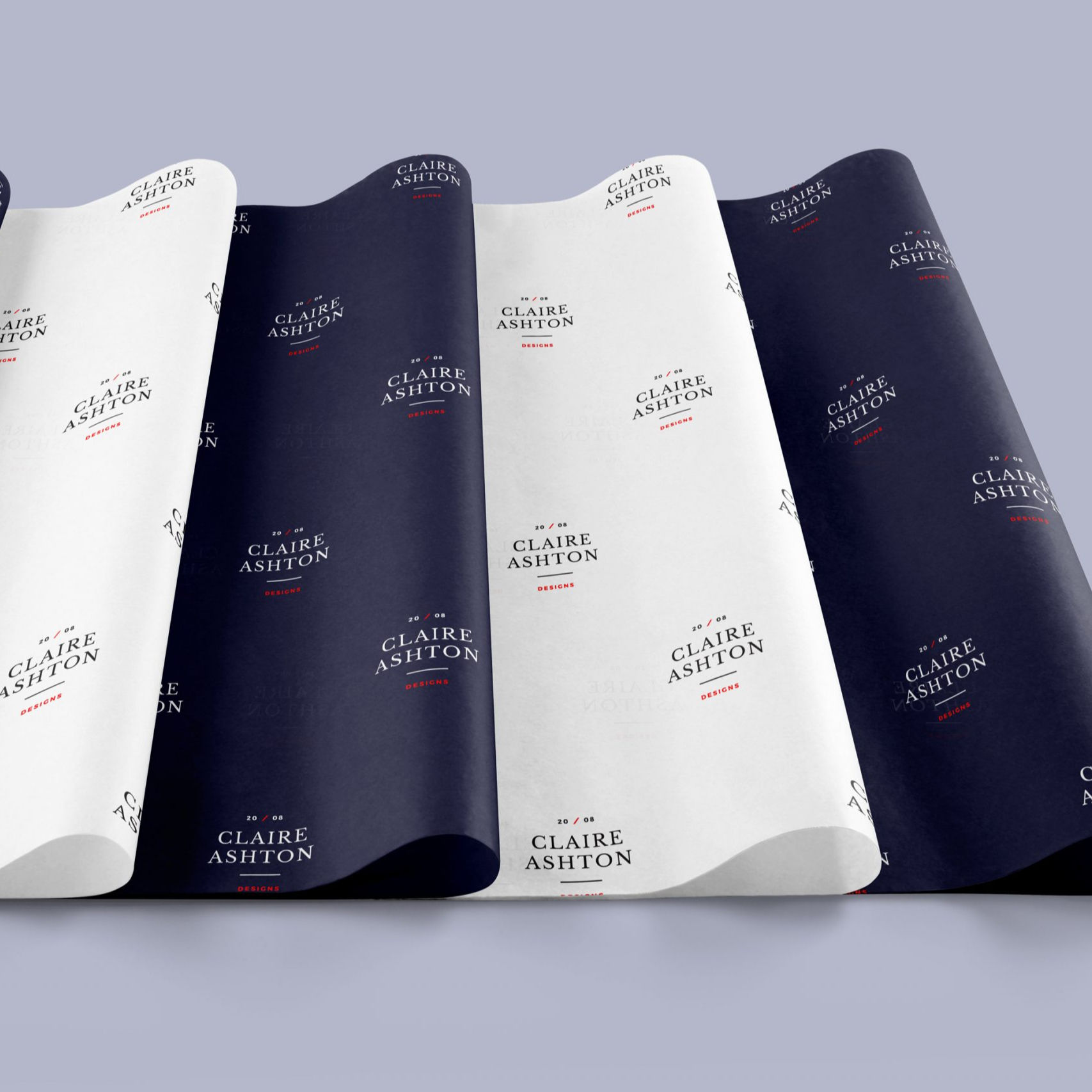
The structure is simple, but the behavior is not. A sleeve usually starts as a printed sheet, then folds around the box with a glued seam, tucked flap, or wrap closure. Panel orientation, crease depth, and seam position decide whether the piece looks crisp or looks like it lost an argument with the carton. The wine club box sleeves material guide only becomes useful once it moves from theory into the way the sleeve actually travels. In production, that usually means offset printing or digital printing, followed by aqueous coating, lamination, spot UV, die-cutting, scoring, folding, gluing, and carton packing.
Transit matters more for wine clubs than it does for shelf packaging in a retail setting. These boxes get handled more often, stacked more tightly, and exposed to more variable warehouse conditions than people usually expect. In practice, the sleeve has to survive pallet pressure, carton rubbing, and parcel sortation without showing fatigue before it arrives. That means the stock needs enough stiffness to hold shape, enough surface strength to resist scuffing, and enough flexibility to fold cleanly at the score. For a lot of programs, that points to 18-24 pt SBS for print-heavy designs, or a 280-350 gsm kraft/recycled board for a more natural look with slightly higher tolerance for handling.
Material choice changes how all of that plays out. Uncoated boards absorb ink differently and usually give a softer, more tactile feel, but they can show rubbing sooner. Coated boards resist abrasion better and often hold sharper graphics, especially when the design depends on photography or rich color fields. Kraft paper carries an earthy, honest tone that works well for a rustic wine club, though it can mute deep colors and make fine detail feel less punchy. Specialty stocks shift the tone again, while also shifting cost and production complexity. If a supplier offers an FSC, GRS, or similar recycled-content claim, ask for the current certificate scope and the exact material breakdown before you lock the purchase order.
Score quality matters just as much as stock grade. A strong board can still fail if the crease is too shallow, the panel is too tight, or the wrap direction fights the grain. I have seen a sleeve that looked perfect in prepress crack along the fold because the grain ran the wrong way. That is one of the places where the wine club box sleeves material guide saves money, because it pushes the buyer to think about the whole structure instead of treating the sleeve like a label with extra surface area. As a rule of thumb, keep grain direction parallel to the longest fold line whenever possible, and confirm the crease with a physical sample instead of relying on the artwork PDF alone.
Closures deserve the same attention. A glued seam can be clean and efficient, but it depends on accurate registration. A tucked flap can reduce adhesive use, though it may loosen if the box dimensions vary too much. If the club ships multiple box sizes, the sleeve stock should be forgiving enough to handle small dimensional shifts without becoming loose on one run and uncomfortably tight on the next. For most sleeve programs, a tolerance band of +/- 1.5 mm on the carton width and height is realistic to check during the sample stage.
Here is a simple way to think about it:
- Uncoated stock gives a softer, more natural feel, but it is more vulnerable to rub.
- Coated stock handles handling and color better, especially for dark graphics and bold photography.
- Kraft paper supports an earthy brand tone, but it can flatten bright color work.
- Thicker boards improve stiffness, but they increase fold resistance and unit cost.
For clubs shipping through parcel carriers, I usually lean toward materials with a little more surface protection. Not always the heaviest stock, just the one that survives the route without looking tired when the customer opens the shipper. That extra bit of protection is often the difference between a sleeve that feels intentional and one that feels rushed. A 1,000-piece run on 24 pt coated SBS with aqueous coating is often easier to keep consistent than a lighter uncoated sheet when the job includes rich solids, fine line art, or a lot of handling.
Wine Club Box Sleeves Material Guide: Cost, Pricing, and MOQ
Price is not just about the paper count. In the wine club box sleeves material guide, cost comes from substrate grade, ink coverage, coating, finishing, die complexity, and how many times the job needs to change over. A simple single-color sleeve on standard board can look very different on the invoice from a full-bleed version with foil, a custom cutout, and a die line that takes extra setup time to dial in. Digital short runs can be fast, but offset becomes more efficient once the order grows and the artwork stays stable.
MOQ behavior matters too. Higher minimums usually unlock better unit pricing because setup gets spread across more pieces. Smaller clubs pay more per unit because the press, die, and finishing steps still have to happen. That does not make small orders bad. It means the buyer needs to see the real unit economics before choosing a quantity by instinct and hoping the math behaves itself later. A realistic MOQ for custom wine club sleeves is often 500-1,000 units for digital or simplified offset work, 1,500-3,000 units for standard offset jobs, and 5,000+ units when the spec includes multiple finishes or a custom dieline across several box sizes.
Here is a realistic pricing snapshot for common sleeve choices at moderate quantities, usually around 3,000 to 5,000 units. These are broad ranges, not promises, because artwork coverage, shipping region, and finishing details can move the numbers quickly. At 500 MOQ, the same sleeve can jump dramatically, with a basic printed board sleeve often landing around $2.50-4.00 per unit before freight, especially if there is a custom die, coating, or a two-step assembly.
| Material / Finish | Typical Look | Shipping Durability | Approx. Unit Cost |
|---|---|---|---|
| Kraft paper sleeve | Natural, rustic, earthy | Moderate; shows rub sooner than coated stock | $0.18-$0.30 |
| Coated SBS board | Clean, bright, premium print surface | Strong; better rub resistance | $0.22-$0.38 |
| Recycled board | Eco-forward, slightly softer tone | Moderate to strong depending on caliper | $0.20-$0.34 |
| Textured specialty stock | Luxury, tactile, high-end | Strong, but depends on finish and crease quality | $0.35-$0.60+ |
As a practical buying range, a 500 MOQ sleeve is often $2.50-4.00 per unit, a 1,000-piece run may fall around $1.20-2.40 per unit, and a 3,000-5,000 piece job can often land in the $0.45-0.95 range depending on the material and finishing. Foil stamping usually adds about $0.08-0.25 per unit at higher quantities, embossing can add $0.10-0.30, and soft-touch lamination often adds $0.05-0.18. If the supplier includes carton packing and insertion, ask whether that labor is priced separately.
Production Steps, Process, and Lead Time for Wine Club Box Sleeves
A standard sleeve job usually follows six steps: artwork check, structural dieline confirmation, sample approval, mass printing, finishing, and final inspection. If the buyer is moving fast, the first proof is often a PDF within 24 hours, a flat sample in 3-5 business days, and a pre-production sample in 5-10 business days depending on the material and finish. For standard coated board sleeves, the full lead time is commonly 18-22 business days after proof approval. Jobs with foil, embossing, custom windows, or multiple SKUs often stretch to 25-30 business days.
Typical equipment and process checkpoints include offset printing or digital printing, aqueous coating or lamination, automatic die-cutting, scoring, folding, and gluing. On the QC side, the important checks are not just visual. Inspect for color consistency, score cracking, glue bond strength, die-cut accuracy, registration drift, rub resistance, and fit on the real carton. A practical acceptance window is often Delta E under 3 for key brand colors, no visible crack on the fold line after forming, and no glue seepage on the seam.
- Artwork and dieline: confirm fold direction, seam location, bleed, and barcode clear space.
- Sample stage: review digital proof, flat sample, and pre-production sample on the real box.
- Prepress: verify grain direction, color profile, overprint settings, and any spot color matches.
- Production: run print, coat, die-cut, crease, and assemble in sequence.
- Inspection: check dimensions, scuffing, glue strength, fold cracking, and carton fit.
- Packout: count, bundle, and carton-pack with corner protection if needed.
If sustainability documentation matters, ask for the exact certificates tied to the material or facility rather than a generic claim. GRS is useful for recycled-content board, while GOTS and OEKO-TEX Standard 100 are more relevant when the sleeve package includes textile add-ons, fabric wraps, or inserts. WRAP and BSCI are factory-level social compliance references that can support procurement reviews, but they should still be paired with current reports and scope verification.
Wine Club Box Sleeves Material Guide: How to Choose the Right Stock
The easiest way to choose is to start with the box environment, not the artwork. A heavy bottle shipper that moves through parcel networks needs more abrasion resistance than a seasonal promo box that only travels short distances. A premium club that leans on photography needs a smoother coated sheet. A farm-to-table or organic wine brand often looks better on kraft or recycled board, especially if the print is restrained and the typography does most of the work.
For a practical shortlist, most buyers can narrow the field to three choices: 18-24 pt coated SBS for premium print and tighter folds; 300-350 gsm kraft for an earthy, natural presentation; or 280-350 gsm recycled board when the brand wants an eco-forward message with a verifiable recycled-content claim. If the sleeve is going to be handled a lot, pick the stock that scores cleanly without cracking and survives a simple rub test after coating.
If you want the quickest decision path, use this rule: choose the smoothest stock that still survives shipping, then test the actual fold and seam on the real carton. That avoids overbuying on finish and underbuying on durability. It also keeps the sleeve from becoming the weak point in a package that was otherwise well designed.
Common Mistakes With Wine Club Box Sleeves Materials
One common mistake is choosing a board that is too thick for the crease width. That looks premium in the spec sheet and brittle in the hand. Another is ignoring grain direction, which can cause fold cracking even when the stock itself is strong. A third is picking a finish that looks beautiful in a photo but scuffs badly in shipping, especially on dark, full-bleed art.
Another issue is skipping a real sample stage. A PDF proof cannot show how the sleeve grips the carton, how the seam aligns, or how the coating reacts to handling. Buyers also get caught by overcomplicated print specs: if the job has heavy ink coverage, foil, embossing, and a tight dieline all at once, expect more setup, more waste, and a longer approval cycle.
The safest way to avoid rework is to test the fit on the actual box, verify the finish with a rub test, and confirm the quantity against the MOQ before artwork is final. A cheap-looking sleeve is usually the result of one missed detail, not three bad decisions.
Expert Tips and Next Steps for Ordering Wine Club Box Sleeves
Ask for three things before you issue the order: a structural dieline, a physical sample, and a written spec sheet that lists material, caliper, finish, and target quantity. If the supplier cannot give you those basics quickly, the production run is probably going to be harder than it needs to be.
If the project has multiple box sizes, standardize the artwork family and adjust only the sleeve dimensions. That keeps print setup simpler and protects margin at smaller MOQs. If the brand needs a premium feel without a large cost jump, consider a coated board with selective matte or soft-touch areas instead of moving all the way into specialty stock.
For buyers comparing quotes, the cleanest next step is to request pricing at 500, 1,000, and 3,000 units using the same artwork. That will show the real step-down in unit cost and make it easier to balance budget against presentation.
Frequently Asked Questions
What stock works best for most wine club sleeves? For most clubs, 18-24 pt coated SBS is the safest starting point because it balances stiffness, print quality, and fold performance.
What lead time should I expect? Standard jobs usually take 18-22 business days after proof approval. More complex finishing can push that to 25-30 business days.
What MOQ is normal? A practical custom MOQ is often 500-1,000 units for simpler runs and 1,500-3,000 units for standard offset production.
What should I inspect before approval? Check color, crease cracking, glue bond, die-cut accuracy, seam alignment, rub resistance, and fit on the actual carton.


