Wine Club Hang Tags Cost: The Small Insert That Changes Perception
A bare bottle neck can leave a club shipment feeling unfinished, almost like the last detail never made it out of proof. Add the right hang tag, and the package starts to read as deliberate, branded, and worthy of the subscription price. That is why people search wine club hang tags cost in the first place: they want a number, sure, but they also want to know whether a small printed piece can lift the perceived value of the whole order without turning fulfillment into a slow, fussy job.
For a winery or club manager, the tag is not decoration for decoration's sake. It helps each delivery feel like a release with a point of view rather than a box of bottles that happen to share a ship date. It can make seasonal drops easier to recognize, give gift shipments more shelf presence, and create a cleaner first impression in tasting rooms and club fulfillment. If the spec is thought through, the labor stays steady. If the spec is careless, the packing table gets extra steps, extra adjustments, and a higher unit cost for something that should have been straightforward from the start.
That is the real reason wine club hang tags cost matters. The tag is small, but the purchase decision is not. A winery is usually balancing presentation, budget, and repeatability across several shipment cycles. A better tag can support a stronger margin and make the club feel more polished. A simpler tag can still perform well if the stock, print method, and finish match the brand. The wrong tag, though, looks like a budget cut wearing a nice font.
In the best cases, hang tags do three jobs at once. They identify the shipment, reinforce the brand, and reduce the need for separate inserts that get lost in the box. That is why wine club hang tags cost should be compared against the cost of doing nothing, not against a fantasy premium piece with foil, embossing, and a die line better suited to a luxury invitation. A clean, well-made tag often gives more value than a stack of extra paper pieces nobody reads.
A good hang tag should make the club box feel complete before the customer opens it. If it does that with one pass through production, the spec is probably right.
For a Fast Custom Quote, the cleanest path is simple: define the format, choose the stock, decide on the finish, and lock the quantity before asking for a price. That turns wine club hang tags cost into a real buying conversation instead of a guessing game. The sections below break down the product, the specs, the price ranges, the timing, and the quote details that matter most.
Wine Club Hang Tags Cost Breakdown: Product Details That Matter
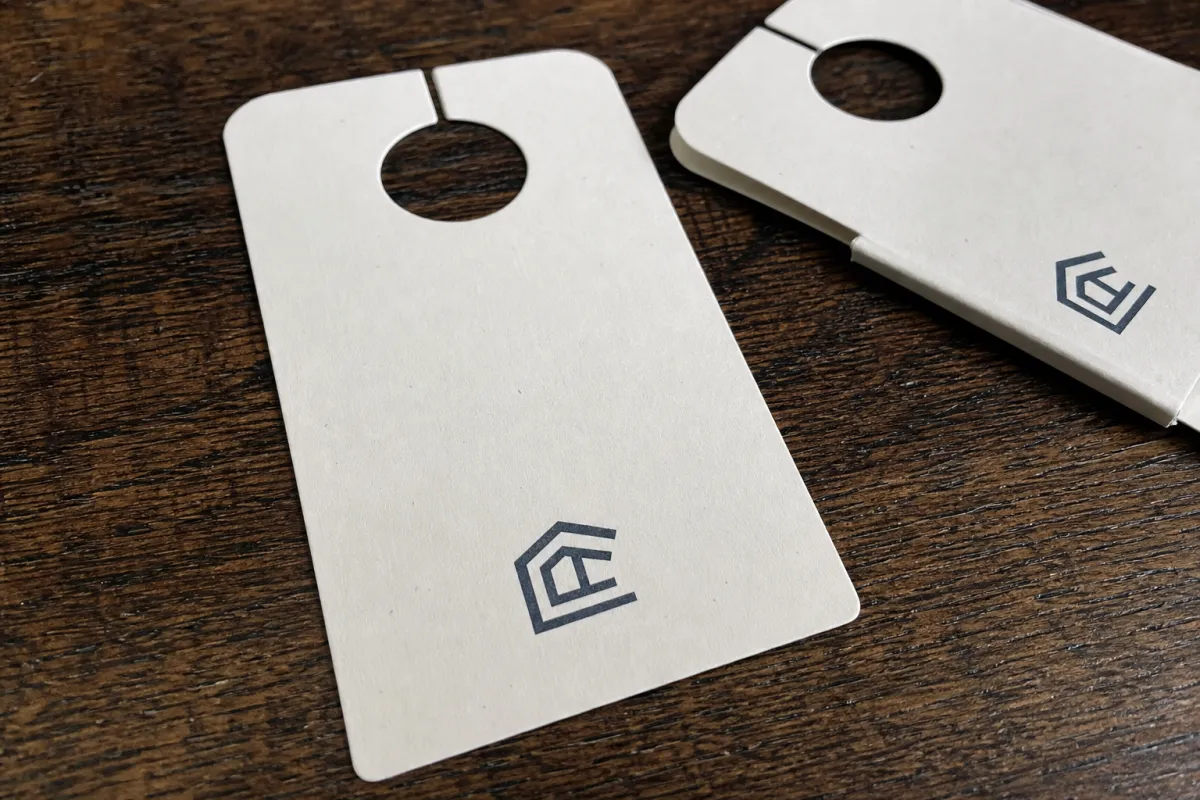
Before anyone talks pricing, the product has to be defined clearly. Wine club hang tags are printed pieces that attach to a bottle neck, a carrier, a gift pack, or a membership shipment. They usually hang from a punched hole, a string, a ribbon, or a pre-tied attachment. Some are simple single-sided cards. Others are folded pieces with room for notes, tasting details, club benefits, or QR codes. The form you choose shapes both the presentation and wine club hang tags cost.
The simplest version is a flat tag with one printed side and a hole punch. That is usually the lowest-friction option for clubs that want a clean identity marker and do not need much copy. A double-sided tag gives more room for messaging, which can be useful for tasting notes, release details, or member instructions. Folded cards cost more because you are printing and finishing a larger piece, but they can replace separate inserts. When you compare wine club hang tags cost, ask what the tag is replacing. A slightly higher print price can still save labor and cut clutter.
Shape matters too. A standard rectangle keeps tooling simple and tends to keep setup charges lower. A custom die-cut shape can make the tag feel more distinct, but it adds tooling fees and usually raises the minimum. Rounded corners are a small upgrade that helps the tag feel more finished without pushing the job into luxury territory. The hole size and placement are not cosmetic details either. If the hole is too tight for the ribbon or string, production slows down. If it is placed badly, the tag hangs crooked, which is a tidy way to make a nice design look accidental.
Most buyers also need to decide whether the tag will carry variable data. Member names, bottle IDs, tier names, or QR codes can all be added, but variable work adds prepress handling and inspection time. That is part of wine club hang tags cost, whether the quote says it plainly or hides it under a vague setup line. If the job needs personalization, ask early. Do not wait until proofing to discover that every tag needs unique text.
Paper choice is another practical fork in the road. A lighter paper can work for short-term shipments or casual tasting-room packaging, especially if the design stays minimal. A heavier stock feels better in the hand and tends to hold its shape around the bottle neck. In a club setting, that tactile difference matters. A flimsy tag can make an otherwise good shipment feel underbuilt. For smaller programs, a clean economical tag may be the smarter choice, especially if the club ships often and the piece needs to hold its own without becoming a production burden.
Wine club hang tags also show up beyond monthly club boxes. They appear in limited releases, tasting-room retail, gift sets, holiday packs, and on-premise add-ons. That flexibility is part of the value. If your packaging system already includes Custom Labels & Tags, the hang tag can become a repeatable component rather than a one-off expense. That is where wine club hang tags cost starts to look less like a single line item and more like part of a packaging system that keeps working across seasons.
Wine Club Hang Tags Cost Specs: Stock, Size, Finish, and Ink
The quickest way to keep wine club hang tags cost under control is to keep the spec sheet clear. Stock, size, finish, and ink coverage drive the look and the price. If the brief is vague, the quote grows vague too, and vague pricing usually comes with extra padding. A tight brief gives the estimator something real to work from, and it saves everyone from a long chain of clarifying emails.
Stock is the first lever. Economy matte paper can work for low-drama club inserts, especially when the design leans on typography and a restrained palette. Midweight coated stock usually gives better image clarity and a more polished feel for branded releases. Premium textured board, cotton stock, or specialty paper gives the highest-end presentation, but it also pushes wine club hang tags cost up quickly. The paper itself is only part of the picture; thicker or more textured stock can also affect trimming and punching.
Size changes both paper usage and visual impact. A small tag may save on raw material, but a bigger tag can carry more information and stand out better on the bottle. For many clubs, the sweet spot sits around 2 x 3.5 inches to 3 x 5 inches, depending on the amount of text and the overall packaging style. Oversized tags can look impressive, but they are not always practical if neck space is tight or the tag needs to sit neatly inside a shipper. When buyers ask about wine club hang tags cost, size often explains why two quotes that seem close are not really comparable.
Finish is where the look shifts fast. Uncoated stock has a natural winery feel and accepts handwritten notes well. Aqueous coating or soft-touch lamination gives a smoother, more refined finish and protects the surface during handling. Foil stamping, embossing, and spot UV can make a tag feel premium, but those finishes are not free. They raise both production complexity and setup charges. If the brand is grounded and understated, too much shine can look forced. If the brand is premium and the budget supports it, those finishes can make a real difference.
Ink coverage matters more than many buyers expect. Full-color tags with rich photos, gradients, and dark solids usually cost more than one- or two-color spot jobs. Heavy coverage can also require more proofing, especially if color consistency matters across repeated club shipments. If you are comparing wine club hang tags cost across vendors, ask whether the quote assumes full bleed on both sides, one side only, or a simpler one-color design. A quote that looks cheap at first glance can become expensive once coverage, finishing, and proofing are all tallied.
Here is a practical comparison to keep the buying process honest:
| Spec Level | Typical Stock | Typical Use | Cost Per Piece Range | Notes |
|---|---|---|---|---|
| Economy | 14pt matte or uncoated cover | Simple club shipments, tasting-room inserts | $0.08-$0.18 at 5,000 | Lowest unit cost; basic print and punch only |
| Mid-tier | 16pt coated cover or heavier matte board | Regular club releases, branded gift packs | $0.14-$0.30 at 5,000 | Balanced presentation and durability |
| Premium | Textured stock, soft-touch, specialty board | Reserve clubs, holiday releases, gift sets | $0.28-$0.55 at 5,000 | Higher setup charges and more careful finishing |
Those ranges are working numbers, not a promise. wine club hang tags cost changes with size, quantity, attachment style, and whether the job includes foil, embossing, or variable data. Still, the table gives a better starting point than vague marketing language. If a quote falls far outside these ranges, there is usually a reason. Sometimes that reason is a premium spec. Sometimes it is simply extra overhead.
For brands that care about sustainability claims, stock selection should be checked against credible certification. FSC-certified paper is common in branded packaging, and it is worth asking for documentation if that matters to your club messaging. For packaging performance, organizations like ISTA and industry references from FSC help buyers separate marketing talk from real material standards. That matters when a tag has to survive shipping, handling, and repeated contact without looking tired halfway through the season.
Wine Club Hang Tags Cost, MOQ, and Quote Ranges
MOQ is where the conversation gets practical. Minimum order quantity exists because setup, proofing, and finishing take time whether you print 200 tags or 20,000. That is why lower runs usually carry a higher cost per piece. The press does not care that the shipment is small. It still needs to be set up, checked, trimmed, punched, packed, and shipped. That fixed work gets spread across fewer pieces, which pushes wine club hang tags cost up on short runs.
For smaller club programs, a run of 250 to 500 tags can make sense if the design is simple and the schedule is flexible. Expect the per-piece price to sit in a noticeably higher band because the setup charges are being spread across a tiny batch. At 1,000 pieces, the numbers usually soften. At 5,000, the bulk pricing starts to show real savings. Past that, the unit cost may keep dropping, but not as sharply. Paper, press Time, and Finishing stop cooperating at some point. Production always has a floor.
Here is a realistic way to think about wine club hang tags cost at different quantities:
- 250 pieces: often $0.55-$1.60 each for a simple to mid-tier tag, depending on stock and finish.
- 1,000 pieces: often $0.18-$0.55 each for a straightforward custom tag.
- 5,000 pieces: often $0.08-$0.30 each for economy to mid-tier specs.
- Premium finishes: foil, embossing, or specialty die cuts can push those numbers higher at every quantity.
If you want the quote to be useful, send the estimator the basics upfront: size, stock, print sides, finish, quantity, attachment method, and destination ZIP. Include whether the artwork is print-ready or still in draft form. That last part matters. Poor files become a hidden tax on wine club hang tags cost because they create extra proofing and revision rounds.
Ask for itemized pricing. A good quote should show print cost, setup charges, any tooling fees for custom dies, proof fees if applicable, and shipping. If the vendor buries everything into one line, it becomes hard to compare options. That is how people end up thinking two quotes are equal when one includes a custom die and the other does not. A better move is to request at least three scenarios: economy, mid-tier, and premium. That makes the tradeoffs obvious and keeps the decision grounded in numbers rather than guesswork.
Repeat-order pricing is another piece buyers often miss. If the tooling already exists and the file is archived, reorders can move faster and cost less to manage. That is especially helpful for seasonal club releases, where the same format comes back quarter after quarter. If you plan ahead, wine club hang tags cost can settle into a predictable range instead of bouncing every time the club schedule changes.
Wine Club Hang Tags Cost Production Steps, Timeline, and Lead Time
The production path is straightforward, but only if the buyer keeps the decisions tight. The usual flow is quote request, spec confirmation, artwork review, proofing, production, finishing, packing, and shipment. Every one of those steps can affect wine club hang tags cost if the job keeps changing after approval. Clean runs are the ones that lock the details before anything goes to press.
Lead time starts after proof approval, not when someone sends an email asking for pricing. That distinction matters because it is easy to assume a quote and a ship date are the same thing. They are not. If artwork is incomplete, the schedule stretches. If the die line is not final, the schedule stretches. If stock has to be swapped, the schedule stretches. None of that is mysterious. It is simply the cost of indecision, and indecision has a price tag.
For a simple hang tag with standard stock and no specialty finishes, a typical production window is often 7-10 business days after proof approval. A more complex order with custom shapes, foil, embossing, or variable data can move to 12-18 business days, sometimes longer if the stock is special-order. Rush work may be possible if the schedule is open, but that usually means a rush fee or tighter spec limits. If your club calendar is fixed, ask for lead-time confirmation before approving the quote. That one step can save a lot of stress later.
These are the most common reasons a job slows down:
- Artwork arrives without bleed, trim marks, or correct resolution.
- The attachment method changes after proofing.
- A custom shape requires new tooling.
- The stock choice is revised after pricing is already sent.
- Variable data needs extra file checks or sample review.
Keep in mind that wine club hang tags cost is not only about print. It also includes the hidden work of checking files, confirming dimensions, and making sure the final piece will actually hang the way you expect. A tag that looks good on screen can fail on the bottle if the hole is wrong or the weight is off. That is why samples and mockups are useful. They catch practical issues before a full run turns into a reprint. I have seen more than one job go sideways over a hole punch that was a little too small for the ribbon, which sounds minor until production is standing there with a packing line waiting.
If your packaging workflow already includes other printed components, such as branded inserts or custom label and tag programs, it helps to lock the visual system early. Matching paper tones, typography, and attachment style across pieces reduces surprises and makes repeat production easier. That kind of coordination does not sound glamorous, but it saves money. Saving money is usually more appealing than discovering late that three pieces in the box all speak a different design language.
For shipping and handling, ask whether the finished tags are packed bulk or kitted. Bulk packing is usually cheaper. Kitting can make sense if the club assembly team wants pre-counted bundles, but that adds labor. In practical terms, the best way to keep wine club hang tags cost in check is to avoid unnecessary handwork. Every extra minute at the finishing table shows up somewhere in the quote.
Why Choose Us for Wine Club Hang Tags Cost Control
The best supplier is not the one with the loudest pitch. It is the one that helps you spend money in the right places. That is the approach here. The goal is not to push the most expensive hang tag possible. It is to shape a spec that fits the club tier, the bottle presentation, and the actual budget. That is how wine club hang tags cost stays under control without making the final package look cheap.
Clear quoting matters. A useful quote should explain what is included, what is optional, and what drives price up. If a custom die cut adds tooling fees, say so. If a specialty finish adds setup charges, say so. If a lower quantity has a higher unit cost because the press setup stays the same, say so. Buyers do not need fluff. They need the numbers in plain language so they can compare options without translating sales jargon into actual money.
Consistency matters too, especially for subscription clubs that ship multiple times a year. Members notice when packaging shifts from one release to the next. A tag that matches the previous run in stock, tone, and finish makes the program look planned instead of improvised. That consistency is real value for wine club hang tags cost, because it reduces the need to rework files or match mismatched materials later.
Prepress support is another practical advantage. A lot of reprints happen because the artwork file looked fine to the buyer but failed the print check. Fixing a file before production is cheaper than fixing a mistake after production. That sounds obvious because it is. Still, plenty of jobs get rushed into the press with a bad dieline or missing bleed. Good prepress review catches those issues early and protects the budget.
We also understand that wine clubs are not all the same. Some need a functional tag that identifies membership level and bottle contents. Others need a presentation piece for reserve tiers or holiday releases. Some are built around tasting room pickup, where the tag is part of the in-person experience. That variety changes the spec. It also changes wine club hang tags cost. A single format does not fit every club, and pretending otherwise is how budgets get blown on features nobody asked for.
There is a simple way to judge whether a vendor is worth your time. Do they ask the right questions? Do they explain tradeoffs clearly? Do they give you pricing that you can actually compare? If the answer is yes, you are probably dealing with someone who understands production instead of someone who just wants to sell a shiny finish and move on. That is the standard a packaging buyer should expect.
For brands that care about material responsibility, ask about FSC paper options and basic shipping practices. If your team is trying to reduce waste, it is worth reviewing whether the tag can do more than one job before printing more pieces. Packaging references from groups like the packaging industry association are useful for keeping terminology honest, and sustainability guidance from EPA can help separate real waste reduction from decorative claims. That kind of due diligence does not make the quote prettier, but it does make the decision smarter.
Next Steps to Quote Wine Club Hang Tags Cost Accurately
If you want a quote that is actually useful, send the full spec instead of a vague request for "some tags." Quantity, size, stock preference, print sides, finish, attachment method, and destination ZIP are the minimum details. Add artwork files, dielines, or even a bottle-neck photo if you have one. That helps the estimator catch fit issues early and gives you a clearer view of wine club hang tags cost before anyone commits to production.
It also helps to ask for multiple pricing scenarios. A lot of buyers stop after one quote and then wonder whether the price is fair. Better to compare an economy version, a mid-tier version, and a premium version side by side. That shows exactly how MOQ, paper, finish, and tooling affect the final numbers. It also makes the decision easier when the club calendar is tight and someone needs to approve the order without dragging the whole team through another round of debate.
Here is the checklist I would use before sending the request:
- Confirm the bottle style or package type the tag has to fit.
- Decide whether the tag is one-sided, two-sided, or folded.
- Pick the stock level that matches the club tier.
- Choose whether the finish should stay natural or move toward premium.
- State the quantity with a realistic buffer for packing and spoilage.
- Share the shipping deadline and delivery ZIP.
That list sounds basic because it is. Basic information is what keeps wine club hang tags cost under control. The moment the spec gets fuzzy, quotes start drifting, lead times start slipping, and "simple" tags turn into a chain of follow-up emails. Nobody needs that.
For wineries, clubs, and subscription programs, the smartest move is to treat the hang tag as a packaging tool, not an afterthought. The right tag can make a shipment feel complete, support retention, and improve the perceived value of the box without adding a pile of labor. The wrong one wastes paper and time. So the practical takeaway is this: gather the exact size, stock, finish, attachment method, and quantity first, then compare at least three quote tiers before you approve the run. That is the cleanest way to understand wine club hang tags cost and keep the order moving without surprises.
FAQ
What affects wine club hang tags cost the most?
Quantity, stock weight, print sides, and finishing are the biggest drivers. Custom shapes, foil, embossing, and variable data raise wine club hang tags cost faster than basic full-color printing. Shipping and artwork prep can matter too, especially on smaller runs.
What is the MOQ for wine club hang tags?
MOQ depends on the print method, stock, and finishing, but lower quantities usually cost more per tag. If the run needs a custom die or special finish, expect a higher minimum or a higher setup charge. Repeat orders often have more flexibility once the tooling is already in place.
How long does production take for wine club hang tags?
Simple jobs with approved artwork move faster than custom shapes or premium finishes. Proof approval, stock availability, and finishing steps are the main timeline variables. If you need a tight ship date, ask for lead-time confirmation before approving the quote.
Can I get a lower unit cost on wine club hang tags?
Yes, usually by increasing quantity, simplifying the stock, or removing specialty finishes. Standardizing one tag size across multiple club tiers can also reduce setup waste. Ask for pricing at multiple quantities so you can see where the unit cost drops.
What should I send for an accurate wine club hang tags quote?
Send quantity, size, stock preference, print sides, finish, and any attachment details. Include artwork files or a sample photo so the vendor can flag issues early. If you have a budget target, say it upfront; that saves time and pointless back-and-forth.