For custom logo packaging, Wine Club Tissue Paper cost is one of those line items that looks tiny until a brand changes the sheet size, adds more print coverage, or orders too few pieces to spread setup across the run. Then the quote shifts. Quickly. A buyer starts out thinking in pennies, and the real discussion becomes unit cost, MOQ, and whether the tissue still feels premium once it is wrapped around a bottle.
I have priced enough tissue jobs to know that the number is rarely random. wine club tissue paper cost follows a short list of inputs: material weight, print method, order quantity, and how much branding goes on the sheet. Know those pieces before you ask for pricing, and you get a cleaner quote with fewer surprises. Skip them, and the number you receive may look fine until freight, tooling fees, or a rushed reprint shows up later.
Wine clubs get this right and wrong in the same breath. The insert has to protect bottles, support the unboxing, and keep the presentation polished enough for gift buyers and subscription members. It still has to fit a workable cost per piece. Push the package too far and the margin gets eaten up. Cut it too hard and the box feels cheap. That tension is the whole job, and there is no magic trick that removes it.
From the buyer side, the work is kind of simple and kind of not. You are balancing presentation, packing speed, and a budget that already has other hungry line items. The tissue is not the hero of the shipment, but it quietly changes how the whole box lands. That is why the best wine club tissue paper cost conversations start with the spec, not the price.
Wine Club Tissue Paper Cost: Why Small Changes Move the Quote
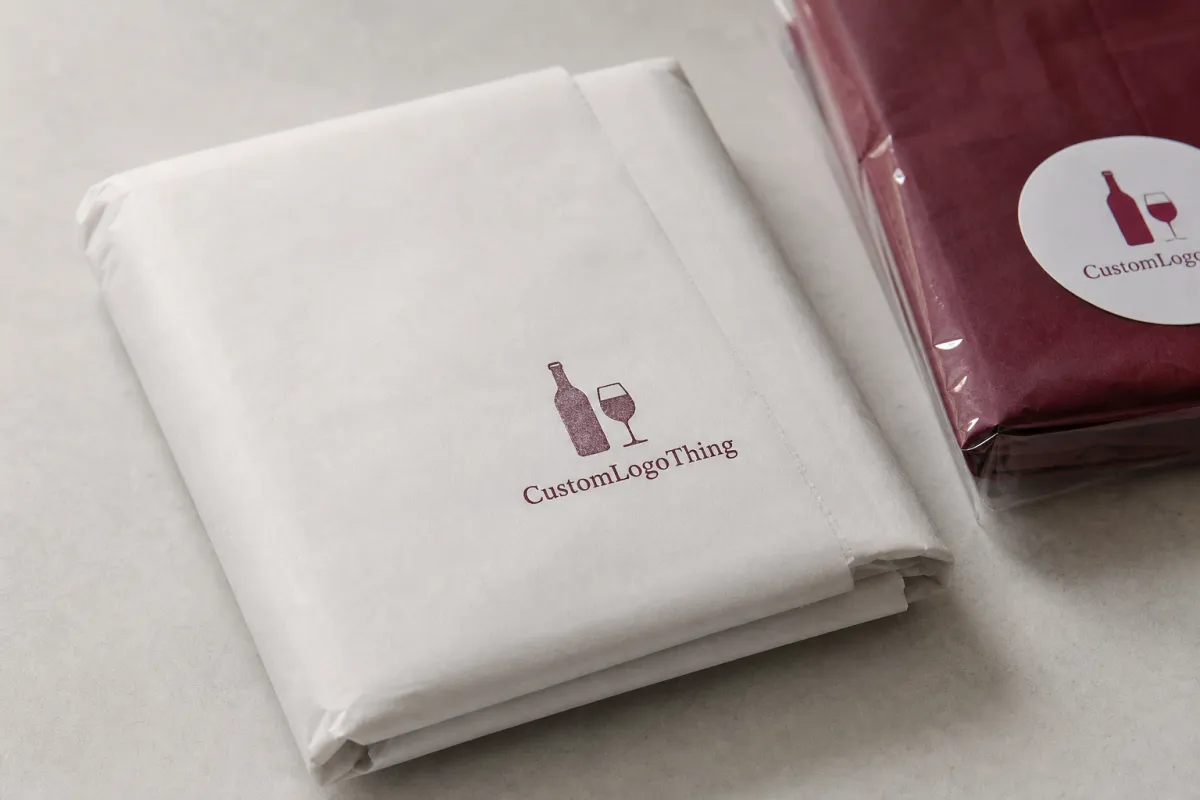
wine club tissue paper cost moves faster than most buyers expect because tissue is a deceptively simple product. A plain white sheet is one thing. A custom printed sheet with a repeating logo, a specific Pantone match, and a larger-than-standard format is another. Add a second color and the quote starts climbing. Increase the sheet size for a more luxury presentation and material use changes. Order fewer sheets and the fixed setup gets divided across a smaller run. A tiny spec change can swing wine club tissue paper cost more than people think.
From a packaging buyer's point of view, the pressure is easy to understand. Wine club shipments are not just shipping containers. They are part of the brand experience. The insert has to make the member feel like the box was packed with care, not assembled in a rush. A better insert can lift gift perception, support repeat orders, and reduce the "this feels cheap" reaction that hurts retention. If wine club tissue paper cost drifts too far upward, the upgrade stops making sense.
The practical reality is simple. The best quote is not the cheapest one on paper. It is the one that balances appearance, packing speed, and budget discipline. A clean branded tissue sheet can do a lot of work if the design stays controlled and the print area stays sensible. A full-bleed pattern may look more premium, but it usually pushes wine club tissue paper cost higher because of ink coverage, registration control, and tighter production tolerance.
"I need it to feel premium, but I do not need a luxury item hiding inside a box of wine." That is the real brief behind a lot of wine club tissue paper cost conversations.
Good buyers ask the useful questions before requesting pricing:
- What is the sheet size and fold style?
- How many sheets do we need per shipment or per quarter?
- Do we want one-color branding or a richer pattern?
- Is the tissue visible on unboxing, or mostly functional?
- Do we need retail-ready packaging or pre-folded sheets for packing speed?
The answers usually tell you more about wine club tissue paper cost than any generic price list. Generic price lists mostly decorate a conversation. Real quotes depend on the spec sheet, not wishful thinking.
It also helps to think in terms of unit cost and total program cost. A lower per-sheet number can still be the wrong deal if it adds packing labor or forces a reprint because the color is off. For many wine clubs, the smartest move is to compare cost per piece at two or three volume levels before locking in the design. That gives a clearer read on where wine club tissue paper cost actually lands once the order becomes real.
One more practical detail: if your club runs seasonal programs, do not let the tissue spec drift every time the artwork changes. I have seen buyers save money simply by standardizing the sheet and changing the print file, not the size. That is not flashy, but it keeps the order calmer and the pricing easier to predict.
Product Details: What Wine Club Tissue Paper Should Include
Start with the basics. Wine club tissue paper is usually a custom printed or unprinted tissue sheet used to wrap bottles, line cartons, or add a branded layer to a subscription shipment. In plenty of programs, the sheet is doing three jobs at once: protecting the product from scuffing, creating a better visual reveal, and reinforcing the brand. That is why wine club tissue paper cost should never be treated like a simple paper purchase. It is part packaging, part presentation, part retention tool.
The core decisions are straightforward: custom printed or plain, standard sheet size or oversized, one side or both sides printed, and how bold the branding should be. Some clubs want a minimal logo mark in one corner. Others want a repeating pattern that looks polished without shouting at the customer. Both can work. The right choice depends on how the tissue sits in the box and how much visual weight the brand already carries on the carton, insert card, and outer packaging. Those decisions directly affect wine club tissue paper cost.
There are also practical use cases that shape the spec. A monthly club may need a fast, consistent wrap for two or three bottles. A gift program may care more about the first impression and less about speed. Seasonal membership mailers might use the tissue as a color cue for holidays, limited releases, or anniversary packs. Each use case changes the level of branding that makes sense, and each one pushes wine club tissue paper cost in a slightly different direction.
For most buyers, the sweet spot is not the fanciest option. It is the option that looks intentional. A single-color logo on a well-sized sheet can look sharper than a busy design that tries too hard. If you want the insert to feel premium without reading like a billboard, restraint usually wins. That choice often keeps wine club tissue paper cost in a range the finance team can live with.
Useful add-ons to ask for:
- Matching tissue colors for seasonal campaigns or brand palettes
- Pre-folded sheets for faster packing on the line
- Retail-ready packaging for clubs that also sell in tasting rooms
- Custom bundle counts, such as 100 or 250 sheets per pack
- Short-run sample packs before a full rollout
If sustainability matters, ask whether the stock can be sourced from FSC-certified fiber. If the tissue needs to survive a rough carrier network, it is smart to think about handling the same way you would for transit-sensitive packaging and reference ISTA testing expectations. Tissue paper is not a heavy-duty protective material, and that is fine. The honest job of the insert is to support presentation and reduce scuffing, not replace a real transit test.
The practical takeaway: better product definition leads to a cleaner wine club tissue paper cost. If the buyer knows the use case, the print style, and the pack count, the supplier can quote something useful instead of guessing. Guessing is how quotes get "mysteriously" expensive.
Specifications That Affect Cost, Print Quality, and Branding
The biggest drivers behind wine club tissue paper cost are not mysterious. They are the same specs that affect most custom print jobs: basis weight, sheet dimensions, print coverage, color count, and artwork complexity. Tissue basis weight is usually measured in a lightweight range, and even small changes in thickness can affect handling, opacity, and perceived quality. If the paper is too thin, the logo may show through badly or the sheet may tear during folding. If it is too heavy, the cost goes up without much added value.
Sheet dimensions matter more than many buyers expect. A larger sheet may improve the presentation, especially for multi-bottle packs, but it also increases raw material use. That adds up quickly. A standard size keeps production simple and usually helps keep wine club tissue paper cost under control. A custom size can be worth it if the wrap has to cover bottles cleanly or fit a specific carton, but the quote should reflect that extra material.
Print coverage is another major lever. A tiny logo in one corner is cheaper to produce than a full-sheet pattern. The more ink on the sheet, the more likely you are to see cost pressure from longer press runs, more careful drying, or extra waste during setup. If the design uses tight registration or multiple artwork versions, the production team has to work harder to keep everything lined up. That is where wine club tissue paper cost starts climbing for reasons that are easy to understand but annoying to pay for.
Color matching is where buyers often get too ambitious. A clean one-color brand mark is usually the most efficient way to keep wine club tissue paper cost in check. If you need PMS matching, full-bleed printing, or a rich gradient effect, the quote will reflect that. Not because the supplier is being dramatic, but because color control on tissue is touchy. The material is thin. The absorbency is different from cartonboard. Ink behavior matters. A small mismatch can ruin the premium effect.
Every extra spec should earn its place. If it does not improve brand recognition, unboxing, or packing efficiency, it is probably inflation dressed up as design. That is exactly how wine club tissue paper cost gets out of hand. The smartest programs save money by simplifying rather than cutting quality.
Common ways to save without making the package look cheap:
- Use one print color instead of two or three
- Keep the artwork repeating and consistent
- Standardize one sheet size across all club tiers
- Limit print coverage to the most visible areas
- Choose a stock tissue color that fits the brand instead of custom-dyeing everything
Quality checks should include opacity, tear resistance, print clarity, fold behavior, and how the sheet looks under warehouse lighting. A tissue sheet can look great in a sample photo and still fail in packing if it crumples badly or drags on the line. That is not a theory. It is how real production runs behave. If the insert slows packers down, labor cost becomes part of wine club tissue paper cost whether the accounting line shows it or not.
One more useful point: ask how the supplier handles tooling fees and setup charges. Some print methods require plate or screen setup, especially on the first run or when the art changes. Those fees are not always huge, but they belong in the quote. Skip them during planning and your tidy wine club tissue paper cost estimate turns into a mess after approval.
In practice, I have seen buyers save more money by trimming artwork complexity than by haggling over a few cents on the sheet. That may sound boring, but boring is often where the margin lives. A cleaner file, fewer colors, and a standard size are usually the least painful ways to keep the program under control.
Wine Club Tissue Paper Cost: Pricing, MOQ, and Unit Cost
Now the part everyone actually wants: numbers. A realistic wine club tissue paper cost quote usually has three pieces: setup charges, the unit price, and any freight or finishing cost. For Custom Printed Tissue, smaller runs tend to cost more per piece because the fixed production setup is spread across fewer sheets. That is why MOQ matters so much. If a supplier asks for 5,000 sheets minimum, a run of 2,000 sheets will usually carry a noticeably higher wine club tissue paper cost per sheet, if they accept it at all.
For planning purposes, a simple one-color custom sheet can often land somewhere around $0.08-$0.18 per piece at moderate volume, while smaller orders may push into the $0.18-$0.35 per piece range. Unprinted tissue is usually cheaper, sometimes much cheaper, depending on sheet size and bundle count. If you need full-coverage printing, multiple colors, or special handling, expect wine club tissue paper cost to move upward. These are planning ranges, not promises. Real quotes depend on the exact spec, shipping destination, and production method.
The other number that matters is MOQ. A lower MOQ is useful for a new club launch or a seasonal test, but it usually comes with a higher unit cost. That is the tradeoff. A higher volume order almost always improves bulk pricing because the factory can run the job more efficiently, reduce waste, and pack the sheets in a more streamlined way. If you are buying for recurring shipments, ask for at least two quantity tiers so you can see how wine club tissue paper cost changes as volume increases.
| Option | Typical MOQ | Planning Unit Cost | Best For | Watch-Outs |
|---|---|---|---|---|
| Unprinted tissue | Low to moderate | $0.03-$0.08 | Budget-conscious inserts and filler use | Less branding impact; may feel plain in premium kits |
| One-color logo print | Often 5,000+ sheets | $0.08-$0.18 | Most wine clubs that want a clean branded look | Setup charges and tooling fees should be confirmed upfront |
| Two-color or higher-coverage print | Usually higher | $0.14-$0.28 | Premium programs and gift-facing shipments | More print control needed; color matching can add cost |
| Full-bleed custom pattern | Higher MOQ | $0.18-$0.35+ | Hero unboxing moment and strong shelf presence | Highest wine club tissue paper cost; not always worth it |
That table is the practical version, not the fantasy version. A lot of buyers see a headline price and stop there, but that is how they miss the real cost drivers. If one supplier gives you a low unit price but hides setup charges, and another gives you a slightly higher unit price with no surprises, the second quote may be the better deal. Compare the full order value, not just the first line. That is the only sane way to read wine club tissue paper cost.
Freight matters too. Tissue sheets are lightweight, but volume can still matter once the order is packed in bundles and cartons. If the shipment is going across the country or overseas, ask whether the quote includes export packing, palletizing, or insurance. Cheap paper with expensive freight is still expensive. It just takes longer to realize it. That is another reason wine club tissue paper cost should be evaluated with the whole landed cost in mind.
What should you send to get a real quote? Use this checklist:
- Sheet size and fold style
- Quantity needed now and quantity forecasted per year
- Number of print colors and artwork files
- Whether the design is one-side or two-side print
- Delivery address and target in-hand date
- Any color match requirement, especially PMS
When buyers send those details in one shot, wine club tissue paper cost becomes much easier to pin down. If they send "we need some branded tissue for wine boxes" and nothing else, the quote will be broad for a reason. There is no magic number hiding behind vague specs.
Process and Timeline: From Quote to Production
The quoting process should be straightforward. If it is not, you are probably about to pay for the confusion later. A solid wine club tissue paper cost workflow usually starts with an inquiry, then moves into spec review, artwork check, proof approval, production, inspection, and shipping. Each step matters because a small mistake upstream can force a reprint or delay the line. And yes, a reprint is the fastest way to make a neat wine club tissue paper cost estimate look silly.
Artwork review is where many orders slow down. If the logo file is low resolution, the print edges are fuzzy, or the Pantone target is unclear, the supplier has to ask questions. Those questions are not there for sport. They prevent a bad run. The same goes for quantities. If the buyer keeps changing order volume after approval, the production schedule changes, and the unit price may change with it. That is basic production math and a very real part of wine club tissue paper cost.
Realistic timelines depend on the run size and the print complexity. A straightforward custom tissue order can often move from proof approval to production in roughly 12-15 business days, with shipping added on top depending on destination. More complex orders, higher color counts, or seasonal spikes can take longer. If the job needs extra sampling or tighter color matching, build more time into the schedule. Custom printing is not a vending machine. It is a production process, which means wine club tissue paper cost and turnaround both respond to complexity.
There are a few things buyers can do to shorten the timeline without cutting corners:
- Send final vector artwork, not a rough screenshot
- Confirm dimensions before the quote is approved
- Decide whether a sample is required before production
- Tell the supplier the delivery window upfront
- Avoid late changes to quantity or print colors
If you need a launch tied to a club renewal, seasonal gift box, or a customer event, do not wait until the last week. That is how people end up paying rush charges, or worse, taking a temporary substitute that does not match the brand. The most expensive version of wine club tissue paper cost is the one you had to buy twice because the first order missed the window.
Inspection is worth asking about too. It does not have to be complicated, but it should exist. Check print clarity, sheet count, bundle count, and carton condition before shipping. If the tissue is going into premium wine club shipments, even a small defect rate can cause a disproportionate amount of annoyance. Nobody wants member complaints over wrinkled tissue or off-color logos. That kind of noise costs more than the paper.
From a buyer's point of view, the best timeline conversation is clear and boring. Boring is good. It means the supplier has already answered the hard questions. You know the price, the setup charges, the expected ship date, and any tooling fees that apply. That is the kind of quote that lets you manage wine club tissue paper cost instead of fighting it.
Why Choose Us for Wine Club Tissue Paper Orders
If you are shopping for a supplier, reliability beats drama every time. A decent wine club tissue sheet should not surprise you. The color should be consistent, the print should be clean, and the packaging should arrive ready to use. That sounds basic because it is basic. Yet a lot of orders go sideways on exactly those points. A good supplier protects your wine club tissue paper cost by controlling the boring details that keep a project on track.
One advantage of working with a factory-direct team is clearer spec control. You are not guessing where the margin went or whether a middle layer added cost without adding value. You get a better view of the real unit cost, the actual MOQ, and what bulk pricing looks like at different volumes. That matters when you are planning a club program with recurring orders. A small per-sheet change becomes real money when multiplied across thousands of shipments. That is why wine club tissue paper cost is best handled with transparency, not sales theater.
Another practical strength is sample support. If the tissue color, fold behavior, or print feel needs to be approved before production, a sample saves headaches. For premium clubs, that extra check is usually worth it. A printed sheet can look acceptable in a mockup and still miss the mark in person. The way tissue sits around glass, how it creases, and how it reads under warehouse lighting all affect the final impression. A sample helps keep wine club tissue paper cost aligned with the actual result you want.
We also try to keep communication direct. No fluff. If a spec increases cost, you should know why. If a simple change can save money without hurting the presentation, you should hear that too. A lot of buyers do not need a polished pitch. They need someone to say, plainly, "This sheet size is enough," or "You do not need three colors for this design," or "Yes, that extra edge-to-edge print will push the wine club tissue paper cost higher." Honest answers are more useful than polished nonsense.
For wine clubs, the right supplier should help balance presentation with budget discipline. That means understanding repeat shipments, seasonal variations, and the reality of packing lines. A tissue insert is not a hero product. It is a supporting piece that should do its job without stealing margin from the bottle inside. If the quote respects that, the program works better. If not, you end up paying premium rates for packaging that is doing the job of a much cheaper spec.
Here is what a strong supplier should be able to give you quickly:
- A clear quote with setup charges and unit price separated
- Reasonable MOQ options for test runs and larger programs
- Straightforward advice on print coverage and sheet size
- Sample support before mass production
- Transparent lead times and freight expectations
That is the standard. Not luxury. Not smoke and mirrors. Just a sane way to manage wine club tissue paper cost so the packaging supports the brand instead of draining it.
Next Steps: Get the Right Quote for Wine Club Tissue Paper
If you want a useful wine club tissue paper cost quote, do not start with "How much is it?" Start with the spec. Gather the sheet size, quantity, print colors, artwork files, and delivery location. If you know your annual usage, include that too. That one number helps the supplier suggest better bulk pricing and shows whether the order should be built for a short run or a recurring program. The clearer the input, the cleaner the wine club tissue paper cost response.
It also helps to request two quantity levels. For example, ask for a lower MOQ option and a larger-volume option side by side. That makes the cost per piece obvious. Sometimes the jump from one tier to the next is tiny, and sometimes it is not. Either way, you want to see where the savings actually show up. A quote without volume comparison is just one number. A quote with two or three tiers tells you where wine club tissue paper cost starts to work in your favor.
If the insert is customer-facing and color accuracy matters, ask for a proof or sample. That is especially useful for premium wine club shipments, anniversary boxes, and gift programs. You do not need a sample for everything. But when the look matters, it is worth checking. A color that is slightly off on a screen can look wildly different on tissue. And if the fold style is wrong, the whole presentation feels cheap. That is not a small issue. It is the difference between a tidy brand moment and a forgettable one.
Here is the shortest version of the buying process:
- Pick the sheet size and fold style
- Decide whether you need one-color branding or a fuller print
- Estimate annual volume and minimum launch quantity
- Ask for pricing at two or three quantity levels
- Review sample or proof before production approval
That sequence saves time and usually saves money. More important, it keeps wine club tissue paper cost tied to a real packaging plan instead of a guess. A wine club shipment should feel considered, not overdesigned. The insert should support the bottle, the brand, and the budget. That is the balance worth aiming for, and it is exactly where a good wine club tissue paper cost quote helps.
If you are ready to move from research to pricing, send the sheet size, print colors, artwork, quantity, and delivery target first. That is enough to get an honest starting quote. From there, you can compare options, adjust the spec, and choose the version that gives you the best mix of appearance, turnaround, and wine club tissue paper cost. No drama. Just a usable number.
What is the typical wine club tissue paper cost per sheet?
The typical wine club tissue paper cost per sheet depends on quantity, sheet size, print coverage, and color count. Smaller runs usually cost more per sheet because setup charges are spread across fewer pieces. For planning, a simple branded run often lands around $0.08-$0.18 per piece at moderate volume, while lower quantities can push the wine club tissue paper cost higher. Ask for pricing at two or three volume levels so the unit cost is easier to read.
How does MOQ affect wine club tissue paper cost?
MOQ has a direct effect on wine club tissue paper cost. A lower MOQ usually means a higher unit price because production setup does not shrink just because the order is small. Higher volumes usually improve bulk pricing and reduce the cost per piece. If you are testing a new club package, ask for the lowest workable MOQ first, then compare the next tier to see where the wine club tissue paper cost becomes more efficient.
Does full-color printing increase wine club tissue paper pricing a lot?
Yes. Full-color or high-coverage printing usually raises wine club tissue paper cost compared with a simple one-color logo. The bigger the print area and the tighter the color match, the more cost pressure you should expect. A simplified repeating pattern often gives a better balance of brand impact and unit cost. If the design does not need full-bleed coverage, keeping it simple is usually the smarter move for wine club tissue paper cost.
How long does wine club tissue paper production usually take?
Production time for wine club tissue paper cost quotes depends on artwork approval, order size, and whether color matching is required. After proof approval, a straightforward run can often move through production in roughly 12-15 business days, then shipping time is added on top. Seasonal launches and sample approvals can extend that. If timing matters, flag the target delivery window early so the final wine club tissue paper cost quote reflects the real schedule.
What should I send to get an accurate wine club tissue paper quote?
Send sheet size, quantity, print colors, artwork files, delivery location, and target date. Include any folding, packaging, or color matching requirements too, because those details shape wine club tissue paper cost more than most buyers expect. If you are unsure about the spec, ask for a recommendation based on your shipment volume. A complete request gets you a real quote instead of a vague guess, which is the whole point of asking about wine club tissue paper cost in the first place.
The fastest path to a useful quote is still the simplest one: send the exact sheet size, print count, annual volume, and in-hand date in one note. That gives the supplier enough information to price the job honestly, and it gives you a real basis for comparing options. If you do that, wine club tissue paper cost stops being a fuzzy placeholder and starts becoming a number you can actually work with.