Wine Club Zipper Pouches cost less than Rigid Gift Boxes on paper, but paper is not where budgets go to live. The real spend shows up in setup, freight, sampling, packing labor, and the occasional "quick fix" that was supposed to be cheap. I have seen plenty of packaging programs start with a low quote and end with a stack of avoidable charges that nobody budgeted for.
That gap is why the first price a buyer sees can be misleading. A pouch may look straightforward in a mockup, yet the build can change fast once you account for fabric weight, zipper quality, print method, custom sizing, inserts, and how much handling the pouch is going to take in the warehouse. If the club ships every quarter, the pouch also has to look consistent from one run to the next. Otherwise the brand starts drifting, and members feel that drift even if they cannot name it.
So the better question is not, "What is the cheapest pouch?" It is, "What is a fair wine club zipper pouches cost for the level of presentation, durability, and fulfillment speed we actually need?" That question takes a little longer to answer, sure, but it saves a lot of nonsense later.
Wine Club Zipper Pouches Cost: Why the Lowest Quote Misses the Point
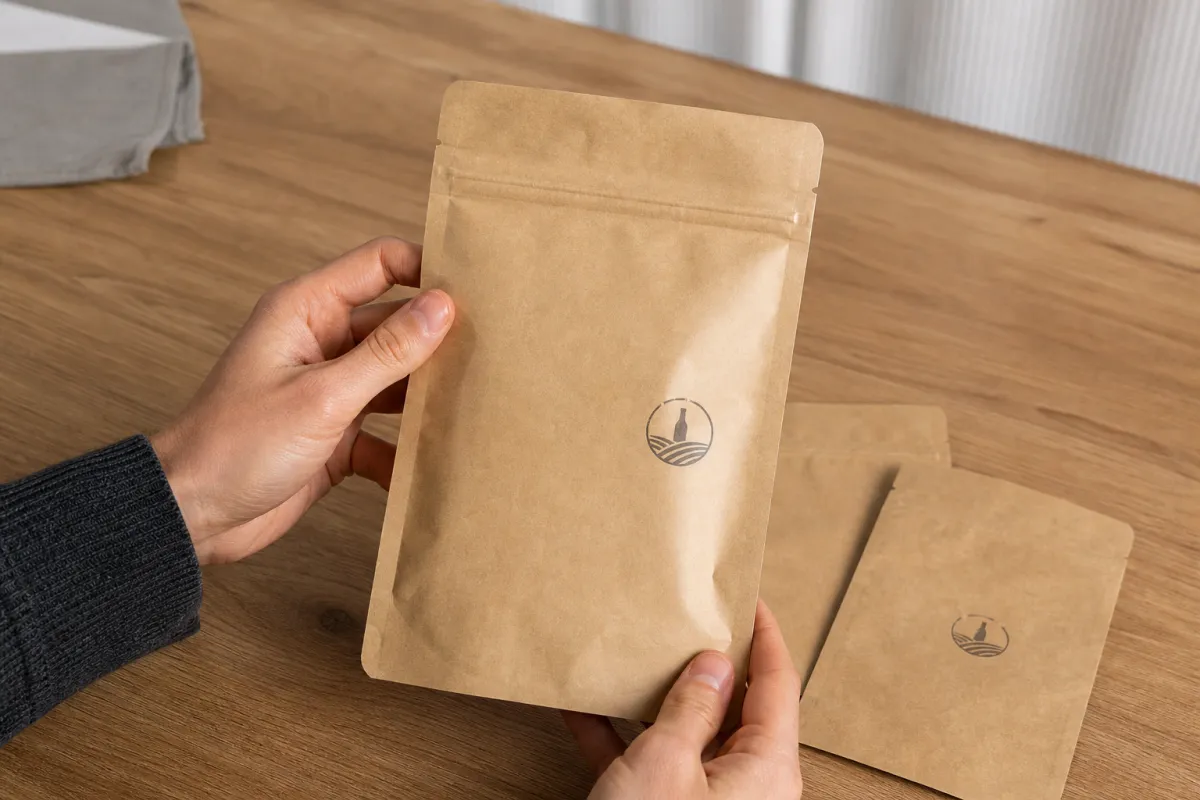
The lowest quote usually leaves something out. Maybe the fabric is thinner than the sample photo suggested. Maybe the zipper is a light coil that snags after a few openings. Maybe the logo is crisp in the digital proof and muddy once it hits production. None of that shows up in a single line item, and all of it changes wine club zipper pouches cost once the shipment is in motion.
From a buyer's point of view, the pouch has to do three jobs at once. It has to protect the bottle, carry the brand, and pack fast enough that the team does not hate the product by week two. If one of those jobs breaks down, the "cheap" pouch stops being cheap. The hidden bill usually appears as rework, customer complaints, damaged perception, or a reorder that nobody planned for.
A fair quote should break out pouch size, material, zipper style, closure type, decoration method, and packaging extras so you can compare line by line. If a supplier cannot spell that out, the quote is kinda useless. Buyers end up comparing apples, oranges, and a few mystery items nobody asked for.
Cheap on paper, expensive in rework. That is how a lot of packaging budgets get burned.
Brand perception matters too. Wine club members are not looking at a pouch like it is a commodity mailer. They are deciding whether the club feels considered. A well-made pouch can make a modest bottle feel deliberate. A flimsy pouch does the opposite; it makes the shipment feel like something grabbed at the last minute from the back of a storeroom.
Wine club zipper pouches cost should be judged on value, not sticker price. Real spend includes unit cost, setup charges, tooling fees, packing labor, and whether the pouch will be reused or tossed after one use. If the pouch improves perceived value and helps the team move faster, it earns its place. If it saves a few cents and creates waste, it was never the cheaper option.
Consistency matters as much as the first run. For clubs that ship on a regular cadence, reorders need to match the approved sample closely enough that the brand does not wander from one release to the next. A supplier worth keeping makes repeat production boring. That is a compliment. Boring means fewer surprises.
What Wine Club Zipper Pouches Are Made For
Wine club zipper pouches are soft-sided, reusable packages built for bottle shipments, member gifts, tasting sets, loyalty rewards, and retail add-ons. They are not trying to replace every carton in the packaging world. They are built to do one job well in places where weight, storage, and presentation all matter.
In practice, that often means direct-to-consumer wine clubs, seasonal launches, holiday bundles, and renewal gifts. The pouch gives you enough printable surface to carry a logo, a message, or a limited-edition graphic while staying lighter and easier to store than a rigid box. That sounds minor until you are stacking hundreds of units in a warehouse or trying to cut pack-out time during a holiday surge.
They also work well when the brand wants something reusable. A customer can keep the pouch for travel, storage, or gifting. That reuse extends the life of the packaging beyond a one-time box and gives the brand more impressions without buying a larger structure. It is practical marketing, not magic.
Still, not every pouch is the same product. A flat cotton sleeve, a gusseted canvas pouch, and a lined RPET zipper pouch can all serve the same basic role while landing at very different price points. Gusset depth changes how the bottle sits. Fabric weight changes hand feel and durability. A lined interior changes how polished the pouch looks when opened. Those are not tiny details. They are the difference between thoughtful packaging and something that feels generic.
If the pouch is part of a shipper, ask how it behaves with the bottle inside a secondary carton. If it is only a presentation layer, the requirements shift. If it needs to resist abrasion, stitch quality matters more. If it will be opened and closed repeatedly, the zipper and pull tab deserve extra attention. That is where wine club zipper pouches cost starts splitting into real buying categories.
For buyers comparing options, think in terms of use case first:
- Member gift packaging: stronger presentation, cleaner branding, moderate durability.
- Tasting kit packaging: lighter build, more print focus, lower material weight can be fine.
- Retail add-on: higher finish quality, better zipper feel, more attention to packaging details.
- Shipment companion: efficient pack-out, repeatable sizing, and fewer components are usually better.
If the use case is clear, the pricing conversation gets easier. If it is vague, every quote starts to look like a guess.
Specifications That Change Wine Club Zipper Pouches Cost
The spec sheet is where wine club zipper pouches cost either stays under control or drifts upward. Buyers often focus on artwork first, but the biggest price swings usually come from structure and material. Size, fabric, zipper type, lining, stitching, and add-on features affect unit cost more than a lot of people expect.
Start with size. A pouch designed for one standard bottle is a different build from one meant for a magnum, a boxed set, or a two-piece tasting kit. More fabric means more material. More structure means more sewing time. Even a small increase in gusset depth can change how the pouch packs and how much labor it takes to close cleanly.
Material choice matters just as much. Cotton canvas feels premium and familiar, but it may cost more than lightweight nonwoven or basic polyester. RPET can be a strong choice for sustainability-minded programs, but the finish, weight, and feel need to be checked carefully. Laminated fabrics give a cleaner branded surface and better wipe-down performance, but they can lift the quote. There is no free lunch here. There never is.
Decoration method changes both setup and final cost. One-color screen print is usually simpler than full-color print. Embroidery looks elevated, but digitizing and stitch count add labor. Woven labels can feel polished and are often a good middle ground. Heat transfer allows more graphic complexity, but it is not always the best choice for a pouch that will be handled often. Ask how the decoration method will wear after repeated use, not just how it looks in a sample photo.
Extras add up fast. Custom zipper pulls, contrast piping, internal pockets, foam protection, hang tags, individual polybags, and retail labeling all sound minor until each one adds time or tooling fees. That is how an apparently modest pouch order turns into a larger program spend.
If the pouch is going into a shipping environment, ask about the pack-out test. A supplier should be able to discuss drop risk, abrasion, and carton weight. For shipping performance standards, see the ISTA test framework. If the package includes paper inserts or hang tags, FSC-certified paper may matter as well: FSC. Those references do not pick the pouch for you, but they keep the decision grounded in real-world use.
Here is a simple way to think about the main cost drivers:
- Size: larger pouch, more material, more labor.
- Material: cotton, canvas, RPET, nonwoven, or laminated fabric all land differently.
- Closure: basic zipper, upgraded pull, or specialty zipper pull changes the price.
- Decoration: print, embroidery, woven label, or mixed decoration styles affect setup and labor.
- Extras: inserts, tags, protective wrap, and retail packaging increase unit cost quickly.
That list may look obvious. It is also where a lot of buyers lose money. The quote that looks cheapest at first can become the most expensive once those items are added back in.
Wine Club Zipper Pouches Cost, MOQ, and Unit Price
MOQ changes the conversation immediately. Lower quantities carry higher wine club zipper pouches cost because setup, sourcing, and decoration overhead get spread across fewer pieces. That is normal. It is not a penalty; it is basic manufacturing math. If someone promises a tiny run at a near-bulk rate, ask what they are leaving out.
For simple pouch builds, a smaller order may still be perfectly workable if the club is testing a new membership gift, doing a seasonal release, or launching a pilot program. The problem is pretending a 250-piece run should price like a 3,000-piece run. It will not. Unit cost improves as the order grows, but the size of that improvement depends on the exact spec.
To make the numbers easier to compare, ask for tiered pricing at multiple quantities. A quote at 250, 500, 1,000, and 3,000 pieces usually shows where bulk pricing really starts to make sense. Once you see the breakpoints, you can decide whether it is worth increasing the order size to unlock a better cost per piece.
| Option | Typical MOQ | Typical Unit Cost | Best For | Main Tradeoff |
|---|---|---|---|---|
| Stock-style zipper pouch with one-color logo | 250-500 | $1.25-$2.50 | Fast pilot runs and simple member gifts | Limited material and size choices |
| Custom cotton or canvas pouch with screen print | 500-1,000 | $1.80-$3.60 | Premium club packaging with solid brand visibility | Higher setup charges than stock options |
| RPET or laminated pouch with woven label | 1,000+ | $2.20-$4.40 | Retail-ready presentation and repeat use | More material and finishing decisions |
| Fully custom pouch with lining, embroidery, and extras | 2,500+ | $3.50-$6.50 | High-end club programs and seasonal launch packs | Tooling fees, longer lead times, and more approvals |
Those ranges are examples, not a promise. They assume standard bottle-sized pouches, common decoration, and normal production conditions. Freight, taxes, and unusual packaging requests can move the final number. Even so, they show how quickly wine club zipper pouches cost rises when the build gets more complex.
Watch the quote for hidden charges. Tooling fees can appear if a project uses custom zipper pulls, specialty embroidery setup, or a new label format. Setup charges may apply for print screens, color matching, or artwork clean-up. Sampling can be charged separately, and freight is often left out of early conversations. That is how budget surprises happen.
The clean way to evaluate a quote is to ask for a landed estimate. That means the supplier spells out the base unit cost, any setup or tooling fees, sampling, packaging, and freight assumptions. Without that, you are comparing incomplete numbers. Incomplete numbers are how procurement teams end up explaining overruns to finance.
One more point: a lower MOQ does not automatically mean better value. If the unit price is high enough, a slightly larger order may cost less overall and leave extra inventory for the next club cycle. That only works if storage is available and the design is stable. If the program is still changing, keep the order tight and spend the money on getting the spec right first.
Process and Lead Time for Wine Club Zipper Pouches
The buying process should be simple, even if the product is custom. Start with a clear brief: pouch size, quantity, target budget, branding method, and whether samples are required. If those basics are missing, the quote will be vague, and the back-and-forth will drag on.
Then move into artwork review. A clean logo file saves time. A blurry JPEG does not. If the artwork needs sizing adjustments, the supplier should tell you where the print area ends and what details may disappear at production scale. That matters more than people think, especially with small type or thin linework.
After that comes sampling or mockup approval. For premium wine club programs, this step is worth it. A sample confirms the feel of the fabric, zipper action, pouch dimensions, and decoration quality. It also surfaces problems early, while they are still cheap to fix. That alone can improve wine club zipper pouches cost over the life of the program because it prevents waste and rework.
Production time is separate from sampling time. Transit time is separate again. Buyers should not collapse all three into one date just because the launch calendar looks tight. A realistic plan often includes 3-7 business days for sampling or mockup review, 12-20 business days for production after approval, and then freight time on top of that. Exact timing depends on the spec and the factory schedule, but those are common planning ranges.
Rush orders can happen, but they usually come with tradeoffs. A faster order may reduce material choices, force simpler decoration, or add a premium charge. If someone promises a fast turnaround without any compromise, ask what they are actually changing behind the scenes. Usually something is being simplified.
For clubs with recurring shipments, the best timeline is one that repeats cleanly. A milestone-based schedule helps marketing, procurement, and fulfillment stay aligned. It should cover brief submission, artwork approval, sample sign-off, production start, ship date, and delivery. That way everyone knows what is done, what is pending, and where delays can occur.
One practical check: ask whether the supplier can hold a repeatable spec across reorders. If the pouch was approved in spring, the next run should not wander because a material color shifted or a print process changed. Consistency is not glamorous, but it matters more than a lot of sales language.
If your team is comparing multiple vendors, use the same schedule structure for every quote. That gives you a fair read on wine club zipper pouches cost versus lead time. Some suppliers are cheaper because they are slower. Others are faster because they are less flexible. You need to know which tradeoff you are buying.
Why Buyers Choose Our Wine Club Zipper Pouches
Buyers usually want three things from a supplier: a quote they can understand, a reasonable MOQ, and fewer unpleasant surprises during production. That is not glamorous. It is simply the job. The best packaging partners make wine club zipper pouches cost easier to evaluate by separating real unit cost from the noise around it.
At Custom Logo Things, the useful part is straightforward communication. A buyer should be able to ask for the size, material, decoration method, and pricing tiers without getting buried in vague language. If a pouch needs a different closure, better stitching, or a revised print area, that should be explained plainly. Packaging decisions get better when the numbers are clear.
Another reason buyers stick with a supplier is spec control. A wine club program repeats by design, and repetition exposes inconsistency fast. If the first run has a soft zipper and the second run feels tighter, your team will notice. If the print shifts or the pouch dimensions drift, members may not know the technical reason, but they will know the package feels different. That is a problem.
Practical support matters too. Buyers need artwork review, material recommendations, and realistic lead-time planning. They do not need a dramatic pitch. They need someone who can point out that a thin line will disappear in embroidery, or that a fully custom build will lift wine club zipper pouches cost enough to justify a simpler finish.
Repeat ordering should also be easy. A good supplier keeps the approved spec organized so the next order does not require a full restart. That saves time, cuts approval fatigue, and reduces the chance that a reorder comes back slightly different from the first run. The savings are not only financial. They are operational.
There is a bigger point here. A wine club pouch is not judged in a vacuum. It is judged beside the bottle, the insert card, the shipping carton, and the brand story attached to the shipment. The supplier should understand that the pouch has to fit the whole program, not just the sample on the desk. Practical packaging advice is worth more than flashy packaging language.
When the buying process is clean, wine club zipper pouches cost becomes easier to manage. You can compare costs across the same spec, see where the quantity breakpoints are, and choose the finish level that makes sense for the club. That is the real advantage: less guessing, fewer surprises, better outcomes.
Next Steps to Lock In the Right Quote
If you want a quote that means something, gather the basics before you ask. Pouch size. Quantity. Target budget. Branding method. Sample requirement. Those five items do most of the heavy lifting. Without them, the first number you get is just a placeholder.
Then compare at least two or three quantity tiers. A 500-piece run and a 1,000-piece run often tell very different stories about bulk pricing. The higher tier may bring the unit cost down enough to justify a larger buy, or it may show that the design is still too complex for your budget. Either way, the numbers help.
Send artwork early. If the supplier has to clean up the file, they should tell you what changed and whether the print area or detail level affects cost. That matters because small artwork tweaks can shift setup charges, and in some cases they can change the decoration method entirely. No one likes learning that after approval.
Also ask for a landed-cost estimate, not just a factory price. Freight, sampling, packaging, and any tooling fees belong in the conversation. That is the only way to judge wine club zipper pouches cost against the actual budget line you need to manage. A quote that leaves out half the spend is not a quote. It is a teaser.
Use the quote to compare specs, not just price. A slightly higher number can be the better buy if it includes stronger construction, better print quality, or a more useful zipper closure. On the other hand, a cheaper pouch that creates packing delays or looks weak beside the bottle is not saving you anything. That is the kind of false economy that keeps packaging managers busy for the wrong reasons.
The last thing to remember is simple: wine club zipper pouches cost depends on specs, MOQ, and production choices. If those three pieces are clear, the decision gets a lot easier. If they are fuzzy, the quote will be fuzzy too, and that usually costs more in the end.
Frequently Asked Questions
What affects wine club zipper pouches cost the most?
Size, material, and decoration method usually drive the biggest swings in wine club zipper pouches cost. MOQ matters too, because setup charges get spread across the order. Add-ons like lining, inserts, and custom tags push the price up faster than most buyers expect.
What is a typical MOQ for custom wine club zipper pouches?
MOQ depends on the material and print method, but lower quantities almost always carry a higher unit cost. Simple stock-based runs can start smaller than fully custom builds. Ask for tiered pricing so you can see where the best cost per piece starts.
How long does production usually take for wine club zipper pouches?
Sampling, production, and shipping should be counted separately. Artwork approval and material selection can change the schedule. Rush options may be available, but they often limit customization or raise wine club zipper pouches cost.
Can I get a sample before ordering a full run?
Yes, and that is usually the smart move for a premium wine club program. A sample helps confirm size, feel, zipper quality, and decoration clarity. Sampling adds time and a little cost, but it reduces expensive mistakes later.
Do wine club zipper pouches cost less than rigid wine boxes?
Often yes, especially when shipping weight and storage efficiency matter. But the final comparison depends on material, printing, and any added inserts or finishing. Compare landed cost, not just factory price, before making the call.
If you are pricing a new club pack or tightening an existing program, start with the spec and the landed cost, not the headline number. That is the cleanest way to compare wine club zipper pouches cost, avoid bad assumptions, and buy packaging that actually fits the job. If the quote is clear, the pouch is right, and the MOQ makes sense, the rest tends to fall into place.


