Plain beanies are easy to source and easy to overlook. Add a woven label, a logo patch, or both, and the product starts to feel finished. That matters when you are comparing options because the best Woven Label Beanies logo patches quote is not just the lowest unit price. It is the one that matches the artwork, the knit, the quantity, and the timeline.
A useful quote should tell you how decoration affects Cost, Lead Time, and risk. A blank cap can be cheap, but a bad placement or the wrong patch style can make the finished piece look off. Buyers usually run into problems when specs are vague: no size callout, no placement note, no knit type, and no clear target for packaging or inspection.
The goal is straightforward. Compare decoration method, MOQ, sample timing, and finishing details in one pass so you can judge the real build, not just the headline price.
Why decorated beanies sell faster than plain blanks
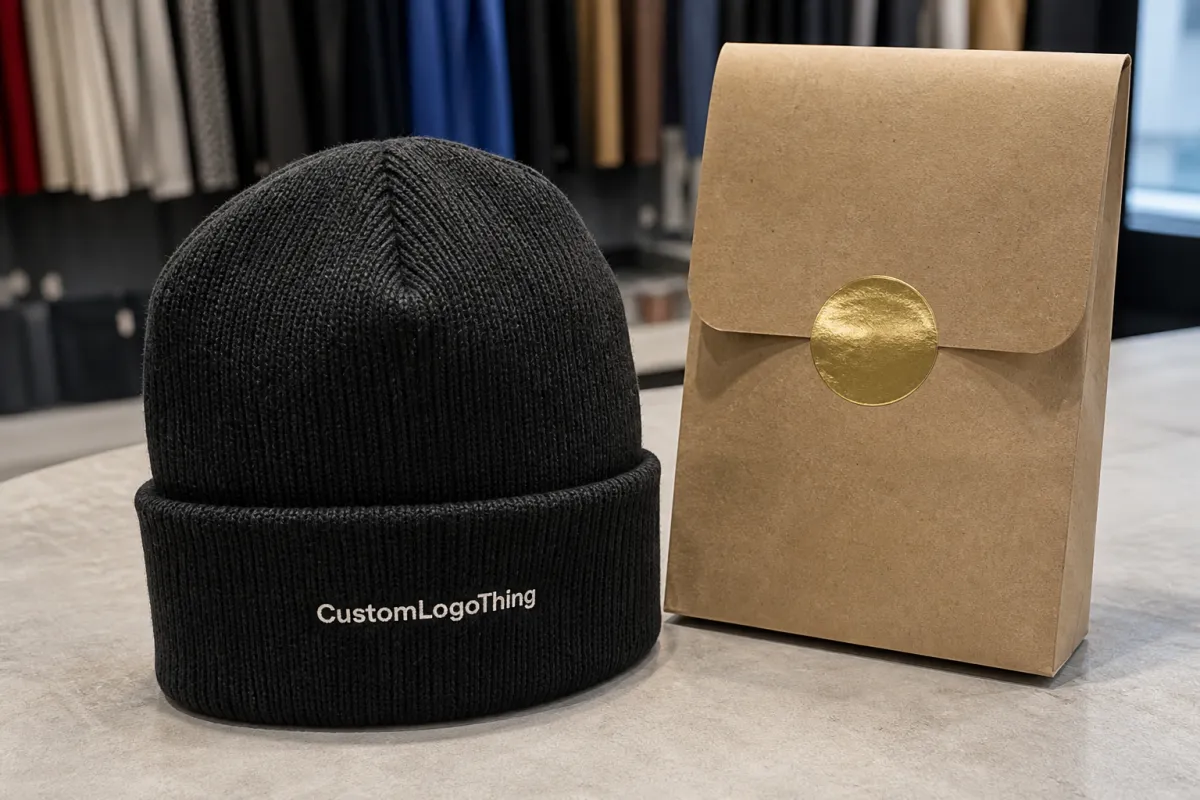
A plain knit cap can work for internal use, giveaways, or very low-margin programs. For retail, it often feels unfinished. A woven label or patch gives the buyer a quick cue that the item was designed on purpose, which helps in product pages, team stores, and shelf displays where small details do most of the selling.
Decoration also raises perceived value without changing the cap much. A front cuff patch reads more strongly from a distance, while a side-seam woven label is quieter and often better for fashion brands that want a cleaner look. The right choice depends on brand position, not just the artwork file.
Decorated beanies are also easier to approve when the logo is legible at small size and the placement is clear. That reduces revision loops and lowers the odds of fixing a problem after production has started. In practice, a simple mockup often saves more time than a clever one.
Practical rule: if the logo cannot be understood at arm's length, it is probably too small or too detailed for the knit.
Decoration options for woven labels, logo patches, and hybrid builds
Most beanie programs use one of four approaches. A woven label works well for fine lines, small type, and low-profile branding. An embroidered patch gives more texture and a stronger retail look. A PVC patch handles bold shapes and sharper edges. A hybrid build combines methods when a brand wants detail and shelf presence at the same time.
Placement matters as much as decoration type. The front cuff is the most readable location and usually the best choice for retail. The side seam creates a softer look. The back cuff works for secondary marks or size identifiers. Woven label tabs near the seam can feel premium, but they do not carry the same visual weight as a front patch.
Size needs to match the knit. A 2 to 2.5 inch patch is common on cuffed beanies. Woven label tabs often sit around 0.75 to 1.25 inches wide. Go smaller and the text starts disappearing into the texture. Go larger and the decoration can overwhelm the cap. If the logo is detailed, ask for a placement proof before the order is finalized.
Material choice also changes the hand feel. Polyester woven labels are common because they are economical and stable. Cotton labels can feel softer, but they are not always as crisp on tiny type. Embroidered patches need enough stitch density to look filled in, not lumpy. PVC patches should keep sharp edges without looking bulky. Good suppliers will tell you what the art can support instead of agreeing to everything.
- Woven labels: best for fine detail, small type, and a light hand feel.
- Embroidered patches: best for texture and visible retail branding.
- PVC patches: best for bold shapes and weather-resistant use.
- Hybrid builds: best when the design needs both detail and stronger shelf impact.
Beanie construction specs that affect fit, stretch, and wear
Beanie construction affects the final result as much as decoration. Start with the basics: cuffed or slouch, knit gauge, yarn type, and cap depth. A 7-gauge chunky knit feels warmer and heavier. A 10- to 12-gauge knit sits flatter and usually handles small branding more cleanly. That difference matters if the logo has text, thin outlines, or a tight border.
Acrylic is still common because it is affordable, holds shape, and gives predictable production results. Recycled polyester can support sustainability goals and sometimes gives a smoother hand feel. Wool blends cost more and can feel premium, but they add care considerations and are not always as easy to produce in bulk. None of these is automatically better; each serves a different use case.
Decoration has to work with the knit. A patch with the wrong backing can make one section stiff while the rest of the cap still collapses. Sew-on patches usually sit more naturally than aggressive adhesive options. Woven labels are lighter, but the stitch line still matters because sloppy attachment can cause edge curl after repeated wear.
Color matching deserves its own check. Screen colors are a starting point, not a promise. Pantone references help, but yarn has texture, twist, and absorption that can shift the look. Physical yarn cards are more reliable than a monitor. If the order is brand-sensitive, ask for yarn approval before bulk knitting begins.
The tradeoff is simple: thicker beanies feel warmer and more premium, but they can make the logo sit less flat. Lighter beanies decorate more cleanly, but they may not satisfy cold-weather expectations. Decide what the cap needs to do before comparing prices.
Pricing, MOQ, and the woven label beanies logo patches quote buyers should compare
A useful quote breaks out the parts that actually move cost: decoration method, size, number of colors, yarn type, quantity, packaging, and shipping lane. If the supplier sends only a single total with no detail, the number may be tempting, but it is hard to compare or verify.
MOQ changes unit economics quickly. At low quantities, setup, sampling, and labor spread over fewer pieces, so the per-unit price rises. Once the order reaches roughly 500 to 1,000 pieces, pricing usually settles. For a simple decorated beanie run, buyers often see ranges around $2.80 to $4.50 per unit at 300 to 500 pieces, with higher pricing for custom knit construction, multi-step decoration, heavier yarn, or individual packaging.
That range is only a starting point. The details drive the number. A woven label usually adds less than a patch, and a hybrid build costs more than either one alone. If the order needs extra stitching, extra color matching, or a special packing method, the quote should show that clearly.
| Option | Typical MOQ | Usual unit add-on | Best use |
|---|---|---|---|
| Woven label | 200 to 500 pieces | $0.18 to $0.40 | Small branding, fine text, lighter hand feel |
| Embroidered patch | 300 to 500 pieces | $0.30 to $0.70 | Retail visibility and textured logo presence |
| PVC patch | 300 to 800 pieces | $0.45 to $0.95 | Bold shapes, sharp edges, outdoor wear |
| Hybrid label + patch | 500 pieces and up | $0.50 to $1.10 | Brands that want detail and stronger shelf impact |
Hidden costs matter too. Sampling can run $25 to $60 per style. Revision rounds cost time more than money, but time matters if the launch date is fixed. Split shipping, polybagging, printed inserts, hang tags, carton markings, and carton testing all add friction. For compliance or sustainability programs, material standards belong in the quote discussion as well. If paper tags or carton components are involved, FSC may matter. If the goods must survive long transit and distribution handling, ISTA testing is worth asking about.
Process and timeline: sample, approval, production, shipping
The workflow should be simple: inquiry, artwork review, quote, proof or sample, approval, bulk production, packing, dispatch. If a supplier skips steps or changes the sequence, the job gets messy fast. A clean approval gate keeps bulk production from starting before size, placement, and quantity are signed off.
Three things usually slow a beanie order down: incomplete artwork, slow approvals, and late changes after the sample is made. Vector files remove a lot of friction. So do clear placement notes and exact quantity counts. If the target ship date matters, send the final logo, quantity, shipping address, and delivery window in the first message.
Lead times are usually more ordinary than buyers expect. A straightforward sample often takes 5 to 10 business days. Bulk production commonly lands around 12 to 20 business days after approval, depending on yarn stock, decoration method, and order size. Rush jobs can happen, but they usually cost more and still depend on material availability. Shipping is separate from production, so ask for production time and transit time as two different numbers.
Good vendors tend to ask the same questions every time. That is not busywork; it is how they protect the schedule. Missing one spec at quote stage usually creates a delay later, and the delay is almost always more expensive than answering the question up front.
Decoration placement mistakes that cause warped logos
Most ugly decoration on beanies is a placement problem. Put a patch too close to a seam and the knit pulls the logo off center. Put it across a high-stretch zone and the art distorts once the cap is worn. On soft knit goods, even a good patch can buckle if the backing is too rigid or the stitching is too dense.
Oversized patches also cause trouble. A 3 inch patch can look fine in a mockup and awkward on a compact cuff. The opposite problem is just as common: tiny text that disappears once texture takes over. Thin line art, reverse-out details, and low-contrast color combinations need more caution than a standard badge.
"A logo that looks clean on screen but warps on the cap was never really approved. It was just tolerated."
Always test placement on a real sample or a close physical proof. Measure from the cuff edge, seam line, and center point. If the beanie has a deeper fold or a taller crown than expected, the logo may need to move or shrink before production starts. That extra setup time is cheaper than a carton full of product nobody wants to wear.
How to judge a supplier's repeatability on reorders
First orders get the attention. Reorders show whether the supplier has a process or just a good memory. A reliable team keeps archived artwork, patch dimensions, color references, stitch counts, and placement notes so the second run matches the first. If those records are hard to find, expect drift in logo size, cuff alignment, thread shade, or patch position.
Repeatability is a quality system issue. The factory should have batch records and QC checkpoints before cartons ship. At a minimum, look for stitch inspection, label alignment checks, color consistency review, and packing counts. If the order ships to multiple destinations, the packing list should show exactly what went where.
The quote itself gives clues. A slightly higher number can still be the better buy if it includes saved specs, proof support, and clear reorder documentation. Rework erodes margin quickly, and missed launch dates cost more than most buyers expect. Chasing the lowest line item is often how the same order gets bought twice.
For programs that will repeat, ask whether the supplier can tie records to the exact cap style and decoration method. That reduces a lot of avoidable chaos later, especially if the same logo needs to move between knit gauges or different beanie shapes.
Next steps: send specs, request a sample, and confirm order details
The clean path is simple: choose the beanie style, confirm the decoration type, prepare vector artwork, and lock quantity before asking for a final price. If you already know the budget range, say it. A target budget helps narrow the build faster than vague approval language.
Before bulk production starts, ask for a sample or a digital proof with exact placement and size. Check the logo from a distance. Check the cuff height. Check whether the decoration feels balanced on the cap. Then confirm shipping address, delivery date, packaging preference, and who gives final approval.
If the order is not fully defined, do not expect the quote to be precise. Send the art, quantity, beanie style, and deadline in one message, and the price usually makes sense faster.
FAQs
What do I need for a woven label beanies logo patches quote?
Send the artwork file, beanie style, decoration method, quantity, placement, and target delivery date. Add color count and packaging needs so the quote reflects the actual job. If you have a budget target, include that too.
What MOQ is typical for woven label and patch orders?
Many suppliers price better once you are in the low hundreds per colorway. Smaller runs are possible, but unit cost usually rises because setup is spread over fewer pieces. MOQ often differs by decoration method, so check woven labels, embroidery, PVC, and hybrid builds separately.
Are woven labels or logo patches better for beanies?
Woven labels are cleaner and lighter when you want subtle branding. Logo patches give more visual presence and usually read better from a distance. The better choice depends on how bold you want the brand to feel and how much surface area you have.
How long does production take after approval?
A straightforward sample often takes 5 to 10 business days. Bulk production usually runs about 12 to 20 business days after approval, then shipping time is added on top. Ask for production and transit separately so the schedule is clear.
Can I reuse the same artwork on different beanie styles?
Yes, but the placement and sizing may need to change for cuffed, slouch, or thicker knit styles. Keep vector files and exact color references so the design can be adapted without starting from scratch. Ask for a fresh proof if the knit structure changes.
What should I check in a sample?
Check logo size, placement, stitch quality, edge finish, color accuracy, and whether the decoration distorts when the beanie is stretched. Also check the inside of the cap for rough backing, loose threads, or poorly trimmed seams.
What usually pushes the price up fastest?
Higher quantity helps, but the fastest price increases usually come from custom knit construction, multiple decoration steps, thicker yarn, complex artwork, and individual packaging. Small changes add up quickly, so keep the build as simple as the brief allows.


