Two bucket hats can use the same cotton twill, the same brim shape, and the same basic sewing pattern, yet one looks like finished retail product while the other looks like leftover promo stock. Often, the difference is not the hat body. It is the label: its size, weave clarity, placement, edge finish, and how naturally it sits on the crown or seam. That is why woven labels for bucket hats cost deserves attention before anyone signs off on a bulk order.
Bucket hats leave very little room for branding mistakes. The label usually sits on the front crown, side seam, brim edge, or inside sweatband, and each position exposes different flaws. A muddy logo looks worse when it is centered on a plain crown. A stiff patch can pucker a soft hat. A side tab with ragged edges makes the whole product feel cheap, even if the fabric and stitching are perfectly fine.
The right label spec does not have to be expensive. It does have to be deliberate. Size, fold type, thread count, backing, quantity, and sewing method all affect both price and appearance, and small adjustments can protect the margin without stripping the hat of its retail finish.
The Small Label That Makes a Cheap Hat Look Expensive
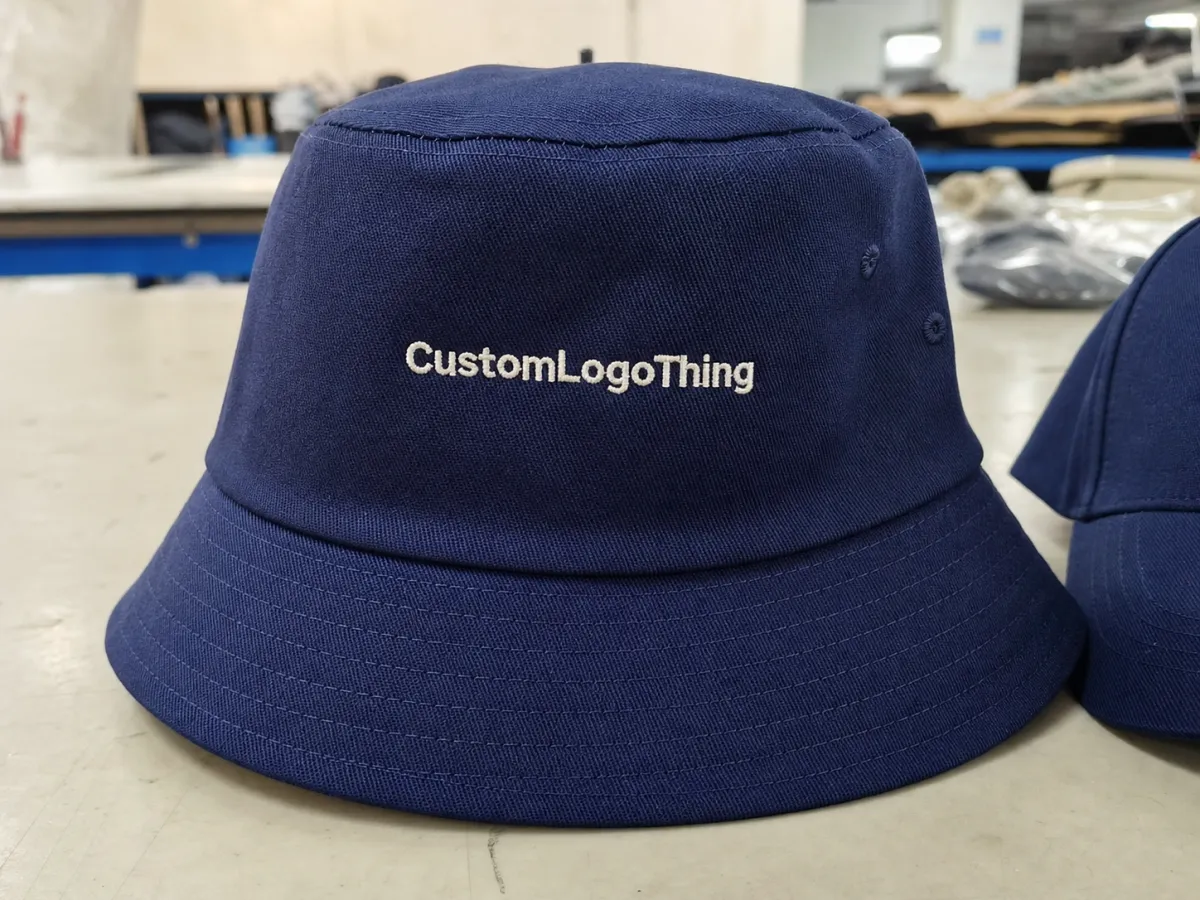
A woven label gives a bucket hat a permanent brand marker. Hang tags, stickers, and paper sleeves can support the sale, but they do not stay with the product. A label does. It keeps identifying the brand after the hat leaves the table, after the tag is removed, and after the first season of wear.
From a buyer’s perspective, that permanence matters because bucket hats are compact, rounded, and visually simple. There is no chest print or large panel to carry the design. A clean front label can make a plain hat feel intentional, while a poor label can make a decent hat feel rushed. Customers may not describe it in production terms, but they notice crooked placement, fuzzy lettering, weak contrast, and a patch that looks too heavy for the fabric.
“Most buyers do not lose money because the hat body is unusable. They lose money because the label makes the product look lower grade than it really is.”
Label cost should be treated as part of the presentation budget, not as a loose accessory line. The cheapest label can become expensive if it pulls the perceived value of the hat down. That matters for streetwear capsules, resort merchandise, brewery releases, golf outings, outdoor programs, fishing apparel, and any run where the hat needs to feel worth keeping rather than tossed into a giveaway bin.
Good label work also creates continuity across colorways. One woven label can carry the same brand mark across khaki, black, olive, navy, and natural cotton hats without changing the garment body. That is useful for small brands and merch buyers because it keeps the assortment recognizable while avoiding a separate decoration method for every fabric color.
The goal is not to make the label complicated. Usually, the best label is the one that looks like it was planned at the same time as the hat.
Label Styles That Work Best on Bucket Hats
Bucket hats accept several label styles, but not every style belongs on every hat. Placement comes first. A front patch reads differently from a side seam tab, and an interior sweatband label has a different job from a brim-edge loop label. Before comparing prices, decide where the customer will see the brand mark and how much attention it should command.
- Flat woven labels suit front branding, interior labels, and low-bulk applications where the edges can be sewn cleanly.
- Center-fold labels work well for seam insertion, especially when the label needs to wrap around an edge or sit partly inside the hat.
- End-fold labels hide raw side edges and give a tidy finish for labels sewn on two sides.
- Loop-fold labels are useful on side seams and brim edges when the mark should be visible from more than one angle.
- Woven patches create stronger front branding and more visual weight, especially for retail or outdoor styles.
- Satin woven labels are softer against the skin and often make sense inside the sweatband or crown.
For small logos, fine type, and sharp line work, damask woven labels are usually the safest choice. The weave is tighter than many lower-detail options, so small elements hold better and letter edges stay cleaner. If the design uses thin strokes, small registration marks, or compact brand text, damask often earns its higher cost by preventing the logo from turning into a soft rectangle of thread.
Woven patches are stronger visually, but they are not automatically more premium. A heavy merrowed patch can look excellent on a sturdier outdoor bucket hat and awkward on a light, unstructured fashion bucket. The same logo may need a flat label for one hat and a patch for another. That is not inconsistency; it is respecting the construction.
Buyers comparing Custom Labels & Tags options should match the label style to the hat body before locking the quote. A relaxed washed-cotton bucket hat may need a soft, narrow side tab. A structured streetwear bucket may support a larger front patch. Same brand, different physics.
Specs That Change Label Quality Before Price Enters the Room
A quote needs a real spec. “Small and clean” is not enough. Useful specs include label size, fold style, cut type, thread color count, background color, logo detail level, backing, edge finish, placement, and whether the label will be delivered loose or sewn onto hats. Without those details, the first price is only a placeholder.
Size changes the label quickly. A small side tab might be about 0.5 x 1 inch. A front woven label often lands around 1.5 x 2 inches. A larger woven patch may be 2 x 2.5 inches or larger, depending on the crown shape and available sewing area. Bigger labels cost more because they use more material and machine time, but bigger also gives fine artwork more room to breathe. The cheapest small label is not a bargain if the logo becomes unreadable.
Thread color count is another major variable. Many bucket hat labels work well with 2 to 6 thread colors. Extra colors can help a complex logo, but they add cost and may not improve the final read at small scale. Gradients, shadows, hairline strokes, and photographic detail rarely translate cleanly into woven form. If the artwork relies on tiny effects, simplify it for the label rather than paying to reproduce details no one can identify from arm’s length.
Edge finish affects both appearance and behavior on the hat. Heat-cut edges are common for standard flat labels. Ultrasonic cutting can create a cleaner edge on certain synthetic constructions. End-fold and center-fold styles hide edges by design. Merrowed borders give woven patches a thicker, framed look, though they add bulk and are not ideal for every crown shape.
Backing should be chosen for the actual application, not because it sounds more finished. No backing is common for sew-in labels. Iron-on backing can help patch-style labels, but it still may need stitching for durability on a hat that will be worn, bent, packed, and washed. Adhesive backing is often useful for positioning before sewing. Fusible backing can help in specific production setups, though it adds handling steps and may not be necessary for a simple side tab.
Readability deserves a hard check before production. Text below about 5 to 6 points can become muddy depending on font, contrast, weave density, and thread choice. A narrow script logo in low-contrast thread may look fine on a digital proof and weak once woven. Strong contrast, slightly heavier letterforms, and fewer tiny internal gaps usually produce a more professional label.
For broader production planning, hat packaging and transport should not be ignored. The ISTA library can help buyers think through carton strength, handling, and what happens after finished hats leave the sewing table. A good label will not rescue stock that arrives crushed or poorly packed.
Woven Labels for Bucket Hats Cost: What Drives the Quote
Woven labels for bucket hats cost is driven mainly by size, quantity, thread color count, fold or edge finish, backing, artwork complexity, sampling, and application. Loose labels cost less than labels sewn onto finished hats because sewing adds labor, handling, alignment checks, and sometimes fixture or placement work. A quote that does not separate label production from sewing may hide the part of the project that actually affects margin.
Practical price ranges are useful, as long as they are treated as ranges rather than promises. Simple small woven labels often land around $0.10 to $0.45 per piece at higher quantities. Larger woven patches or specialty finishes commonly run around $0.40 to $1.50+ per piece, depending on the construction. Setup charges, sample fees, rush fees, sewing charges, and freight can change the finished landed cost.
Two labels with the same logo can price very differently. A 1 x 1 inch heat-cut label with two thread colors is not the same job as a 2.5 inch merrowed patch with six colors and sewn application. The first is efficient. The second may be worth it for a visible retail patch, but it is a different product with different labor behind it.
| Label option | Best use | Typical cost per piece | Notes |
|---|---|---|---|
| Small flat woven label | Side tab, inside sweatband, subtle branding | $0.10-$0.25 at higher quantities | Best for simple artwork and low-bulk placement |
| Center-fold or end-fold label | Seam insertion, hidden edges, tidy side branding | $0.15-$0.35 | Good balance of finish, durability, and cost per piece |
| Large woven patch | Front crown branding and retail presentation | $0.40-$0.90 | Higher material use, stronger visual impact, more placement sensitivity |
| Special finish or sewn application | Premium drops, heavier branding, finished hat programs | $0.70-$1.50+ | May include extra handling, sewing, backing, or finishing work |
MOQ matters because woven labels require setup before production begins. Custom runs often start around 100 to 500 pieces, though the better per-piece economics usually appear at 1,000 pieces and above. Setup charges spread across more labels, machine time is used more efficiently, and the unit cost becomes easier to justify.
For a cleaner comparison, ask for tiered pricing at 300, 500, 1,000, and 2,500 pieces. If you know the hat program will continue, add 5,000 pieces to the request. The spread between tiers often tells you more than the first price does.
If the program also includes paper swing tags, size stickers, barcode labels, or insert cards, keep the whole group under one brand spec using Custom Labels & Tags. That helps prevent five slightly different whites, mismatched logo sizes, and a packaging system that looks assembled one emergency at a time.
MOQ, Sampling, and Unit Cost Tradeoffs Buyers Should Know
MOQ exists because woven labels are not produced like one-off stickers. Artwork has to be translated into weave data, thread colors must be selected, machines need setup, and the first pieces have to be checked before the run is useful. That labor exists whether the order is 100 labels or 5,000.
Small orders can still make sense. A 100 to 300 piece run may be reasonable for a test drop, a boutique colorway, a private event, or a design that has not been proven yet. The unit cost will be higher, but the risk is contained. For a replenishment program, seasonal merch line, or hat that is already selling, a very low quantity may create false savings because the buyer pays setup again on the next run.
Sampling is worth considering whenever the label is front-facing, the text is small, the logo has tight detail, or brand color matching matters. A digital proof confirms layout, scale, fold direction, and approximate color placement. It does not fully show thread texture, edge behavior, or how the label looks on the curve of a bucket hat crown. A physical sample is slower, but it can catch problems that a screen cannot.
There is a practical way to control setup charges and unit cost without making the hat look cheaper:
- Reduce the label size only if the artwork still reads clearly.
- Use the fewest thread colors needed to preserve the brand mark.
- Choose a standard fold when it fits the placement.
- Skip backing that does not support the sewing or finishing process.
- Use one label across several hat colorways when the contrast still works.
- Approve a physical sample before sewing labels onto a large finished hat run.
The best savings usually come from removing waste, not from stripping out every quality detail. If a label is too small, too faint, or too stiff for the hat, the lower price does not help much. Buyers should look for the point where cost comes down but the label still supports the product’s intended price level.
Production Steps and Lead Time for Custom Hat Labels
A normal woven label order moves through quote request, artwork review, spec confirmation, digital proof, sample approval if needed, bulk weaving, cutting, folding, inspection, packing, and shipping. If the labels are being sewn to hats, application and final inspection come after label production.
Lead time depends on the clarity of the spec as much as the complexity of the label. Digital proofing often takes 1 to 3 business days after artwork and specs are complete. Physical samples commonly take 5 to 10 business days after proof approval. Bulk production often falls around 7 to 20 business days, depending on quantity, construction, and current capacity. Sewing, freight, customs if applicable, and final hat assembly add time.
Rush orders are possible for simple labels when production space is available. They become harder when the artwork has many colors, the label is large, the backing is unusual, or the buyer revises the logo after proof approval. The fastest projects are not always the simplest products; they are the ones with the clearest decisions.
Quality control should be built into the timeline. At minimum, check weave clarity, color visibility, label dimensions, fold direction, edge consistency, count accuracy, and packing. For sewn labels, check placement height, angle, stitch tension, puckering, and whether the label sits flat when the hat is worn. A label can look fine loose on a table and still sit badly on the crown if the patch is too stiff or the placement is too high.
For retail launches, influencer kits, and premium merchandise, physical approval is usually worth the delay. A defect on loose labels is irritating. A defect on 5,000 finished hats is expensive and slow to unwind.
If the finished hats will ship to retailers, events, or multiple warehouse locations, packaging needs the same practical attention. Crushed cartons, bent brims, moisture exposure, and poor packing counts create problems that have nothing to do with the label but still affect the product experience. The FSC site is useful if the program includes paper tags, paperboard inserts, or other components where responsible sourcing has been requested.
How Custom Logo Things Keeps Hat Label Orders Practical
Custom Logo Things helps buyers turn a logo file into a production-ready woven label spec. That work is practical rather than decorative: confirm the label size, choose the fold, narrow the thread colors, check whether the artwork will weave cleanly, and make sure the construction fits the hat.
A small side seam tab should not be quoted the same way as a front patch for a premium bucket hat. The side tab needs clean folding, good contrast, and low bulk. The front patch may need a tighter weave, heavier border, backing, or sample approval before bulk production. The right recommendation depends on the finished hat, not just the logo file.
Clear quoting matters. Buyers should be able to see MOQ options, tiered pricing, sample costs, sewing costs, and freight estimates rather than a headline price that leaves out half the order. The useful number is the landed cost of the label program, especially when purchasing is comparing decoration methods or deciding whether to order loose labels or finished hats with labels already applied.
Quality checks should cover artwork translation, proof accuracy, weave detail, cut and fold consistency, color visibility, backing choice, packing counts, and sewn placement if application is included. Those checks are not elaborate; they are the difference between a product that looks planned and one that looks improvised.
The Custom Labels & Tags category is most effective when the label is treated as part of the hat spec from the beginning. If the budget is tight, simplify the label in places customers will not miss. If the hat is intended for premium retail, spend more carefully on weave clarity, contrast, and sample approval. Do not pay for details no one can see. Do pay for the details customers touch, read, and photograph.
Next Steps Before You Request a Bucket Hat Label Quote
Before requesting a quote, gather five pieces of information: label placement, approximate size, order quantity, sewing requirement, and logo file. Those details remove most of the slow back-and-forth and make the first quote far more useful.
Vector artwork is best. AI, EPS, and PDF files usually translate most cleanly into weave data. A high-resolution PNG can help as a visual reference, but it should not be the only file for a logo with fine detail. If brand color matters, include Pantone references or another clear color standard. Thread matching can get close, but it will not behave exactly like ink, screen color, or embroidery thread.
Hat details help as well. Send the fabric, color, crown construction, brim style, and intended label location if they are already known. A soft washed-cotton bucket hat and a structured polyester bucket hat do not handle labels the same way. The label needs to match the garment’s weight, curve, and use.
For price comparison, ask for 300, 500, 1,000, and 2,500 piece tiers. If the order may repeat, ask for 5,000 too. If the label is large, visible, premium, or tied to a launch date, request a physical sample before bulk production. That is not overcautious; it is cheaper than finding out too late that the label looks wrong on the hat.
Bottom line: the real cost of woven labels for bucket hats is controlled by clear specifications, realistic quantities, and production choices that match the hat. Send the artwork, size, placement, quantity, fold preference, backing needs, and sewing requirements to Custom Logo Things, and the quote can be built around the actual job instead of guesswork.
How much do woven labels for bucket hats usually cost?
Basic small woven labels often range from about $0.10 to $0.45 each at higher quantities. Larger woven patches or specialty finishes can run about $0.40 to $1.50+ each. Sewing the label onto the bucket hat is usually quoted separately, so the finished applied cost is higher than the label alone.
What is the MOQ for custom woven bucket hat labels?
Many Custom Woven Label orders start around 100 to 500 pieces, depending on the specs and production setup. Better unit cost usually appears at 1,000 pieces and above because setup work is spread across more labels. Ask for tiered pricing if you want to see the real break points.
Are woven labels or embroidered patches better for bucket hats?
Woven labels are usually better for fine logo detail, small text, clean edges, and lighter-weight branding. Embroidered patches are better for raised texture, a heavier hand feel, or a rugged outdoor look. For most small front-facing bucket hat logos with lettering, woven construction gives cleaner detail.
How long does it take to make woven labels for hats?
Digital proofing often takes 1 to 3 business days after specs are confirmed. Physical samples may take 5 to 10 business days after proof approval. Bulk production commonly takes 7 to 20 business days, with extra time needed for sewing, freight, and final hat assembly.
What details do I need for a woven label quote for bucket hats?
Send your logo file, desired label size, order quantity, placement, fold style, backing preference, and thread color requirements. Include whether you need loose labels only or labels sewn onto finished bucket hats. If the hat fabric, color, or construction is already chosen, include those details so the label can be spec'd correctly.