For boutique retailers, a logo patches Bulk Order for Boutique retailers is not only a sourcing choice. It is a merchandising decision that can shift how a product feels on the shelf, on a hanger, or in a gift box. A small branded patch can make a private-label hoodie look more intentional, a tote look more premium, and a cap look finished rather than plain.
That matters because boutique customers often judge value in seconds. They may not compare stitch counts or backing types, but they do notice whether a piece looks coherent. A patch can create that coherence without changing the base garment, the bag, or the hat underneath. For retailers working with tight margins, that kind of visual lift is hard to ignore.
It also helps that patches sit in a practical middle ground. Full garment embroidery is more involved, and direct print can look too flat for some products. A custom patch gives buyers a repeatable brand marker that can be applied across categories with less production friction than reworking the item itself.
Why Boutique Retailers Use Logo Patches to Lift Perceived Value
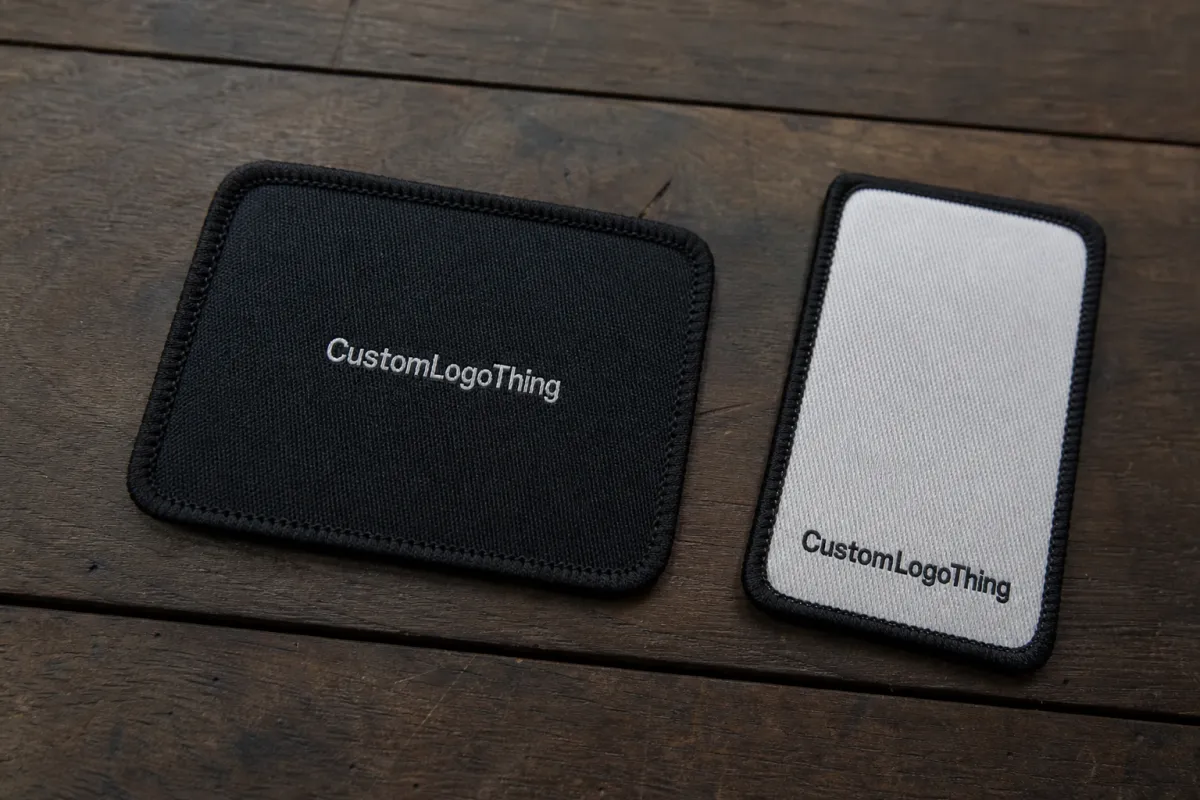
Retail buyers usually ask the same question first: what changes the customer’s impression fast enough to matter on the floor? A patch often does. On a plain hoodie, cap, tote, or beanie, a well-made patch creates a branded focal point without forcing a redesign of the entire product. That is why logo Patches Bulk Order for Boutique retailers keeps showing up in private-label basics, seasonal drops, and giftable accessories.
The economics are fairly direct. A patch can cost far less than a more involved embellishment, yet it still creates a clear visual cue. In practical terms, that can improve margin while making the item look more polished. If a boutique is choosing between an unbranded $18 cap and a branded version with a modest patch cost added, the branded option often has the better retail story.
Small branding details also carry across channels. On the sales floor, they help with recognition. In unboxing, they make the product feel more considered. Across a product line, they create continuity, and customers notice continuity even when they cannot name it. A tote, tee, and hat that all speak the same visual language tend to look like a brand rather than a random assortment.
“The best patch programs do not try to overpower the product. They make it look finished, which is what boutique buyers usually want when they are trying to protect margin and still sell a branded story.”
Common retail uses include private-label essentials, capsule collections, seasonal apparel, travel bags, and premium gifts. The goal is not decoration alone. It is better presentation, clearer branding, and more consistent sell-through. That is the difference between a patch as ornament and a patch as a sales tool.
For buyers building branded assortments, it helps to review broader sourcing terms inside a structured program such as our Wholesale Programs, especially if patches will be part of recurring seasonal buys rather than a single test order.
Patch Styles, Backings, and Materials That Fit Retail Packaging
Not every patch style fits every retail use. That sounds obvious, but many weak runs start with a strong logo and the wrong material match. Boutique products usually need a premium look, stable color, and enough durability to survive hanging, folding, try-ons, and routine handling.
Embroidered patches work well when texture and a classic brand feel matter. They are common on apparel and caps because they bring a tactile, established look. Woven patches handle smaller details better and are often the cleaner choice when a logo includes fine typography. PVC patches give a more modern finish and hold up well in wet or high-contact settings. Leather patches fit higher-end outerwear, bags, and rugged basics. Chenille has a softer, varsity-style feel. Printed patches can work for complex art or gradients, though they are not always the strongest fit for premium boutique positioning.
Backing choice matters just as much as the surface material. Sew-on remains the most reliable option for long-term durability. Heat seal can work on compatible fabrics if application conditions are controlled. Iron-on is convenient, but buyers should be cautious; household application varies widely, and adhesion depends on fabric, temperature, and pressure. Adhesive is usually better for temporary placement or promotional use. Velcro suits interchangeable branding or tactical-style merchandise, but it is a narrow use case. For garments that will be washed often, sew-on or a properly tested heat-seal construction usually makes more sense.
Material selection should match the story the product is trying to tell. If the line leans premium, a leather or woven patch can elevate the item without adding visual clutter. If the product is outdoors-oriented or intended for rougher handling, PVC often holds up better. An embroidered patch can fray at the edges if the fabric sees constant abrasion. That is not a design flaw so much as a mismatch between material and use.
Packaging and display also influence how a patch reads. A centered patch on a folded garment looks deliberate. Gift sets benefit from a patch that aligns with the hang tag, tissue, or sleeve card. Even a well-made patch can look underwhelming if it is attached off-center or buried in a crowded presentation. The patch does not need to be loud. It does need to look intentional.
For quality expectations and shipping performance references, buyers often use third-party resources such as the International Safe Transit Association and the EPA for material stewardship and packaging-related guidance.
Logo Patch Specifications Buyers Should Confirm Before Ordering
The quickest way to avoid costly mistakes is to lock the specifications before production starts. A good supplier should ask for size, shape, material, border style, backing, attachment method, artwork format, and color references. A vague brief usually produces a patch that needs corrections later.
At minimum, confirm these points:
- Size: exact width and height in inches or millimeters
- Shape: round, square, shield, custom die-cut, or irregular outline
- Color count: the number of thread or print colors to be matched
- Border style: merrowed, laser-cut, stitched edge, or heat-cut
- Backing type: sew-on, heat seal, iron-on, adhesive, or Velcro
- Attachment method: permanent, temporary, or reusable
Artwork matters just as much. A vector file is preferred because it keeps lines clean and makes digitizing or artwork setup more accurate. If color consistency matters, include Pantone references. If the logo has tiny type or thin strokes, ask for a minimum line thickness recommendation before approving the artwork. Small details can disappear below a certain size, especially on embroidered and chenille constructions.
Retail application should also shape the spec. Will the patch go on a beanie that stretches, a bag that gets scraped on counters, or a hoodie that will be washed repeatedly? Those are different use cases, and the patch should be chosen with that in mind. A design that looks perfect in a mockup can still fail in use if the backing is wrong or the border is too delicate.
For first-time programs, request a digital proof at minimum. For a hero product or premium collection, a physical sample is usually worth the extra time. The cost of a sample is small compared with the cost of correcting a bad first shipment. In sourcing terms, that is cheap insurance.
Buyers should also ask how closely the finished patch will match the approved proof. Color variation, border tightness, and edge finish can shift between sample and bulk run if the process is not controlled. A supplier who can explain where variation may occur is usually easier to work with than one who promises perfect output and leaves no room for reality.
Logo Patches Bulk Order for Boutique Retailers: Pricing, MOQ, and Unit Cost
This is where the buying decision becomes concrete. A logo patches Bulk Order for Boutique retailers should be evaluated on total landed cost, not just unit price. That means setup fees, sample costs, shipping, and any secondary handling or relabeling charges all belong in the comparison.
Typical cost drivers include patch size, stitch density, material choice, number of colors, backing type, and quantity. Larger patches use more material and labor. Dense embroidery requires more machine time. Specialty options such as leather, PVC, or custom backing can increase cost, especially at lower volumes. More units usually lower the unit price, but only if the artwork is already stable and the supplier can run the order efficiently.
Here is a practical pricing view buyers can use as a planning benchmark. These are not universal numbers; they change with artwork complexity, supplier location, and shipping method. Still, they help retailers set expectations before requesting quotes.
| Patch Type | Typical MOQ | Approx. Unit Cost at 1,000+ | Best Use Case |
|---|---|---|---|
| Woven | 100-300 pieces | $0.20-$0.60 | Fine detail, small logos, clean retail presentation |
| Embroidered | 100-500 pieces | $0.25-$0.80 | Classic apparel branding, caps, hoodies |
| PVC | 200-500 pieces | $0.45-$1.10 | Outdoor gear, bags, durable accessories |
| Leather | 100-300 pieces | $0.40-$1.25 | Premium basics, jackets, tote bags |
| Chenille | 200-500 pieces | $0.60-$1.50 | Fashion-forward, varsity, statement pieces |
One detail many buyers miss: a slightly higher unit price can still be the better deal if defect rates are lower. If a cheaper supplier sends patches with uneven edges, weak backing, or inconsistent color, the hidden costs show up in labor, returns, and customer complaints. That is not savings. That is delayed waste.
MOQ varies by style and factory setup. Simpler woven or embroidered patches often allow lower entry quantities than specialty materials. Some suppliers can combine sizes or colors under one MOQ, but not all do. Ask early, because that affects inventory risk. For boutiques testing a new logo program, lower MOQ can matter more than chasing the lowest possible unit cost.
It also helps to quote more than one material. A woven version, an embroidered version, and a PVC or leather version can reveal how much of the price difference comes from actual production demands versus supplier preference. Sometimes the premium is justified. Sometimes it is just a different route to the same visual result.
Production Steps, Lead Time, and Approval Milestones
Most patch orders follow a predictable sequence: inquiry, artwork review, quote, proof, sample approval, bulk production, quality check, and shipment. The process is simple on paper. The mistakes are usually human. Missing files, unclear color references, and late design changes are the usual culprits.
For planning, sample development may take several business days depending on complexity. Bulk production often runs in the range of 12-15 business days after proof approval for standard styles, though specialty materials or larger volumes can extend that. Transit time is separate. Air freight, sea freight, and courier service all change the final delivery date. If a launch date matters, that should be discussed before production begins, not after the cartons are packed.
Here are the milestones boutique buyers should request up front:
- Artwork confirmation with line thickness and color review
- Digital proof or sample approval
- Production start date
- Mid-run quality check if the order is large enough to justify it
- Final QC and packing confirmation
- Estimated ship date plus transit mode
Rush service is sometimes possible, but it depends on patch type, artwork complexity, and factory capacity. A simple woven patch can move faster than a dense embroidered or molded PVC design. If speed matters, ask whether the supplier can prioritize proofing first. That step often becomes the bottleneck.
Timing should also align with store resets, buying windows, and seasonal drops. Boutique inventory is unforgiving. If patches arrive late, the collection loses momentum. If they arrive early without storage planning, they may sit long enough to get bent, scuffed, or mixed with the wrong SKU. A patch program lives or dies on schedule discipline as much as on design quality.
How Boutique Buyers Keep Reorders Consistent, Compliant, and Easy to Scale
For boutique buyers, repeatability is often more valuable than novelty. A patch program that can be reordered with the same size, same color profile, and same edge finish gives the retailer confidence across multiple SKUs and seasons. That matters when the logo appears on caps, totes, outerwear, and gift items that need to feel related without being identical.
Good production control starts before the first order ships. That means pre-production checks, in-line inspection, and final QC. Color stability should be reviewed against the approved proof, and dimensions should be checked before packing. In small runs, variation is more visible because there is less volume to mask it. In larger runs, inconsistency can spread quickly if nobody is watching.
Compliance is another area where practical sourcing beats guesswork. Retailers should think about fabric compatibility, wash performance, labeling expectations, and any material restrictions tied to their target market. If a patch will be attached to children’s goods, performance and material review become even more important. For any program involving transit or storage stress, buyers can also reference packaging and distribution test guidance from organizations like ISTA.
Reorders are easier when specs are stored cleanly. Save the artwork file, approved size, backing type, color references, and final sample notes. That reduces back-and-forth later and helps maintain consistency across replenishment runs. It also makes scaling simpler if a product starts selling faster than expected. Boutique brands do not always get that kind of warning, so the paperwork has to do the memory work.
Three practical checks matter most on repeat runs: first, verify that the patch dimensions still match the approved spec; second, compare the backing performance to the original batch; third, confirm that edge finish and color placement have not shifted. Those are the points where small drift can turn into a noticeable product difference.
For repeat programs and multi-SKU assortments, buyers can also use our FAQ as a quick reference before sending the next spec sheet. That tends to reduce back-and-forth on the front end, where clean orders are usually won.
Next Steps to Place a Confident Bulk Patch Order
If you are ready to place a Logo Patches Bulk order for boutique retailers, gather the essentials first: logo file, desired size, patch style, backing preference, quantity range, and target delivery date. That gives the supplier enough information to quote accurately and flag problems before production starts.
Ask for two or three material options if you are unsure about finish or price. Compare them side by side. Sometimes the cheapest version looks fine in a mockup but underperforms in hand. Sometimes the premium version is only slightly more expensive and clearly better suited to the product line. The point is to buy deliberately, not blindly.
If the patch will sit on a hero product, order a sample or detailed digital proof before committing to full production. That step protects against avoidable surprises in size, color, and attachment method. Plan stock around the launch date, not the approval date, and keep buffer inventory if the item is likely to reorder quickly.
Most of all, treat the patch as part of the product architecture. It affects perception, margin, and presentation. A patch order that is sized correctly, approved cleanly, and checked properly can make a boutique collection feel more complete without changing the core garment. That is why the spec sheet deserves the same attention you would give to fabric or trim.
What is the best patch type for a logo patches bulk order for boutique retailers?
Embroidered and woven patches are common for apparel because they balance detail, cost, and brand visibility. PVC or leather patches suit premium accessories and outerwear when texture and durability matter more than fine thread detail. The best choice depends on where the patch will be used, how often it will be handled, and the image you want on the shelf.
What MOQ should boutique buyers expect for custom logo patch orders?
MOQ varies by patch style, complexity, and factory setup, but bulk orders usually start with a minimum quantity per design. Simpler styles often allow lower entry quantities than highly detailed or specialty-material patches. Ask whether different colors or sizes can be combined under one MOQ to reduce inventory risk.
How long does production usually take for custom logo patches?
Timelines depend on artwork approval, sample sign-off, and production queue, but buyers should plan for proofing plus manufacturing time. More complex patches take longer because stitch testing, color matching, and backing application add steps. Shipping method also affects final delivery, so confirm both production lead time and transit time.
Can I request samples before placing a bulk order?
Yes, and it is smart for first-time boutique runs or premium product launches. Samples help verify color, size, texture, edge finish, and attachment method before full production. If a physical sample is not practical, ask for a detailed digital proof and material notes.
What files do I need to start a custom patch quote?
A vector logo file is best because it preserves clean lines and helps with accurate digitizing or artwork setup. Include size, quantity, patch style, backing preference, and Pantone references if color matching matters. The more specific the brief, the faster the quote and proofing process usually moves.


