A guest lifts a robe from a boutique shelf, runs a hand over the collar, and sees the label before they check the price tag. That small woven tag may be the only permanent branding left after the tissue, kraft wrap, hangtag, gift box, or corrugated mailer is gone. That is why a Woven Labels Material guide for hotel boutiques matters more than many retail buyers expect.
Hotel boutique labels are not decoration pasted onto a finished product. They have to survive folding, steam, guest handling, shelf display, repeated laundering, and sometimes the harsher wash cycles used for robes, towels, spa wraps, uniforms, and linen products. A beautiful label that scratches the neck or curls after three washes is not premium. It is a small defect with a long memory.
For buyers building a cohesive brand system, woven labels often work best alongside matching packaging components such as hangtags, tissue, and trim cards. If you are reviewing a wider trim or branding set, it can help to compare label styles with Custom Labels & Tags so the garment label, gift presentation, and shelf display feel like one system rather than separate purchases.
Woven Labels Material Guide for Hotel Boutiques: What the Label Really Has to Do
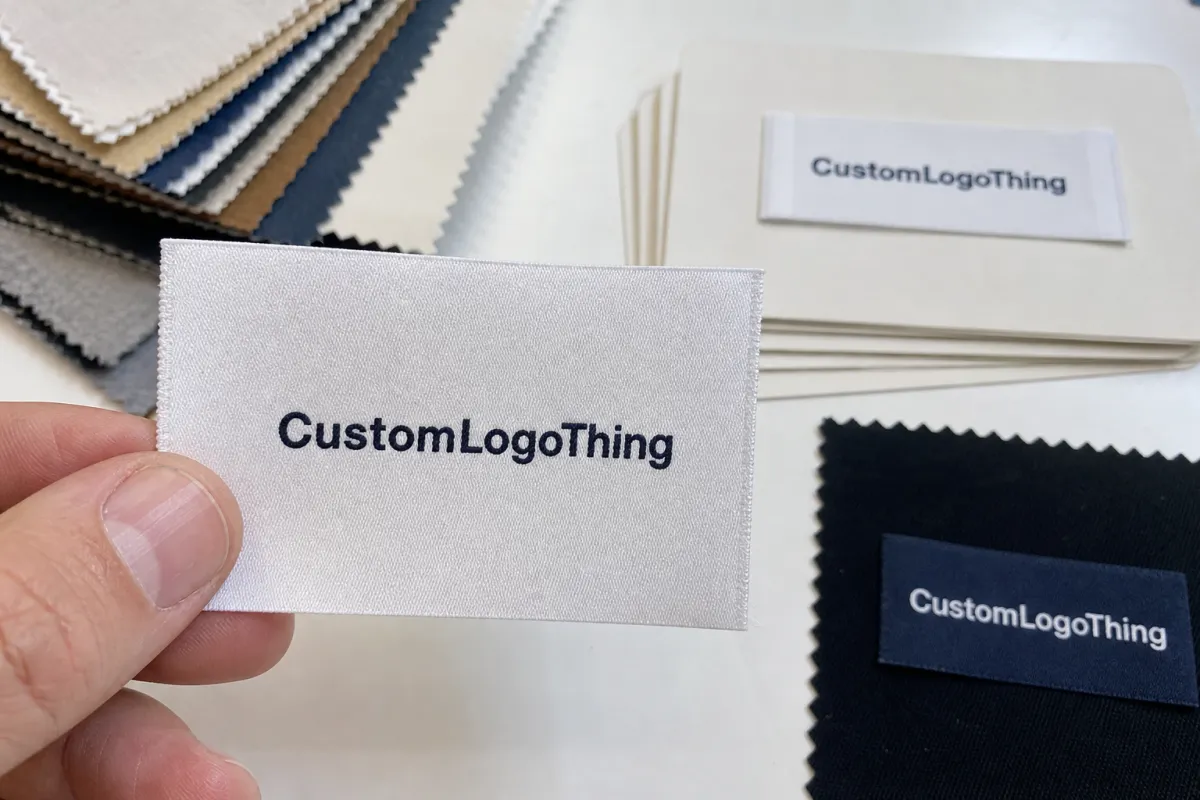
A woven label is made by weaving yarns into the design rather than printing ink on top of fabric. The logo, border, background, and lettering become part of the textile structure. That construction gives a good woven label the permanent, refined look buyers associate with premium apparel and hospitality goods.
The hospitality retail mix makes label selection more complicated than it first appears. One property may sell terry robes, waffle robes, linen shirts, cotton sleepwear, spa headbands, slippers, aprons, totes, scarves, candles in fabric pouches, and small gift-shop apparel under the same visual identity. Those items do not all want the same trim. A label that feels acceptable on a canvas tote can feel bulky inside a sleep shirt.
The main material choices are usually damask, satin, taffeta, cotton or cotton-look yarns, and recycled polyester. After that come edge finish, backing, fold style, dimensions, thread colors, and attachment method. This is the part buyers often underestimate. They pick the softest sample or the lowest quote, then discover the fold is wrong for the seam, the lettering is too small to weave cleanly, or the label feels stiff after washing.
The better approach is less glamorous but more reliable: match the label to the product. Consider garment weight, skin contact, laundering method, retail price point, sewing construction, and brand mood before choosing a material. A quiet resort line may need a matte cotton-look label. A polished city hotel robe may call for high-density damask with a crisp center fold. A spa towel may need durability more than delicacy.
It also helps to think about where the label sits. A neck label touches skin, so softness matters. A side-seam label can handle more structure. A hem label on a robe may be visible during display but not during wear, so appearance can outweigh touch. A hanging fabric loop on a retail tote may need the label to do double duty as branding and a reinforcement point. In each case, the label is doing more than identification. It is shaping the guest's reading of quality.
For hotel boutiques, the label often functions as a quiet proof point. It tells the buyer that the product belongs to a specific brand family and was made with enough care to deserve a permanent identifier. That is why the textile choice, the stitching method, and the finishing detail should all support the same message. A fuzzy, flimsy, or poorly aligned label can make an otherwise good product feel rushed.
How Woven Labels Are Made: Threads, Looms, Edges, and Backing
Custom Woven Labels are produced on narrow fabric looms using polyester, cotton, or specialty yarns. The loom controls how threads move across the label width, building the background, logo, text, and border one thread path at a time. After weaving, the label is cut, folded, heat sealed if needed, inspected, packed, and prepared for sewing or application.
At a basic level, warp threads run in one direction and weft threads pass across them. Simple enough. Yet that structure shapes nearly every artwork decision. A thick hotel monogram can weave beautifully. A hairline script font, soft drop shadow, or tiny line of legal text may not. Gradients also behave differently in thread than they do in print because yarn colors shift in steps, not photographic blends.
Printed labels still have their place. They can handle small care instructions, QR codes, detailed wash symbols, and many colors with less friction. Woven labels, though, usually feel more permanent and more valuable for visible branding. For hotel boutique goods, that perceived permanence matters because the label stays with the robe, scarf, shirt, or bag for the life of the product.
Edges deserve attention. Ultrasonic cut edges are clean and common for polyester labels because the cut seals the yarns and helps resist fraying. Hot cut edges work in a similar direction, though the feel depends on yarn and thickness. Woven edges can feel softer because the edge is formed during weaving rather than chopped afterward. A merrow-style border gives a framed, dimensional appearance, but it can add bulk on lighter garments.
Backing and attachment choices include sew-on, iron-on, adhesive-backed, and heat-seal labels. For hotel textiles that will be washed often, sew-on is usually the most dependable. Heat-seal and adhesive labels can work for packaging, temporary branding, or non-wash applications, but they need careful testing before use on robes, towels, uniforms, or spa garments exposed to hot water, tumble drying, and commercial detergents.
Practical rule: if the product will be washed often, worn against skin, or sold as a premium hotel boutique item, approve a physical swatch before bulk production. Thread sheen and label thickness can look very different under boutique lighting than they do on a screen.
Design files are only one part of the job. Yarn, loom behavior, cutting, folding, edge sealing, and sewing all affect the finished label. A good specification treats the label as a small textile component, not a flat graphic.
Best Woven Label Materials for Robes, Linens, Apparel, and Spa Goods
Damask is the premium all-rounder. It uses a finer weave and higher thread density, so it can hold sharper logo detail, cleaner borders, and smaller text than many lower-density options. The hand feel is usually smooth enough for neck labels and robe collars, and the finish reads polished without looking flashy. For hotel robes, sleepwear, linen shirts, scarves, and higher-end gift items, damask is often the safest starting point.
Satin woven labels bring shine. They feel soft and elegant, especially on loungewear, lingerie-style sleep pieces, silk-touch scarves, and luxury packaging trim. The tradeoff is that satin can be less forgiving with tiny lettering or high-friction placement, depending on the weave and yarn. If a satin label sits at the back neck of a robe that gets washed weekly, sample it first.
Taffeta is more economical and stable. It is usually firmer, slightly more structured, and less refined to the touch than damask or satin. That does not make it inferior. Taffeta can be a practical choice for care labels, secondary branding, internal side-seam labels, or products where softness is not the main concern. For a budget-sensitive program, a clean taffeta care label paired with a small damask brand label can be a smart split.
Cotton and cotton-look woven labels have a quieter character. They suit resort boutiques, spa lines, organic-feeling apparel, handmade-style gift items, and products packed with recycled or low-gloss materials. Buyers should stay realistic. True cotton yarns can bring more shrinkage, dye variation, and edge inconsistency than polyester damask. Cotton-look polyester often gives the natural appearance with better wash stability.
Recycled polyester yarns are useful for properties building sustainability language into hangtags, packaging, or in-room retail displays. Before making claims, confirm how the material is described on the artwork and packaging side. It is usually safer to say the label uses recycled polyester yarns only if the supplier can support that statement with clear documentation. Even when the end customer never asks for proof, a precise description helps keep the brand message consistent across the full retail set.
There is also the question of visual texture. A matte label can feel calm and organic. A lightly lustrous label can read more refined. A dense weave can feel sturdy and premium, while a looser weave can feel more casual. That nuance matters in hotel boutiques because the guest is often buying an experience, not just an item. The label should match the way the room, the amenity kit, the gift box, and the retail rack are all telling the same story.
In practice, many hotel boutique programs use a combination: damask for visible brand marks, taffeta for care or content labels, and satin when the product leans soft and luxurious. That approach can keep the system balanced between cost, comfort, and presentation.
Key Specs That Change Comfort, Durability, and Brand Perception
Material is only one part of the specification. Width, length, weave density, fold type, color count, and stitching allowance all change how a label behaves in use. A label that looks perfect in a digital proof can still disappoint if it is too wide for a neckline, too stiff for terry cloth, or too long for a slim seam.
Common woven label widths often fall around 10 mm to 50 mm, though larger decorative pieces can go beyond that. For neck branding, many buyers stay in the 15 mm to 30 mm range because the label is visible but not overly bulky. For hem branding, bag interiors, or retail presentation pieces, wider formats can work better. Length varies even more, especially when a fold is involved.
Folds change comfort and appearance. A center fold is common for neck labels because it creates two sew points and keeps the label flat. End folds can work for side seams or cleaner exterior branding. Book folds, loop folds, and miter folds are useful in specific constructions, but they also need more careful planning. A fold that adds convenience on one garment can become a pressure point on another.
Thread count or density affects how much detail the label can hold. Higher density usually means clearer edges and text, but it can also raise cost and sometimes stiffness. Lower density can be fine for simple icons, bold lettering, and care labels where ultra-fine detail is not needed. Buyers should not assume that more density is always better. The best density is the one that fits the artwork and the product use.
Color matching deserves attention too. Woven labels typically use dyed yarns rather than printed color, so exact screen matches are not guaranteed. The most reliable path is to define the nearest practical match and accept a small tolerance. If the brand system is sensitive to color, it may help to limit the label to two or three yarn colors. That usually simplifies production and keeps the final look cleaner.
Wash performance is critical for hotel items. Towels, robes, and uniforms often see repeated laundering, tumble drying, bleaching alternatives, or commercial detergents. A woven label should be tested for shrinkage, edge curling, fading, and seam security under the expected wash routine. The safest assumption is not that one wash test proves everything, but that a short wash cycle series gives a useful signal before bulk ordering.
Comfort should be measured as carefully as durability. Some labels feel fine in hand but irritating on skin, especially if the edge is thick or the fold lands in a sensitive area. If the label will touch the guest directly, ask whether it can be positioned outside the most sensitive zones or combined with a softer base fabric. A slightly larger seam allowance or repositioned fold can improve wearability more than switching to a different material alone.
Cost, Pricing, and MOQ Factors for Hotel Boutique Woven Labels
Woven label pricing usually depends on size, weave density, color count, fold type, backing, quantity, and whether the order includes special finishing. As a rough market pattern, small runs can cost significantly more per piece than larger production orders, and custom options like merrow edges or specialty yarns may raise the unit cost. It is common for buyers to see a lower price on a simple label and a noticeably higher one once they add folds, extra colors, or custom packaging.
MOQ, or minimum order quantity, often starts around a few hundred pieces for very simple jobs and can move into the thousands for broader programs. That said, the actual threshold depends on the supplier's equipment setup and the complexity of the label. A label with only two colors and one standard fold is usually easier to produce than a multi-color piece with fine text and a custom cut shape. The more variable the design, the more likely the MOQ or price will reflect setup time.
For hotel boutiques, it can make sense to buy labels in batches that match the life of a product line rather than a single seasonal drop. A robe style that stays in the catalog for a year may justify a larger label run. A limited gift-shop capsule may only need a smaller order. The goal is to avoid overbuying while still keeping the per-piece cost within the expected margin.
One useful cost-saving tactic is to split functions. For example, a high-end damask brand label can handle front-facing identity, while a simpler taffeta care or content label handles technical information. This often keeps the guest-facing piece elevated without forcing every label in the program to carry the same premium price. It also makes the program easier to scale across robes, apparel, and small accessories.
Another cost factor is artwork readiness. Clean vector files, limited color counts, and legible text usually reduce revision time. Unclear artwork can slow sampling and may require multiple proofs before the label is approved. That is not just a design issue. It also affects lead time, rework risk, and, in some cases, the final unit price. If the design team can simplify the smallest details early, the production path is usually smoother.
If you are comparing woven labels against other custom trims, it is worth reviewing the broader trim family through Custom Labels & Tags. Seeing the options together can help you decide whether the best answer is a fully woven program, a woven-and-printed hybrid, or a simpler label set with one premium hero piece and one utility piece.
Budget planning should also account for testing. A sample label may feel like a small extra step, but it is usually cheaper than reworking a full run after the weave proves too coarse, too shiny, or too stiff. In hotel retail, where the presentation standard is high and the guest expects a polished finish, that test cost is usually worth it.
Process and Timeline: From Artwork to Sew-Ready Labels
The process usually starts with artwork review. The supplier checks line weight, font size, color count, size, fold type, and whether the design is realistic for weaving. A logo that looks simple on a screen can still need adjustments once the smallest letters and borders are translated into thread. This is especially true for boutique brands that use refined serif type or thin script details.
After artwork approval, the next step is often a digital proof or loom simulation. This gives a rough view of how the finished label may look. It is helpful, but not perfect. Thread sheen, texture, and the slight firmness of woven material usually do not show up fully in a proof. That is why physical sampling matters when the label will be visible to guests or touch the skin.
A sample run or pre-production sample can usually reveal issues with contrast, fold placement, and edge finish. Some buyers skip this step to save time, but for hotel boutiques the risk is often too high. Even a small mismatch in brand color or a slightly bulky fold can make the trim feel less polished than the rest of the product.
Typical timing varies, but many woven label projects move through proofing, sampling, and production in roughly one to several weeks depending on complexity, quantity, and how quickly approvals are returned. Straightforward orders often move faster, while custom finishing, revised artwork, or larger quantities can extend the schedule. If labels are tied to a seasonal launch, it is wise to build in buffer time for one revision round.
Once production is complete, the labels are usually delivered loose, cut into strips, folded, or packed according to the finishing plan. Some buyers want labels ready for sewing by internal production teams. Others want them packed by style or SKU to make assembly easier. Either way, clear packing instructions can save time later and reduce sorting mistakes.
From a workflow perspective, the most efficient orders are the ones with a complete spec sheet. That sheet should cover dimensions, fold, backing, color references, edge finish, quantity per SKU, and where the label will be sewn. The more that is decided upfront, the fewer surprises appear during production.
Common Mistakes and Next Steps Before You Place an Order
One common mistake is choosing the most luxurious-looking material without checking whether it suits the product. A shiny satin label may look elegant in isolation, but if it slides on a robe seam or feels too slick on a towel, it can undermine the item it is meant to elevate. Material choice should follow use case first and appearance second.
Another mistake is overcrowding the design. Small woven labels have limits. When buyers try to fit a full slogan, several lines of legal copy, a logo, a website, and a QR code into one tiny label, the result often becomes hard to read and expensive to produce. A better solution is usually to simplify the woven label and move the detailed information to a separate printed care tag or retail insert.
Ignoring the attachment method is also risky. A label that works on a stable woven garment may fail on plush terry or a curved neckline if the fold and stitching plan are not considered early. The same label can feel fine in a mockup and awkward in real use. For hotel textiles, seam behavior matters almost as much as the label itself.
Skipping wash testing is another costly mistake. Even when the label looks perfect on day one, repeated laundering can expose curl, abrasion, fading, or edge lift. A small test batch washed under expected conditions is a practical safeguard, especially for robes, spa items, and uniforms that will be cleaned often.
The next step is to create a concise spec list before requesting a quote. Include the product type, the desired feel, the washing conditions, the approximate size, the fold, the material preference, and whether the label will be sewn into a seam or exposed on the outside. When the supplier receives a clear brief, the quote is usually more useful and the samples are more likely to match expectations.
If the line includes multiple items, separate them into label families. For example, one family might cover guest robes and apparel, while another covers spa accessories or retail bags. That keeps the woven label system organized and helps prevent a single overbuilt label from being forced onto every product.
Finally, remember that woven labels are part of the product, not a finish applied at the end. The best results come from planning them together with the garment, the packaging, and the guest experience. When all three are aligned, the label stops being a small detail and starts doing real brand work.
FAQs
What is the best woven label material for hotel boutique robes?
Damask is usually the best starting point because it balances detail, softness, and durability. If the robe has a more relaxed or natural brand feel, a cotton-look polyester can also work well. For heavily washed robes, always test a sample first.
Are woven labels better than printed labels for hotel retail items?
They are often better for visible branding because they feel more permanent and premium. Printed labels can be better for detailed care information, wash symbols, and small text. Many hotel programs use both.
How many colors should a woven label use?
Many labels use two to four colors because that keeps the design readable and the production process manageable. More colors are possible, but they can increase cost and may not improve legibility if the artwork is already small.
What size works best for a neck label?
There is no single best size, but many neck labels fall in the 15 mm to 30 mm width range. The right size depends on the garment, seam allowance, and how much information needs to fit on the label.
How long does production usually take?
Simple orders may be completed in a short production window after proof approval, while more complex orders or revised artwork can take longer. A common planning approach is to allow extra time for sampling and one revision cycle.
Can woven labels be used for packaging too?
Yes, woven labels can be used on fabric pouches, gift wraps, accessories, and soft packaging elements. For full packaging systems, it is often helpful to review related trim and branding options through Custom Labels & Tags so the materials and finishes stay consistent.
What should a hotel boutique buyer request before ordering?
Ask for a quote, a digital proof, and if possible a physical sample or swatch. Also confirm the wash expectations, fold type, material, and attachment method before approving production.


