Woven Labels Material Guide for Corporate Gifting Teams
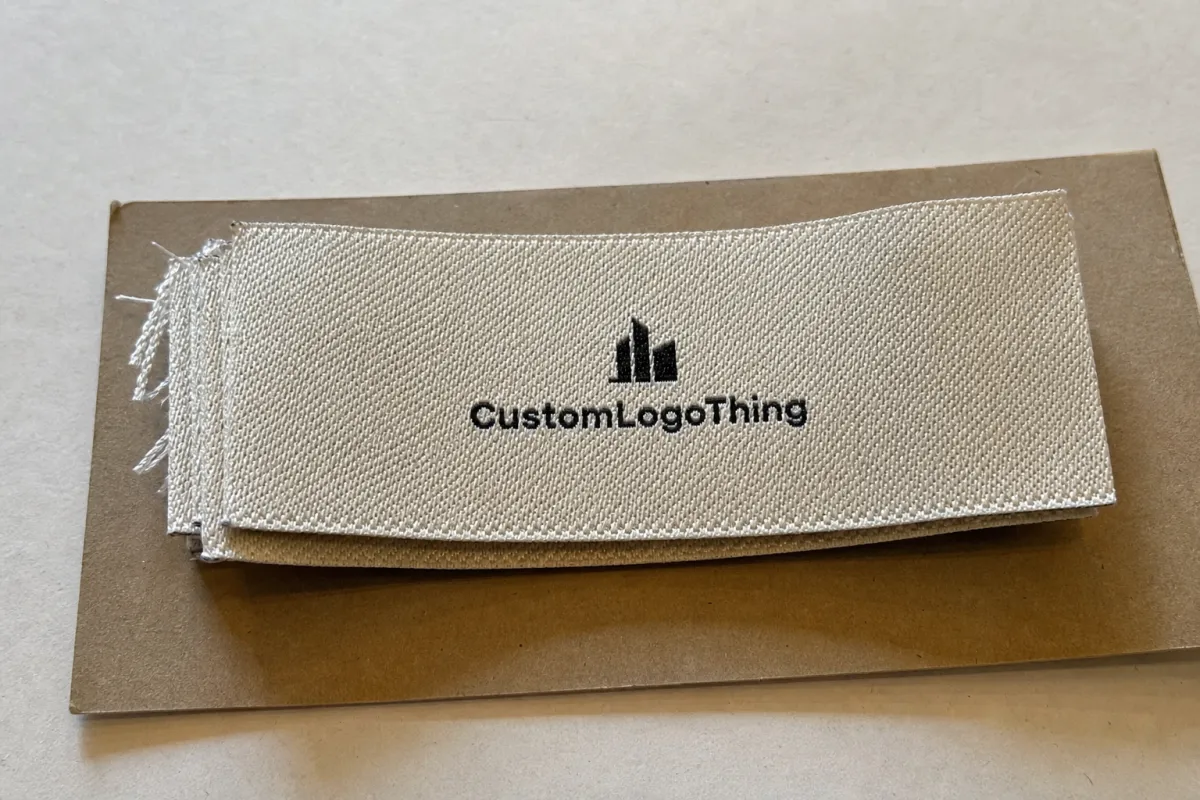
The smallest branding element on a premium gift often gets the most direct handling. A recipient may touch the neck label, hem tag, sleeve label, pouch label, or blanket corner patch before they pay much attention to the outer box, which is why a Woven Labels Material guide for corporate gifting teams is more useful than it might sound at first.
A woven label is a custom fabric label made by interlacing colored yarns on a loom. The logo, background, border, and lettering are built directly into the fabric structure, not printed as ink on top of cloth. That construction gives woven labels their durable, retail-quality feel, but it also means material choices matter. Yarn thickness, weave density, fold style, and edge finish all affect how the finished label looks and feels in a real hand.
Corporate gifting teams should care because the label becomes part of the gift experience. The wrong substrate can make a luxury hoodie feel scratchy at the neck, make a tote label curl at the corners, or turn a detailed corporate seal into a fuzzy block of color. A clean label, on the other hand, can make a simple fleece, notebook sleeve, cap, scarf, or travel pouch feel more intentional.
Label material is not just about softness. It affects artwork clarity, sewability, wash durability, perceived value, lead time, and unit cost. A buyer planning 250 executive gifts has a different risk profile than a team producing 15,000 event totes, but both need clear specifications before production starts.
This Woven Labels Material guide for corporate gifting teams walks through the practical decisions: material types, construction, sizing, pricing, timelines, common mistakes, and the handoff details that help a supplier quote cleanly. If your team is comparing label options now, Custom Logo Things also lists related options under Custom Labels & Tags, which is a helpful starting point for narrowing the format.
Practical rule: judge a woven label on the actual gift item whenever possible. A label that feels premium on 12 oz canvas can feel too stiff on a 145 gsm performance tee.
How Woven Labels Are Made and Why Material Changes the Result
Woven labels are made on looms using warp and weft yarns. Think of the warp as the lengthwise yarn structure and the weft as the yarns crossing through it to create the image. The design is formed by thread color changes, weave structure, and density. There is no surface ink doing the heavy lifting, so every tiny line in the artwork must be translated into yarn.
Most custom woven labels use polyester yarn. That is not a cheap shortcut; it is a practical material choice. Polyester is stable, colorfast, strong, and able to handle the heat, abrasion, laundering, folding, and general handling that apparel and corporate gifts often see. Cotton labels exist, and recycled materials may be available on some programs, but polyester damask remains the standard for fine detail and consistent production.
The common weave qualities each behave differently:
- Damask: Fine, smooth, and capable of holding smaller lettering and sharper logo edges. Often used for apparel labels, executive gifts, scarves, beanies, and retail-style branding.
- Semi-damask: A middle ground with good detail, slightly more texture, and often a lower cost than high-definition damask.
- Satin: Smooth and lustrous, best for simple marks, elegant wordmarks, and labels where sheen is part of the look.
- Taffeta: More economical and more textured, suitable for utility labels, care labels, or placements where the recipient will not feel it directly against skin.
- Woven patches: Thicker and more substantial, often used on outerwear, bags, blankets, caps, and accessories.
Edge finishing also changes performance. An ultrasonic cut seals synthetic yarns cleanly and helps reduce fraying. A hot cut can work for straight edges but may feel firmer. A woven edge is soft and integrated into the label structure. A merrowed edge gives patches that rounded embroidered border look, while laser cutting can support unusual shapes if the artwork and material are suitable.
Color is built from available yarns. Close Pantone matching is often possible, but it should be checked against the supplier’s yarn library, especially for strict corporate brand programs. Thread reflects light differently than ink on kraft paper, foil on a rigid box, or digital color on a screen. That small difference can matter when the gift is for an executive program or sponsor-branded event.
Key Material Factors: Softness, Detail, Durability, and Brand Feel
Softness is a real performance issue. If a label sits at the neck, waistband, cuff, scarf edge, beanie fold, or any skin-contact point, the hand feel needs to be smooth enough that the recipient does not immediately want to cut it out. For those placements, high-definition damask polyester is usually the safe choice because it balances fine detail with a softer face.
Bags, zipper pouches, tech organizers, blankets, and outerwear can tolerate more structure. A heavier woven patch or thicker label may actually improve perceived value on those items. The same choice inside a lightweight shirt can feel bulky and wrong.
Artwork detail has limits. Tiny type, registration marks, gradients, complex crests, and fine-line icons do not translate into yarn the same way they do in a vector file. A 0.25 pt line may look crisp on screen, but a loom needs physical thread to represent it. In practice, labels under about 1 inch wide should use simplified marks, larger letter spacing, and fewer fine details.
Density is the plain-language way to think about how much yarn information can fit into the label. Finer weaves can hold smoother curves, smaller characters, and more polished surfaces. Lower-density constructions may show more texture and less precision. That can be acceptable for rugged branding, but it is risky for a detailed logo lockup.
Durability depends on where the label will live. Apparel labels may need to survive 30 to 50 home laundry cycles without serious edge distortion or color loss. Bag labels may face abrasion from hands, straps, zippers, and trunk storage. A label on a blanket corner may be bent, washed, and rubbed repeatedly. Ask about colorfastness, edge stability, and backing suitability if the gift will be used hard.
Brand feel is the quieter part of the decision. Matte damask can feel understated and professional. Satin can look polished and formal. A textured patch can make outdoor, athletic, or workwear gifts feel more substantial. A useful Woven Labels Material guide for corporate gifting teams should always connect material back to the item, because the label does not live by itself.
Cost, MOQ, and Unit Cost Drivers for Custom Woven Labels
Woven labels have setup work before the first usable piece comes off the loom. The supplier has to review artwork, convert the design for weaving, select yarn colors, program the loom, cut and fold the labels, inspect them, pack them, and ship them. That is why very small orders often carry a higher unit cost. Setup time gets spread across fewer pieces.
For a simple straight-cut damask label, a run of 5,000 pieces might land around $0.12 to $0.35 per label, depending on size, finish, color requirements, and packing. A small run of 250 to 500 pieces may be several times higher per unit because the same technical preparation is still required. Specialty patches, merrowed borders, adhesive backing, or individual kitting can push costs higher.
Size matters in two ways. Larger labels consume more yarn and loom time. Very small labels can also cost more than expected if they carry tiny lettering or a detailed mark that requires extra proofing or sampling. A 1.5 x 0.75 inch end-fold label with a simple wordmark is a different production job than a 3 x 2 inch shaped patch with six yarn colors and a merrowed edge.
Color count matters, but not always the way buyers assume. More yarn colors can increase complexity, yet the bigger cost issue is often strict matching, extra sampling, or artwork adjustment. If the brand standard requires a very specific red or blue, provide the Pantone reference early and request confirmation against available yarns.
| Option | Best Use | Typical Feel | Relative Cost | Buyer Notes |
|---|---|---|---|---|
| High-definition damask | Apparel, scarves, executive gifts | Smooth, detailed, premium | Medium to high | Best all-around choice for logos with small text or fine edges. |
| Satin woven label | Dressier gifts, simple logos | Smooth, slightly shiny | Medium | Works best with clean marks and limited detail. |
| Taffeta label | Utility labels, non-skin-contact use | Textured, functional | Low to medium | Good for cost control, less ideal for premium apparel. |
| Woven patch | Bags, blankets, outerwear, caps | Thicker, more dimensional | Medium to high | Can use merrowed edges or laser-cut shapes for stronger visibility. |
| Adhesive or iron-on backing | Temporary placement, heat application, kitting | Varies by base label | Add-on cost | Test on the actual material; heat and adhesive compatibility vary. |
A clean quote request should include target quantity, finished size, fold type, attachment method, artwork file, color references, gift item type, deadline, shipping destination, and whether a sample is required. If the labels will be packed into kits with corrugated cardboard mailers, kraft paper wraps, or other branded packaging, say so early. Packing method can affect label bundling, count accuracy, and fulfillment timing.
The lowest unit cost is not always the best value. If a scratchy or poorly matched label makes a $70 hoodie feel like a giveaway, the savings disappear quickly.
Process and Timeline: From Artwork to Finished Labels
A typical woven label order follows a predictable path: artwork and specifications are received, weave feasibility is reviewed, size and fold are confirmed, yarn colors are selected, a digital proof is prepared, a physical sample is made if needed, production is approved, labels are woven, cut, folded, inspected, packed, and shipped.
For straightforward orders with complete specifications, digital proofing may take 1 to 3 business days, and production may run around 10 to 15 business days after approval. Sampling can add 5 to 10 business days, sometimes more if color matching or overseas transit is involved. These are practical planning ranges, not promises. Quantity, seasonality, complexity, and shipping method can shift the schedule.
Timelines stretch for predictable reasons. Missing vector art is one. Unclear finished size is another. Late Pantone references, uncertainty about whether the label will be sewn into a seam or applied as a patch, and multiple internal stakeholders reviewing separate proof versions can all create avoidable delays.
Artwork preparation should be disciplined. Provide vector files such as AI, EPS, or editable PDF when possible. Outline fonts. Simplify hairlines. Call out colors clearly. Avoid gradients and photographic effects unless the supplier confirms a woven interpretation that still looks acceptable. If the logo has a small tagline, consider removing it or moving it to a printed hangtag instead.
Sampling is not always required, but it is smart for executive gifts, strict color programs, skin-contact apparel, or high-value items. A physical sample lets the team judge thickness, shine, edge feel, color, and readability. For broader packaging programs, standards from organizations such as ISTA can also help teams think about transit testing and handling, especially if labeled gifts are being packed into mailer kits or shipped individually.
Coordination with decorators or cut-and-sew partners is just as important as the label itself. Fold type, seam allowance, and placement need to match the actual sewing operation. A center-fold label usually needs artwork planned for front and back panels. An end-fold label needs enough fold allowance on both sides. A straight-cut patch needs clean stitch margin around the perimeter.
Build the timeline backward from the event date. Allow time for proofing, sample review, bulk weaving, transit, receiving, decoration, kitting, final inspection, and delivery. Rush orders can work when the artwork is simple and the specs are complete, but specialty finishes and strict sampling need breathing room.
Step-by-Step Material Selection for Corporate Gift Programs
A practical Woven Labels Material guide for corporate gifting teams should feel like a decision path, not a catalog page. Use these steps before sending a quote request.
- Identify the gift item and label placement. A neck label, hem tag, blanket corner label, tote exterior label, and zipper pull branding piece each need different materials. Skin contact points need softness. Exterior placements need abrasion resistance.
- Define the recipient experience. Should the label feel soft and discreet, polished and executive, rugged and durable, retail-inspired, or highly visible for event branding? The answer narrows the weave quickly.
- Match the weave to the artwork. Choose high-definition damask for fine detail, satin for smooth sheen and simple marks, taffeta for economical utility use, and woven patches for thicker exterior branding.
- Choose the fold and attachment method. Center fold works well for seam-in labels and hang-style tags. End fold gives a clean sew-down edge. Straight cut works for patches. Loop fold can wrap a hem or seam. Mitre fold is useful for angled corner applications. Adhesive and iron-on backings need testing on the actual gift material.
- Set a realistic size. Larger is not automatically better. A 2.5 inch patch might look great on a canvas tote but overpower a premium quarter-zip. Readability and wearability both matter.
- Request samples when touch matters. Apparel, scarves, caps, baby items, hospitality gifts, and anything worn close to skin should be reviewed physically if timing allows.
- Lock specifications before bulk quoting. Purchasing, design, fulfillment, and event teams should work from one technical brief, not scattered email notes.
For teams building a full branded kit, label choices should also sit beside packaging choices. If your shipper uses recycled materials, post-consumer waste content, or FSC certified paper components, the label story may need to support that positioning. The Forest Stewardship Council is a useful reference for paper-based packaging claims, while textile label material claims should be verified directly with the supplier.
Custom Logo Things can help teams compare sewn labels, hang tags, and related brand trims through Custom Labels & Tags, which is often the easiest way to align the label with the gift item before getting deep into production details.
Common Mistakes That Make Woven Labels Look Less Premium
The most common mistake is shrinking a complex corporate logo too far. Tiny taglines, registration marks, crests, and fine-line icons can lose definition once converted into woven yarn. If the label is small, simplify the artwork. A clean symbol often looks more premium than a cramped full lockup.
Another mistake is choosing material from a screen image alone. Woven labels have texture, thickness, shine, edge feel, and stiffness. A JPG proof can show layout, but it cannot tell you whether a neck label feels scratchy or whether a satin surface looks too shiny next to brushed fleece.
Poor fold selection creates avoidable production trouble. A straight-cut label ordered for a seam application may leave raw-looking edges. A center-fold label without enough panel space can make the front or back artwork unreadable. An end-fold label needs fold allowance, or the stitch line may crowd the logo.
Stiffness mismatch is another quality killer. A durable exterior label works beautifully on canvas, outerwear, or a heavy blanket, but the same construction inside a lightweight shirt can feel bulky. Test the label against the actual item weight, not just the brand concept.
Color expectation issues are also common. Thread color can look different from ink on a brochure, foil on a box, or graphics printed on biodegradable packaging. Yarn has surface texture and reflects light in its own way. For strict brands, approve a yarn match or physical sample before bulk production.
Placement deserves attention. Labels sewn where they scratch skin, catch on zippers, bend around hard corners, or disappear into seams after decoration will weaken the finished presentation. Late changes can also create risk. Adjusting size, fold, or material after sampling may require a fresh proof and can affect the production schedule.
Next Steps: Build a Label Spec Your Supplier Can Quote Cleanly
The best next step is a simple technical handoff. Gather the logo file, preferred finished size, intended placement, gift item photos or specs, desired feel, quantity, deadline, shipping destination, and corporate color standards. That single packet saves days of back-and-forth.
Create a one-page spec sheet with fields for material, weave type, fold type, cut style, edge finish, backing, thread colors, artwork orientation, seam allowance, and packaging or kitting requirements. If labels are being sewn by a decorator, include stitch margin and placement notes. If labels are being shipped to a fulfillment team, include count-per-bag or count-per-carton preferences.
Rank priorities before requesting a quote. Is softness the top concern? Exact color matching? Fastest turnaround? Lowest unit cost? Retail-level finish? Maximum durability? A supplier can give better technical guidance when the tradeoffs are clear.
Ask directly whether the artwork should be simplified, whether the label size is appropriate, and whether the chosen material suits the actual gift. A good supplier should be able to flag issues before the loom is programmed. That is much cheaper than discovering a scratchy label or unreadable logo after bulk production.
Use one internal proof route. Design, procurement, HR, events, and executive stakeholders may all have opinions, but conflicting revision cycles create schedule pressure and quality risk. One approved proof owner keeps the order moving.
A Woven Labels Material guide for corporate gifting teams is most useful when it turns a creative idea into a manufacturing-ready specification. Clear decisions at the label stage protect the feel, timing, and perceived value of the finished gift, whether the label is sewn into a hoodie, added to a tote, placed on a blanket, or packed into a premium kit.
FAQ
What is the best woven label material for corporate gifting apparel?
High-definition damask polyester is usually the safest choice for apparel because it offers a smooth hand, strong detail, good durability, and a more premium feel against or near the skin. Satin can work well for simple logos and a dressier finish, while taffeta is better for budget-conscious or utility applications where softness and fine detail are less critical.
How should corporate gifting teams choose between damask, satin, and taffeta woven labels?
Choose damask when logo clarity, softness, and all-around premium presentation matter most. Choose satin when the artwork is simple and the team wants a smooth, slightly lustrous surface. Choose taffeta when the label is functional, lower cost, or used somewhere the recipient will not feel it directly against skin.
What affects the cost of woven labels for corporate gifts?
The biggest drivers are quantity, label size, weave quality, yarn color requirements, fold type, backing, edge finish, sampling needs, packing method, and shipping timeline. Very small runs often have higher unit costs because setup, proofing, and loom preparation are spread across fewer pieces.
How long do custom woven labels take for a corporate gifting project?
The timeline depends on artwork readiness, sampling requirements, production complexity, order quantity, and shipping method. Teams should allow time for proof review, possible physical sampling, bulk weaving, cutting, folding, inspection, transit, and any downstream sewing or kitting.
Can woven labels match strict corporate brand colors?
Woven labels can often get close to specified brand colors using available yarn libraries, but thread reflects light differently than printed ink or digital screens. For strict brand programs, provide Pantone references early and request a physical sample or yarn match confirmation before approving bulk production.


