Woven Labels Unit Cost for Book Merch Brands That Buy in Short Runs
Why Short Book Merch Runs Make Label Cost Matter Fast
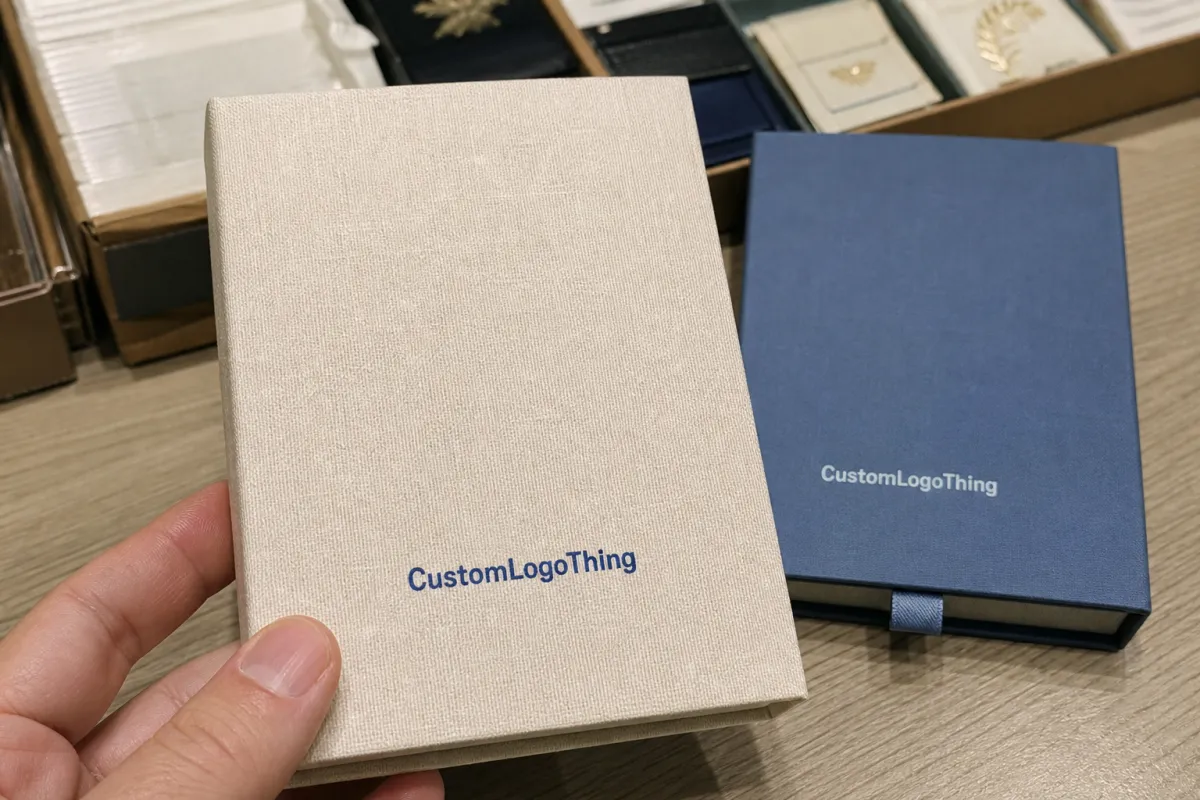
A tiny label can make a $28 tote feel like real merch instead of a blank bag with ambition. The woven labels unit cost for book merch brands is usually driven less by the fabric strip itself and more by MOQ, setup, fold style, backing, and finishing labor.
Book merch runs are often awkwardly sized. Not one-off craft quantities. Not large enough to unlock beautiful factory economics either. A publisher, author shop, indie bookstore, or fandom brand might need 100 hoodies, 300 canvas pouches, 500 book sleeves, or 1,000 collector inserts. In that middle zone, a label at $0.42 instead of $0.18 sounds harmless until it spreads across five SKUs, extra samples, and freight. Math, rude as usual.
Cost is only half the story. A woven label changes how the item feels in hand. It gives a drop a retail finish and ties the item back to a title, author, imprint, series, or campaign without covering every surface in a giant printed logo.
For premium book merch, touch matters. Sharpness matters. Stitching matters. If a tote is sold beside a signed hardcover or packed into a collector bundle, the customer expects the accessory to feel intentional. A scratchy label, muddy weave, or crooked sew-in makes the whole set feel cheaper.
Buyer rule: treat the woven label as part of the retail experience, not a throwaway trim item. It is small, but it is one of the few details customers physically touch.
A good woven label can support a higher perceived value on apparel, sleeves, pouches, bags, wraps, and boxed sets. That does not mean every job needs the densest weave or a specialty finish. The spec should match the selling price. A $12 promo pouch and an $85 collector bundle should not be wearing the same label.
Which Woven Label Format Fits Your Merch Drop
Format choice affects visibility, comfort, sewing labor, and cost per piece. It also controls how much usable design space you get. A 1-inch label is not a true 1-inch canvas after folds, seam allowance, and edge finishing. That catches new buyers all the time.
| Label Format | Best Use | Typical Size Range | Buying Note |
|---|---|---|---|
| End fold | Hoodies, tees, totes, pouch seams | 0.75" x 1.5" to 1.25" x 2.5" | Clean edges, easy to sew flat, good for small logos. |
| Center fold | Neck labels, side seams, soft goods | 0.75" x 1.5" to 1.5" x 2" | Front and back can carry information, but comfort matters. |
| Flat sew-in | Book sleeves, dust covers, collector inserts | 1" x 2" to 2" x 4" | Most visible face area, but edges must be finished well. |
| Loop fold | Outer seams, blankets, fabric wraps | 0.75" x 2" to 1.25" x 3" | Good brand tab effect, limited design area per side. |
| Hang-style woven label | Gift packaging, boxed sets, premium bundles | 1.5" x 2" to 2.5" x 3.5" | Decorative; may need a hole, cord, or adhesive support. |
End fold labels are the safest choice for most apparel and bags. They sit flat, hide raw edges, and leave enough face area for a title mark, icon, or short brand name. Center fold labels work well for neck labels or side-seam tabs, but if the fabric touches skin, price a softer finish. Nobody wants a fantasy-romance hoodie with a neck label that feels like a tiny saw.
Flat sew-in labels are useful for book sleeves, dust covers, and fabric inserts where the label becomes a visible design detail. Loop fold labels are better for a small branded tab on the outside of a tote or pouch. Hang-style woven labels can work for collector packaging, especially on ribbon-tied book boxes, fabric wraps, or limited-edition bundles.
Format can move cost because folds add handling, cutting accuracy matters, and some constructions require more finishing. A simple flat woven label often prices lower than a multi-fold label with backing and tight registration.
Premium author drops and indie publishing brands often benefit from smaller labels with tighter weave rather than oversized labels with fuzzy detail. Restraint sells. A clean 1" x 2" woven mark on a canvas pouch can look better than a 3" billboard trying too hard.
Specs That Change Durability, Hand Feel, And Price
A woven label quote is only as useful as the spec behind it. The usual variables are width, height, weave density, thread color count, backing, fold style, edge finish, and packing method. Change two of those and the unit cost can move quickly.
Common book merch label sizes run from 0.75" x 1.5" for small apparel tabs to 2" x 3" for visible packaging labels. Larger labels use more yarn and machine time, but size alone does not determine price. A small label with tiny serif type, four colors, and dense weave can cost more than a larger two-color label with simple art.
Weave density affects legibility. Higher-density damask-style woven labels can make small text, fine linework, and curved logos look cleaner. They also require more precise setup. That can raise setup charges or the base cost per piece, especially on low quantities where fixed production work has fewer units to hide behind.
Color count matters too. Many woven label jobs sit comfortably at 2 to 4 thread colors. More colors are possible, but every added color can increase proofing time, thread matching work, and production complexity. Pantone matching helps, but thread is not ink. It reflects light differently, and some neon, metallic, gradient-heavy, or watercolor-style artwork simply does not translate well into woven construction.
Backing is another cost lever. Plain sew-in labels are usually the most durable and economical. Iron-on backing adds convenience for some apparel or fabric applications, but it may not hold equally on every textile. Adhesive backing can work for packaging inserts, sample kits, or temporary placement, though it is not a substitute for sewing on items that will be washed or flexed heavily.
- Plain sew-in: best for durability, apparel, totes, pouches, and long-term use.
- Iron-on backing: useful for heat-press application, but test fabric, temperature, and pressure first.
- Adhesive backing: practical for packaging, inserts, and light-duty display use.
- Soft finish: worth pricing for neck labels, baby items, scarves, or anything touching skin.
For wash durability, woven labels usually outperform many printed fabric labels because the design is made from thread rather than surface ink. Still, construction matters. If the label will be washed weekly, folded into mailers, rubbed against hardcovers, or handled at events, ask about abrasion, wash testing, and stitch allowance. Standards from groups such as ASTM International can be useful reference points for textile testing language, especially if your team has formal quality requirements.
Woven Labels Unit Cost for Book Merch Brands: MOQ, Pricing, And Pack Math
The Woven Labels Unit Cost for Book Merch Brands changes sharply at low quantities because setup, artwork prep, loom setup, cutting, folding, and packing have to be paid for whether the order is 100 pieces or 1,000. That is why the first price break often feels dramatic.
Here is a practical pricing range for basic custom woven labels. These numbers are not a promise; specs, freight, and supplier policies vary. They are useful for sanity-checking a quote.
| Quantity | Typical Unit Cost Range | Common Fit | What Usually Drives Price |
|---|---|---|---|
| 100 pieces | $0.75-$1.60 each | Test drop, author event, sample merch | Setup charges, small-batch handling, proofing time |
| 300 pieces | $0.38-$0.90 each | Small launch merch, indie shop run | Fold style, color count, backing, packing |
| 500 pieces | $0.24-$0.65 each | Preorder campaign, bookstore bundle | Weave density, label size, finishing |
| 1,000 pieces | $0.14-$0.42 each | Series merch, restock, multi-SKU use | Bulk pricing, freight, carton packing |
For a standard 1" x 2" end fold label with 2 to 3 thread colors and plain sew-in finishing, a 500-piece order might land around $0.28-$0.55 per label before freight. Add adhesive or iron-on backing and the number may climb by $0.05-$0.18 per piece. Add dense weave, extra colors, specialty yarn, or an unusual fold and the range shifts again.
Most quotes include basic artwork review, digital mockup, weaving, cutting, folding, and simple bulk packing. Some suppliers include artwork cleanup. Some do not. Some bury tooling fees inside the unit cost. Others show setup charges as a separate line. Neither method is automatically good or bad. The useful comparison is total landed cost.
MOQ can matter more than the base label price. If the actual need is 160 labels and the MOQ is 300, the order includes 140 extras. That may be smart if reorders are likely or if backups are needed for damaged goods, sewing errors, or sample pulls. It is wasteful if the label is title-specific and the campaign ends next month.
Ask for 100, 300, 500, and 1,000-piece options whenever possible. The unit cost may drop enough at 500 pieces to justify buying more, especially if the same label works across hoodies, totes, and pouches. If the label is only for one limited collector box, keep the run tighter and protect cash.
Compare landed cost, not just unit price. Freight, carton count, individual bagging, and pack-out can turn a cheap-looking quote into a mediocre one fast.
Pack math deserves attention. A label at $0.35 on a $42 hoodie is easy to absorb. The same label on a $9 promotional bookmark pouch is a different conversation. For bundles, look at the full stack: garment or bag, label, sewing labor, hang tag, insert card, mailer, fulfillment handling, and replacement allowance. A label rarely breaks the budget by itself. It usually becomes a problem when nobody priced the full pack-out.
How Artwork, Color Counts, And Backing Affect Cost
Clean artwork quotes faster. It also produces better labels. Shocking, I know.
Vector files are best: AI, EPS, or clean PDF. High-resolution PNG files can work for early quoting, but final production usually benefits from vector art because the design has to be translated into thread paths, not printed pixels. Tiny text, thin outlines, distressed textures, watercolor effects, gradients, and full book-cover art often need simplification.
Unit cost usually improves when the design uses fewer colors and stronger shapes. A two-color author logo will almost always behave better than a six-color miniature book cover squeezed into a 1" label. If the original art depends on shaded illustration, use a simplified icon, title lockup, monogram, house mark, or series symbol instead.
Pantone references can help align the label with dust jackets, box art, or brand guidelines. Thread palettes still have limits. A deep burgundy thread may not match coated-paper ink exactly. Metallic-looking colors can behave differently in woven form, and true metallic yarn may cost more or feel stiffer.
Backing choice should follow the merch type. For a canvas tote, plain sew-in is reliable. For a fabric book sleeve, flat sew-in or end fold often works cleanly. For a gift box insert, adhesive backing may be enough. For a hoodie, iron-on alone can be risky unless the fabric, adhesive, temperature, and pressure are tested. Heat and fabric blends do not care about your launch calendar.
- Send final dimensions: “small label” is not a spec. Use inches or millimeters.
- Keep text above practical size: tiny serif copy under 5-6 pt often gets muddy in weave.
- Limit colors: 2-4 thread colors keep proofing and cost under control.
- Confirm fold allowance: folds reduce visible design area.
- Name the application: hoodie neck, tote seam, pouch face, box insert, or dust-cover sleeve.
Revisions cost time. Sometimes money. A rushed file with unclear size, no fold direction, and a logo pulled from social media will trigger extra proof rounds. That can push production back 2 to 5 business days before a loom even starts running.
Production Steps And Lead Time From Proof To Delivery
Woven labels follow a simple sequence, but simple does not mean instant. The normal flow is quote request, art review, digital mockup, proof approval, production, inspection, packing, and shipping.
- Request quote: send quantity, size, fold, backing, art, and ship-to ZIP.
- Review mockup: confirm visible area, colors, fold marks, and edge finish.
- Approve proof: production timing usually starts after approval, not after the first email.
- Produce labels: weaving, cutting, folding, and backing happen to the agreed spec.
- Inspect and pack: labels are checked for count, trim, fold accuracy, and visible defects.
- Ship: freight timing depends on service level and destination.
For many standard woven label orders, plan on 2 to 4 business days for quoting and proofing if the art is clean. Production often runs 7 to 15 business days after proof approval for common quantities. Larger or more complex jobs can take 15 to 25 business days, especially with sampling, dense weave, specialty backing, or multiple versions.
Delays usually come from four places: artwork revisions, slow proof approval, payment timing, and unclear specs. Not glamorous. Very real. If a launch merch team spends six days debating whether the label should be 1.25" or 1.5", no supplier can magically give those days back.
Rush production can help if the spec is locked and the file is usable. It may shorten production by 2 to 5 business days depending on capacity. It will not fix late creative approval, missing ship-to details, or a merch item that has not been chosen yet. Paying rush fees before the basics are settled is just lighting money on fire, but with invoices.
For book launch merch or preorder fulfillment, build backward from the ship date. If preorder boxes must leave a fulfillment partner on Friday, labels need to arrive before kitting starts, not the morning of. Add 3 to 7 calendar days of buffer for receiving, sewing, sorting, or pack-out. If packaging includes cartons, mailers, or inserts, references from ISTA can help teams think through transit handling and pack testing, especially for heavier collector bundles.
Quality control should be boring. That is the goal. Check count, size tolerance, fold direction, color approximation, spelling, loose threads, edge fray, backing coverage, and whether the label sits correctly on the merch item. For folded labels, confirm the visible face is what was approved. For neck labels, rub the edge against skin before committing to a full apparel run. The cheapest defect is the one caught before sewing.
Why Book Merch Teams Reorder The Same Label Spec
Consistency is underrated. A stable woven label spec lets book merch feel like one brand family across titles, series drops, restocks, and event-exclusive items. The label becomes a quiet system: same size, same fold, same thread palette, same placement.
The Woven Labels Unit Cost for book merch brands can also become more predictable after the first run. Once artwork is cleaned up and the spec is approved, reorders usually need fewer proofing steps. That reduces the chance of mistakes and makes planning easier for apparel, totes, sleeves, pouches, and collector packaging.
Stable specs help with quality control. If the first run used a 1" x 2" end fold label with three thread colors and plain sew-in backing, the next run can be checked against that standard. If every drop changes size, weave, color count, and fold style, the team is not building a system. It is creating fresh opportunities for rejects. Charming, but expensive.
Cheaper alternatives have their place. Printed satin labels can work for care instructions or low-cost promo goods. Heat transfers can be fine for apparel branding if the garment supports them. Paper hang tags are useful for retail information and barcodes. Woven labels bring a dimensional, stitched-in look that fits premium book merch better, especially for items sold as keepsakes.
For packaging-minded teams, woven labels pair well with other branded components. A collector kit might include a labeled canvas pouch, a printed insert card, and a branded mailer. If you need more label and tag options, the Custom Labels & Tags page is the logical place to compare builds without pretending one format solves every job.
Reorders also make bulk pricing easier to plan. If the same label can serve a full series instead of one title, 1,000 pieces may make more sense than 300. If the title art changes every release, smaller runs protect cash and reduce leftover stock. Both choices can be right. The numbers decide.
What To Send For A Fast Quote
A fast quote needs real details. Not a mood board. Not “something premium.” Send the information a production team can price without guessing.
- Label size: width x height, plus visible area if folded.
- Quantity: ask for two or three breaks, such as 100, 300, and 500 pieces.
- Fold style: end fold, center fold, flat, loop fold, or hang-style.
- Artwork file: vector preferred; clean PDF or high-resolution PNG acceptable for early quoting.
- Thread colors: note brand colors, Pantone references, or acceptable approximations.
- Backing: plain sew-in, iron-on, adhesive, or no backing.
- Merch type: hoodie, tote, pouch, book sleeve, collector box, or packaging insert.
- Deadline: include the in-hand date, not just the launch date.
- Ship-to ZIP: needed for freight and landed cost.
Ask for side-by-side options. A quote at 100, 300, and 500 pieces shows where the unit cost drops and whether the larger buy is worth it. Sometimes 500 pieces only saves a few cents each. Sometimes it cuts the cost per piece by 35% or more because setup gets spread across more labels.
Also mention packaging constraints. If the label must fit inside a 4" x 6" sleeve, sit on a narrow seam, survive washing, avoid scratching a book cover, or match a kraft mailer system, say that up front. A generic label quote is easy. An accurate label quote needs the real job.
Teams with multiple merch pieces can review examples through Case Studies to think through how labels, tags, inserts, and packaging work together. The strongest merch programs usually do not treat each component as a separate little island.
If sustainability claims matter, be careful with wording. Labels may be small, but claims around recycled content, responsible sourcing, or packaging recovery still need support. The Forest Stewardship Council is a useful reference for paper-based packaging claims, while textile label claims should be checked against the actual material and supplier documentation.
The cleanest buying move is simple: request a side-by-side quote showing price, MOQ, lead time, setup charges, backing, and freight together. Then approve the spec that fits the drop, not the fantasy version of the drop.
FAQs
How do I estimate woven label unit cost for a small book merch run?
Start with quantity, size, fold style, color count, and backing. Those details move the price more than the label body itself. Ask for quotes at 100, 300, and 500 pieces so you can see where setup charges spread out. Compare landed cost, not just unit price, because shipping, packing, and special handling can change the real number.
What quantity gives the best woven label price for book merch?
The best cost per piece usually appears once MOQ is comfortably absorbed, often in the mid-hundreds or higher. For many book merch teams, 500 or 1,000 pieces can price much better than 100. That said, if you are testing a new title, author brand, or collector concept, a smaller run can still make sense if the merch margin supports it.
Does a higher stitch count always raise woven label cost?
Usually, yes. Denser weaving takes more production time and more careful setup. It is worth paying for when the logo has tiny text, fine lines, or needs sharper edge detail. If the art is bold and simple, a lighter spec often gives a better price without hurting the final look.
How long does woven label production usually take?
Most jobs move through quoting, proofing, production, inspection, and shipping in a predictable sequence. A standard order often needs 7 to 15 business days after proof approval, with extra time for revisions, samples, specialty backing, or larger quantities. Rush service can help, but only if the artwork is ready and the spec is already locked.
What files do you need for an accurate woven label quote?
Send a vector file if possible, plus dimensions, fold style, quantity, backing choice, and ship-to ZIP. Include the product type and deadline so the quote reflects the actual use case. If final art is not ready, send the cleanest logo file you have and identify any must-keep details before proofing starts.
Woven labels are small, but they sit at the intersection of branding, textile production, fulfillment timing, and margin control. For book merch brands, the practical answer is rarely “buy the cheapest label.” It is closer to this: choose the simplest spec that still looks intentional, quote enough quantity breaks to see the real price curve, and check the full landed cost before approving the drop.


