Woven Labels Supplier Quote for Beauty Brands
Get a Woven Labels Supplier Quote for beauty brands with clear pricing, MOQ, lead times, and the specs needed to compare samples fast.
A woven label is small, but it can change how a beauty product feels in the hand. It may sit on a spa robe, cosmetic pouch, towel, gift set, or retail insert, so the quote is not just a decoration request. It affects texture, durability, logo clarity, attachment method, and how the package reads as a finished system.
Many quote delays start with incomplete inputs: a logo file, a rough size, and no decision on fold, backing, placement, or thread colors. That gap creates sample loops, cost changes, and labels that look right on screen but feel too stiff, too busy, or too small once woven.
Woven Labels Supplier Quote for Beauty Brands: What Changes the Price
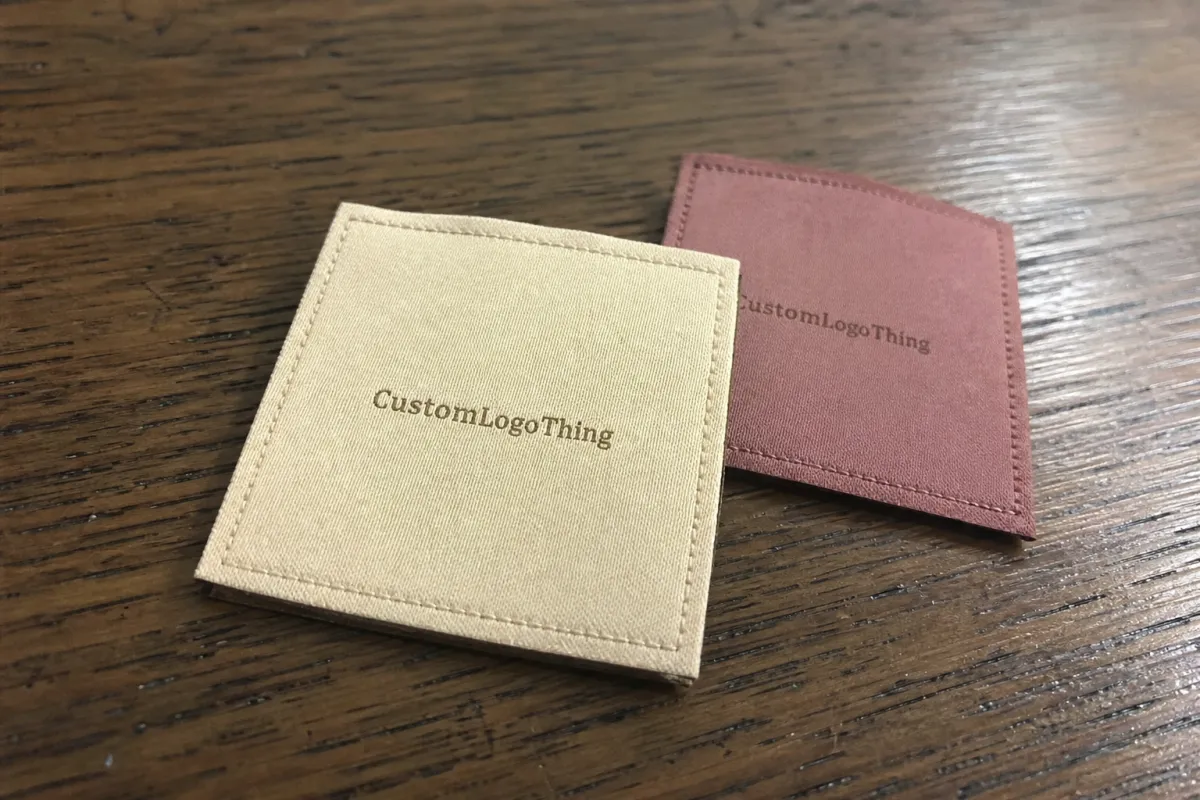
Woven label pricing depends on structure. Size, thread count, weave density, color count, fold style, backing, packing, and order quantity all affect the number. A dense damask label with five colors and an end fold will not price like a straight-cut satin tag, even if the proof looks similar.
The use case matters. A 40mm x 20mm label on a towel edge needs different softness and seam behavior than the same size label on a cosmetic pouch or gift insert. Some labels need clean folded edges for sewing. Others need adhesive or heat-seal backing because sewing is not part of the assembly process.
Buyer rule: if the label will be touched, washed, folded, photographed, or used across multiple SKUs, quote it as a functional product component.
A useful quote starts with finished size, fold style, quantity, thread colors, attachment method, and delivery target. If packaging artwork is fixed, match the label against that system. If packaging is still changing, define placement and material first so the supplier can price the correct construction.
Damask, Satin, and Fold Styles That Fit Premium Beauty Lines
Damask and satin solve different problems. Damask woven labels are usually better for fine detail, small text, and clean logo edges. They are a common choice for skincare pouches, robe neck labels, and small textile trims where the mark must stay legible.
Satin woven labels have a smoother, glossier surface and a softer visual finish. They can work well for spa goods, gift bags, and fabric accessories, but small letters and thin strokes soften sooner. If the logo uses delicate script, test it before approving bulk production.
| Label option | Best use | Typical buyer watch-out | Common finish range |
|---|---|---|---|
| Damask woven label | Fine logos, skincare pouches, robe neck labels | Can cost more than basic satin if density is high | 25mm-60mm wide, 2-6 thread colors |
| Satin woven label | Soft spa goods, beauty gift bags, fabric trims | Small text can soften visually | 20mm-50mm wide, usually simple graphics |
| Straight cut label | Pouches, box inserts, decorative trims | Edge finish must be clean to avoid fraying | Heat cut or ultrasonic cut |
| Center fold or loop fold | Side seams, towel edges, robes, merch add-ons | Fold allowance changes visible size | Commonly 10mm-15mm fold allowance |
Fold style changes both appearance and price. End fold hides raw edges and suits labels sewn flat to fabric or pouches. Center fold fits seams. Loop fold creates a small branded tab for towels or accessory edges. Book fold adds space for brand and care information. Straight cut works where the edge stays visible and must look clean.
Hand feel should be specified, not assumed. A bulky fold can feel rough on a satin pouch. A stiff edge near a cosmetic bag opening will be noticed. For beauty goods, the label should feel designed into the product rather than added after the rest of the package is finished.
The Specification Checklist Buyers Need Before Approving Artwork
Quotes move faster when the supplier does not have to guess. The minimum spec pack should include finished size, fold style, backing, color count, placement, and intended substrate.
- Finished size: state visible size and total cut size if folded. A 40mm x 20mm center-fold label may need extra length for seam allowance.
- Fold style: end fold, center fold, loop fold, book fold, miter fold, or straight cut.
- Backing: no backing, adhesive, iron-on, or heat-seal depending on application method.
- Color count: include background and logo thread colors; 2-4 colors are common, while 5+ can raise cost and complexity.
- Placement: robe neck, pouch side seam, towel edge, carton insert, ribbon tab, or exterior packaging trim.
- Substrate: cotton, terry cloth, satin, canvas, kraft board, coated paper, or another surface.
Vector artwork is best: AI, EPS, or editable PDF. Website images and flattened raster files rarely provide enough detail for clean weaving. If the label includes fine script, legal copy, care symbols, or compliance-adjacent text, ask for a readability check before approving the proof.
Thread matching is not the same as print matching. A Pantone target on a carton may not translate exactly into yarn. The same shade can read differently against soft-touch paper, satin fabric, or terry cloth. For color-sensitive beauty programs, request thread photos under neutral light or a physical strike-off before bulk production.
Fine detail often needs translation. A thin line that prints cleanly on a carton may not survive at 25mm wide in woven form. Thin serifs, narrow icons, and delicate scripts may need simplification. That is not a supplier defect; it is the difference between print and weave.
For broader packaging quality references, buyers can also review general testing and distribution principles from ISTA, especially if finished beauty sets move through parcel networks and the woven label is attached to outer fabric goods or inserts.
How to Match Woven Labels to Packaging, Pouches, and Gift Sets
A woven label should support the full brand system: carton, ribbon, tissue, zipper, lining, closure, and primary container. Customers read those elements together. If the label is too bright, too large, or too heavy for the material, the set can look assembled rather than designed.
Coordinate the label with one or two anchor elements. If the carton uses warm ivory board and champagne foil, a cream ground with muted gold thread may work better than bright yellow. If the pouch is black satin and the jar cap is brushed silver, a black damask label with cool grey thread can look more controlled than a high-contrast white label.
Multi-SKU programs need consistency. A bath salt jar, cleanser tube, robe, and cosmetic pouch may use different materials, but the woven label family should still feel related. Use the same logo width, thread palette, fold style, or common height across fabric items where possible.
Seasonal launches expose mismatches quickly because bundles often involve multiple vendors. If the woven label is quoted late, it may arrive on time but still be wrong for photography because the tone is off or the fold feels too heavy against the fabric. Approve the label alongside the pouch, carton, ribbon, and tissue whenever possible.
Woven Labels Cost, MOQ, and Quote Variables
A basic woven label at 5,000 pieces may fall around $0.06-$0.18 per unit, depending on size and detail. A smaller premium run with dense damask, special folding, and stricter color matching may land closer to $0.18-$0.45 per unit. These are practical ranges, not guarantees. Freight, rush handling, sampling, and finishing can change the final cost.
MOQ should match the launch plan. Smaller runs reduce inventory risk but raise unit cost. Larger runs improve pricing but can trap cash before demand is proven. A 500-1,000 piece starter quantity may be possible for some specs, but 3,000-5,000 pieces often gives better pricing. Established replenishment programs usually benefit from 10,000+ pieces.
| Quote item | What it covers | Buyer question to ask |
|---|---|---|
| Unit price | Cost per finished woven label at the quoted quantity | Does this price hold for reorders or only the first run? |
| Sample or strike-off fee | Physical sample to check thread, size, and hand feel | Is the fee credited against bulk production? |
| Artwork or setup | File preparation, loom setup, or proofing work | What happens if the logo needs simplification? |
| Finishing | Folding, heat cutting, backing, packing, or sorting | Is folding tolerance stated, such as ±1mm? |
| Freight | Shipment to the buyer or assembler | Can labels ship directly to the pouch or textile factory? |
Ask for price breaks at 1,000 / 3,000 / 5,000 / 10,000 pieces if you are planning both launch and reorder quantities. Also ask whether the supplier stores reorder notes: yarn color, loom file, fold setting, packing count, and approved sample reference. Those records help prevent drift between runs.
Be careful with sustainability claims. Woven labels are commonly polyester, cotton, recycled polyester, or blends. If your brand uses FSC-certified paper packaging, that claim does not automatically apply to textile trims. Use FSC references only for certified paper or board components, and document any textile label claims separately.
Production Steps, Lead Times, and Reorder Timing
The usual path is inquiry review, artwork check, digital proof, sample or strike-off if needed, weaving, cutting, folding, finishing, packing, and dispatch. Delays usually come from missing dimensions, low-resolution artwork, late logo changes, or thread colors approved only from a screen image.
A complete spec pack can often be quoted within 1-2 business days. Digital proofing may take another 1-3 business days. Physical sampling often adds 5-10 business days, depending on complexity and shipping route. Bulk production for common woven labels frequently runs 10-18 business days after proof approval; larger or more complex orders can require 20+ business days.
Plan backward from the earliest needed date, not just the public launch date. Product photography may need labels 4-6 weeks before launch. Kitting may need them 2-3 weeks before fulfillment. If labels are sewn onto pouches or robes, the textile factory may need them before final assembly.
For launch programs with influencer seeding, retail samples, or PR mailers, consider a reorder buffer of 15-25% above forecast if the label is not season-specific or unusually expensive. Running short on a custom trim can stall a full gift set while jars, cartons, and inserts sit ready.
For repeat programs, keep an approved master sample away from sunlight and moisture. Reorders should be checked against that reference, not only a photo or screen proof.
Quality Checks That Protect Color, Hand Feel, and Consistency
Quality control for woven labels must be physical. A PDF proof cannot confirm whether the edge feels scratchy, the fold holds cleanly, or the logo remains readable at final size. Ask for checks on thread color, edge finishing, trim consistency, legibility, folding accuracy, and backing behavior.
Color should be checked against the approved thread target and beside the actual packaging if possible. A beige thread may look balanced on a cream pouch but dull against a bright white carton. For beauty programs, compare the label with the box, pouch, ribbon, and primary container cap before launch photography.
Hand feel depends on placement. If the label sits near skin, as on a spa robe or towel, softness matters most. If it sits on an outer gift bag or pouch face, edge crispness, centering, and logo clarity may be more important.
Reorder consistency is the supplier test. The second run should match the first in color, weave density, cut quality, and fold placement. A ±1mm variation may be acceptable for some uses, but not if the label must align with a stitched border, pouch seam, or printed insert window.
If multiple factories or fulfillment centers handle the product, send the same approved label reference to each location. Even correct labels can look inconsistent if one assembler sews them 5mm lower than another.
Brands that want to see how packaging details affect finished presentation can review examples on the Custom Logo Things Case Studies page. The point is consistency: beauty packaging looks premium when small details repeat with discipline.
What to Send for a Quote and How to Compare Supplier Replies
To get a usable quote, send a tight specification pack. Do not rely on “same as last time” unless the supplier has the approved production record and master sample.
- Artwork file: vector AI, EPS, or editable PDF preferred.
- Finished size: visible dimensions plus total cut size for folded labels.
- Fold style: end fold, center fold, loop fold, book fold, or straight cut.
- Quantity: target order plus optional price-break quantities.
- Color targets: Pantone references if available, with awareness that thread matching has limits.
- Placement: exact product location, such as pouch side seam, towel edge, robe neck, or gift box insert.
- Needed delivery date: include ship-to location and any kitting or photography deadline.
Compare replies on identical assumptions. A $0.09 label is not cheaper than a $0.14 label if the lower quote excludes folding, sampling, or freight. Check whether proofing is included, whether samples are physical or digital only, and how artwork changes affect schedule and cost.
Ask for proof notes. A strong supplier reply should flag text that is too small, logo strokes that need adjustment, fold allowance that changes visible size, or thread colors that are approximate. That feedback is more useful than a clean-looking proof with no manufacturing comments.
Also verify packing. Labels may need to arrive in bags of 500, on rolls, stacked by SKU, or separated by colorway. Beauty launches often involve assembly partners, so packing format can save labor on the production floor.
A reliable woven label quote is not only the lowest unit price. It should show whether the supplier can hold the same spec through sample, approval, production, and reorder.
FAQ
What should I include in a woven labels supplier quote for beauty brands?
Include finished size, fold style, quantity, artwork file, color targets, placement, backing, attachment method, and target delivery date. If the label includes small text or care information, ask for a readability check before approval.
How low can MOQ be for woven labels for a beauty brand launch?
MOQ depends on size, color count, weave density, and finishing. Some starter runs may be possible around 500-1,000 pieces, but 3,000-5,000 pieces often gives better pricing. Ask for price breaks at 1,000, 3,000, 5,000, and 10,000 pieces.
How long does the quote and production process usually take?
A complete request can often be quoted within 1-2 business days. Digital proofing may take 1-3 business days, physical sampling can add 5-10 business days, and common bulk production often runs 10-18 business days after approval.
Which woven label style works best for premium skincare and spa products?
Damask is usually best for crisp logos, small text, and fine detail. Satin can work when the brand wants a smoother, softer look and the artwork is simple. The right choice depends on placement, substrate, hand feel, and readability.
How do I compare woven labels quotes from different suppliers?
Confirm that every quote uses the same size, fold, quantity, color count, backing, finishing, packing, and delivery assumptions. Separate unit cost from setup, sampling, freight, and special packing charges. A clear Woven Labels Supplier Quote for beauty brands should make those differences easy to see.