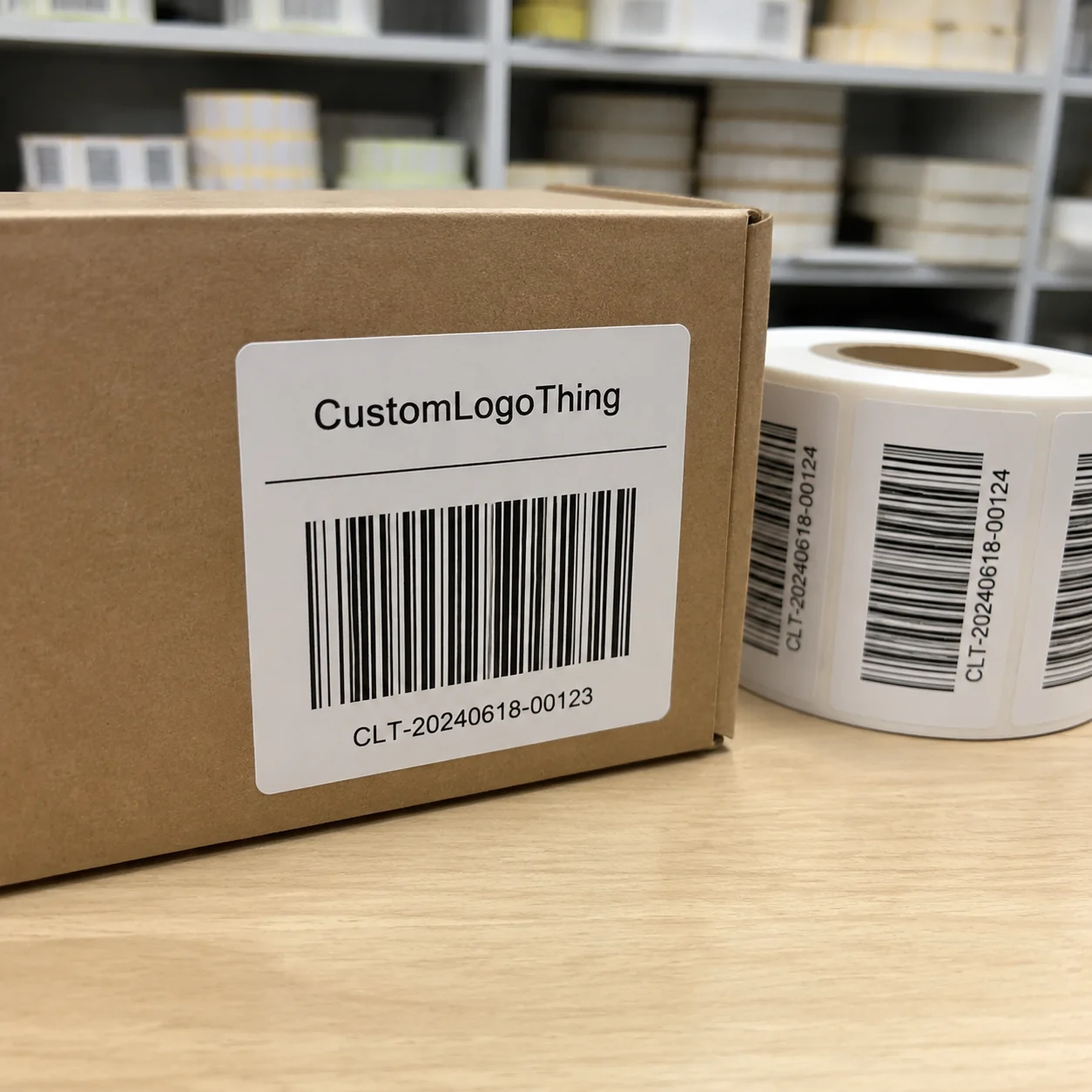
Chocolate packaging has an odd assignment. It must suggest indulgence before the box is opened, then tolerate shipping cartons, warm hands, cold rooms, courier movement, and a crowded retail shelf where the decision window may be only a few seconds. A Woven Labels Supplier Quote for chocolate brands is not just a trim price. It is a packaging specification, with all the small risks that come with that word.
The best buyers do not begin with, “How cheap can this label be?” They ask whether the same woven mark can carry a brand across a Valentine sleeve, a holiday gift box, a three-bar tasting set, and the regular retail line without looking pasted on. That is where the quote starts to reveal useful information: not only cost, but fit, repeatability, and production discipline.
Why woven labels outlast a seasonal chocolate box
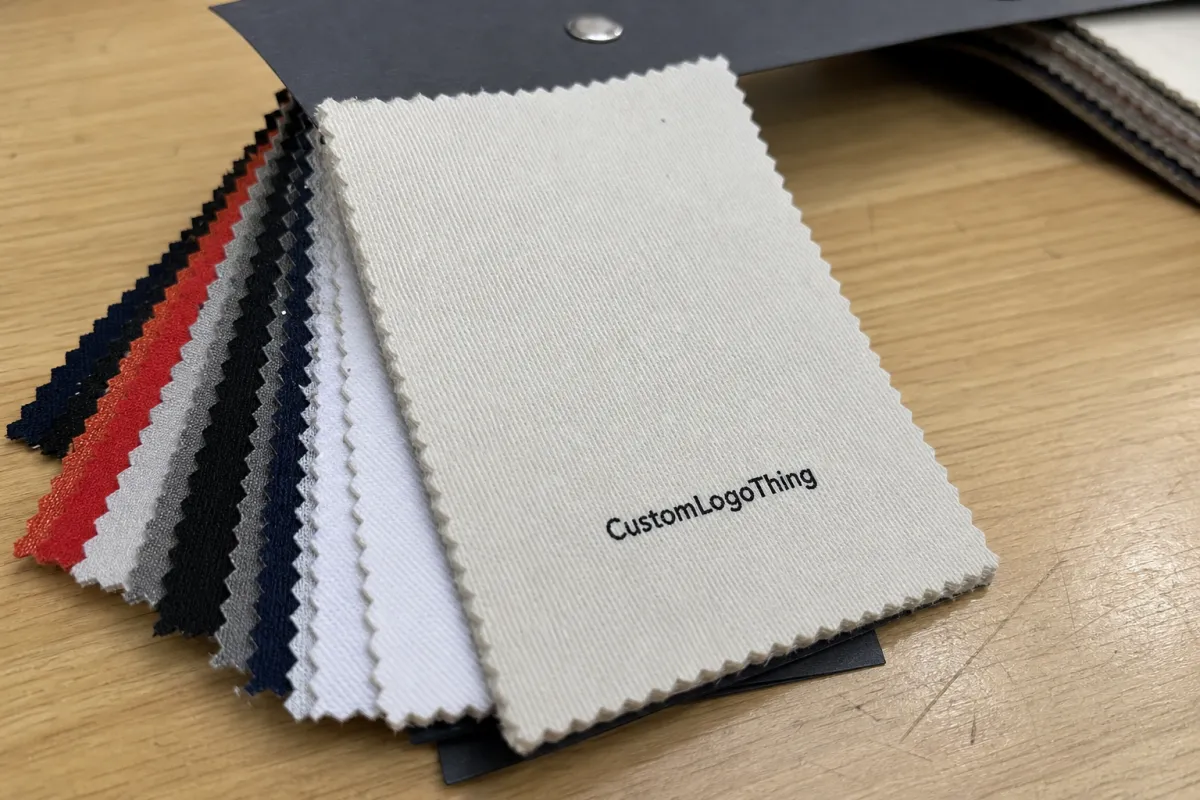
Chocolate packaging changes constantly. Holiday artwork disappears. Limited-edition flavors get retired. Ingredient callouts shift after a reformulation. The woven label can stay steady through those changes, carrying the brand mark with a permanence printed carton art does not always provide.
That matters commercially. If the label becomes the anchor, the rest of the pack can move around it. A brand can change wrapper color, sleeve illustration, ribbon, foil tone, or insert card while keeping a recognizable tactile signature in place.
A woven label also signals restraint, which is more valuable than it sounds. Premium confectionery rarely benefits from decoration stacked on decoration. It needs precision: clean edges, controlled color, a legible logo, and a surface detail that rewards a closer look. A small textile badge can do that without turning the pack into a costume.
The comparison with a paper sticker is useful but not absolute. Paper labels are quick, familiar, and often right for short promotions. Woven labels earn their keep when the component will repeat across several runs, appear on giftable packaging, or help a modest carton feel more deliberate. They bring texture into a category dominated by smooth foil, coated board, and printed paper.
A useful quote should answer three questions early: what the label will look like, how it will attach, and what it will cost at the quantity you actually plan to buy.
Packaging teams sometimes underestimate how much a small fabric component changes perceived value. A paper-wrapped chocolate bar can read as ordinary. Add a properly scaled woven label with balanced density and the pack looks edited, not merely decorated. The effect is subtle. So is good typography. That does not make either one minor.
Judge a Woven Labels Supplier Quote for chocolate brands against repeatability rather than novelty. If a supplier can produce the same label consistently across seasonal calendars, with the same fold, color match, and edge finish, the brand avoids a slow drift in appearance. That drift is easy to miss internally and easy to spot on a shelf.
Where woven labels fit on bars, truffles, and gift packs
Chocolate brands usually use woven labels in four places: outer wraps for bars, neck labels for gift boxes, stitched tags on pouches, and retail hang labels for assortments. Each placement changes both the look and the handling. A label that works on a rigid truffle box may be awkward on a soft pouch. A label that looks perfect in a rendering may slow packing if every unit needs hand alignment.
On bars, the label often acts as a compact brand badge. It can sit across a paper wrap, attach to a belly band, or fold over a narrow sleeve edge. On gift boxes, it may function as a neck label, front identifier, or closure detail. On pouches, it borrows from soft-goods language: less confectionery counter, more keepsake.
There is a sharp difference between decorative branding and functional labeling. A logo-only label can be optimized for texture and recognition. A label carrying SKU codes, flavor names, ingredients, or compliance text needs more room, more careful artwork, and realistic expectations about woven resolution. Fabric can reproduce detail well, but it is not offset print.
- Front-facing tag - best when the brand mark should be seen first.
- Side seam label - useful when the label should feel like a quality marker rather than a headline.
- Neck label - practical for gift boxes, cube packs, and assortment sleeves.
- Hang tag - helpful for seasonal releases, hamper sets, and retail display programs.
Pack geometry should shape the quote. A 40 mm label on a rigid box behaves differently from the same label on a flow-wrapped bar or filled pouch. Curves, folds, closure pressure, and shelf-facing orientation all matter. So does the customer’s hand path: if fingers repeatedly rub the label while opening the pack, abrasion resistance matters more than it would on a display-only face.
For short-lived campaigns, printed stickers may still be the cleaner choice. They are fast, cheap, and easy to version by flavor. Woven labels are stronger when the brand wants a tactile identifier with a longer useful life: tasting kits, premium bars, boxed truffles, corporate gifts, advent products, and reusable pouches.
Construction specs that affect look, hand-feel, and durability
The largest price swings usually come from construction, not from the logo alone. Size matters, but weave density, thread count, color count, edge style, fold type, and backing choice shape both cost and performance. Those details determine whether the label feels refined or bulky, whether the mark is readable, and whether the edge sits flat after application.
Higher weave density can improve detail, up to a point. Very fine lines, tiny icons, and hairline serif type often break down once translated into thread. The better production answer is usually simplification: fewer micro-details, stronger contrast, and slightly more breathing room around the mark. In woven work, clarity beats ambition.
Common finishing choices look simple on paper, but they change the final pack:
- Center fold - often used where the label folds over an edge or neck area.
- End fold - keeps raw ends hidden and gives a neat sewn or fixed edge.
- Mitre fold - gives a sharper, more tailored presentation on premium packaging.
- Straight cut - works for labels that will be stitched, sealed, or mounted separately.
- Sew-on construction - strongest where the label must become a permanent part of a pouch or textile wrap.
- Heat or adhesive backing - useful on selected surfaces, but it must be tested against coatings, texture, and handling conditions.
Color deserves the same caution. Thread-matched tones are reliable for solid marks and simple palettes. Gradients, subtle shadows, and photographic effects rarely translate cleanly. If the logo relies on seven close shades of brown, the woven version may need a reduced palette with deliberate contrast. That is not a compromise in quality; it is a translation into another medium.
Buyers should also confirm what the label will touch. Coated paperboard, uncoated kraft stock, foil laminate, velvet-touch board, textured paper, and flexible film all respond differently to heat, pressure, glue, and stitching. Food packaging adds another layer: the label usually sits outside the food-contact zone, but adhesives, inks, coatings, and migration concerns still need sensible separation from the chocolate itself.
Quality control should not stop at the digital proof. Check stitch clarity, edge fray, color consistency, label dimensions, fold accuracy, and backing behavior. A tolerance that looks small on a spreadsheet can become obvious when 2,000 labels sit slightly crooked on a narrow bar sleeve.
Transport durability offers a useful parallel. Standards such as ISTA testing help packaging teams think about distribution stress. The woven label is only one component, but it still belongs to a system that must survive compression, vibration, temperature variation, and repeated handling.
Pricing, MOQ, and quote levers that change your unit cost
Most buyers ask for a unit price first. Reasonable. But the more useful comparison is the full cost at the exact quantity, using the real artwork, actual finish, and intended pack format. A neat $0.14 label is not a bargain if it needs hand trimming, fails on the sleeve coating, or arrives too late for the pack-out date.
For woven labels, the main quote levers are predictable: label size, weave complexity, number of thread colors, fold style, backing, edge finish, sampling needs, and packing method. MOQ also changes the equation. A 1,000-piece test run and a 10,000-piece launch order carry different setup economics. They should not price the same way.
As a planning range, smaller Custom Woven Labels for chocolate packaging may land around $0.12-$0.30 per unit, depending on quantity and finish. More complex pieces with multiple colors, special folds, high-density weave, or custom backing can move higher. At around 5,000 pieces, many buyers start to see better unit pricing than at 1,000 or 2,000 pieces, though the break depends on artwork and production method.
Hidden variables are not necessarily red flags, but they must be visible. Artwork cleanup can add cost if the logo is not production-ready. Rush production changes the schedule and sometimes the price. Split shipments affect freight. SKU sorting, individual bagging, barcode labels on label packs, or shipment by flavor group may add handling charges. Those details are mundane until they are missed.
| Option | Typical use | Indicative unit range | What drives the price |
|---|---|---|---|
| Simple woven label | Bar wraps, basic logo tags | $0.12-$0.18 | Low color count, standard fold, larger run |
| Mid-detail woven label | Gift boxes, pouches, retail packs | $0.18-$0.28 | More weave detail, custom size, refined finishing |
| Premium woven label | Seasonal gifts, high-end assortments | $0.28-$0.45+ | Small text, multiple colors, specialty fold or backing |
The table is a planning tool, not a universal tariff. A proper Woven Labels Supplier Quote for chocolate brands should be attached to the pack, the volume, and the production route. The goal is not the lowest number on paper. The goal is a quote that survives contact with the packing line.
Ask for pricing at the target quantity and at the next sensible tier. The gap often tells a more honest story than a long sales presentation. If 2,500 pieces and 5,000 pieces are close in total cost, the larger order may protect a seasonal program from reorder panic. If storage is tight or artwork is likely to change, the smaller run may be wiser despite the higher unit price.
Process, proofing, and turnaround from brief to ship date
The workflow is usually direct: send specifications, receive a layout or digital proof, confirm construction, approve a sample or mockup if needed, then release production. The shortest projects are not always the simplest. They are the ones with fewer unknowns.
A typical custom woven label order often needs 12-15 business days after proof approval. That is a useful planning figure, not a guarantee. Complex artwork, seasonal backlog, revised folds, sampling rounds, freight constraints, or holiday closures can extend the schedule. Repeat orders with saved specifications may move faster because the supplier is not reinterpreting the artwork from scratch.
Many projects lose time in predictable ways. Measurements are missing. The pack photo is shot at an angle, so scale is unclear. The design team has three logo files and no one knows which one is current. One stakeholder assumes sewing; another assumes adhesive. The quote stalls because the supplier is forced to price a moving target.
Milestones help. Ask when the first proof will arrive, when comments are due, when production can start, and when the shipment is expected to leave. A fixed launch date needs a backward schedule. “Soon” is not a production plan.
Proofing should include more than logo placement. Check the finished label size, fold allowance, thread colors, background texture, orientation, and how the label is packed for application. If the team will apply labels by hand, count how many labels can be placed per hour in a realistic trial. If a co-packer will apply them, confirm whether the labels need to arrive on rolls, in bundles, or separated by SKU.
For broader packaging programs, recognized resources can help teams ask better material questions. The Packaging School and packaging industry resources offer useful context on packaging process decisions. If the outer carton uses certified paperboard, FSC references may be relevant; FSC explains the certification framework.
A quote becomes accurate when design intent, pack type, target date, and approval path are visible. Without those four pieces, even a precise-looking number is partly guesswork.
Matching label style to wrappers, sleeves, and seals
Chocolate packaging surfaces do not behave alike. Foil wraps are slick and reflective. Paper sleeves can dent, buckle, or absorb pressure marks. Rigid cartons hold shape well but still show poor alignment. Pouches flex, which changes how a label must attach. The surface should lead the decision.
Glossy and metallic materials often need stronger contrast. A small brown-on-bronze logo may look sophisticated on screen, then disappear under retail lighting. Matte paper is more forgiving; a subtler woven mark can still read clearly because the background is quieter. This is one reason physical proofing matters. Screens flatter contrast.
Soft-goods-style finishing can be excellent for chocolate gift packaging. It suggests care without forcing the design into rustic clichés. Still, test abrasion, corner lift, stitch points, and adhesion if the label sits on a seal, flap, or edge that customers handle repeatedly.
Assembly speed deserves more attention than it gets. A beautiful label that takes 25 seconds to align by hand becomes expensive during a seasonal pack-out. Multiply that by 8,000 gift boxes and the labor cost can erase the savings from choosing a cheaper label. Precision is not only aesthetic; it is operational.
Design around the line, not the rendering. If the carton closes tightly, if the wrapper creases at the label point, or if the pouch has an uneven fill, the label must accommodate those facts. A quote that ignores application is incomplete.
For brands coordinating several packaging components, Custom Labels & Tags can help keep measurements, logo treatment, and finish choices consistent across bars, boxes, pouches, and secondary packs. The strongest programs reuse what should stay constant and vary only what needs to change.
What buyers get from a supplier built for repeat orders
Repeat orders expose supplier discipline. The first run can hide many weaknesses because everyone is watching closely. The second and third runs show whether the specifications were saved correctly, whether the artwork stayed clean, and whether the supplier understood the packaging context rather than merely processing a file.
For chocolate brands, that reliability matters because seasonal calendars leave little room for correction. A late label can hold up filled product, finished boxes, retail shipments, and promotional photography. A color shift can make one flavor look unrelated to the rest of the line. A fold variation of a few millimeters can throw off a narrow sleeve.
A repeat-order supplier should preserve the label size, thread references, fold choice, backing, proof history, and packing requirements. If the brand uses the same mark across several SKUs, saved artwork reduces back-and-forth. It also reduces accidental redesign, the quiet source of many packaging inconsistencies.
Communication is part of quality control. Buyers need direct answers: MOQ, expected ship date, what changed from the last proof, whether the current backing suits the new carton coating, and what happens if the label grows by 3 mm. These are operational questions. A supplier that answers them clearly is worth more than one that only sends polished mockups.
Operational reliability is the real value. Proof accuracy. Stable production standards. Order tracking. Sensible packaging of the labels themselves. Clear escalation if a deadline is tight. Nothing glamorous, but luxury packaging often depends on ungamorous discipline.
If you want to understand how a supplier handles continuity across product lines, review Case Studies. The most useful examples are not always the prettiest. They are the ones that show repeatability, controlled variation, and production follow-through.
What to send next for an accurate woven-label quote
A useful brief is concrete. Send the label dimensions, vector artwork if available, quantity by SKU, preferred fold, attachment method, target ship date, pack photos, and dielines if they exist. Add the surface material too: coated board, paper wrap, foil laminate, pouch film, fabric pouch, or another substrate.
Do not leave out the chocolate format. A bar, truffle box, advent calendar, pouch, and corporate gift set create different packaging conditions. A supplier who knows the format can recommend a sensible size and finish instead of quoting the logo in isolation.
Ask for two options when the project allows it: the ideal finish and a practical alternative. That comparison shows where the cost really sits. Sometimes the premium version adds little. Sometimes a simpler fold or reduced color count protects the budget without weakening the pack.
Before approval, confirm the proof, production slot, delivery window, packing method, and responsibility for application. If a co-packer is involved, share their handling requirements early. If the label will be applied by hand, request labels packed in a way that supports fast counting and placement. Small decisions upstream prevent slow work downstream.
A Woven Labels Supplier Quote for chocolate brands becomes actionable when it connects the number to the pack, the deadline, and the production method. Price matters. So does whether the label stays readable on a glossy sleeve, arrives before the fill date, and can be applied without turning the packing table into a bottleneck. If those conditions are clear, Contact Us with the specifications and ask for a production-ready quote.
FAQ
What affects a woven labels supplier quote for chocolate brands the most?
Size, weave detail, color count, fold style, backing, and order quantity usually move the price most. Rush timing, artwork cleanup, SKU sorting, and special packing can also change the final quote. The pack format matters because placement and attachment affect production setup.
Can I use woven labels on chocolate bars and gift boxes?
Yes. Woven labels can work on bars, sleeves, boxes, pouches, gift packs, and seasonal assortments. The construction should match the surface: a rigid carton can handle different placement and pressure than a flexible pouch or paper-wrapped bar.
What MOQ should I expect for a chocolate label order?
MOQ varies by size, construction, color count, and supplier setup. Smaller test runs may be possible, but unit cost typically improves at higher quantities because setup costs spread across more pieces. Ask for pricing at your target volume and the next tier up.
How fast can a woven label order for chocolate packaging be produced?
Many custom orders require about 12-15 business days after proof approval, though complex artwork, sampling, rush periods, or freight constraints can extend that. Repeat orders with saved specifications often move faster. Share the launch date early so the schedule can be checked before approval.
What files should I send with my woven label quote request?
Send vector artwork when possible, plus dimensions, quantity, fold preference, attachment method, placement notes, target date, and packaging photos or dielines. If final art is not ready, a clear logo file and reference pack are enough to begin a preliminary quote.