Woven Labels Supplier Quote for Corporate Gifting Teams
Why Woven Labels Change the Perceived Value of Corporate Gifts
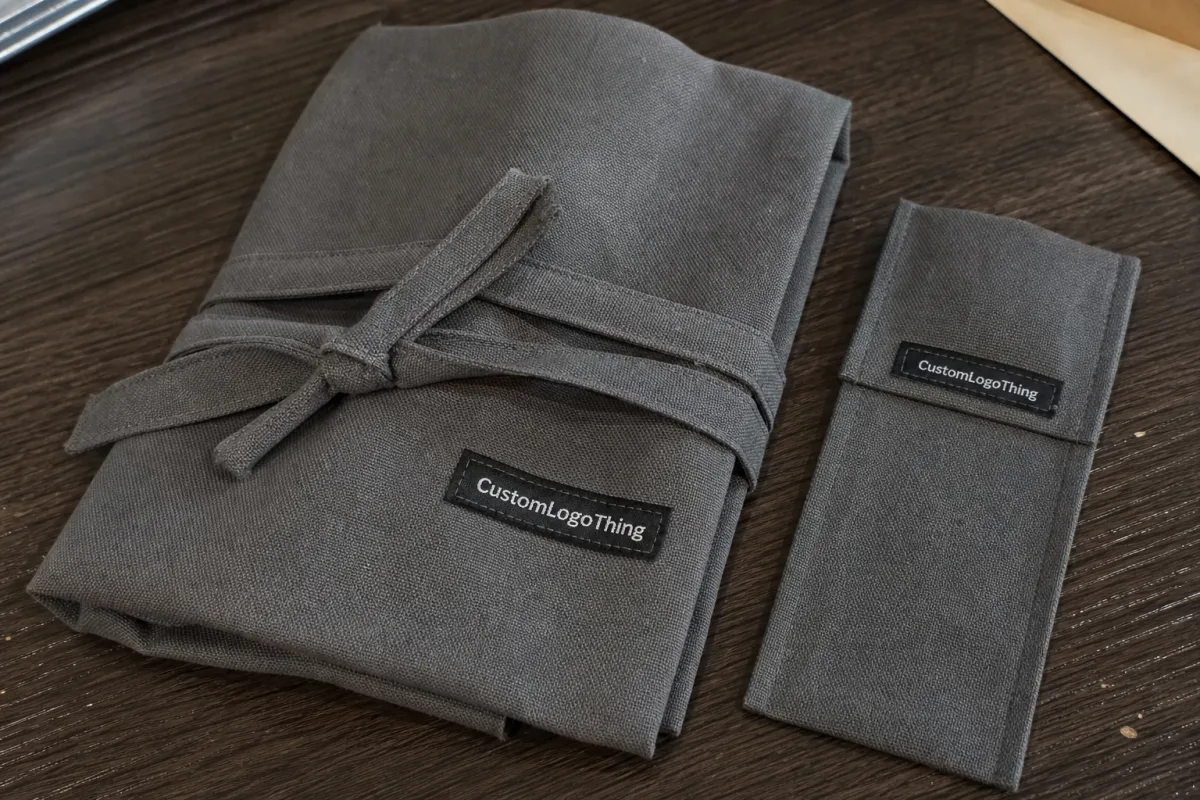
Two quarter-zips can come off the same production line and still feel like different products. One carries a crisp woven brand label at the neck. The other has a plain tag that looks like it was added as an afterthought. That tiny difference changes how the item is read: planned, finished, and worth keeping, or merely distributed.
For corporate gifting teams, a Woven Labels Supplier Quote for corporate gifting teams is not only about price per piece. It is about how a gift behaves in the real world. Will it survive washing? Will it keep its shape after repeated use? Does it look like a retail item or a promo item? Those details affect how recipients treat the gift and whether it stays in circulation.
Woven labels are especially effective because they sit at the intersection of branding and durability. Thread becomes the artwork. The surface has texture, edges, and a permanence that printed stickers or paper inserts cannot match. That matters on apparel, bags, blankets, caps, and travel accessories, where the gift itself is meant to be used, not stored.
Printed labels still have a place. They are useful for care text, fiber content, and low-profile interior information where fine detail matters more than texture. But for most textile gifts that need to feel premium, woven construction usually makes better sense. It is a practical choice, not a decorative one.
Corporate gifting teams usually sit under pressure from several directions at once: event dates, onboarding schedules, executive approvals, budget ceilings, and brand standards that leave little room for improvisation. HR may need 800 welcome kits ready by a Monday. Sales enablement may need customer gifts that do not look promotional. Procurement may need a supplier quote that is clear enough to compare against others without a second round of clarification.
Practical buyer rule: if the item is washable, wearable, reusable, or meant to signal quality, specify the label early, not after the garment or bag is already moving through production.
A strong supplier quote should answer five things quickly: what the label will be made from, how much the project will cost at different quantities, what the minimum order is, how long production will take, and what information is missing from the artwork or placement brief. If those answers are buried, the quote is not ready yet.
Product Details That Matter for Gift-Ready Woven Labels
Woven labels are created by weaving colored threads into a design rather than printing ink onto cloth. That sounds minor until you compare the finished result. Ink sits on top of a surface. Thread becomes part of the surface. The difference shows up in texture, wash performance, and how the label ages after repeated handling.
For corporate gifting, the most common placements are predictable. Neck labels work for hoodies, polos, quarter-zips, and T-shirts. Hem tabs add a subtle retail cue to outerwear. Side-seam labels fit tote bags and travel pouches. Fold-over labels are common on blankets. Patch-style woven labels can work well on caps, tech cases, and soft goods that need a more visible mark.
Construction changes more than appearance. A flat label is straightforward and versatile. A center-fold label is meant to be sewn into a seam, often at a neckline. End-fold labels tuck raw edges under for a finished face. Loop-fold labels create a small tab. Miter folds are more specialized and show up on corners or shaped applications. The wrong fold can slow sewing or make a label look awkward on the finished item.
Material choice matters too. Damask woven labels are usually the best option when the logo has small lettering, thin lines, or fine edges that need to stay legible. Satin woven labels have a smoother, slightly brighter finish. Taffeta labels are more economical and structured, though they do not usually carry tiny detail as well as damask. For a gift program that will be photographed, worn, and reused, clarity tends to matter more than saving a few cents.
One label rarely suits every item in a mixed kit. A 0.5 x 1.5 inch side tab can disappear on a blanket but feel right on a tote. A 2 x 3 inch patch can look balanced on a cooler bag yet overpower a beanie. Teams sourcing for multiple SKUs should think in placements, not just in logos. A good supplier will talk through those tradeoffs instead of forcing one size across the whole order.
- Apparel: neck, hem, sleeve seam, or interior brand tab.
- Blankets: bottom corner, fold-over edge, or binding area.
- Tote bags: lower corner, outer seam, or interior pocket.
- Executive kits: interior placement for a quieter brand read.
Timing also affects the construction choice. If the label is sewn after embroidery or after kitting has started, labor can increase fast. Reopening packed units is tedious and expensive. In a batch of 2,500, that is not a trivial detail; it is the sort of thing that turns a tidy budget into a surprise.
Specifications to Prepare Before Requesting a Quote
A quote is only as accurate as the inputs behind it. For a Woven Labels Supplier Quote for corporate gifting teams, the supplier needs the size, fold type, quantity, thread colors, artwork file, backing preference, application method, shipping destination, and deadline. Without those, every number is a guess dressed up as a number.
Most label sizes fall into a familiar range. Small neck labels often sit around 1 x 2 inches. Side tabs are commonly near 0.5 x 1.5 inches. Labels for blankets, bags, and pouch fronts often land between 1.5 x 2 inches and 2 x 3 inches, depending on visibility and how much detail the logo needs.
Artwork should be vector whenever possible: AI, EPS, or editable PDF. Woven production turns art into thread paths, not pixels. A fuzzy image pulled from a slide deck may look acceptable on a screen and then collapse into a blur once it is translated for weaving.
Thread color matching needs a realistic brief. Pantone references help, but woven thread is not the same as printed ink. It reflects light differently and rarely matches a brand guide exactly in every lighting condition. If a brand color is sensitive internally, ask for a physical sample before the whole batch runs.
Fine detail is usually where projects go wrong. Tiny type, hairline strokes, gradients, shadows, and photographic elements do not translate well into woven construction. A supplier may recommend enlarging text, thickening strokes, simplifying the icon, or reducing the number of colors. That is not a design setback. It is how the art gets made manufacturable.
| Specification | Common Choice | Buyer Impact |
|---|---|---|
| Label size | 0.5 x 1.5 in to 2 x 3 in | Larger labels use more material and may need more sewing space. |
| Construction | Flat, center-fold, end-fold, loop-fold | Fold style affects finish, placement, and labor. |
| Material style | Damask, satin, taffeta | Damask gives sharper detail; taffeta can reduce cost. |
| Backing | Sew-on, iron-on, adhesive | Sew-on is usually best for washable gifts. |
| Artwork | AI, EPS, editable PDF | Clean vector art reduces proofing revisions. |
Edge finishing deserves attention. Heat-cut edges are common and clean. Ultrasonic cutting can be more precise. Adhesive backing may help with temporary positioning, but it should not be treated as a long-term attachment method for washable textiles. Iron-on backing can work on some projects, though testing on the actual substrate is wise before anyone approves it as the default.
Compliance is separate from decoration. Apparel gifts may still need care, fiber content, size, or country-of-origin information depending on where they are distributed. A decorative woven brand label does not automatically satisfy those requirements. If the label must carry regulatory information, decide whether that belongs on the same label or on a separate care label.
For teams comparing formats and planning mixed programs, the Custom Labels & Tags page is useful for understanding what can be built before sending an RFQ.
Woven Labels Supplier Quote for Corporate Gifting Teams: Pricing, MOQ, and Unit Cost Drivers
Pricing is shaped less by “a label” than by the total setup. Quantity, size, color count, fold style, backing, finishing, and whether the labels are loose or applied all affect cost. A vague request gets a vague answer because the supplier has no real basis for a clean calculation.
Minimum order quantities are tied to setup economics. Pilot runs may be possible, but unit cost usually improves as orders move from 250 pieces to 1,000, 2,500, or 5,000 pieces. The fixed work of artwork conversion, loom setup, and proofing gets spread across more units. That is why the first tier often looks expensive per piece and the larger tiers look much calmer.
As a working range, simple loose woven labels may land around $0.18 to $0.45 per piece at higher volumes. Small runs, added colors, specialty folds, metallic thread, or special backing can push that higher. Applied labels are a different story because sewing, handling, and repacking add labor. A label that looks inexpensive on paper may not be inexpensive once it is attached to 1,500 garments or folded blankets.
Large labels use more material. Detailed designs take more weaving time. Metallic thread costs more and behaves differently from standard polyester. Individual bagging, iron-on backing, and special packing instructions can all raise the final number. Freight matters too, especially if labels are going to a decorator, kitting partner, warehouse, or multiple shipping points.
Setup fees should be asked about directly. Woven labels usually need artwork conversion, loom setup, and a proof or sample approval step. A 100-piece order can feel disproportionately expensive because the setup work is nearly the same as a much larger run. The economics only start to settle once volume rises enough to absorb those fixed costs.
| Quantity Tier | Typical Use Case | Unit Cost Pattern | Procurement Note |
|---|---|---|---|
| 250 pieces | Pilot gift run or VIP batch | Highest unit cost | Useful for testing placement and approval risk. |
| 500 pieces | Small event or department rollout | Moderate improvement | Ask whether sampling is included or separate. |
| 1,000 pieces | Onboarding or customer program | Better setup absorption | Often a sensible first bulk tier. |
| 2,500 pieces | Conference, holiday, or sales campaign | Lower unit cost | Confirm carton count and shipping destination. |
| 5,000 pieces | Multi-SKU or repeat gifting program | Usually strongest economics | Request reorder documentation and golden sample control. |
Request tiered pricing at 250, 500, 1,000, 2,500, and 5,000 pieces if the program might grow. That gives procurement a usable comparison set instead of a single number that may not scale well. If the order may repeat quarterly, say so. A supplier can usually forecast more intelligently when the project is not a one-off mystery.
A useful quote should separate label-only pricing from applied-label pricing. It should also state the assumptions clearly: size, fold, backing, artwork condition, sample requirement, freight terms, and approval timing. That is the difference between a quote and a placeholder.
Process and Timeline from Artwork Review to Delivered Labels
The production path is simple on paper and easy to slow down in practice. Quote request. Artwork review. Digital proof. Sample or pre-production approval. Bulk production. Quality inspection. Packing. Shipping. Each step has a small decision point that can absorb time if the brief is incomplete.
Fast timelines usually belong to buyers who send clean vector art, confirmed dimensions, known quantity, a preferred fold, the intended application method, and a real in-hands date at the start. Missing one of those details can cost a day. Missing several can cost a week, especially if the supplier has to rebuild assumptions around the project.
Proofing is where the supplier checks whether the design can actually be woven cleanly. The feedback often sounds practical because it is: increase line weight, enlarge text, simplify the logo, reduce colors, or change the fold. That is not rejection. It is the translation step between brand design and production.
Digital proofs are usually enough for straightforward labels. Physical samples are slower, but they are more useful when texture, color, edge quality, and legibility matter. For VIP gifts, executive apparel, or any program that is likely to repeat, the extra time is often worth it.
Typical timing depends on complexity. A simple loose-label order may take about 10 to 15 business days after proof approval. Sampling, specialty thread, complex finishing, application sewing, or freight constraints can extend that window. Rush service may be possible, but if it is, the quote should make the tradeoff visible rather than hiding it in fine print.
Labels sit upstream from much of the rest of the gift workflow. Embroidery, sewing, folding, kitting, warehousing, and final fulfillment can all depend on labels arriving on time. A five-day delay at the label stage can move a launch kit past the date it was meant to support. In a corporate setting, the calendar usually matters more than the craft story.
Build the schedule backward from the fixed date: event, onboarding class, launch meeting, board presentation, holiday cutoff, or customer mailing window. Separate what is hard from what is flexible. A supplier can manage timing risk far better when the brief says, “must be in kitting by Friday,” instead of “ideally sometime next week.”
For teams thinking beyond the label itself and into transit behavior, organizations such as ISTA are useful references for packaging and distribution testing.
Quality Checks That Protect Brand Standards at Scale
Quality control matters more in corporate gifting than many buyers expect. One flawed label on a VIP gift can do more damage than a missing insert in a bulk pack. People notice the thing that is stitched onto the item. It feels deliberate, so flaws there carry more weight.
Start with the basics: logo clarity, spelling, thread color, fold accuracy, edge quality, label size, backing, and consistency across the run. Then check the label in context. A label that looks tidy on a flat table may curl, pucker, or sit awkwardly once sewn into fleece or canvas.
Approvals should be written. Sign off on artwork, proof, and sample before full production starts. Verbal approvals are easy to misremember, especially once a project moves through procurement, branding, and fulfillment at the same time. File names, revision numbers, and proof dates do real work here.
Readability should be tested at actual size. Enlarged monitor proofs are deceptive. Tiny lettering that looks fine at 400% zoom can turn into a fuzzy thread mass once woven into a 1 x 2 inch label. If legal or care information needs to be legible, a separate printed care label may be the better answer.
Durability depends on application. For washable apparel and blankets, sew-on woven labels usually offer the most reliable performance. Adhesive-only formats can be useful for temporary positioning or non-washable packaging elements, but they are not a strong choice for garments that will be laundered repeatedly.
Color risk is not theoretical. Thread reflects light differently under office LEDs, daylight, store lighting, and phone flash. Brand teams should review color under practical conditions, not just beside a Pantone book on a desk with perfect light. That is where a physical sample becomes useful instead of ornamental.
Keep a golden sample for repeat programs. Save one approved label with the spec sheet, final artwork, thread references, backing choice, and approval date. Future orders can then be compared against something real instead of a screenshot buried in email.
Low-cost labels can still become expensive if they slow sewing. Poor edge cuts, uneven folds, or miswoven artwork may create rework at the decorator. Saving three cents per label does not help if another forty cents per unit disappears into handling.
Supplier Capabilities Corporate Gifting Teams Should Verify
Supplier claims only matter if they are specific. Ask whether the team can handle artwork cleanup, woven sampling, bulk production, label guidance, repeat orders, and shipping coordination. A supplier that asks detailed questions early is often reducing project risk rather than creating friction.
Corporate gifting brings its own operational pressure. Kits may ship to multiple addresses. Decoration partners may need labels by a fixed date. Warehouses may want carton labels. Event teams may have almost no room for late freight because the conference starts in the morning, not sometime after lunch.
Ask whether the supplier can quote loose labels and applied labels. Some projects only need labels shipped to a sewing contractor. Others need a complete branded package with labels, boxes, tissue, ribbon, inserts, and outer mailers. The more integrated the sourcing, the less likely the finished kit is to feel assembled from unrelated pieces.
Production control should be visible in the quote. Look for a defined proofing process, sample review, QC checks, packing method, and reorder documentation. If those assumptions are missing, the final invoice may not match the first estimate, and that is where procurement starts losing patience.
Repeatability matters more than it first seems. Many corporate gifting programs begin as one campaign and then turn into onboarding kits, customer appreciation packages, holiday gifts, sales incentives, or milestone awards. A good supplier should be able to recover the spec without rebuilding the whole project from scratch.
Questions about sourcing and packaging may also surface, especially if the gift includes paper-based outer materials or mailers. For teams tracking responsible sourcing claims, certifications from organizations such as FSC can matter in the broader packaging conversation.
The best quotes are the ones that make uncertainty visible. A strong Woven Labels Supplier Quote for corporate gifting teams states what is included, what is excluded, what approvals are required, how long each stage should take, and what could change the price. That level of clarity is more useful than polished sales language.
Next Steps: Build a Quote Request That Gets a Fast Answer
The fastest quote requests are complete, not long. A buyer who sends ten precise details usually gets a better answer than a buyer who sends a page of background without the specs that actually drive production.
Use this checklist before requesting a woven labels supplier quote for corporate gifting teams:
- Company name and contact person
- Project name or campaign name
- Label quantity and possible reorder quantity
- Label size, such as 1 x 2 inches or 2 x 3 inches
- Fold type: flat, center-fold, end-fold, loop-fold, or miter-fold
- Material preference: damask, satin, taffeta, or supplier recommendation
- Thread colors and Pantone references if available
- Vector artwork file: AI, EPS, or editable PDF
- Backing preference: sew-on, iron-on, adhesive, or none
- Application method: loose labels, sewn labels, or labels sent to decorator
- Gift item type: apparel, bags, blankets, accessories, or mixed SKUs
- Shipping destination and required delivery date
Include a placement photo or mockup. It prevents expensive guessing. A label intended for the lower corner of a blanket needs a different approach from a neck label on a fleece pullover or a side tab on a tote bag.
State whether the order is label-only, labels shipped to a decorator, or part of a broader packaging program. If boxes, tissue, ribbon, inserts, or mailers are also in scope, mention that early so the brand system can be planned as one package instead of a stack of disconnected items.
Request tiered pricing and timeline options in the same message. Ask for 250, 500, 1,000, 2,500, and 5,000 pieces if the program could scale. Identify the non-negotiables up front: exact event date, brand color tolerance, physical sample requirement, retail-level finish, or budget ceiling.
Keep the approved spec after the first order. The next corporate gifting campaign will move faster with fewer artwork questions, fewer corrections, and less back-and-forth over details that were already settled once.
FAQs
What details are needed for a woven label supplier quote for corporate gifting programs?
Provide quantity, label size, fold type, artwork file, thread colors, backing preference, application method, shipping address, and required delivery date. Include photos or mockups of the gift item so the supplier can recommend the right construction and placement. If the program may expand, ask for tiered pricing instead of a single quantity.
What is the typical MOQ for custom woven labels for corporate gifts?
MOQ depends on label size, design complexity, and production setup requirements. Small pilot runs may be available, but unit cost usually improves at higher quantities because setup work is spread across more labels. For procurement planning, request price breaks at 250, 500, 1,000, 2,500, and 5,000 pieces.
How long does woven label production usually take for corporate gifting teams?
Timeline depends on artwork readiness, proof approval, sampling, order quantity, finishing, and shipping method. A simple loose-label order may take about 10 to 15 business days after approval, while physical samples, applied sewing, specialty threads, and freight requirements can add time. Share the final in-hands date early so production can be scheduled around kitting or event deadlines.
Are woven labels better than printed labels for branded corporate apparel gifts?
Woven labels are usually better for long-lasting apparel, blankets, bags, and premium textile gifts because they offer a retail-style feel and strong wash durability. Printed labels may be better for complex gradients, very small text, or low-profile interior information labels. The right choice depends on the artwork, placement, and expected product lifespan.
Can a supplier match our corporate brand colors in woven labels?
Suppliers can approximate brand colors using available thread colors and Pantone references. Thread is not identical to ink, so exact color matching is limited by material, dye lot, and light reflection. A physical sample is recommended when brand color accuracy is critical for executive gifts, VIP programs, or repeat corporate campaigns.


