A bride may spend three seconds touching the inside neckline before she studies the silhouette. That is why a Woven Labels Supplier Quote for wedding boutiques should not begin with price alone. It should begin with garment feel, label placement, and the finish your customer notices during fittings.
Wedding boutiques sell detail. A label that looks cheap, curls at the edge, scratches the skin, or shows through a sheer layer can weaken the perceived value of a $900 robe set or a $4,000 gown. The label is small. The signal is not.
The practical goal is straightforward: Order Custom Woven labels with fewer revisions, clearer pricing, and production timing that does not collide with appointments, trunk shows, alterations, or collection launches. That requires better specifications, not longer email chains.
Why Woven Labels Fit Bridal Garments Better Than Prints
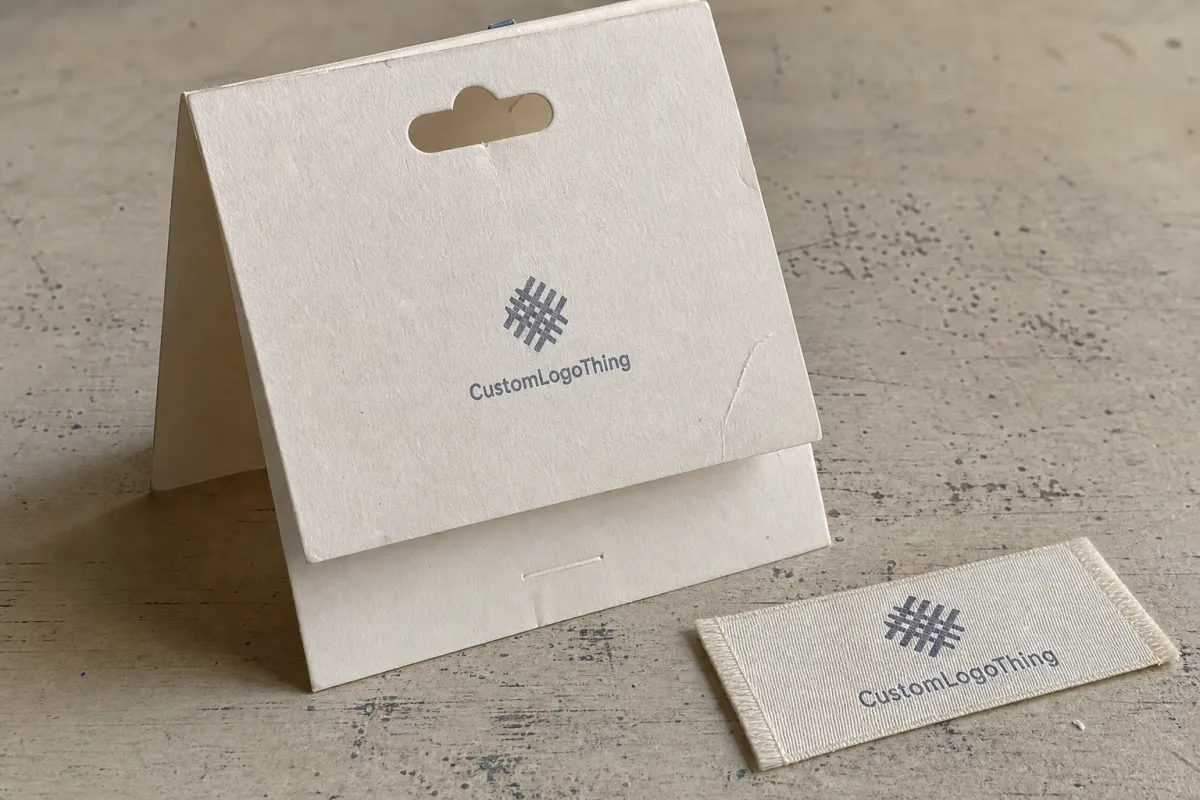
Bridal buyers notice texture early. They handle satin, crepe, tulle, lace, organza, charmeuse, and stretch mesh before they read a care instruction. Printed labels can work for certain basics, but woven labels usually deliver a more dimensional, premium hand because the brand mark is made with thread rather than surface ink.
That difference matters on bridal garments. A gown, veil, robe, bridesmaid set, or keepsake accessory is often inspected first at arm’s length, then close up under bright boutique lighting. Woven edges tend to appear cleaner than many printed alternatives, especially around serif lettering, monograms, crests, and small decorative marks. Damask woven labels, in particular, can hold fine detail well because the weave structure is tighter than many economy label options.
Durability is another reason to quote woven labels instead of defaulting to printed tags. Bridal products are handled repeatedly: unpacked, steamed, fitted, repacked, transported, altered, photographed, and sometimes dry cleaned. Even if the final owner wears the garment once, the boutique may touch it dozens of times before the sale is complete.
Presentation and durability should drive the purchase. Not decoration alone.
A label used in a silk robe has different requirements than a label sewn into a structured mikado bodice. A label on a veil comb sleeve has different pressure points than a label on a garment bag or packaging ribbon. Start with the end use, then quote the label.
Buyer check: If the label will touch skin or sit under sheer fabric, ask about softness, edge finish, and color show-through before approving price.
Label Styles, Folds, and Placement Options for Wedding Boutiques
Fold style changes more than appearance. It affects stitch method, comfort, usable logo area, and the real cost of finishing. A quote that ignores fold style is incomplete.
End fold labels are folded on the left and right ends, then stitched at both sides. They suit neck labels, robe labels, and packaging applications where a clean rectangular face is preferred. Because the ends are tucked under, they can look polished without exposing raw edges.
Center fold labels fold across the middle and are usually sewn into a seam. They are common for side seams, care-content pairings, and smaller apparel identifiers. The visible area is only part of the total woven piece, so artwork must be scaled with the fold allowance in mind.
Mitre fold labels angle the ends. They are often used for hanging or edge applications where the label needs a refined tab-like finish. Loop fold labels work when both sides may be visible or when the label needs to sit in a seam as a soft loop. Straight cut labels can suit packaging sleeves, sample cards, or non-apparel placements, but they need the right cutting method to reduce fraying and roughness.
Placement changes the specification again. Neck labels need to be soft and visually balanced. Side-seam labels can be narrower, but they must survive tension and laundering. Hem labels are visible branding choices, so scale becomes sensitive. Hangtag reinforcement labels and accessory inserts for satin sets, veils, garters, or robe packaging may need a slightly firmer hand.
A minimalist slip dress may not tolerate the same label size as a lined ball gown. A sheer overlay may expose dark back threads. A quote should account for fold style, stitch method, and placement complexity because each detail changes setup, finishing time, and inspection standards.
Artwork, Size, and Thread Specifications That Affect Approval
Good woven label production starts with disciplined artwork. Send a vector logo file when possible: AI, EPS, or clean PDF. If the mark is only available as a PNG, use the highest-resolution version and expect the supplier to confirm whether it can be converted cleanly. Include exact wording, capitalization, color references, and whether the label must coordinate with hangtags, ribbon, tissue, garment bags, or packaging already in use.
Size is where many boutique label projects get into trouble. Tiny labels feel elegant on a screen. Then the fold consumes 6 mm to 10 mm of usable area, the stitch line takes more space, and the brand name becomes thin. A 30 mm x 15 mm center fold label may look refined in a mockup, but a long boutique name in a script font can turn into a gray thread blur.
Thread and weave choices matter. Damask woven labels usually offer the best detail retention and a softer, smoother surface. Satin woven labels give a dressier sheen, though fine detail can vary depending on artwork, contrast, and density. Taffeta labels are often more economical and practical for straightforward branding, but they rarely look as refined as damask on high-end bridal garments.
Color contrast deserves more attention than it usually gets. Ivory thread on a champagne ground can look beautiful, but it may disappear under boutique lighting or in photography. Silver on pale gray has the same risk. Thin borders, hairline script, tiny registration marks, and complex crests may need simplification before weaving.
This is the approval trap: buyers approve a digital proof as if it were a print job. Woven labels are engineered through thread. Curves, serifs, small gaps, and color transitions have physical limits. A supplier should flag risky artwork before production, not after 2,000 pieces are woven.
Ask whether the quote assumes standard polyester thread, metallic thread, recycled yarn, cotton-look texture, or another material. Polyester is common because it is durable, colorfast, and stable through typical handling. Metallic thread can create a premium look, but it may feel firmer and can raise cost. If the label will touch skin, do not choose metallic detail casually.
Pricing, MOQ, and Unit Cost for Boutique Label Orders
A Woven Labels Supplier Quote for wedding boutiques should show the moving parts behind the number. The main pricing drivers are material type, label size, color count, fold style, quantity tier, edge finish, backing, custom packaging, and shipping method. Rush handling, if available, can add cost too.
MOQ is not always one fixed number. It may apply per design, per colorway, per size, or per fold style. Ordering the same logo in ivory and black may count as two production versions. A boutique that needs labels for gowns, robes, and accessory bags should ask whether those are separate MOQs or a combined production run.
Typical boutique orders often sit between 500 and 5,000 pieces per design. Smaller runs may be possible, but the per-label cost rises because setup and proofing do not shrink in the same proportion as quantity. A 500-piece run might land around $0.28 to $0.75 per label depending on size and finishing. At 2,500 to 5,000 pieces, a standard woven label may fall closer to $0.12 to $0.35 per unit. Complex damask, metallic thread, special folds, adhesive backing, heat-cut shaping, or individual packing can move the price upward.
| Order Type | Typical Quantity | Common Unit Range | Best Fit | Watch Point |
|---|---|---|---|---|
| First sample run | 100-500 pcs | $0.45-$1.20 | New boutique logo, test placement, private-label trial | Setup cost can dominate the unit price |
| Standard boutique reorder | 1,000-3,000 pcs | $0.18-$0.45 | Core gowns, robes, accessories, packaging inserts | Confirm whether price is per design or total volume |
| Scaled production run | 5,000+ pcs | $0.08-$0.28 | Multiple locations, private-label collections, high-repeat SKUs | Storage, version control, and future artwork changes |
Price ranges are only useful if the assumptions match. A 20 mm straight-cut taffeta label and a 45 mm damask end-fold label with metallic accent are not comparable, even if both carry the same logo. Ask for line-item pricing where possible. Production, setup, proofing, sampling, revision charges, and freight should be separated. That prevents a low headline price from hiding a high shipping charge.
Also check whether the quote includes overage or shortage tolerance. Some label runs may ship a small percentage above or below the ordered quantity due to production yield. For a boutique, that can affect how many robe sets, pouches, or garment bags can be completed before a reorder is needed.
Production Process and Timeline for Bridal Label Runs
The production path is predictable if the artwork is ready: inquiry, artwork review, digital proof, approval, weaving, cutting and folding, inspection, packing, shipment. Delays usually happen in the first three steps, not at the loom.
For a standard custom woven label, many suppliers quote production after proof approval rather than from the first email. That distinction matters. If artwork needs two revisions over five business days, the delivery clock has not really started. A typical standard run may take 10 to 18 business days after proof approval, with sampling or special finishing adding time. Air shipping may take several days; economy freight can take longer.
Seasonality can compress the schedule. Bridal boutiques preparing for trunk shows, new appointments, market samples, or collection drops often need labels at the same time they are finalizing garment bags, tissue, hangtags, and display packaging. The label may be physically small, but it can stop a finished product from looking complete.
A good quote should state:
- Estimated proof timing after artwork submission
- Whether a physical sample is available before bulk production
- Production time after proof approval
- Cutting, folding, and packing format
- Shipping method and estimated transit time
- Any rush limits, holiday closures, or blackout periods
Quality control should be part of the timeline, not an afterthought. Labels need to be checked for thread color, weave clarity, cut length, fold accuracy, edge smoothness, loose threads, and quantity. For bridal use, softness and back-thread visibility deserve extra attention. A technically acceptable label can still be wrong for a sheer bodice or delicate robe neckline.
Packaging buyers may also want to align labels with broader brand packaging. If garment bags, cartons, or mailers are part of the project, standards such as ISTA transport testing guidance can help frame shipping durability discussions. For paper-based hangtags or backer cards, FSC sourcing may matter; the Forest Stewardship Council explains chain-of-custody expectations for certified materials.
Woven Labels Supplier Quote for Wedding Boutiques
A reliable Woven Labels Supplier Quote for wedding boutiques proves more than speed. Fast response is useful, but it is not the same as production control. A quote that arrives with two smart clarification questions is usually safer than a suspiciously quick number that ignores size, fold, and thread behavior.
Clear communication is the first proof point. The supplier should confirm the intended use, label dimensions, fold type, color count, and garment fabric. If the label will sit against skin, softness should be discussed. If it will be sewn into sheer fabric, visibility should be discussed. If the artwork has fine script or a crest, weave limits should be discussed before approval.
Sample consistency is the second proof point. A single beautiful sample is not enough if the bulk run shifts in color, edge quality, or fold accuracy. Color matching is never identical to screen color because thread reflects light differently than ink, foil, or dyed fabric. Still, disciplined suppliers can work with Pantone references, previous samples, or physical packaging pieces to get close.
Revision handling separates serious suppliers from order takers. Ask how many proof revisions are included, what changes trigger a new setup charge, and how quickly revised proofs are returned. Proofing should never be vague. Vague proofing causes missed launches.
Repeat order capability matters too. Wedding boutiques may run several label versions: main boutique brand, private-label collection, bridesmaid sub-line, robe program, or packaging label. A supplier should be able to quote repeat orders cleanly across multiple locations or collections, using the previous approved specification rather than starting from zero each time.
Process transparency reduces surprises. Better specifications produce better quotes. Better quotes produce cleaner approvals. Cleaner approvals produce fewer late-stage problems.
Why Woven Labels Save Reorder Time for Wedding Boutiques
A well-specified woven label becomes part of the boutique’s brand system. The same logo size, thread palette, fold style, and placement rules can carry across gowns, veils, robes, garment bags, keepsake pouches, and packaging sleeves. That saves time because every new product does not require a fresh branding debate.
Small-batch bridal inventory makes consistency more valuable, not less. A boutique may reorder 40 robes, 12 sample gowns, 75 accessory pouches, and 300 packaging inserts across separate dates. If the label specification is locked, replenishment moves faster and presentation stays uniform. Staff do not have to reinterpret the brand mark. Production does not have to recheck every detail.
The operational value is easy to underestimate: fewer styling decisions, fewer proof cycles, fewer internal approvals, less rebriefing when a new buyer, seamstress, or marketing manager joins the project. A quote should therefore include repeat pricing or at least the next price break, because the first order is rarely the last.
There is also a merchandising angle. Consistent woven labels make private-label pieces feel intentional beside designer inventory. They connect the garment to the boutique’s packaging and appointment experience. That connection is subtle, but bridal retail is built on subtle cues: texture, lighting, tissue, ribbon tension, sleeve finish, and the label a customer sees during the final fitting.
Do woven labels solve every branding issue? No. A poor logo, wrong placement, or stiff construction can still hurt the garment. A good woven label is a repeatable brand asset, but only if the specification is honest about fabric, use, comfort, and scale.
What to Send for an Accurate Quote
For an accurate Woven Labels Supplier Quote for wedding boutiques, send the details a production team actually needs. A clear request can cut days from the quote-and-proof cycle.
- Logo file: Vector AI, EPS, or PDF preferred; high-resolution PNG if vector is unavailable.
- Target size: Include finished size and whether dimensions are before or after folding.
- Fold style: End fold, center fold, mitre fold, loop fold, or straight cut.
- Quantity: Break it down by design, colorway, size, or SKU if needed.
- Color references: Pantone numbers, thread references, or photos of existing packaging.
- Garment type: Gown, veil, robe, lingerie bag, accessory pouch, packaging sleeve, or hangtag support.
- Placement: Neck, side seam, hem, outer packaging, insert, or visible brand tab.
- Timing: Required in-hand date, proof deadline, and shipping destination.
Photos help. Send product images, close-ups of fabric, and any existing labels or hangtags. A supplier can judge scale and contrast more accurately from a robe neckline photo than from a logo file alone.
If matching branded pieces are needed, review Custom Labels & Tags to align woven labels with hangtags, stickers, packaging labels, and related boutique finishing items. For a first order, ask for proof timing, sampling options, production lead time, and shipping estimates in the same message. That avoids a slow chain of follow-up emails.
The strongest quote requests are specific without pretending every detail is already solved. Send the intended use, the artwork, the quantity, and the deadline. Then ask the supplier to flag risks in weave detail, color contrast, fold allowance, and comfort before production begins.
Frequently Asked Questions
What should a woven labels supplier quote for wedding boutiques include?
A complete quote should list material, size, fold type, color count, finish, quantity, proof stage, and expected turnaround. It should separate production cost from shipping, setup, and revision charges. If custom backing, special cutting, metallic thread, or premium finishing is included, that should be stated clearly.
What MOQ is typical for woven labels for bridal shops?
MOQ depends on construction, but standard finishes and lower-detail labels usually allow smaller entry quantities than complex custom runs. Ask whether the MOQ applies per design, per colorway, or per size. A useful quote also shows the next price break, so the boutique can decide whether to order conservatively or scale up.
How long does production take after artwork approval?
The timeline usually starts after the proof is approved, not when the inquiry is sent. Many standard runs take about 10 to 18 business days after approval, plus shipping, though sampling, special folding, color matching, or rush-season capacity can change that estimate. Confirm the in-hand date, not just the production date.
Which woven label type works best for wedding dresses and accessories?
Damask is often chosen for wedding dresses because it holds fine detail and has a refined finish. Satin can suit brands that want a smoother, dressier surface. Taffeta is practical when cost and broad compatibility matter more than maximum detail.
Can a woven label match soft bridal fabrics without feeling rough?
Yes, if the weave, fold, and stitch method are selected for the garment. A supplier should recommend a softer hand for delicate fabrics and a narrower format where possible. Requesting a proof or physical sample is the safest way to check comfort before full production.
Should a boutique order one label for all bridal products?
Sometimes, but not always. One core label can work across gowns, robes, and packaging if the size and fold are versatile. Sheer fabrics, lingerie items, veils, and visible hem branding may need a smaller or softer version. Ask for a quote that separates versions clearly so the cost difference is visible.