Boutique buyers ask about Woven Labels Unit Cost for boutique orders because the first number on a quote rarely reflects the full spend. A label can look inexpensive until sampling, folding, proof changes, and freight are added. Then the line item is no longer small, especially when the order is short and every extra step gets spread across fewer pieces.
The better question is not which supplier can print the lowest sticker price. It is which quote gives you the right balance of clarity, durability, and repeatability at the quantity you actually need. For small brands, that distinction matters because a label is part of the garment experience, not just a technical attachment.
Cheap labels often become expensive through avoidable problems: poor readability, rough edges, inaccurate colors, or a reorder that does not match the first run. Once a boutique starts fixing those issues across inventory, the initial savings disappear quickly. A careful quote process saves more money than a race to the lowest unit price.
Why the cheapest label quote is often the wrong one for boutiques
The lowest quote usually wins only when the job is simple and the specs are already locked. Small boutique runs are rarely that clean. Artwork changes, unclear fold directions, and special finishing all create extra labor, and the supplier has to recover that cost somewhere. That is why the cheapest quote often turns out to be the most expensive mistake.
Small orders also carry a fixed setup burden. The mill or converter has to prepare the weave program, thread colors, cutting method, and packing format whether the run is 500 pieces or 5,000 pieces. On a short run, those fixed costs get divided across fewer labels, so the unit cost rises. There is no shortcut around that math.
For a boutique brand, the risk side matters as much as the price side. A label that frays, curls, or reads poorly can make a garment feel unfinished. If the garment sells at a premium, the label has to support that positioning. A low-cost label that feels thin or looks mismatched can undermine the product before a customer even checks the fabric.
- Durability - will the label survive washing, handling, and repeated wear?
- Presentation - does it match the garment price and brand level?
- Reorder consistency - can the same spec be reproduced later?
- Failure risk - what happens if detail is lost or the edges soften after washing?
A useful way to judge cost is to compare the label against the cost of one bad return. If the label contribution to a garment is a few cents and the damage from a poor presentation is a full return, the lowest quote was not a saving. It was a liability that happened to be cheap on paper.
For related packaging and identification options, see Custom Labels & Tags if you need to compare woven construction against other label formats.
What a woven label package actually includes
A woven label order is not one price for one object. It is a bundle of specs that determine the look, the feel, and the amount of machine time required. The quote changes with the finished size, weave type, color count, fold style, edge treatment, and packing method. Leave out any of those and the price is not truly comparable.
The three common constructions are damask, satin, and taffeta.
- Damask - the densest and most detailed option, usually chosen for fine logos and small type.
- Satin - smoother and softer, with a more lustrous surface that suits garments where hand feel matters.
- Taffeta - a simpler weave that can work for basic branding, though tiny elements are less crisp.
Each construction behaves differently on the garment. Damask is often preferred for neck labels and branded details that need clean lines. Satin can be better for pieces worn close to the skin, although the softer surface may show tiny details less sharply. Taffeta is functional and economical, but it is not the best choice if the logo uses hairline strokes or small legal text.
Common boutique uses include neck labels, side seam labels, hem tags, care labels, and small brand patches. Those uses do not share the same technical demands. A neck label needs comfort and clarity. A care label needs readability after repeated washing. A seam tag may be tiny, but it still has to hold the brand mark cleanly enough to look intentional.
A standard woven label order usually includes:
- Artwork review
- Digital proof
- Optional sample or strike-off
- Production run
- Cutting, folding, and packing
- Shipping or carton packing for in-house sewing
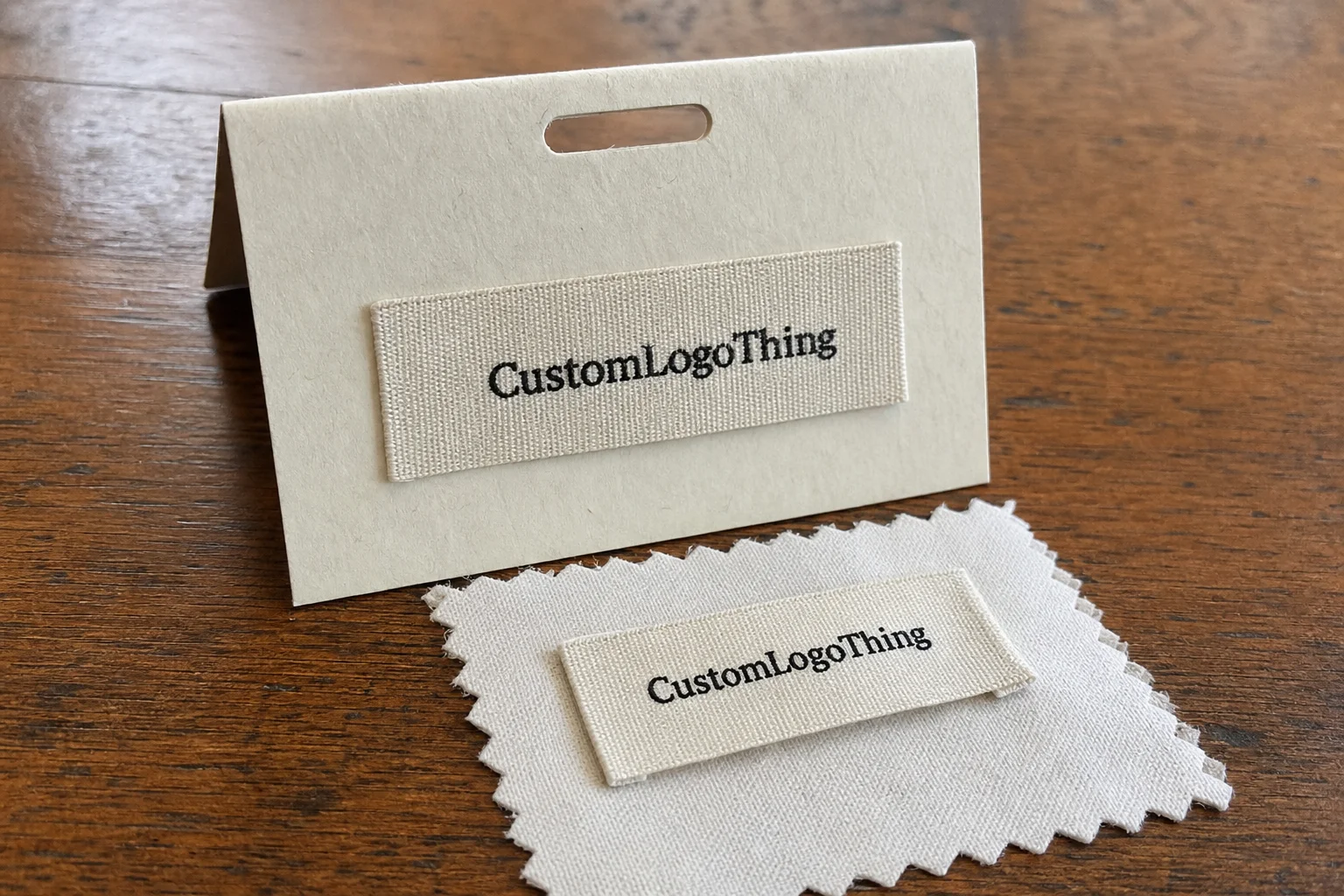
One small detail changes the whole order flow: folded versus flat delivery. A flat label may be cheaper, but if your sewing line expects folded labels, the labor shifts downstream. That extra handling has a cost, even when the quote does not spell it out line by line. Ask early, because later corrections tend to cost more.
Specifications that change hand feel, durability, and approval speed
A few specifications move price more than anything else. If those are not settled early, the quote will keep changing and the approval cycle will slow down. Buyers who know the garment use case usually get better numbers because they can define the label properly the first time.
- Finished size - width and height determine how much yarn and machine time the label needs.
- Color count - more thread colors usually means more setup and more machine changeover.
- Weave density - tighter weaves support finer detail but cost more than loose constructions.
- Fold style - end fold, center fold, Manhattan fold, and loop fold each change finishing work.
- Cut shape - straight cut is simpler; custom shapes add handling and inspection time.
Weave density is one of the most misunderstood factors. A denser weave is not just a visual upgrade. It is what allows small letters, thin outlines, and complex logos to hold together when the label is cut and folded. If the artwork includes a narrow serif or a thin symbol line, a looser weave can blur the detail fast. That can force a redesign or a second sampling round.
Color count also affects price in a way that is easy to underestimate. Two colors are usually manageable. Five or six colors can still work, but every additional thread choice adds setup complexity and increases the chance of mismatch. For boutique buyers, the practical question is whether the extra colors actually improve the garment. If they only make the art busier, they are often not worth the cost.
Artwork quality has a direct effect on approval speed. Files with unresolved outlines, raster logos, tiny text, or weak contrast tend to slow the proof stage because the factory has to flag problems before weaving starts. A logo that looks fine at screen size may fall apart at 15 mm wide. That is not a production defect. It is a scale problem, and it is cheaper to catch it before sampling.
Fabrics also influence label choice. A softer knit can tolerate a smoother satin label, while a structured jacket or heavier woven garment may suit a crisp damask tag. If the product sits in a premium price range, the label should not feel like an afterthought. The mismatch is obvious, especially in a boutique setting where customers often inspect finishes closely.
For product handling and transit testing, guidance from ISTA can help teams think through packaging durability, while sustainability claims for paper components or inserts should remain aligned with organizations such as FSC where applicable. Those references do not replace supplier specs, but they help keep packaging decisions grounded.
| Label choice | Best for | Typical cost effect | Notes |
|---|---|---|---|
| Damask woven label | Fine detail, premium apparel | Higher | Best readability for small text and logos |
| Satin woven label | Softer garments, smoother finish | Medium | Comfortable hand feel, slightly less crisp than damask |
| Taffeta woven label | Simple branding, budget-conscious runs | Lower | Works best with basic artwork and minimal detail |
| Folded neck label | Apparel branding with sew-in placement | Medium to higher | Fold type and finishing affect the total more than many buyers expect |
If you want faster proof approval, send artwork that is already scaled to final size. A clean vector file, clear dimensions, and Pantone references if color matching matters can remove days of back-and-forth. Most delays come from ambiguity, not from the machine.
Woven labels unit cost: what boutiques actually pay
Here is the practical range. For boutique runs, Woven Labels Unit Cost for boutique orders often lands in these rough bands, assuming standard construction and normal finishing:
- 1,000 pieces: about $0.12-$0.30 per label
- 3,000 pieces: about $0.08-$0.22 per label
- 5,000 pieces: about $0.06-$0.18 per label
- 10,000 pieces: about $0.04-$0.12 per label
Those figures move with size, weave density, color count, fold style, and packaging. A small two-color neck label with a standard fold sits on the lower side of the range. A denser damask label with multiple folds, special cut work, or more color changes shifts upward quickly. That is normal and usually justified.
The pricing drivers are straightforward:
- Setup and tooling for the weave program and machine preparation
- Color count and thread changeover
- Label size and weave complexity
- Fold type and finishing labor
- Packaging and carton preparation
- Shipping and any split delivery
MOQ matters as much as the unit rate. A lower MOQ can be the better decision when a brand is testing a season, a capsule, or a new garment style. Paying a slightly higher unit price for 1,000 labels is often smarter than buying 5,000 labels that will sit in storage or go obsolete after a design update.
Ask for landed cost rather than just factory price. Landed cost should include sampling, freight, packing extras, and any other charge that affects the final spend. A low base price with added fees later is not a true comparison. It is a quote designed to look favorable before the details appear.
For boutique buyers, the middle-tier option is often the best fit. The cheapest quote can be vulnerable on detail and consistency. The highest quote may offer finer construction than the garment needs. The middle tends to deliver the right mix of visual quality, order reliability, and sane cost.
Production steps, sample approval, and turnaround expectations
A woven label order follows a predictable sequence. Artwork comes in, the proof is checked, sampling may happen, production starts after approval, and the finished labels are packed and shipped. Most delays happen before the machine runs, usually because the spec changed or the artwork was incomplete.
Typical timing looks like this:
- Artwork proof: 1-3 business days if the file is clean and the specs are complete
- Sample or strike-off: 3-7 business days, longer if revisions are needed
- Production: often 10-15 business days after approval
- Shipping: depends on the route, service level, and customs handling if applicable
Those ranges are realistic for standard work, not rushed work. If the label has a complex weave, more color changes, or a special fold, production can take longer. If the buyer waits on internal approval from design, merchandising, and operations, that adds time too. Factories cannot work around indecision.
Sampling is useful when the artwork is detailed, the brand is particular about hand feel, or the label needs to sit beside expensive garments. A sample catches problems before the full order starts. It also confirms whether the weave reproduces the logo cleanly at actual size. That matters more than how sharp the file looked on a laptop screen.
Delay usually comes from a short list of avoidable causes:
- Unclear artwork files or missing dimensions
- Last-minute fold changes
- Color matching disputes
- Revisions after sample approval
- Waiting on internal sign-off
There is a simple way to keep the process moving: decide the final fold, size, and color references before sampling. Every change after proofing can create extra cost, and every change after sampling can reset the schedule. If the brand is still exploring logo direction, a smaller test run is safer than a full production order.
For paper insert or packaging decisions, guidance from the EPA can help teams think about waste reduction and material choices. Labels are only one part of the product presentation, but they affect how the whole package is perceived.
Why boutique buyers keep reordering the same label partner
The value of a label supplier shows up on the second order. Once the spec is locked, the next run should be easier to quote, easier to approve, and easier to match. If the supplier keeps a clean archive of dimensions, colors, fold style, and packing method, the reorder should not require a long email chain.
Consistency matters more than squeezing out one more cent. Boutique brands often release new colorways or seasonal garments, but the label itself should stay visually stable. If the black thread becomes charcoal on a reorder or the fold is cut slightly off, the difference is visible. Customers notice more than they say.
A good supplier usually gives a few clear signals:
- Proofs that show exact finished size
- Lead times that are stated plainly
- Repeat runs that match the approved sample
- Fast answers when a reorder is needed
- No surprise changes to the archived spec
For a boutique team, the best partner is the one that reduces decisions. They already know the prior spec, they catch obvious errors before production, and they understand that a small label still carries brand weight. That level of process discipline is worth more than a slight discount on a one-off order.
If you are comparing bulk pricing across vendors, use the same spec sheet with each one. Otherwise, the quotes are not truly comparable. One supplier may be pricing a folded damask label, another a flat taffeta tag, and a third a version with more colors than you intended. The numbers may look close while the products are not.
What to send for an accurate quote and a cleaner reorder
A useful quote starts with complete information. If the request is vague, the price will be vague too. Buyers usually get the cleanest response when they send the actual production facts rather than a rough idea of the design.
- Artwork file in vector format if possible
- Finished label size with width and height
- Fold type if folded labels are needed
- Quantity for the first run and likely reorder volume
- Target fabric or garment type
- Attachment method such as sew-in or heat-applied if relevant
- Preferred delivery window and shipping address
It also helps to ask for pricing at two quantities: the amount you expect to order now and the next price break. That gives a real view of unit cost over time, which matters for seasonal boutiques that reorder often. Sometimes the slightly larger run wins on efficiency. Sometimes it does not. Either way, you should see the break points before making a decision.
Ask a few practical questions while the quote is still open:
- How long will proofing take?
- Is a sample included or optional?
- What is the production window after approval?
- How are the labels packed for sewing or storage?
- What happens if color correction is needed?
For a cleaner reorder later, keep the final approved file, not the draft. Save exact dimensions, fold notes, color references, and placement instructions in one place. That habit prevents the usual problems: a missing PDF, a forgotten fold, or a team member referencing an older version of the logo. The best reorder is the one that does not have to be rediscovered.
For many boutique brands, the smartest path is to quote the exact garment and the exact application method, then compare the full landed cost against expected reorders. That gives a more accurate view of Woven Labels Unit Cost for boutique purchases and helps avoid paying for features the product does not actually need.
FAQ
What drives boutique woven label unit cost the most?
Quantity is usually the biggest factor because setup costs are spread across fewer pieces on smaller runs. Color count, weave density, and fold style also move the price because they affect machine setup and finishing labor. Shipping, sampling, and packaging can change the final total more than buyers expect if they only look at the base factory price.
Is there a minimum order for woven labels on small boutique runs?
Yes, most suppliers set an MOQ because production setup has to be worth running. Lower MOQs usually cost more per piece, but they can still be the better choice if you only need a small batch. Ask for pricing at your target quantity and at the next break point so you can compare the real value.
How long do woven label samples and production usually take?
Artwork proofing is often the fastest stage if the file is clean and the specs are already decided. Sampling adds time when you want to confirm weave, colors, or fold style before committing to production. Production and shipping depend on order size, finishing complexity, and whether the schedule is standard or rushed.
Which woven label style works best for boutique apparel?
Damask is usually the best option when you need crisp detail and a premium feel. Satin can work well when the brand wants a smoother finish and a softer touch on lighter garments. The right choice depends on the garment fabric and the level of detail in the artwork, not just the lowest quote.
Can I reorder the same woven labels later without starting over?
Yes, if the final spec sheet and artwork are locked, repeat orders are much faster. Keep the exact dimensions, fold type, color references, and placement notes so the next run matches the first one. A good supplier should be able to pull the previous job and quote a cleaner reorder without extra back-and-forth.