If you are comparing Woven Labels Unit Cost for coffee, the first trap to avoid is treating the lowest quoted price as the lowest real cost. A woven label that survives packing, shipping, retail handling, and repeated customer contact can be a better buy than a cheaper option that frays, dulls, or looks uneven once it is actually in use. For coffee brands, especially those that care about presentation, the label is not a throwaway accessory; it is part of the package architecture.
The right question is less about “what is the cheapest label?” and more about “what label specification gives the best result for this bag, garment, or merch item?” That means looking at weave type, size, fold, attachment method, and order quantity before anyone talks about price. A quote that ignores those details is usually too vague to be useful, and in practice it often misses the real cost drivers anyway.
Why coffee brands care about label cost per unit
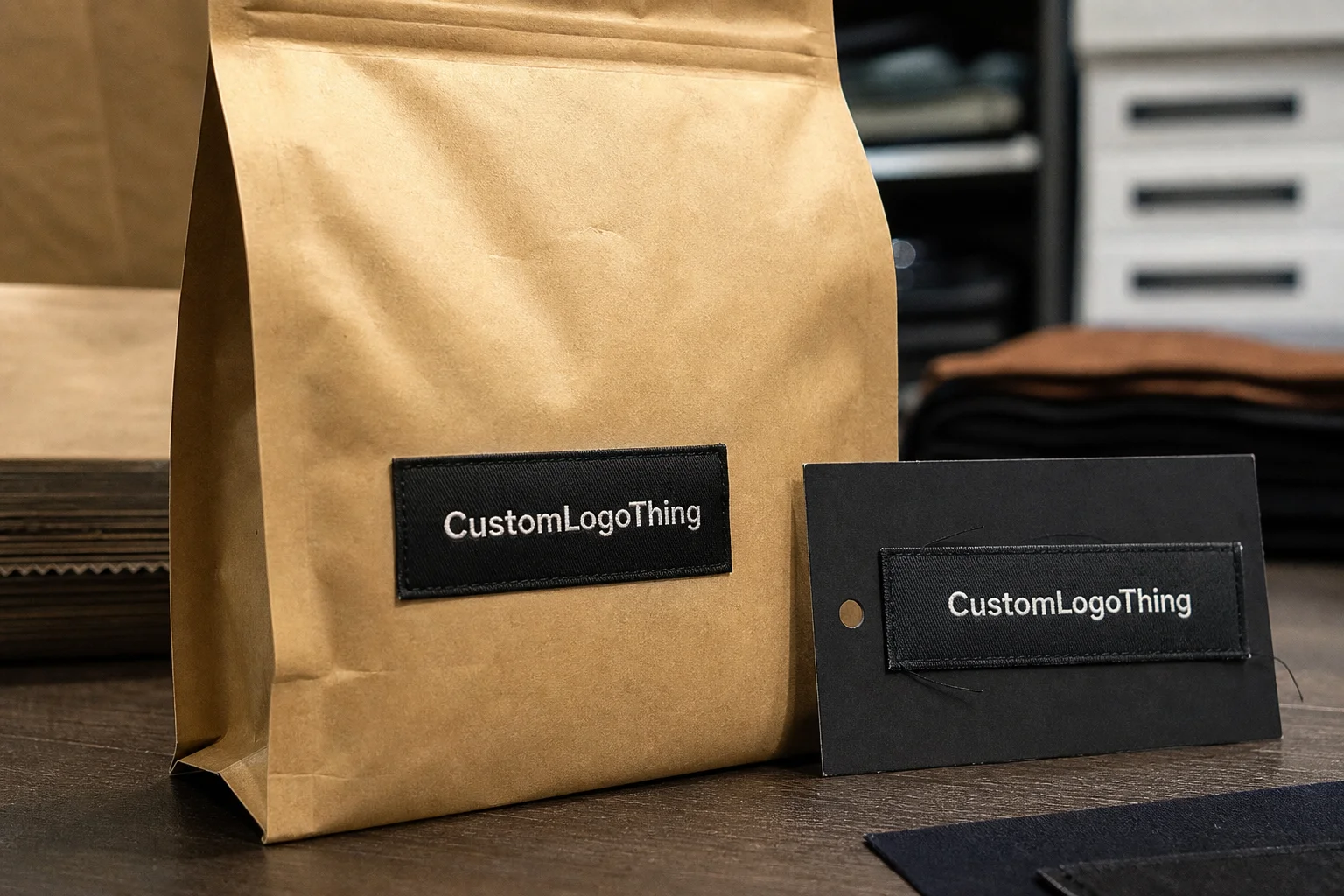
Coffee packaging gets handled more than people realize. Bags are filled, sealed, boxed, shipped, stacked, opened, and sometimes repacked or displayed again. If a woven label starts to curl, loosen, or lose edge definition during that process, the bag can look lower quality even when the coffee inside is excellent. That is why experienced buyers pay close attention to cost per piece instead of focusing only on the headline order total.
On a small run, a woven label may cost more per unit than a paper tag or printed sticker, but it often earns that difference back through better durability and a stronger visual finish. The math is not just about purchase price; it is about how long the label stays presentable and how much brand value it carries through the product’s life cycle. For sewn-on applications, the label becomes part of the item rather than a temporary surface treatment.
There is also a practical production angle. Different label formats require different finishing steps, and those steps affect labor, machine time, and waste. A side seam label, a center-fold label, and a flat cut label may use similar artwork, yet the unit cost will not be the same. Buyers who compare quotes without checking the construction details often end up comparing different jobs as if they were identical.
That is why the best quote requests are specific. Ask for the price based on actual dimensions, fold style, color count, and quantity, and request clear separation between sample cost, setup charges, and bulk pricing. Once those pieces are visible, the true cost becomes easier to understand and the buying decision gets cleaner.
A woven label should do three things at once: identify the brand clearly, hold up under normal handling, and fit the packaging or garment without creating avoidable work on the line.
For brands building a broader packaging system, labels and tags are often grouped together under Custom Labels & Tags so packaging, apparel, and promotional items stay visually aligned across the line.
Woven label formats for coffee packaging and merch
Coffee brands use woven labels in more places than many buyers expect. Retail bags, subscription pouches, sampler packs, apron programs, tote bags, and event merch can all carry the same identity system. When the label language is consistent across those items, the brand looks more disciplined, and reorder planning becomes simpler because artwork and construction stay closer together.
That said, not every woven label belongs in the same place. A label designed for a garment seam may be a poor fit for a pouch sleeve or a stitched fabric wrap around secondary packaging. The application should determine the construction, not the other way around. If the use case changes, the fold style, edge finish, and label size may need to change as well.
Most coffee buyers choose damask woven labels when they need sharper detail, tighter linework, or small text that still needs to read cleanly. Damask generally gives a finer, more detailed appearance than a basic weave structure. Taffeta can still be useful for lighter-duty or budget-conscious runs, but the surface is usually less refined and the smallest text is more likely to soften.
Common constructions include:
- Center-folded labels for sew-in applications on apparel or fabric wraps.
- End-fold labels for neat edge finishing and cleaner insertion points.
- Side-fold labels when the label needs better stability in a seam.
- Hot-cut labels for flat use where edge control matters and bulk must be kept low.
- Cut-and-folded labels when extra seam allowance is needed for installation.
Artwork should be designed with weaving limits in mind. A logo that looks sharp on screen can lose clarity if the lines are too thin or the text is too small for the weave density. Tiny origin marks, roast identifiers, or limited-run identifiers may need simplification before production starts. The cleaner the artwork, the easier it is to preserve detail without inflating the cost.
For buyers who manage multiple SKUs, one practical approach is to standardize the woven label style across the brand wherever the application allows it. That reduces variation in approval cycles and makes reorders more predictable. It can also lower the risk of inventory fragmentation, which matters when a coffee line has seasonal blends, private-label work, and staff apparel all moving on different schedules.
Packaging and transit requirements also deserve attention. Buyers often cross-check general packaging guidance from sources such as Packaging.org and shipment testing references from ISTA when the package must tolerate stacking, vibration, and repeated handling.
Material specs that change the final quote
The quote begins changing the moment the size changes. Width, height, seam allowance, and fold style all affect how much material is used and how much finishing work is needed. A 20 mm x 60 mm label and a 15 mm x 30 mm label may look similar on a screen, yet they are not priced the same because the loom setup and material usage are different.
Color count is another major factor. Each additional thread color adds complexity to the weave, and fine details usually require tighter density control. A simple two-color logo is much easier to produce than a design that includes small taglines, multiple accent colors, and dense border work. If the design is too detailed, the manufacturer may need to simplify it to preserve legibility.
Finishing affects both appearance and durability. Hot-cut edges work well for flat applications where fray control matters but bulk needs to stay low. Folded edges are better for sewn-in use because they protect the raw edge and make installation easier. Merrowed borders are more common on patch-style labels or applications that need a more finished perimeter. Laser-cut options can be useful in certain cases, but they are not automatically the best answer for every coffee label.
Artwork file quality matters more than many buyers expect. Vector files are the most useful starting point because they preserve line shape and scale cleanly. Pantone references can help guide the color conversation, but woven thread will not match printed ink with exact precision, especially under different lighting conditions. The approval stage should focus on acceptable visual match, not a perfect print-style color duplicate.
Text size is usually the first thing to fail if the design is overcrowded. Once woven, small fonts can close up or blur at the edges, especially on tighter weave counts. That is one of the reasons the technical review matters so much: a design that looks efficient on paper may cost more to produce if it needs several rebuilds before it is weave-ready.
Durability requirements should match the end use. Coffee packaging sees light-to-moderate handling during packing, shipping, and shelf display. Apparel and tote bags see rubbing, folding, and in many cases washing. If the same label family has to serve both environments, the spec should favor a stronger thread structure and a finishing method that will not loosen at the edges.
Buyers should also ask what is included in the quote. Tooling fees, sampling, folding, bagging, inspection, and any artwork adjustment work can all affect the final invoice. A low base price with several missing line items is not a strong comparison point, because the true landed cost may end up much higher than the first number suggested.
Woven labels unit cost, MOQ, and quote factors
Now to the number people usually want first: Woven Labels Unit Cost for coffee. In practice, that number is built from a few variables that interact with one another: quantity, label size, color count, finish type, and packing requirements. Change one of those and the price per piece changes too. That is normal, and it explains why two quotes for what sounds like the same label can land in very different places.
Minimum order quantity matters because setup costs are spread across fewer pieces on a small run. That does not make a low-MOQ order a mistake. It just means the economics are different. A 1,000-piece run may be the right answer for a seasonal roast or a first launch, while a 10,000-piece run often improves bulk pricing enough to lower the unit cost in a meaningful way.
| Order profile | Typical label complexity | What usually happens to unit cost | Best use case |
|---|---|---|---|
| Low MOQ, simple artwork | 1-2 colors, standard size, basic fold | Higher unit price because setup is spread across fewer labels | Launches, seasonal coffee drops, test runs |
| Mid-range quantity | 2-4 colors, standard finish | More balanced pricing and better efficiency | Core SKU packaging and recurring merch |
| Higher quantity | Simple to moderate detail, repeat order | Lower cost per piece and stronger bulk pricing | Established roasts, private-label packaging, uniforms |
| Complex custom spec | Fine text, multiple colors, special folds | Higher price regardless of quantity, though larger runs still improve value | Premium branding or collector-style packaging |
There are also a few straightforward ways to bring the price down without damaging the design. Simplify the artwork where possible. Keep the size within a standard range. Reduce the color count if the visual identity can tolerate it. Choose the finish that matches the application rather than overspecifying a decorative edge no one will see once the label is installed.
Requesting several quantity tiers is one of the smartest ways to compare value. A quote at 1,000 pieces, 3,000 pieces, and 5,000 pieces can show the break point where the unit price drops enough to justify higher inventory. Sometimes the savings are large enough to make the bigger order sensible; other times the storage burden outweighs the discount. That decision should be based on actual numbers, not a guess.
Sample and shipping costs should be shown separately from the label unit price. If they are bundled into a single total, it becomes harder to compare suppliers. A quote that clearly separates production, inspection, packing, and freight is easier to use for planning and budget review.
Some coffee brands also work from a sustainability angle and try to avoid excess material use. For those teams, resources from the EPA Sustainable Materials Management program can be useful background when balancing durability, waste, and order efficiency.
Production steps, timeline, and approval checkpoints
Most woven label orders follow a fairly standard path. Artwork review comes first, then a digital proof, then a sample or strike-off if the design is detailed or color-sensitive. After approval, the loom is set, the labels are woven, then they are cut, folded, inspected, and packed. Simple enough on paper, but each step has a way of slowing down if the input files or specs are unclear.
Timeline depends heavily on how ready the artwork is. A clean vector file with sensible text sizing and a clear fold specification can move through the system quickly. A design that needs multiple revisions, color correction, or structural rework will take longer. Seasonal demand matters too, especially when coffee brands are preparing new packaging, holiday runs, or retailer launches at the same time.
Physical samples are worth the extra step when the label has fine detail or color sensitivity. A screen proof can hide issues that become obvious in hand, such as text density, thread contrast, edge clarity, or the way a fold sits after cutting. Approving a sample before the full run can prevent a lot of waste later.
A realistic production window for many custom woven label orders is around 12 to 15 business days after final proof approval. Simple repeat orders can move faster, while more complex specs, special packaging, or multiple approval rounds can push the schedule out. That range is not a promise; it is a practical planning window that depends on order size and the factory workload at the time.
Once the proof is approved, the specifications should be confirmed in writing. Size, fold, thread colors, quantity, and packing method all need to be locked before production begins. Last-minute changes are one of the most common reasons for delay, and they can also affect the final price. A clear approval record keeps the project controlled and reduces avoidable rework.
Why coffee packaging buyers choose a direct manufacturer
Many buyers prefer direct manufacturing for one simple reason: tighter control. When ordering Woven Labels for Coffee packaging or merch, they want consistent specs, clearer pricing, fast proof feedback, and the ability to reorder without rebuilding the project every time. Those things matter more than sales language or generic service promises.
Working directly with the manufacturer usually gives better visibility into weave density, thread selection, finishing, and quality control. That matters because the label may be small, but the expectations are not. A coffee brand wants the logo to look crisp on the shelf and in hand, and it wants the same result on the next reorder, not just the first run. Repetition should mean consistency, not compromise.
Direct production support is also helpful when a brand manages several product lines at once. Single-origin bags, seasonal blends, decaf, and private-label products may all need slightly different packaging, and the same is true for aprons or tote bags used at events. Keeping those items within one technical program makes it easier to standardize sizes, approve color matches, and keep inventory aligned with demand.
There is a practical advantage here that buyers sometimes overlook: fewer handoffs usually mean fewer misunderstandings. When artwork, proofing, and production all move through the same technical chain, there is less risk that a detail gets changed quietly between quote and shipment. That is especially valuable for brands protecting margin while trying to keep the visual presentation clean.
The best manufacturing relationships are usually built on predictable output, honest lead times, and a quote that clearly states what is included. That kind of clarity is more useful than a long list of vague assurances, especially when the project involves a label family that has to work across packaging, apparel, and promotional items.
What to prepare before requesting a quote
A fast quote starts with good information. If you want the most accurate response on Woven Labels Unit Cost for coffee, send the artwork, target dimensions, preferred fold, quantity, application type, and any brand color requirements. Those details are enough for a manufacturer to price the job realistically instead of guessing at the technical scope.
Reference photos help too. A photo of the coffee bag, garment, tote, or apron shows how the label will actually be used, which can change the recommended structure. A label sewn into a side seam is not the same as one tucked into a pouch sleeve or attached near a hem. The more clearly the application is shown, the fewer corrections are needed later.
Confirm the attachment method before asking for pricing. Will the label be sewn in, heat-applied, tucked, or attached in another way? Installation affects both the design and the cost, and it can change the fold style the factory recommends. If you are not sure which construction is right, ask for the technical recommendation before the proof is approved.
It also helps to request two or three quantity options in the same inquiry. That makes the unit cost comparison much clearer and shows whether a larger order actually saves enough to justify the additional inventory. For many buyers, that comparison turns a rough estimate into a usable purchase decision.
The cleanest process is simple: gather the specs, request tiered pricing, review the proof carefully, and approve production once everything is locked. If those steps are handled well, the order stays controlled and the final label is much more likely to match the brand standard you set at the beginning.
That is the real value of understanding Woven Labels Unit Cost for coffee before placing an order. The goal is not just a lower number; it is a label that fits the product, the schedule, and the brand without creating avoidable costs later.
What affects woven labels unit cost for coffee packaging the most?
Quantity, label size, color count, and finish style are the main drivers. More detailed artwork and tighter weave requirements usually raise the price, and low-MOQ orders tend to cost more per label because setup is spread across fewer pieces.
Are woven labels a good choice for coffee bags and merch?
Yes, especially when the brand wants a durable, premium-looking identifier. They work well on merch, staff apparel, and some fabric-based packaging applications, but they are not ideal for every direct-to-bag use, so the construction should match the application.
What is the usual MOQ for custom woven labels?
MOQ depends on size, design complexity, and finishing needs. Smaller orders are possible, but unit cost is usually higher at lower quantities, so it helps to ask for tiered pricing to see where the best value starts.
How long does production usually take after approval?
Timeline depends on artwork readiness, proof approval, and current production load. Simple repeat orders may move faster, while custom finishes or multiple revisions usually take longer, and a clear approval process helps keep turnaround predictable.
What files should I send for the fastest quote?
Send vector artwork, preferred dimensions, quantity, and fold or finish preference. Include brand colors, application details, and photos of where the label will be used. If you need a price comparison, ask for several quantity tiers in the same request.


