Hotel buyers do not need a glossy pitch. They need a clear view of Woven Labels Unit Cost for hotel programs that have to survive uniforms, towels, robes, spa textiles, and housekeeping items that get washed, handled, and reordered far more often than a typical retail product. A label that frays, fades, or forces a replacement run is not inexpensive; it is simply cheap for a short moment before the real bill arrives.
In practice, a woven label has three jobs: identify the item, support brand presentation, and hold up in commercial use. If it misses on any one of those, the unit price stops being the main issue because the total cost begins to climb through rework, replacements, and inconsistent presentation. That is why experienced buyers look at cost per piece, wash performance, and repeatability before they look at the lowest number on a quote.
Hotel textile programs are especially sensitive to inconsistency. Uniform buyers want neck labels and size labels that match from one reorder to the next. Housekeeping teams want labels that do not irritate staff or snag in laundering. Guest-facing linens need a clean, credible look. None of that is complicated on paper, but it becomes expensive quickly if the label spec is vague.
Why hotel buyers care more about unit cost than sticker price
Hotels use woven labels in more places than many people realize. Uniform necklines. Robe hems. Spa wraps. Towel edges. Laundry items. Housekeeping textiles. Some labels are visible branding, while others are internal identification points, but the buying logic is the same: the label must do its job without adding friction later.
The common mistake is chasing the lowest sticker price on one sample and ignoring what happens over a full program. A label can cost a few cents less and still end up more expensive if it needs replacement sooner, creates sewing issues, or arrives with color inconsistency. Once the first batch is approved, the real question becomes whether that same spec can be repeated cleanly six months later.
That repeatability matters because hotel labels are often ordered on a schedule, not as one-off purchases. Uniform programs change slowly, but they do change. If the supplier cannot hold size, color, fold style, and weave quality, the savings disappear into reapproval time and mismatched inventory. The invoice looks lower; the program does not.
There are hidden cost drivers that show up in the spec sheet rather than the sales quote:
- Stitch density and weave complexity
- Label size and total surface area
- Color count and thread changes
- Fold style and finishing labor
- Back finish such as sew-on, heat seal, or soft-edge options
- Logo detail level and readability at small scale
A simple woven label often gives the best value for hotels because it costs less to produce, is easier to inspect, and usually holds up better in repeated laundering. That does not mean the label should look plain or unfinished. It means the design should be restrained enough that the weave remains sharp at the size needed on a garment or textile edge. Crowded art looks clever in a mockup and muddy on the finished piece.
For buyers comparing Custom Labels & Tags, the useful question is not “What is the cheapest quote?” It is “What label specification gives the lowest stable unit cost for this use case?” That wording sounds small, but it changes the whole buying decision. You start comparing durability, setup, and reordering behavior instead of just chasing a low number that cannot be held.
Woven label styles that fit hotel uniforms and textile programs
There is no single woven label style that works for every hotel item. Placement, fabric weight, laundering, and how visible the branding needs to be all influence the choice. A label sewn into a shirt collar behaves differently from one attached to a towel edge, and the wrong format can make even a strong design feel awkward.
Common folds and formats
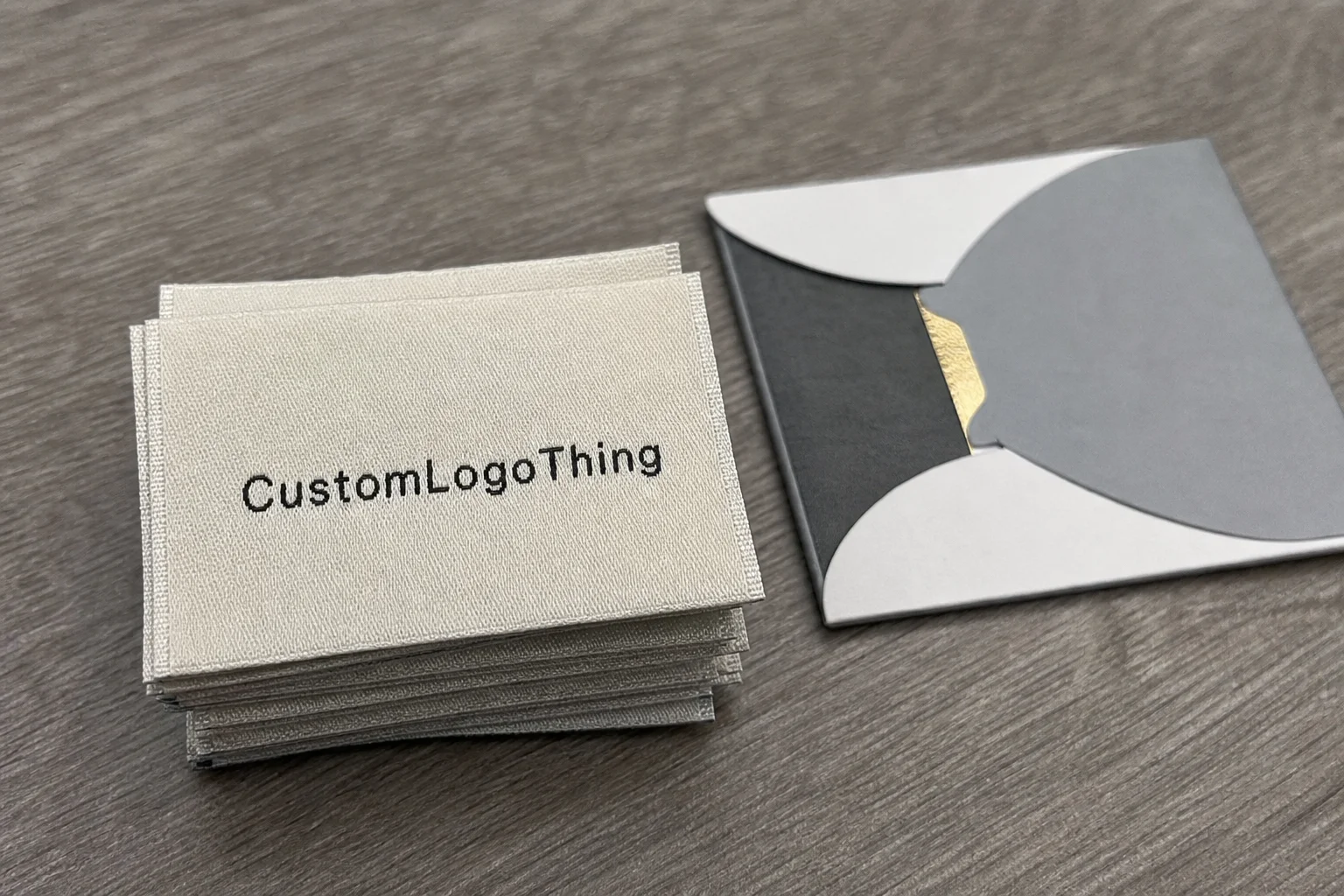
End fold labels are common for side seams and hems. They are neat, flexible, and work well when the label needs to be sewn into an edge without adding bulk. Center fold labels are widely used for necklines because they hang cleanly from the middle and give a balanced look. Manhattan fold labels are more finished and enclosed, which makes them useful for premium apparel programs, although the extra finishing raises cost a bit.
Straight cut labels are often the most flexible choice for towels, robes, and textile branding where the buyer wants custom placement and controlled seam allowance. Loop labels are less common, but they can serve specialized branding or hanging applications where the label also functions as a small attachment point.
For hotel textiles, sew-on styles are still the safest default. Adhesive backing can have niche uses, but it is not the first choice for commercial laundering. Heat seal backing can work on certain fabrics, yet the fabric itself has to be tested first. A label that seems convenient at approval can fail after the first laundry cycle if the backing and fabric are not truly compatible.
Damask vs. satin weave
Damask Woven Labels are the workhorse option for most hotel programs. They handle fine detail better, feel thinner on the garment, and tend to keep text readable at smaller sizes. Satin weave labels feel smoother and can look slightly more polished on the surface, but tightly packed artwork can lose clarity, and the cost may rise depending on the construction.
For most hotel applications, damask offers the best balance of clarity, durability, and pricing. Satin makes sense when the brand presentation calls for a softer finish and the design is simple enough that detail loss will not become a problem. The right choice is usually the one that fits the item without forcing the label to do too much.
Logo complexity matters more than many buyers expect. If the artwork includes thin serif text, tiny symbols, or multiple lines of small copy, the woven result may become crowded once it is reduced to a practical size. As a rule of thumb, text should stay readable at roughly 6 pt or larger in the final woven layout, though very small labels may require even more simplification. A sample or proof is worthwhile when the design includes care instructions, size marks, or small brand elements that could disappear in production.
For hotel uniforms and linens, the best label is usually the one that survives repeated washing, stays legible, and does not irritate the user. That sounds plain because it is. The practical job matters more than the decorative one, especially in operations where housekeeping and laundry teams notice every rough edge.
| Label style | Best hotel use | Cost impact | Notes |
|---|---|---|---|
| End fold | Uniform hems, side seams | Lower to moderate | Good for simple sewn-in branding |
| Center fold | Necklines, shirts, jackets | Moderate | Clean hanging look, widely used |
| Manhattan fold | Premium apparel, finished presentation | Higher | More labor in finishing |
| Straight cut | Towels, robes, textile attachments | Lower to moderate | Flexible for multiple placements |
| Loop label | Special textile branding or hang points | Moderate to higher | Depends on shape and finishing |
Specs that change the final woven labels unit cost for hotel orders
The Woven Labels Unit Cost for hotel orders is driven by the specification sheet more than the headline quote. Two labels that look nearly identical in a digital mockup can end up in very different price ranges once width, weave density, finishing, and quantity are finalized.
Width and height matter because they affect both material use and loom time. A narrow neck label is usually less expensive than a large hem label with multiple lines of text. Thread count also changes the cost. More threads create finer detail, but they require more production time. That is the tradeoff: better resolution is usually more expensive.
Color count is another major driver. One- or two-color woven labels are generally the most economical. Every additional color adds complexity, especially if the design needs tight registration or uses very small type. Metallic threads, special borders, and custom shapes tend to raise the price faster than buyers expect. Those details can also increase setup charges if the supplier needs additional machine preparation.
It helps to think of woven labels in practical tiers:
- Simple label: 1-2 colors, standard fold, sew-on back, minimal text
- Mid-range label: 3-4 colors, moderate detail, custom fold, branded finish
- Premium label: multiple colors, metallic thread, fine text, special backing or shape
Commercial laundering changes the buying standard. A hotel label should be able to handle repeated wash cycles, tumble drying, folding, and handling without bleeding, curling, or losing edge integrity. If a supplier cannot speak plainly about wash performance, colorfastness, or edge stability, that is a warning sign. You are not ordering a decorative tag. You are ordering a textile component that has to hold up under repeated use.
Production quality also matters in the small details. Clean trimming keeps loose threads from becoming a complaint. Consistent fold lines make labels easier to sew. Sharp edges reduce bulk on lightweight fabrics. These things are easy to miss in a photo and obvious once the labels are stitched into a garment program.
For sourcing and material discipline, some buyers also ask whether the supplier can align packaging or substrate choices with recognized standards. For general resource management references, the Forest Stewardship Council can be reviewed at fsc.org, and general packaging guidance is available at packaging.org. Those sites do not replace a textile spec, but they can help frame expectations around responsible material handling and production thinking.
In real hotel programs, simpler designs often lower unit cost without making the label look cheap. They can actually look more refined because the branding is easier to read. Clean design is not a compromise when the label has a clear role.
Pricing, MOQ, and quote factors for hotel label programs
The fastest way to get a useful quote is to send the full specification upfront. If the supplier has to guess, the number will be fuzzy. If they have exact dimensions, artwork, quantity, and finishing requirements, the price becomes something you can actually compare across vendors.
MOQ matters because Custom Woven Labels are priced around setup and machine time. Small runs carry a higher cost per piece because the preparation cost is spread across fewer labels. Larger runs usually reduce the unit cost, sometimes substantially. In many hotel programs, the difference between 500 pieces and 5,000 pieces is enough to change the entire economics of the order.
As a practical range, simple hotel woven labels often price lower in larger volumes, while more complex styles move into a higher cost band once extra colors, finer detail, or specialized finishing are added. Exact numbers depend on size, weave density, and finish, but the direction is consistent: the more elaborate the spec, the higher the unit price.
Most suppliers need these details before quoting:
- Artwork file, ideally vector format
- Exact label size in mm or inches
- Quantity required
- Fold style or cut type
- Back finish or attachment method
- Color references, such as Pantone references if available
- Delivery address and target timeline
- Use case: uniform, towel, robe, spa item, or other textile
Packaging affects labor more than many buyers expect. Some hotel teams want labels on rolls for faster sewing. Others prefer cut pieces bundled by department or by garment type. That can save time in the workroom even if the label itself costs slightly more to prepare. If the labels are going through an internal sewing line, packaging should be treated as part of the total cost, not an afterthought.
There is also a real choice between ordering exactly what you need each month and buying for the year. Smaller repeated orders reduce storage risk, but the unit cost usually stays higher because setup is repeated. Annual bulk orders lower the per-label rate, but inventory has to be managed carefully, especially if the brand, logo, or textile program is still changing. Stable programs often benefit from larger buys; evolving ones are usually safer with shorter runs.
One more point buyers should not skip: tooling fees and setup charges should be clearly stated before approval. Some suppliers include them in the unit price, while others list them separately. A quote that looks inexpensive can become much less attractive once those charges are added. Clarity early in the process saves more money than haggling over a few cents on the label itself.
For hotel procurement, the best pricing comparison is apples to apples: same size, same weave, same fold, same backing, same quantity. If one quote includes a different fold or fewer colors, it is not the same item even if the sample images look similar. The spec is the price.
Process and turnaround: from artwork to delivery
The production flow is usually straightforward: brief, artwork review, digital proof, sample approval if needed, weaving, finishing, inspection, and shipping. It only becomes messy when the spec changes halfway through. That happens more often than suppliers like to admit and more often than buyers expect.
Here is the normal path:
- Send logo artwork and dimensions.
- Confirm fold style, backing, and quantity.
- Review a digital proof for layout and color placement.
- Approve a physical sample if the label will be visible to guests or needs exact brand matching.
- Move to production after sign-off.
- Inspect finished labels for cut quality, color consistency, and folding accuracy.
What slows orders down? Unclear logo files. Missing color references. Last-minute changes. A request to “make it premium” without a measurable spec. That is not a production brief. It is a guess.
Standard turnaround often runs around 12-15 business days after proof approval for typical woven label orders, although more complex projects can take longer. Rush production may be available, but it usually narrows finishing options and can increase unit cost. If the labels will be visible to guests, the extra time for a sample is usually justified. If the labels are for internal housekeeping use, a proof may be enough.
Reorders move faster when the original specification is stored clearly. Keep the same dimensions, colors, fold style, and back finish if you want the next batch to match the first one. The best reorder is the one no one can distinguish from the original. That is especially true in hotel programs, where a slight shade shift or a changed fold can make a whole carton look wrong.
Inspection should not be skipped. A quick check for loose threads, misaligned folds, weak cut edges, and color drift catches small issues before they spread into production use. The most efficient label order is not just the one that ships on time; it is the one that arrives ready to be sewn without extra handling.
How to choose a supplier for hotel woven labels without wasting budget
Buyers should judge suppliers by repeatability, not just the first order price. Good woven labels are easy to quote once. Consistent woven labels across multiple orders is the real test.
Look for a supplier that can hold weave quality at the label size you need, communicate clearly about MOQ, and show proof control before production. If they cannot explain how they handle color matching, edge finishing, inspection, or reorders, keep looking. Cheap quotes are easy. Reliable execution is harder, and hotel programs usually expose the difference quickly.
“A low quote that changes twice is not low. It is a future invoice with a smile on it.”
For hotel programs, one vendor handling sampling, production, and reorder records can reduce friction across departments. Uniform buyers, housekeeping teams, spa operations, and procurement all benefit when the spec lives in one place. That also helps if different textile categories need matching labels under the same brand system, because the exact weave and finish can be carried forward without reinventing the order each time.
Ask these questions before approval:
- What is the exact MOQ for this spec?
- Are tooling fees or setup charges included?
- What is the standard production timeline after proof approval?
- How do you handle wash durability expectations?
- Can you store the final spec for easy reorders?
- What happens if the first sample needs correction?
If a supplier is vague on those points, the quote is not really finished. It is a starting estimate. That may be acceptable in some buying categories, but it is not enough for hotel textile branding, where repeatability and reorder control are part of the business model.
Also watch for the kind of quote that looks attractive because one key detail is missing. A label may be priced well until the buyer realizes the price assumes a different fold, fewer colors, or a larger tolerance on the weave. Those differences are not small. They change the actual value of the order.
Next steps to request a quote and lock in the right spec
If the goal is to get the right woven labels unit cost for hotel programs, start with a clean brief. Gather the logo file, label size, quantity, fold style, back finish, and exact use case. If the labels will go on guest-facing linens or uniforms, say that clearly so the supplier can recommend the right weave and finishing method.
Then compare more than price. Compare the specification. A lower quote on a premium-looking label may actually be worse than a slightly higher quote on a simpler construction that holds up better in laundry and sewing. Two quotes with different folds or thread counts are not the same product, even if the visuals seem close.
Ask for a proof. Ask for a sample if the label will be visible to guests. Save the reorder specification in writing. That one step protects future inventory and prevents the familiar scramble when the next purchase order needs to match a batch that was approved months earlier.
For hotel buyers, the most effective approach is practical: define the use case, compare unit cost against durability, and choose the simplest design that still represents the brand well. If that process is followed, woven labels stay predictable in cost and useful in service, which is exactly what a hotel textile program needs.
Action list: send artwork, confirm MOQ, request bulk pricing, review a proof, and save the reorder spec before approving production.
FAQ
What affects woven labels unit cost for hotel uniforms and linens most?
Design complexity, label size, thread count, fold style, and backing type drive most of the cost. More colors, metallic thread, and special finishing usually raise the unit price. Larger quantities lower the per-label cost because setup is spread across more pieces.
What is a typical MOQ for hotel woven labels?
MOQ varies by size and design, but Custom Woven Labels are often ordered in low-thousand quantities. Simple labels may allow smaller runs; complex woven details usually need a higher MOQ. Always confirm MOQ before final artwork, because changing specs can change the minimum.
How long does production usually take for hotel woven labels?
Standard production commonly takes about 1 to 3 weeks after proof approval, depending on quantity and complexity. Rush options may be possible, but they can increase unit cost. Artwork changes and delayed approvals are the usual reasons timelines slip.
Which woven label style works best for hotel towels and robes?
Sew-on labels and soft-edge folded labels are common for robes and towels because they handle laundering well. Straight-cut or loop styles can work for textile branding depending on placement and seam allowance. The best choice depends on whether the label is decorative, functional, or both.
Can I reorder the same woven labels for hotel use later?
Yes, reorders are easier if the original artwork, size, colors, and fold specs are saved. A good supplier should keep production records so repeat orders match the first batch. Ask for the exact spec sheet now to avoid costly mismatches later.