Cheap labels get expensive fast when they look fuzzy, fray early, or arrive too late for a market weekend. Woven Labels Unit Cost for ceramic studios depends on size, weave detail, quantity, finishing, and whether the label has to survive real studio use instead of sitting pretty in a proof file.
For ceramic brands, the label is usually not just one tiny tag on one item. It may go on aprons, tea towels, linen wraps, tote bags, gift packaging, care cards, and small studio merch. That makes pricing a little less cute and a lot more practical. You are not only buying a label. You are buying consistency across touchpoints.
Custom Logo Things works with buyers who need practical answers before they place an order: “What will this cost per piece?” “What MOQ makes sense?” “Can I reorder the same label later without starting from scratch?” Good questions. Much better than asking for “premium quality” and hoping the quote reads your mind.
What woven labels unit cost for ceramic studios really covers
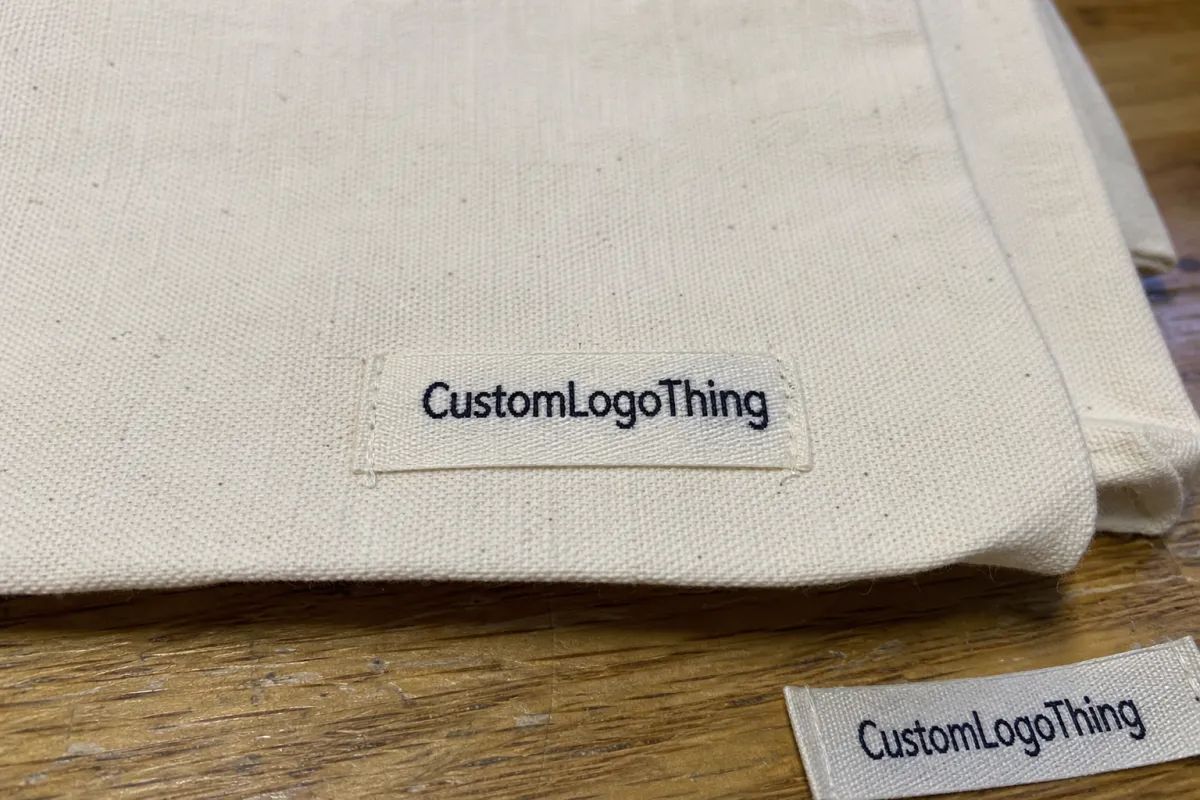
The first thing to understand: the label itself is rarely the whole cost. Woven Labels Unit Cost for ceramic studios usually includes the physical label, thread selection, loom setup, artwork handling, finishing, folding, trimming, packing, and sometimes shipping. If the artwork needs cleanup, if the logo has tiny lettering, or if the label uses several thread colors, the unit cost moves. Funny how machinery refuses to work for exposure.
Setup matters because woven labels require production preparation before the first usable label comes off the loom. Some suppliers call these setup charges. Others bundle them into the unit price. Either way, you pay for them. On a 100-piece order, that setup burden is heavy. On a 2,000-piece order, it spreads out and hurts less.
Ceramic studios also have a different use case than a basic apparel brand. A potter may need one label for a linen wrap around mugs, another for studio aprons, and another for a gift bag sold during holiday markets. Same logo, different label format. That can mean separate proofs, separate folds, and sometimes different sizes.
Here is the part many buyers miss: the cheapest quote is not always the lowest total spend. If the label looks blurry beside handmade ceramic work, the brand presentation drops. If the edge frays after three washes on an apron, you reorder sooner. If the colors are off, every product photo looks slightly wrong. Congratulations, you saved two cents and bought a problem.
Practical rule: judge woven label pricing by durability, legibility, and reorder consistency — not just the lowest cost per piece on the quote sheet.
The right label should survive handling, sewing, folding, retail display, shipping, and in some cases washing. That is why Woven Labels Unit Cost for ceramic studios should be reviewed as part of the total branded packaging system, not as an isolated little rectangle of thread.
Woven label formats that fit ceramic studio products
Format changes everything. The same logo can be made as an end-fold label, center-fold label, loop fold label, straight-cut patch, sew-in label, or backed label. Each one has a different use case, production step, and attachment method. That changes the quote.
End-fold labels have folded left and right edges, usually sewn down on both sides. They work well for apron chest pockets, tote bags, and product wraps where the label sits flat. Standard widths often run from 0.75 inches to 2 inches, with lengths from 1.5 inches to 3 inches. Larger is possible, but large woven labels start acting like patches rather than tags.
Center-fold labels fold in half, often used on hems or seams. They are common on tea towels, napkins, and cloth wraps. A ceramic studio selling hand-thrown bowls wrapped in reusable linen can use a center-fold label as a small branded tab. Polished, but not loud.
Loop fold labels are similar, but both cut ends are tucked into the seam, leaving a loop visible. These are useful on towels, bags, and soft goods. They feel retail-ready without shouting over the handmade ceramic piece. That balance matters. A label should support the work, not try to become the work.
Straight-cut labels are flat labels with heat-cut edges. They can be sewn on all four sides, attached to gift packaging, or used as a patch on a tote. Heat-cut edges help reduce fraying, though the final result depends on yarn type and construction.
Backing options may include no backing, iron-on backing, adhesive backing, or heavier support for patch-style labels. Not every backing is right for every material. Adhesive may be fine for short-term packaging, but it is not a magic spell for textured fabric or dusty kraft paper. Test it.
For buyers building a full branded presentation, woven labels often sit alongside hang tags, stickers, belly bands, or printed cards. If you are matching labels with other branded pieces, review Custom Logo Things’ Custom Labels & Tags options so the colors, sizing, and finish choices make sense together.
| Label format | Best ceramic studio use | Cost impact | Buying advice |
|---|---|---|---|
| End-fold | Aprons, totes, fabric wraps | Moderate due to folding step | Good default for visible branding on flat fabric |
| Center-fold | Tea towels, napkins, linen packaging | Moderate | Works well on seams and edges |
| Loop fold | Towels, bags, studio merch | Moderate | Clean retail look, especially for soft goods |
| Straight-cut | Patches, gift packaging, sew-on branding | Often lower if simple | Best for simple shapes and clear artwork |
| Backed label | Packaging, patches, special applications | Higher due to added material | Confirm the backing suits the surface before ordering bulk |
The attachment method affects Woven Labels Unit Cost for ceramic studios because folding, backing, and edge finishing add steps. A simple straight-cut label may price lower than a folded label, but if your sewer needs extra time to attach it cleanly, the total cost may not actually be lower. Packaging math loves little traps.
Specifications that push the quote up or down
Woven label pricing is driven by specs. Not vibes. If two quotes are far apart, there is usually a difference in size, weave density, color count, finishing, MOQ, or included charges.
The big variables are width, length, thread count, weave density, number of colors, edge finish, fold style, backing choice, and packaging method. A 1-inch by 2-inch label with two thread colors is not the same job as a 2-inch by 3-inch label with six colors and tiny text. One is efficient. The other asks the loom to perform dental surgery.
Smaller text usually needs denser weaving. A basic damask woven label can handle good detail, but there are limits. If your logo includes a thin serif font, a pottery wheel icon, a kiln mark, and a two-line tagline under 6 pt equivalent size, expect a warning during proofing. Or expect a blurry result if nobody warns you. The warning is better.
For many ceramic studios, a clean label uses 2 to 4 thread colors. That range is usually enough for a studio name, symbol, and simple border. Five or more colors can look excellent, but the quote may rise, and color matching gets more complex. If your brand palette uses earthy tones — clay, off-white, charcoal, oxide blue, moss green — woven thread can get close, but it will not behave exactly like ink on coated paper.
Standard sizes often help control unit cost. A label around 0.75 inch by 2 inches, 1 inch by 2 inches, or 1.5 inches by 2.5 inches can be more efficient than an odd shape that wastes loom width or requires special cutting. Custom sizes are fine. Just do not act shocked if unusual specs cost more.
Artwork quality also matters. Send vector artwork when possible: AI, EPS, PDF, or clean SVG. High-resolution PNG can sometimes work, but low-resolution screenshots are a crime against production. Clean files reduce proofing time, lower the chance of revisions, and help the supplier quote more accurately.
- Lower-cost choices: standard size, 2 to 3 colors, simple icon, no backing, common fold.
- Higher-cost choices: dense weave, tiny text, 5+ colors, metallic thread, adhesive or iron-on backing, unusual shape.
- Smart compromise: simplify the layout before reducing quantity. Quantity cuts can raise the cost per piece fast.
For studios thinking about sustainability and packaging claims, be careful with wording. If you use recycled paper tags, FSC-certified cards, or reusable cloth wraps along with woven labels, keep claims accurate. The Forest Stewardship Council offers useful guidance around responsible paper sourcing. Woven labels are a different material category, so do not mix claims casually.
Specs decide whether Woven Labels Unit Cost for ceramic studios lands in a comfortable range or creeps into “why is this tiny thing so expensive?” territory. The quote is the result of production choices. Make those choices deliberately.
Cost, pricing, MOQ, and unit-cost ranges
Woven label pricing usually drops as quantity rises because setup is spread over more pieces. That is the core pricing logic. A low quantity is useful for testing a new product line, but the cost per piece will usually be higher than a larger reorder.
Here are practical ranges for planning. Actual pricing depends on specs, supplier capacity, shipping destination, and whether tooling fees or setup charges are shown separately.
| Order quantity | Typical use case | Estimated unit cost range | Best fit |
|---|---|---|---|
| 100-250 labels | Testing new merch or a seasonal studio drop | $0.65-$1.80 per label | Small batch validation, not best for long-term cost control |
| 500 labels | First serious run for aprons, wraps, or retail bags | $0.38-$0.95 per label | Good middle ground for growing studios |
| 1,000 labels | Standard reorder for regular packaging and studio goods | $0.24-$0.65 per label | Often the first strong bulk pricing tier |
| 2,500 labels | Multiple product lines or annual supply planning | $0.16-$0.42 per label | Better unit cost if the design is stable |
| 5,000+ labels | High-volume retail, wholesale, or repeat packaging | $0.10-$0.30 per label | Lowest cost per piece, but only smart if you will use them |
Those ranges are planning numbers, not a quote. A small, two-color straight-cut label at 2,500 pieces could sit near the lower end. A larger, dense, multi-color folded label with backing may sit much higher. This depends on the label spec. Always has. Always will.
MOQ means minimum order quantity. Lower MOQs help small ceramic studios avoid overbuying, but they rarely produce the best price. A 100-piece run may be right if you are testing a new logo or a limited release. A 1,000-piece run may be smarter if the same label will appear on every linen wrap, apron, and tote for the next several months.
Ask about sample fees, rush charges, color changes, special folding, backing, and shipping before you compare quotes. A supplier with a low headline price and surprise add-ons is not cheaper. It is just better at hiding the bill until later.
Quote tiers are your friend. Ask for 500, 1,000, 2,500, and 5,000 pieces on the same specification. The real decision is not “What is the cheapest order?” It is “Where does the unit cost drop enough to justify buying more?” That breakpoint is often where smart buyers save money.
For a studio with steady sales, woven labels unit cost for ceramic studios should be reviewed against actual usage. If you use 150 labels per month, 500 labels will last a little over three months. If you use 400 labels per month during market season, a 500-piece order becomes a very short runway. Plan inventory like an adult. Your future self will be less annoyed.
Process and timeline from artwork to delivery
The normal woven label order flow is simple, but each step needs attention. First comes artwork review. Then a digital proof. Then revisions if needed. After that, sample approval or production approval. Finally, the labels are woven, finished, inspected, packed, and shipped.
For many standard woven label orders, a realistic timeline is often 10 to 20 business days after proof approval. Complex labels, high quantities, special backing, or busy production schedules can extend that. Rush orders may be possible, but rush production is not a substitute for clean artwork and quick approvals.
Clear files keep the schedule tight. A vector logo, exact size, desired fold, thread color direction, and quantity can move through quoting and proofing faster than a vague note saying, “We need cute labels for our pottery.” Cute is not a production spec. Neither is “earthy.” Send details.
Ceramic studios with seasonal drops, gallery openings, wholesale deadlines, or holiday markets should plan backward from the launch date. If finished goods need to be photographed two weeks before a market, and the labels need to be sewn onto wraps before photography, then the label delivery date is not the market date. It is earlier. Much earlier.
Before asking for a timeline, prepare these details:
- Quantity needed now, plus possible reorder quantity later
- Finished label size in inches or millimeters
- Format: end-fold, center-fold, loop fold, straight-cut, or backed
- Number of thread colors, or reference colors if available
- Artwork file, preferably vector
- Use case: apron, towel, tote, linen wrap, retail packaging, or other item
- Delivery address or shipping region
- Deadline, if there is one
If your studio ships fragile ceramic goods, labels are only one piece of the packaging system. For outer cartons and shipping performance, standards from groups like ISTA are useful for understanding transit testing and package handling. Woven labels will not protect a mug from a drop. Shocking, I know. But they can make the unboxing feel intentional once the item arrives safely.
Production timelines are easier to manage when the buyer responds quickly. If a proof sits in someone’s inbox for six days, the schedule did not “slip.” It was parked. Approve, revise, or ask a clear question. That is how orders keep moving.
Why ceramic studios choose a supplier that handles reorders well
The first order matters. The reorder matters more. Ceramic studios often use the same woven label for years, especially if the label becomes part of a signature wrap, apron, tote, or gift presentation. Repeatability is not glamorous, but it saves money and headaches.
A good reorder process keeps production records: size, fold style, weave file, thread colors, previous quantity, and finishing instructions. Without that record, every reorder becomes a guessing contest. Guessing is not a strategy. It is how you get a slightly different beige thread every time.
Color matching deserves a realistic mindset. Woven thread is not Pantone ink. It has texture, shadow, and sheen. A supplier should help select thread colors that are close and consistent, then keep those choices attached to the order record. For ceramic studios with warm clay palettes, off-whites, muted greens, iron blacks, or cobalt blues, small shifts can be noticeable in product photos.
Proof clarity also matters. A clean proof should show size, fold, colors, artwork layout, and any warnings about small text or fine lines. If the proof is vague, ask questions before approval. Approving a bad proof and blaming production later is a classic buyer mistake. Avoid it. It is boring and expensive.
The best supplier is not always the one offering the flashiest discount. Better service often looks plain: fast replies, clear quote tiers, practical cost-saving suggestions, and predictable reorder handling. That is exactly what small teams need. They do not need a twelve-email mystery tour.
Cost-saving advice should protect the design. For example, reducing from five colors to three may lower the quote without hurting the look. Increasing the label width slightly may improve legibility and avoid a denser weave. Switching from an unusual fold to a standard fold may cut finishing cost. These are useful changes. Randomly shrinking the logo until no one can read it is not.
For studios that already order stickers, hang tags, or soft goods branding, keeping woven labels connected to the wider label program helps. Review custom label and tag options for branded packaging if you want the woven label, paper tag, and retail sticker to feel related rather than assembled during a power outage.
Reorders are also where bulk pricing becomes easier to judge. After the first run, you know usage. If 1,000 labels lasted four months, a 2,500-piece reorder may make sense. If the first design changed after one event, smaller runs are safer. The right quantity is the one tied to actual use, not optimism.
Next steps for an accurate quote and faster ordering
If you want a useful quote, gather four things first: label size, quantity, artwork, and where the label will be used. Those details give the supplier enough information to price the real job instead of tossing out a generic estimate that changes later.
Start with the use case. A label for a kiln apron may need a different fold than a label for a linen mug wrap. A label for a tote bag may need stronger visual presence. A label attached to retail packaging may need clean edges and a size that works with the rest of the packaging layout.
Next, choose the fold style. If you are not sure, describe the application and ask for a recommendation. Then confirm color count. Two to four thread colors are enough for many ceramic studio labels. If your design needs more, fine, but know that the quote may rise.
Then decide whether you need a standard run or a rush schedule. Standard timing is usually cheaper and less stressful. Rush service may be available, but it can add fees and reduce room for revisions. If a gallery date is fixed, say that early. Suppliers cannot protect a deadline they do not know exists.
Ask for a unit-cost comparison at several quantities. For example, request 500, 1,000, 2,500, and 5,000 pieces using the same spec. That lets you see where the pricing drops enough to justify a larger order. Sometimes the jump from 500 to 1,000 is worth it. Sometimes it is not. Numbers beat guessing.
- Send your logo or artwork file.
- Confirm finished size and fold style.
- Pick estimated quantity tiers for pricing.
- Share the use case and deadline.
- Review the proof carefully before approval.
Custom Logo Things can quote woven labels as part of a wider branded packaging setup, including Custom Labels & Tags for retail presentation, product wraps, and studio merch. The best quotes are specific. The worst ones are vague and optimistic. You can guess which kind causes fewer headaches.
Send the exact details for woven labels unit cost for ceramic studios so the quote reflects real production needs: size, quantity, fold, color count, artwork, use case, and delivery location. That is how you get pricing you can actually use, not a pretend number that falls apart after proofing.
FAQ
What affects woven label unit cost for ceramic studio orders the most?
Quantity usually has the biggest effect because setup gets spread across more labels. Weave density, number of colors, fold style, backing, and edge finish also change the quote quickly. Artwork quality matters too, because cleaner files reduce proofing delays and extra revisions.
What MOQ should a small ceramic studio expect for woven labels?
MOQ depends on the label size, weave detail, and finishing method. Smaller studios can often order lower quantities, but the unit price will usually be higher than a larger run. Ask for pricing at several quantity tiers so you can compare the real breakpoints instead of guessing.
How long does the woven label process usually take?
The usual path is artwork review, proof approval, production, and shipping. Simple orders often move faster when artwork is ready and approvals happen quickly. Rush timing depends on production capacity, order size, label specification, and shipping distance.
Can woven labels be used on ceramic studio packaging and textiles?
Yes. Woven labels are commonly used on aprons, tea towels, totes, linen wraps, gift bags, and retail packaging tied to ceramic work. The best format depends on whether the label is sewn in, folded over an edge, used as a patch, or attached to another material.
How do I lower woven label unit cost without making the label look cheap?
Use a standard size, fewer thread colors, and a simpler fold where possible. Keep artwork clean and legible so you do not need a denser weave than necessary. Compare quote tiers before choosing a small order, because a modest quantity increase can lower the cost per piece enough to make the larger run smarter.