Woven Labels Unit Cost for Vitamin Brands: Buy Smart
Buyers asking about Woven Labels Unit Cost for vitamin brands usually want one thing first: a real number, not a polished shrug. The price can move from under ten cents to nearly fifty cents a piece once size, weave density, fold style, and order volume change. That spread matters when your packaging schedule is locked and your launch date is not negotiable.
Vitamin brands are not buying for a runway look. They are buying for clean presentation, repeatable application, and labels that do not look tired after a few handling cycles. The wrong spec can look fine on a PDF and weak in a carton. That is where the actual cost shows up.
In practice, woven labels unit cost for vitamin brands is less about the label itself and more about the decisions around it. Size, yarn count, color count, finish, and fold all touch cost. So does whether the label has to run through a fast pack line or be hand-applied in small batches. If you want a clean number, you need clean inputs.
A cheap woven label is often the most expensive one once it starts causing rework, rejects, or awkward hand application on the packing line.
For vitamin brands, the better question is not "what is the cheapest label?" It is "what unit cost gives me clean brand control, low waste, and no surprises at packout?" That is the part most buyers skip, then regret later.
Why woven labels unit cost for vitamin brands can swing fast
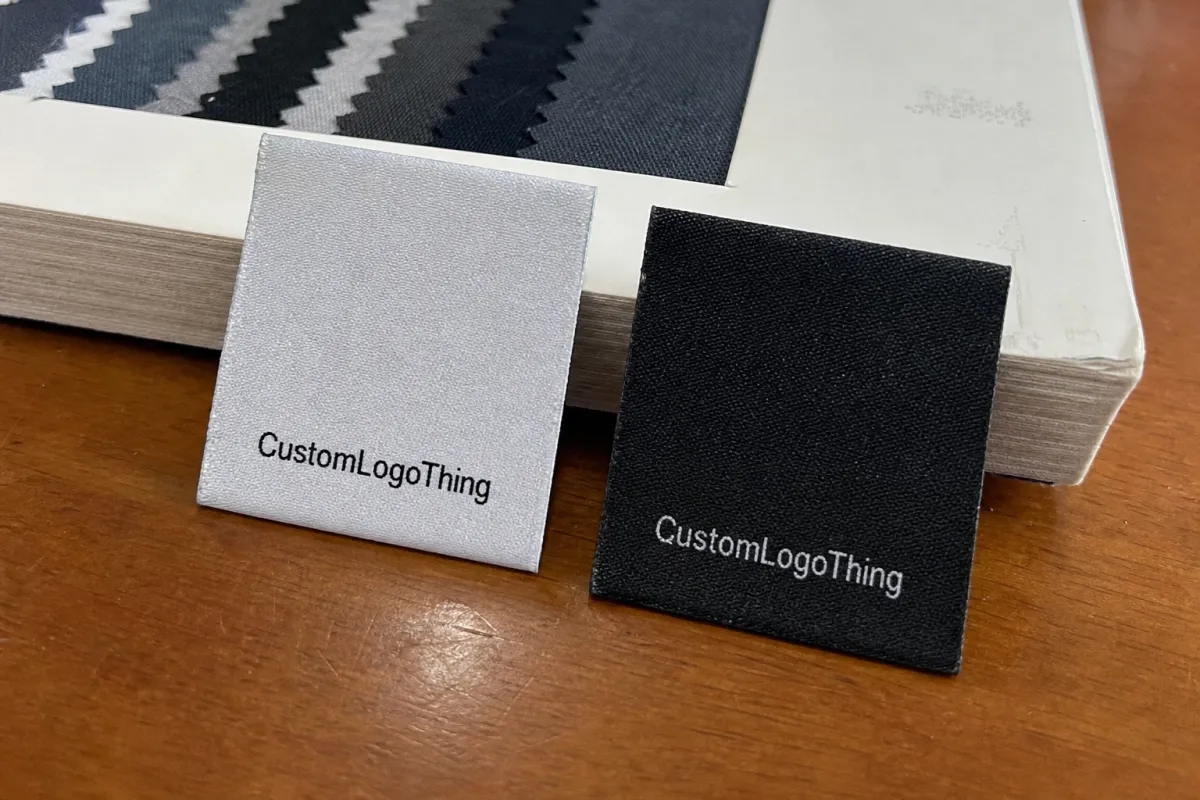
The same woven label can land at very different prices because the factory is not pricing a concept. It is pricing thread count, weave density, finishing steps, and how many pieces will share the setup burden. That is the real math behind Woven Labels Unit Cost for vitamin brands. Everything else is decorative noise.
From a buyer’s point of view, vitamin packaging has a sharper standard than many apparel jobs. Shelf presentation matters. So does readability. If the label sits on a supplement pouch, bundle insert, or promotional accessory, it still has to look crisp under retail lighting and hold up through packing, shipping, and handling. A fuzzy logo on a vitamin brand package looks cheap fast.
There is also a volume effect. Small runs carry more setup cost per unit because the digitizing, loom preparation, color matching, trimming, and inspection work do not shrink just because the order is small. Once you move into better volume, that fixed work gets spread out. That is why woven labels unit cost for vitamin brands can drop hard between 1,000 pieces and 10,000 pieces, even if the artwork stays the same.
The hidden cost trap is simple: buyers chase the lowest quote, then discover the weave is too loose for small type, the edges fray after cutting, or the fold style adds awkward labor at packout. A quote that hides that kind of problem is not a bargain. It is just a future headache with better typography.
For a vitamin brand, the label is not just decoration. It is part of the perceived quality of the product line. If the label looks soft, crooked, or flimsy, customers notice. Maybe not consciously, but they notice. The package starts speaking before the sales copy does.
One more thing: the label may be cheap on paper but expensive in labor. A center-fold label that feeds cleanly on a machine is often worth more than a lower-priced option that slows the pack line. A few seconds per unit becomes real money once you run thousands of pieces. Buyers love unit price until the labor invoice arrives.
Woven label formats that fit supplement packaging
Not every woven label format makes sense for vitamin brands. The wrong shape creates handling issues, and the wrong edge finish can make a good design look sloppy. For supplement packaging, I usually look first at where the label will live, how it will be attached, and whether the brand needs a soft retail feel or a more functional production label.
Damask woven labels are the best fit when the artwork includes small text, thin strokes, or a logo that needs a cleaner edge. The weave is tighter, so details hold better. Taffeta is more economical, but it is also less forgiving. If the design is simple and the brand is not trying to cram a paragraph into a tiny label, taffeta can be fine. If the design is detailed, damask usually earns its keep.
Common formats include end fold, center fold, straight cut, and loop fold. End fold works well for sewn-in placement. Center fold is useful for neck loops, hanging applications, or labels that need to fold around an edge. Straight cut is often cheapest, but it only makes sense if the application method is already defined. Loop fold is more specialized, and more specialized usually means higher woven labels unit cost for vitamin brands.
For supplement kits, mailers, and branded pouch sets, some buyers also use woven labels as accessory tags or secondary brand markers rather than primary regulatory labels. That distinction matters. The woven piece can support the brand, but it should not pretend to replace required product labeling, barcode placement, lot coding, or ingredient panels. Those are separate jobs.
Best-fit use cases
If the label is going on a zip pouch, sachet set, wellness accessory, or branded insert, keep the format simple. A clean straight cut or end fold usually handles better than a fancy fold that adds labor without adding value. If the label is small, move to damask. If the design is simple and the order is large, taffeta may be enough.
There is also a presentation angle. Satin labels and printed labels can look smooth and glossy, but woven labels give a more tactile, finished feel. That tactile cue can matter for premium vitamin lines, especially if the brand wants a natural, heritage, or wellness-forward look. It is not magic. It is just a texture that feels more deliberate than a basic print job.
Specs that change durability, texture, and shelf impact
The biggest driver of woven labels unit cost for vitamin brands is not always the size. It is the spec stack. A 30 mm by 50 mm label with two colors and a straight cut is a different job from a 25 mm by 70 mm damask label with four colors, a merrowed edge, and a center fold. Same category. Very different cost.
Color count matters because each additional yarn color adds weaving complexity and setup attention. One or two colors are economical. Three or four colors start to push price upward. If the design needs a gradient or photographic detail, woven is probably not the right answer. That is where printed labels do the better job.
Size changes cost in two ways. First, a larger label uses more material. Second, larger artwork can demand more weave detail and more finishing time. Small labels can be deceptive too. They may look cheap because they are tiny, but very small text can require a tighter weave and a better yarn structure, which pushes the quote up. Tiny does not always mean inexpensive. That would be too easy.
Edge finish also changes the feel and the price. Heat cut labels are often cleaner and lighter on cost. Merrowed edge or stitched border styles can add a premium look, but they are not free. If the label is hidden inside a carton or tucked onto an accessory, there is no reason to pay for a decorative edge unless the brand story supports it.
Material choice matters too. Polyester is the common workhorse because it holds color well and resists wear. Satin can give a softer surface and a more polished touch, but it is not automatically the right answer for every vitamin brand. If the label needs to survive rough handling or frequent abrasion, pick the construction that survives the abuse, not the one that sounds nicer in a sales email.
For buyer teams comparing woven labels unit cost for vitamin brands, I would always ask for the same set of specs: finished size, fold style, color count, weave type, edge finish, and attachment method. Without those six items, every quote is only an estimate. Sometimes a sloppy one.
Pricing, MOQ, and unit cost bands that actually matter
Here is the part buyers actually need. For small runs of about 1,000 to 2,500 pieces, woven labels unit cost for vitamin brands often lands around $0.28 to $0.55 per piece, depending on size, color count, and fold style. That is not cheap, but the setup burden is heavy on small quantities. If you need custom work in a small run, that is the price of reality.
At 5,000 pieces, many jobs fall into roughly $0.12 to $0.24 per unit. That is usually where the quote starts to feel reasonable, especially if the design is not overcomplicated. Once you get to 10,000 pieces and above, a simpler woven label can drop into the $0.07 to $0.16 range. More complex art still pushes higher, because complexity always charges rent.
Minimum order quantity is not just a supplier rule. It is a production efficiency issue. A factory needs enough units to absorb the cost of loom setup, yarn preparation, proofing, cutting, and inspection. If someone offers a very low MOQ with a very low unit price, ask how they are doing it. Sometimes the answer is scale. Sometimes the answer is compression somewhere you will not like.
There may also be a sampling cost or digitizing fee. Expect something like $30 to $120 for proofing or artwork prep on many custom runs, though some suppliers roll that into the first order. Rush production can add 10% to 25% if the schedule is tight and the factory has room to move. Freight is separate. Always separate. If the quote bundles everything without clarity, you are not getting a clean quote.
A simple cost model
Say a vitamin brand wants 5,000 labels, 35 mm by 55 mm, two colors, damask weave, and straight cut. A fair quote might sit around $0.14 to $0.19 per unit, with a setup or proof charge on top. If the same brand switches to four colors, a center fold, and a stitched edge, the unit cost can move meaningfully higher. Not because the supplier woke up greedy. Because the job got harder.
That is why buyers should look at total landed cost, not just piece price. You may save two cents per label and spend that back in labor, scrap, or delay. That trade does not impress anybody on the receiving dock.
Production steps and lead time from artwork to delivery
A clean production process usually starts with artwork review. The supplier checks logo clarity, line weight, letter size, color count, and finished dimensions. If the artwork is weak, the quote is weak too. Poor source files create fuzzy results, and fuzzy labels are a waste of budget.
Next comes digitizing. The art is translated into a woven structure that the loom can read. This stage matters more than most buyers think. Good digitizing preserves small details and prevents the label from turning into a vague blur. That is one reason woven labels unit cost for vitamin brands is not only about manufacturing time. Prepress work is part of the cost.
After that, the supplier sends a proof. This can be a digital mockup or a physical sample, depending on the job and the timetable. A physical sample is better if the brand is picky about texture, edge finish, or fold behavior. If you are about to launch a premium vitamin line, guessing is a weak plan.
Production lead time usually runs around 12 to 18 business days after proof approval for standard custom orders. Very simple jobs can be faster. Rush jobs can sometimes move in 7 to 10 business days if the factory has open capacity and the artwork is already clean. Shipping time sits on top of that. Buyers forget this constantly, then act surprised when a label does not teleport.
For quality control, smart buyers ask for basic inspection standards and a clear approval path. Many packaging teams also expect their broader packaging supply chain to align with standard testing principles like ISTA for transit handling and ASTM methods for material consistency where relevant. If the order includes paper inserts, cartons, or branded outer components, FSC-certified paper options may matter too. The label itself is not the whole compliance story.
Before approval, check the small stuff. Readability. Cut quality. Fold accuracy. Color matching against brand references. A tiny mistake on a woven label looks bigger than the same mistake on a larger printed panel. Small format, big visibility.
Common ordering mistakes that inflate woven label spend
The first mistake is overdesigning. Buyers sometimes try to stuff too much into a small label. Fine detail, tiny legal text, extra icons, and multiple colors make the label harder to weave and more expensive to produce. Simplicity is not laziness. It is cost control.
The second mistake is picking the wrong fold or finish for the application. A center fold might look neat in a mockup, but if the pack line needs a straight-cut piece, that beautiful fold becomes an extra handling step. Extra steps cost money. They always do.
The third mistake is ignoring the actual handling environment. If the label will ride inside a vitamin pouch or box, it does not need the same level of abrasion resistance as a visible retail neck label. If it will be exposed on an accessory or sample item, the construction needs more strength. Match the spec to the use case. Otherwise woven labels unit cost for vitamin brands will rise without giving you a better outcome.
The fourth mistake is quoting by image only. A screenshot is not a spec sheet. Suppliers need exact dimensions, quantity, attachment method, preferred fold, and the artwork file. If you leave those out, you will get vague pricing and probably a messy production cycle.
The fifth mistake is not asking about waste. If a supplier gives a low unit price but a high reject rate or a loose tolerance standard, that cheap quote gets expensive fast. A serious buyer asks how the supplier handles inspection, trim consistency, and color alignment. Not because the team enjoys paperwork. Because rework costs more than clarity.
The last mistake is assuming every woven label is the right answer. Sometimes a printed satin label, a direct print, or even a simple paper tag does the job more efficiently. Woven is strong, tactile, and premium-feeling. It is not automatically the best tool for every vitamin brand package. Good purchasing is not loyal to one material. It is loyal to the result.
Why Custom Logo Things is the safer supply choice
If you want fewer surprises, Custom Logo Things is the safer choice because the conversation starts with spec clarity instead of vague promises. That matters. A supplier that can explain how woven labels unit cost for vitamin brands changes with size, color count, and fold style is usually a supplier that understands the production risk too.
What buyers should expect from a good partner is simple: straight answers on MOQ, clear proofing, realistic lead times, and quote lines that do not hide setup, sampling, or freight. No drama. No mystery pricing. No fake urgency. The job is to get the label right and get it delivered on time.
For vitamin brands, especially those with multiple SKUs or seasonal pack changes, consistency matters as much as cost. A supplier who keeps the specification stable from reorder to reorder saves time later. That is where the better buy lives. Not in a one-time discount.
If you are comparing suppliers, ask the same questions every time. What is the finished size? What is the thread count or weave type? How many colors? What fold? What is the MOQ? What is the proof turnaround? The answers will tell you more than any glossy quote sheet.
Next steps for a fast, accurate quote
Send the supplier six things and you will get a much tighter quote: finished size, quantity, artwork file, color count, fold style, and application method. If you also give the deadline and shipping destination, even better. That is how you get a quote that actually means something.
When buyers skip those details, they usually get a low-ball number that changes later. Nobody likes the second email that says the price went up because the spec was incomplete. It is a classic waste of time.
For woven labels unit cost for vitamin brands, ask for pricing at two or three volume breaks, not just one number. A good comparison might be 1,000, 5,000, and 10,000 pieces. That makes the cost curve visible. It also helps you decide whether to buy conservatively now or scale the order for better unit economics.
Finally, check whether the label is part of a larger packaging kit. If you are ordering cartons, inserts, hang tags, or outer packaging at the same time, the vendor may be able to coordinate files, packaging standards, and delivery timing more efficiently. That is not magic. It is just less chaos.
FAQ
What is a normal MOQ for custom woven labels?
Many suppliers start around 1,000 pieces, though some go lower with a higher unit cost. For better pricing, 5,000 pieces or more is usually where the numbers start to behave.
Are woven labels better than printed labels for vitamin brands?
Not always. Woven labels feel more premium and hold shape well, but printed labels can handle fine detail and full-color art better. If the design is complex, print may be the smarter move.
How long does a custom woven label order take?
Standard production often takes 12 to 18 business days after proof approval. Rush options can be faster if the factory has capacity and the artwork is already clean.
What pushes the price up the most?
Small quantities, extra colors, tight detail, special folds, and premium edge finishes are the usual cost drivers. Complex artwork is the quiet budget killer here.
Can woven labels work for supplement pouches and boxes?
Yes, if the label is being used as a brand element, accessory tag, or sewn-in identifier. Just do not confuse it with required regulatory packaging text. Those are different jobs.
For vitamin brands, the best buying decision is rarely the lowest sticker price. It is the label that fits the pack line, holds the brand look, and keeps woven labels unit cost for vitamin brands under control without turning the order into a mess. That is the real win.


