Compare Woven Labels Unit Cost for Soap Makers Now
Your Soap Looks Handmade. Your Label Should Not Look Homemade.
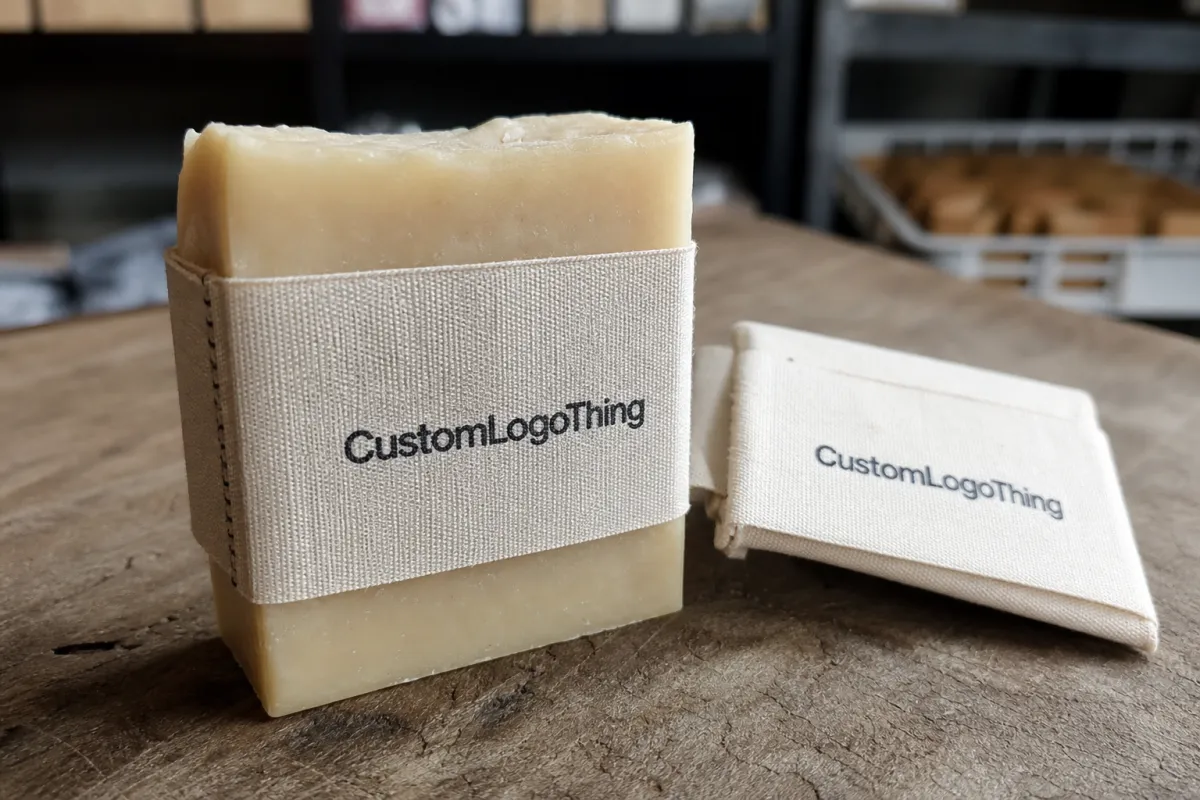
A beautiful cold-process soap bar wrapped in kraft paper, tied with twine, and finished with a cheap sticker that curls at the corner is a small tragedy. Woven Labels Unit Cost for soap makers matters because many soap brands buy in smaller batches, test seasonal scents, and still need packaging that looks ready for retail instead of ready for a school fundraiser.
That tiny label can make a $9 bar feel like a $4 bar. Annoying, but true.
Woven labels give handmade soap packaging a tactile brand marker that holds up better than many paper stickers, especially on fabric wraps, cotton muslin bags, gift sets, spa bundles, and boutique display packaging. They are not only for clothing brands. That assumption costs soap makers a lot of missed presentation value.
Use them on soap sleeves, linen wraps, cotton bags, towel sets, sampler kits, hotel amenity packs, wedding favors, and maker-market bundles. A woven label does one job very well: it makes the brand feel permanent. Paper can still handle ingredients, scent names, batch numbers, bar weight, and compliance details. Frankly, trying to weave an ingredient list into a 1-inch label is how good packaging goes to die.
For buyers comparing Woven Labels Unit Cost for soap makers, the goal is not to buy the fanciest label available. The goal is to match the label to the packaging format, order quantity, and actual sales plan. Facts beat fluffy artisan-brand poetry every time.
Practical rule: If the soap is priced as a giftable product, the label needs to support that price. If the bar is a low-cost giveaway, a woven label may be overkill. Packaging should work for the margin, not just the mood board.
Where Woven Labels Fit in Soap Packaging
Woven labels work best where touch matters. Sew one onto a muslin drawstring bag. Wrap a narrow woven band around a paper sleeve. Stitch a small logo tab onto a linen soap wrap. Add a folded label to a bath gift box ribbon or spa kit. The effect is immediate: more texture, more perceived value, less “I printed this at midnight.”
Compared with printed stickers, paper belly bands, hang tags, and cotton tags, woven labels usually cost more per piece. No surprise there. But they add durability and a giftable finish that basic paper cannot always deliver. Stickers are useful. Hang tags are flexible. Belly bands are efficient. Woven labels feel more permanent.
The best fit? Boutique soap makers, wedding favor suppliers, hotel amenity producers, spa product brands, farmers market sellers moving into retail, and private-label bath product companies. If the product sits in a gift shop, spa lobby, hotel bathroom, subscription box, or curated market display, woven branding can make sense.
There are cases where woven labels are too much. Very low-price soap bars, one-day event giveaways, scents that change every week, or test batches with no repeat plan probably do not need custom woven labels. Sometimes a sticker is fine. Shocking, I know.
Natural packaging pairs especially well with woven labels: kraft paper, recycled boxes, cotton muslin, hemp fabric, linen wraps, and minimalist paper sleeves. If sustainability is part of the brand positioning, keep the full packaging system honest. For fiber sourcing and certification language, the Forest Stewardship Council is a useful reference for paper and board claims.
| Packaging Format | Best Label Type | Typical Use | Buyer Note |
|---|---|---|---|
| Muslin drawstring bag | Center fold or end fold woven label | Gift sets, sampler bars, spa kits | Sewing gives the cleanest result. |
| Kraft soap sleeve | Straight cut or narrow wrap label | Retail bars and market displays | Test attachment before bulk production. |
| Linen or cotton wrap | End fold or miter fold label | Premium handmade bars | Folded edges look more finished. |
| Gift box or bath bundle | Loop fold or tag-style woven label | Holiday sets, wedding favors, hotel amenities | Keep the design brand-only for reuse. |
Woven Labels Unit Cost for Soap Makers: What Changes the Number
woven labels unit cost for soap makers is driven by a handful of specs: label size, order quantity, thread count, number of colors, fold type, backing, edge finish, and packaging method. Change one variable and the unit cost changes. Change five and the quote can move fast.
Small runs cost more per label because setup, loom programming, sampling, and quality control are spread across fewer pieces. That is not a conspiracy. It is math. A 100-piece order carries the same pre-production attention as a much larger run, but with fewer labels to absorb the cost.
For planning, simple woven labels may land around $0.08 to $0.25 each at higher quantities. Smaller runs, oversized labels, premium folds, dense weaving, adhesive backing, or complex artwork can push the cost per piece higher. If someone promises dirt-cheap pricing on a detailed 6-color label at tiny quantity, ask what corners are being shaved. There is always a corner.
Soap makers often need fewer labels than apparel brands. That makes MOQ planning more serious. Buying 100 labels feels safe, but 500 or 1,000 can cut the unit cost sharply if the design is evergreen. A brand-only woven label can work across lavender, charcoal, oatmeal, citrus, goat milk, and seasonal gift bars without trapping cash in one scent.
| Order Quantity | Typical Planning Range | Best For | Tradeoff |
|---|---|---|---|
| 100-250 pieces | Often highest unit cost | Testing size, fold, or attachment method | Safe, but usually poor bulk pricing. |
| 500 pieces | Better entry point for custom labels | Small soap lines and market sellers | Still not the lowest cost per piece. |
| 1,000 pieces | Common sweet spot | Evergreen brand labels across scents | Requires confidence in design and size. |
| 2,500+ pieces | Stronger bulk pricing | Wholesale, gift sets, private label, repeat sellers | Storage and forecast accuracy matter. |
Setup charges and tooling fees may be rolled into the quote or listed separately. Sampling may also be included, optional, or billed as a separate line. Always ask. Comparing one supplier’s “all-in” quote to another supplier’s base price is how buyers fool themselves into picking the wrong number.
Artwork matters too. Tiny text, gradients, shaded illustrations, and hairline script logos do not always weave cleanly. A cleaner label often costs less and looks better. Funny how that works.
Specifications That Keep Labels Legible on Small Soap Packaging
Soap packaging is small. That sounds obvious until someone sends a logo with seven words, a floral border, a tagline, and a batch note for a label smaller than a postage stamp. Keep the woven label focused on brand identity.
Common soap label sizes include small side tabs around 0.75 x 1 inch, square logo labels around 1 x 1 inch or 1.25 x 1.25 inches, narrow wrap labels around 0.5 to 0.75 inch tall, and longer fold-over labels for bags or bundles around 1 x 2 inches before folding. The right size depends on the bar, sleeve, bag, or box. Measure the finished packaging, not the naked soap bar.
Material choice affects both detail and price. Damask woven labels are usually best for fine detail and smooth brand marks. Satin woven labels offer a smooth surface and slightly dressier finish. Taffeta-style labels can be more economical, with a more textured hand and less fine detail. For most premium soap packaging, damask is the safest place to start.
Use fewer thread colors if price matters. One to three colors is usually plenty for soap branding. Strong contrast matters more than color count, especially on small labels. Cream thread on pale beige linen may sound elegant, but if nobody can read it from 18 inches away, congratulations, you made a secret logo.
Fold styles that make sense for soap packaging
- Straight cut: Good for flat application, bands, boxes, and non-sewn uses.
- End fold: Clean for sewing onto wraps, bags, and fabric sleeves.
- Center fold: Useful as a small side tab on muslin bags or cloth packaging.
- Loop fold: Works for ribbon-style attachment, towels, spa sets, and bundles.
- Miter fold: More polished for premium wraps or decorative corner placement.
Edge finishing matters. Heat-cut edges help reduce fraying on straight labels. Folded edges give a cleaner sewn look. Comfort against skin matters less than it does for apparel, but messy edges still cheapen the presentation.
Do not cram ingredients onto the woven label. Ingredient lists, net weight, business address, scent names, bar codes, and regulatory copy belong on printed packaging. A woven label should carry the logo, short brand name, or simple mark. Pairing woven branding with printed compliance labels is the sensible route.
If you are choosing between label styles, Custom Labels & Tags can be matched to soap sleeves, muslin bags, fabric wraps, and boxed sets without overbuilding the spec.
MOQ, Quote Details, and How to Compare Suppliers
Most custom woven label orders start around a few hundred pieces, with better pricing at 500, 1,000, 2,500, and higher. Exact MOQ depends on construction, artwork, supplier workflow, and whether sampling is needed. The lower the quantity, the more each label has to carry the fixed production costs.
To get a clean quote, send the details upfront. Guessing wastes time. Vague requests get vague pricing, and vague pricing has a bad habit of growing later.
- Final label dimensions, including folded size if applicable
- Fold type: straight cut, end fold, center fold, loop fold, or miter fold
- Quantity options, ideally 500, 1,000, and 2,500 pieces
- Vector artwork file, such as AI, EPS, or editable PDF
- Thread color count and any brand color targets
- Backing preference, such as no backing, adhesive, or heat seal if available
- Cut style and edge finish
- Intended use: sewn bag, soap band, gift box, towel set, or retail bundle
- Target delivery date
Ask for multiple quantity tiers in one request. A buyer asking only for 500 pieces may miss the fact that 1,000 costs only modestly more overall and much less per piece. That price break can make the decision obvious.
The cheapest quote is not always the cheapest order. Bad edge cutting, muddy logo detail, wrong fold orientation, inconsistent sizing, or weak adhesive can waste labels and slow down packing. If your team spends an extra 30 seconds fighting every label on 800 soap bags, the “cheap” option just sent you an invoice in labor.
Compare landed cost, not just unit cost. Include product cost, setup charges, tooling fees, sample cost, freight, taxes, rush fees, and any repackaging needed before production use. If products will ship to retailers, consider basic transit testing principles from ISTA, especially for boxed gift sets and wholesale cartons.
Custom Logo Things can help match label construction to the actual packaging use instead of blindly quoting the fanciest label. Fancy is nice. Functional is better. If your scent lineup changes often, keep the woven label brand-only and use separate printed stickers for scent names. That one decision can control woven labels unit cost for soap makers better than shaving fractions of a cent off thread choices.
Process, Lead Time, and Production Steps Before You Order
The ordering process is straightforward if the buyer sends complete information. Submit artwork and specs. Review the quote. Approve a digital proof. Approve a physical sample if needed. Start bulk production. Check quality. Ship. Simple process, many chances for avoidable delays.
Typical timing looks like this: digital proofing may take 1 to 3 business days, sampling may take around 5 to 10 business days, and bulk production often takes 10 to 20 business days after approval, depending on quantity and complexity. Rush options may exist, but rush work costs more and leaves less room for fixing artwork problems.
Production slows down when artwork is unclear, dimensions are missing, thread colors change late, text is too small, custom backing is requested, or the order lands during a busy gifting season. International shipping can add delays too. Nobody enjoys explaining to wholesale buyers that the labels are “almost here.” Order earlier.
Digital proofs are faster and cheaper. Physical samples are smarter for new brands, premium retail launches, packaging that needs exact sizing, or designs with fine logo detail. If the label wraps around a bar, folds into a seam, or needs to line up on a muslin bag, a physical sample can save money by catching a sizing mistake before bulk production.
Approval matters. Once a proof is approved, the supplier produces to that approval. Check spelling, logo orientation, fold direction, finished size, thread colors, and cut line. Then check them again. A reversed fold on a center-fold label is not a philosophical issue. It is a production problem.
Order before farmers markets, holiday gift sets, wedding favor season, and wholesale restocks. Waiting until the week before a market is not a strategy. It is a panic purchase.
For reorders, keep the approved spec sheet, artwork version, thread references, fold type, and reorder quantity on file. This reduces delays and prevents design drift. If the first order worked, do not reinvent it because someone found a new font on a Tuesday.
Quality Checks Soap Brands Should Not Skip
Before using the full batch, inspect the labels. Verify size, fold direction, thread colors, logo clarity, edge finish, and consistency across the run. Pull samples from different parts of the pack, not only the top label. Production variation is usually small, but checking takes minutes and can prevent a packing headache.
Test labels on actual soap packaging. Do not hold one in the air, say it looks cute, and approve the whole system. Wrap the soap. Tie the bag. Place it in the box. Add the ribbon. Stack it like it will sit at retail. Then judge it.
Woven labels should handle normal retail handling, gift packaging, display movement, and customer touchpoints. They are not designed to absorb soap oils directly. Use a wrapper, paper sleeve, glassine layer, box, or fabric barrier when needed. Oil transfer can stain fabric and weaken adhesives. Basic chemistry remains rude, but reliable.
Color expectations need some realism. Woven thread colors can differ from screen colors and printed Pantone colors. The goal is close brand alignment, not photographic color matching. If exact color is critical, request available thread references or a physical sample before production.
Attachment method matters as much as the label. Sewing is usually strongest for muslin bags, linen wraps, and cotton packaging. Adhesive backing may work on some boxes or sleeves, but performance depends on the surface. Heat seal options require compatible materials and testing. Safety pins or mini clips can work for temporary displays, but they are not ideal for most retail packaging.
Fabric, textured kraft, glossy boxes, and oily soap contact all behave differently. Test first unless you enjoy rework. I do not recommend rework as a lifestyle.
Keep extras. A practical overage for small brands is often 3% to 8% beyond the exact bar count, depending on packing method. You will need labels for damaged packaging, samples, wholesale displays, last-minute gift sets, and the one bar someone decides needs to be photographed again.
Next Steps: Build a Label Order That Actually Fits Your Soap Line
Start with the packaging format, not the label. A label for a muslin bag is different from a narrow band on a soap sleeve. A folded tab for a cotton wrap is different from a flat label for a gift box. Measure the actual bar, sleeve, wrap, box, or bag before requesting pricing.
Use one evergreen brand design whenever possible. Keep scent names, ingredients, batch numbers, weight, and compliance details on printed labels. That gives you flexibility and lets the woven label work across the full product line.
- Choose one evergreen logo or brand mark.
- Confirm where the woven label will be attached.
- Measure the final packaging, not just the soap bar.
- Choose the fold type based on attachment method.
- Select 1 to 3 thread colors with strong contrast.
- Decide whether backing is needed.
- Request quotes at 500, 1,000, and 2,500 pieces.
- Check setup charges, sampling fees, freight, and rush fees.
- Approve proof details slowly. Production moves after approval.
Send vector artwork when possible: AI, EPS, or editable PDF files are best. If only PNG or JPG files are available, redrawing may be needed, especially for small woven details. Redrawing adds time and sometimes cost, but it is better than weaving a fuzzy logo and pretending that was the plan.
Choose a practical quantity. Include current inventory, upcoming markets, wholesale samples, gift sets, and mistakes. Soap makers almost always need more labels than they think once bundles and seasonal boxes enter the picture.
For a fast quote from Custom Logo Things, send artwork, label size, quantity range, fold style, color count, use case, and target delivery date. The Custom Labels & Tags team can help compare construction options so the final spec fits your packaging instead of draining margin for no reason.
The fastest way to control woven labels unit cost for soap makers is to simplify the design, quote multiple quantities, and match the label spec to the packaging before production starts. Pretty packaging is nice. Packaging That Sells, protects margin, and reorders cleanly is better.
FAQ
What is a realistic woven label unit cost for soap makers?
Simple woven labels can often range from about $0.08 to $0.25 each at larger quantities. Smaller runs, larger sizes, complex artwork, premium folds, backing, setup charges, sampling, and shipping can raise the final cost. Ask for pricing at 500, 1,000, and 2,500 pieces so you can see the real price breaks before ordering.
What MOQ should soap makers expect for custom woven labels?
Many custom woven label orders start at a few hundred pieces, but stronger unit pricing usually begins around 500 to 1,000 pieces. If scents change often, use one evergreen woven brand label and separate printed labels for scent names. That keeps the MOQ useful across the full soap line instead of trapping you with labels for one seasonal product.
Are woven labels better than stickers for handmade soap packaging?
Woven labels look more premium and tactile on muslin bags, linen wraps, spa bundles, and gift sets. Stickers are better for ingredients, scent names, bar weight, compliance details, and short seasonal runs. Many soap brands use both: woven labels for brand identity and printed labels for required product information.
How long does it take to produce woven labels for soap packaging?
Digital proofing usually takes 1 to 3 business days, sampling may take about 5 to 10 business days, and bulk production often takes 10 to 20 business days after approval. Complex artwork, custom folds, higher quantities, busy seasons, and shipping method can affect the timeline. Approve proofs carefully because spelling, size, fold direction, and logo orientation are locked in once production begins.
What label specs help lower woven label pricing for soap makers?
Use a clean logo, fewer thread colors, standard sizes, and simple fold types to control pricing. Avoid tiny ingredient text, gradients, and detailed illustrations that do not weave cleanly at small sizes. Ordering one evergreen brand label in a higher quantity is usually smarter than creating separate woven labels for every scent.