If you need a woven neck labels Supplier Low MOQ, the question is not whether they can weave a name into fabric. It is whether they can do it in small quantities without turning a simple branding job into a headache. For startups, capsule drops, test runs, and seasonal product lines, that distinction matters more than polished sales copy.
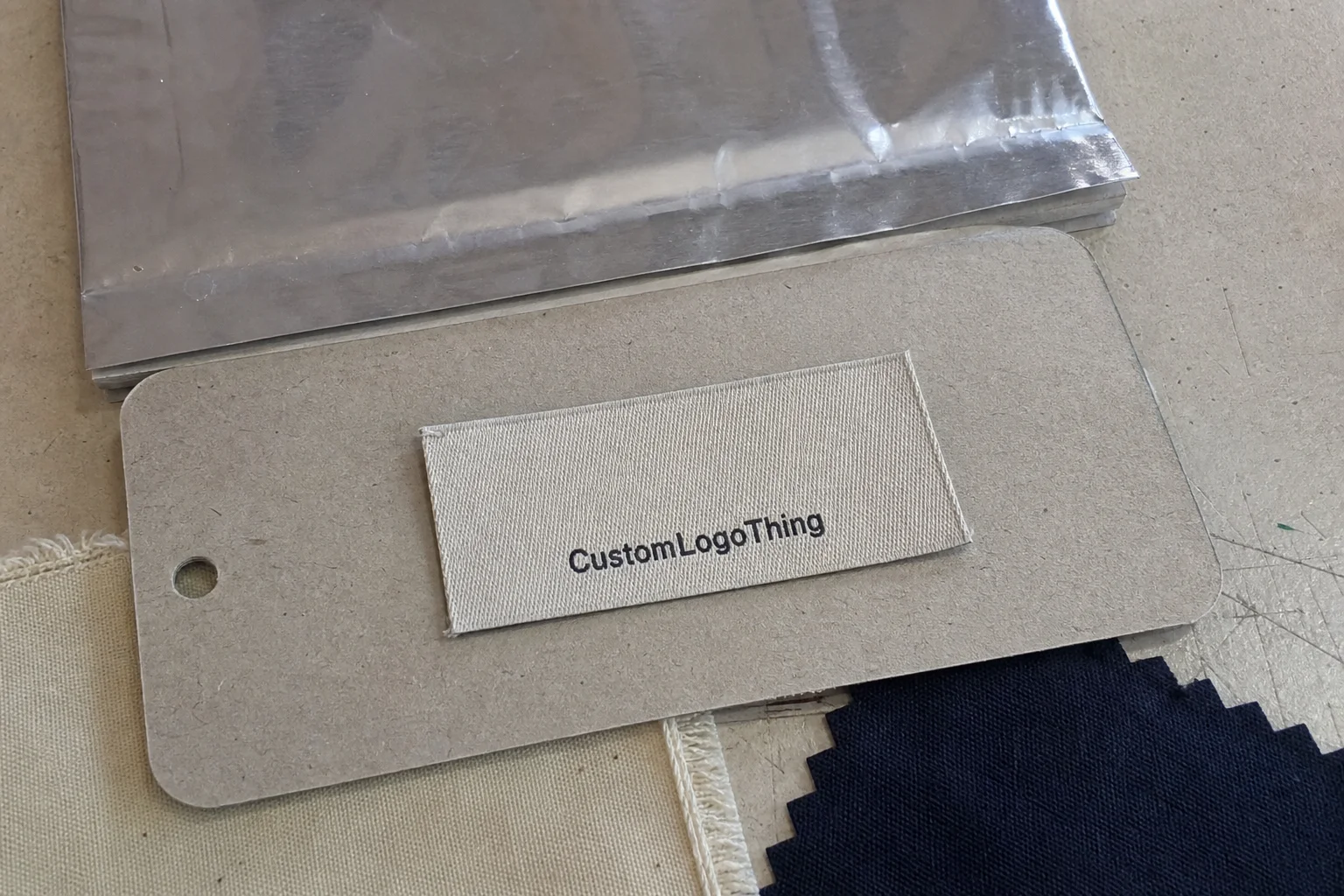
Woven Neck Labels do one job exceptionally well: they make a garment feel finished. That sounds basic, but the label is often the first tactile brand detail a customer notices after the fabric itself. If the label is scratchy, blurry, or badly cut, the garment feels cheaper than it actually is. If the label is clean, soft, and correctly sized, the whole piece reads as more credible.
Small-run buyers usually want three things at once: low minimums, decent quality, and predictable costs. Suppliers that only think in bulk often struggle with that combination. A useful supplier should be able to quote clearly, explain production limits, and show where the price changes when you tweak the artwork or the quantity.
Why low-MOQ woven neck labels make sense for smaller apparel runs
Not every brand needs 10,000 labels sitting in storage. In fact, for many smaller apparel businesses, that would be a mistake. A low-MOQ woven label order lets you match branding to actual sales velocity instead of guessing six months ahead and hoping the design never changes.
That flexibility matters for a few practical reasons. Colorways change. Fit changes. Fabric suppliers change. Even a small logo refresh can make older labels feel obsolete. If you are still testing which silhouettes sell, or whether a certain collection will come back next season, smaller orders reduce the chance that you are left with outdated inventory.
There is a second reason brands move toward low minimums: cash flow. Labels are not the most expensive part of production, but they are part of the up-front spend. A smaller order leaves more working capital for fabric, trimming, packaging, and freight. That is especially helpful when the brand is producing in batches rather than booking full seasonal runs.
Woven labels also outperform temporary branding in most real-world uses. Printed neck marks can be fine for a sample or a rush job, but they often look less finished and may wear down faster. Stickers are useful for folded goods or short-term identification, yet they do not give the same retail impression. A woven label signals permanence, even if the order behind it was deliberately small.
For that reason, a Woven Neck Labels Supplier Low moq is often the right fit for limited collections, merch drops, boutique basics, and children’s apparel. Smaller orders let you test presentation as well as product performance. If a label style is too bulky, too sharp, or too visually busy, you will know before the brand commits to a large production cycle.
In practice, low MOQ helps brands do three things well:
- Test designs before scaling up.
- Limit dead stock when styles or logos change.
- Refine branding based on what works in hand, not just on screen.
The tradeoff is simple. Smaller quantities usually mean a higher unit price. That is not a flaw in the system; it is how setup costs work when they are divided across fewer pieces. The real decision is whether flexibility is worth more than chasing the lowest possible per-label cost.
Small-batch branding should look intentional. A label that feels temporary can make the entire garment feel temporary, even when the fabric and construction are solid.
Woven neck label styles, finishes, and placement options
Woven labels are not interchangeable. The fiber type, weave density, cut, and fold style all influence readability and comfort. A label that looks fine in a mockup can become fuzzy, stiff, or awkward once it is woven and sewn into a garment.
Damask is the most common choice for detailed branding because it handles fine lines and smaller text better than looser weaves. It is usually the safest option when the logo has lettering, icons, or multiple thin elements. Satin has a smoother surface and softer hand feel, so it is often preferred for neck labels that sit directly against the skin. Taffeta is generally more economical, but it tends to suit simpler marks or internal labels better than premium fashion branding.
There is no universal “best” structure. The right choice depends on the garment, the branding style, and where the label will sit once sewn.
Common fold options
- End fold - Clean edges, useful when the label is sewn into a seam.
- Center fold - Common for neck labels that fold over the collar seam.
- Manhattan fold - A center fold with extra side extension for a more polished sewn-in finish.
- Straight cut - Best for side-seam labels or labels sewn on all four sides.
- Loop fold - Used when the label needs to wrap or hang in a specific way.
Placement changes how customers experience the garment. Back neck labels are the standard because they combine branding and size information in one visible place. Side-seam labels can feel less intrusive and work well for minimal garments or soft knits where the brand wants the neckline to stay clean. Some brands also separate brand identity from care information, which can simplify sewing and make the label system easier to manage during production.
Comfort matters more than many buyers expect. Satin or similarly soft constructions often work better on tees, loungewear, sleepwear, and children’s items, where the label sits in direct contact with the skin. If the garment will be worn for long periods, a stiff or rough edge becomes a quality issue, not just a design preference.
Detailed artwork needs to be handled with care. Tiny serif lettering, thin rules, gradients, and delicate icons can disappear in the weave. A woven label is not a print job. The construction has limits, and those limits are what separate a clean result from a muddy one. If the logo depends on ultra-fine detail, simplify it before production rather than hoping the weave will rescue it.
Ask about weave density if clarity is a priority. Tighter weaves generally improve detail and edge definition, but they can also increase cost slightly. That tradeoff is normal. Better legibility usually means more yarn density and more careful production.
Artwork, specs, and production-ready file requirements
Most ordering delays start with incomplete information. A buyer sends a logo and asks for pricing, but leaves out the folded size, the number of colors, whether size information is included, and how the label will be sewn in. Then the quote comes back inconsistent, and everyone has to revisit the same details.
To get a usable quote, prepare the basics first:
- Finished label size
- Fold type
- Number of weave colors
- Background color
- Text content for brand, size, or care information
- Application method such as sew-in or center fold
Vector artwork is the safest starting point. AI, EPS, PDF, and SVG files are much easier to convert into a weaving program than low-resolution JPGs or screenshots. If the logo is already blurry in the file you send, it will not become cleaner in production. At best, the supplier has to redraw it. At worst, the details are lost.
Thread colors should be treated as close matches, not exact paint equivalents. Woven labels use yarn, not printed ink, so Pantone matching is approximate. A competent supplier will tell you where a color may shift slightly to preserve clarity. That honesty matters more than pretending a perfect match is possible in every case.
Size is another place where buyers often misjudge the result. A neck label around 1" x 2.5" is common, but there is no fixed standard that works for every garment. The right size depends on how much content needs to fit, how the fold is constructed, and whether the label is meant to be visible or discreet. Too small, and the text becomes unreadable. Too large, and the collar area starts to feel bulky.
The practical rule is to keep the copy short and the structure simple. A clean logo, a size mark, and maybe a small care line will usually perform better than a crowded design trying to do too much. Woven production rewards restraint.
Compliance should be part of the brief, not an afterthought. Depending on the market and the garment category, you may need brand name, size, fiber content, country-of-origin information, and care symbols. Requirements vary by region, but the supplier still needs to know what the finished label is expected to carry before weaving starts. If the label is doing too much, split the information across multiple labels rather than compressing everything into one tiny area.
Pricing, MOQ, and what changes your unit cost
Woven label pricing is usually driven by a handful of variables: size, quantity, number of colors, fold style, weave density, finish, and whether the design requires special handling. Any time the label becomes more detailed or more labor-intensive, the price moves upward. That is not a warning sign; it is simply how textile production is priced.
Low MOQ orders usually cost more per piece because setup work is spread across fewer units. The supplier still has to review the artwork, prepare the weave program, run the machine, cut the labels, and inspect the batch. Whether the order is 300 pieces or 3,000, a lot of those steps do not shrink proportionally. The smaller the run, the less room there is to dilute those fixed costs.
For rough budgeting, these ranges are realistic for simple woven neck labels on small runs:
| Order size | Typical label complexity | Estimated cost per piece | Notes |
|---|---|---|---|
| 300-500 pcs | Simple 1-3 color logo, standard fold | $0.18-$0.45 | Higher setup impact, less flexibility for detail |
| 1,000-3,000 pcs | Moderate detail, multiple colors, custom fold | $0.08-$0.22 | Often the best balance between cost and flexibility |
| 5,000+ pcs | More detailed branding, repeat production | $0.03-$0.12 | Lower cost per piece, but more inventory commitment |
Those are planning figures, not guarantees. Label size, yarn type, finish, and the supplier’s own production setup can move the number in either direction. Still, the pattern holds: small orders are more expensive per unit, while larger orders lower the price but increase inventory exposure.
Ask about tooling or digitizing fees before approving anything. Some suppliers fold those charges into the quote; others list them separately. If a quote looks unusually low, check whether setup charges, proofing, and shipping were omitted. The cheapest quoted label can become the most expensive order once every extra line item appears.
Two simple changes can lower cost without making the label look cheap:
- Reduce the number of weave colors if the logo still reads clearly.
- Use a standard size instead of a custom dimension that requires additional setup.
Ask for price breaks at common thresholds such as 500, 1,000, and 3,000 pieces. A supplier that really works with small batches should be able to explain the jump from one tier to the next. If they avoid giving those numbers, the quote is incomplete.
Do not ignore freight. A low unit price can disappear once shipping, sample charges, and rush fees are added. For small orders, freight sometimes has more impact than people expect. Total landed cost tells the truth better than a per-piece rate alone.
Production steps, proofing, and lead time expectations
The normal workflow is usually straightforward: inquiry, artwork review, digital proof, approval, production, inspection, and shipping. If a supplier skips proofing or rushes the artwork phase, that is a problem. The label may be small, but the production steps still need to be controlled.
Most first orders will need at least one proof revision, especially if the label includes multiple lines, a fold, or size information. A proper proof should show the final dimensions, layout, color references, fold orientation, and how the label will be finished. If any of that is missing, ask for a corrected proof before approval. Fixing layout errors after weaving starts is far more expensive than pausing for one more revision.
There are two common sample paths:
- Digital mockup - Fast and low cost, useful for checking layout and content.
- Physical sample - Better for checking hand feel, weave sharpness, and the actual look of the thread colors.
For a first-time order, a physical sample is often worth the extra time if the label is central to the brand presentation. It is one of the few ways to confirm how the weave behaves in real life rather than on-screen. If the design is simple and the launch timing is tight, a digital proof may be enough, but only if the supplier is clear about the limits of that proof.
Lead time depends on order size, complexity, and how quickly the proof is approved. For low-MOQ woven labels, a common production window is roughly 12-15 business days from proof approval, with shipping added afterward. Rush service can be available, but it usually costs more and leaves less room for correction. Clean artwork and quick approvals are the two things that shorten the schedule most reliably.
Quality control should not stop at the proof. Ask how the supplier checks weave clarity, cut edges, color consistency, and softness. If the label will be sewn into garments that are washed often, durability matters too. A good supplier should be able to speak plainly about tolerances, not hide behind generic claims.
How to choose a supplier that can actually handle small runs
Not every supplier that advertises low minimums is suited to small orders. Some technically accept them, but the communication is slow, the proofs are vague, and the final result varies too much from run to run. That defeats the point of buying low MOQ in the first place.
Look for a supplier that states the minimum clearly and explains what changes the price. If they can distinguish between damask, satin, and taffeta without stumbling, that is a good sign. If they can explain fold options, finish options, and reorders in plain language, even better. Confusing terminology often becomes confusing production.
Factory-side control matters because the best repeatability usually comes when the same operation handles artwork conversion, weaving, cutting, and finishing. That reduces the number of handoffs and helps preserve consistency from one order to the next. For a brand that plans to reorder the same label across several seasons, that consistency is worth more than a tiny price difference.
These are the quality checkpoints worth asking about:
- Weave clarity on logos and small text
- Edge finishing with no loose fraying
- Color consistency across the batch
- Softness against the neck area
- Reorder archiving so the spec can be repeated later
Ask whether previous artwork is stored and whether reorders can use the same setup. If the supplier keeps the file and spec history, future production is easier and usually less expensive. It also reduces the chance that a second batch drifts from the first because someone re-created the label from scratch.
Do not treat custom labels and tags as a side detail. They are part of the garment’s construction and part of the brand’s perceived quality. A supplier should understand that role instead of treating the label as an optional extra.
For buyers comparing options, a useful test is simple: ask for a quote, a proof, a sample plan, and a clear lead time. The supplier that responds with specifics is usually the one that can handle a small run without wasting time. The one that stays vague probably works better on large, standardized orders.
Next steps to order custom neck labels without overbuying
Before requesting a quote, gather the practical details: logo file, finished size, fold style, estimated quantity, and any brand or compliance text that needs to appear on the label. If you want the label to include size or care information, add that now rather than during proofing. The cleaner the brief, the less back-and-forth you need later.
It helps to compare at least two quantity tiers. For example, request pricing for 500 and 1,000 pieces. That makes the cost difference visible and shows whether ordering a little more now saves enough per piece to justify the extra inventory. Sometimes the higher tier is clearly the smarter purchase. Sometimes it is not.
If this is a first woven label order, ask for both a digital proof and a sample plan. The mockup catches layout issues. The sample catches texture, width, and real-world appearance. Those two checks are far cheaper than discovering a bad label after the garments are already sewn.
A practical order flow usually looks like this:
- Send the artwork and quantity target.
- Confirm size, fold, finish, and label content.
- Review the quote, including setup and freight.
- Approve the proof.
- Move into production and inspection.
Speed helps, but stability helps more. If the design is still changing, every supplier will slow down because the spec is not final. Once the artwork settles, a Woven Neck Labels Supplier low moq can help you produce retail-ready labels without overbuying or committing to an unnecessary batch size.
What is the minimum order for woven neck labels supplier low moq orders?
Low MOQ often starts at a few hundred pieces, though exact minimums depend on label size, weave detail, fold style, and finish. Smaller orders are usually possible, but the unit price rises as the run gets smaller because setup costs are spread across fewer labels.
Can I order woven neck labels with my logo and size in one label?
Yes. Many brands combine logo branding and size information in one woven neck label. That approach works best when the artwork is simple enough to stay readable at a small size.
How long does production usually take for custom woven neck labels?
Production time depends on proof approval, quantity, and complexity, but low-MOQ woven label orders are often produced in about 12-15 business days after approval. Shipping time is separate, and rush orders can shorten the schedule at an added cost.
What affects the price of woven neck labels the most?
The main pricing factors are quantity, number of colors, label size, fold type, and finishing method. More detailed artwork or special construction usually increases the unit cost.
What should I send to get an accurate quote from a woven neck labels supplier?
Send your logo file, preferred size, fold style, estimated quantity, and any care or size information you want included. If you have a reference label or a close visual example, include that too so the supplier can match the look more accurately.