For small retail brands, the search for a custom opp bags Supplier Low MOQ usually starts with a simple mismatch: the product is ready, but the packaging still looks like a bulk item. Clear OPP bags solve that quickly. They keep the item visible, add a crisp surface sheen, and give the package a finished retail feel without jumping straight into costly cartons or laminated pouches.
That is why so many buyers begin with OPP before moving into heavier branded structures. The material is lightweight, the presentation is clean, and the order size can stay modest while the brand tests demand. For accessories, stationery, small apparel, gift goods, and many parts, that combination is hard to beat.
There is also a practical advantage that gets overlooked: a small packaging change can change how the same product is priced in the buyer’s mind. A plain clear pouch says inventory. A properly sized, neatly sealed OPP bag with a logo panel says retail-ready. That shift can matter more than a larger print budget.
“Small brands do not always need elaborate packaging first. They need packaging that fits the product, looks clean, and does not eat the margin.”
Why small brands switch to clear OPP packaging first
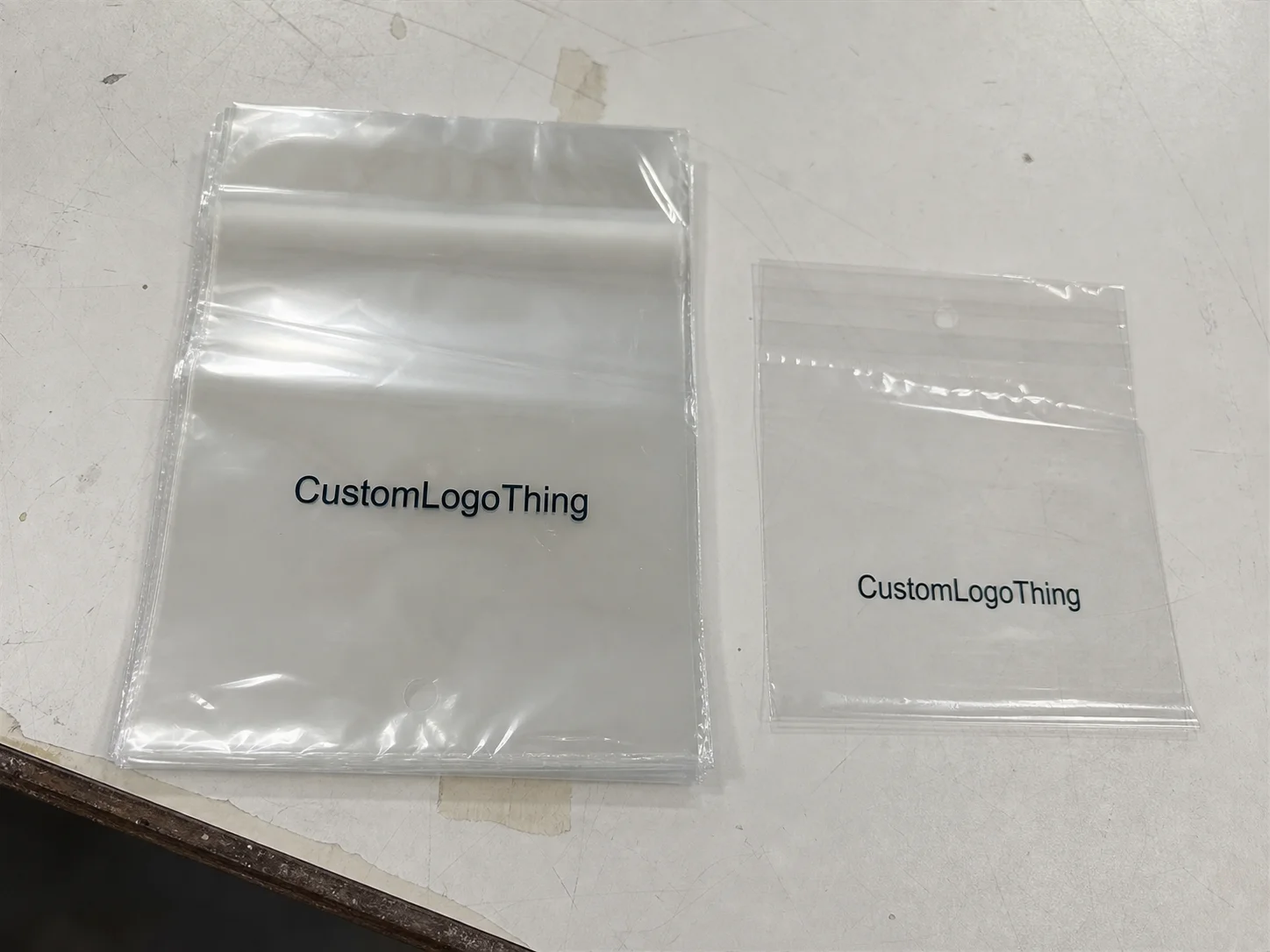
OPP, or oriented polypropylene, has one straightforward advantage: shoppers can see the product clearly before they touch it. In retail packaging, that matters. Transparency, stiffness, and gloss create a tidy face on a peg or shelf, and the package can do a surprising amount of selling before the customer reads a single line of copy.
From a buyer’s perspective, OPP is also easier to justify economically than many heavier formats. It is lighter to ship, usually simpler to pack in cartons, and less bulky in transit. If you are testing a new SKU, running a seasonal assortment, or placing a first production order, low MOQ packaging helps control inventory risk while still making the product look intentional.
OPP often works as a bridge solution. A brand can start with a clear bag, then add labels, inserts, hang tags, or printed cartons later if demand grows. That matters because packaging strategy rarely changes in one jump. It usually moves in layers: first visibility, then branding, then protection, then a more complete retail system.
There is a reason this material shows up so often in display packaging. It is familiar to packing teams, works with a wide range of lightweight products, and avoids the “prototype” look that can come with improvised solutions. For buyers under pressure to launch quickly, that reliability counts.
If you are still comparing packaging types, our Custom Packaging Products page is a useful place to sort through formats before requesting a quote.
OPP bag formats, print options, and closure styles that actually matter
Not every OPP bag behaves the same way on the line or on the shelf. The format changes the look, the packing speed, and the final cost. Flat bags are the simplest option and work well for thin products, folded apparel, inserts, or small accessories. Side-seal versions usually give a cleaner edge and stack more neatly. Gusseted styles add room for thicker items and reduce the chance of a package looking compressed.
Header bags deserve special mention because they are common in peg display. The header gives room for branding, barcode placement, and a hang hole. For retail packaging that needs to sit on a rack rather than on a shelf, a header bag can make a low-MOQ order look much more polished than a plain flat pouch.
Material choice matters too. OPP has a sharper, more glass-like clarity than PE, and it usually feels stiffer in the hand. That stiffness helps the bag hold shape on shelf. CPP is softer and can be useful in certain sealing structures, while PE is flexible and forgiving. If the priority is presentation, though, OPP is usually the first material buyers ask for.
Printing should match the use case, not the wish list. A one-color logo on the header or lower panel is often enough for smaller runs. Reverse printing can protect ink from scuffing. Barcode space, warning text, and legal copy need to stay legible after sealing and handling. If the bag is mainly for display, the print area can stay modest. If it must ship directly to the end customer, the layout usually needs more coverage and better planning.
Closures change both workflow and pricing. Self-seal adhesive strips are popular for small runs because they remove the need for extra equipment. Heat-seal compatibility helps if the factory or packer closes bags in-line. Resealable features work better for products shoppers may open and re-close. Each option changes material usage, labor, and lead time, so closure style should be set before artwork is finalized.
For a quick comparison, the main formats usually break down like this:
| Format | Best use | Typical cost impact | Notes |
|---|---|---|---|
| Flat OPP bag | Small, thin products | Lowest | Good for basic retail packaging and inserts |
| Side-seal bag | Cleaner finish, tighter stack | Low to moderate | Often preferred when presentation matters |
| Gusseted bag | Bulkier items | Moderate | Adds depth and can increase material usage |
| Header bag | Peg display | Moderate | Supports hang holes and visible branding |
Size, thickness, and finish specifications to confirm before ordering
Before a supplier can quote accurately, the measurements have to be locked down. Width, length, gusset depth if needed, seal width, and print area all matter. If the product is even slightly larger than the bag opening, packing slows down. If the bag is too loose, the presentation starts to look careless.
Thickness is usually given in microns or mil. The right spec depends on product weight, shape, and any sharp edges. Thin film may be fine for folded fabric or paper goods. Small accessories with corners or metal parts usually need more film to resist splitting. Over-specifying thickness raises unit cost without always improving performance, so the goal is fit, not bravado.
Finish details can matter just as much as the base dimensions:
- Clarity level for product visibility and shelf appearance
- Anti-static treatment for lightweight items that attract dust
- Hang hole reinforcement for peg display
- Seal width for strength and machine compatibility
- Barcode or label space for retail scanning
Skipping the sample stage is one of the more expensive mistakes buyers make. A bag can look correct on paper and still behave differently once the product is inserted and sealed. The fit changes. The print may fold under tension. A hang hole may sit too close to the edge. A sample or pre-production proof catches those problems before the full order starts.
For products that will hang in-store, the exact hole style and reinforcement method should be confirmed early. Thin film around a weak hole can tear during transport or when staff restock shelves. The same caution applies to items with corners. Slightly heavier gauges and rounded product edges are often safer than trying to save a fraction of a cent on film.
Standards-conscious buyers sometimes also check whether the packaging specification lines up with transport and handling expectations. Resources from groups such as the PMMI and test organizations like ISTA can help shape a more realistic spec, especially when the bag is part of a broader shipping or retail program.
Custom OPP bags supplier low MOQ: pricing, MOQs, and quote drivers
The phrase custom opp bags Supplier Low MOQ usually points to a supplier willing to work below standard bulk thresholds. That often means using existing material widths, standard film grades, or a simpler print setup. For a small brand, that can be the difference between testing demand now and sitting on a larger commitment that ties up cash.
Low MOQ does not mean one universal number. Some suppliers offer stock-size customization, where the factory already has a standard bag dimension and only changes the print or a small detail. Others can run a fully custom size with a smaller production commitment. Those are not priced the same, and the quote should make the difference clear.
The main drivers behind price are predictable:
- Bag size and whether it fits existing cutting tools
- Film thickness, which affects resin usage
- Print colors and print coverage
- Printed sides, especially if reverse printing is required
- Adhesive strip type or closure style
- Special features such as hang holes, euro slots, or anti-static treatment
- Packing method and carton configuration
For budgeting, simple low-MOQ custom OPP runs may fall around $0.04-$0.12 per unit for standard clear bags with minimal print at modest quantities. More customized printed formats can move into the $0.12-$0.30 per unit range depending on size, thickness, print coverage, and finishing. These are broad working ranges, not promises. Freight, setup, proofing, and carton configuration can shift the landed cost quickly.
That is why a quote should show more than a unit price. Ask for multiple quantity tiers, sample cost, setup or plate charges, freight terms, and production lead time. A cheap line item can become expensive once extras are added. The real comparison is landed cost, not the first number on the page.
A supplier that explains tradeoffs clearly is usually more useful than one that promises every feature at the lowest price. If the quote is unusually cheap, check whether the print is limited, the material is thinner, or the order is being handled through a stock program rather than a true custom run. There is nothing wrong with that model, but it should be visible in the quote.
In many projects, OPP sits between plain polybags and more elaborate retail packaging. That middle ground is useful. It protects the item, looks clean, and keeps the economics manageable while the product line is still proving itself.
Process and timeline from artwork approval to shipping
A clean production cycle usually starts with the inquiry, then moves into spec confirmation. Once dimensions, thickness, print area, and closure style are set, the supplier prepares artwork or a proof. After approval, materials are prepared, printing begins, the film is cut and sealed, the bags are checked, and the cartons are packed for shipment.
The slowest part is usually not the machine time. It is the back-and-forth around artwork, unclear dimensions, and late changes to print coverage or closure style. If the buyer changes the bag width after proof approval, the production file may need to be revised. On a small run, that can add days to the schedule and push back freight booking.
For planning purposes, simple low-MOQ OPP jobs can sometimes finish in roughly 10-15 business days after proof approval. More customized printed runs, or jobs with multiple proof rounds, often take 15-25 business days or longer. Shipping time sits on top of that, and international freight can vary widely depending on method and destination.
Carton packing deserves attention too. Some orders are bulk packed in master cartons, while others are palletized for better protection. If you need split delivery to more than one warehouse or store, ask whether cartons can be labeled by destination. That small instruction can save a significant amount of manual sorting later.
Packaging decisions also connect to waste and material handling. Some buyers ask about carton efficiency, excess void fill, or whether broader packaging programs can reduce waste elsewhere in the supply chain. The EPA Sustainable Materials Management resources are useful if your team is trying to reduce packaging burden without compromising retail presentation.
How to compare a reliable supplier beyond the lowest price
A reliable supplier should do more than send a price. They should confirm dimensions, review the print file, explain tolerances, and say what happens if the product does not fit exactly as planned. That kind of feedback usually comes from a team that understands factory reality, not just sales language.
On the production floor, quality control is usually built around a few measurable checks: seal consistency, edge trimming, print alignment, clarity, and carton packing consistency. Uneven seals can open early. Poor trimming makes stacks look crooked. Print drift weakens the branded look even when the ink itself is fine.
It also helps to separate actual manufacturing support from generic reselling. A real production partner should answer practical questions about materials, minimums, sample policy, and process capability without vague wording. They should also tell you whether the job is being treated as a standard line item or as a special run that needs more setup.
Good suppliers usually ask useful questions back:
- What is the exact product size and weight?
- Does the bag need a hang hole or adhesive strip?
- Will it be used for display, shipping, or both?
- How many print colors are required?
- What date do you need the goods in hand?
That matters because a bag should be matched to the product, not just quoted by width and length. This is where weaker programs often fail. They treat the bag as a commodity line item, while stronger suppliers treat it as part of the product packaging system.
If you are building a wider packaging plan, pairing bags with labels, inserts, or FAQ-style support content can help standardize your order process across SKUs. It also makes future package branding easier to scale without redesigning everything from scratch.
Next steps to request a low-MOQ custom OPP quote
If you want a useful quote, prepare the basics before you ask. Have the product dimensions ready, plus your target bag size, quantity range, print artwork, closure preference, and required ship date. The more precise the input, the less back-and-forth you will need before the supplier can price the job correctly.
Ask for a sample or mockup if the product is new. Ask for a unit-price table across quantities so you can see where the breakpoints sit. Confirm whether setup charges are included or billed separately. A quote that looks attractive at first glance can change quickly once plates, proofing, or freight are added.
Artwork should be sent in a clean file format, with bleed, safe area, and legible text clearly defined. If the design includes a barcode, fine line, or small legal copy, make sure it stays readable after printing and sealing. The packaging file should be treated like a production document, not just a visual mockup.
Then compare the quote against your budget and your retail goal. If the specs fit the product, the proof looks correct, and the timeline works with your launch, proceed. If not, revise the size or print plan before approval. That approach keeps low-MOQ buying efficient and avoids expensive rework.
For many buyers, the right custom opp bags supplier low moq is the one that gives a clear spec, a fair landed cost, and enough flexibility to launch without overbuying. Keep the order simple, confirm the details, and build the packaging program one clean run at a time.
What is the typical MOQ for custom OPP bags supplier low MOQ orders?
Low MOQ usually means the factory is willing to start with a smaller production run than a standard bulk order, but the exact number depends on size, print complexity, and whether the bag is stock or fully custom. Ask for quantity tiers so you can see how the unit price changes as the order increases.
Can I order custom OPP bags with a logo in a small quantity?
Yes, many suppliers can print a logo on low-volume OPP orders, especially when the design is simple and the bag size matches an existing production setup. The cleaner the artwork and the fewer print colors, the easier it is to keep setup costs under control.
What details should I confirm before approving a quote for custom OPP bags?
Confirm dimensions, thickness, print area, number of colors, closure style, packing method, sample cost, freight terms, and lead time. Also verify whether the quoted price includes setup charges or if those are billed separately.
How long does production usually take for low MOQ OPP bags?
Production time depends on artwork approval, print complexity, and factory schedule, but simple low-MOQ jobs are often faster than larger custom runs. The safest approach is to approve the proof quickly and ask for a dated schedule before production starts.
Are custom OPP bags better than PE bags for retail display?
OPP usually offers higher clarity and a sharper, glossier presentation, which makes it a strong choice for retail display and product visibility. PE is often softer and more flexible, so the better option depends on whether the priority is presentation, stretch, or puncture tolerance.


