If you are comparing Zipper Packaging Bags Bulk private label options, the real question is not whether the bag looks attractive in a mockup. It is whether the package protects margin, ships cleanly, and still gives the product a credible retail face. Flexible packaging keeps winning that comparison for a reason. A well-specified zipper bag can deliver shelf impact, resealability, and branding without the freight weight and storage drag that come with jars, tins, and rigid cartons.
That matters more than design drama. The best package is the One That Sells, ships, and reorders without constant corrections. Private label zipper bags have become a practical choice for snacks, coffee, supplements, pet treats, cosmetics, and small hardware because they are lightweight, easier to warehouse, and usually cheaper to ship than custom printed boxes or rigid containers. Not glamorous. Just profitable.
Buyer reality: A package that saves 20-40% in shipping weight can do more for margin than a fancier finish ever will.
Why bulk zipper bags are often the better margin play
Printed cartons still have a place, but they are not always the best answer for a launch or a growing SKU line. Bulk zipper bags often deliver similar shelf visibility at a lower total landed cost. They also reduce dimensional shipping costs, which starts to matter fast once fulfillment volume climbs. A 1,000-unit run of flexible packaging can take far less warehouse space than the same quantity in cartons or jars.
That difference is not theoretical. A lighter package means lower freight charges, easier palletization, and fewer damage claims. It also means fewer headaches for smaller teams that do not want to manage multiple packaging components, sleeves, inserts, and secondary cartons just to launch one product. From a packaging standpoint, private label zipper bags let you test demand, protect cash flow, and move faster.
Brands selling seasonal flavors or rotating assortments especially benefit. One base bag format can support several SKUs with color changes, label changes, or modest artwork updates. That cuts complexity and keeps reorders less painful. You are not rebuilding the whole pack every time someone decides strawberry should be pinker.
Weight does not equal value. Buyers sometimes overpay for packaging because they equate heavy with premium. In retail packaging, what matters is protection, clarity, and consistency. If your product does not require a rigid structure, zipper bags are often the smarter commercial move.
For brands with sustainability reporting or source-reduction targets, flexible formats also fit well. Material use is lower than in many rigid alternatives, and freight efficiency supports lower transport emissions. The U.S. EPA Sustainable Materials Management program discusses exactly why source reduction matters across packaging systems.
Businesses that usually get the best return from zipper bags include:
- Snack and confectionery brands
- Supplements and nutraceuticals
- Coffee and tea companies
- Pet treat and pet food brands
- Cosmetics and personal care items
- Small parts, accessories, and hardware
Those categories need resealability, clear branding, and efficient handling. A bag does all three well.
Formats, closures, and print options that actually matter
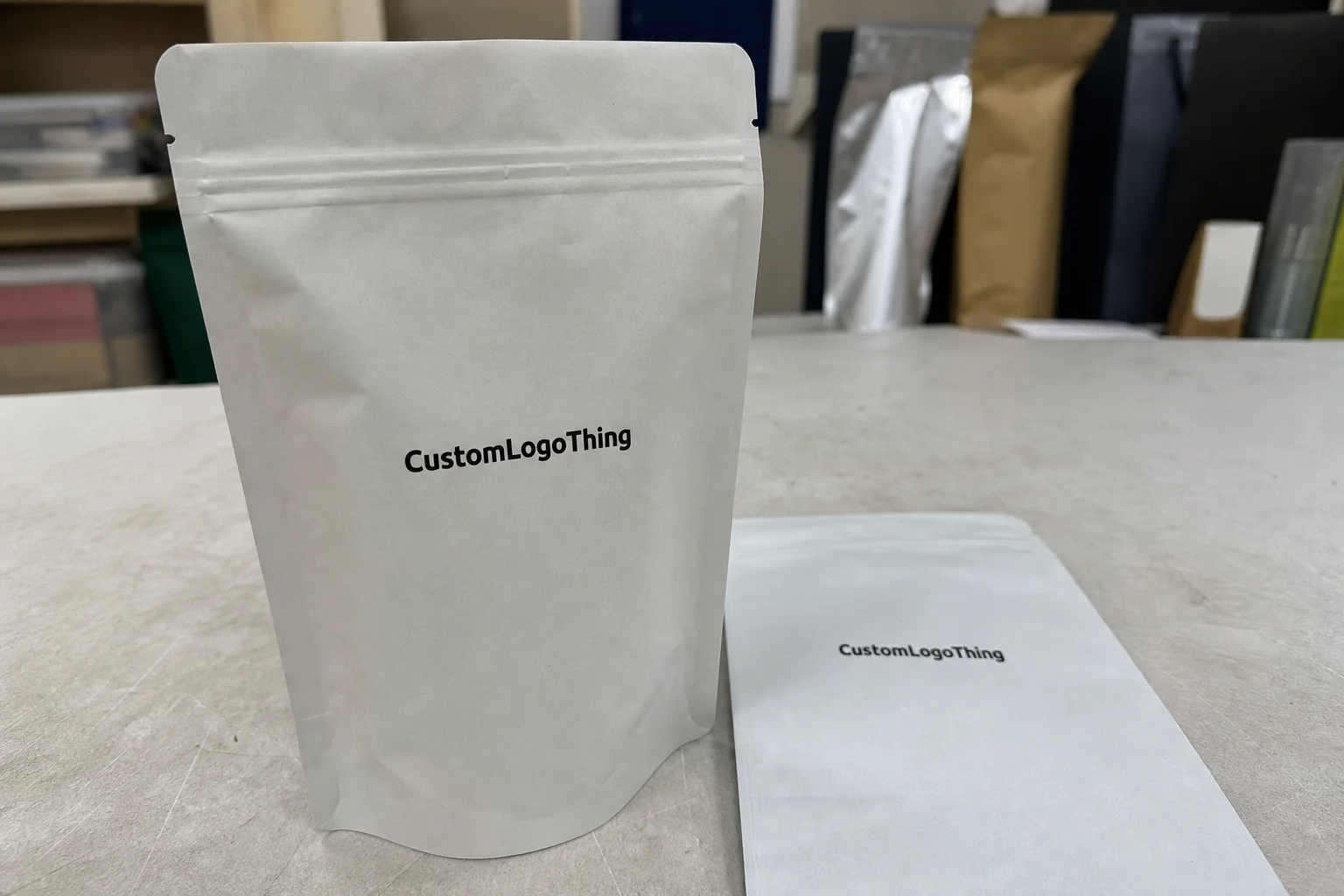
Not every zipper bag performs the same way. The right structure depends on fill weight, shelf presentation, and how the customer opens and closes the pack. Stand-up pouches are the most common retail-facing format because they display well and give you more printable surface area. Flat zip bags are simpler and often cheaper. Gusseted bags add capacity and can improve shelf profile for larger fills.
Here is the practical breakdown most buyers end up using:
- Stand-up pouches: best for shelf visibility, branding, and higher perceived value
- Flat zip bags: efficient for lighter products, samples, and e-commerce kits
- Side-gusset or bottom-gusset bags: useful for bulkier items and larger fill volumes
- Clear window bags: helpful when product visibility supports trust and purchase confidence
Closure choice matters too. Press-to-close zippers are standard for most consumer goods. Slider zippers cost more, but they can improve ease of use on larger packs. Child-resistant closures are relevant for regulated categories. Tear notches and heat-sealed tops are often added when tamper evidence matters. If the product will be opened and resealed repeatedly, that functionality is not optional. It is part of the user experience.
Print options should support fast recognition. Full-color artwork gives the strongest shelf presence. Spot color can be enough for simpler branding, especially when the category already has strong visual norms. Matte finishes read as more restrained and premium. Gloss finishes feel brighter and more promotional. Metallic accents can help, but they also raise cost, so use them where they actually improve conversion instead of just making the quote annoying.
Writable panels can be useful for batch coding, flavor notes, or retail handling. Hang holes matter for peg displays. Degassing valves are close to mandatory for coffee. That is the kind of detail a buyer should confirm before placing an order, because a nice-looking bag that fails functionally is still a bad purchase.
| Format | Typical Use | Brand Impact | Relative Cost |
|---|---|---|---|
| Stand-up pouch | Retail snacks, supplements, coffee | High | Medium |
| Flat zip bag | Samples, accessories, e-commerce packs | Moderate | Low |
| Gusseted bag | Bulk fills, taller products, larger volumes | Moderate to high | Medium |
| Window pouch | Products where visibility builds trust | High | Medium to higher |
If your line is still evolving, start with one or two formats and keep the rest consistent. That is usually cleaner than building an elaborate packaging system before sales data exists.
Specs to lock before you request a quote
This is where most buyers either save money or lose it. Before requesting zipper packaging bags Bulk Private Label, lock the basics: width, height, gusset depth, film thickness, and target fill weight. A few millimeters can change bag appearance and sealing performance. It can also affect freight quotes and carton counts.
Material choice is the next big decision. Common constructions include PET/PE laminates, which balance print quality and sealability well. Matte lamination gives a softer look. Gloss film increases shine. For buyers with sustainability goals, recyclable mono-material options are increasingly relevant, though the print and barrier performance depend on the exact structure. Do not assume every “eco” bag performs the same. Ask for barrier data, not just a green headline.
Barrier performance matters if the product is sensitive to moisture, oxygen, light, or aroma loss. Coffee and supplements often need stronger oxygen barrier properties. Snacks may need moisture resistance and puncture resistance. Cosmetics may need compatibility testing to make sure oils or actives do not interact with the film. Seal strength and puncture resistance should be specified, not guessed.
Food-safe compliance is another checkpoint. If the bags will touch food, supplements, or personal care products, confirm that the material and ink system are appropriate for the application. Industry standards such as ASTM methods are commonly used in testing, and buyers in regulated categories may also require documentation aligned with ISTA packaging test protocols for transit performance.
Artwork requirements are where delays often begin. You need:
- Final dieline
- Bleed allowance
- Vector logo files
- High-resolution images if photos are used
- Color references or Pantone targets
- Barcode placement and quiet zone
The rule is simple: the more precise the spec sheet, the fewer revisions, delays, and hidden costs. That is true whether you are ordering 2,000 packs or 200,000. I would rather see one detailed brief than three pages of vague direction and a follow-up email that says, “we’ll know it when we see it.”
For buyers who also need outer cartons, labels, or retail-ready display components, it helps to coordinate the full pack architecture early. That is where Custom Packaging Products and Custom Labels & Tags can fit into a broader launch plan without creating mismatched branding later.
Cost, pricing, and MOQ: what changes your unit cost
Pricing for zipper bags is not random. It usually follows a predictable pattern. Material type, print complexity, bag size, zipper style, and order volume are the main drivers. A simple two-color bag with a standard press-to-close zipper will price very differently from a large, high-barrier pouch with full-color coverage and a specialty finish.
MOQ changes the economics quickly. Lower quantities are useful for tests, but they usually carry higher per-unit costs because setup work is spread over fewer bags. Higher quantities reduce unit price, though that only helps if the inventory will sell within a reasonable time. Buying too many bags to save a few cents per unit is not smart if the SKU turns slowly. Packaging that sits in a warehouse is not a discount. It is cash with a shelf life.
Typical buyer pricing for private label zipper bags can vary widely, but a realistic comparison often looks like this:
| Order Type | Typical Unit Cost Range | Cost Drivers |
|---|---|---|
| Simple branded stock-style bag | $0.12-$0.22 | Basic print, standard size, lower setup |
| Custom printed pouch with mid-level barrier | $0.18-$0.35 | Full-color print, custom size, better film |
| Premium barrier pouch with special features | $0.28-$0.60+ | Valves, sliders, child resistance, specialty finishes |
Those ranges are not universal. They depend on volume, freight, and the exact structure. But they are useful because they reflect how the market usually behaves. Buyers should also watch for plate charges, proofing fees, and freight. A quote that looks cheap at first can become expensive once the landed cost is tallied.
Sample cost is another question that comes up often. Some factories charge for samples, especially if they are custom printed. Others credit sample costs back against a confirmed order. Reorders are usually cheaper than first runs because tooling is already approved and artwork is locked. Still, that only holds if the spec does not change.
If you are comparing suppliers, ask for a full landed-cost view, not just a bag price. Freight, cartons, inner packs, and any labeling or kitting can shift the total. For larger buyers, wholesale programs can improve repeat ordering economics, which is why it is worth reviewing Wholesale Programs before finalizing a supply plan.
One practical buying tip: match order volume to sales velocity. Not ambition. Not vanity. Sales velocity.
Production steps and turnaround: from artwork to finished bags
The production path is straightforward when the buyer is organized. First comes inquiry and spec confirmation. Then artwork review. Then proof approval. After that, production, inspection, and shipment. The process is simple on paper. In practice, most delays happen before printing starts.
Missing dielines are a common cause. So are low-resolution files, unclear color targets, or late changes to barcode placement. If your team is still revising pack copy, do not send the job to production yet. That only creates back-and-forth and increases the risk of reprints.
Lead time depends on whether you are buying stock-style configurations or fully custom printed runs. Standard formats with modest decoration move faster. Fully custom structures, specialty closures, and barrier upgrades take longer because more variables must be controlled. A buyer should expect some variation based on seasonality and press capacity, especially for larger runs.
In many cases, a complete proof cycle shortens the overall timeline because it prevents expensive print mistakes. That is one reason sample approvals matter. A digital proof is useful, but a physical sample can reveal zipper behavior, panel proportion, and finish differences that are not obvious on screen.
As a rough planning benchmark, projects with ready artwork and standard specs often move in about 12-15 business days after proof approval, though that depends on order size and the production queue. Shipping time is separate. International freight can add another layer of timing, especially if customs documents need extra review.
Before ordering, prepare these items:
- Final bag dimensions and fill weight
- Artwork files and color references
- Target quantity and reorder forecast
- Compliance requirements
- Preferred shipping method and destination
That preparation keeps the schedule predictable. It also makes the quote more accurate from the start.
How to keep private label runs consistent across reorders
Consistency is where private label packaging earns trust. If the first run looks one way and the reorder looks slightly different, customers notice. Retail buyers notice too. Color management is the first control point. Standardizing inks, print references, and approval records protects brand recognition across multiple production runs.
Then there is functional quality. A good zipper bag is not just about print. It needs reliable zipper engagement, clean seals, and consistent dimensions. Quality control should include print registration, zipper function, seal integrity, and visual inspection. Those checks may sound basic, but they prevent the sort of problems that turn into complaints or chargebacks later.
Supply continuity matters as well. If the material source changes without documentation, the feel, clarity, or barrier performance may shift. That can be enough to alter how a product sits on shelf. Keeping written specs and stored approval records helps preserve consistency and makes reorders faster.
That is the hidden cost many brands miss. Inconsistent packaging can slow fulfillment, create confusion in inventory, and weaken shelf presence. It also makes the product line look less mature than it really is. Stable package branding sends a stronger signal to the market.
For brands managing several SKUs, the support piece matters. File updates, format changes, and line extensions should not require a full restart every time. The better approach is to treat the original spec as a control document, then update only what needs to change. That discipline saves time and reduces waste.
It also helps with certification-focused buyers. If you need FSC-related paper components or want to align outer packaging with sustainability claims, documentation should be kept current. The FSC system is not relevant to every zipper bag, but when paper components or cartons are part of the pack, it can matter.
How to order with fewer delays and better pricing
If you want better pricing and fewer delays, start with the basics. Gather fill weight, bag dimensions, artwork files, and target quantity before requesting a quote. That alone removes most of the back-and-forth that slows packaging projects down. It also helps the supplier recommend the right structure instead of guessing.
Select one or two material options for comparison. Do not ask for every possible variation unless you are still narrowing down the product strategy. More options can look helpful, but they usually slow decision-making. If you know the product will touch food, supplements, or cosmetics, confirm compliance needs early. Those requirements affect material selection, ink choice, and documentation.
Request a sample or digital proof before full production. That is not a delay. It is insurance. A small proofing step can prevent a very expensive reprint. If the bag will sit in retail packaging alongside other SKUs, check how the finish, color, and proportions look next to the rest of the line. This is where strong packaging planning pays off.
For brands ready to move, the path is simple: send specs, approve a mockup, lock quantity, and schedule production. That process works whether you are buying a first run or scaling a mature program. And if your goal is margin with less packaging weight, Zipper Packaging Bags Bulk private label are still one of the clearest options on the table.
What is the best MOQ for zipper packaging bags bulk private label orders?
The best MOQ depends on bag style, print method, and whether you need a custom structure or a stock format with branding. Lower MOQs work well for test launches, but unit cost usually improves as volume rises. The right number is the one that matches forecasted sales so inventory does not sit too long.
How much do private label zipper bags cost per unit?
Unit cost is driven by material, size, zipper type, print coverage, and order quantity. Simple unprinted or lightly printed bags are usually cheaper than full-color, high-barrier pouches. Freight, setup, and proofing can change the total landed cost, so compare complete quotes rather than base price alone.
What artwork files are needed for custom zipper bag printing?
Vector files are preferred for logos and text because they scale cleanly. A dieline, bleed, and correct color references help prevent production errors. High-resolution raster images can work for photography, but they should meet print-quality standards and be checked before approval.
How long does production usually take for custom zipper bags?
Turnaround depends on order complexity, proof approval speed, and production scheduling. Projects with complete artwork and standard specs usually move faster than highly customized formats. Final shipping time depends on destination and freight method, so it should be planned separately from production time.
Can zipper bags be made for food-grade or product-safe use?
Yes, many zipper bags are available with food-safe materials and appropriate barrier properties. You should confirm compliance requirements before quoting, especially for food, supplements, or cosmetics. Ask for documentation if your category requires testing, migration support, or regulatory records.