zipper packaging bags Bulk B2B Sourcing sounds like a procurement task, but the business impact is bigger than the category name suggests. If a pouch looks good on shelf yet leaks aroma, loses seal integrity, or frustrates the end user every time it is reopened, returns and complaints follow fast. That is why buyers keep treating zipper bag sourcing as a repeatable program, not a one-off purchase.
From a packaging buyer’s point of view, the appeal is straightforward. A zipper closure paired with flexible film usually weighs less than rigid containers, ships more efficiently, and gives a cleaner retail presentation than many basic plastic packs. Better still, the consumer touches the closure every time they use the product. That repeated interaction affects loyalty more than many secondary branding tweaks. A good closure becomes part of the product experience. A bad one becomes the reason the customer never reorders.
This is also why brands with expanding product lines need a spec-driven buying process. Same print register. Same zipper feel. Same seal performance across runs. That is what protects product packaging standards as volume grows and SKUs multiply.
Why zipper bags outperform many shelf-ready plastic packs
The strongest case for zipper bags is functional. A properly designed pouch can reduce oxygen exposure, improve storage after opening, and present a more premium shape than a loose-fill poly bag. If a snack bag, supplement pouch, or pet treat pack is easy to reseal, buyers see fewer stale-product complaints and fewer damaged units in transit. Those are not abstract risks. They hit margins directly.
Flexible packaging also has a shipping advantage. Compared with rigid tubs or jars, zipper pouches generally use less material and take up less cube in transit. That lower weight can translate into real savings, especially for brands shipping nationally or importing in larger volumes. In many programs, the packaging move is not about “fancier design.” It is about getting a better protection-to-cost ratio.
Small upgrades can affect repeat purchase behavior more than another round of artwork tweaks. Packaging is tactile. The end user notices opening resistance, zipper alignment, tear notch placement, and the feel of the reclose. Good package branding is not only visual. It is mechanical. That is easy to miss if a team only reviews static proofs.
For brands ordering bulk bags across multiple SKUs, the real win is standardization. One zipper style, one print method, one approved spec sheet. That reduces variation and makes reorders far easier to manage than piecemeal retail packaging buys.
“A pouch that seals well once and poorly later is not a packaging asset. It is a support ticket waiting to happen.”
Product formats, structures, and closure options that matter
Not every zipper bag should look or perform the same. The format should match the product risk. A snack brand may want a lightweight stand-up pouch. A hardware brand may prefer a flat zipper bag for parts counting. A sample kit may need a clear front so the contents are visible immediately. The wrong format forces the buyer to compensate later with inserts, labels, or oversized shipper cartons.
Common formats buyers compare
- Stand-up pouches for shelf presence, display stability, and a higher perceived value.
- Flat zipper bags for low-profile items, kits, and compact shipping.
- Side-gusset bags for products that need more internal volume without a wide footprint.
- Clear front or window bags when visibility drives trust or product checking.
Zipper type matters just as much. Press-to-close zippers are common because they are economical and familiar. Double-track zippers improve closure confidence for products that are opened often. Child-resistant closures may be needed for regulated products or higher-risk contents. Tamper-evident options help buyers show that a pack has not been opened before purchase or receipt. Each choice changes cost, user experience, and line efficiency.
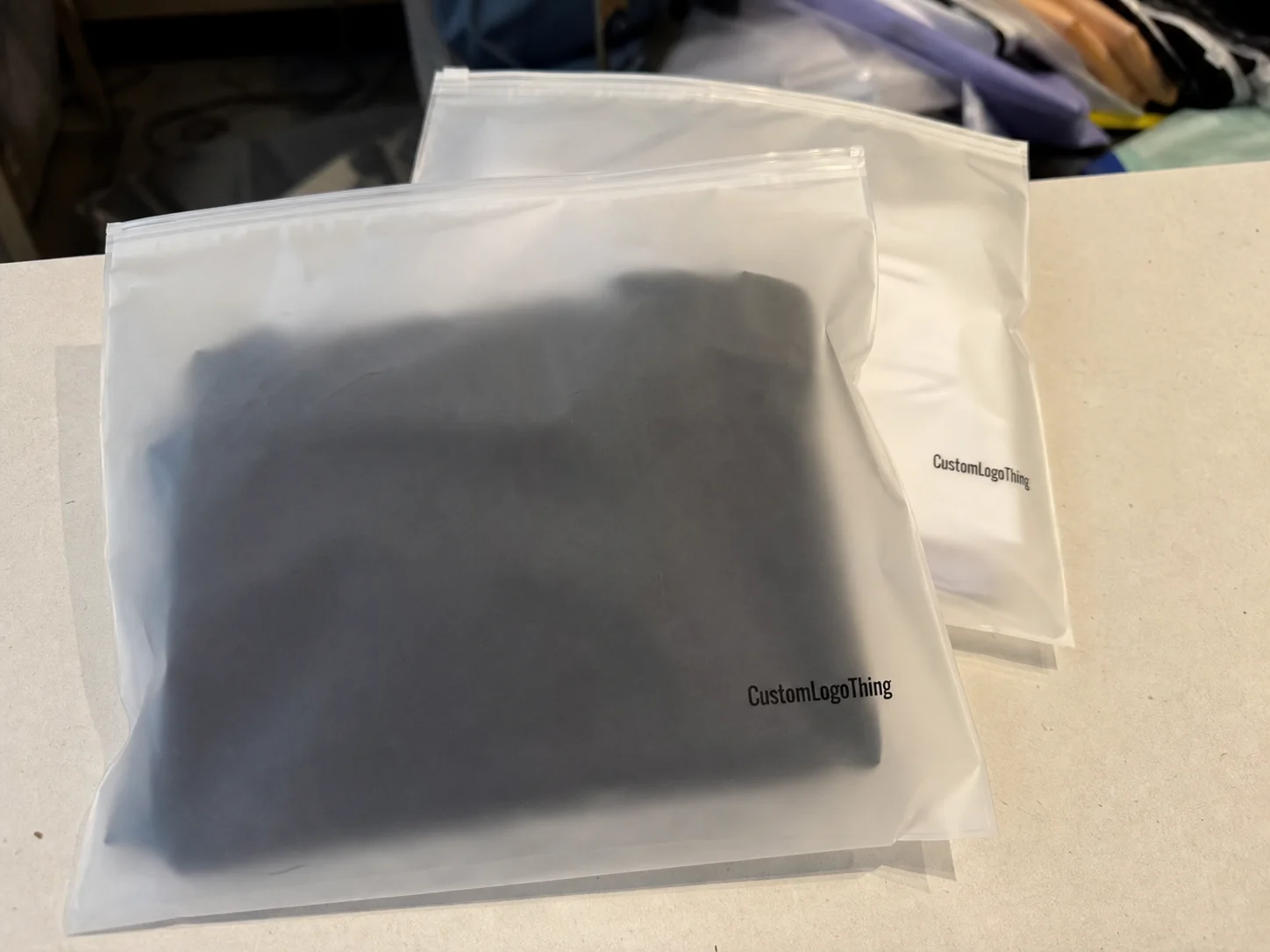
Film structure is the other major decision. PET/PE is common for printability and seal strength. Matte laminates give a softer, more premium look. Barrier films improve oxygen and moisture protection, which is crucial for coffee, supplements, and certain food items. Clear PE options work when visibility matters more than shelf rigidity. For some product lines, a basic clear pouch is enough. For others, it is simply not enough protection.
Practical use case is the best filter. Snacks need freshness retention. Supplements need barrier performance and regulatory discipline. Hardware needs puncture resistance. Apparel and small accessories often care more about clarity and presentation. Pet treats often need stronger seals and aroma control. Sample kits need a balance of appearance and easy opening. That is where packaging design stops being decorative and starts being operational.
Brands comparing custom packaging formats should also think about outer shipping. A pouch that looks good on shelf may still need better cartonization or case packing. The best product packaging choices reduce damage without adding unnecessary layers.
Specs buyers should lock before requesting samples
The fastest way to waste time in Zipper Packaging Bags Bulk b2b sourcing is to request samples without a tight spec. The supplier can only quote accurately if the buyer has already defined dimensions, fill weight, film thickness, closure type, and print requirements. If those are vague, the sample stage becomes a guessing exercise. Guessing costs time, and time costs money.
Start with the physical dimensions. Width, height, bottom gusset, and fill weight should all be clear. A 120 mm x 200 mm pouch with a 40 mm gusset behaves very differently from a 150 mm x 220 mm pouch with a 60 mm gusset. Then define thickness in microns or mils. In many consumer programs, 80–120 micron is common, but the right spec depends on product weight and puncture risk.
Lock the functional details too: zipper style, seal type, hang hole, tear notch, euro slot, or hanging display hole if needed. A good supplier will also ask whether the pouch must run on manual filling or automated equipment. That detail matters more than many buyers expect. A pouch can look perfect and still be a poor fit for line speed.
Print requirements should be decided before sampling. One-color flexo, full-color rotogravure, matte finish, gloss finish, or clear window coverage all affect MOQ and cost. If the design has large ink coverage, expect more scrutiny on color match and a higher chance of revision. If the artwork includes metallics, spot white, or transparent zones, the proofing process becomes more technical.
| Spec item | Why it matters | Common buyer mistake |
|---|---|---|
| Dimensions and fill weight | Determines fit, headspace, and shelf shape | Approving artwork before testing actual product volume |
| Film structure | Affects clarity, barrier, and stiffness | Choosing appearance first, then discovering poor protection |
| Zipper type | Controls user experience and reseal reliability | Using a basic zipper for a product that needs repeated opening |
| Print method | Changes MOQ, color accuracy, and cost | Expecting photo-quality output on a low-budget setup |
Ask for dielines and sample mockups before production. Then test them on real product, not just on a spreadsheet. If the bag is for food, supplements, or anything regulated, ask about compliance statements and relevant standards. For transport and drop performance, it helps to reference accepted test frameworks such as ISTA methods. For sustainability claims, verify material sourcing and chain-of-custody requirements with documentation, not marketing language.
For buyers developing branded packaging at scale, this stage is also where internal approvals should happen. The same spec sheet can support multiple product packaging variations later, but only if it is clean and complete now.
Cost, pricing, MOQ, and unit cost drivers
Pricing in Zipper Packaging Bags Bulk b2b sourcing is not driven by one number. It is driven by a stack of decisions. Material grade, pouch size, print count, zipper type, barrier performance, finish, and freight weight all affect the final unit cost. If a quote looks unusually low, the question is not “Is this a deal?” The question is “What was removed from the specification to get there?”
For example, a simple unprinted PE zipper bag will usually price lower than a full-color laminated stand-up pouch. A child-resistant or double-track zipper adds cost. A high-barrier multilayer structure adds cost. Bigger pouches cost more in film and ship heavier. Even a modest change in thickness can matter when an order runs into tens of thousands of units.
MOQ varies widely. Simpler constructions often support lower minimums than multi-layer printed pouches. A basic structure may be possible at a few thousand units, while more complex printed builds often start higher. For many buyers, the practical range is not “small versus large.” It is “what quantity lets me test the market without paying a premium for every unit?”
Here is a realistic comparison buyers can use as a starting point. Actual quotes depend on size, print coverage, and freight assumptions.
| Bag type | Typical MOQ band | Indicative unit cost range | Best fit |
|---|---|---|---|
| Plain PE zipper bag | 3,000–10,000 units | $0.06–$0.15 | Samples, apparel, light-duty use |
| Printed stand-up pouch | 5,000–20,000 units | $0.14–$0.32 | Retail packaging, snacks, supplements |
| Barrier laminated zipper pouch | 10,000+ units | $0.22–$0.48 | High-protection product lines |
Unit cost usually falls as volume rises, but only to a point. Freight can erase savings. Warehousing can erase savings. Over-specifying a premium structure for a simple product can erase savings. Buyers should compare landed cost, not just factory quote. That means unit price plus freight, duties if applicable, inspection fees, and the cost of rejects or damage. The cheapest packaging on paper is not always the cheapest packaging in use.
For brands planning annual buys, it is smart to connect purchasing to wholesale programs and broader Custom Packaging Products planning. That way, pouch buying does not happen in isolation from carton selection, inserts, or retail packaging strategy.
EPA guidance on waste reduction and materials management can also help teams frame material choices with less guesswork. See EPA sustainable materials management resources for a useful policy backdrop.
Process, timeline, and production steps from quote to delivery
The sourcing flow is usually straightforward, but delays hide in the details. A clean process starts with inquiry, then specification review, quotation, artwork proofing, sample approval, production, inspection, and shipment. If any of those steps is vague, the schedule stretches.
Typical timing depends on complexity. Quote response may take 1–3 business days if the spec is complete. Artwork proofing can take another 2–5 business days, especially if the buyer wants multiple revisions. Sample production often takes 7–12 business days. Full production commonly runs 12–20 business days after proof approval, although complex laminated orders or busy factory periods can stretch that further.
The biggest delay is usually not machine time. It is approval time. Buyers wait on internal sign-off, legal review, or color decisions. Suppliers wait on final files. The fastest programs are the ones that arrive with print-ready artwork, approved Pantone references, final dielines, and a clear statement of what the bag must do.
Risk control should be built into the schedule. A pre-production sample helps confirm structure and print. In-line QC checks catch seal issues, zipper misalignment, and color drift before the whole run finishes. Final inspection confirms count, carton labeling, and packing list accuracy. For shipping-sensitive orders, it can also help to define carton drop or vibration expectations based on accepted test standards such as those used by ISTA.
- Inquiry with dimensions, artwork, and intended use.
- Specification review to confirm materials, zipper style, and compliance needs.
- Quotation with MOQ, lead time, and freight assumptions.
- Proofing and sampling using a final dieline.
- Production after sample approval.
- Inspection and shipment with packing list verification.
That sequence sounds basic. It is not. It is where good sourcing programs protect cash flow. A buyer who locks these steps early avoids rushed revisions and expensive reprints. In practice, that is the difference between a controlled purchase and a scramble.
How to compare suppliers beyond the lowest quote
A low quote is only useful if the supplier can repeat it with the same quality. The first thing to check is zipper consistency. Does the closure engage properly across runs? Are seals uniform? Are the margins controlled? In zipper packaging, those details matter more than a small price gap.
Next, evaluate documentation. A supplier should be able to state material structure, thickness, print method, and compliance position clearly. If the answers are vague, the risk profile is higher. Good vendors also respond quickly to sample requests and proof corrections. Slow communication is often a preview of slow problem-solving later.
Operational transparency is another filter. Ask about defect tolerance, lead-time assumptions, and how they handle print variation or damage in transit. If the supplier avoids direct answers, that is a warning sign. A trustworthy partner will explain where cost tradeoffs sit. For example, a matte laminate may improve shelf look but increase print complexity. A stronger barrier may protect product better but raise unit cost and minimums.
A simple scorecard helps remove emotion from the decision.
| Evaluation area | Weight | What “good” looks like |
|---|---|---|
| Quality consistency | 35% | Repeatable seal, zipper engagement, and print accuracy |
| Pricing stability | 25% | Clear price structure with limited surprise charges |
| MOQ flexibility | 15% | Practical minimums for testing and reorder planning |
| Shipping reliability | 15% | Realistic lead times and careful carton packing |
| Communication | 10% | Fast, specific responses and accurate proofing |
Also look at the broader portfolio. A supplier that handles custom printed boxes, inserts, and other branded packaging formats may understand how pouch specs fit into the larger product launch. That can simplify coordination if the same buyer also needs Wholesale Programs support across multiple categories.
Next steps for a clean bulk order and smoother reorders
Before you request pricing, prepare a buyer brief that includes product type, dimensions, fill weight, artwork files, compliance needs, and expected annual volume. That one document can save days of back-and-forth. It also gives the supplier a better shot at quoting accurately the first time.
Request two or three sample structures if you are still deciding between formats. Compare how they feel in hand, how the zipper closes, how the pouch sits on shelf, and how the print reads under real lighting. Buyers often underestimate how much a matte finish, a clear panel, or a stiffer film changes the perceived value of the pack.
Ask for a formal quote that breaks out unit cost, MOQ, lead time, freight assumptions, and sample policy line by line. If the quote is bundled into one number, ask for more detail. Transparency makes it easier to compare suppliers fairly and easier to explain the decision internally.
Finally, plan the reorder now. Keep the approved spec sheet, final dieline, color targets, and print master on file. If the next batch uses the same zipper style and dimensions, the order moves faster and the risk drops. That matters for seasonal products, fast-moving retail packaging, and any program where continuity is part of the brand promise.
For buyers focused on Zipper Packaging Bags Bulk b2b sourcing, the best outcome is not just a quote. It is a repeatable buying system. One that holds spec, price, and quality together across runs. That is what keeps product packaging predictable, and predictable packaging is what protects margins.
FAQs
What should I ask before ordering zipper packaging bags bulk B2B?
Ask for exact dimensions, material structure, zipper type, print method, MOQ, and Lead Time before approving a quote. Request a sample or mockup so you can test seal performance, fill fit, and shelf appearance before production.
How do I compare unit cost on custom zipper bags with different materials?
Compare the landed unit cost, not only the factory price. Factor in film thickness, barrier performance, shipping weight, and expected defect or damage risk.
What MOQ is typical for custom zipper packaging bags bulk orders?
MOQ varies by size, print complexity, and structure. Simpler bags often support lower minimums than multi-layer barrier pouches or high-color printed runs.
How long does the process usually take from artwork to delivery?
Timing depends on proof approval, sample review, and production queue. Fast approvals and final print files usually shorten the timeline the most.
Can I reorder the same zipper bag spec without starting over?
Yes, if the supplier keeps your approved dieline, artwork, and production spec on file. Reorders are faster when dimensions, material, and zipper style stay unchanged.