The acrylic winter hats Unit Cost Breakdown for bakery sourcing is rarely decided by the base cap price alone. One trim choice, one label change, or one decoration method can move the final number more than a small size adjustment, and that matters when hats are staff gear, holiday retail add-ons, or resale items with real margin pressure. Buyers who understand setup charges, MOQ tiers, and freight before requesting quotes usually get cleaner numbers and fewer surprises.
Acrylic winter hats unit cost breakdown for bakery sourcing
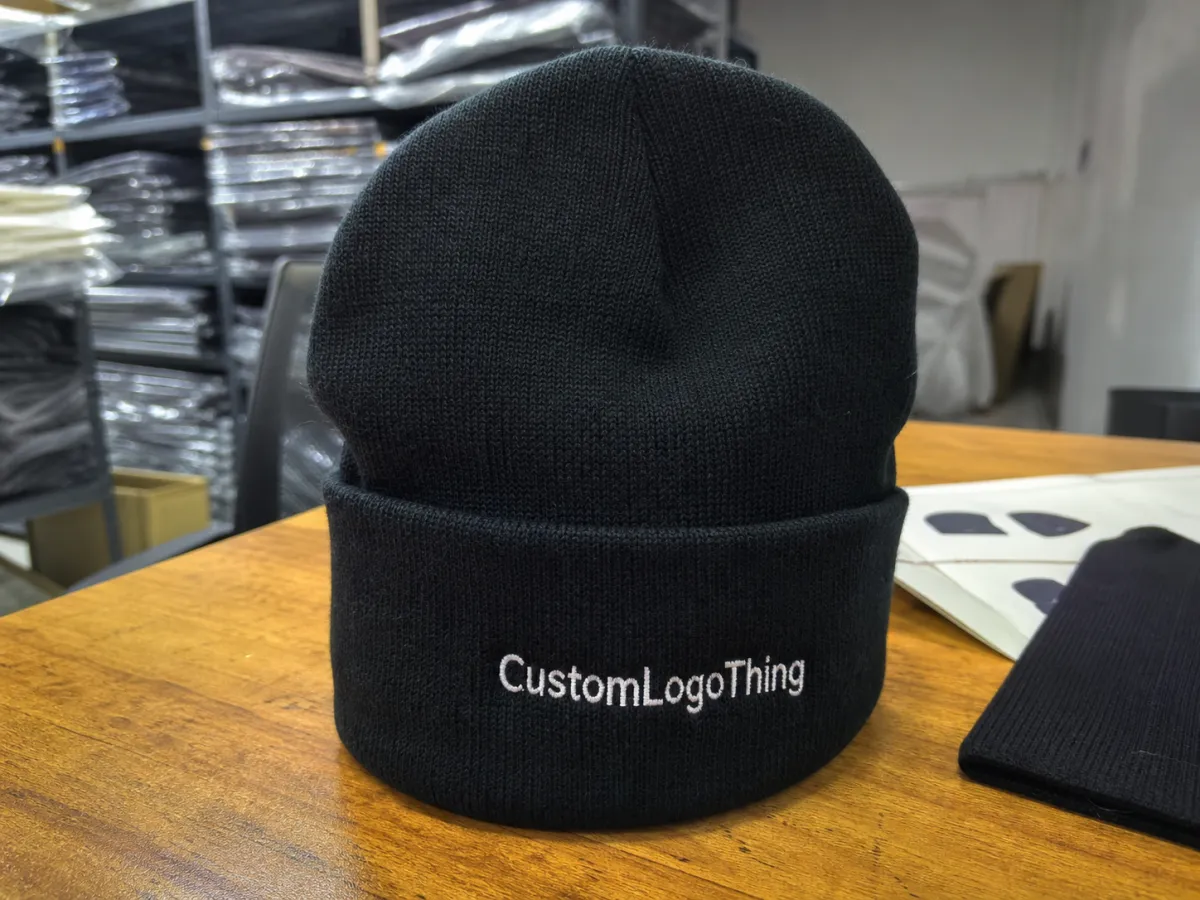
An acrylic winter hat is not just a cold-weather accessory for a bakery. It can be part uniform, part retail item, and sometimes part gift-with-purchase. That mix changes the purchasing logic. A staff beanie has to survive repeated wear, quick laundering, and long shifts in cool prep areas. A retail beanie has to look good folded on a shelf under bright lighting. The same product family can serve both, but the spec cannot be identical unless the buyer is willing to accept a compromise.
Acrylic remains popular because it balances warmth, color consistency, and decoration reliability. It also takes dye well, which matters when a bakery wants deep seasonal colors such as burgundy, forest, charcoal, cream, or evergreen without paying for premium fibers. The material is lightweight, relatively stable in production, and compatible with embroidery, woven patches, and woven labels. That said, the cheapest acrylic hat on paper is not always the lowest-cost option once setup, packaging, and freight are included.
The mistake most teams make is treating the hat as a single line item. In practice, the quote is a stack of smaller decisions. A tighter cuff changes material use. A woven label changes tooling. A retail fold changes labor. Even the carton count affects shipping efficiency. For a bakery chain buying staff uniforms, consistency matters most. For a local bakery selling winter merch, presentation can outweigh a few cents of savings. Same product, different buying logic.
One more reason the breakdown deserves attention: bakery programs often sit at the intersection of operations and merchandising. That is a strange place to buy from. Kitchen managers care about comfort, durability, and quick replenishment. Store teams care about how the hat looks next to bread, candles, or gift boxes. Finance cares about landed cost and reorder predictability. If those three priorities are not aligned before the quote, the final number usually creates internal debate.
Product details that matter for bakery staff, retail, and gifting
An acrylic winter hat usually means a knitted beanie made from 100% acrylic or an acrylic blend. Buyers choose it for warmth, soft hand feel, and predictable stretch recovery. In a bakery, those traits have practical value. Staff moving between chilled storage, delivery loading, and customer-facing space need something that stays comfortable without losing shape by the end of a shift.
There are three common use cases. First, staff uniforms for kitchens, delivery teams, and front-of-house crews. Second, retail add-ons bundled with bread boxes, candles, cookie tins, or seasonal gift sets. Third, branded merchandise for customers who already trust the bakery enough to buy a logo item. Each use case changes the spec.
Staff gear can prioritize comfort and repeat wear. Retail pieces need a cleaner finish and better fold presentation. Gift programs sit somewhere in between. A hat that feels fine for staff use can still look too plain for a shelf program, while a heavily decorated retail piece can be overbuilt for a uniform order.
Before comparing price, buyers should look at a few traits that control wearability and presentation:
- Hand feel - soft enough for daily wear, but not so loose that the knit looks tired after unpacking.
- Stretch recovery - the hat should return to shape after being pulled on and off repeatedly.
- Cuff style - single cuff, double cuff, or slouch fit changes decoration space and overall visual weight.
- Knit density - tighter knit usually reads more premium and supports cleaner embroidery.
- Decoration compatibility - some knits hold a woven patch better, while others work best with a low-profile woven label.
That last point deserves more attention than it usually gets. A hat that looks average in a sample can sell well if the decoration lands cleanly and the color palette matches the bakery brand. The reverse is also true. A cheap hat with weak finish work can make the entire program feel underplanned, even if the price looked attractive on the quote.
One practical caveat: acrylic is warm, but not every acrylic knit performs the same. Low-twist yarns can pill faster. Open knits can feel airy but may lose structure. In a food-adjacent retail setting, that matters because loose fibers, static, and sloppy fold lines make the product look older than it is. Warmth alone does not make a good hat.
Specifications that control fit, comfort, and brand presentation
The first spec to lock is size range. Many adult acrylic beanies are designed to fit a broad head circumference, but broad is not vague. Ask for a target circumference, a relaxed measurement, and a stretch target. If your bakery has a mix of staff across locations, the hat needs enough recovery that it still looks intentional at the end of a long shift.
Then move to knit and construction. Buyers should ask about knit gauge, cuff depth, yarn weight, and seam finish. A tighter knit usually gives a cleaner surface for decoration and stronger shape retention. A deeper cuff gives more room for branding, but it also adds material and can change unit cost. Yarn weight matters too: a lighter hat may be fine for indoor retail use, while a heavier beanie makes more sense for early-morning delivery teams or outdoor loading.
Decoration choice changes both appearance and pricing. For bakeries, the usual options are:
- Embroidery for simple logos and crisp branding.
- Woven patches for sharper detail and a more retail-ready look.
- Woven labels for lower-cost branding with a clean finish.
- Custom packaging inserts for resale programs that need a stronger shelf story.
A small logo in embroidery often feels more restrained and staff-friendly. A woven patch can carry better detail if the logo has thin lines, small text, or a more complex shape. Woven labels are useful when the bakery wants branding without turning the hat into a billboard. They can also protect margin when the order is large enough to spread setup costs across volume.
Packaging details can matter more than buyers expect. A hat packed flat with a retail fold, a barcode sticker, and a paper belly band looks different from a loose bulk pack in a carton. If the hats are for resale, ask for carton pack count, retail fold, and shelf-ready presentation. If paper inserts or hangtags are included, FSC-certified stock is worth considering, especially when the bakery already makes sustainability claims. For transit expectations, it is smarter to compare pack-out standards against organizations like ISTA than to guess how the goods will arrive.
Comfort details are the small things that decide whether employees actually wear the product. Seam feel at the crown, stretch memory after repeated use, and the way the cuff sits on the forehead all influence acceptance. A bakery manager may only see a logo. The wearer feels the seam every morning.
Unit cost, pricing, MOQ, and quote drivers for bakery programs
The acrylic winter Hats Unit Cost Breakdown for bakery sourcing should separate one-time charges from repeat-order costs. Otherwise, the first quote can look expensive while the reorder looks misleadingly cheap. A proper quote usually includes the blank hat, decoration, setup charges, sample or proof fees, packaging, freight, and any special labeling.
Blank hat cost is the base. From there, decoration adds two different kinds of cost: recurring cost per piece and one-time tooling fees or setup charges. An embroidered logo may carry a modest setup fee, while a woven patch or custom label can introduce tooling fees for artwork conversion, loom preparation, or die work. Those fees are not a red flag. They are just the cost of turning a generic hat into a branded product.
MOQ drives the math more than many buyers expect. At 300 to 500 units, the supplier has less room to absorb setup. At 3,000 or 5,000 units, the same setup gets diluted across more pieces, so the unit price drops faster. That is why the most useful quote is not a single number. It is a tiered picture.
| Order profile | Typical MOQ | Blank hat cost per piece | Decoration and setup | Estimated landed unit cost |
|---|---|---|---|---|
| Staff uniform program | 300-500 pcs | $1.10-$1.55 | $0.25-$0.60 per piece, plus $35-$90 setup | $1.70-$2.40 |
| Mixed staff and retail run | 1,000 pcs | $0.95-$1.35 | $0.20-$0.50 per piece, plus $50-$120 setup | $1.45-$2.05 |
| Retail-focused branded beanies | 3,000 pcs | $0.85-$1.15 | $0.18-$0.42 per piece, plus $75-$160 tooling fees | $1.25-$1.85 |
| Seasonal volume buy | 5,000 pcs | $0.78-$1.05 | $0.15-$0.35 per piece, plus $90-$220 setup | $1.10-$1.60 |
The table shows the pattern most buyers eventually see: MOQ changes unit cost faster than a small decoration upgrade does. A slightly larger order can reduce the per-piece cost enough to offset better branding. That is why bulk pricing should be viewed as a ladder, not a single number. If you only compare the headline quote, you may miss the order size where the landed cost becomes more attractive.
Freight deserves its own line in the budget. Air shipping can make a small run arrive quickly, but it can also wipe out the savings from a lower factory price. Sea freight lowers the transport bill but asks for more time and often a larger carton volume commitment. For bakery programs with a fixed launch date, the cheapest unit price is not the cheapest outcome if the hats miss the season.
Here is a useful buyer rule: compare the same decoration, the same pack-out, and the same freight assumption across suppliers. If those three items do not match, the quote is not truly comparable.
For a bakery, the landed cost is what matters, not just the factory price. A hat at $1.20 ex-factory can be worse value than a $1.35 hat if the second quote includes clearer proofing, tighter packing, and lower freight exposure. That is where the cost breakdown protects margin.
Production process and lead time from artwork to delivery
A useful production flow is predictable. It starts with a short brief, then artwork review, then sampling or digital proofing, then production, then inspection, packing, and freight booking. If a supplier cannot describe those steps in plain language, that is usually a warning sign.
Typical lead time depends on order size and decoration complexity. Simple embroidered beanies may move faster than patch-based retail hats, because patch approval adds another decision point. A common planning window is 12 to 15 business days from final proof approval for straightforward runs, then another 5 to 12 business days for shipping depending on destination and service level. During peak holiday demand, add buffer. Not because the factory is careless, but because transport, carton space, and proof approvals all slow down at the same time.
Most delays come from the same few causes:
- Artwork revisions after the first proof.
- Color approval delays when brand shades are sensitive.
- Decoration changes after sampling.
- Late decisions on packaging inserts or retail folds.
- Holiday congestion at freight handoff.
Rush production is possible in some cases, but it usually trades away flexibility. You may get fewer decoration options, less packaging customization, or a higher unit cost. If the hats are only for staff use, that trade-off may be acceptable. If they are for retail, speed without presentation quality can be expensive in a different way.
From a packaging buyer's point of view, the smartest move is to align delivery against store rollout dates, not just ship date. A carton that leaves early but lands late does not help a new opening or a seasonal display. Planning around inspection, customs where relevant, and delivery booking avoids a lot of last-minute scrambling.
One practical detail worth checking is moisture control in transit. Knit goods do not like damp cartons, and acrylic can pick up a stale smell if packed poorly in humid conditions. For a bakery retailer, that is a small problem with a big visual consequence. The product may technically be fine and still feel unsuitable for the shelf.
Quality checks and common mistakes before you approve a run
The cleanest way to avoid costly rework is to inspect the sample as if it were going on sale tomorrow. Check knit density, seam placement, cuff symmetry, logo alignment, and color consistency. If the hat will be worn by staff, test it on more than one head size. If it will be retailed, fold it the way it will appear in the store and judge it from that angle, not just flat on a table.
There are a few defects that show up often in low-cost knit programs. Loose threads around the crown. Logos set too high or too low on the cuff. Slightly off-center labels. Color variation between production lots. Those issues are not dramatic individually, but they add up when the buyer needs a program that looks consistent across locations.
Acrylic also has a few material-specific issues to watch. Static can be noticeable in dry weather. Pilling can show up faster on lower-grade yarns. An overly loose knit can look soft at first and then collapse after a few wears. None of those problems make acrylic a bad choice. They just mean the buyer should ask the right questions before approving the run.
Common mistakes tend to be boring, which is probably why they are repeated so often:
- Approving a sample without checking how the cuff sits when worn.
- Ignoring the difference between relaxed size and stretch size.
- Comparing quotes with different freight assumptions.
- Forgetting packaging when the hats are meant for retail shelves.
- Overlooking color tolerance when the bakery brand uses a strict palette.
The fastest way to lose value is to chase the lowest number before the spec is locked. A slightly cheaper hat that misses the brand shade, ships in poor packaging, or arrives late is not a better purchase. It is just a lower invoice with a higher cleanup cost.
For bakery buyers handling multiple locations, consistency is its own kind of savings. If the hats match from store to store, reorder to reorder, the program feels managed rather than improvised. That is especially useful for seasonal campaigns, where a product has to look right the first time and keep looking right in the last week of the season.
Next steps to request a quote, compare samples, and lock timing
If you want a clean acrylic winter hats Unit Cost Breakdown for bakery sourcing, send a brief that covers the basics: target quantity, logo files, preferred colors, decoration method, delivery date, and shipping destination. If you know whether the hats are for staff, retail, or gifting, say that up front. It changes the recommended spec and the quote structure.
Before approving production, compare at least two proof or sample options. One can test decoration clarity. The other can test hand feel and cuff depth. For retail hats, that comparison is worth more than shaving a few cents off the first quote, because shelf appeal and wearability influence sell-through. If you want the lowest landed cost, ask for quote tiers at 500, 1,000, 3,000, and 5,000 units so you can see where MOQ changes the math.
- Send the logo in vector format if possible.
- State whether you want embroidery, a woven patch, or a woven label.
- Confirm carton count and retail fold if resale is part of the plan.
- Ask for a separate line on sample fees, setup charges, and freight.
- Request an updated schedule if the delivery date is tied to a store launch or holiday event.
If you are using FSC-certified inserts or packaging, confirm that before proof approval so the paper spec does not change late in the process. Small changes at the end of a job are where schedules slip.
For bakery buyers who need a quote they can actually use, the next move is simple: ask for the full cost breakdown with the same spec across every supplier, then compare landed cost rather than the headline factory price. That is where the real difference shows up.
What is included in an acrylic winter hats unit cost breakdown for bakery sourcing?
It should show blank hat cost, decoration setup, sample or proof fees, packaging, freight, and any add-on labeling. A useful breakdown also separates one-time setup costs from repeat-order costs so buyers can forecast accurately.
How does MOQ affect acrylic winter hat pricing for bakery buyers?
Higher quantities usually reduce the per-unit price because setup and handling are spread across more hats. The best quote will show price breaks by tier so you can see when ordering a little more creates a better landed cost.
Which decoration method keeps unit cost lowest for bakery hat orders?
Simple embroidery or a small woven label is usually cheaper than complex multi-position decoration or oversized patches. The lowest-cost option still has to match your use case, because retail hats and staff hats may need different finishes.
How long does production usually take after artwork approval?
Lead time depends on sample approval speed, order size, decoration complexity, and current factory load. Once artwork is approved, buyers should still plan for production, inspection, packing, and shipping time before delivery.
Are acrylic winter hats suitable for bakery staff uniforms and resale?
Yes, acrylic is commonly used for warmth, color stability, and reliable decoration on both uniform and retail programs. The key is choosing the right spec, because staff comfort and shelf presentation often need different priorities.

