A bucket hats Unit Cost Breakdown usually starts with the wrong assumption: that the logo is the main expense. In practice, fabric weight, brim structure, seam count, lining, and finish quality often move the price more than decoration does. Two hats can look nearly identical in a mockup and still quote very differently once one uses heavier cloth, tighter stitch density, or a more complicated internal build.
That matters because buyers rarely need the same hat for every program. A promo giveaway, a retail capsule, a resort uniform, and a sports activation all call for different durability, packing, and presentation standards. A clean quote should show the base hat, the decoration, the setup work, and the pack-out separately so you can compare suppliers on equal terms instead of chasing the lowest line item and discovering the missing costs later.
A low unit price means very little if the hats arrive with loose stitching, a misread logo color, or packing that your warehouse has to fix by hand.
Why Bucket Hat Pricing Changes Faster Than Most Buyers Expect
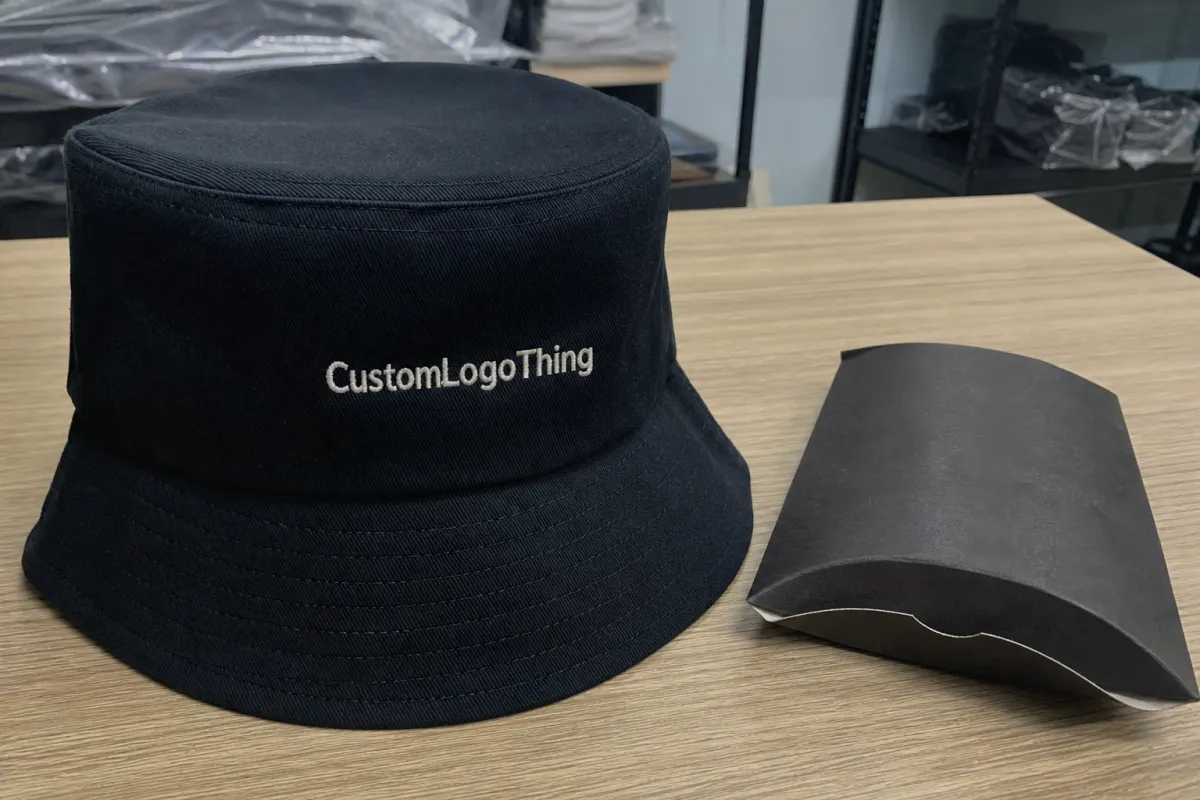
The first surprise for many buyers is that decoration rarely carries the whole order. The blank hat often absorbs a bigger share of the budget. A simple embroidered mark on a light cotton twill style may stay affordable, but move to heavier canvas, a structured crown, or a stitched brim with extra rows and the cost rises before artwork even enters the factory.
Construction is the reason. Some bucket hats are soft and packable, which keeps cutting and sewing straightforward. Others need firmer brim support, lined crowns, reinforced seams, or a sweatband that holds shape after repeated wear. Each of those features adds labor, machine time, and inspection time. Comparing two quotes without checking the build is a fast way to compare different products as if they were the same.
End use changes the spec too. Promotional programs usually accept simpler construction and higher flexibility on finish. Retail buyers often need sharper topstitching, cleaner interior work, and tighter shade control. Sports programs may want sweat resistance and more durable seams. Resort merch usually sits between those poles: soft hand feel, neat presentation, and a result that looks premium in hand even if it is not overly technical.
That is why the useful question is not “What is the cheapest bucket hat?” It is “What exactly did the supplier price?” Once that answer is clear, the quote becomes readable instead of misleading.
Product Details That Set the Baseline
Before any supplier can give a trustworthy bucket Hats Unit Cost Breakdown, the core spec has to be fixed. Crown height, brim width, seam count, sweatband style, eyelets, and whether the hat is soft, structured, or packable all change how the product is cut and sewn. Even a small change, such as widening the brim, can alter material usage and sewing time enough to affect the unit price.
Material choice is equally important. Cotton twill is the common baseline because it has a familiar hand feel and handles embroidery well. Washed cotton gives a softer, more relaxed look. Polyester and nylon work better for lighter weight, quicker drying, and more technical programs. Ripstop adds tear resistance and a more utilitarian texture. Fleece and sherpa belong in a different cost band because the fabric behaves differently in cutting and finishing.
Fit changes the quote as well. Adult sizing is the simplest starting point, but youth sizing, adjustable bands, and custom internal bands can raise both cost and minimum order quantity. If the style needs a tighter fit range or less common head circumference, the factory may need more sampling and more careful size control.
Decoration zones matter too. A front panel logo is usually the easiest path. Side placements, all-over prints, woven patches, and mixed decoration methods all create extra setup and handling. If you are comparing quotes, ask whether the supplier priced the blank, the decoration, or the fully finished unit.
- Cotton twill is usually the most stable baseline for embroidery.
- Polyester and nylon suit lighter, more technical looks.
- Fleece and sherpa require more careful cutting and sit at higher cost.
- Patch placements can add labor even when the artwork itself is simple.
Specs Buyers Should Lock Before Requesting Samples
The quickest way to keep a quote clean is to lock the spec before sample rounds begin. Fabric weight, brim width, crown height, stitch density, and any lining or reinforcement requirements should be agreed up front. If those points stay vague, the first sample can look acceptable and the final quote can still drift once the factory builds to a more exact standard.
Optional features should also be called out early because they affect both labor and material use. Chin cords, contrast underbrims, packable construction, upgraded sweatbands, custom closures, toggles, and extra reinforcement each push the price in a different direction. Some of those details are minor on paper but time-consuming on the sewing floor.
Artwork choice should match the method. Embroidery is often the cleanest option for simple logos with limited colors. Woven patches carry finer detail and read more retail-ready. Screen print can work for larger, flatter graphics, while heat transfer is useful for short runs or highly detailed art on smoother fabrics. If a logo has tiny text, thin lines, or multiple color transitions, the decoration method should be chosen for legibility as much as price.
Color control deserves the same discipline. Ask for PMS targets where relevant, and agree on a practical tolerance before sampling starts. A good supplier will also tell you whether the fabric is dyed to order or drawn from stock. That difference affects both lead time and repeatability.
For transit and packaging expectations, it helps to think beyond the hat itself. If the order needs warehousing or retail distribution, carton strength and pack configuration matter. Standards from ISTA are a useful reference point when you want shipments to survive real handling, not just a quick trip from factory to dock.
| Cost Element | What It Covers | Typical Impact on Unit Cost |
|---|---|---|
| Base hat | Fabric, cutting, sewing, brim construction, sweatband | Usually the largest line in the quote |
| Decoration | Embroidery, print, woven patch, heat transfer | Moderate, but highly artwork-dependent |
| Setup charges | Digitizing, screens, patch preparation, proofing | Higher at low MOQ, lower at higher volume |
| Tooling fees | Custom molds or hardware for specialty trims or labels | Can be one-time or amortized across volume |
| Pack-out | Polybags, inserts, stickers, carton marks, retail packing | Small individually, meaningful across bulk orders |
| Freight | Air or ocean shipping, local delivery, warehouse transfer | Can change landed cost more than decoration |
Bucket Hats Unit Cost Breakdown: MOQ, Decoration, and Pack-Out
This is where the numbers become usable. A proper bucket hats Unit Cost Breakdown should separate the base hat cost, decoration, setup or digitizing, labeling, packaging, and freight. If all of those pieces are bundled into one vague number, the quote is hard to compare and even harder to defend internally. Buyers need to know the cost per piece before shipping, then the landed cost after packing and transport.
MOQ has a direct effect on bulk pricing. The lower the quantity, the more setup charges are spread across each hat. That is why a simple embroidered hat can still look expensive at 100 pieces and much more reasonable at 1,000 pieces. Some suppliers will quote basic styles at 100 to 200 units, while more custom builds often land in the 300 to 500 range or higher. The more custom the spec, the less forgiving the MOQ tends to be.
For reference only, a plain cotton twill bucket hat in a moderate bulk order might sit around $1.80 to $3.50 per unit before decoration, depending on fabric weight, sewing complexity, and quantity. Add a simple embroidered logo and the unit cost may move by another $0.35 to $1.25. Woven patches, more detailed print methods, or specialty trims can push that increment higher. If the order needs retail-ready packing, individual polybags, or custom inserts, those costs should be shown separately so you can see what is driving the final number.
Hidden line items are usually what surprise first-time buyers. Digitizing for embroidery, patch application labor, carton labeling, size stickers, and special folding instructions can all appear in the fine print. A clear quote should say whether sample charges are credited later, whether setup charges are one-time, and whether shipping is included or billed separately. If a supplier will not break the quote apart, it is hard to know whether the low number is real.
Comparing options works best when you compare the same basis. A quote that includes packing, pre-production proofing, and freight can be better value than a lower price that excludes all three. That is the difference between a quote and a finished buying decision.
Here is a practical way to compare common decoration paths:
| Decoration Method | Best For | Typical Cost Behavior | Notes |
|---|---|---|---|
| Embroidery | Simple logos, clean brand marks | Moderate setup, good value at volume | Works best with bold shapes and limited small text |
| Woven patch | Fine detail, retail presentation | Higher setup, stronger visual finish | May include tooling fees if the patch style is custom |
| Screen print | Larger graphics, flatter artwork | Efficient on higher quantities | Depends heavily on fabric surface and ink count |
| Heat transfer | Short runs, detailed imagery | Flexible, but not always the lowest cost at scale | Adhesion and wash performance need checking |
Production Steps and Lead Time From Art Approval to Delivery
The production path is usually straightforward: quote, artwork review, sample or proof approval, production, finishing, packing, and shipment. What slows an order is not usually the sewing itself; it is the time lost waiting for a decision on art, fit, shade, or pack-out. Once a buyer understands the process, it is easier to protect the schedule and keep the bucket Hats Unit Cost Breakdown from drifting into a late-order rush premium.
Lead time depends on several moving parts. Artwork turnaround can be same-day or take a week if the logo needs cleanup. Fabric availability matters too; stocked material speeds things up, while custom-dyed fabric extends the calendar. Decoration complexity matters as well. A single embroidery location is simpler than a hat with a patch, a printed underbrim, and custom label work. Large orders also need more time for cutting, stitching, and inspection.
For many bulk orders, a realistic window is often 12 to 20 business days after proof approval, with shipping added on top. Air freight shortens transit time but raises landed cost. Ocean freight lowers shipping cost per piece, yet it needs more planning. If the order has a hard in-hand date, the buyer should say that immediately so the supplier can quote what is actually possible.
Rush service can be possible, but it is not automatic. It is easier when the hat uses stock fabric, one decoration method, and simple packaging. It gets risky when the order needs custom fabric, stitched patches, special packing, or several approval rounds. A delayed sign-off on the sample is one of the most common reasons a schedule slips. Approvals should happen in this order: artwork first, then sample fit or proof, then final color call, then production release.
For packaging materials, FSC certification is worth checking if you want responsibly sourced paper cartons, inserts, or hangtags. The details matter less for the hat itself than for the printed support materials around it. A simple reference point is the FSC site at fsc.org.
What Keeps Reorders Consistent Across Batches
Reorders go smoother when the first order leaves behind a good paper trail. A written spec sheet, an approved reference sample, and a clean art file prevent the supplier from reinterpreting the design every time a new batch is needed. That discipline matters more than many buyers expect, especially when the original quote was built to a tight unit cost.
The practical controls are simple but important. Color tolerance should be documented. Panel alignment should be checked against the approved sample. Seam strength should be consistent from one run to the next. Decoration placement should not drift by a few millimeters every time the order repeats. Those small changes create the kind of inconsistency that customers notice immediately, even if the supplier considers the batch acceptable.
Good QC should include stitching inspection, logo alignment, packing counts, and carton labeling before goods are released. If the order is going into retail, team, or event channels, those checks prevent avoidable returns and rework. Reorder consistency is not just about appearance; it protects the brand presentation and avoids extra handling costs.
Practical rule: keep one approved master sample, one spec sheet, and one decoration file. If any of the three changes, treat it as a new build, not a repeat.
For repeat programs, that is how a bucket Hats Unit Cost Breakdown stays stable instead of slowly expanding through unnoticed changes. A tiny adjustment in fabric weight or pack-out can add cost without improving the product in any meaningful way.
What Experienced Buyers Compare Before They Choose a Supplier
Experienced buyers do not just ask for the lowest quote. They ask what is included. Quote transparency is usually the first sign of a supplier that knows how to manage bulk orders cleanly. A strong quote separates the base hat, decoration, setup, packing, and freight instead of hiding everything behind one unit number that looks attractive but is hard to audit.
Sample accuracy is the next check. Detailed mockups and pre-production confirmations reduce expensive corrections later, especially when the bucket hat has a detailed logo or a retail-facing finish. If the supplier is casual about proofing, the order can still succeed, but the risk of rework rises. Buyers should also look at how the supplier handles carton labels, shipping marks, and special packing instructions, especially when goods are heading to multiple addresses or a warehouse with receiving rules.
Packaging and transport deserve real attention because a low factory quote can be expensive once freight and handling are added. A supplier who can explain carton dimensions, pack counts, and shipping terms is usually giving you a truer landed cost. That is often the difference between a quote that works on paper and one that actually works in procurement.
One useful way to compare vendors is to ask for three versions of the same order: blank, decorated, and fully packed. That reveals where the money sits and makes the bucket hats unit cost breakdown easier to compare side by side. The cheap quote may win on base price and lose everywhere else.
- Check included items: sample, setup, packing, freight, taxes, and rework policy.
- Check proofing: mockup quality, color control, and approval steps.
- Check logistics: carton marks, warehouse labeling, and delivery terms.
- Check repeatability: how the supplier stores specs for reorders.
Next Steps to Get a Cleaner Quote on Bucket Hats
The cleanest way to get an accurate quote is to send the basics in one message: quantity, target ship date, material preference, size range, decoration method, and packaging needs. If you already have a reference hat or a clear product photo, include that too. It helps the supplier align the build with the actual expectation instead of guessing from a loose description.
Ask for at least two quote scenarios. One should show the blank hat. Another should show the decorated, fully packed version. If you need retail presentation, ask for that as a separate line as well. This makes the bucket hats unit cost breakdown much easier to evaluate because you can see what each layer adds to the total. It also helps you decide where to spend and where to stay simple.
Approve a digital proof or sample before production, especially when the logo has multiple colors, tight details, or a premium retail goal. That extra checkpoint saves time later and protects the brand finish. If the hat is for a staff program or a promotional drop, consistency and delivery timing usually matter more than squeezing the last cent out of the unit price.
The best buying decisions are usually the most disciplined ones. Lock the spec, check the sample, compare the same cost elements across suppliers, and keep the landing terms visible. Do that, and the bucket hats unit cost breakdown becomes a practical planning tool instead of a guessing game.
FAQ
What is included in a bucket hat unit cost breakdown?
A proper breakdown should show the base hat, decoration, setup or digitizing, labels, packing, and freight terms if they apply. It should also make clear whether sample costs, cartons, and special finishing are included or billed separately. That is the only way to compare bucket hats unit cost breakdown figures on equal terms.
Why does bucket hat pricing drop when the MOQ goes up?
Setup charges are spread across more pieces, so the cost per piece improves as order quantity increases. Higher volumes can also unlock better material purchasing and more efficient decoration runs, which is why bulk pricing often improves sharply once the MOQ moves up.
Which decoration method is usually best value for custom bucket hats?
Embroidery is often strong for simple logos, while woven patches can handle fine detail and printed methods can work well for larger graphics. The best value depends on artwork complexity, target quantity, and the presentation the buyer wants. In many cases, the strongest option is not the cheapest method, but the one that avoids extra setup changes later.
How long does a custom bucket hat order usually take?
Timing depends on sample approval, material availability, decoration complexity, and the production queue. Many orders land in a 12 to 20 business day production window after proof approval, but buyers should add shipping time and expect more time if the order needs special packaging or custom materials.
What details should I send to get an accurate bucket hats unit cost breakdown?
Send the quantity, material preference, artwork, decoration method, size range, target delivery date, and packaging request. If possible, include a reference sample or a clear product photo so the quote matches the intended build. The better the input, the more reliable the bucket hats unit cost breakdown will be, especially for bulk order quotes.

