Five Panel Caps Unit Cost Breakdown for Bulk Orders
The five panel caps Unit Cost Breakdown can look deceptively simple: cap, logo, freight, done. That shorthand misses the real drivers. A 100-piece order often carries more cost per cap than a 500-piece run because digitizing, sample preparation, packaging, and the first round of quality checks sit on top of a smaller quantity. Fixed charges do not shrink just because the order does.
Five-panel construction has a built-in cost advantage in some programs. The front panel gives decoration a clean surface, the structure is easier to control than a more segmented cap, and the sewing path is generally efficient. That does not mean every five-panel cap is cheap. Thin fabric, weak closures, sloppy stitching, or a logo that does not hold after a few wears will erase any savings fast.
From a buying perspective, the job is comparison discipline. Match fabric weight, decoration method, closure, inside finish, and packing spec before judging one quote against another. Otherwise one supplier is quoting a retail-ready item while another is pricing a stripped-down giveaway piece, and the numbers only appear to compete.
Why five-panel caps can look affordable until setup changes the math
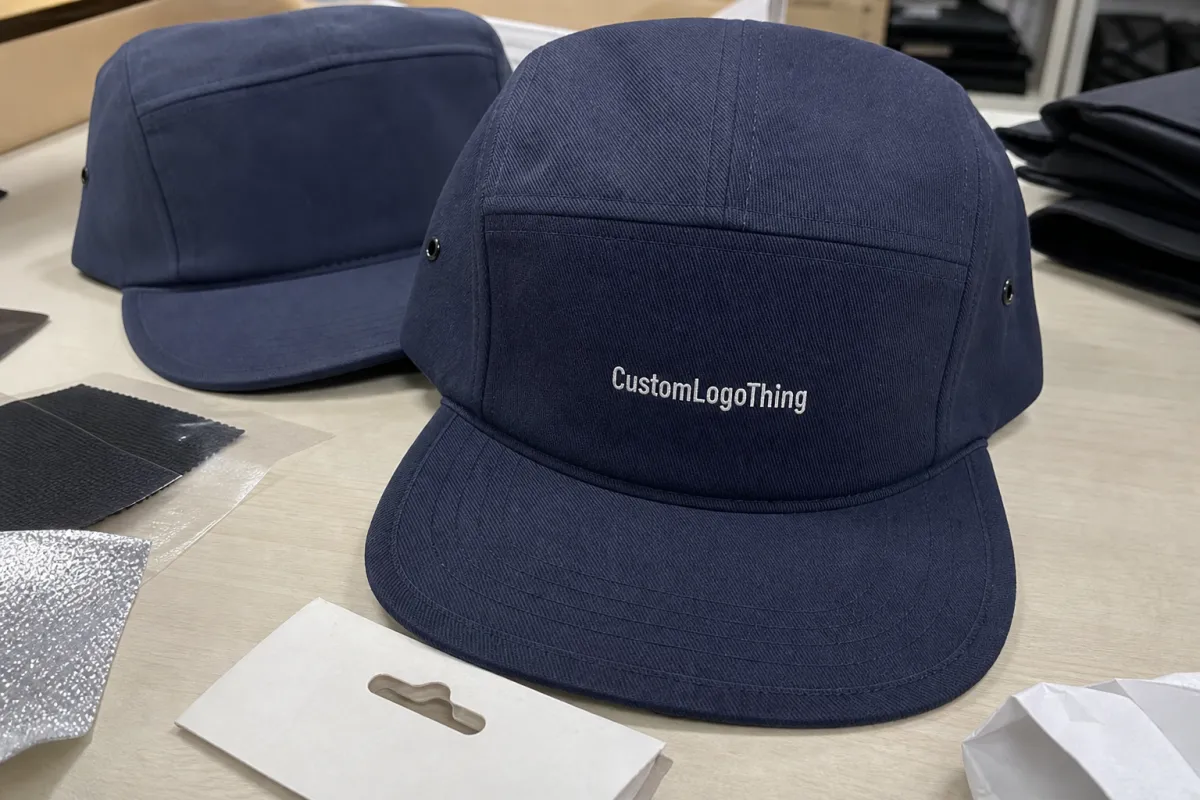
Five-panel caps are popular because the construction is efficient. A broad front panel can take embroidery or print cleanly, and the body usually needs fewer operations than a more complex cap. That efficiency keeps the base price attractive, especially in bulk, but only when the order is large enough to absorb the fixed costs behind the scenes.
That is where many quotes become misleading. Artwork digitizing, screen prep, patch tooling, sample development, and approval rounds do not scale down just because the order is small. On a 100-piece run, a $40 digitizing charge and a $60 sample can add more than a dollar per cap before sewing starts. On a 500-piece run, the same expense may fall to a few cents per piece.
The phrase Five Panel Caps unit cost breakdown matters because it forces the quote into separate parts. Base blank, decoration setup, finishing labor, packaging, and freight should be visible on the page. If those buckets are blended together, it becomes hard to tell whether the lower price is real or only missing a cost that will show up later.
A quote is only useful if it tells you what is included, what is one-time, and what can still change before shipment.
Construction simplicity also has a practical benefit beyond price. Five-panel caps tend to be more repeatable because the front panel gives decorators a large, stable area to work with. That reduces alignment problems and can lower the risk of rework on reorder programs. Predictable production usually means less waste, and less waste is often the hidden margin in headwear.
Product details buyers should confirm before requesting samples
Before a sample request goes out, the spec sheet should answer a small set of questions clearly: crown height, front panel structure, brim shape, closure type, and sweatband construction. Those details decide how the cap fits, how it wears, how much labor it needs, and how easy it will be to reorder the same item later without drift.
Cotton twill is still the familiar baseline. It is breathable, easy to decorate, and usually a dependable middle ground for club merch, event programs, and branded retail basics. Washed cotton softens the hand feel and fits streetwear or lifestyle drops, but shade variation is usually wider. Polyester offers better color consistency and moisture handling, while nylon gives a more technical look and often sits higher in price because of finish and handling.
| Fabric option | Typical unit cost effect | Best fit | Watch-outs |
|---|---|---|---|
| Cotton twill | Baseline | Retail basics, promotions, club merch | Can wrinkle and fade faster than synthetics |
| Washed cotton | + $0.15 to $0.35 | Streetwear, lifestyle drops | Color variation can be wider from lot to lot |
| Polyester | - $0.05 to + $0.15 | Sports, outdoor events, repeat programs | Decoration heat must be controlled carefully |
| Nylon | + $0.20 to $0.50 | Lightweight technical looks | Slicker hand feel and tighter process control needed |
Fit and use case matter just as much as fabric. A retail headwear line usually needs stronger crown shape, cleaner stitching, and tighter color consistency. Team promotions can often simplify the closure and inside finish to stay within budget. Event giveaways care more about logo visibility and delivery timing than premium detailing. That is not cutting corners; it is matching the product to the job.
It helps to separate optional details from cost-driving details. Optional items include contrast taping, custom inside labels, and specialty hangtags. Cost-driving items include structured fronts, reinforced visor inserts, and branded closure hardware. If the goal is to simplify the cap without making it look cheap, start with the inside. Buyers rarely see the inside, but factories still spend time building it.
Specifications that change quality, comfort, and reorder consistency
The details that separate an acceptable cap from a dependable one are usually hidden in the spec. Stitch count, seam reinforcement, visor insert, eyelet placement, panel lining, and front-panel stiffness all affect how the cap holds its shape after packing, shipping, and wear. Buyers often see only the logo; the factory sees a sequence of operations, each one adding time and risk.
Decoration is a cost lever too. Embroidery usually gives the cleanest branded look, but stitch count matters. A small one-color logo is faster and cheaper than a dense multi-color design or a layout that translates gradients into thread. Woven patches can look premium and handle more detail, but they bring tooling fees and application labor. Prints are efficient for flat artwork, although placement and ink coverage still move the price per piece.
Color control is where reorder programs either stay disciplined or drift. Pantone matching is only as good as the fabric and dye process behind it. Cotton twill and washed cotton can tolerate some variation; synthetics may give tighter consistency, but they require clearer approval around sheen and shade. If repeat orders are likely, ask how the supplier tracks cloth, trim, and thread from lot to lot. A concrete answer is better than a vague promise.
Packaging is another hidden variable. Individual polybags add material and labor. Size stickers, barcode labels, and retail inserts matter when caps go straight to stores or distribution centers. Stronger shipper cartons may be necessary for longer transit or multiple handoffs. The ISTA guidance is useful here because crushed cartons can create rework that never appears in the factory quote.
For programs tied to sustainability claims, paper inserts or hangtags may need FSC-certified stock. That does not change the cap itself, but it can affect the packaging line and approval timeline. If recycled messaging is part of the brief, the certification framework at fsc.org is worth checking before artwork is locked.
One more point matters on repeat orders: tolerance. If the crown height, panel shape, or logo placement is allowed to drift too far on approval samples, the first production run may pass and the second may not match visually. Clear tolerances reduce disputes later. They also make the unit cost more honest because the supplier is pricing a tighter standard, not a looser one with hidden variability.
Five panel caps unit cost breakdown: what changes the quote
The cleanest way to read a quote is to split it into six buckets: base blank, fabric upgrades, decoration method, digitizing or artwork setup, sampling, and finishing labor. If a supplier cannot separate those buckets, the quote is already less useful than it should be.
Base blank price changes with fabric type and whether the crown is structured. Decoration method changes the next layer: single-location embroidery is usually easier than multiple patches or mixed print-plus-embroidery work. Then come setup charges, which are often flat even on low-volume runs. A one-time logo digitizing fee may run $15 to $45, while patch tooling or custom label dies can be higher depending on complexity.
MOQ tiers matter because fixed costs get diluted. The same cap can look expensive at 100 pieces and much more reasonable at 500 pieces simply because the setup does not change much. Bulk pricing tends to improve in steps, not smoothly. A factory may quote one cost per piece at 100, a better cost at 300, and a stronger break at 500 or 1,000 units. That is normal, and it is why buyers should ask for more than one breakpoint.
| Order size | Typical cost per piece | Setup share | What usually changes |
|---|---|---|---|
| 100 units | $4.20 to $7.80 | High | Sampling and digitizing feel expensive |
| 300 units | $2.80 to $5.10 | Moderate | Better balance of labor and setup |
| 500 units | $2.10 to $4.20 | Lower | More efficient use of fixed charges |
| 1,000 units | $1.65 to $3.30 | Lowest | Material buying power improves |
Freight and packaging should stay separate from the factory quote if you want a true landed-cost comparison. A cap that looks $0.30 cheaper can become more expensive once cartons, individual bags, and air freight are added. For buyers comparing vendors across regions, that gap can be larger than the decoration cost itself.
Common surprises are usually self-inflicted. Extra embroidery colors add thread changes. A side logo adds hooping time. A woven patch on the front and a print on the back means two production steps instead of one. Custom labels may seem small, but they add setup and a quality check. The best way to protect the budget is to let the first decoration location carry most of the visual work.
A useful rule for comparing quotes: if one supplier includes structure, inner labeling, and packaging while another excludes all three, the cheaper number is not the lower-cost cap. It is the thinner quotation. That distinction matters more than many buyers admit, especially on first orders where the actual landed price still feels abstract.
Production process and lead time from approval to shipment
Most orders follow the same sequence: quote confirmation, artwork proof, sample or pre-production approval, bulk production, quality inspection, packing, and dispatch. The sequence matters because delays at the front end usually cost more than delays near the end. If artwork is not locked, the line stops. If the sample is not approved, bulk cannot begin.
Lead time is driven by four things: material sourcing, decoration queue, seasonal workload, and revision cycles. Standard runs often land around 12 to 15 business days after proof approval, but that assumes the fabric is in stock and the artwork is clean. If custom dye work or special trim is involved, the schedule can stretch to 18 to 25 business days. Rush orders are possible, yet they often add overtime, priority handling, and more expensive freight.
Buyers can shorten turnaround in practical ways. Send vector art early. Finalize quantity before sampling. Keep one decision-maker on the spec. Approve the closure type and packaging together instead of in separate rounds. Those steps sound basic, but many delays come from internal handoffs rather than factory capacity.
Build backward from the ship date, not from the quote date, if the launch date is fixed. Leave room for one correction round, one sample cycle, and one transit buffer. A cap order can move quickly, but only when the approval path is disciplined. The factory cannot compress uncertainty forever.
Packaging and shipping also affect reliability. If cartons need to survive multiple handoffs, ask whether the supplier can describe carton strength, packing density, and pallet pattern. That is not the same as certified lab testing, but it is better than guessing. In headwear programs, a crushed box can distort shape enough to trigger rework or customer complaints.
What a reliable cap supplier should prove before you place the order
A reliable supplier should prove three things before money changes hands: the sample matches the spec, the QC process is documented, and the same fit can be repeated on reorder. If a supplier cannot show those basics, the quotation may still be useful, but the buying risk is higher than it should be.
Sample accuracy tells you more than a polished sales email ever will. Check crown height, visor curve, stitching density, logo placement, closure function, and inside finish. Ask whether the approved sample is the exact reference for bulk or just a visual guide. That difference matters. A good factory will answer directly.
Communication quality is not a soft benefit. It changes cost. Fast proofs reduce revision cycles. Clear answers on MOQ avoid false planning. Straightforward shipping terms reduce the chance of surprise charges. A supplier who explains why a lower-cost closure or a simpler inner label makes sense is usually helping the buyer save real money, not just trimming the quote to win the order.
Value also shows up in consistency. The real cost of poor supply is not just a remake. It is the delay caused by re-approval, the customer service load, and the time spent explaining why the second shipment does not match the first. For program accounts, that is often more expensive than a slightly higher unit cost from the start.
Ask for proof, not promises. Photos of prior production are useful, but they should be tied to the same construction, not a different style. A strong supplier can show how they check measurements, color, decoration placement, and carton counts before shipment. That is what reduces the chance of an expensive surprise later.
One subtle sign of experience is restraint. A capable supplier will sometimes recommend fewer custom details, not more. That is usually a good sign. It suggests they are protecting the structure, lead time, and repeatability of the order rather than padding the spec with extras that make the cap harder to control.
Common ordering mistakes that push unit cost higher than needed
The most expensive mistake is vague artwork. A logo sent as a low-resolution JPG may look fine on screen, then need cleanup, tracing, and digitizing before it can be sewn or printed. That extra work becomes setup charges. If the order includes more than one decoration location, those costs multiply quickly.
Too many SKUs are another trap. A buyer who splits 500 caps into five colorways can lose the pricing advantage of volume and end up paying more per piece than expected. Unless the market clearly needs multiple colors, a simpler run is usually better for the budget and easier for the factory to schedule.
Last-minute color changes are expensive because they interrupt material planning. If the bulk cloth has already been reserved or dyed, changing a shade can trigger waste, rework, or a longer lead time. The same goes for closure changes and packaging revisions. A small request can push the order from standard to rush handling before the buyer notices the impact.
Comparison errors also cause problems. A lower price may hide lighter fabric, a weaker closure, or a less durable decoration method. If one supplier quotes 100 percent cotton twill with an embroidered logo and carton labels, and another quotes a lighter blend with no labels or bags, those are not competing offers. They are different products.
The practical rule is simple: simplify the spec first, then add only the details that strengthen brand presentation or retail value. That is usually the fastest way to protect bulk pricing without making the cap feel cheap.
There is also a timing mistake that shows up often enough to matter. Buyers wait to request shipping estimates until production is nearly finished, then discover the freight option changes the total economics completely. If the order is time-sensitive, freight should be discussed during quoting, not after approval. Otherwise the unit cost on paper and the unit cost delivered to the warehouse will tell different stories.
What to send for a fast quote and how to compare next steps
To get a useful quote, send the essentials in one pack: quantity, target budget, fabric preference, closure type, decoration method, packaging needs, and delivery deadline. Add vector artwork, logo placement notes, and any compliance or labeling requirements. The cleaner the brief, the faster the pricing and the fewer the revisions.
Ask for pricing at multiple breakpoints. A 100-piece quote can show setup sensitivity, while 300, 500, and 1,000 units reveal where scale starts to pay off. That comparison helps the buyer decide whether to keep the run tight or expand the order to lower average unit cost. If inventory risk is real, the lowest per-piece price is not always the best commercial decision.
- Compare unit cost: make sure fabric, decoration, and finishing are matched.
- Check setup fees: digitizing, tooling fees, and sample charges should be visible.
- Review lead time: standard timing is usually cheaper than rush timing.
- Confirm shipping terms: factory price is not the same as landed cost.
- Ask about reprint policy: quality risk is part of the economics.
If the supplier responds with a clean mockup, a clear spec sheet, and a line-by-line Five Panel Caps unit cost breakdown, the buyer can move with confidence. That is the point: not chasing the lowest sticker price, but buying a cap that fits the use case, holds its shape, and reorders without drama. For bulk programs, that is the most reliable way to keep the economics stable from the first sample to the final shipment.
How do I estimate five-panel cap unit cost for a small order?
Add the base cap price, decoration setup, sample cost, packaging, and freight before judging the quote. Smaller runs carry a higher share of fixed charges, so a 100-piece order almost always looks less efficient than 500 units. Ask the supplier to separate unit cost from one-time setup charges so the math is visible.
What MOQ usually gives the best pricing on custom five-panel caps?
Pricing usually improves in tiers, so ask for breakpoints at 100, 300, 500, and 1,000 units. The best MOQ is the one where the lower cost per piece still fits your sell-through plan. A larger order can reduce bulk pricing, but only if the inventory will move.
Which decoration method lowers five-panel cap pricing the most?
Simple single-location embroidery or a one-color print is often cheaper than patches or multi-location artwork. Complex 3D embroidery, extra thread colors, and side or back placements usually raise labor and setup charges. If budget is tight, keep the logo placement clean and let the front panel do most of the work.
How does lead time affect the five-panel caps quote?
Rush orders can add overtime, priority scheduling, and more expensive shipping. Standard lead times usually keep the quote more stable and easier to forecast. If the deadline is fixed, build in proof approval time so the factory does not have to accelerate the run.
What details do you need for an accurate five-panel cap quote?
Send quantity, fabric choice, closure, decoration method, packaging needs, and delivery deadline. Include vector artwork and any branding or compliance requirements so the factory can quote cleanly. The better the brief, the easier it is to compare the five panel caps Unit Cost Breakdown across suppliers without guessing at hidden costs.
For repeat bulk orders, the smartest move is to lock the spec, compare the setup charges, and confirm the landed cost before production starts. That is how the five panel caps unit cost breakdown stays predictable instead of drifting after approval.

