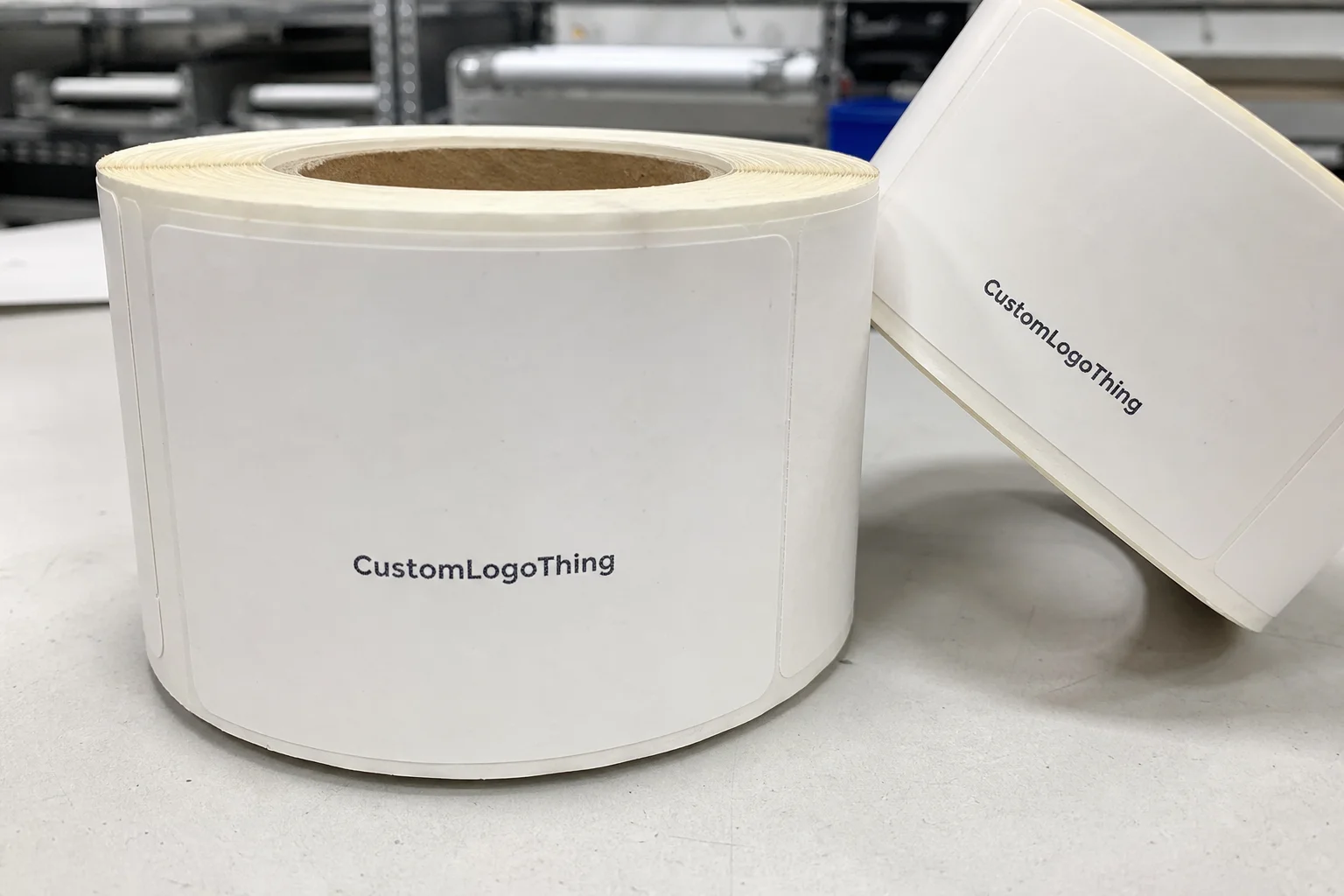
Address labels pre printed can remove a surprising amount of friction from a packing line. If you have ever watched someone hand-write the same sender details, return address, or routing line on dozens of cartons after everything else is already packed, you know how quickly a small task turns into a bottleneck.
For apparel brands, boutique fulfillment teams, subscription programs, and small operations that repeat the same mailing information over and over, the value is not just the label itself. It is the time saved, the lower error rate, and the cleaner presentation that comes from moving the address onto the label before the order reaches the table. The best orders for address labels pre printed usually start with a simple question: what needs to happen faster, with less handling, and with fewer chances for rework?
There is also a less visible benefit. A label that is printed consistently is easier to inspect, easier to scan, and easier to keep in stock than a stack of handwritten alternatives. In a small operation, that difference can be the gap between finishing a pack-out cleanly and spending the last hour of the day correcting the same avoidable mistakes.
Why pre printed address labels can save a mailing run
The fastest way to slow down a shipment or insert job is to ask a person to hand-write repeating addresses after the boxes are already sealed. Ink smears. Handwriting varies. Someone gets interrupted, loses the stack order, and a five-minute task becomes a backtracking exercise. Address labels pre printed take that repetitive step off the packing table and move it into a controlled print process where the layout stays consistent from the first label to the last.
A blank label still has its place, especially when every parcel is going to a different destination. But when the same sender information, return address, warehouse code, or store location appears on every piece, a Pre Printed Label usually wins on speed and consistency. The benefit is especially clear for apparel inserts, returns routing, subscription mailers, and small-batch fulfillment where the same address block is used repeatedly across many cartons or envelopes.
What often surprises buyers is that the savings show up in labor and workflow, not only in print. A label that takes five seconds less per unit can save hours across a run, and that matters when a team is working around carrier pickup times or trying to finish before the end of the shift. The cleaner presentation matters too. Recipients notice when shipping and return information is aligned and legible; they also notice when it looks improvised.
From a packaging buyer's point of view, the best label is the one that reduces touches. If the work stays in one place, with fewer interruptions and fewer corrections, the whole operation feels lighter.
If you are comparing packaging components more broadly, think in terms of total handling steps. A label, a carton, and an insert may each seem minor on their own, but together they define how much attention the packer has to give the order. For teams that want to compare formats, Custom Labels & Tags is a useful starting point for reviewing fixed branding, shipping data, and combinations of the two.
There is also a practical quality issue. A pre printed address block tends to look sharper, more uniform, and easier to scan at a glance than a handwritten equivalent. That matters if your labels pass through multiple hands or need to survive receiving, sorting, and final delivery without creating questions at the dock.
How address labels pre printed move from artwork to finished rolls
The production flow is usually straightforward, but each step matters. It starts with the artwork or data file, which may be as simple as a fixed address block or as complex as a variable-data layout with multiple names, departments, or routing lines. The print provider reviews sizing, safe margins, font choices, and whether the content will sit correctly on the label once it is trimmed or converted into rolls, sheets, or fanfold stacks.
For fixed jobs, address labels pre printed are a good fit when the same content repeats across the full order. For variable data printing, the label structure stays the same while the address fields change from piece to piece. That is useful for multi-recipient mailings, serialized routing, or internal distribution where the format is stable but the destination is not. Fixed print is usually simpler and cheaper per piece; variable print adds flexibility, but it also adds file preparation and proof complexity.
Resolution matters more than many first-time buyers expect. Small type, barcodes, and compact address blocks can look fine on screen and then fail in print if the source file is weak or the font size is too tight. If the label has to survive moisture, abrasion, or repeated handling, the substrate and ink system matter just as much as the layout. A label that looks good on a proof can still perform poorly if the material cannot hold up to transit conditions.
Desktop and production formats are another point where buyers get tripped up. A label that fits a home or office printer may not be the best choice for high-volume pack-out, and a production roll may not feed correctly in a desktop unit. Core size, unwind direction, roll diameter, and gap sensing all need to match the printer or applicator. If that sounds fussy, it is. The cost of ignoring those details is wasted inventory and jammed equipment.
Typical buyer questions are more useful than broad design preferences. Will the label be applied by hand, dispensed from a roll, or printed in-house later? Will it sit on a paper mailer, a coated carton, or a rough recycled box? Does the operation need 2 x 4-inch labels, a slimmer address format, or a larger shipping panel? Those answers determine whether a fixed print format is enough or whether a more flexible setup is worth the extra setup time.
For first-time orders, a simple spec sheet helps avoid guesswork. The most common production details include face stock, adhesive type, finish, label size, roll core size, and the number of labels per roll. A few of the common formats buyers ask for are:
- 2 x 4 in. for compact shipping and address panels.
- 4 x 6 in. for larger shipping labels and integrated routing details.
- 1 in. core for some desktop devices.
- 3 in. core for production systems and higher-volume dispensing.
Those dimensions are not universal, but they are common enough that a supplier should be able to confirm fit quickly if the application is well defined.
Cost and pricing factors that change your quote
Pricing usually comes down to a handful of variables: quantity, label size, number of versions, material, adhesive, print colors, finishing, and whether the job is a repeat or a first-time setup. The same size label can land in very different price ranges depending on whether it is a single fixed design on a common paper stock or a more complex job with multiple address versions and special finishing.
As a rough buying guide, small first runs often carry the highest unit price because setup is spread over fewer labels. Once volume climbs, the unit cost usually drops in a noticeable way. For many custom runs, buyers might see something like $0.18 to $0.35 per label at low quantities, then a lower figure when ordering several thousand pieces, depending on print coverage, stock, and finishing. Those numbers are not a promise; they are a realistic way to compare quotes without being misled by a headline price that hides setup fees or material upgrades.
The quote usually moves in the buyer's favor when the spec is standardized. Common sizes, one-color fixed print, and a stock the supplier already runs frequently tend to keep the price controlled. Custom die sizes, unusual roll configurations, and specialty adhesives do the opposite. That does not make them wrong choices, but it does mean they should be justified by the application rather than selected by habit.
| Option | Typical Cost Impact | Best Use Case |
|---|---|---|
| Standard paper stock | Lowest | Dry indoor mailings, general shipping, short handling windows |
| Synthetic stock | Moderate to higher | Moisture exposure, cold storage, rough handling |
| One-color fixed print | Lower | Sender, return, or routing labels with simple layouts |
| Multiple versions or variable data | Higher | Mailing lists, multi-destination fulfillment, serialized distribution |
| Special finish or custom conversion | Higher | Premium branding, durability, or specific dispenser requirements |
Size standardization helps a lot. If you can choose a common dimension that works with your current dispenser or label path, you reduce setup friction and improve reorder consistency. Adhesive choice has a similar effect. A permanent adhesive on a common paper stock is usually less expensive than a specialty adhesive built for cold-chain use or removability.
If you are comparing suppliers, ask for pricing at multiple breakpoints, not just one quantity. A quote at 1,000 pieces and a quote at 5,000 pieces can reveal whether the vendor is pricing setup fairly or hiding margin in the small run. It also helps to ask whether art changes, additional versions, or proof revisions are included, because those items can change the effective cost more than the base price suggests.
Process and timeline: what to expect before delivery
The cleanest orders usually follow a predictable path: request, quote, proof, approval, production, and shipment. The proof stage is the main checkpoint. If the address block is not centered, the barcode is too small, or the line spacing looks crowded, this is the time to catch it. Once the job is in production, mistakes become waste instead of corrections.
For a simple repeat order, turnaround can be fairly quick if the spec is already approved and the material is in stock. First-time custom work takes longer because someone has to confirm the artwork, verify dimensions, and make sure the label format matches the intended application method. A common timeline is 12 to 15 business days from proof approval for a first run, though that depends on the complexity of the job and the supplier's current load. Rush work is possible, but it usually narrows your material choices and compresses the proof window.
Several things slow a job down more than people expect. Missing address files. Unclear margins. Artwork exported at the wrong size. A late change to the return line. Custom die sizes that require special tooling. None of those issues are dramatic on their own, but they add up quickly. The smoothest orders are the ones where the buyer sends clean input the first time.
A useful quality-control pass before approval should cover the basics that are easiest to miss under deadline pressure:
- Check the smallest text line at actual size, not only on screen.
- Confirm spacing around the edges so the trim does not cut into the content.
- Verify any barcode or routing code at the final output size.
- Match the roll direction and core size to the equipment that will use it.
- Confirm the final address format, including suite, unit, or department lines.
Before you Request a Quote, have these items ready:
- Final label dimensions.
- Exact address text or data file.
- Estimated quantity and any volume tiers you want priced.
- Application method: hand-applied, roll-fed, sheet-fed, or in-house printed later.
- Material preference if you already know whether you need paper or synthetic.
- Any environment constraints such as moisture, cold storage, or rough carton surfaces.
That preparation shortens the proof cycle and helps the supplier recommend the right format instead of guessing. If your team is trying to align labels with a broader packaging system, it can also help to review print and material standards against industry references such as the ISTA packaging testing guidelines and general packaging best practices from the Institute of Packaging Professionals.
Choosing the right material, adhesive, and finish
Material choice is where a lot of the real-world performance gets decided. Paper labels are usually the economical choice for dry, indoor applications and short transit windows. They print cleanly, convert well, and cover a wide range of standard shipping needs. Synthetic labels cost more, but they handle moisture, abrasion, and temperature swings better, which makes them a smarter choice for cold storage, damp environments, or packages that will be handled a lot.
Adhesive should be chosen for the surface and the journey, not just for the label stock. A permanent adhesive is the default for transit because it needs to stay put through sorting, scanning, and delivery. Removable adhesive makes more sense for reusable bins, returns processing, or temporary internal routing. Stronger adhesives may be needed for rough corrugate, recycled surfaces, or cartons stored in colder conditions where bond strength can be affected.
Finish changes more than appearance. Matte finish usually improves readability and reduces glare under bright warehouse lighting. Gloss can look sharper and more polished, but it may reflect light and make small text harder to scan quickly. If the label needs to be compatible with thermal transfer printing or a specific direct-thermal process, that has to be built into the spec from the start. A good finish does not just look better; it supports the function of the label in the actual packing environment.
For clothing brands, the material choice often comes down to how the package is handled before it reaches the customer. A label on a poly mailer sees a different set of stresses than a label on a rigid carton. If the pack station is moving fast and the labels are touched frequently, a slightly stronger adhesive or a more durable face stock can prevent a lot of rework. That is not always the cheapest option, but it is often the cheaper one after you count missed scans, relabeling, and manual correction.
When sustainability matters, ask about recycled content, recyclable face stocks, or supplier certifications. If you need a chain-of-custody claim for paper-based components, check whether the stock is certified by FSC. That does not make every label more sustainable by default, but it is a meaningful signal when paper sourcing matters to your brand or customer.
A practical caveat: “eco” claims vary widely. Some papers contain recycled fiber but still need a conventional adhesive for reliable performance. Some synthetic labels reduce waste in transit because they fail less often, even though the material itself is not paper. The right spec depends on the package, not on a label claim in isolation.
Common ordering mistakes that create delays or waste
The most common mistake is approving a proof too quickly. If the address is cramped, the return line is too close to the edge, or the barcode looks soft, do not assume the printer will fix it later. Print does not usually improve bad layout. It reproduces it faithfully.
Another frequent problem is choosing the wrong size. Buyers sometimes select a label that fits the visual space on paper but not the actual dispenser, applicator, or printer path. That creates jams, crooked application, or inventory that cannot be used without reworking the process. The hidden cost is often bigger than the price difference between a standard size and a custom one.
Data hygiene matters too. Inconsistent abbreviations, duplicated rows, missing suite numbers, and mixed formatting can all create confusion when a variable-data job is assembled. Even the best print setup cannot rescue a messy address list. If the file goes in dirty, the output usually comes out dirty.
Here are the mistakes that show up most often:
- Approving a proof without checking the smallest text line.
- Ordering a label size that does not fit the applicator or printer path.
- Underestimating volume and paying more in multiple small re-orders.
- Choosing a paper stock that breaks down in moisture or rough handling.
- Sending addresses in inconsistent formats that complicate layout and sorting.
There is also a broader operational issue. Once your packing team gets used to one format, even a small change can slow them down for a shift or two. The fastest way to avoid that is to lock the format early and keep the same orientation, size, and feed method wherever possible. That is especially true when address labels pre printed are part of a repeat mailing flow rather than a one-off campaign.
A related risk is over-specifying the first order. Some buyers ask for multiple versions, extra finishes, and custom formats before the basic workflow has been tested. That can be useful if the operation is already mature, but for a new spec it often creates more variables than value. A simpler first run gives you a cleaner baseline for cost, speed, and durability.
How to place a smart first order and scale it cleanly
If this is your first order, start with a format that can be repeated without drama. Pick one standard size, one material that fits the environment, and one application method your team already knows. Then ask for pricing at several quantities so you can see where the unit cost begins to flatten. That gives you a clean baseline for future reorders.
The best first order is usually the one that solves one problem well rather than trying to solve every possible future need. A fixed sender label can be tested quickly, approved with little risk, and reordered with confidence. Once that workflow is stable, you can add alternate versions for different departments, return points, or seasonal uses.
When you Request a Quote, ask for these specifics:
- Recommended material for your surface and handling conditions.
- Expected turnaround from proof approval to shipment.
- Unit cost at 1,000, 5,000, and 10,000 pieces if those tiers make sense.
- Proof timing and how many revision rounds are included.
- Whether the label is optimized for hand application, roll dispensing, or in-house printing.
If you are managing packaging for a brand, also think about how the label fits the larger system. The size should match the mailer or carton. The finish should not fight the lighting in your packing area. The adhesive should survive the actual journey, not just a room-temperature test on a sample box. And if your business has a packaging standard or sustainability target, the label spec should support that standard instead of drifting away from it.
One practical way to scale is to keep the first version as your master spec and then build small variations from it. That reduces approval time on future runs, keeps the pack line familiar, and makes it easier to compare supplier quotes on equal terms. In other words, address labels pre printed work best when the artwork, data, and application method are locked in before production starts, because that is where the waste gets removed and the consistency shows up.
For operations that reorder regularly, document the final approved spec in a place the whole team can reach. Include the size, stock, adhesive, roll direction, core size, and an image of the approved label. A good record prevents small changes from creeping in and makes it easier to spot when a reprint is actually a redesign in disguise.
Are address labels pre printed better than blank labels for repeat mailings?
Yes, when the same sender, return, or routing information is used repeatedly and speed matters. They reduce handwriting errors, save labor at the packing station, and give you a cleaner, more consistent result. Blank labels are better when every piece needs a different address or frequent edits.
What affects the price of address labels pre printed the most?
Quantity, label size, number of colors, material, adhesive, and whether the job is fixed or variable data are the main drivers. Higher quantities usually lower unit cost because setup is spread over more labels. Special finishes and rush timing can raise the quote.
How long does production usually take?
First-time jobs usually take longer because artwork, proofing, and setup need to be completed before print starts. Simple repeat orders can move quickly if the spec is already approved. Rush turnaround depends on material availability and how fast the proof is approved.
Can pre printed address labels work with my existing label printer?
Only if the size, roll core, orientation, and material are compatible with your equipment. Some jobs are made for direct application and are not intended for in-house printing. Check the printer specifications before ordering to avoid jams or wasted inventory.
What should I send when requesting a quote?
Provide the exact label size, quantity, address content or layout, preferred material, and how the labels will be applied. Include any packaging or mailing constraints, such as moisture exposure or applicator compatibility. Ask for pricing at a few volume levels so you can compare unit cost properly.