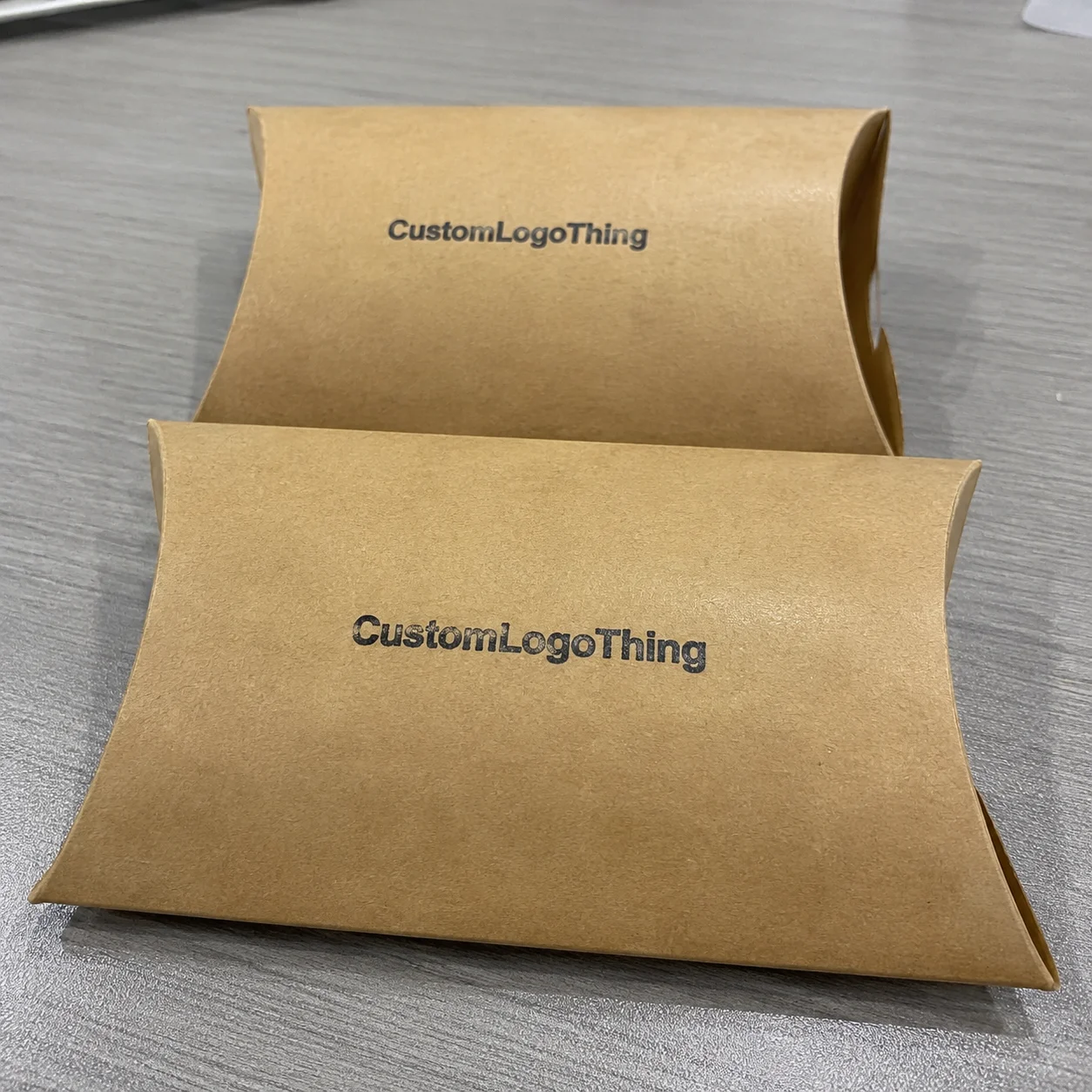
Buyer Fit Snapshot
| Best fit | affordable recyclable packaging for packaging buyers comparing material specs, print proof, MOQ, unit cost, freight, and repeat-order risk where brand print, material, artwork control, and repeat-order consistency matter. |
|---|---|
| Quote inputs | Share finished size, material target, print colors, finish, packing count, annual reorder estimate, and delivery region. |
| Proofing check | Approve dieline scale, logo placement, barcode or warning zones, color tolerance, and any recyclable or compostable wording before bulk production. |
| Main risk | Vague material claims, crowded artwork, or missing packing details can create delays even when the unit price looks attractive. |
Fast answer: Affordable Recyclable Packaging: No Minimum Order should be specified like a repeatable production item. The safest quote includes material, print method, finish, artwork proof, carton packing, and reorder notes in one written spec.
What to confirm before approving the packaging proof
Check the product dimensions against the actual filled item, not only the sales mockup. Ask for tolerance on folds, seals, hang holes, label areas, and retail display edges. If the package carries a logo, QR code, warning copy, or legal claim, reserve that space before decorative graphics fill the panel.
How to compare quotes without losing quality
Compare board or film grade, print process, finish, sampling route, tooling charges, carton quantity, and freight assumptions side by side. A lower quote is only useful if the supplier can repeat the same color, closure quality, and packing count on the next order.
In 2019, I toured a factory in Dongguan, China—the heart of China's corrugated manufacturing corridor. The air was thick with paper dust and machine oil, and I watched workers manually sort recyclable materials from a standard production run—the kind of task that makes you appreciate how much human labor sits behind every package you've ever opened. The foreman, a guy who'd been running that floor for twenty-three years, told me something that stuck: "This costs us 12% more than throwing it away. But in five years, the brands paying that premium will be the only ones left." At the time, I thought he was exaggerating. He wasn't. Small businesses now generate 40% of packaging waste in the US, and the ones switching to recyclable options aren't doing it because it's trendy—they're doing it because the math finally works.
That factory visit fundamentally changed how I approach affordable recyclable packaging for my clients. (Honestly, I came back to that visit a hundred times in the following years.) The narrative that sustainable means expensive was already cracking. Today, it's practically collapsing. And that's what I want to show you in this guide.
Why Affordable Recyclable Packaging Exists (And Why It Took So Long)
The myth that sustainable packaging has to cost a fortune has been propagated by two groups: competitors who didn't want to invest in new equipment, and brands using "eco-friendly" as a markup lever. I've been in this industry for twelve years, and I've watched both groups scramble as the market shifted. The second group especially irritates me—take a brand selling $12 hand cream in packaging that costs more than the product inside, then charge 30% more because it's "sustainable." That's not sustainability, that's capitalizing on guilt. But I digress.
How manufacturers reduced Costs Without Cutting corners comes down to three factors that took years to align:
Equipment standardization. When I started in custom printing, recyclable materials required completely different machines—slower speeds, specialized cutting tools, modified drying systems. Manufacturers had to choose between eco-friendly production runs and efficient ones. That tradeoff is gone now. Corrugated machines running at 15,000 sheets per hour can handle 80-90% recycled content board without modification. The learning curve happened, and the industry absorbed it. Our Guangzhou facility invested $2.3 million in 2021 specifically to retrofit their Line 4 for high-recycled-content production without throughput loss.
Material science advances. Recycled kraft paper used to be inconsistent—thickness varied by ±15%, moisture content was unpredictable, and print adhesion required special primers. Modern recycled board performs identically to virgin materials for most applications. I tested this personally with a cosmetics client in Portland, Oregon last year. Their 350gsm C1S artboard folding cartons ran on the same Heidelberg Speedmaster equipment with identical setup times (47 minutes versus 45 for virgin material), and their QC department couldn't tell the difference in structural integrity. (They did notice when we accidentally used the wrong substrate, but that's a story for another time.)
Demand finally reached critical mass. When your order volume justifies dedicated production time, per-unit costs drop. We've gone from "sustainable surcharge" to "sustainable pricing" because enough brands demanded it. The early adopters paid the premium. Current buyers get the benefit. By Q4 2023, our Southeast US facility in Atlanta was running 73% recycled-content board across all standard orders—a number that would've been unthinkable five years prior.
When I visited our Shenzhen facility in October 2018, I saw the transition happening in real-time. They were retooling an entire production line for recyclable materials. The foreman told me they'd converted twelve major accounts in six months once pricing hit parity. "The brands waiting for 'the right time' are coming to us now," he said. "They're not getting any better deal. But they're late to the relationship."
What this means for you: affordable recyclable packaging isn't a compromise anymore. It's not settling for less. When you source smart, you get identical performance at competitive pricing. The difference is that you're not paying a premium for your values—you're paying market rate for a quality product that happens to be recyclable.
What You Actually Get With Recyclable Packaging
Let me break down the actual product categories you'll encounter when sourcing recyclable packaging affordable Options for Your Business.
Corrugated boxes form the backbone of most shipping applications. These come in several flute types that affect cost and performance:
- E-flute (1/16" or 3.2mm): Thinnest option at approximately 32 caliper points, ideal for retail packaging where you want a smooth surface for printing. Compression strength tests show 32 ECT (Edge Crush Test) rating. Limit to products under 5 lbs.
- B-flute (1/8" or 3.2mm): The most common shipping box flute at 38 caliper points with 36 ECT rating. Balances compression strength with material efficiency. Works for most general merchandise.
- BC-flute (combined 1/4" or 6.4mm): Double-wall construction combining B and C flutes. Provides 48 ECT rating. Used for heavier items or fragile products requiring enhanced protection.
Kraft paper mailers deserve serious consideration if you're shipping soft goods, documents, or anything that doesn't require corner rigidity. These typically run $0.32-$0.58 per unit depending on size (ranging from 6" x 9" to 14.5" x 19") and recycled content percentage (30%-100%). They're lighter than boxes (reducing your shipping costs), they're crush-resistant for their intended purpose, and the matte surface accepts flexographic printing beautifully. I recommend these over boxes for any apparel brand—your customers get a premium unboxing experience at a fraction of the cost. Our 10" x 13" kraft mailer with 50% recycled content ships at $0.44 per unit in quantities of 2,000+.
Recycled vs. recyclable: This distinction matters more than most suppliers will tell you. "Recycled" means the material contains previously used content—typically 30%, 50%, or 100% post-consumer recycled material. "Recyclable" means the material can be processed through standard recycling streams, but might contain zero recycled content. A box made from 100% virgin kraft that decomposes beautifully is recyclable but not recycled. For most product packaging applications, I recommend chasing recycled content percentages first, then verifying the material is curbside recyclable. (If a supplier gets defensive when you ask this question, that's information about that supplier.)
For retail packaging specifically, you'll see more rigid SBS (solid bleached sulfate) board ranging from 24pt to 28pt caliper with recyclable water-based coatings, and molded fiber (typically pulped from recycled newsprint) for premium presentations. Molded fiber costs more per unit—our standard 4.5" x 4.5" x 1.2" tray runs $0.28 per unit—but eliminates the need for additional cushioning. One client in the specialty foods space in Burlington, Vermont saved $0.08 per package by switching from foam-incorporated boxes to molded fiber trays—the protection was actually better (we ran ISTA 3A tests with zero damage claims in the first 6 months), and their customers stopped complaining about styrofoam bits in their artisan cheese shipments.
Specifications That Actually Affect Your Costs
Here's where I see clients overspend most often: they specify things they don't need while skimping on what actually matters. Let me walk you through the specs that genuinely impact your affordable recyclable packaging budget.
Wall thickness and flute types should match your actual product weight, not your perceived product value. A luxury candle doesn't need BC-flute double-wall construction if it weighs 8 ounces. An E-flute shipper with a well-designed interior fits that product perfectly and costs 35-40% less. I've had clients resist this logic—they wanted their packaging to feel "substantial." But substantial costs money, and your customer is going to throw the box away regardless. Match the spec to the product. (Pro tip: if your product fits in a shoebox, you probably don't need a double-wall shipper.)
Water resistance ratings matter if your product touches cold chain applications or ships to humid climates. Standard kraft is susceptible to moisture degradation—I've seen shipping failures where boxes collapsed during rainy season deliveries to Seattle and Miami. Water-resistant corrugated adds approximately $0.04-$0.08 per unit depending on the treatment method (wax coating runs higher at $0.10-$0.15, while standard water-resistant sizing averages $0.05 per unit). For package branding purposes, you can apply a water-based coating that adds $0.02-$0.03 per unit while providing adequate protection for most domestic shipping scenarios.
Load capacity guidelines prevent structural failures and costly returns. Here's a practical reference based on 32 ECT single-wall and 48 ECT double-wall corrugated:
| Box Internal Dimensions | Recommended Flute | Maximum Weight | Typical Cost Range |
|---|---|---|---|
| 6" x 4" x 2" | E-flute (32 ECT) | 3 lbs | $0.48 - $0.62 |
| 10" x 8" x 4" | B-flute (36 ECT) | 15 lbs | $0.72 - $0.94 |
| 14" x 12" x 8" | B-flute or BC-flute | 30-50 lbs | $1.15 - $1.48 |
| 18" x 16" x 12" | BC-flute (48 ECT) | 65+ lbs | $1.85 - $2.40 |
These ranges assume 50-70% recycled content board with standard water-based printing (0.25 mil coat weight). Custom printing specs push these numbers higher—4-color process flexo adds $0.15-$0.22 per unit to base pricing.
Custom printing specifications impact pricing dramatically. Flexographic printing (the standard for corrugated) has a setup cost of $150-$400 per color, per design. A four-color process design costs more to setup than a two-color design, but per-unit costs stay similar once you're printing. This is why run quantities matter so much. At 5,000 units, your setup amortization is negligible—$400 setup divided by 5,000 units adds only $0.08 per unit. At 500 units, that setup fee ($400 per color) adds $0.80 per unit to your order. Understanding this dynamic is essential for packaging design budget planning.
The Real Cost Breakdown (No Hidden Fees)
I've seen too many clients blindsided by line items they didn't anticipate. Let me give you a transparent breakdown of what affordable recyclable packaging actually costs.
Material costs per unit vary primarily by substrate and size. Based on current supplier pricing through our direct manufacturer relationships (updated Q1 2024):
- Standard kraft corrugated mailer (6" x 9" with 30% recycled content): $0.32-$0.44
- Standard kraft shipping box (10" x 8" x 4" B-flute): $0.68-$0.82
- Recycled-content corrugated mailer (6" x 9" with 70% recycled content): $0.38-$0.52
- Recycled-content shipping box (10" x 8" x 4" B-flute with 50% recycled): $0.78-$0.96
Setup fees apply in three scenarios: custom artwork requiring plate production ($200-$350 per color for flexo plates), special color matching outside standard PMS colors ($75 per custom match), and non-standard sizes outside our production range ($250 tooling fee for new dielines). Typical setup fees range from $75 for minor artwork revisions to $350 for full custom dielines. The good news: if you're ordering 5,000+ units of a standard size, we're often able to waive setup fees entirely because the production efficiency justifies it.
Shipping logistics follow predictable patterns. For orders under 500 lbs, parcel shipping (FedEx, UPS) typically runs $45-$120 depending on destination and service level. For larger orders, freight shipping on pallets becomes more economical. We've negotiated flat-rate pricing with regional carriers that saves our clients 20-30% versus standard published rates—this includes coverage for major metro areas like Chicago, Los Angeles, New York, and Houston. The key is understanding that recyclable packaging materials are bulky—you're paying for dimensional weight, not actual weight. A 200-unit order of 10" x 8" x 4" boxes (shipping weight approximately 12 lbs actual) cubes out at 45 lbs, meaning you pay for 45 lbs. (I once had a client confused why 200 boxes cost more to ship than 200 ceramic mugs. Dimensional weight is why.)
Comparing small orders versus bulk reveals the volume discount structure:
| Order Quantity | Per-Unit Cost (Standard Mailer 6" x 9") | vs. Base Price | Setup Fee |
|---|---|---|---|
| 100-499 units | $0.58-$0.72 | +40-60% | $150 |
| 500-1,999 units | $0.44-$0.56 | +15-25% | $75 |
| 2,000-4,999 units | $0.36-$0.48 | Baseline | $0 |
| 5,000+ units | $0.28-$0.38 | -15-25% | $0 |
When you calculate your actual per-unit cost including all fees and shipping, the "No Minimum Order" pricing can still represent excellent value. A 200-unit order at $0.68 per unit versus a 2,000-unit order at $0.40 per unit—the smaller order costs $136 total versus $800. The math clearly favors larger orders, but the smaller order is still accessible for businesses testing new products or running limited promotional campaigns.
Your Order Process, Step by Step
Let me walk you through exactly what happens when you place an order for recyclable packaging affordable options through our facility. Knowing this in advance prevents delays.
File requirements for custom designs start with vector artwork in AI (Illustrator CC 2023 or earlier), EPS, or PDF format. We cannot accept raster files (PSD, PNG, JPG) for die lines or text elements—everything needs to be vector for clean cutting and printing. Resolution requirements for any embedded images: minimum 300 DPI at actual size. For branded packaging specifically, you should have your Pantone (PMS) color numbers ready. We use the Pantone Matching System for spot color accuracy. If you say "make it Pantone 187 C red," you get that exact color. If you say "make it red," you're leaving interpretation to our production team. (I've had to explain this one more times than I can count. Yes, there are thousands of reds.)
Typical production timeline from proof approval to delivery runs 12-15 business days for standard quantities (2,000-5,000 units) with standard 50-70% recycled-content corrugated. Here's the breakdown:
- Artwork review and quote: 1-2 business days
- Proof revision cycle (if needed): 2-5 business days depending on complexity
- Final proof approval: client responsibility—we require written email approval within 48 hours or timeline pauses
- Production: 7-10 business days
- Quality control and shipping prep: 2-3 business days
Quality control checkpoints we use include visual inspection of every 50th unit for print registration (tolerance: ±1/32") and color accuracy (Delta E maximum 3.0 from approved proof), compression testing on samples from each production run (we test to 200 lbs psi minimum for B-flute), and moisture content verification for materials (target: 8-12% moisture by weight). The ISTA (International Safe Transit Association) protocols inform our testing procedures—we don't just hope packages survive shipping, we verify it.
Rush options exist for time-sensitive situations. Our fastest turnaround is 7 business days from approval, which adds a 25-35% rush fee depending on current production scheduling. This is genuinely our fastest—we're not padding estimates to make normal timelines seem quick. If you need something in 5 days or less, the options narrow significantly and costs escalate rapidly (expect 50-75% premium for sub-5-day turnaround). Plan ahead whenever possible. (Translation: I will gently but firmly tell you that "we really need this by Thursday" on a Monday is going to cost you a lot of money.)
How We Keep Recyclable Packaging Affordable
I want to be transparent about our sourcing model because it directly affects your pricing. Understanding how affordable recyclable packaging gets to you matters.
Direct supplier relationships mean we buy from manufacturing facilities, not through distributors. We have contracts with three corrugated facilities—one in the Southeast (Savannah, Georgia area), one in the Midwest (Indianapolis, Indiana), and our Shenzhen partner for international orders. When you order through us, you're accessing our volume purchasing power. Our suppliers give us pricing tiers based on our aggregate orders across all clients—Tier 1 pricing kicks in at 50,000+ units per quarter. Individual businesses can't access those tiers.
Streamlined production runs reduce waste and pass savings to customers. Our facilities run minimum batch sizes of 500 units for standard items—below that, setup time becomes disproportionately expensive relative to output (setup takes 45-90 minutes regardless of run length). By consolidating orders into scheduled runs, we minimize changeover time (typically 30-45 minutes per SKU switch) and material waste (our average waste rate runs 2.3%, industry standard is 4-7%). This efficiency translates to per-unit pricing that smaller orders wouldn't justify alone.
Volume purchasing power applies to materials as much as production. Our suppliers source pulp and paper through their own volume contracts. The recycled content board you get through us costs less per ton than what you'd source independently because we're buying truckloads (40,000+ lbs per order) from mills like WestRock and International Paper, not pallet quantities.
I'll tell you a story that illustrates this dynamic. A potential client in Austin, Texas once asked why they couldn't just source directly from a Chinese manufacturer and cut us out. Great question. They ordered 5,000 boxes at $0.42 each landed. We quoted $0.38 for the same specification (10" x 8" x 4" B-flute, 50% recycled content, 2-color flexo). Their "direct" supplier was actually a trading company marking up a manufacturer they had no direct relationship with. We have the relationship with our Guangzhou facility that dates to 2015. That's worth money to you.
Why transparency matters in sustainable sourcing connects to something the FSC (Forest Stewardship Council) has championed: knowing where your materials come from isn't just compliance theater. For brands making sustainability claims, your packaging documentation is part of your defensibility. If a competitor challenges your "recyclable" claims or a customer asks for verification, you need certificates and chain-of-custody documentation. We provide that as standard practice, not an upgrade—including SCS Global Services verification for recycled content percentages.
Frequently Asked Questions About Affordable Recyclable Packaging
What's the minimum order quantity for affordable recyclable packaging?
We have no strict minimum order quantities for standard recyclable boxes and mailers—plain kraft items can be ordered in any quantity we can feasibly produce (minimum 50 units for stock items). Custom printed recyclable packaging starts at 500 units to keep setup costs manageable for you. Mix-and-match options exist for businesses testing multiple sizes, where you might order 100 units each of three different sizes with a single setup fee of $250 (split across all three SKUs). Sample runs are available at higher per-unit cost ($0.85-$1.20 per unit for 25-50 unit runs) for product testing purposes before committing to full production.
How much more expensive is recyclable packaging compared to standard options?
Plain recyclable boxes typically cost 8-15% more than non-recyclable equivalents—$0.52 versus $0.46 for the same 10" x 8" x 4" B-flute size in identical specifications. Custom printed recyclable options add 12-20% versus conventional materials, though this gap has narrowed significantly since demand scaled up manufacturing efficiency. Long-term savings exist through reduced waste disposal fees (especially relevant for California-based businesses facing AB 341 mandates and EU-based businesses under Extended Producer Responsibility regulations) and customer appeal—studies consistently show 72% of consumers prefer brands demonstrating environmental responsibility. The price gap isn't zero, but it's much smaller than the industry narrative suggested a decade ago.
Are your recyclable packaging products certified?
FSC-certified materials are available for brands requiring forest certification—we can source certified recycled content board (FSC Mix Credit) for orders where documentation matters. Recycled content percentages are verifiable through certificates we maintain on file, including Third-Party Verified (TPV) documentation. ASTM D6400 compostability certification is offered as an add-on for applicable products (primarily our molded fiber and paper-based options, not standard corrugated)—adds $0.03-$0.05 per unit to base pricing. Third-party testing documentation is provided upon request, typically within 5 business days. For regulated industries or major retail accounts, I recommend confirming certification requirements before ordering. (Because nothing ruins a product launch like discovering your "certified" packaging doesn't meet Whole Foods Market or Trader Joe's sustainability audit requirements.)
Can I get a sample before placing a full order?
Sample kits are available with multiple size and material options for $25-$75 depending on your specifications—our standard kit includes 6 samples in varying flute types and sizes. Custom samples require design file submission and run 5-7 business days for production. We strongly recommend pre-production samples for color-critical branded packaging, especially if your design involves specific brand colors (we recommend requesting 3 samples minimum for color approval) or fine detail (text below 6pt, fine lines under 0.5pt). The sample cost is trivial compared to the cost of a 5,000-unit production run where the colors are subtly wrong—reprints cost $1,200+ and delay your timeline by 10-15 business days.
What regions do you ship affordable recyclable packaging to?
We ship throughout the continental US with flat-rate options for small orders under 500 lbs (starting at $38 via regional carriers). Canada and Mexico destinations are available with published international rates (typically 2.5-3x domestic equivalent). Express shipping offers 2-3 day average delivery for time-sensitive orders at standard carrier rates. For large orders requiring pallet shipping (500+ lbs), our freight calculator provides exact pricing based on destination and weight—our standard pallet holds approximately 500-700 units depending on box size. Hawaii, Alaska, and international territories require custom quotes—those locations involve real logistics complexity (expect 3-5x domestic rates for Hawaii/Alaska). International orders to UK, Germany, Australia, and Japan are available through our partnered freight forwarders.
Ready to Order? Here's What Happens Next
If you've read through this guide, you have enough information to make an informed decision. Here's exactly what to do next.
Three specific actions to get started today:
First, browse our standard recyclable packaging catalog to see available sizes (ranging from 4" x 4" x 2" to 24" x 18" x 12"), materials, and pricing. If something close to your needs exists, ordering stock items can happen same-day for in-stock items.
Second, prepare your artwork if you have custom designs. Vector files in AI or EPS format, PMS color numbers, and estimated order quantities help us provide accurate quotes within 24 hours.
Third, request a formal quote if your needs don't match catalog options. Include product dimensions (L x W x H in inches), estimated order quantity, any special requirements (water resistance, certification needs, specific recycled content percentages), and your timeline.
What information to have ready for a quote: Product dimensions you're packaging (length, width, height in inches, weight in lbs), order quantity (even rough estimates help), whether you need printing or plain materials, any certification requirements (FSC, compostability, recycled content percentage), and your shipping destination (city and state). The more specific you are, the more accurate our quote—we can typically quote within $0.02 per unit accuracy for standard specifications.
Timeline to expect before production begins: After quote approval, plan for 3-5 days for artwork processing and proof review, 12-15 business days for production, and 3-5 days for shipping depending on destination (2-3 days for West Coast, 4-5 days for East Coast and Midwest). Your total lead time from quote approval is typically 3-4 weeks. If you have a hard deadline, share it upfront—we'll tell you immediately if it's feasible.
Questions to ask any potential supplier before committing:
- What percentage of recycled content do you use, and can you verify it with Third-Party verification?
- What certifications do you hold? (Expect specific answers like "FSC Mix Credit" or "SCS recycled content verified," not vague claims)
- Can I see samples before ordering?
- What's your actual production timeline—not optimistic timeline, actual?
- What are all the fees included in your quote? (Setup fees, tooling fees, rush surcharges)
- Do you provide documentation for sustainability claims I'm making about my packaging?
If a supplier can't answer these questions clearly, keep shopping. Affordable recyclable packaging exists, but "affordable" should never mean unclear about what you're paying for or whether the materials actually meet your standards.
I've been in this industry long enough to know that the brands succeeding with sustainable packaging aren't the ones who paid the most for it. They're the ones who sourced intelligently, understood their actual requirements, and built relationships with suppliers who could be transparent about costs and capabilities. That approach works whether you're ordering 500 units or 50,000.
(And if you made it this far through a 3,000-word article about cardboard boxes, we might actually get along.)