Buyer Fit Snapshot
| Best fit | Custom Boxes No Minimum Order Required | Fast & Affordable projects where brand print, material claims, artwork control, MOQ, and repeat-order consistency need to be specified before quoting. |
|---|---|
| Quote inputs | Share finished size, material target, print colors, finish, packing count, annual reorder estimate, ship-to region, and any compliance wording. |
| Proofing check | Approve dieline scale, logo placement, barcode or warning zones, color tolerance, closure strength, and carton packing before bulk production. |
| Main risk | Vague material claims, crowded artwork, missing packing details, or unclear freight terms can make a low unit price expensive after revisions. |
Fast answer: Custom Boxes No Minimum Order Required | Fast & Affordable should be specified like a repeatable production item. The safest quote records material, print method, finish, artwork proof, packing count, and reorder notes in one written spec.
Production checks before approval
Compare the actual filled-product size with the drawing, then confirm tolerance on folds, seals, hang holes, label areas, and retail display edges. Reserve space for logos, QR codes, warning copy, and material claims before decorative graphics fill the panel.
Quote comparison points
Review material grade, print process, finish, sampling route, tooling charges, carton quantity, and freight assumptions side by side. A quote is only useful when the supplier can repeat the same color, closure quality, and packing count on the next order.
At 7:40 a.m. in Dongguan, I stood next to a founder as she approved 50 mailers on a digital press while her previous supplier refused anything under 1,000. She was launching a skincare trial kit and had $1,200 left for packaging and freight. custom boxes No Minimum Order required gave her breathing room to test, sell, and keep the brand moving instead of freezing cash in stock she might never use. After 12 years in packaging, I keep seeing the same split: founders who buy for learning speed tend to survive; founders who overbuy “perfect” boxes too early usually burn cash.
At Custom Logo Things, we treat packaging as an operations decision first and a design decision second. You need exact sizing, repeatable quality, and pricing that protects margin. Most buyers searching for custom boxes no minimum order required are in one of five situations: launch, market test, promo window, seasonal push, or limited storage. Short-run packaging exists for those constraints, period.
Custom Boxes No Minimum Order Required: Why Small Runs Win
Back in 2023, a candle startup in Austin showed me their first broker quote: 2,500 units, offset print, 28-day production, $0.84 per box. Looks attractive on paper. In actual cash terms, it meant $2,100 before freight, before storage, before one gift set sold. We rebuilt the plan using custom boxes no minimum order required: 100 units, digital print, white E-flute corrugated, $2.35 each, under $300 total before shipping. Per-unit cost went up. Financial risk dropped hard. They sold out in 19 days and reordered with a better insert fit.
Dead inventory almost never shows up as one dramatic loss. It leaks out through trapped working capital, crowded shelves, and reprints after regulatory updates. I watched one brand scrap 800 boxes after a formula change made side-panel claims non-compliant. Their hit was about $1,700 before any package reached a customer.
Buying custom boxes no minimum order required creates faster feedback loops. You test one version, collect data, then change what actually affects performance:
- Insert depth adjusted by +3 mm to stop product rattle.
- Panel contrast tuned so barcode scans cleanly on handheld readers.
- Interior messaging revised to improve unboxing UGC performance in small campaigns.
This model is especially useful if you’re working with clear limits:
- Ecommerce launches shipping roughly 25-300 orders per month.
- Subscription pilots checking churn and retention signals.
- Seasonal campaigns like Mother’s Day bundles and holiday drops.
- Influencer sends where 50 strong kits outperform 5,000 generic cartons.
- Retail pop-ups with minimal backroom space.
No-minimum ordering does not mean low-grade output. It means a different production model: digital print, intelligent batching, and structural templates adapted to real product loads. I’ve approved short runs that outperformed bigger offset runs in drop tests because the board spec matched product weight and route stress.
Most buyers ask three fair questions:
- Will color shift between reorders?
- Will the box survive parcel handling?
- Will it still look premium on shelf and on camera?
Those outcomes are achievable if specs and proofing are controlled. Set measured CMYK targets, define acceptable tolerances, and choose material for shipping conditions. For DTC shipments under 1.2 kg, I usually recommend E-flute around 1.5-1.8 mm with a 32 ECT target. Heavier kits often need B-flute or reinforced mailer geometry. Not glamorous, but it works.
Custom Logo Things keeps the mechanics transparent. We’ll tell you when custom boxes no minimum order required is the right fit and when it’s time to shift into volume economics. If you want help selecting format by SKU and route profile, start in Custom Packaging Products.
Product Options for Custom Boxes No Minimum Order Required
Low-quantity runs work best when structure matches short-run production reality. If you’re ordering custom boxes no minimum order required, style selection matters just as much as artwork.
Mailer boxes
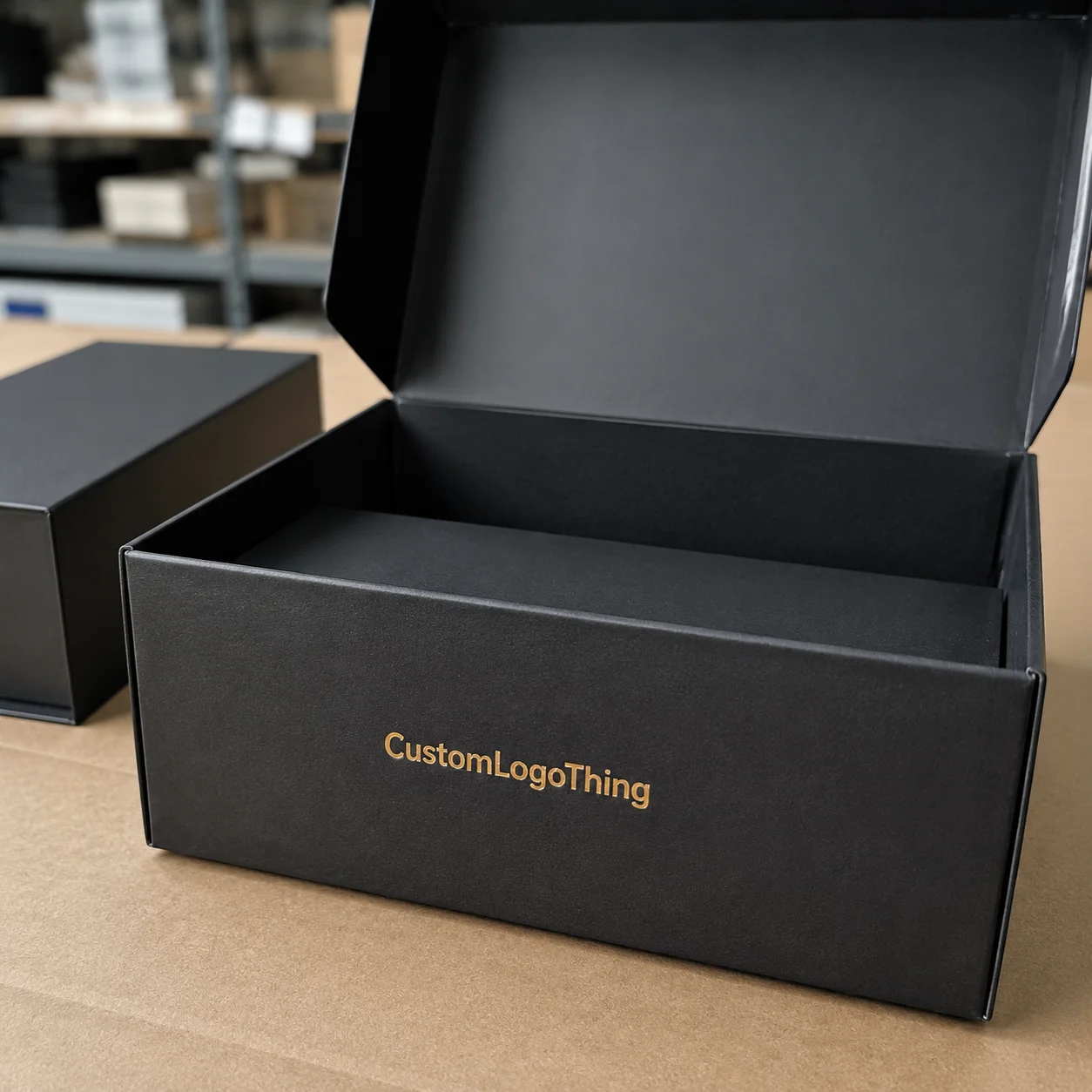
For ecommerce packaging, mailers are usually the practical default. Standard builds use E-flute corrugated with white or kraft liner and perform well for apparel, skincare kits, notebooks, supplements, and lighter electronics under about 1.5 kg. These are often the easiest Custom Printed Boxes to produce at 25, 50, or 100 units.
Folding cartons
Retail presentation and secondary product packaging often sit here: cosmetics, tea sachets, soap bars, and smaller bottles. Typical board is 18pt to 24pt SBS. In the 50-200 range, digital output looks excellent if files are CMYK-ready and fine text is handled correctly.
Rigid setup boxes
Rigid boxes deliver premium unboxing, but they’re slower and pricier in short runs due to labor-heavy wrapping and assembly. They fit gift sets, candles, jewelry, and PR kits. Some rigid builds still require minimum thresholds for wrapped components and magnetic closures, so confirm constraints before final art approval. custom boxes no minimum order required is available in selected rigid formats, not all formats.
Tuck-end boxes and sleeves
Launch pilots and refresh projects benefit from this category. Printed sleeves can rebrand plain stock cartons without full replacement. I’ve used sleeve programs in the $0.42-$0.88 range for mid-volume campaigns and avoided unnecessary carton rebuilds.
Shipping cartons
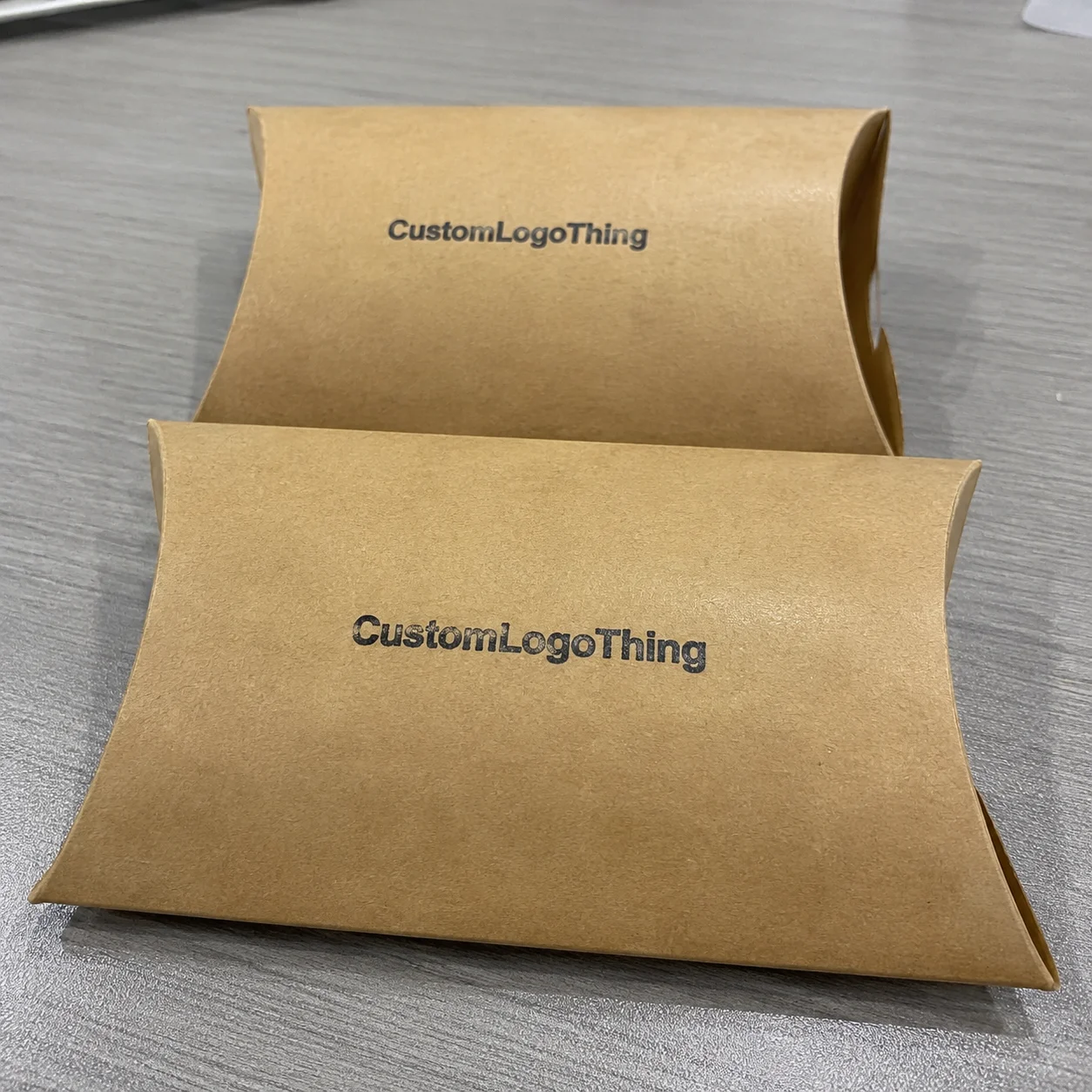
If brand presence on the outer shipper matters, simple one-color black on kraft usually gives strong value at low volume while still delivering clear package branding.
Common print coverage tiers for custom boxes no minimum order required include:
- Outside only (usually lowest cost)
- Outside + one interior panel
- Full-color interior reveal for unboxing-focused campaigns
- Minimal one-color brand mark
Finishes that generally work well in short runs:
- Matte lamination
- Gloss lamination
- Soft-touch (style dependent)
- Spot UV on supported formats
- Foil stamping on compatible lines with realistic run thresholds
Add-ons that improve outcomes more than they inflate budgets:
- Paperboard inserts to immobilize glass containers.
- Corrugated partitions for 2-pack and 4-pack sets.
- Tissue wraps for inexpensive visual lift.
- QR campaign cards tied to post-purchase offers.
“Custom” can mean two different things. Template customization modifies dimensions and art on existing dielines. Full structural engineering builds a fresh dieline around product geometry, fragility, and pack-out behavior. Fragile or unusual SKUs usually justify structural work, even in small runs.
Quick comparison matrix:
| Box Type | Best For | Typical Short-Run Qty | Cost Range (Unit) | Notes |
|---|---|---|---|---|
| Mailer Box (E-flute) | DTC shipping | 25-500 | $1.90-$5.80 | Strong value for custom boxes no minimum order required |
| Folding Carton (SBS) | Retail shelves | 50-1,000 | $0.65-$2.40 | Great for retail packaging |
| Rigid Setup Box | Gift/premium | 100-1,000 | $3.80-$12.00 | Higher labor and material input |
| Product Sleeve | Rebrand overlays | 100-2,000 | $0.42-$1.30 | Fast iteration for packaging design |
Specifications That Actually Matter Before You Order
Skipping specs is how teams pay twice. I once reviewed a beautifully printed 300gsm board box that collapsed in transit because the packed product was a 900g glass item plus insert. Visual quality was strong; field performance failed.
For custom boxes no minimum order required, material has to match real use conditions:
- E-flute corrugated (roughly 1.5-1.8 mm): smooth print face, strong fit for lightweight DTC.
- B-flute corrugated (roughly 2.5-3.0 mm): higher stacking and compression resistance.
- SBS paperboard 18pt-24pt: crisp folds for cartons and sleeves.
- Kraft liner: natural look with slightly muted color output.
- White coated stock: stronger color vibrancy and photo reproduction.
If sustainability is part of your criteria, request exact recycled-content percentages and certification records. FSC chain-of-custody claims should be traceable through license codes at FSC. “Eco-friendly” without documentation is kinda just marketing copy.
Fit delays usually start with sizing mistakes. Send internal dimensions (L × W × H), not external. Most products need about 2-5 mm clearance per side depending on insert design. Corrugated converting tolerances commonly sit near ±2 mm, so critical-fit projects should use physical sampling.
File setup for custom boxes no minimum order required should follow production standards:
- AI, EPS, or PDF preferred.
- 300 DPI imagery at final size.
- CMYK mode instead of RGB.
- Typically 3 mm bleed; safe zone around 3-5 mm from cut and fold lines.
- Fonts outlined or embedded.
Frequent artwork failures include 6pt reverse text on dark solids, barcodes placed across folds, and rich-black builds that dry differently by substrate. Keep barcode fields clean and high-contrast, especially if scan reliability is a hard channel requirement.
Protection should be engineered, not guessed. If your target damage rate is below 1.5%, define insert retention and closure behavior before print approval. Heavy kits may need reinforced corners or double-wall logic. For transit validation, review ISTA standards.
Proofing routes for custom boxes no minimum order required:
- 3D digital proof: fast for layout and copy checks.
- Physical sample: validates fit, board handfeel, closure behavior, and tighter color expectation.
Physical proofing often adds 2-5 business days and can save much more in rework. A protein snack brand skipped a $65 sample and later paid $940 for reprints after flap locks caused corner splits during packing. That’s not a theoretical warning; that’s a bill somebody paid.
Approval checklist before production starts:
- Final internal dimensions and tolerance range
- Material code (E-flute white, 24pt SBS, etc.)
- Finish choice (matte, gloss, soft-touch)
- Artwork version ID and print placement
- Ship-to addresses and SKU counts
Pricing & MOQ: Real Numbers for No-Minimum Custom Boxes
Budget conversations should stay tied to total cash flow. custom boxes no minimum order required gives lower upfront exposure, not magic unit pricing. If someone quotes premium rigid magnet boxes at $0.60 for 25 units, scope is missing or the quote won’t hold.
Main unit-cost drivers:
- Style and finished dimensions
- Board grade and material weight
- Print coverage and color complexity
- Finishing layers (lamination, UV, foil)
- Insert design complexity
- Shipping zone and service speed
Typical short-run bands I see for custom boxes no minimum order required:
- 25 mailers: about $3.20-$5.80 each
- 50 mailers: about $2.40-$4.30 each
- 100 mailers: about $1.90-$3.60 each
Folding cartons usually trend lower at similar quantities. Rigid boxes trend higher due to hand assembly and wrapped construction. Digital print removes plate costs tied to offset setup, which is exactly why small-batch ordering is financially viable now.
Cost traps that catch buyers all the time:
- Oversized geometry: adding 10 mm per panel can increase material waste by roughly 12-20%.
- Overbuilt board: thicker board can raise dimensional freight without adding meaningful protection.
- Last-minute rush freight: expedited shipping can double landed cost.
- Excess finish stacking: soft-touch + foil + UV can look crowded and inflate spend.
In Shenzhen, I negotiated a 60-unit influencer project where the initial request was 157gsm art-paper wrap on rigid magnetic-closure boxes at $8.90 landed per unit. We shifted to premium E-flute mailers with spot UV logo and a custom insert for $3.40 each. Presentation held up. Budget dropped by more than 60%.
A practical order strategy for custom boxes no minimum order required:
- Run a pilot at 25-100 units.
- Track damage rate, unboxing feedback, and packing speed.
- Change one variable per reorder (insert, finish, or board).
- Scale after conversion and operations are validated.
Read MOQ language carefully. “No minimum” can mean true one-unit production on selected digital lines, while foil, embossing, or specialty rigid builds still carry practical thresholds. Get those conditions in writing; you’re gonna need that clarity later if timelines tighten.
| Quantity | Simple Mailer (1-color) | Full-Color Mailer | Premium Mailer + Insert | Typical Lead Time |
|---|---|---|---|---|
| 25 | $3.20-$4.10 | $3.80-$5.20 | $4.60-$5.80 | 8-12 business days |
| 50 | $2.40-$3.30 | $2.90-$4.00 | $3.40-$4.30 | 8-12 business days |
| 100 | $1.90-$2.70 | $2.30-$3.20 | $2.90-$3.60 | 10-15 business days |
“We started with 50 units, fixed one insert issue, then scaled to 400 with zero transit damage in month two.” — DTC supplements client, Nevada
To avoid surprises, request side-by-side quotes at 25, 50, and 100 units with production and freight separated. Transparent quoting makes decisions faster and safer. If your SKU velocity is stable and scale planning has started, review options under Wholesale Programs.
Process & Timeline: From Quote to Delivered Boxes
Good packaging projects run on predictable process, not optimistic promises. For custom boxes no minimum order required, this workflow keeps quality and timing under control.
- Quote request: Submit dimensions, style, quantity, ZIP/postal code, and required in-hand date.
- Dieline + artwork review: Check printability, panel fit, barcode areas, and fold safety.
- Proof stage: Approve a digital 3D proof or a physical sample.
- Approval lock: Sign off on final versioned files.
- Production: Print, cut, convert, finish, and assemble where required.
- QC checks: Random sampling against visual and dimensional standards.
- Packing + dispatch: Cartonization and tracking release.
Typical post-approval timelines for custom boxes no minimum order required:
- Simple mailers: 8-12 business days
- Complex print with inserts: 10-15 business days
- Rigid short runs: 15-22 business days based on finish stack
Four actions speed up execution immediately:
- Send complete print-ready files from day one.
- Confirm internal L × W × H dimensions only.
- Assign one decision owner for approvals.
- Return proof comments within 24 hours.
Common delay points include missing dielines, RGB files sent for CMYK production, too many revision loops from drifting stakeholder feedback, and address or SKU-count errors before dispatch.
Sampling choice is straightforward. Use digital proofs for speed when structure is standard. Use physical samples for fragile SKUs, tight fit tolerance, or high finish expectations. A short sampling delay often prevents a much longer reprint cycle.
Multi-SKU programs may ship in splits, and that can improve delivery speed. Ask for carton-level tracking and transit protection details. We match outer-pack methods to route conditions so custom boxes no minimum order required arrive clean, not crushed at corners.
Pre-production checklist for timeline stability:
- Final artwork filenames with version control
- Approved dieline and material callout
- Finish confirmation by SKU
- PO or payment confirmation
- Verified ship-to list and contact numbers
Why Custom Logo Things Is Built for No-Minimum Orders
A lot of suppliers advertise short runs, then bury setup fees, stretch proof cycles, or go quiet after payment. I’ve had to clean up too many of those projects. Custom Logo Things was built to make custom boxes no minimum order required workable for operators who care about timelines, specs, and margin.
What sets our process apart:
- Short-run production flow built around digital print and fast converting.
- QC checkpoints before and after die-cut to catch registration and fold defects.
- Packaging specialists focused on fit-for-purpose specs instead of unnecessary upsells.
Operational discipline matters more than mockup flair. We track artwork versions so reorder V3 never prints V1 compliance text by mistake. Approved specs are locked by SKU for repeat consistency. Brands running variants save real money with that control.
I’m direct about add-ons. If matte lamination plus a one-color interior already meets your brand goal, I won’t push foil just to raise invoice value. Some products need premium finish layers; many don’t. Honest guidance should protect your economics, not pressure your budget.
Communication stays practical: documented specs, realistic ship dates, and revision notes you can act on. You won’t get vague answers. For day-to-day questions, our FAQ covers file prep, lead times, and reorder workflow.
Quality basics we enforce on every program:
- Consistent material sourcing for repeat board performance
- Print calibration routines by substrate type
- Defined defect thresholds with corrective rerun policy
We also tell you when to move beyond custom boxes no minimum order required and into higher-volume economics. Start with one SKU, validate performance, then scale into a multi-SKU system with shared design language and controlled per-order cost.
Next Steps: How to Place Your Custom Boxes No Minimum Order Required
For a clean quote process, prepare these five inputs before requesting custom boxes no minimum order required:
- Internal dimensions (L × W × H in mm or inches)
- Box style (mailer, carton, sleeve, rigid)
- Material and finish preference (example: white E-flute + matte lamination)
- Artwork files (AI/PDF/EPS, CMYK, bleed included)
- Quantity, ship-to ZIP/postal code, and required in-hand date
If details are still fuzzy, keep the first run simple: standard mailer template, outside print only, one finish. Launch that version, collect reactions, then refine from evidence. For many DTC brands under $10,000 monthly packaging spend, this path gives the best risk control.
A pilot structure that works well for first-time buyers:
- Initial run of 25-100 units
- Damage-rate tracking across the first 30-60 shipments
- Collection of unboxing feedback and UGC quality signals
- Insert or board adjustments based on actual shipping data
Reorders move faster when approved dielines and print files are archived with version tags. That reduces proof cycles and helps maintain batch-to-batch consistency. It also simplifies expansion when you add SKUs and want aligned ecommerce plus retail packaging presentation.
The practical takeaway: custom boxes no minimum order required works best with clear specs and phased scaling. Start lean. Validate quickly. Optimize with real shipment data. Then expand with confidence.
What Should You Know Before Ordering Custom Boxes No Minimum Order Required?
Check four items first: exact internal dimensions, board grade, print-file readiness, and realistic lead time. For most early-stage brands, custom boxes no minimum order required performs best as a test-and-scale system: start with 25-100 units, track damage and customer response, then adjust one variable per reorder. Ask for production and freight pricing separately, and confirm whether add-ons like foil or rigid magnetic closures carry practical minimums.
FAQs
Can I really order custom boxes with no minimum order required?
Yes. Many digitally printed mailers and cartons support true low-quantity ordering. Certain specialty finishes and rigid constructions may still carry practical thresholds. Confirm MOQ by style, finish, and quantity directly in your quote.
How much do custom boxes no minimum order required usually cost per unit?
Short runs usually have higher per-unit pricing than bulk, but they reduce upfront cash exposure. Final cost depends on dimensions, board type, print coverage, finish, inserts, and ship-to location. Request side-by-side pricing at 25, 50, and 100 units to find the best break point for your volume.
What is the turnaround time for custom boxes with no minimum?
Timing depends on proof approval speed, order complexity, and queue position. Many standard programs deliver in roughly 8-15 business days after approval. Rush options may be available, though expedited production and freight can raise landed cost.
Do no-minimum custom printed boxes have the same quality as bulk orders?
They can, provided materials and specs are selected correctly. Differences usually come from print method and finishing constraints rather than quantity alone. Approving a detailed proof or physical sample is the best way to validate fit, color expectation, and durability before a larger reorder.
What files do I need to submit for custom boxes no minimum order required?
Preferred formats are AI, PDF, or EPS with fonts outlined and linked or embedded images. Use CMYK mode, include bleed, and keep critical content inside safe zones. If you don’t have a dieline yet, share exact product dimensions and your team can request one before final artwork setup.