Apparel Bulk Knit Beanies Material Guide for Buyers
Two beanies can look nearly identical on a product sheet and still perform very differently in hand. Swap the yarn and you can change softness, stretch recovery, stitch clarity, warmth, packing weight, and the margin on a 3,000- to 10,000-piece order.
What Buyers Miss First
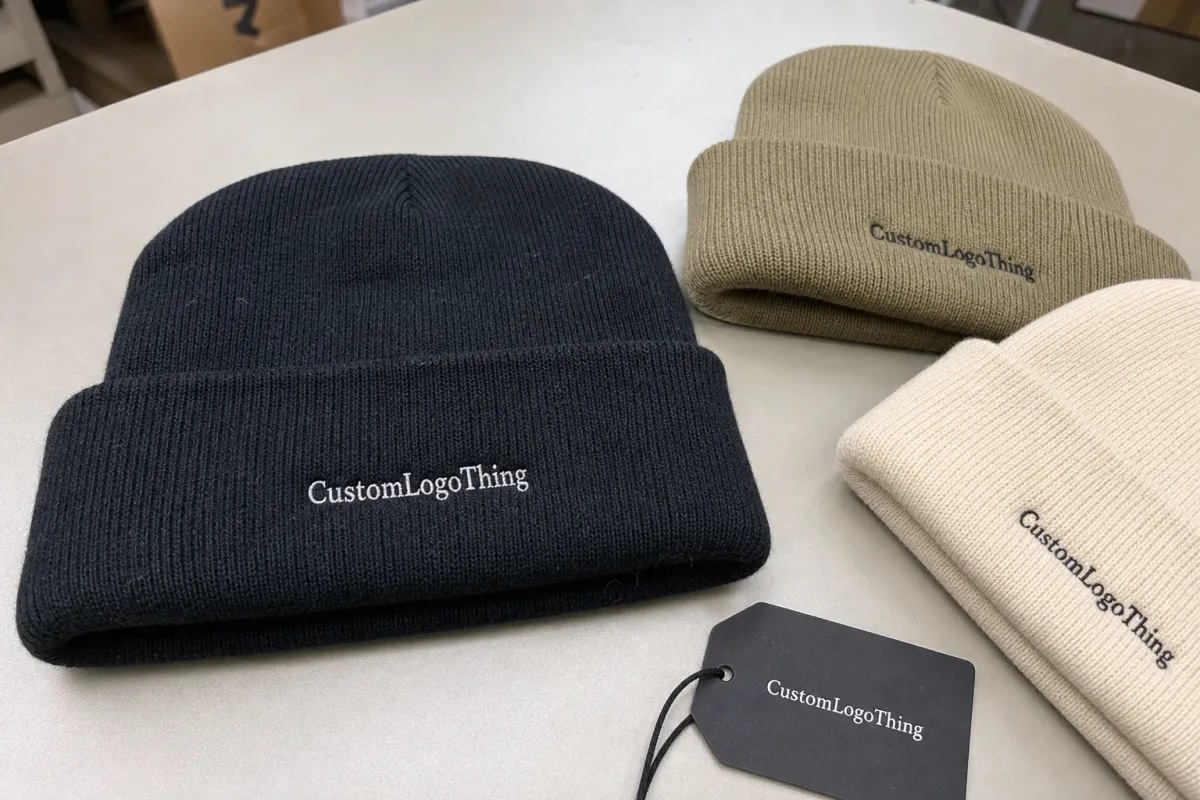
Most buyers start with logo placement, patch style, or embroidery size. That makes sense, but the material choice quietly controls what people feel when they put the beanie on. A yarn change can turn a sharp sample into a hat that pills early, stretches out, or feels flatter than expected.
Fabric controls stitch definition, dye consistency, warmth, and shipping weight. It also affects how the beanie behaves after folding, bagging, unboxing, and a few weeks of wear. On a sample, the difference can seem minor. On a full run, it can move landed cost enough to change retail pricing or campaign margin.
Packaging adds another layer. A beanie shipped in a folded insert, wrapped in kraft paper, and packed into corrugated cardboard will land differently from the same hat tossed into a loose polybag. Buyers who separate the material decision from pack-out usually discover the total cost too late.
"The beanie that looks premium in a photo can still feel generic in hand if the yarn choice is wrong."
For a giveaway, a stable acrylic knit may be the right answer because it scales cleanly and keeps the order under control. For retail, a wool blend or documented recycled blend can justify a higher ticket. For winter events, warmth and recovery may matter more than decoration detail. The right material depends on the channel, the decoration method, and the wear expectation.
One practical rule: if the supplier knows the target hand feel, color direction, decoration method, and pack-out style before sampling starts, the quote is more accurate and the sample is easier to approve. If those details keep changing, the yarn choice becomes a moving target.
Fiber Blends for Promotions, Retail, and Events
Three fiber families account for most bulk knit beanie programs: acrylic, wool, and recycled blends. Each solves a different buying problem. Acrylic is usually the value leader because it scales well, knits consistently, and gives suppliers a predictable result. Wool feels warmer and more natural in hand, which is why buyers often connect it with premium retail. Recycled blends sit between those poles when a brand wants a sustainability story without moving entirely into a luxury price band.
Acrylic is popular for a reason. It takes dye consistently, resists surprise shrinkage better than many natural options, and keeps production planning straightforward. For a high-volume campaign hat, it is often the safest choice. A dense rib knit in acrylic can still look sharp, especially when paired with a woven label or a small patch. The biggest limitation is perception: it usually reads as more practical than premium.
Wool changes the tone. It can improve warmth and perceived value, but it also brings more attention to itch factor, fiber consistency, and cost. Some buyers want the natural story. Others want the insulation. If the customer will pay for the upgrade, wool can make sense. If not, it can push the order outside the budget with limited upside.
Recycled materials only help when the supply chain is documented. A recycled acrylic or recycled polyester blend can support a lower-impact claim, but that claim should be backed by yarn documentation and consistent lot control. Packaging can strengthen the story if it uses FSC-certified paper stock, post-consumer waste content, or biodegradable components. Buyers should ask for proof, not slogans. The EPA's recycling guidance at EPA recycling guidance and FSC's certification overview at FSC International are useful reference points when evaluating claims.
| Fiber option | Typical buyer use | Indicative bulk price signal | Main tradeoff |
|---|---|---|---|
| Acrylic | Promos, events, large giveaways | Often about $1.90-$3.40 per unit at 3,000 pieces, before freight and extras | Less natural hand than wool |
| Wool or wool blend | Retail, premium gifts, winter collections | Often about $3.50-$6.50 per unit depending on yarn content and finish | Higher cost and more care in spec approval |
| Recycled blend | Sustainability-led merch, branded retail add-ons | Often about $2.40-$4.80 per unit, depending on source and certification claims | Availability and hand feel vary by yarn source |
There is no universal winner. For a sports promo, acrylic is usually the most sensible answer. For a boutique retail box, wool can support the price. For a brand that needs both sustainability language and bulk efficiency, a recycled blend can work if the supplier can show traceability and stable supply.
Gauge, Weight, Cuff, and Fit Specs for the PO
Once the fiber is set, the spec sheet becomes the real control document. A supplier needs more than a logo file and a color name. The buyer should define knit gauge, yarn weight, finished dimensions, cuff height, crown shape, and whether the beanie is single-layer or double-layer. Those details affect both the quote and the fit.
Gauge changes how the beanie reads visually and how it feels on the head. Tighter gauge usually gives cleaner stitch definition and a more finished look. Looser gauge can feel softer and more relaxed, but it may also look less structured. For retail, a tighter construction often photographs better. For promotional wear, a looser knit may be acceptable if the cost target is right.
Weight and dimensions are not small details. They control comfort, appearance, and return risk. A beanie that is too shallow may ride up. One that is too deep can look slouchy in a way the buyer did not intend. If the style is meant for youth, oversized wear, or gender-neutral retail, that should be written clearly into the PO.
Decoration space follows structure. A thick cuff gives embroidery a stable field, while a full-needle rib can compress some patch styles. Jacquard patterns may reduce the clean area available for branding. If the logo must sit center-front, confirm the needle count and crown placement before sample approval.
- Ask for tolerances: finished length, width, and cuff height should not be left vague.
- Confirm the fit model: adult, youth, or one-size-fits-most changes the pattern.
- State the decoration method: embroidery, woven patch, or label each affects structure.
- Request a pre-production spec sheet: it keeps the sample and bulk run aligned.
Material choice only works if the rest of the build is written down with the same care. Without spec discipline, the order is guesswork.
Pricing, MOQ, and Unit-Cost Breakpoints
Bulk knit pricing is never a single number. It is a stack of decisions: fiber type, stitch complexity, number of colors, decoration method, labeling, packaging, and freight. Buyers who compare only the headline unit price usually miss the real cost. A lower quote can hide a larger setup charge, slower lead time, or weaker quality control.
MOQ works the same way. Lower minimums are possible in many programs, but the economics change as volume rises. Setup costs spread out. Knitting efficiency improves. Freight planning gets cleaner. That is why suppliers often quote several tiers. If you only ask for one quantity, you cannot see where the cost curve begins to flatten.
For planning, these ranges are useful:
- Small run: 300-1,000 pieces, usually higher unit cost and fewer material options.
- Mid run: 1,000-5,000 pieces, often the best balance of price and flexibility.
- Large run: 5,000-10,000+ pieces, where unit cost improves but approval discipline matters more.
If the beanie is for a short campaign, cost control may matter more than fiber prestige. If it is retail-facing, protect the material spec first. Ask for pricing at three points: target MOQ, a middle tier, and the next scale-up. The number that matters is not only the unit price. It is the slope.
Packaging and shipping can shift landed cost in quiet ways. Recycled mailers, kraft paper belly bands, and FSC-certified inserts may add a little per unit, but they can support the brand story and avoid the flat look that cheap packaging creates. For bulk shipments, corrugated cardboard cartons with clear case counts reduce handling errors.
Production Process and Turnaround
The cleanest way to manage a knit beanie order is to map the process before production starts. The usual sequence is quote, spec review, sample development, sample approval, bulk knitting, finishing, quality control, packing, and shipment. Each step can move quickly if the inputs are complete. Each step can stall if the material or artwork keeps changing.
Most delays appear in the same places: yarn color is not finalized, the buyer wants to move the logo after the sample arrives, packaging is still under discussion, or the team approves the sample and then asks for a new hangtag right before bulk production. None of that is unusual. It just adds time and cost.
Realistic timing matters. A simple stock-yarn sample may take about 5-10 business days. Bulk production can often land in the 15-25 business day range after approval, depending on factory capacity and complexity. Custom dye work, multiple colors, or dense jacquard patterns can extend that window. If the order is tied to a seasonal launch or event date, ask for sample timing and bulk timing separately.
Good suppliers also think about freight, not just knitting. If the beanies ship in cartons with consistent folded counts, accurate labels, and proper protection, the receiving team moves faster and shortage claims become less likely. For commercial shipments, many brands test packaging performance against shipping stress using the ISTA testing framework.
- What yarn is in stock and what needs to be sourced?
- What is the sample approval deadline?
- Can the factory hold a production slot for my target ship date?
- Will partial shipments be possible if the order is large?
- How will cartons be labeled and palletized?
If those answers are vague, the schedule is too. Lead time tracks directly with material choice, because yarn availability, dye work, and finishing all move together.
Supplier Checks That Protect Quality
The fastest way to protect the order is to test the supplier before bulk knitting begins. Four things matter most: sample consistency, yarn traceability, clear communication, and documented QC checkpoints. If those are present, the risk drops sharply. If they are missing, even a good-looking quote can turn into a fragile process.
Stitch quality should be inspected in neutral light, not under a warm showroom lamp. Color variation and minor knit irregularities show up more clearly in daylight or under a neutral source. A charcoal beanie that reads slightly brown in a photo may be perfectly acceptable in person or may be off-spec. Check in the right light and the difference is obvious.
Past production photos help only if they are relevant. Ask for examples of comparable beanies, comparable yarns, or comparable volume levels. A supplier that has handled 500-piece boutique runs may not be the same supplier you want for a 10,000-piece retail order. Volume discipline matters as much as design skill.
Packaging and finishing details are telling too. Pay attention to folded counts, size consistency, label placement, carton protection, and whether the packed units look uniform. Those are evidence that the factory is running a controlled process. If a supplier can keep knit quality stable and pack counts accurate, it is more likely to deliver the approved sample as ordered.
"The best supplier does not just make the beanie. It protects the approved spec from the first sample to the last carton."
Supplier selection is risk management. A better partner reduces rework, avoids late-stage surprises, and keeps the final product aligned with what the buyer approved.
Approving Materials, Samples, and Volume
At this point, the buying decision should be clear enough to move. Choose the target fiber blend. Confirm the color direction. Define the fit. Decide whether the order is promo, retail, or event-driven. Those four moves narrow the field quickly and keep the supplier from quoting against a moving target.
Then send a sample request that includes the logo file, target quantity, packaging needs, and deadline. If the order will use recycled materials, ask what proof the supplier can provide. If the pack-out includes kraft paper wraps, corrugated cardboard cartons, or biodegradable packaging elements, ask how those items are sourced and whether any are FSC-certified.
It also helps to compare at least two spec options side by side. Compare a value acrylic against a premium wool blend, or a standard cuff against a deeper cuff with a woven label. That comparison shows how the material choice changes the final unit cost and whether the added spend creates enough value for the channel.
Before bulk production starts, lock three approvals: the spec sheet, the sample sign-off, and the production quantity. Do not treat them as separate conversations. They are the same decision. Once they are aligned, the order is easier to manage, and the supplier can work faster with less backtracking. For repeat orders, Wholesale Programs can also simplify reordering and make quantity planning more predictable.
If you need a final filter, use this one: pick the material that fits the customer, the price point, and the decoration method together. That is the practical center of the guide, and it is the quickest way to avoid paying for features the buyer will never notice.
What is the best material for apparel bulk knit beanies?
Acrylic is usually the best value choice for large runs because it balances cost, stitch definition, and scale. Wool or wool blends suit buyers who want a warmer, more premium feel and can absorb a higher unit cost. Recycled blends work well when sustainability claims matter, but the hand feel and price can vary by yarn source.
How do I compare bulk knit beanie pricing across suppliers?
Compare the full quote, not just the headline unit price. Check setup fees, decoration charges, packaging, and freight so the landed cost is clear. Ask for pricing at multiple quantities so you can see where the true cost breakpoints begin.
What MOQ should I expect for custom bulk knit beanies?
MOQ depends on yarn type, knit complexity, and decoration method. Simple styles often allow lower minimums, while custom colors or detailed patterns usually require larger runs. Request a Quote at your target quantity and one higher tier to see how scale affects unit cost.
How long does production take after sample approval?
Turnaround depends on factory capacity, yarn availability, and final design complexity. Simple programs can move faster than custom-dyed or multi-color knit styles. Ask for separate sample and bulk timelines so launch planning is based on realistic lead times.
Can I mix materials or colors in one bulk knit beanie order?
Sometimes, but mixing specs can raise complexity and reduce pricing efficiency. Material changes may also affect feel, color consistency, and production timing. If you need multiple versions, ask whether the supplier can keep one base spec and vary only the visible details.


