Hotel large boutique Paper Bags MOQ sounds like a purchasing line, but it is really a decision about guest handling, brand presentation, and operational waste. A bag that is too small forces staff to split items across multiple carriers. A bag that is too large burns paper, freight space, and budget. The right middle ground is usually found by looking at what the bag must carry, how often it will be handled, and how forgiving the construction is once it leaves the counter.
Hotels buy these bags for retail corners, spa products, arrival gifts, amenity bundles, and room-delivery sets. The job is simple on paper: hold the items and look polished. In practice, the bag has to survive lifting, walking, stacking, and sometimes a second handoff before the guest sees it. That means structure matters as much as artwork. A crisp bag can make a modest purchase feel considered; a weak one does the opposite fast.
The most useful sourcing conversations are not about logo size first. They start with load, format, and reuse. What is going inside the bag? How heavy is it? Will staff pack it at reception or in a back office? Those answers shape everything else, including MOQ, stock choice, and the final landed cost.
Why larger boutique bags change the guest experience
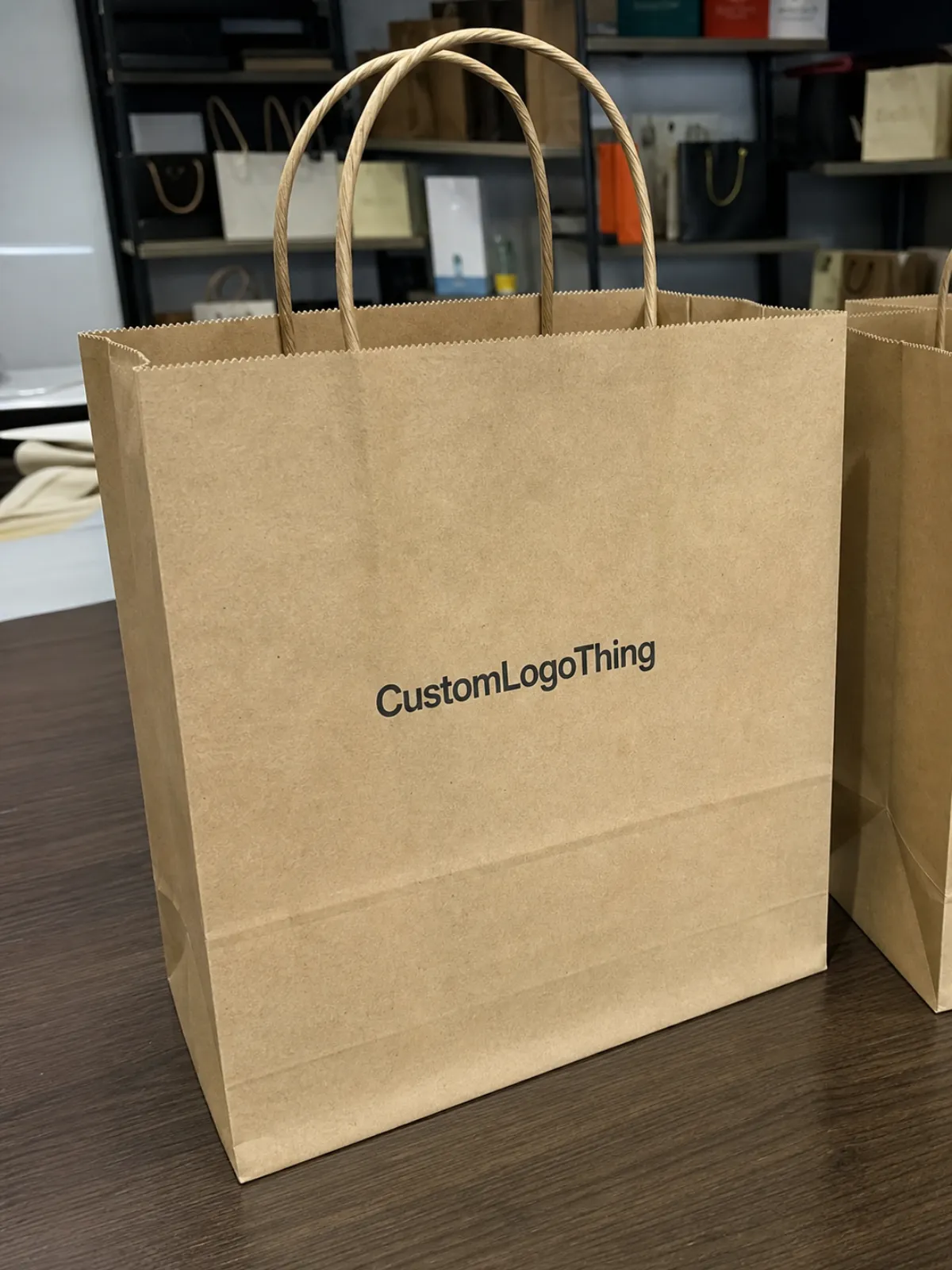
Larger boutique bags reduce friction. One properly sized bag can replace two smaller ones, which matters during check-in, spa pickup, and retail sales when staff are already juggling keys, receipts, room numbers, and guest questions. The benefit is not only speed. Fewer transfers mean fewer damaged items, fewer awkward handovers, and fewer complaints about packaging that looks improvised.
The visual effect is quieter but just as useful. A generous bag with balanced proportions reads as intentional even before the guest notices the logo. Clean folds, a sturdy base, and handles that do not twist or sag give the package a more expensive feel than a highly decorated bag on light stock. That is one reason many hotel buyers choose restrained artwork and put more of the budget into the build.
Different use cases call for different priorities. A spa bag often needs a softer finish and a cleaner look because it may carry fragrances, skincare, or robes. A retail bag for bottled products needs side-wall strength and a bottom that does not bow. A VIP welcome bag needs room for inserts, tissue, a card, and perhaps a boxed amenity set without crushing the top edge. These are small distinctions, but they change the product spec more than branding decks usually admit.
If the bag cannot survive the walk from the desk to the room, the finish is not doing much work.
There is also a staff-efficiency angle that is easy to overlook. Bags that stand upright, open cleanly, and keep their shape while being packed reduce handling time and cut down on rework. Guests notice the same things. A wrinkled bag or one that leans under its own weight suggests the operation is under-specified, even if the printing looks expensive. Packaging is part of the service script.
For procurement teams, the commercial question is not whether a bag looks premium in a mockup. It is whether the format saves time, avoids damage, and keeps the contents intact at the right cost. That is the real value test.
Dimensions, handles, and finishes that hold up in hotel use
Bag size should begin with the largest item the hotel expects to place inside, then add room for tissue, inserts, or protective wrapping. A frequent mistake is to size around the average item. That usually creates a bag that looks squeezed, or one that is overbuilt and expensive. Both outcomes are common when the specification starts with aesthetics instead of contents.
Width and gusset should let the product sit flat without forcing the side panels outward. Height should allow for the top fold, handle attachment, and any closure or branding area near the rim. If the bag is likely to carry boxed goods, a little extra headroom prevents the top from buckling. For many hotel programs, large boutique dimensions often fall somewhere around 10 x 4 x 12 inches to 14 x 6 x 16 inches, but that range only works as a starting point. The correct size depends on the actual load and how the hotel packs it.
Handle selection changes both feel and durability. Twisted paper handles are cost-efficient and common for lighter retail use. Rope handles feel denser in the hand and suit higher-end presentations. Ribbon handles can look refined for gifting, though they are not the strongest choice for heavier items. Die-cut handles with reinforcement patches keep the exterior clean and are useful on flatter bag styles, but the cut needs to be comfortable, not just visually neat.
Structural details are where many hotel orders succeed or fail. A reinforced top fold helps the bag keep its shape after repeated handling. A bottom insert spreads weight more evenly across the base. Strong glue lines and accurate folding reduce the chance of the seam opening when a guest lifts the bag by one handle. None of those details are decorative. They are the practical parts of the spec.
Finish affects both appearance and wear. Matte surfaces hide fingerprints better and usually feel calmer. Gloss produces more visual punch and can make colors look brighter. Soft-touch can create a more tactile premium feel, though it adds cost and can scuff differently from standard lamination. Uncoated stock keeps the look natural and works well for hotels that want a less retail-heavy feel. The choice depends on how the bag will be used, not just how it photographs.
For hotel Large Boutique Paper Bags MOQ planning, it helps to inspect the bag as a physical object rather than a graphic file. A strong handle, a stable base, and a fold that resists collapsing will matter more than a dramatic mockup once the bags enter daily service.
Paper stock and print specs for premium branding
Paper stock controls feel, stiffness, and print behavior. Lighter boutique bags may work in midweight kraft or art paper if the contents are modest. Larger hotel carriers usually need a heavier stock or a laminated construction so the side walls stay upright and the handle area does not feel flimsy after packing. The right stock is a balance, not an upgrade contest.
Typical paper ranges are fairly predictable. A lighter promotional bag may use 157-200gsm paper. A more premium large boutique bag often lands around 210-250gsm, and some laminated builds go higher depending on the construction and finish. Heavier paper can improve structure, but it also increases unit cost and shipping weight. For soft goods, more paper is not always better. It can be unnecessary weight if the bag contents are low risk.
Printing needs the same level of scrutiny. A simple one-color logo usually keeps setup charges lower and color matching easier. Full-bleed backgrounds, large dark fields, and foil accents demand tighter control because small shifts in ink density are visible. If the brand has strict identity standards, PMS matching is usually safer than hoping CMYK will land close enough on the first run.
Premium finishing adds complexity. Foil stamping, embossing, debossing, and spot UV each create a different look, but each also changes cost and lead time. Foil and embossing work especially well when the design needs polish without a large amount of ink coverage. A restrained logo on a clean field often looks more expensive than a crowded layout with too many effects.
Buyers should approve artwork at actual size. Screen mockups hide problems. At production size, spacing, barcode zones, small legal text, and edge bleed become much easier to judge. This matters if the bag is also carrying promo codes, item labels, or care instructions. The proof should reflect the folded bag, not only the flat view.
Sustainability claims deserve careful wording. If FSC-certified paper is required by the brand, ask for certification documents rather than assuming the stock qualifies. The FSC system is widely used for responsible paper sourcing and chain-of-custody tracking. For broader material choices and disposal expectations, the EPA's guidance on reduce, reuse, and recycle provides a sensible reference point, especially when comparing coatings and recovery options.
One practical caveat: some finishes that look excellent in a sample can show wear quickly under hotel handling. Matte black with foil, for example, may photograph beautifully but still pick up marks from repeated contact. The buyer should ask how the finish behaves after folding, stacking, and transport. That conversation saves surprises later.
Pricing, MOQ, and unit cost drivers for hotel large boutique paper bags moq
MOQ is driven by production complexity, not just by bag category. Size, print count, handle type, finish, and whether the bag needs custom tooling all influence the minimum. A plain one-color bag on an existing die can often be produced at a lower MOQ than a custom size with ribbon handles and a laminated surface. The more variables, the more the setup cost gets spread across the run.
The main price drivers are easy to map. Paper weight moves the cost. Custom printing moves the cost. Special coatings move the cost. Reinforced handles, inserts, and custom dimensions move the cost again. If the converter needs new cutting forms or extra hand assembly, tooling fees or setup charges are common. Those charges should be visible in the quote, not buried in a line that looks like freight.
For comparison shopping, tiered pricing is more useful than a single number. A quote at 2,000 pieces rarely shows where the useful break point sits. The better comparison is often 2,000 versus 5,000 versus 10,000 pieces because the cost per piece may fall sharply once the setup has been absorbed. That matters if the hotel can store the surplus and use the same format across multiple seasons or properties.
| Spec option | Typical MOQ range | Typical unit cost range | Best fit |
|---|---|---|---|
| Twisted-handle kraft, 1-color print | 1,000-3,000 pcs | $0.28-$0.55 | Lobby retail, amenity bags, simple welcome kits |
| Art paper, matte lamination, rope handle | 2,000-5,000 pcs | $0.55-$1.05 | Premium spa retail, gift sets, branded arrivals |
| Heavy stock, foil or embossing, reinforced build | 3,000-8,000 pcs | $0.85-$1.60 | Luxury suites, VIP gifting, higher-value merchandise |
Those figures are directional. Freight, export packing, customs handling, and split delivery requirements can move the landed price more than the headline unit rate. A low factory quote can turn less attractive once shipping and storage are added. That is why procurement should look at total landed cost rather than the first number that arrives by email.
For hotel large boutique Paper Bags MOQ planning, the most useful quote is the one that shows cost steps clearly. Ask which changes affect price the least and which ones trigger a fresh setup. Sometimes a second print color adds very little. Sometimes it changes the whole production route. The difference matters.
If the order is for a seasonal launch, compare one conservative MOQ with one slightly higher-volume option. A larger run may drop the per-bag cost enough to justify extra stock, especially if the bag design will be reused across a group of properties or in the same retail program for several months.
Process, timeline, and production steps from proof to delivery
A clean production flow usually follows the same sequence: request specs, receive a quote, confirm the dieline, approve artwork, review the final proof, then move into production. That sounds basic, but delays usually start with incomplete inputs. Missing art files, unclear dimensions, or late changes to handle style can add days before the order has even been scheduled.
Lead time depends on quantity and complexity. Standard orders with approved artwork often take about 12-15 business days after proof sign-off. More complex builds, especially those with foil, embossing, or custom sizing, can run longer. Shipping is a separate variable. Air freight is faster and more expensive. Sea freight is slower but usually makes more sense for larger replenishment orders.
Hotels should leave room for launch dates, events, and peak travel periods. A bag that arrives after the opening is not useful, even if the quality is good. A buffer of one to two weeks beyond the expected ship date is usually wise because artwork revisions, carton changes, and shipping delays appear more often than buyers would like.
If the bags will be packed with other items or used as part of a distributed welcome kit, ask whether the sample or carton plan has been checked against a relevant standard. ISTA test methods are commonly used for shipping and distribution checks, and they are helpful when a package must survive more than a short handoff. Not every paper bag order needs formal testing, but larger kits and heavier retail sets benefit from a more disciplined review.
It also helps to confirm the ship-to location early. Resort delivery, warehouse receiving, and overseas distribution are not interchangeable. They affect transit time, freight cost, and sometimes the carton configuration. If those details are left until the end, the quoted schedule often changes. That can create avoidable pressure on the receiving side.
For faster quoting, share the dimensions, quantity, stock preference, handle style, print colors, finish, delivery point, and required arrival date in one message. Good data shortens the back-and-forth more effectively than a long email thread.
Supplier checks that reduce reorders, damage, and delays
Price alone does not tell you whether a supplier is reliable on paper bag programs. Ask for a written spec sheet, sample photos, and a clear approval trail for the dieline and artwork. If a supplier cannot show which version was approved, repeat orders become harder and errors are more likely.
Quality control should focus on the parts that fail in practice. Handle attachment has to hold under load. Color matching should be checked on press, not only on a screen. Bottom seams need to stay closed after packing and transport. A bag can look perfect in a still image and still fail once staff start using it every day.
Buyers should also compare suppliers on total landed cost. That includes carton packing, freight mode, export handling, and the risk of replacement if the order arrives with weak handles or inconsistent color. A slightly higher quote may be the better commercial decision if it reduces the chance of a reprint or a rushed reshipment.
Repeat orders deserve their own check. If the supplier saves the final dieline, print references, stock notes, and finish details, replenishment becomes faster and more accurate. That matters for hotel groups that reorder by season or route requests through a central procurement team. The second order should not feel like a new project.
This is also where hotel large Boutique Paper Bags moq stops being a purely pricing question. A lower MOQ only helps if the supplier can repeat the same build consistently. If the first run is clean but the second drifts on color, size, or handle strength, the lower minimum does not actually save money. Consistency is part of the product.
There is one more test worth asking about: how the supplier handles exceptions. Do they explain when a larger bag needs heavier paper? Do they flag a finish that increases the unit cost sharply? Do they point out that a slightly higher MOQ can reduce the per-bag price enough to outweigh storage? A good supplier answers those questions before the order is placed.
Next steps for quoting a hotel bag order
Start with the bag dimensions, the contents, the handle style, and the finish. Then add quantity, print colors, delivery point, and the required arrival date. That set of details is usually enough for a supplier to narrow the options quickly and tell you whether the order falls inside a practical production band.
Artwork should go out with clear notes on logo placement, any small text, and the number of printed panels. If the design is sensitive, ask for a sample or pre-production proof before the full run starts. Catching a placement problem early is far cheaper than correcting it across thousands of pieces.
It also helps to set a target MOQ band before asking for a quote. That gives the supplier room to recommend the right build instead of pushing the most expensive version by default. If you are choosing between two finishes, ask for both. A side-by-side comparison of bulk pricing, appearance, and handling usually makes the decision much easier.
For buyers managing hotel large Boutique Paper Bags moq across one property or a group portfolio, the strongest quote compares three things together: unit cost, lead time, and structural fit. If one option saves a few cents but fails a load check, it is not the better order. If another raises the cost slightly but improves handling and lowers damage risk, that is often the smarter commercial choice.
That is the point of a disciplined spec. The bag should fit the guest journey instead of forcing the operation to work around the packaging.
What MOQ should I expect for hotel large boutique paper bags?
MOQ usually depends on size, print complexity, and finish choices rather than only on order volume. Simple one-color bags often have lower minimums than foil, embossing, or multi-panel artwork. Ask for tiered quotes so you can see how the unit price changes at different quantities.
Can I order samples before placing a hotel boutique bag order?
Yes. Ask for a flat sample or a pre-production proof before full production starts. Use it to check paper feel, handle strength, color accuracy, and bag proportions. If the order has special artwork, confirm logo placement and any edge bleed on the sample.
Which size works best for large hotel gift and retail items?
Choose the bag around the largest item plus a small buffer for tissue, inserts, or boxed packaging. Measure width, gusset, and height separately so the bag does not look undersized or wastefully large. If the bag will carry robes or boxed amenities, prioritize bottom strength and handle comfort.
How long does production usually take after artwork approval?
Lead time depends on quantity, print method, and whether custom sizing is required. Standard orders with approved artwork often take about 12-15 business days before shipping. Add transit time separately, especially for launches, events, or hotel opening dates.
What should I send to get an accurate quote for hotel large boutique paper bags?
Send bag dimensions, quantity, stock preference, handle style, print colors, and finish requirements. Include delivery location and needed arrival date so freight and turnaround are priced correctly. If you have a target budget, mention it early so the supplier can recommend the best spec mix.

