Buyer Fit Snapshot
| Best fit | Apparel Packaging Boxes Custom projects where brand print, material claims, artwork control, MOQ, and repeat-order consistency need to be specified before quoting. |
|---|---|
| Quote inputs | Share finished size, material target, print colors, finish, packing count, annual reorder estimate, ship-to region, and any compliance wording. |
| Proofing check | Approve dieline scale, logo placement, barcode or warning zones, color tolerance, closure strength, and carton packing before bulk production. |
| Main risk | Vague material claims, crowded artwork, missing packing details, or unclear freight terms can make a low unit price expensive after revisions. |
Fast answer: Apparel Packaging Boxes Custom: Artwork Proof, Packing Count, and Landed Cost should be specified like a repeatable production item. The safest quote records material, print method, finish, artwork proof, packing count, and reorder notes in one written spec.
Production checks before approval
Compare the actual filled-product size with the drawing, then confirm tolerance on folds, seals, hang holes, label areas, and retail display edges. Reserve space for logos, QR codes, warning copy, and material claims before decorative graphics fill the panel.
Quote comparison points
Review material grade, print process, finish, sampling route, tooling charges, carton quantity, and freight assumptions side by side. A quote is only useful when the supplier can repeat the same color, closure quality, and packing count on the next order.
Apparel Packaging Boxes Custom: How to Choose the Right Fit
A shirt can be cut beautifully and still lose its premium feel the moment it lands in the wrong box. With apparel Packaging Boxes Custom, the package often becomes the first physical proof that a brand pays attention to detail, and a flimsy carton can drag a well-made garment down into bargain-bin territory in seconds.
That mismatch costs more than people expect. A box is not just a container. It is protection, product packaging, retail packaging, and package branding all doing separate jobs at once. Choose the wrong structure or finish, and the damage shows up in customer perception, shipping claims, and margin. I have seen teams spend extra on foil stamping only to discover the box still failed at the most basic task: keeping the clothes flat and intact.
See how Apparel Packaging Boxes custom protect garments, shape unboxing, and manage cost through the right materials, structure, and timeline.
Why Apparel Packaging Boxes Custom Matter More Than You Think
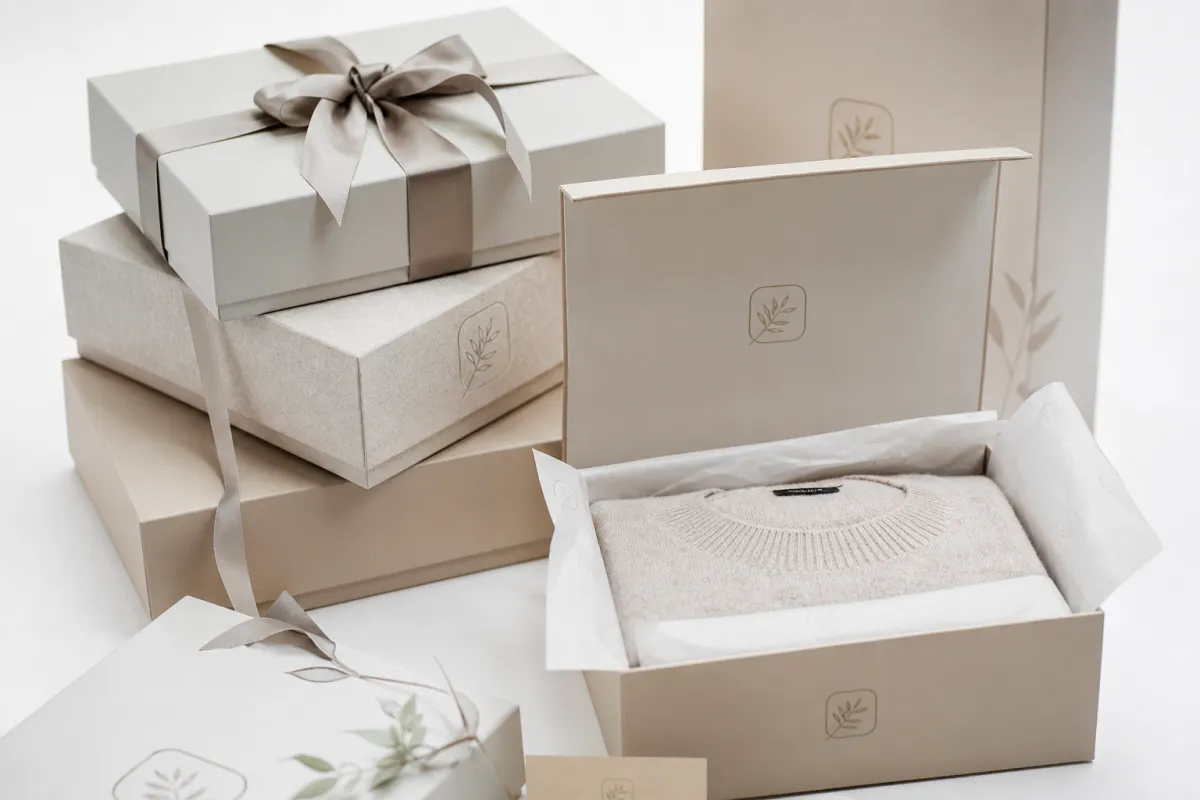
Two identical shirts can trigger two very different reactions. Place one in a rigid branded box with crisp folds and a restrained logo, and it feels considered. Put the other in a dented generic mailer, and the same shirt suddenly reads as low-end stock, even if the fabric and stitching are identical. That shift is not accidental. It is packaging design doing its job.
Apparel packaging boxes custom matter because they frame the first contact between customer and product. Before anyone touches the cloth, they notice the box weight, the print quality, the opening sequence, and whether the garment looks protected or tossed in at the last minute. That first impression shapes perceived value more than most brand teams want to admit.
There is a practical side too. Well-built apparel packaging boxes custom reduce wrinkling, scuffing, and corner damage during transit. They keep folded shirts centered, stop hoodies from shifting around, and make gift sets feel deliberate instead of improvised. For direct-to-consumer brands, that can mean fewer complaints, fewer re-ships, and fewer returns tied to preventable damage.
From the buyer's perspective, the equation is simple. The box has to protect the garment, present it properly, and fit the shipping model. Premium knitwear rarely belongs in a thin sleeve. Bundled apparel sets need packaging that keeps every component in place without turning the interior into a loose pile of fabric and paper. Apparel packaging boxes custom give brands control over that balance.
Presentation still carries weight, and not in a vague marketing way. Good branded packaging makes a product feel finished. It tells the customer the brand notices details that many competitors miss. That is why so many teams treat apparel packaging boxes custom as part of the garment rather than a disposable extra. The box becomes part of the purchase experience, part of the shelf story, and part of the memory the customer takes home.
A box is not decoration first. It is a shipping decision that happens to carry branding.
Once that idea settles in, the rest gets easier. The question stops being “What looks nice?” and turns into “What structure, material, and finish will do the work?” That is the right question for apparel packaging boxes custom, and it is the one that keeps expensive surprises out of the production run.
How Do Apparel Packaging Boxes Custom Work?
Apparel packaging boxes custom usually follow a straightforward workflow: define the product, choose the box style, set the dimensions, pick the stock, add print and finishes, then approve samples before production starts. On paper, that sounds orderly. In practice, the fit stage decides whether the project works or turns into a series of avoidable headaches.
The garment matters more than the rendering. A folded tee, a stacked hoodie, a pair of socks, a scarf, or a bundled gift set all behave differently inside a box. A slim cotton shirt can sit neatly in a shallow carton, while a thicker sweatshirt needs more headroom and stronger side walls. Good apparel packaging boxes custom are built around the real folded dimensions, not a concept sketch.
These box formats show up most often in apparel packaging:
- Folding cartons for lighter garments, accessories, and retail display.
- Rigid boxes for premium presentation, gift sets, and higher perceived value.
- Mailer boxes for direct shipping and stronger stacking during transit.
- Tuck-end boxes for efficient assembly and straightforward retail use.
- Magnetic closure boxes for a luxury opening experience and high-end package branding.
Each format solves a different problem. Folding cartons print beautifully and keep costs down, but they are not built to take rough shipping by themselves. Rigid boxes feel substantial, and that weight shows up in both unit cost and freight. Mailers sit between the two for brands that want structure without moving into full luxury packaging. Apparel packaging boxes custom should match the product journey from warehouse to customer, not just the look of a mockup.
Inserts and tissue matter more than many buyers expect. A simple paperboard insert can keep a shirt from sliding. Tissue adds friction and makes the reveal feel intentional. For multi-item sets, custom inserts separate components so the interior does not look like someone shook the box before delivery. Small detail, large effect.
Printing carries the branding layer. Many apparel packaging boxes custom use offset printing for cleaner, higher-volume color work, while digital printing works well for shorter runs or frequent artwork changes. Foil stamping, embossing, debossing, spot UV, and custom liners all have a place, but not every finish belongs on every box. Strong package branding usually comes from one clear accent, not five effects competing for attention.
If the box ships directly to customers, the construction also needs to survive actual handling. That is where shipping tests matter. For brands comparing protective performance, the test framework at ISTA is worth reviewing, because a box that looks excellent but fails in transit is just an expensive mistake.
For teams trying to keep the process organized, it helps to treat apparel packaging boxes custom as a small project with defined stages: concept, dimensions, material, print, sample, approval, production, and freight. That discipline keeps the work from drifting into a pile of opinions.
Key Factors in Apparel Packaging Boxes Custom
Five things decide whether apparel packaging boxes custom feel right or awkward: material, size, structure, branding complexity, and protection. Everything else is a variation on those five. If one slips, the box usually shows it fast.
Material choice sets the tone. Paperboard is common for lighter retail packaging and gives strong print quality. Corrugated stock adds strength and performs better in shipping. Rigid board suits premium presentation when appearance matters as much as cost. Recycled kraft gives a natural look and a more restrained feel. Specialty lamination changes durability and appearance, though the price climbs quickly if it is treated as a default instead of a choice.
Size and structure matter more than most buyers expect. Oversized apparel packaging boxes custom waste board, waste shipping space, and let the product rattle inside. Undersized boxes crush folds or force wrinkles into places they should never be. The right box leaves enough room for tissue or inserts if needed, but not so much extra volume that you end up shipping air.
Branding complexity changes both price and production risk. A one-color logo on kraft board is simple and efficient. Full-coverage print, metallic foil, textured coating, and multi-panel artwork raise the stakes. That does not make richer branding wrong. It means every added effect has to justify its place. A clean, confident retail packaging design often outperforms a box that tries to look expensive by stacking every finish available.
Protection needs are non-negotiable when the box ships to a customer. A retail display carton can use lighter construction because it lives on a shelf. A shipped box has to survive stacking, vibration, drops, and edge wear. If linehaul or parcel delivery is part of the plan, stronger walls and tighter fit tolerances are worth the spend. The EPA has a useful overview on reducing packaging waste and right-sizing at EPA packaging guidance, which is a useful reminder that overboxing is not a virtue.
Sustainability is not just a marketing line. Recycled board, FSC-certified fiber, minimal coating, and right-sized dimensions all contribute to a stronger packaging story. If a brand wants to make responsible sourcing claims, the certification needs to be credible. FSC gives a solid starting point for fiber sourcing claims. That works better than vague green language, which buyers can spot instantly.
Consistency matters too. Custom printed boxes for apparel need to be repeatable. If the first sample looks polished and the next production run shifts in shade, trust starts to erode. Proofing, color targets, and clear print specs help prevent that. Good apparel packaging boxes custom should not only look sharp. They should repeat cleanly across runs, which is what turns package branding into a system rather than a lucky one-off.
For brands building a broader packaging lineup, side-by-side comparison beats guesswork from a single sample. If you are still mapping out options, reviewing Custom Packaging Products alongside your apparel box plan can prevent a wrong structure from getting ordered twice.
Apparel Packaging Boxes Custom Pricing: What Drives Cost
Apparel packaging boxes custom pricing comes down to five main levers: box type, stock thickness, print coverage, finish complexity, and order quantity. Add inserts, specialty coatings, or rush freight, and the number shifts again. Nobody enjoys that answer, but it is the honest one.
The easiest way to read pricing is to compare how much structure and finish the box actually needs. A simple folding carton for lightweight apparel can be highly efficient. A corrugated mailer is stronger and usually costs more. A rigid setup box with magnetic closure sits at the premium end because it uses more material and more manual assembly. That elevated feel is the point, and the bill reflects it.
Quantity changes the economics. Larger runs usually reduce unit price because setup work gets spread across more boxes. The downside is storage and cash flow. If you only sell seasonal drops or limited editions, overordering can turn a supposed savings into inventory that sits untouched for months. Apparel packaging boxes custom should be priced at several order levels so the real tradeoff is visible.
Hidden costs matter too. Dieline development, plate charges, sampling, proofing, freight, and rush fees can alter the final number quickly. When a quote looks unusually low, check what is missing. More than one buyer has been caught off guard by pieces of the process that were treated like optional extras. They are not optional. They are simply itemized later.
The table below gives realistic comparison points. These are typical ranges, not promises. Artwork coverage, exact dimensions, material grade, and shipping mode will move the numbers.
| Box Type | Best Use | Typical Unit Range | Cost Notes |
|---|---|---|---|
| Folding carton | Folded tees, light apparel, accessories | $0.18-$0.45 | Good for higher-volume custom printed boxes; lower structural cost, strong print value |
| Corrugated mailer | Direct shipping, e-commerce apparel | $0.40-$1.10 | Better protection, heavier freight, solid choice for shipping-focused apparel packaging boxes custom |
| Rigid setup box | Premium retail, gift sets, launches | $1.20-$4.50 | Higher material and assembly cost, strong shelf presence, better unboxing feel |
| Magnetic rigid box | Luxury collections, VIP kits | $2.50-$7.00 | Premium closure, more manual labor, useful when presentation carries part of the selling price |
A practical rule helps here: compare at least three quantities before approving a run. For example, 1,000, 3,000, and 5,000 units usually reveal where the unit price drops enough to matter. That makes it easier to decide whether a design change is worth the money or just expensive decoration. Apparel packaging boxes custom should earn their cost through value, not vanity.
Print load changes the math too. A single-color kraft box can feel deliberate and modern. Full-coverage CMYK with foil, embossing, and a custom insert can look expensive, but material and labor rise fast. If the apparel margin is tight, it usually makes more sense to spend on one strong detail than on every possible finish.
For buyers comparing packaging budget against overall fulfillment cost, packaging product formats are easier to evaluate when shipping weight, stackability, and assembly time are considered together. That is where the real savings usually live.
Apparel Packaging Boxes Custom Process and Timeline
The timeline for apparel packaging boxes custom is usually more forgiving than people fear, but only if the buyer stays organized. The process typically moves through discovery, dieline creation, artwork setup, sampling, revisions, production, finishing, packing, and shipping. Miss one approval, and the schedule starts slipping for reasons that feel small at first and expensive later.
Discovery is where the box purpose gets defined. Is this retail packaging, e-commerce shipping packaging, a gift box, or a presentation box for a limited apparel drop? The answer changes the structure. It also changes the finish strategy. A brand that wants understated product packaging does not need the same spec as a high-ticket launch kit.
Dieline creation is the step people often underestimate. This is where dimensions become manufacturing instructions. If the folded shirt is measured without tissue, or without the insert, or without the real fold style, the prototype can come back too tight. Two millimeters is not a tiny mistake in packaging. Two millimeters is how a good concept turns into a box that pinches corners and slows packing.
Sampling is the checkpoint nobody should skip. A proof image can only show so much. A physical sample reveals whether the folds clear the walls, whether the finish reads correctly under normal light, and whether the opening feels clean. If the sample is wrong, fix it before production. That is cheaper than discovering the issue after thousands of units are printed.
Typical timing depends on the setup. Simple digital apparel packaging boxes custom can move from proof approval to production in about 7-12 business days. More complex rigid boxes, special finishes, or custom inserts often need 15-25 business days or more after approval. Add freight, and the calendar stretches again. That is normal. It is manufacturing, not a mystery.
Busy production periods matter too. Seasonal launches, holiday programs, and retail resets crowd the factory schedule, so a quote that looks fine in isolation can become tight in practice. Smart buyers build in a buffer. A week of cushion helps. Two weeks is safer. More is wise if the launch date is fixed and someone is likely to discover a revision late on Friday.
The buyer's role comes down to speed and clarity. Fast approvals keep the process moving. Slow feedback adds days, sometimes weeks, without improving the box. If you want apparel packaging boxes custom to land on time, bring measurements, print files, color expectations, and a clear sign-off path before the sample phase starts.
If you want a packaging team to work efficiently, tell them what matters most: presentation, shipping durability, or cost control. Once those priorities are explicit, the rest of the process gets simpler.
Step-by-Step Guide to Ordering Apparel Packaging Boxes Custom
Ordering apparel packaging boxes custom is less mysterious than it looks. The work sits in the details. Handle them in the right order, and the project stays calm. Skip around, and it turns into a chain of avoidable surprises.
-
Define the product and use case.
Start with the garment itself. Is it a folded tee, hoodie, activewear set, scarf, or mixed bundle? Then decide how the box will be used. Retail shelf, gift presentation, direct shipping, or a hybrid? Apparel packaging boxes custom should be specified around that answer, not around a vague idea of “premium.”
-
Measure the folded product correctly.
Measure the garment after it is folded the way it will actually ship. Include tissue, inserts, and any sleeve boards or backing cards. If multiple sizes are sold, test the largest folded version first. That keeps the box usable across the full line and avoids a second dieline later.
-
Choose the box style and material.
Decide whether the box needs strength, shelf appeal, or both. Paperboard works well for lighter presentation boxes. Corrugated works better for shipping. Rigid board suits higher-value items. This is where many buyers overspend on finishes and underspec the structure. The box should protect the apparel before it tries to impress anyone.
-
Prepare artwork for production.
Use the correct dieline, keep logos inside safe areas, and set color expectations early. Ask for a proof and read it like a production document, not a mood piece. If the branding will appear on multiple panels, make sure marks, folds, and seam positions are understood before approval. Good package branding depends on alignment as much as on style.
-
Review the sample and approve with purpose.
Check fit, finish, opening feel, and assembly time. If the sample looks good but slows packing, that is a labor issue. If it feels premium but the garment shifts inside, that is a protection issue. Approve only when the box handles both the product and the process.
Once those five steps are locked, execution becomes much easier. If you want to compare styles or build out a broader line, the Custom Packaging Products page is a useful starting point for matching box formats to real use cases.
One more practical point: do not design the box in isolation from fulfillment. A beautiful carton that adds 20 seconds to every order is gonna show up in labor costs quickly. For apparel packaging boxes custom, packing speed matters almost as much as print quality.
Common Mistakes, Expert Tips, and Next Steps
The most common mistake with apparel packaging boxes custom is guessing the dimensions. Guessing feels quicker, but it usually costs more. A box that is too small crushes the product. A box that is too large wastes material, increases freight cost, and lets the garment move around inside like it was packed without any thought at all.
Overdesigning the print is another trap. Buyers sometimes try to make the box carry every brand message at once. Full-coverage ink, foil, embossing, spot UV, and a custom insert can look impressive on a sample shelf, but the cost stack grows quickly. If the margin is not there, that design works against the business. A cleaner, sharper apparel packaging boxes custom spec often looks more confident than a box overloaded with effects.
Skipping samples is the classic self-inflicted problem. The mockup looked fine. The print file looked fine. Then the actual carton arrives and the fold line cuts through the logo, or the lid sits crooked, or the shirt only fits if it is folded tighter than the product team wanted. That is why sample approval exists. It is not ceremonial. It prevents expensive regret.
Ordering too few units is another trap. Small runs make sense in some cases, especially for new launches or seasonal capsules. The downside is that tiny quantities can push unit cost up fast. If the program is likely to repeat, ask for pricing at two or three volume points and compare the real tradeoff. Sometimes a slightly larger run pays off. Sometimes it only creates storage headaches. There is no magic number; there is only the number that fits the demand pattern.
These expert moves usually pay off:
- Standardize sizes across product lines where possible so dielines can be reused.
- Use one premium detail well, such as embossing or foil, instead of stacking every finish.
- Choose structure first, then decoration, because the box has to function before it performs.
- Keep branding consistent across product packaging so the customer recognizes the system immediately.
- Test packing speed before full production if fulfillment labor is tight.
There is a sustainability angle here too. Right-sized apparel packaging boxes custom reduce wasted board and often reduce shipping volume. That helps cost and the environment, which is one of the few places where operations and marketing can agree without negotiation. The EPA guidance linked earlier is a useful reference if you need support for packaging reduction decisions beyond personal preference.
If you are deciding what to do next, keep it practical. Audit the apparel you ship most often. Decide whether the box must protect, present, or do both. Request sample pricing at two or three quantities. Then approve a prototype before full production. That sequence gets you to a better box faster than endless internal debate.
Apparel packaging boxes custom work best when they are treated like part of the product system, not an accessory project. That means measuring honestly, pricing honestly, and choosing finishes with restraint. It also means thinking about the wider packaging line, not just one SKU. If you want to compare more custom packaging options, do it before the artwork is locked, not after the sample is already wrong.
For brands serious about consistency, apparel packaging boxes custom should be planned alongside the garment fold, the fulfillment method, and the customer journey. That is the real fit. Not only the physical fit. The operational fit. The box should suit the shirt, the shipper, the margin, and the brand story at the same time.
And if that sounds like a lot, it is. Packaging is one of those areas where a small decision quietly affects everything else. The good news is that once the box system is right, it keeps working for a long time.
So the most useful next move is simple: measure the folded apparel, define the shipping path, compare three box structures, and approve a sample that proves the fit before a full run. Do that, and apparel packaging boxes custom stop being a guess and start being a repeatable part of the business.
Frequently Asked Questions
What size should apparel packaging boxes custom be for folded shirts?
Measure the folded shirt with tissue and any inserts included, not just the garment flat. Leave enough clearance so the shirt slides in cleanly without compressing the folds. If multiple sizes are sold, test the largest folded size first so the box works across the range.
How much do apparel packaging boxes custom usually cost?
Cost depends on box style, material, print coverage, finishes, quantity, and shipping. Rigid boxes and specialty finishes cost more; simple folding cartons and kraft mailers are usually cheaper. Ask for pricing at several quantities so you can compare unit cost against storage and cash flow.
How long do apparel packaging boxes custom take to produce?
Simple projects can move quickly, but sampling, artwork approval, and freight often set the real timeline. Special finishes, custom tooling, and busy production periods can extend lead time. Build in extra time before launches, seasonal drops, or retail resets.
What materials work best for apparel packaging boxes custom?
Paperboard works well for lighter retail boxes and clean printing. Corrugated stock is better for shipping protection and stronger stacking performance. Rigid board is best when presentation matters more than unit cost.
Can apparel packaging boxes custom include inserts or special finishes?
Yes, inserts help hold garments in place and improve presentation. Special finishes like foil, embossing, and spot UV can make the packaging feel more premium. Use finishes strategically so the box looks intentional instead of overloaded.
Choose apparel packaging boxes custom with the product, shipping method, and margin in mind, and the box stops being a line item you resent and starts doing useful work for the brand every time it lands in a customer’s hands.


