The apparel running Caps Sample Checklist exists for one reason: a cap that looks right on a table can still fail in motion. Sweat changes the feel of fabric, wind changes how the brim sits, and a half-inch of extra depth can make a cap ride up or collapse in the front. A sample is only useful if it reveals those problems before bulk production starts.
That is where many buyers lose money. They approve a sample because the logo is clean or the color matches the reference, then discover later that the cap is too warm, the closure slips, or the internal seams irritate after a long run. On active headwear, small defects are not small. They become returns, complaints, or dead inventory.
A disciplined sample review should answer four questions: does it fit the intended wearer, does it perform during movement, does the branding reproduce accurately, and can the factory repeat the build without drifting from the spec? If the answer to any of those is uncertain, the sample is not finished working yet.
Why Sample Caps Fail When Buyers Skip One Checklist
Running caps are often treated like casual caps with a technical label attached, but the use case is different. A running cap has to manage heat, sweat, and motion all at once. A cap that feels acceptable in a showroom can become distracting after twenty minutes outdoors. That is why a sample review needs more than a visual check.
Most failures come from one of three oversights: the cap was never worn in motion, the buyer only checked the outside, or the brief was too vague for the factory to build consistently. If the sample checklist is loose, the factory fills in the blanks with assumptions. Assumptions are cheap in sampling and expensive in production.
A running cap also lives through more stress than a promotional cap. The brim gets bent in bags, the sweatband soaks and dries repeatedly, and the stitching near the closure is pulled every time the wearer adjusts fit. A weak thread count, poor seam finishing, or a closure that looks fine on day one can turn into a problem very quickly.
A sample is not a trophy. It is a test piece. If it cannot survive a real wear test, it has not earned approval.
Buyers sometimes focus on the most visible feature first, usually the logo. That is understandable, but it can hide deeper issues. A sharp mark does not rescue a cap that traps heat, sits too shallow, or scratches the forehead. The smarter question is whether the product still feels right after a hot run, a wash cycle, and a week in a gym bag.
How a Sample Review Moves From Prototype to Approval
The sample process works best when the brief is specific enough that nobody has to guess. The buyer should send measurements, artwork files, intended use, fabric preference, closure type, and any non-negotiable details such as reflective accents, laser-cut vents, or a soft front panel. If the design includes special construction, that should be stated early, not after the first sample arrives.
A useful review has two stages. First, inspect the cap on the table. Check seam finish, logo alignment, print sharpness, label placement, packaging, and obvious construction defects. Then put it on a head and move. Bend forward, walk briskly, and if possible run in it for at least a short test. Motion exposes crown imbalance, brim bounce, and sweat management issues that a static inspection will never show.
Feedback should be measurable. “Make it cleaner” is not enough. “Raise the front logo 4 mm, reduce fill density, and flatten the center seam by 1 mm” gives the factory something concrete to work with. Clear language shortens revision cycles because it reduces interpretation.
Approval usually falls into one of three buckets:
- Approve for production when the sample matches the spec and wear testing is acceptable.
- Request a revised sample when a production-critical detail still misses the target.
- Approve with notes only when a minor issue is documented and does not affect fit, function, or durability.
That last option needs restraint. Notes are fine for a hangtag line or a packaging detail. They are not fine for fit, breathability, or decoration defects that will repeat across every unit.
Fit, Breathability, Branding, and Fabric Details
Fit is the first gate because everything else depends on it. Check head circumference range, crown depth, brim length, and closure adjustment against the actual user. A cap built for a narrow range may look fine on paper and still fail the broader audience the moment it reaches retail. Too shallow, and it rides up. Too deep, and the front panel sags or folds.
Breathability deserves equal scrutiny. Polyester is common because it dries quickly and handles decoration well, but not all polyester behaves the same. Mesh side panels, perforated back panels, and sweat-wicking interiors all change how the cap feels after 15 or 20 minutes of activity. A buyer should ask how the fabric feels once it warms up, not only when it comes out of the box.
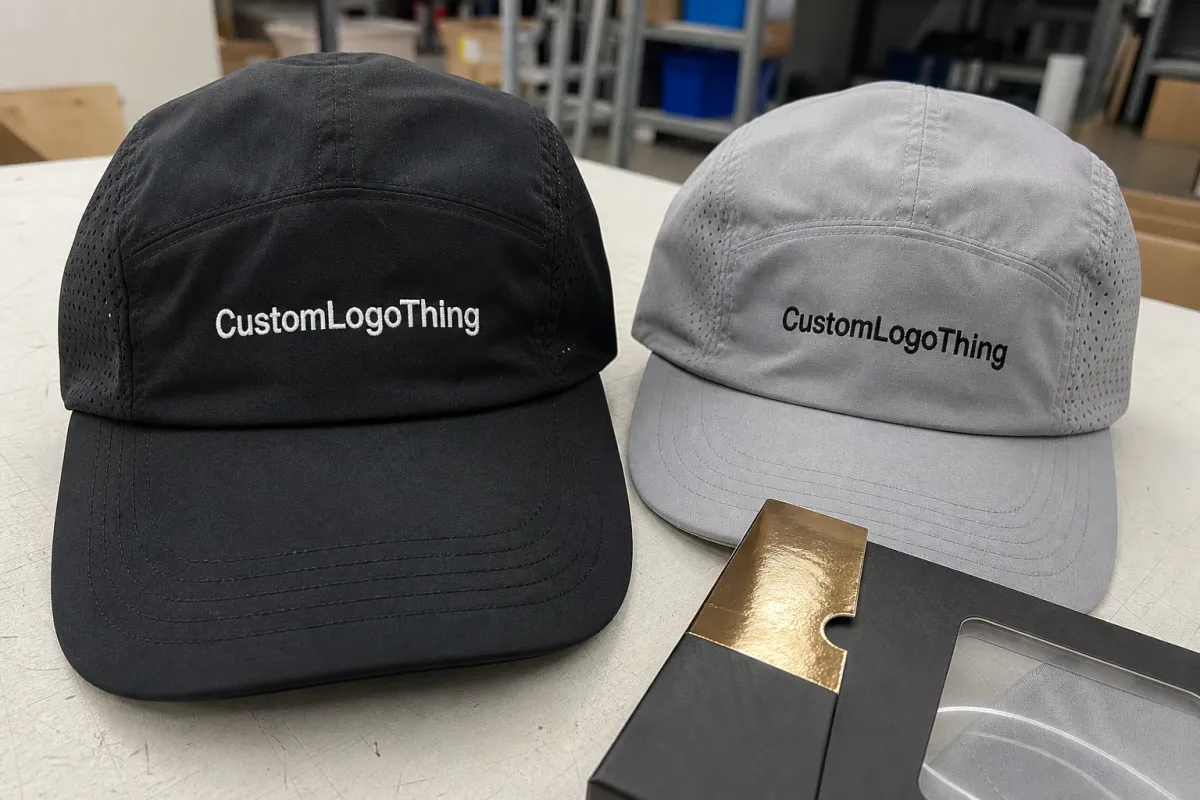
Branding quality is more than logo size. Review placement, stitch density, edge clarity, color matching, and how the mark sits when the front panel flexes. Embroidery can pucker if the fill is too heavy or the backing is too stiff. Print can crack or blur if the substrate is not stable enough. A good sample shows whether the decoration method matches the fabric, not just whether the artwork file was followed.
Trim and interior finish matter too. Internal seams should lie flat. Labels should not scratch. Sweatbands should feel soft enough for repeated wear but stable enough not to twist after washing. Buyers often underestimate these details because they are invisible in marketing images, yet they are easy for customers to notice the first time the cap is worn hard.
For technical buyers, it helps to compare sample options against a few practical variables:
| Sample Type | Best For | Indicative Sample Cost | Typical Review Time | Main Risk |
|---|---|---|---|---|
| Stock cap with print | Fast promotional or event orders | $30-$60 | 5-8 business days | Fit may be generic and less controlled |
| Stock cap with embroidery | Simple retail-style branding tests | $40-$85 | 7-12 business days | Logo puckering if stitch density is off |
| Custom panel build | Unique crown shape or material mix | $65-$150 | 10-18 business days | More room for spec drift during revisions |
| Pre-production sample | Final sign-off before bulk | $45-$120 | 8-14 business days | Any miss here can scale across the order |
Fabric choice should be read with some skepticism, because the label rarely tells the whole story. Lightweight polyester, nylon blends, and a small amount of spandex can change stretch recovery, handfeel, and drape. A cap that needs structure should not use a fabric that collapses too easily. A cap meant for cooling should not use dense lining that traps heat.
Packaging and paper components deserve their own check if the product is sold as premium or environmentally sensitive. Ask whether inserts, cartons, or hangtags are printed on FSC-certified stock if that claim matters to the brand. If shipping durability is part of the risk profile, package testing references such as ISTA methods can help define what “good enough in transit” actually means. See FSC and ISTA for the baseline language suppliers often use.
Production Process and Timeline for Sample Approval
The best production flow is boring in the right way. The buyer sends the brief. The factory confirms the spec. The sample is built. Feedback is gathered. A revision is made if needed. Final approval is written down. Only then does bulk production start. Every shortcut in that chain creates avoidable risk.
Lead time depends on how much of the cap is standard and how much is custom. A simple running cap made from familiar fabric and a standard closure can move quickly. A cap with a special mesh, custom crown pattern, reflective trim, or unusual lining needs more time because sourcing and construction both become more complicated. Decoration complexity also matters; embroidery, heat transfer, woven patches, and mixed methods all affect turnaround.
For a straightforward first sample, 7-14 business days is a common range once the factory has complete artwork and measurements. A revised sample often takes another 5-10 business days. Bulk production starts after approval, and that timing shifts with order size, season, and factory load. A sample deadline is not the same as a production deadline, even when the dates sit close together on the calendar.
The biggest delays are usually predictable:
- Artwork is sent in the wrong format or at low resolution.
- Measurements are approximate instead of specified.
- No single person owns the approval decision.
- Feedback arrives late, so the sample sits idle.
- Approval is given verbally and then disputed later.
That final problem causes more trouble than buyers expect. Written approval protects both sides because it records exactly what was accepted and what remains open. If packaging is part of the order, the same discipline applies there. Cap spec, insert text, carton layout, and shipping mark should not live in separate conversations that can drift apart.
Production timelines also change when compliance or testing is requested. If a buyer needs colorfastness, wash durability, or a specific packaging test, that should be built into the schedule before anyone promises a ship date. Late testing is one of the fastest ways to turn a manageable order into a rush job.
Cost, MOQ, and Quote Variables That Change the Price
Price matters, but only after the scope is clear. A low quote can be misleading if it excludes setup, artwork preparation, revision samples, or packaging changes. The real question is what the factory has included, and what it has left out. That detail often decides whether a quote is useful or merely attractive.
MOQ affects unit economics immediately. A 300-piece order spreads sampling, setup, and labor across fewer units than a 3,000-piece order, so the per-cap cost rises. That is not a trick; it is arithmetic. Decoration method, fabric selection, panel count, and trim complexity all push the number in different directions.
A useful quote should show:
- Sample fee and whether it is credited against bulk.
- Decoration setup for embroidery, print, or patch work.
- Shipping for sample delivery and any return courier charges.
- Revision fees if another sample is needed.
- Packaging charges for inserts, polybags, hangtags, or cartons.
- Testing or compliance costs if verification is required.
Price comparisons also need context. A $75 sample may feel expensive until it prevents a 2,000-piece mistake. That becomes even clearer when the order is tied to a race date, retail launch, or seasonal promotion that cannot slip. The cheapest quote is rarely the lowest-risk quote.
Buyers should also ask whether the factory can hold the approval spec across reorders. A cap that is easy to sample but hard to repeat is not actually low-cost. The first order may look fine, then color drift, closure substitution, or fabric change creeps into the next run. Reorder consistency is part of the true price.
Common Sample Review Mistakes That Create Rework
The first mistake is approving based on the logo alone. A well-placed mark cannot rescue a cap that runs hot or pinches after ten minutes. The second mistake is relying only on photos. Images are useful for remote review, but they flatten texture, hide brim shape, and soften stitching defects. A photo can confirm appearance; it cannot confirm wear.
Another common problem is vague feedback. “Make it better” does not help anyone. The factory needs a measurable instruction: move the logo, soften the sweatband, deepen the crown, reduce the brim curve, lower the stitch density, or swap the closure type. The more specific the note, the fewer rounds of correction.
Single-person approval creates a different failure mode. One reviewer may love the fit because the cap happens to suit their head shape. Another reviewer may find the crown too shallow or the closure awkward. A running cap intended for a wide audience should be tested on more than one head size before it is signed off.
Buyers also forget the inside of the cap. Internal seam placement, label finish, sweatband width, and backing material all affect comfort. These are the details that often separate a technically correct sample from one that feels commercially ready. Activewear users notice irritation quickly, and they tend to remember it.
Finally, some buyers approve before they check repeatability. If the sample is one-off hand-finished, ask what will change in bulk. If the factory used a substitute component for the sample, make sure the production version is documented. Otherwise, the approved sample and the shipped product may not match as closely as expected.
Expert Tips for Faster Sign-Off and Cleaner Reorders
A one-page scorecard is usually enough to keep the review disciplined. Rate fit, comfort, appearance, packaging, and production readiness. Use pass/fail or a short scale, then add one sentence explaining the score. That format reduces noise and gives the factory something concrete to act on.
Test the sample in more than one condition. A short indoor wear test can miss heat buildup. A cool morning run can hide sweat issues. If possible, test the cap in a few environments: indoor training, outdoor walking, and a short run. The goal is not to build a lab around a cap; it is to catch the obvious failures before customers do.
Keep a master spec sheet with approved measurements, artwork files, color references, trim notes, and packaging details. Reorders become much cleaner when the factory can refer to a single source of truth instead of a trail of emails. This matters most for embroidered styles, where small changes in stitch density or backing can alter appearance more than a buyer expects.
Document what was accepted, not just what was rejected. Buyers often focus on the flaws and ignore the parts that should remain unchanged. That gap becomes a problem later when a factory “improves” a detail that was already working. Stable reorders depend on recording both the approved features and the forbidden changes.
The strongest approach is simple: treat the sample as the only inexpensive place to be precise. Once bulk begins, every correction multiplies. A clean approval trail, a clear spec sheet, and a written note on any acceptable variance will save time later and reduce dispute risk if the order is repeated.
A practical sequence usually looks like this:
- Confirm the wearer, use case, and performance expectation.
- Request the first sample with complete measurements and artwork.
- Run a brief wear test and score the cap honestly.
- Revise only the points that miss the spec or feel wrong in motion.
- Approve production only after the sample and the factory notes match.
That is the real value of the apparel running Caps Sample Checklist: it turns a subjective review into a repeatable buying system. Used well, it reduces rework, protects margin, and gives the bulk order a much better chance of arriving ready to sell.
What should an apparel running caps sample checklist include?
It should cover fit measurements, closure range, crown depth, brim shape, sweatband comfort, and breathability. Add branding checks for logo placement, color match, and stitch or print quality. Finish with packaging, label placement, and any revision notes that affect production.
How many sample rounds are normal for running caps?
One prototype plus one corrected pre-production sample is common for a simple design. More complex fabric choices, new closures, or detailed decoration can require another round. A clear first brief usually reduces the number of revisions.
Do sample fees usually apply to the final order quote?
Sometimes, but not always. Many suppliers credit the sample fee only after the order reaches a set MOQ. Ask whether tooling, embroidery setup, and shipping are separate, and get the credit policy in writing before comparing quotes.
Which measurements matter most when approving a running cap sample?
Head circumference range and closure adjustment are the first checks. Crown depth, brim length, and panel balance affect comfort and appearance. Sweatband width and internal seam placement matter because they influence wearability during longer runs.
When should I request changes instead of approving the sample?
Request changes if the fit is off, the logo is misplaced, or the fabric feels wrong in real wear testing. Do not approve if any production-critical detail is still unclear, even if the sample looks close. Approval should wait until the sample matches the spec and the factory notes are complete.