Order Fitness Slouchy Knit Beanies MOQ for Your Brand If the goal is merch that gets used instead of buried in a closet, fitness Slouchy Knit Beanies moq is a better starting point than another rigid promo cap. A good knit beanie ends up in a gym bag, on a commute, or pulled on after training when the weather turns. That repeated use is what gives branded headwear value; a product worn twenty times creates a very different return than one handed out and forgotten.
Most buyers in this category want the same three things: a manageable minimum, a decoration method that does not fight the fabric, and a silhouette that feels current without drifting into fashion-cost territory. Slouchy Knit Beanies handle that mix well. They read casual and athletic at the same time, which is why they keep showing up in studio launches, membership kits, retail capsules, and teamwear programs.
There is a practical reason too. Knit headwear does not need to look flashy to earn its keep. A clean crown, a stable cuff, and a logo that stays legible after stretching are usually enough. The best orders are rarely the loudest ones. They are the ones people reach for without thinking.
Fitness slouchy knit beanies moq for gym merch that actually gets worn
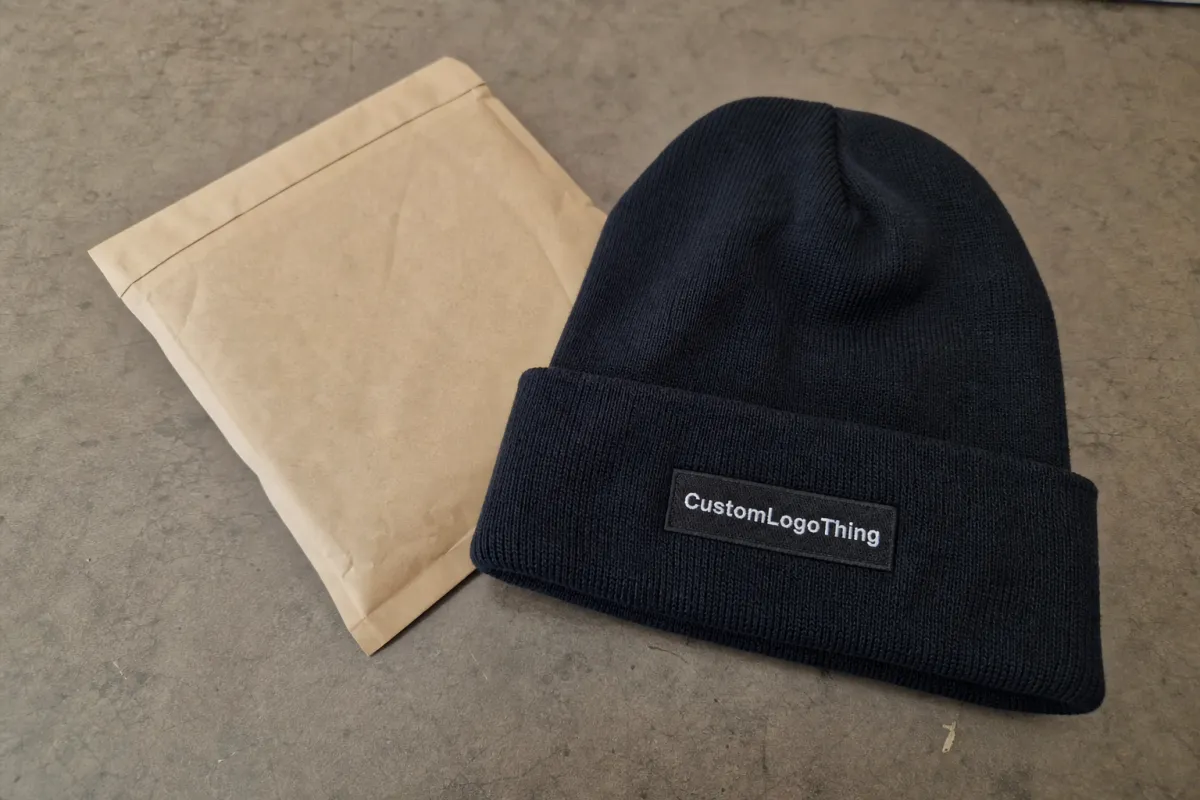
A slouchy knit beanie has a seasonal advantage that many buyers underestimate. It works in early-morning training, on cool commutes, after a workout, and during the months when a cap feels too light and a heavy winter hat feels excessive. That wider useful window matters. If a piece gets worn across three seasons instead of one, the brand exposure and perceived value both rise.
For gyms and wellness brands, that means the beanie can do more than fill a merch table. It can sit with activewear, travel with a customer, and still feel appropriate in casual settings. A soft slouch profile keeps the item from reading like leftover promo stock. It feels closer to a retail accessory, which is exactly why fitness slouchy knit beanies moq often produces better engagement than a more generic headwear format.
The merchandising upside is just as real. Knit beanies pair naturally with hoodies, joggers, tees, and outerwear. That makes them easier to bundle, easier to cross-sell, and easier to include in membership rewards without looking forced. Retail buyers tend to notice one thing quickly: the product that sits comfortably beside apparel is easier to move than the product that looks separate from the line.
That said, the style only works if the details hold together. Too much volume and the beanie starts to look more streetwear than athletic. Too little slouch and it turns generic. The useful middle ground is a balanced crown, a cuff that accepts branding cleanly, and a fabric that keeps its shape after repeat wear.
Fit, yarn, and finish details buyers should compare
The first mistake is treating knit headwear like a blank canvas with a logo on top. The fabric structure changes the product as much as the artwork does. Rib count, gauge, cuff depth, crown height, and yarn recovery all affect how the beanie looks in person. A tighter rib usually holds shape better. A deeper cuff gives more room for decoration. A longer slouch reads softer and more lifestyle-oriented. Shorter crowns feel neater, but can lose the relaxed look that makes the style work for fitness buyers.
Yarn choice is where budget and feel meet. 100% acrylic is still the most common starting point because it keeps cost controlled, accepts color well, and is easy to produce in volume. Acrylic-wool blends usually feel warmer and more retail-ready, though they raise the unit price and can require a more careful wash and handling brief. Recycled yarn blends are useful when the brand story needs a sustainability angle, but they do not automatically lower cost. The right call depends on whether the beanie is meant to be a giveaway, a retail item, or a reward that needs a slightly elevated hand-feel.
Finish details matter because they affect how the garment ages. A soft yarn can still pill if the blend is weak or the twist is loose. A good sample should show how the cuff recovers after stretching, how the logo sits under normal tension, and whether the seams lie flat. Buyers often focus on the front view and miss the underside, where loose finishing, thread tails, or uneven patch backing can make a product look inexpensive even when the yarn itself is fine.
Decoration methods carry their own tradeoffs. Woven labels keep the surface light and preserve stretch. Embroidered patches give strong logo visibility and can add a more premium, tactile feel. Faux leather patches bring a more rugged look, which works for training clubs or outdoor fitness programs. Knit-in graphics are visually strong, but they need simple artwork and limited color counts because the design must work as stitch logic, not just print logic.
Fit is usually sold as one-size, but that phrase hides a lot of variation. A beanie can be “one size” and still feel very different depending on head opening, cuff depth, and how much extra length the crown carries. For that reason, sample approval should include actual measurements, not just a general impression. A few millimeters can change the silhouette more than most buyers expect.
Specs to lock before requesting a sample or quote
A clean quote starts with a clean spec sheet. If the brief is vague, the quote will be too. The details worth fixing early are simple: finished dimensions, rib pattern, cuff height, yarn composition, gauge, stitch count, logo placement, and package format. If the logo sits on the cuff, say so. If it belongs on the body, mark the placement clearly. If the design needs a folded edge or a particular slouch length, spell that out as well.
Color control deserves the same attention. Stock yarn shades are usually faster, cheaper, and easier to sample. Custom-dyed yarn gives tighter brand matching, but it can add lead time and setup cost, especially when the team is chasing an exact Pantone match or a special mélange effect. For many fitness brands, a neutral base such as black, heather gray, navy, charcoal, oatmeal, or forest works better than forcing a custom shade that will barely change the sale.
Material specs should be concrete, not vague. A buyer should know whether the yarn is single-ply or doubled, whether the knit is 1x1 rib or 2x2 rib, and whether the fabric has enough stretch recovery to keep its shape after wear. A slightly denser knit can help the beanie hold its profile and reduce the “draped sock” look that some cheap runs develop after a few uses. That is especially important if the item will sit in retail next to hoodies and outerwear instead of being used as a free handout.
Packaging can affect both price and perception. If the beanies will be sold at retail, confirm whether the supplier can handle individual polybags, size stickers, barcode labels, hangtags, and master carton counts. If the order is going to multiple gyms, studios, or event locations, carton labeling matters more than it sounds. Clean packing reduces rework when the boxes land. For teams that ship into retail channels, testing standards such as ISTA test methods are useful reference points for transit planning, while the Institute of Packaging Professionals is a solid source for packaging basics and material terminology.
Before a sample is made, confirm four things in writing:
- Finished size and the amount of slouch expected in the crown.
- Decoration method and the exact logo location.
- Color count for the beanie and artwork, since each added color can affect cost and setup.
- Packaging format if the order needs retail readiness or distribution to multiple sites.
That short list avoids most of the back-and-forth that slows knit programs down. It also makes apples-to-apples quote comparison possible. If two suppliers are answering different assumptions, the lowest number on the page tells you very little.
Pricing, MOQ, and quote factors that change unit cost
MOQ gets misunderstood because people often read it as a fixed barrier instead of a pricing structure. Lower minimums are useful when the buyer is testing demand or replacing a small stock of merch. Higher minimums usually improve the unit rate because the same setup cost, sampling effort, and production planning are spread across more pieces. Neither option is automatically better. The right choice depends on demand, margin, and how much risk the buyer is willing to carry in inventory.
For fitness slouchy knit beanies moq, the main cost drivers are predictable. Yarn type, number of colors, decoration method, labeling, packaging, and whether the product is built from stock construction or fully custom specs all affect the quote. A simple acrylic beanie with a woven label is easier to price than a custom-dyed knit with a patch, matching hangtag, and special carton marking. The extra cost is not just in the visible decoration. It is also in sourcing, production setup, and quality control.
Buyers should compare quotes on landed cost, not just unit price. A low per-piece number can become expensive once sampling, tooling, freight, and packaging are added. Ask whether the sample is credited back, whether art revisions are included, whether tooling is a one-time charge, and whether freight is quoted door-to-door or from the factory gate. The quote only tells the truth when the same assumptions are used across suppliers.
| Order Type | Typical MOQ | Indicative Cost per Piece | Best Fit | Notes |
|---|---|---|---|---|
| Stock acrylic beanie with woven label | 100-300 pcs | $2.40-$4.20 | Studio giveaways and fast-turn merch | Lowest complexity; limited color control |
| Acrylic or blend beanie with patch branding | 200-500 pcs | $3.25-$5.75 | Gym retail, member rewards, team apparel | Balanced price point with stronger logo visibility |
| Custom knit-in design with premium finishing | 300-1,000 pcs | $4.80-$8.50 | Retail collections and higher-margin programs | More time for sampling, approvals, and color matching |
Those ranges are working figures, not promises. Yarn market conditions, decoration method, and the number of approved samples can move the number up or down. Still, the pattern stays consistent. Simpler builds usually win on unit cost, while more custom builds require a higher margin to justify the added complexity.
Most quote mistakes happen because buyers ask for too much too early. One logo location is easier than two. One base color is easier than three. A standard label is easier than a full custom package. The smartest order is usually the one that controls the fewest variables without losing the look the brand actually needs.
The cleanest beanie order is usually the one with the fewest unresolved choices. Less ambiguity means fewer revisions, fewer delays, and a better chance the final piece matches the sample.
Production steps and lead time from approval to delivery
Once the brief is signed off, the project typically moves through a familiar sequence: inquiry, spec confirmation, artwork review, sample or digital proof, production approval, knitting, decoration, packing, and shipment. None of that is glamorous, but every step exists for a reason. A logo that looks balanced in a flat file can become illegible on a ribbed surface if the line weight is too fine or the contrast is too weak. Catching that early saves time and money later.
Lead time depends on how custom the order is. A stock beanie with a woven label can move faster than a fully custom knit-in style with a patch and retail packaging. As a practical range, many straightforward programs run several business days for sampling and roughly 12-20 business days for production after final approval. More complex color matching, added labels, multi-location shipping, or special packaging can stretch that timeline. Buyers should treat the schedule as real, not aspirational.
Quality control needs to happen during production, not after the cartons are sealed. The checks that catch the most problems are also the simplest: verify yarn lot consistency, confirm stitch tension, inspect logo placement, measure the cuff and crown, and check that patches or labels are stitched flat. Some teams also request a tolerance window on the finished dimensions, usually around a centimeter either way, because knit goods naturally vary slightly from piece to piece. That kind of expectation keeps later disputes to a minimum.
Late-stage changes are the biggest schedule risk. A shifted artwork file, a change to cuff depth, a switch from woven label to patch, or a request to alter packaging after sample approval can all force the order back into review. If the product is tied to a launch date, an event, or a seasonal drop, buffer time matters more than optimism. A buffer is cheaper than an air freight panic.
It also helps to split the timeline into checkpoints rather than one final deadline. Ask when the proof will arrive, when the sample can be reviewed, when production will start, when QC will be completed, and when cartons are expected to leave. That makes it easier to catch problems while there is still room to fix them. For multi-location distribution, confirm carton counts, labeling, and pallet preferences before production ends, not after.
Why our knit program works for fitness brands and teams
For fitness brands, consistency is the real value. A knit program should reproduce the same dimensions, yarn feel, and logo placement from one run to the next. That matters when the product is tied to a membership kit, a staff uniform, or a retail line that needs to look identical across reorders. If the first batch and second batch drift, the brand starts paying for inconsistency in a way that is hard to undo.
Different buyers need the same category for different reasons. Boutique studios often want a polished gift item that feels premium without becoming expensive. Training clubs tend to care more about durability and volume. Supplement brands usually look for visibility and social appeal. Wellness retreats may prioritize softness and color harmony. A useful knit process can handle those different goals without forcing every buyer into the same construction.
What reduces risk is not mystery, it is process. Spec sheets need to be clear. Samples need to reflect real production choices. Decoration needs to be chosen with the yarn and stitch structure in mind. QC should check the parts that actually fail in the field: logo alignment, seam quality, yarn consistency, and measurement tolerance. That is where the value sits. Not in slogans, but in repeatability.
From a sourcing perspective, the strongest vendor relationship feels predictable. The buyer should know what affects unit cost, what affects lead time, and which decisions can be standardized for the next order. Once those variables are visible, the product stops being a guess and becomes part of a repeatable merch system.
There is one final practical point. If the beanie is going to sit beside retail apparel, it has to look finished. A disciplined color palette, a restrained logo, and a yarn that feels intentional in hand do more for sell-through than a busy graphic ever will. The best versions usually have one clear feature and nothing extra fighting it.
Next steps to place a smarter bulk order
Before requesting a quote, gather five things: target quantity, preferred yarn feel, logo file, decoration method, and delivery window. If the beanies are for retail, add packaging needs. If they are for team wear, add size expectations and the number of recipients. If the order is tied to a launch, use the date the product must be in hand, not the date you hope to place the order.
The order of decisions matters. Start with silhouette, then decoration, then packaging, then quantity. That sequence keeps the project focused and prevents scope creep. Too many buyers begin with the number of units and only later decide on construction, which is how budgets expand and timelines slip. Lock the style first. Then price it.
Forecasting should be part of the MOQ decision, not an afterthought. A lower minimum can work for a test run. If the product is already proven, a larger run may improve bulk pricing enough to justify the extra inventory. That tradeoff is simple, but it should be made with margin and demand in mind, not just the smallest possible entry point.
If the goal is fitness slouchy knit beanies moq at scale, the smartest move is to request a spec-based quote and sample plan, then compare the options on unit cost, finish quality, and lead time rather than price alone. That keeps the order controlled from the first proof to the final carton.
FAQ
What is the usual MOQ for fitness slouchy knit beanies?
MOQ depends on construction, yarn choice, and decoration method. Simpler builds usually support lower minimums than fully custom knit-ins, and the requirement may be set per color, per design, or per total order. That detail matters because two quotes with the same headline MOQ can still behave very differently once production starts.
Can fitness slouchy knit beanies use custom logos without raising MOQ too much?
Yes, if the decoration method is chosen carefully. Woven labels and patches are usually easier to scale than complex knit-in graphics, especially when the design uses a limited color count. Keeping the logo to one placement helps protect both the minimum and the unit price.
Which material is best for a slouchy knit beanie used in fitness branding?
100% acrylic is often the most cost-effective option. Blends can feel softer and more premium, while recycled yarns work well when the brand story needs a sustainability angle. The right answer depends on whether the product is meant to be a value piece, a retail item, or a more polished gift.
How long is the lead time after artwork approval?
Lead time depends on sampling, yarn sourcing, and order size. Many straightforward programs run about 12-20 business days after final approval, while custom colors, patch work, or special packaging can push the schedule longer. Build in buffer time if the order has to land by a specific launch date.
What files and details should I send for an accurate quote?
Send the logo file, target quantity, preferred material, color references, decoration preference, and delivery deadline. If the beanies need retail packaging or multi-location delivery, include that too. The more complete the brief, the easier it is to get a quote that can actually be compared.

