If you are sourcing an Apparel Swing Tags Supplier bulk order, the main mistake is treating swing tags as an afterthought. They are small, but they do several jobs at once: they introduce the brand, carry price and SKU data, support barcodes, and help a garment feel finished before a customer ever touches the fabric.
Bulk ordering is not only about a lower unit price. It is also about control. The same board stock, the same ink density, the same finish, and the same hole position have to hold across thousands of tags, often across multiple sizes and seasonal drops. If those details drift, the whole presentation looks inconsistent.
That consistency matters on a shelf, on a rail, and in a parcel. A dependable Apparel Swing Tags Supplier bulk order process should make repeat ordering easier, not force buyers to recheck artwork from scratch every time a replenishment is due.
Why swing tags quietly shape garment perception at retail
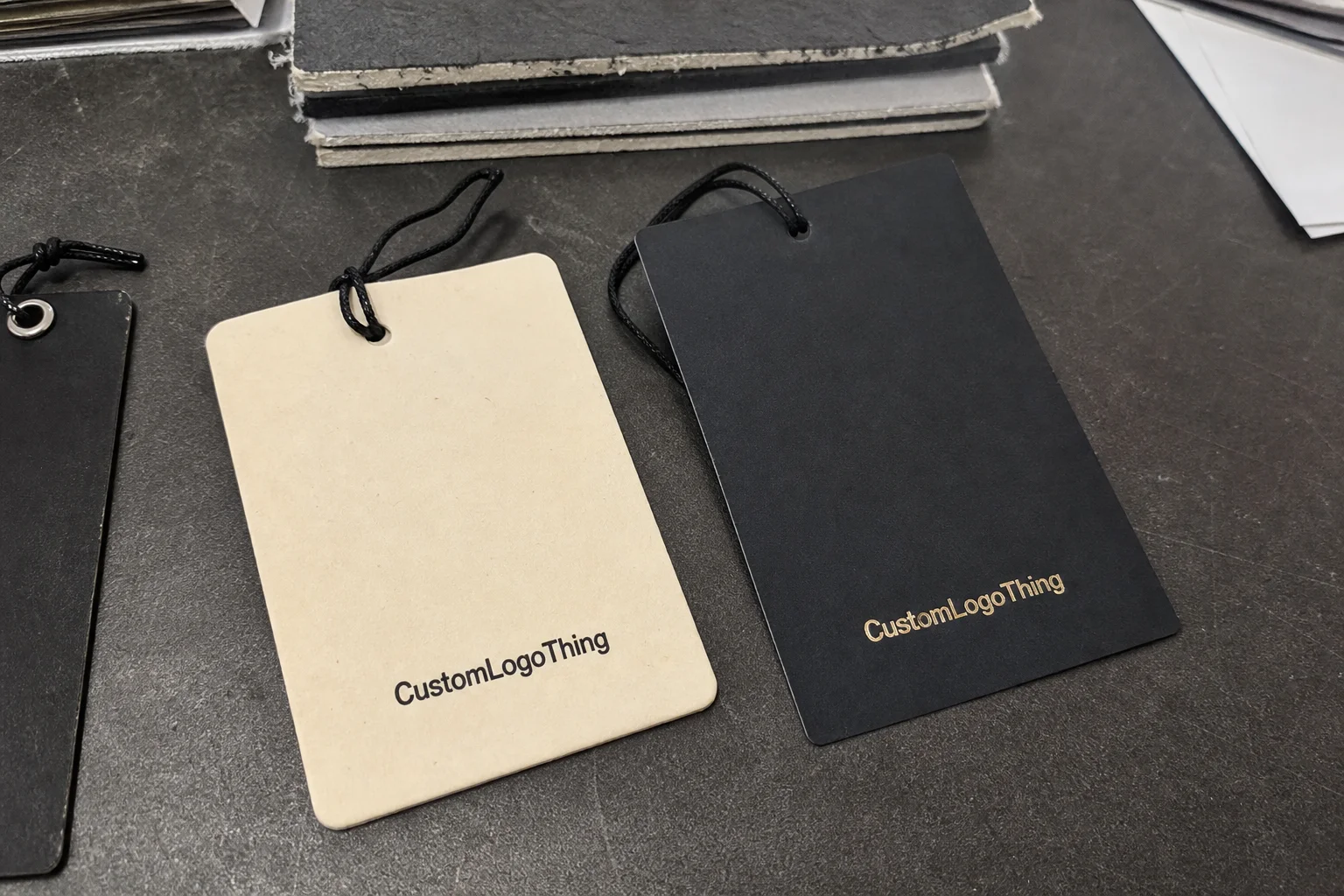
Retail buyers know this instinctively: shoppers often notice the tag before they fully inspect the garment. That first touch can shift perception faster than a product description ever will. A tag with crisp print, neat edges, and sensible information hierarchy suggests discipline. A flimsy or badly cut tag can make even a good garment feel cheaper.
This is one reason bulk ordering is so useful. A tag program that runs across 5,000, 10,000, or 50,000 units needs more than a low quote. It needs a repeatable specification. The board thickness should stay the same, the brand color should stay within tolerance, and the finish should not vary from one run to the next.
That matters most in three settings. Folded apparel on retail shelving often relies on the swing tag as the main brand cue. Hanging garments place the tag in direct view, where it becomes part of the premium signal. E-commerce has its own pressure: the customer sees the tag during unboxing, so even a minor print flaw is more visible than it would be in-store.
Another point often missed by first-time buyers is handling. Clothing tags are not display cards sitting still in a box. They are pulled, scanned, packed, shipped, and rehandled by retail staff. Rounded corners, proper hole placement, and a stock that does not curl easily make a bigger difference than many design teams expect.
Buyer takeaway: a tag should look deliberate at arm’s length, scan cleanly, and survive the supply chain without turning bent or dull. That is the standard a serious Apparel Swing Tags Supplier bulk order should be built around.
Tag constructions, materials, and print finishes that hold up on apparel
Most Clothing Swing Tags are made from paperboard, but the difference between stocks is not cosmetic. Coated paperboard gives sharper image reproduction and better solid color coverage. Uncoated kraft has a warmer, less polished look and is often used for natural, heritage, or eco-positioned brands. Textured stocks can add a tactile cue, while recycled board usually reads as matte and restrained if the print is managed properly.
Board weight matters because the tag has to behave well in packing and on the rack. A 300gsm stock is common for lighter tags. Many buyers move up to 350gsm or 400gsm when they want a more substantial feel or better resistance to creasing. For outerwear or premium lines, a heavier board can be justified, especially if the tag is exposed during transport.
Construction changes both the look and the cost. A single-layer tag is the simplest option and is usually the most economical. A folded tag gives more room for product copy, care details, or a brand story. Die-cut shapes can create stronger shelf presence, but unusual outlines often raise tooling cost and may increase lead time. If the garment is heavier or the presentation needs to feel elevated, eyelet reinforcement is practical because it reduces tearing around the hole.
Finishes should be chosen with care. Offset printing is the standard choice for larger runs because it gives consistent color and crisp detail. Digital printing is useful for smaller volumes or frequent artwork changes. Foil stamping, embossing, and spot UV can sharpen a premium look, though each one adds cost and time. Matte lamination and soft-touch coating change the hand feel in a way that customers notice immediately, even if they cannot name the finish.
A good tag does not need to be loud. It needs to read clearly, feel considered, and stay intact from packing line to store floor.
The functional side matters as much as the visual one. A drilled hole should be placed so the tag hangs straight and does not cover the product. Rounded corners are less likely to fray. Barcode placement needs enough quiet space around the code for scanners to read reliably. If the pack-out team uses strings or fasteners, confirm whether the supplier can ship tags loose, collated, or pre-strung.
There is also a difference between how a tag looks on a proof and how it behaves in a carton. Gloss finishes can show fingerprints and scuffs more easily than buyers expect. Uncoated stocks may absorb ink differently across large flood areas. Dark solids can reveal scratches on the fold or along cut edges. These are not theoretical issues; they are the problems that show up during receiving.
Specifications that control fit, branding, and shelf readability
Tag size should follow the garment and the retail channel. A basic T-shirt often works with a compact format, around 50 x 90 mm or 55 x 85 mm, depending on how much information is required. Denim, coats, and premium apparel can support larger formats, sometimes 70 x 120 mm or more, especially if the tag needs to carry features, care icons, and brand storytelling. Children’s wear and accessories usually need a smaller footprint so the tag does not dominate the product.
Color control is where many bulk orders become unreliable. If your brand color is defined by Pantone, specify it. If photo elements are involved, ask for proofing standards and acceptable deviation. For print files, 300 dpi at final size is a safe baseline for raster artwork, while logos and line art should be supplied as vectors whenever possible. A 3 mm bleed is common, but the supplier should confirm the correct allowance based on trim size and finishing method.
Copy hierarchy needs discipline because space runs out quickly. The most visible details should usually be the brand mark, product name, size, SKU or style code, and price or barcode. Depending on the category and market, the tag may also need fiber content, country of origin, care symbols, or regulatory copy. If you are dealing with an apparel swing tags Supplier Bulk Order, ask which details belong on the front panel, what can move to the reverse side, and which items should be left off entirely to avoid crowding.
Attachment specs deserve more attention than they usually get. String length affects how the tag sits on the garment. Knot style affects packing speed. Plastic fasteners can suit high-volume line packing, while cotton string or black cord can support a more premium presentation. Hole placement also matters, because a tag that is even a few millimeters off can twist, overlap seams, or sit awkwardly under another label.
Some operations prefer tags shipped loose so they can be applied at source or during final packing. Others want tags pre-strung to save labor in receiving or distribution. Both methods work, but they are not interchangeable. The right choice depends on labor cost, volume, packing sequence, and whether the brand wants tagging done in the factory or at the warehouse.
Readability on the shelf is not just about font size. Contrast, spacing, and line length do a lot of work. Black text on kraft stock can be strong if the ink coverage is correct, but thin type may disappear. Very dark backgrounds can make small details harder to scan or read at retail distance. If the tag is supposed to support quick merchandising, the layout should be tested in the same lighting where the garment will be sold.
For teams that manage broader packaging systems, aligning tags with your broader Custom Labels & Tags setup helps keep brand elements consistent across product lines and replenishment cycles.
Cost, pricing, and MOQ factors buyers should compare first
Tag pricing is usually driven by a short list of variables: board thickness, print coverage, number of colors, finishing, die-cut shape, stringing, and total quantity. A simple one-color kraft tag with no special finish will sit at the lower end. Add foil, embossing, soft-touch lamination, or a custom shape and the price can rise quickly. That is normal, and it is why a headline unit price tells only part of the story.
MOQ, or minimum order quantity, depends on the production method. Digital printing often supports smaller runs because it avoids plate setup. Offset printing becomes more cost-efficient as volume rises, especially if the design will repeat across several SKUs or a full season. The real question is not only “What is the MOQ?” but “Is that MOQ per design, per size, or per color version?”
There are also hidden costs that should be stated early. Setup charges, plates, proofing, freight, rush handling, pre-stringing, and carton labeling can all change landed cost. A quote that looks attractive at unit level may become less competitive once packing and shipping are added. A serious apparel swing tags supplier bulk order discussion should cover the full order, not just the print line.
| Tag option | Typical use | Price behavior | Notes |
|---|---|---|---|
| Digital printed card tag | Small runs, quick reorders | Lower setup, higher unit cost | Useful when artwork changes often |
| Offset printed paperboard tag | Mid to large volume runs | Higher setup, lower unit cost | Best for stable artwork and repeat orders |
| Foil or embossed premium tag | Luxury, premium retail | Higher material and finishing cost | Strong visual impact, longer production time |
| Kraft or recycled stock tag | Sustainable or natural branding | Moderate cost, depending on finish | Print contrast should be checked carefully |
As a rough buying framework, a straightforward tag can be inexpensive at scale, while premium finishes can push the cost much higher. Instead of comparing quotes by price alone, match them line for line: same board, same size, same print method, same finish, same hole position, and same attachment method. If one supplier includes pre-stringing and another does not, the comparison is not meaningful.
Reorder economics improve when the supplier keeps approved artwork, locked specifications, and previous production settings on file. That reduces the chance of drift between runs. It also saves time when you are producing multiple retail drops under the same brand system, where a tiny shift in board tone can make new stock look inconsistent beside older stock.
One practical buyer habit: ask for a sample or a previous run reference before committing to a larger order. Paperboard is one of those materials that looks ordinary in a PDF and very different in hand. A stock that feels premium in the proof room may arrive too glossy, too thin, or too stiff for the garment it is meant to support.
Production steps, proofing, and turnaround expectations
The production flow is simple on paper and easy to mishandle in practice. Artwork comes in first. Then the supplier checks the specification: size, stock, print method, finish, hole position, and attachment style. After that, a digital proof should show the trim size, layout, and any variable data. Production should not begin until that proof is approved.
Lead time depends on complexity. A simple printed tag order can move faster than a premium run with foil, embossing, die cutting, or pre-stringing. For a straightforward order, 12 to 15 business days after proof approval is a reasonable working expectation in many cases. More complex jobs usually need more time, especially if the supplier has to coordinate finishing and manual assembly.
Proofing is where many errors can still be stopped. Check logo placement, color targets, barcode size, copy spelling, size text, and care symbols. If there is a regulatory line that must appear in a specific format, verify it here. The supplier should flag obvious risks before the press starts, not after the run is already on the floor.
Quality control should happen at multiple stages. Registration needs to stay tight so layers line up correctly. Cut edges should be clean, with no crushed corners. Holes should not distort the print area. Finishes should remain even across the batch, especially on matte or laminated stocks where small surface variations are easy to notice.
Shipping conditions matter more than many buyers expect. A tag order packed too loosely can arrive with bent corners. A carton packed too tightly can scuff the print or flatten the stringing. A good supplier thinks about carton strength, internal packing, and how the product will be opened at receiving. That is part of the job, not a bonus.
Communication also affects turnaround. Apparel launches are scheduled around packing, labeling, and distribution, so buyers need updates that are specific rather than vague. The best suppliers treat the order as part of a calendar, not merely as a print request sitting in a queue.
For broader material and sustainability references, buyers often consult industry guidance from organizations such as Packaging Machinery Manufacturers Institute and EPA when environmental claims or material handling are part of the brief.
What a dependable hang tag partner should deliver on every reorder
The first order is only a test run. The real measure of a supplier is whether the second, third, and tenth orders match the original spec without correction. Stock consistency, print color consistency, and cut quality need to hold over time. Even a small shift in board tone or ink density can make a new run look off beside the last one.
Prepress support is another sign of a reliable partner. Apparel artwork changes more often than many other packaging assets. Sizes are updated. Prices change. SKU structures get revised. A supplier that can absorb those edits without confusion saves both time and money. Rebuilding a spec sheet from zero for every reorder is a sign the relationship is not mature yet.
Flexibility matters too. Some brands need smaller quantities with premium finishing. Others need high-volume production with efficient packing and shipping. A useful supplier should be able to support both without forcing every order into the same workflow. If they can label cartons clearly, pack tags in the receiving format your team prefers, and keep freight arrangements sensible, that adds real operational value.
Durability in transit and barcode legibility are easy to underestimate. A tag that arrives bent, scuffed, or hard to scan creates extra handling for the apparel team. Those extra minutes add up across a large replenishment. A dependable partner plans for that by specifying pack counts, carton strength, and internal protection that matches the order size.
One thing seasoned buyers look for is how the supplier handles exceptions. If artwork changes after proofing, if a barcode needs correction, or if the order must be split by size or store, the response tells you a lot. Quick yeses are less useful than careful answers. A supplier that asks the right questions early often prevents expensive problems later.
If you are comparing sourcing structures across product lines, reviewing Wholesale Programs can help align order volume, repeat purchasing, and pack-out expectations with the right commercial setup.
How to place a bulk order and move from quote to production
The cleanest ordering process starts with preparation. Gather artwork, decide quantity, choose stock and finish, confirm the attachment method, and request a written quote that reflects the full spec. If you already have a tag style that works, send a sample or reference image. Matching an existing branded look is much easier when the supplier can inspect the actual structure, not just the logo.
Ask for a proof that shows trim size, print layout, and any variable data before approving the run. If multiple garment sizes are involved, confirm whether the supplier will produce one master tag with variable size text or separate versions for each SKU. That decision affects both price and packing format.
Always compare landed cost, not only unit price. Freight can be a major part of the order, especially on heavier board or pre-strung cartons. Setup charges and specialty finishes can change the total quickly. If a quote is vague, request line-by-line clarity. A professional supplier should be able to provide it without hesitation.
Here is the simplest path from inquiry to production:
- Prepare artwork and brand specifications.
- Choose size, board, finish, and attachment method.
- Request a written quote with MOQ and lead time.
- Review the proof carefully, including barcode and copy.
- Approve production and confirm shipping details.
- Schedule receiving so tags arrive before packing or launch.
Keeping the spec sheet stable is the easiest way to make an apparel swing tags supplier bulk order predictable. Use the same measurements, same finish codes, same stringing method, and same approval workflow on every reorder. That discipline reduces errors more effectively than any last-minute rush order can.
If you are building a larger packaging system, the tag should sit alongside labels, inserts, and cartons as part of one coordinated print standard. That is where the operational savings tend to appear: fewer revisions, fewer mismatched finishes, and fewer delays caused by missing approvals.
FAQ
What is the usual MOQ for an apparel swing tags supplier bulk order?
MOQ depends on the print method, stock, and finishing. Digital runs are often lower, while offset printing and specialty finishing usually require larger quantities. Ask whether the MOQ applies per design, per size, or per color version, because that changes the actual order structure.
How long does a bulk hang tag order usually take to produce?
Turnaround depends on artwork readiness, proof approval, stock choice, and finishing complexity. Simple jobs move faster, while foil, embossing, stringing, or custom die cuts can add time. A straightforward order often fits into a 12 to 15 business day window after proof approval, though that depends on the supplier’s schedule.
Can I order different apparel sizes in the same tag run?
Yes, many suppliers can produce one master design with variable size text or SKU data. Confirm whether the variable information changes pricing, proofing, or packing format before you approve the quote. That detail matters more than many buyers expect.
What information should be printed on clothing swing tags?
Most brands include logo, product name, size, price or SKU, barcode, and any required fiber or care details. Keep the layout readable so the tag supports both branding and retail operations. If the tag feels crowded, move secondary details to the back panel or a folded section.
How do I reduce the price of a bulk tag order without lowering quality?
Use a standard size, limit specialty finishes, keep the color count efficient, and increase quantity where possible. Request pricing based on the same specs across suppliers so quotes are easy to compare. If you want more sourcing guidance, our FAQ page also covers common ordering questions.


