Most custom beanie problems do not start at the sewing table or in the packing carton. They start earlier, when a stationery Pom Pom Beanies Digital Proof checklist gets rushed, skimmed on a phone, or approved before someone checks the logo size against the actual folded cuff.
A digital proof is the approval document that shows how the finished stationery pom pom beanie is intended to look before yarn colors, patches, embroidery files, labels, hang tags, or packing instructions are locked for production. It is not just a pretty mockup. A good proof should confirm logo scale, decoration method, beanie body color, cuff height, pom color, label placement, imprint dimensions, thread colors, and any retail or event packaging notes that affect the finished order.
Stationery Pom Pom Beanies Digital Proof Checklist: What It Catches
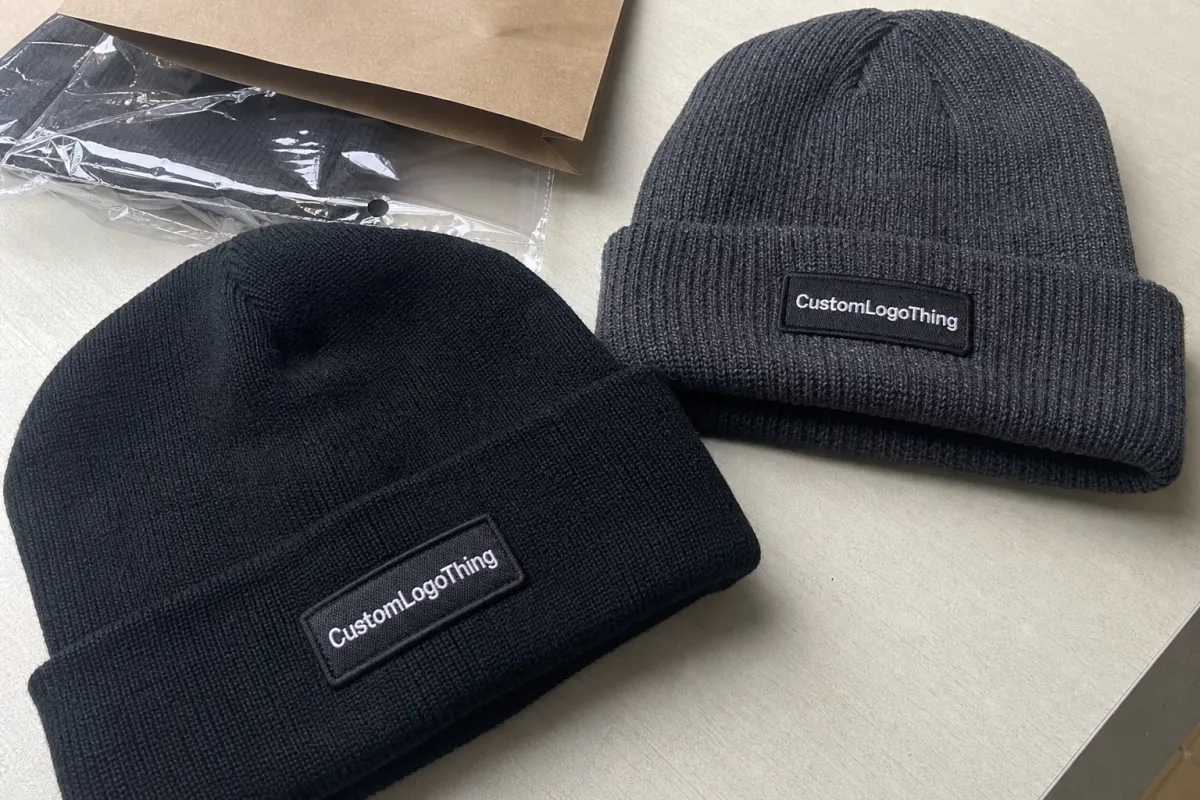
Stationery brands need a sharper proof review than many buyers expect. A planner company, paper goods shop, bookstore, journal brand, or creative merch buyer may have a logo built around fine typography, delicate line art, soft color palettes, or a tiny brand mark that looks perfect on a paper belly band but behaves very differently on ribbed knit fabric.
Direct embroidery has thread thickness. Woven labels have minimum line limits. Faux leather patches have deboss depth and contrast limits. Rubber patches can hold bold icons well, but hairline strokes and tiny serif type may fill in. That is why the proof has to answer production questions, not just design questions.
Here is what most people get wrong: they approve the picture instead of approving the specifications. The beanie may look balanced on screen, but unless the proof shows a 2.25-inch-wide woven label, a 3-inch pom, a 2.75-inch cuff depth, and thread or material color references, the buyer is still making assumptions. Assumptions get expensive once bulk production starts.
Practical rule: treat the proof as the last low-cost place to catch spelling, scale, placement, and color issues before the order becomes yarn, thread, labels, labor, and cartons.
For a stationery Pom Pom Beanies Digital Proof checklist, the goal is simple: slow down the approval moment. Ask the right questions. Confirm every visible part of the product. Then approve with confidence instead of hope.
How a Digital Proof Turns Flat Artwork into a Finished Pom Beanie
The process begins with uploaded artwork. Production teams review file type, vector quality, line thickness, small text, color callouts, and whether the design belongs on embroidery, a woven label, a patch, or a printed tag. Vector artwork such as AI, EPS, or clean PDF files usually gives the best starting point because the logo can be scaled and converted without fuzzy edges. A low-resolution PNG pulled from a website can work for a rough mockup, but it is rarely enough for production setup.
A visual mockup shows general appearance. A production-ready proof anchors real specifications. That means decoration size in inches or millimeters, Pantone or yarn references where available, placement from the cuff edge, orientation on the folded beanie, and the decoration route being used. If the logo sits on a folded cuff, the proof should show it on the folded cuff, not floating on a flat rectangle that ignores fabric thickness.
Stationery-themed beanies commonly use several decoration methods. Embroidery is durable and familiar, but small script lettering under about 0.25 inch high can become muddy. Woven clip labels often handle fine type and thin illustration better because the artwork is woven at a label scale before being sewn into the cuff seam or edge. Faux leather patches give a warm retail feel, especially for kraft, cream, brown, or muted brand palettes, but tiny taglines may need to be removed. Rubber patches work well for bold icons and clean marks. Custom inside labels add polish for retail and subscription box programs, especially when size, care, or brand story copy matters.
The pom deserves its own line on the proof. A solid pom can match the body yarn. A two-color or three-color pom can tie together a brand palette, but it may also make the top of the beanie feel busier. Typical pom diameters often sit around 3 to 4 inches, depending on the beanie size and style. Attachment style matters too; some poms are sewn on permanently, while others may use a snap for easier care. If the pom is oversized, the logo on the cuff may need more breathing room so the whole beanie still feels balanced.
Once a proof is approved, visible design decisions are usually frozen. Corrections may still be possible, but they can add setup charges, sampling delays, or rework. That is why the stationery Pom Pom Beanies Digital Proof checklist belongs beside the proof, not after the purchase order is already in motion.
Key Proof Details to Check Before You Approve Artwork
Review the beanie by visible zones. Start with the front cuff decoration, then move to the crown knit, pom pom, side or back labels, inside label, hang tag, and any outer packaging used for retail, gifting, event pickup, or subscription box fulfillment. It sounds basic, but zone-by-zone checking catches the small misses that a single front-view glance will not.
Logo scale should be checked by actual dimensions, not by screen appearance. A 2-inch embroidered mark and a 2.75-inch woven patch feel very different on a folded cuff. On many adult cuffed beanies, a front decoration between 2 and 3 inches wide is common, but the right size depends on logo shape, cuff height, knit rib, and whether the design is centered or offset.
Color review needs discipline. Screen color is only a reference unless the proof includes standards such as Pantone numbers, thread chart codes, yarn options, or material swatches. Soft stationery palettes such as cream, blush, sage, kraft, slate, dusty blue, and muted navy can shift noticeably between acrylic yarn, cotton labels, polyester embroidery thread, leatherette, and printed paper tags. If brand color is critical, ask for the closest available material reference or consider a physical sample.
Small stationery-style details deserve special attention. Thin pen strokes, script type, tiny stars, ruled notebook lines, floral marks, wax seal icons, and paperclip graphics may need to be thickened, simplified, or moved from direct embroidery to a woven label. On ribbed knit, a hairline may disappear into the texture. On embroidery, a tiny counter inside a letter can close up after stitching.
Fit and construction also belong in the proof review. Confirm adult or youth sizing, approximate beanie height, cuff depth, rib style, pom size, seam placement, and whether the logo remains visible when the cuff is worn folded. A 3-inch cuff may look right on paper, but a deeper fold can hide an inside label or push a patch too close to the lower edge.
- Artwork: logo file, revision, line thickness, small text, and approved layout.
- Decoration: embroidery, woven label, patch, tag, or combined method.
- Placement: front, side, back, cuff edge distance, and centered position.
- Colors: yarn, pom, thread, label, patch, ink, and packaging colors.
- Copy: spelling, punctuation, capitalization, trademark symbols, URLs, and care label content.
One more thing: read every character. Website URLs, seasonal copy, care statements, and trademark symbols are easy to ignore during visual review, yet they are exactly the details customers notice when the beanie is unboxed.
Process and Timeline from Proof Request to Production Approval
A typical approval flow starts with inquiry and artwork upload, followed by production review, first digital proof, buyer markups, revised proof if needed, written approval, optional pre-production sample, and then bulk production scheduling. For straightforward stock beanies with one embroidered logo, the proof stage may be relatively quick. For custom knit colors, special pom combinations, multiple labels, or retail packaging setups, more coordination is normal.
A clean first proof depends on clean inputs. Send the vector logo, preferred beanie color, decoration method, order quantity, deadline, shipping destination, and packaging requirements at the start. If you already know you need individual polybags, hang tags, carton labeling, or FSC-certified paper components for retail packaging, say so early. The Forest Stewardship Council provides useful background on responsible fiber sourcing at fsc.org, and those details can affect material availability and lead time.
Timelines vary, but in practice a simple embroidery proof may be turned around faster than a multi-component proof with custom labels and packaging. A reasonable planning window might include 1 to 3 business days for an initial proof on a standard design, another 1 to 2 business days for revisions, and longer if the artwork needs redrawing or the trim package needs supplier confirmation. Bulk production for decorated beanies often runs around 10 to 20 business days after proof approval, depending on quantity, season, and complexity. Shipping time sits on top of that.
A physical sample is worth considering for new stationery brands, premium retail releases, color-sensitive logos, gift-boxed merchandise, or designs with small lettering. Sampling adds cost and time, but it lets you judge texture, fit, pom fullness, cuff behavior, thread contrast, and packaging in real life. A digital proof can tell you a patch is 2.5 inches wide. A sample tells you whether that patch feels refined on the actual rib knit.
Approval responsibility should be clear. Once the buyer approves the proof in writing, the manufacturer uses that document as the production reference. Marketing, retail, operations, and whoever owns brand standards should review before approval, not afterward. One careful revision cycle rarely hurts the schedule as much as a missed logo placement or color mismatch discovered after 2,000 units are packed.
If you are comparing decoration methods, trims, and packaging in one order, review the production path with the Manufacturing Capabilities team so the proof reflects the way the beanie will actually be made.
Cost, Pricing, and MOQ Details Hidden in the Proof
The proof can reveal cost drivers that were not obvious in the first quote. Decoration size, stitch count, number of thread colors, patch material, label count, pom customization, and packaging complexity all affect price. A beanie with one stock embroidery location is a different product than a beanie with a woven front label, custom inside label, two-color pom, retail hang tag, and individual bagging.
Minimum order quantity also changes by construction choice. Stock beanie blanks with decoration may have lower minimums, sometimes starting around 50 to 100 units depending on the style and supplier. Fully custom yarn colors, private labels, custom pom blends, or special trims can push minimums higher, often into the 250 to 500 unit range or more. That is not always the case, but it is common enough that buyers should ask before building a launch plan around a small test quantity.
Unit cost and setup cost should be separated. Embroidery may require digitizing, often around $40 to $90 depending on logo complexity. Woven labels may have setup fees, patch molds or dies can add cost, custom tags need print setup, and special carton or bagging instructions add packing labor. For 5,000 pieces, a small per-unit change matters. For 100 pieces, setup costs can have a bigger impact on the final landed cost.
| Proof Decision | Typical Cost Effect | Buyer Checkpoint |
|---|---|---|
| Standard cuff embroidery | Often economical; price affected by stitch count and thread colors | Confirm final size, digitizing, and thread references |
| Woven front label | May add label setup and sewing labor; good for fine type | Check label width, fold style, edge placement, and color limits |
| Faux leather or rubber patch | Can add die, mold, or material cost | Confirm patch size, imprint depth, and small copy readability |
| Custom pom color blend | May increase MOQ or lead time | Ask for yarn options and approximate pom diameter |
| Retail hang tag and individual bagging | Adds print, tagging, bagging, and packing labor | Confirm tag artwork, barcode needs, bag type, and carton count |
Proof decisions affect pricing in plain ways. Enlarging embroidery may increase stitch count. Adding a side label adds sewing labor. Switching from a flat woven label to a debossed patch changes material and setup. Requesting individual polybags, belly bands, or retail hang tags changes packing time. If sustainability claims or distribution testing matter, ask early; organizations such as ISTA publish transport packaging test procedures that may be relevant for retail or e-commerce programs.
Compare quotes using the same proof specifications. Two prices may look far apart because one includes inside labels, individual bagging, and a pre-production sample while the other covers only blank beanies with front embroidery. The stationery pom pom Beanies Digital Proof Checklist should help you ask which elements are included, which are optional, and which changes after approval could trigger a revised quote or added lead time.
Common Digital Proof Mistakes That Cause Beanie Revisions
The first mistake is approving from a phone screen. Small type, thread contrast, and logo balance are hard to judge on a 6-inch display, especially if the proof has multiple views. Save the file and review it on a desktop or large tablet at 100% and zoomed in. Print it if your team likes marking up by hand, but remember that office printer color is also only a rough reference.
The second mistake is treating colors as exact without material references. A warm ivory embroidery thread may look white on screen. A sage yarn may appear gray under one monitor setting and green under another. If the proof does not show Pantone, thread, yarn, or material callouts, ask for them. This matters a lot for stationery brands, where quiet color shifts can change the whole personality of the product.
Missing placement measurements cause plenty of revisions. A logo shown on the cuff should include its distance from the bottom edge, whether it is centered on the folded front panel, and whether the fold depth is fixed. If the beanie is photographed or illustrated flat, ask how the decoration sits when worn. Knit stretches. Cuffs roll. Poms pull the crown upward slightly. Real wear can change the look.
Artwork detail is another trap. Thin serif letters in embroidery, tiny taglines on leather patches, and light line art against ribbed knit texture can all fail quietly. The proof should show if the tagline is being removed, enlarged, simplified, or moved to a woven label. If your brand mark has a pencil, paperclip, flower, or tiny star, do not assume it will reproduce just because it appears in the mockup.
Buyers also approve only the front view and ignore everything else. Side labels, inside labels, pom color, cuff height, care tags, hang tags, and packaging notes all shape the customer experience. A beanie sold in a bookstore or subscription box is handled like a retail item, not loose giveaway merch, so the finishing details matter.
The human mistake is having too many reviewers comment separately. One person asks for a larger patch. Another asks for the patch to move down. A third replies later with a different logo file. That creates confusion fast. Pick one final approver who gathers feedback and sends one clean response. A tidy reply saves time and protects the production record.
Next Steps: Build Your Approval Checklist Before You Reply
Before you approve, save the proof file, open it on a desktop screen, and compare it against your brand guidelines. Then mark every visible component: logo, cuff, crown, pom, label, inside tag, hang tag, packaging, quantity, ship-to details, and deadline. A stationery Pom Pom Beanies Digital Proof checklist does not need to be fancy. It just needs to be complete.
Build a simple internal checklist with rows for logo file, decoration size, color references, beanie color, pom color, cuff height, label placement, packaging, quantity, shipping destination, and required in-hand date. Add a column for “approved,” “revise,” or “question.” That small structure keeps the team from approving around uncertainty.
Good revision notes are specific. “Make the logo bigger” is vague. “Please revise the woven label to 2.25 inches wide” is useful. “Move patch up” can be misread. “Move the patch 0.5 inch higher on the cuff while keeping it centered” gives production a clear target. “Use off-white” is risky. “Replace white thread with warm ivory, closest available thread match to our brand guide” is better.
Ask for a revised digital proof for layout, copy, placement, and size corrections. Ask about a physical sample when color, texture, fit, pom scale, or premium retail presentation needs real-world judgment. For simple stock beanies with standard embroidery, a sample may not be necessary. For a high-margin retail drop, it can be cheap insurance.
The final approval email should name the approved proof file, revision number, order quantity, decoration method, beanie color, pom color, packaging notes, and any agreed ship date or deadline. Keep that email clean. Manufacturers work from written approval, and a clear record protects both sides.
If your order includes multiple trims or packaging pieces, coordinate those details through custom logo manufacturing and decoration support before approval so the proof, quote, and production plan are all describing the same product.
A stationery pom pom beanies digital proof checklist is not busywork. It is the buyer’s last practical tool for turning a charming merch idea into a beanie that looks intentional, branded, and ready to ship.
FAQ
What should be included in a stationery pom pom beanies proof checklist?
Include logo size, decoration method, beanie color
Related Articles

Order Custom Water Proof Stickers That Actually Last
Jun 26, 2026


Candle Makers Die Cut Stickers Print Proof Checklist
Jun 23, 2026