A supplement Pom Pom Beanies Digital Proof checklist sounds like a small administrative tool until 2,000 winter promo beanies arrive with the logo patch shifted half an inch off center. They are technically wearable. They may even be warm. But commercially? They look careless, especially if they are packed into influencer kits, handed out at a gym challenge, or bundled with a protein powder subscription.
That is the uncomfortable truth about custom merch: the expensive mistake often happens before production starts. A digital proof is not decoration. It is the last controlled checkpoint before yarn, embroidery files, woven patches, labels, folding instructions, carton marks, and packing notes begin moving through the order. Five minutes of careful review can prevent a replacement cycle that takes three to six weeks, costs thousands in reshipping or discounts, and creates a second problem nobody budgeted for: brand embarrassment.
Why a Supplement Pom Pom Beanies Digital Proof Checklist Prevents Expensive Surprises
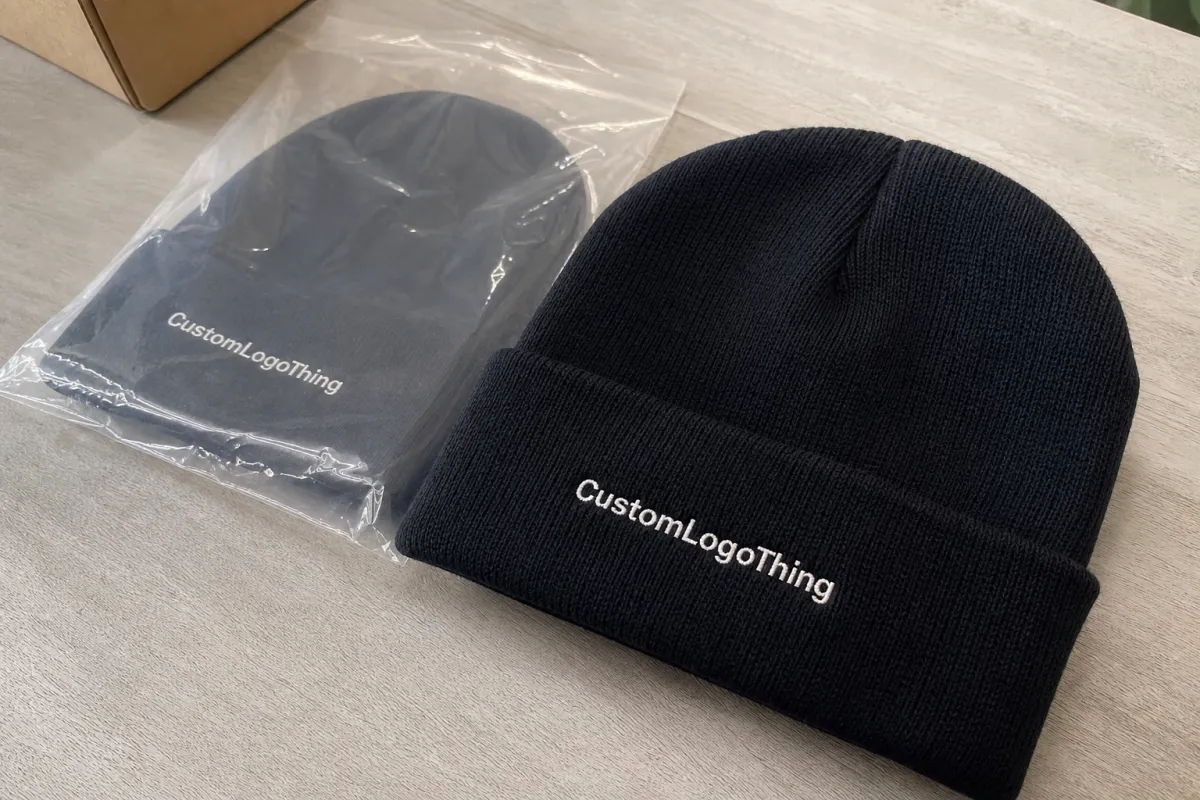
The supplement category has a particular vulnerability with branded apparel. A beanie is not just a giveaway. It often carries the same visual language as a pre-workout label, collagen jar, greens pouch, or shaker bottle: clean typography, precise color coding, certification icons, and a very controlled sense of credibility. Move one element slightly, shrink the logo too far, or let a label sit crooked on the cuff, and the product shifts from premium to promotional in the wrong way.
A supplement pom pom beanies Digital Proof Checklist works because it turns a subjective visual review into a production control process. Instead of asking, “Does this look good?” the buyer asks sharper questions: Is the logo centered on the cuff? Is the patch width listed in inches? Does the pom pom color match the body yarn or intentionally contrast? Are the thread colors referenced by PMS, Madeira, Isacord, or another thread system? Is the carton mark consistent with the purchase order?
In practice, the checklist should cover the details most likely to create disputes later:
- Artwork placement: front center, side cuff, back cuff, or label-only branding.
- Logo scale: patch width, embroidery height, safe margins, and minimum text size.
- Color references: yarn color, pom pom color, thread color, patch ground color, and label color.
- Construction details: cuff height, rib knit direction, pom pom diameter, label fold, and stitch density.
- Order control: quantity, size assumptions, packing method, carton marks, ship-to address, and named approver.
That last item matters more than many teams expect. Supplement launches often involve marketing, compliance, sales, founders, and outside creative teams. If four people approve different versions by email or chat, the supplier may not know which instruction wins. One named final approver reduces noise. It also creates accountability.
Production callout: A proof approval is usually treated as permission to proceed. If the proof shows the wrong patch size, label side, or shipping mark, the factory may produce exactly what was approved.
How Digital Proofs Work Before Custom Beanies Go Into Production
A digital proof is a visual production preview. It shows how the approved design should appear on the finished pom pom beanie, usually with a front view, logo placement, decoration dimensions, color references, and sometimes side or back views if the design includes multiple brand touches. It is faster and less expensive than a physical sample, which is why it is common for straightforward custom beanie orders.
Do not confuse speed with certainty. A digital proof can confirm placement, scale, spelling, artwork version, and listed specs. It cannot fully confirm hand feel, yarn stretch, embroidery puckering, faux fur texture, or how a dark green thread behaves against charcoal acrylic under warehouse lighting. That is where a physical sample earns its keep, especially for premium campaigns or unfamiliar decoration methods.
Typical proof elements include the beanie style, front view, logo art, imprint dimensions, thread or PMS references, woven patch specifications, label placement, and packing notes. Some suppliers also show a flat artwork file beside the beanie mockup. That comparison is useful because a logo may look crisp in isolation and cramped once reduced to a 2.25-inch patch.
Here is the buyer/manufacturer split. The buyer approves the visible production direction: design, placement, colors, measurements, and order instructions. The manufacturer still manages knitting tolerances, machine setup, yarn lot variation, decoration registration, and normal production allowances. A half-inch placement error is one thing. A barely perceptible shade difference between acrylic yarn lots is another. Not always avoidable.
Supplement branding makes this more sensitive. A blue-green used for a greens powder can look clinical or wellness-oriented at one value, then dull and generic a shade darker. Metallic gold may signal premium in a logo file but become muddy in thread. Small “clean label” typography may work on a pouch and fail on a cuff. A good supplement pom pom beanies Digital Proof Checklist forces the team to inspect those translation points before the order leaves the controllable stage.
Logo, Patch, Yarn, and Pom Pom Details Worth Checking Twice
The visible details that disappoint buyers are usually not exotic. They are basic. Logo too small. Patch too wide for the cuff. Pom pom larger than expected. Cuff fold hiding part of a woven label. Front-center alignment drifting because nobody clarified whether “center” meant the beanie body, the cuff face, or the folded edge.
Start with logo size. For embroidery on a cuff, many simple logos sit comfortably around 2 to 3 inches wide, depending on stitch count and letter height. Woven or faux leather patches often land around 2.25 to 3.5 inches wide. Tiny certification marks, capsule icons, leaf symbols, and dense ingredient-inspired typography may not reproduce cleanly below roughly 0.12 inches in letter height. That varies by method, but the risk is real.
Next, check contrast under realistic conditions. A black-on-charcoal mockup may look elevated on a bright monitor. In a warehouse, gym lobby, or winter event tent, it can nearly disappear. White thread on navy acrylic reads from 8 feet away. Tonal gray on recycled black yarn may only read in close-up photos. Neither choice is wrong. The proof should make the intent obvious.
Material changes the equation. Acrylic knit is common because it is cost-effective, consistent, and warm enough for promotional use. Recycled yarn can support sustainability messaging, though buyers should verify certification claims rather than assuming them. Rib knit stretches more vertically and can distort a logo if embroidery is too dense. Cable knit adds texture but reduces flat decoration area. Faux fur pom poms add perceived value, but they also shift the visual balance of the beanie.
Folded cuffs deserve special suspicion. A 3-inch cuff and a 2.75-inch patch can coexist on paper, yet look crowded once the beanie is worn and the knit curves around the head. If the beanie is meant for unboxing photos, retail shelf bundles, staff uniforms, or outdoor event giveaways, compare the proof against that use case. A beanie photographed flat for an influencer kit may need a stronger label position than one worn by staff at a sampling booth.
If sustainability language appears anywhere near the beanie or hang tag, keep the claim disciplined. The Forest Stewardship Council is relevant for paper tags and packaging, not acrylic yarn. The U.S. EPA recycling resources are useful for general packaging context, but they do not automatically validate a recycled apparel claim. Proofs can catch visual errors. They cannot rescue sloppy sustainability copy.
Pricing, MOQ, and Unit Cost Signals Hidden in the Proof
A proof can expose cost drivers before they become invoice surprises. Oversized embroidery, six-color woven patches, custom inner labels, hang tags, specialty yarn, individual polybagging, branded cartons, split shipping, and rush handling all change the economics. They may be worth it. They should not be invisible.
Minimum order quantity is not just a supplier preference. It is math. Setup, digitizing, proofing, material sourcing, decoration setup, packing labor, and freight are spread across the order. A 250-piece run often carries a much higher unit cost than a 2,500-piece run because the fixed work does not shrink proportionally. For many custom pom pom beanies, a buyer might see rough ranges such as $5.50-$9.50 per unit at lower quantities and $3.25-$6.75 at larger quantities, depending on yarn, decoration, and packing. Complex retail-ready programs can exceed that.
Decoration method also drives cost behavior. Embroidery can be efficient for bold, simple logos, especially one to three colors. Woven patches handle small text better and create a clean retail feel, but they introduce a separate patch production step plus application labor. Faux leather patches can look premium for fitness or outdoor-leaning supplement brands, though fine copy and tiny symbols may not deboss clearly.
| Proof Detail | Typical Cost Signal | Buyer Check |
|---|---|---|
| Direct embroidery on cuff | Efficient for simple logos; stitch count raises cost | Confirm logo width, thread colors, and minimum letter height |
| Woven patch | Better for small text; adds patch production and application steps | Check patch size, border color, backing, and edge style |
| Custom inner label | Small unit increase, but extra setup and sewing time | Confirm orientation, care copy, fiber content, and brand copy |
| Individual polybagging | Often adds packing labor and material cost | Verify suffocation warning needs and carton count |
| Split shipping | Can raise freight and handling charges | List every address, quantity split, and required arrival date |
Ask for a line-item quote if the proof includes multiple brand touches. Marketing may care about the patch. Procurement may care about unit cost. Operations may care about carton labels and delivery sequence. A line-item view lets everyone evaluate the same product instead of debating a vague “premium beanie” concept.
For broader decoration and production options, Custom Logo Things outlines available routes on its Manufacturing Capabilities page. That matters because a proof is easier to judge when the buyer understands whether the product is built around embroidery, patch application, private labeling, or custom packaging.
Process and Timeline: From Artwork Upload to Approved Beanie Proof
The cleanest process is sequential. Submit artwork. Confirm beanie specs. Receive the quote. Approve the mockup direction. Review the digital proof. Request revisions if needed. Then release production in writing. Skipping steps may feel faster for one afternoon, but it often creates a two-day detour later.
Normal timing depends on complexity, order volume, decoration method, and shipping destination. A simple embroidered beanie proof may come together quickly once vector art is available. A custom yarn color, woven patch, private label, hang tag, and multiple ship-to addresses require more coordination. Production after proof approval might take 12-20 business days for many straightforward orders, while complex or high-volume programs can need longer. Air freight may solve timing but punish the budget.
Most proofing delays are predictable. Low-resolution PNG logos create digitizing questions. Missing Pantone references lead to color interpretation. Label instructions arrive as casual comments rather than production copy. Stakeholders review on different days and contradict each other. Someone says, “make it pop,” which gives the designer almost no measurable direction.
Better inputs shorten the process without gambling. Send vector artwork in AI, EPS, or editable PDF format. Include exact quantities, delivery deadline, preferred beanie style, target budget, must-have packaging instructions, and any compliance-related copy that legal has already cleared. If the logo has a non-negotiable brand color, provide Pantone or thread references. If the deadline is tied to a retail promotion, athlete event, or subscription box packing date, state the real date, not a padded wish date.
Name one final approver before proofing starts. Supplement brands can be founder-led and opinion-rich, which is not a problem until production decisions become group chat decisions. Brand can own visual accuracy. Finance can own budget. Operations can own shipping and carton marks. Compliance can own claims, icons, and required copy. But one person should send the final written approval.
A practical approval route looks like this:
- Upload vector logo files and any approved brand guide details.
- Confirm beanie body color, cuff style, pom pom type, and decoration method.
- Review quote details against decoration, labels, packing, and freight assumptions.
- Check the digital proof at full size on a desktop screen or printed page.
- Send precise revision notes with measurements, colors, or location changes.
- Approve the final proof only after all stakeholders have signed off internally.
If the order involves unfamiliar materials or a high-visibility launch, request a physical sample. It adds time and cost, but it can reveal the issues a screen cannot: yarn softness, cuff recovery, embroidery density, patch stiffness, pom pom fullness, and real-world color behavior.
Common Digital Proof Mistakes Supplement Brands Make
The most common mistake is approving a logo that is too small. Small feels tasteful on a screen, especially inside a clean PDF. On a knit cuff, viewed from 6 to 10 feet away, it may vanish. Supplement brands often prefer minimalist design, but minimalism still needs enough scale to function as merchandise.
The second mistake is ignoring cuff fold height. A proof may show a neat rectangular cuff, but real knitwear curves, stretches, and shifts when worn. If the cuff is shallow, a tall patch can look squeezed. If the cuff is deep, a small logo can look lost. Ask for cuff height in inches and compare it with the decoration height.
Phone review is another problem. A 2.5-inch patch reduced to a smartphone screen can hide spacing issues, crooked labels, and fine text failures. Review the proof on a desktop monitor, then zoom to 100%. If the supplier provides dimensions, hold a ruler against a printed version. Primitive? Yes. Effective? Also yes.
Compliance-adjacent branding deserves attention. Merchandise may not carry the same regulatory burden as a supplement facts panel, but tiny claims, certification-style icons, “clinically tested” wording, or ingredient benefit language can still create review headaches. If legal has not cleared it for merch, do not let it slide into a patch, hang tag, or insert card because it “looked small.”
Vague revision notes create slowdowns. Replace “make the logo stronger” with “increase woven patch width from 2.25 inches to 2.75 inches.” Replace “more premium” with “use black patch ground with off-white woven logo and merrowed black border.” Replace “fix the label” with “move the woven side label to wearer’s left cuff seam, folded over the edge, logo facing outward.” Specific language protects both sides.
Another subtle mistake: failing to match the proof to the campaign. A beanie for influencer gifting may need a hang tag, clean individual packaging, and a more photogenic fold. A beanie bundled free with a 5-pound protein tub may need lower unit cost and carton efficiency. Staff uniforms may require consistent front-facing embroidery more than elaborate packaging. The supplement Pom Pom Beanies Digital Proof checklist should reflect the real use, not an abstract merch dream.
Buyers can also compare production routes through custom manufacturing capabilities before locking the proof. A design that looks cramped in direct embroidery may work beautifully as a woven patch. A premium patch concept may be unnecessary if the beanie is a high-volume challenge reward.
Next Steps Before You Approve and Release the Order
Approval should be boring. That is a compliment. The final routine should feel like a pre-flight check: full-size proof review, quote comparison, decoration location check, spelling review, color verification, packing confirmation, and shipping mark confirmation. If something is missing, pause. A production line is a poor place to discover an unanswered question.
Build a small internal sign-off chain with named owners. Brand owns logo, color, and overall appearance. Budget owns unit cost, setup fees, and freight. Operations owns delivery date, carton count, and ship-to details. Compliance owns any claim-like wording, icons, or certification references. Four owners can work well if one final approver collects their input and sends a single approval.
Save the approved proof with the quote, purchase order, artwork files, and any revision notes. Reorders become much cleaner when the prior proof is easy to find. Without it, teams rely on memory: “same as last time” may mean the same logo but a different patch size, the same yarn color but a different pom pom, or the same beanie with updated packaging. Memory is not a production specification.
Request a physical sample when the stakes justify it. Large retail programs, premium influencer kits, new yarn colors, unfamiliar decoration methods, strict color matching, or high-visibility supplement launches all qualify. A sample may add a week or more, depending on the supplier and method, but it can prevent a bulk order that technically matches the proof and still disappoints in hand.
Before written approval, compare the final proof against Custom Logo Things’ production and decoration capabilities so the selected method matches the brand objective, timeline, and budget. The best proof is not always the most elaborate one. It is the one that gives the supplement brand the right beanie for the campaign, with the fewest unpleasant surprises.
Use the supplement pom pom Beanies Digital Proof Checklist one final time before you release the order: logo size, placement, yarn color, pom pom color, cuff height, patch or embroidery specs, label details, packing method, carton marks, shipping address, quote match, and named approver. Once approval is sent, production usually begins. That is exactly why the last calm review matters.
FAQs
What should be included in a supplement beanie proof checklist?
A supplement beanie proof checklist should include logo placement, decoration size, thread or patch colors, cuff height, pom pom color, label details, quantity, packing method, shipping address, carton marks, and the exact approver name. For more complex orders, add hang tag copy, individual polybag requirements, split shipping details, and any compliance-reviewed wording.
Is a digital proof enough for custom pom pom beanies?
A digital proof is usually enough for repeat orders or simple designs with standard yarn colors and straightforward embroidery. A physical sample is safer for premium campaigns, new materials, complex embroidery, strict color matching, woven patches with small text, or any order where texture and hand feel influence perceived value.
How long does the digital proof process take for pom pom beanies?
Timing varies by supplier, order complexity, and revision count. Clean vector art, confirmed specs, one decision-maker, and precise revision notes can reduce delays significantly. Missing Pantone references, low-resolution logos, unclear label copy, and late stakeholder feedback are the usual reasons proofing takes longer than expected.
Can proof changes affect the cost of supplement pom pom beanies?
Yes. Larger embroidery, extra thread colors, woven patches, faux leather patches, custom inner labels, hang tags, special packaging, rush production, individual polybagging, and split shipping can all change the final unit cost or quote. If the proof changes the product, ask whether the pricing changes too.
What is the biggest mistake when approving a beanie digital proof?
The biggest mistake is treating the proof like a rough mockup instead of a production document. Every logo, color, measurement, label, packing note, and shipping instruction should be checked before approval. A strong supplement pom pom beanies digital proof checklist turns that review into a repeatable habit instead of a last-minute guess.


