Approve Subscription Paper Bags Print Proofs Faster
What a Subscription Paper Bags Print Proof Actually Shows
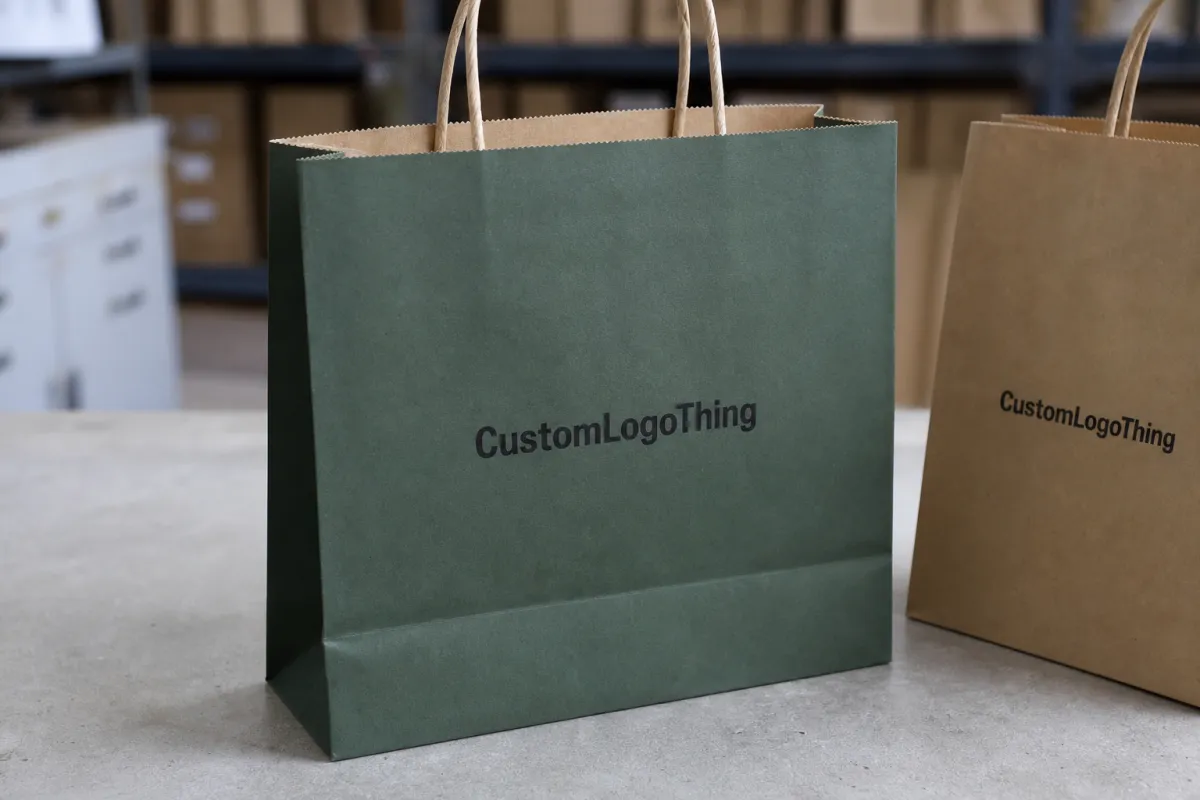
A subscription brand orders 5,000 Kraft Paper Bags, gets the subscription paper Bags Print Proof, clicks approve too fast, and later discovers the logo sits lower than expected once the bag is filled. The proof was not the problem. The review was.
A subscription paper bags print proof is the approval file, sample, or production reference used before printing starts. It confirms the bag dimensions, logo size, artwork placement, ink color, print method, handle position, gusset layout, mandatory marks, and production notes. It is not decoration. It is a control document.
Most buyers see three proof types. A digital proof is usually a PDF or mocked-up dieline. It is fast, often included, and good for checking layout. A press proof uses the actual printing setup or a close production setup, so it is better for ink behavior and registration. A physical pre-production sample shows the bag structure, handle, fold, paper weight, and printed result in your hand. Digital proofs are fast and cheap. Physical samples are slower and more accurate. Anyone pretending they are the same thing is selling optimism.
What does a proof not show perfectly? Plenty. Paper texture varies by batch. Kraft stock can absorb ink unevenly. Minor registration tolerance is normal, especially around folds and gussets. Shipping scuffs can happen. A flat proof also cannot fully show how a bag behaves after someone stuffs it with candles, skincare, snacks, apparel, books, supplements, or whatever your subscription program ships every month.
Subscription packaging is less forgiving than a one-time event bag. Customers compare shipments. Influencers photograph packaging. Fulfillment teams notice whether bags open quickly or fight back like a bad office printer. Small inconsistencies become brand noise when they repeat month after month.
So no, you do not need to become a print technician. You do need to review the subscription paper bags print proof like a buyer who understands what can go wrong before 5,000 pieces show up at the warehouse.
How the Proofing Process Works Before Paper Bag Production
The proofing flow is usually simple, but simple does not mean casual. It often goes like this: quote request, bag spec confirmation, artwork upload, dieline setup, digital proof, buyer revisions, final approval, plate or screen setup, production, quality check, packing, and shipping.
Before proofing starts, the manufacturer needs the basics nailed down: bag size, paper weight, handle type, finish, ink colors, logo file, print location, order quantity, and delivery deadline. Missing specs create guesswork. Guesswork prints badly.
For paper bags, common sizes might be 8 x 4 x 10 inches for small retail goods, 10 x 5 x 13 inches for apparel or subscription kits, and 16 x 6 x 12 inches for bulkier items. Paper weight may land around 120-180gsm for many kraft shopping bags, while heavier premium bags may use 200gsm or more, depending on construction. Handles can be twisted paper, flat paper, cotton rope, ribbon, or die-cut. Each choice changes cost, lead time, and how the artwork sits visually.
Artwork checks are not just “does the logo look nice?” A printer should review vector format, minimum line thickness, outlined fonts, barcode scannability, color callouts, bleed, safe zones, and whether the design crosses folds or gussets. If your logo file is a 400-pixel PNG pulled from a website header, the proof may expose that fast. Good. Better embarrassment now than fuzzy printing later.
The dieline matters because a paper bag is a three-dimensional object pretending to be a flat file for a few minutes. A flat PDF can look clean while the actual printed bag looks awkward because the logo lands on a crease, sits too close to the handle, or runs across a side gusset. Side panels stretch visually when the bag opens. Bottom folds disappear. Handles cover more than people expect.
Most projects include one or two revision rounds. That usually covers placement tweaks, size adjustments, or correcting a small artwork issue. Changing the logo, bag size, paper stock, or print method after approval is different. That can reset the clock.
Approval is not a casual thumbs-up. It is the point where the printer starts spending real money on setup, plates, screens, ink, stock, labor, and production time.
Ask for a proof that includes production notes, not just a pretty mockup. The file should identify the bag size, substrate, ink count, Pantone or CMYK values, handle style, finish, quantity, and tolerance notes. If the proof only shows a logo floating on a generic bag image, push back. That is a sales visual, not a production-ready proof.
Key Proof Details Subscription Brands Should Check First
Start with the high-risk items: logo placement, bag orientation, panel selection, handle clearance, gusset visibility, and whether the artwork still looks balanced when the bag is opened and filled. That last part matters. Flat proofs are polite little liars.
Check scale first. A logo that looks tasteful on a laptop screen may look tiny on a 10 x 13 inch bag. The same logo may look ridiculous on a small merchandise bag. Print the proof at actual size when possible. If the PDF says 100%, print at 100%. Do not let your browser “fit to page” and quietly shrink everything. Rude behavior from software, honestly.
Color needs a realistic review. Pantone references and approved spot color callouts are more reliable than vague requests like “make it beige but premium.” Kraft paper warms and dulls color. White paper brightens it. Coated stock holds ink differently than uncoated stock. If you are printing on natural kraft, expect muted contrast unless the design is built for it.
For printing methods, flexographic printing is common for larger paper bag runs because it handles volume well. Offset printing can produce crisp results for certain premium paper bag projects, usually with more setup. Digital printing can be useful for shorter runs or variable designs, though material compatibility and finish options vary. If the proof does not say which method is being used, ask.
Typography is where small details go to die. Thin strokes, tiny taglines, social handles, QR codes, recycling icons, and legal copy may need to be enlarged or simplified. A 5-point tagline might look elegant in a brand deck. On kraft paper with ink spread, it can look like lint.
Also check the structure. Twisted handles need clearance. Flat handles may cover the top print area. A reinforced top fold changes the visible panel height. Bottom gussets hide anything placed too low. Side gussets distort graphics when the bag opens. If your products are heavy, ask about load rating. Many standard Kraft Paper Bags are fine for light goods, but candles, glass jars, books, and multi-item subscription kits need more caution.
Color, Paper, and Finish Tolerances
Color tolerance is not laziness. It is part of print manufacturing. A reasonable paper bag supplier should be able to tell you whether they hold color to a visual standard, Pantone target, delta E range, or approved sample. For brand-critical colors, ask for an ink drawdown on the actual paper stock. It is boring. It is also cheaper than rejecting cartons of bags because your “warm clay” became “sad brown.”
Paper certifications may matter too. FSC-certified paper, recycled content claims, and curbside recyclability language should be verified before printing. If the bag will carry food, cosmetics, or regulated goods, check whether any contact or labeling requirements apply. ASTM and ISTA standards are not usually printed on the bag, but they can guide testing expectations for drop, compression, vibration, and distribution handling. Subscription packaging lives a hard life after it leaves the printer.
Lamination and coatings deserve a second look. Matte lamination can make colors appear softer. Gloss coating increases contrast but shows scuffs. Soft-touch feels expensive and marks easily, because apparently we cannot have nice things without a tradeoff. Water-based coatings are often used where recyclability is a priority, but exact claims depend on the full material construction and local recycling rules.
If the brand reorders monthly or seasonally, the approved subscription paper bags print proof should become the control file for future runs. Save it. Label it clearly. Future-you will be less annoyed.
Cost, Pricing, and MOQ Effects of Proof Changes
Proofing cost depends on proof type. Digital proofs are usually included with the order or charged as a small prepress fee. Physical samples, press proofs, custom ink drawdowns, and pre-production samples add cost because they use actual labor, material, machine time, and shipping.
Common pricing drivers include bag size, paper weight, handle style, number of ink colors, print coverage, finish, order quantity, shipping cartons, and whether the job uses standard stock or custom tooling. A one-color logo on a standard kraft bag is a different animal from a full-coverage print with custom handles, foil stamping, embossing, and soft-touch print finishing.
| Proof Option | Typical Use | Common Cost Range | Tradeoff |
|---|---|---|---|
| Digital PDF proof | Standard logo bags, repeat runs, simple placement checks | Often included or $25-$75 | Fast, but does not show true paper feel or exact ink absorption |
| Printed physical sample | New bag size, new paper stock, premium launch | Often $75-$250+ | Better accuracy, but adds several business days or more |
| Press proof or ink drawdown | Color-sensitive branding, spot color approval, high-volume run | Often $150-$500+ | Useful for color control, but slower and not always needed |
| Pre-production sample | Complex custom bag before full production | Often quoted separately | Best risk reducer, but highest proofing cost |
Unit pricing varies widely, but here is a practical buying frame. A simple one-color custom kraft bag might land around $0.18-$0.45 per unit at several thousand pieces, depending on size, handle, paper weight, and freight. Smaller runs may cost $0.60-$1.50+ per unit because setup gets spread across fewer bags. Premium laminated paper bags with rope handles, heavier stock, and multi-color printing can climb much higher.
MOQ matters. A standard stock paper bag with a one-color logo may have a lower minimum, sometimes around 500-1,000 pieces depending on supplier and method. A fully custom printed bag may require 3,000-10,000 pieces or more. Not always. But often enough that buyers should ask before falling in love with a design.
Late proof changes get expensive because the printer has already moved from planning to production spending. Changing copy before plate-making might be a small prepress charge. Changing copy after plates or screens are made can mean new setup fees, often $75-$300+ per color or per plate depending on method. Changing bag size after paper is ordered can create stock waste, delay the schedule, and make everyone suddenly very formal over email.
Here is the practical rule: revise heavily before approval, then leave the job alone. If your marketing team, founder, compliance person, and warehouse manager all need opinions, collect them before sending one clean revision list. Drip-feeding feedback over six emails is how small projects become expensive little soap operas.
The subscription paper bags print proof should also match the purchase order. Quantity, size, price, carton pack, and delivery terms should not live in separate versions of reality. If the PO says 10 x 5 x 13 inches and the proof says 9 x 4 x 12 inches, stop. Fix the paperwork before production.
Timeline, Lead Time, and Approval Bottlenecks
For a standard printed paper bag order, digital proofing may take 1-3 business days after usable artwork is received. Revision rounds often add another 1-2 business days each. Production for common Custom Paper Bags may run 10-20 business days after final proof approval, with longer timelines for special paper, custom handles, lamination, foil, embossing, high quantities, or overseas freight.
Physical samples change the schedule. A plain structural sample might take 3-7 business days. A printed pre-production sample can take 7-15 business days or more, especially if it uses actual plates, specialty finishes, or imported materials. Add transit time. Add review time. Add the one person who is mysteriously unavailable until Thursday.
Approval bottlenecks usually come from four places: unclear decision ownership, missing artwork files, color anxiety, and late copy changes. The fix is not complicated. Assign one approver. Use final vector artwork. Decide whether color is “close commercial match” or “must match approved sample.” Lock copy before proofing.
Subscription brands should also think in reorder cycles. If you ship monthly boxes and use bags as part of the unboxing experience, do not order at the last second. A sane reorder point might be 6-8 weeks before inventory runs out for domestic production, or 10-14 weeks if ocean freight, customs clearance, or complex finishing is involved. Air freight can rescue a late project, but nobody enjoys paying for that lesson.
| Project Stage | Typical Time | Buyer Risk | Practical Move |
|---|---|---|---|
| Artwork review | 1-3 business days | Low-resolution files or missing fonts | Send vector AI, EPS, or print-ready PDF files with outlined text |
| Digital proof revision | 1-2 business days per round | Multiple people sending conflicting notes | Submit one consolidated revision list |
| Physical sample | 3-15 business days | Sample adds time before production starts | Use it for new structures, heavy products, or premium launches |
| Full production | 10-20+ business days | Delays after final approval hurt ship dates | Approve only after checking every production detail |
If a supplier promises an unusually short timeline, ask what is being skipped. Sometimes they have stock bags and open press capacity. Great. Sometimes they are skipping a real proof or using whatever ink is already loaded. Less great. Speed is useful only if the bags arrive correct.
Subscription Paper Bags Print Proof Review Checklist Before You Approve
Use a checklist. Not because you are forgetful. Because print production punishes confidence.
First, confirm the bag size in width x gusset x height format. Buyers mix this up constantly. A 10 x 5 x 13 inch bag is not the same as a 10 x 13 x 5 inch bag, no matter how emotionally attached someone is to the wrong sequence. Check whether dimensions are internal, external, or supplier-standard finished dimensions.
Second, confirm the panel orientation. Is the logo on the front panel? Is the opening at the top? Are side gussets blank, patterned, or printed? Does the artwork wrap, stop, or mirror? For subscription programs that use the bag inside a mailer or box, think about the first visible surface after opening. That may matter more than the technical “front.”
Third, check the artwork size and safe zones. Keep key logos, QR codes, and required text away from edges, folds, handles, and bottom creases. A safe zone of at least 0.25 inch is a common starting point, though the supplier may require more depending on bag style and print method. Full-bleed artwork needs bleed. No bleed, no magic.
Fourth, review color callouts. Use Pantone numbers for spot colors where possible, CMYK values for process printing, and approved samples for repeat runs. Ask whether white ink is included if printing on kraft or dark paper. Many buyers assume white areas in a digital mockup will print white. Sometimes they are just unprinted paper. That misunderstanding gets ugly fast.
Fifth, inspect text and codes. Scan every QR code from the proof if the supplier provides a high-resolution version. Confirm website URLs, social handles, recycling marks, country-of-origin statements, batch references, and subscription campaign copy. Legal copy should be approved by someone qualified, not by the person who “has a good eye.” Different job.
Sixth, review production notes. The subscription paper bags print proof should list print method, paper stock, handle material, finish, quantity, carton packing, and any approved tolerance. If you approved a matte finish and the final bags arrive gloss because the note was missing, you now have a very avoidable argument.
Seventh, compare the proof against the quote and PO. Pricing may assume one color, one side, and standard kraft paper. If the proof shows two-sided printing, a heavier stock, or a finish not included in the quote, ask for updated pricing before approval. Surprises are charming at birthday parties. In packaging invoices, not so much.
Common Proofing Mistakes That Ruin Custom Paper Bags
The biggest mistake is approving the proof on a phone. I get it. Everyone is busy. Still, a phone screen is where tiny legal copy and scale problems go to hide. Review on a large screen, then print the proof at actual size if placement matters.
Another common mistake is reviewing only the front view. Paper bags have sides, bottoms, folds, top turns, and handles. If your artwork wraps around the gusset, ask for a flat dieline and a 3D mockup if available. If your bag will stand in a photo, consider how the side panel looks too. Customers do not photograph packaging only from the angle your designer prefers.
Buyers also forget about contents. A bag that looks refined while empty can bulge once filled. Heavy jars pull on handles. Apparel softens the shape. Boxes create hard corners. If your subscription kit has a consistent product load, test a similar blank bag before production. Fill it. Hold it. Set it on a table. Swing it gently. If the handle feels questionable, believe your hand.
Color expectations create plenty of drama. A subscription paper bags print proof viewed on a backlit monitor will not match ink on uncoated kraft. That does not mean the supplier failed. It means screens emit light and paper reflects it. Calibrated monitors help, but physical color references help more.
Then there is the “we will fix it on the next run” mindset. Sometimes that is reasonable. If the logo is 3mm higher than ideal but the bags function and the launch is tomorrow, ship them. If the QR code fails, the handle tears, or the required recycling claim is wrong, do not ship them unless you enjoy expensive cleanup.
Repeat orders bring their own trap. Buyers assume the new run will match the last run exactly. It should be close, but exact matching depends on the same artwork, stock, ink, machine setup, and supplier controls. Keep an approved production sample from the previous run and send photos or the physical sample back as reference. “Same as last time” is not a specification. It is a wish wearing a tiny hat.
Finally, do not approve an unclear proof just to be polite. Ask dumb questions early. The dumb question is usually cheaper than the smart complaint later.
Next Steps to Approve Your Proof Without Rework
Set up a clean approval routine before the proof arrives. Choose one internal owner. Gather artwork, brand guidelines, Pantone colors, product weights, and any compliance copy. Decide which details are flexible and which are not. For most subscription brands, non-negotiables should include logo accuracy, scannable codes, correct bag size, handle strength, and delivery timing.
Ask the supplier for the right proof level based on risk. If you are reordering a standard one-color kraft bag, a digital proof may be enough. If you are launching a premium subscription program with custom handles, a new paper stock, multiple colors, and a heavy product load, pay for a physical sample or pre-production sample. Saving $150 on proofing while risking $5,000 in unusable bags is not thrift. It is performance art.
Keep your revision notes specific. Say “move logo up 0.5 inch and center on front panel” instead of “make it feel more balanced.” Say “change Pantone 5535 C to Pantone 5605 C” instead of “make green more earthy.” Printers can act on measurements, file names, and color codes. They cannot print vibes.
Once the proof is correct, approve in writing and include the proof file name or version number. A good approval note might read: “Approved for production: 10 x 5 x 13 inch kraft paper bag, 140gsm, twisted paper handle, one-color Pantone Black 6 U front print, proof v3.” Dry? Yes. Useful? Very.
After production, keep one carton label, one finished bag, the final proof, the invoice, and any color reference together in a reorder folder. That folder should include supplier contact details, order quantity, unit cost, lead time, and any issue notes. If the bag performed well in fulfillment, write that down too. If handles tore at 8 lb loads, definitely write that down.
A subscription paper bags print proof is not bureaucracy. It is your last inexpensive chance to catch the mistake before paper, ink, labor, and shipping turn it into inventory. Review it slowly, approve it clearly, and your subscription paper bags print proof becomes a production tool instead of a future apology.
FAQs
How long should I expect proof approval to take?
For a simple digital proof, plan on 1-3 business days from the supplier after you send print-ready artwork, then another day internally for review. Physical samples can add 3-15 business days depending on printing, finish, and shipping. If four people need to approve the file, build in more time. Humans are usually the slowest part of proofing.
Is a digital proof enough for subscription paper bags?
Sometimes. A digital proof is usually enough for repeat orders, standard one-color logos, and low-risk layouts. For new sizes, high-value launches, exact brand colors, heavy products, or complicated finishes, ask for a physical sample or press proof. The extra cost is usually easier to swallow than a full rejected run.
What file format should I send for custom paper bag printing?
Send vector artwork whenever possible, usually AI, EPS, or a print-ready PDF with outlined fonts. Include Pantone or CMYK color values, linked images at proper resolution, and any brand rules for logo spacing. Do not send a tiny PNG and hope prepress can rescue it. Sometimes they can. Sometimes the rescue looks like a hostage note.
Can I change artwork after approving the proof?
You can ask, but expect cost and delay. If plates, screens, paper ordering, or production setup has started, changes may require new setup fees and a revised schedule. Before approval, changes are normal. After approval, changes are production interruptions.
What should I do if the final bags do not match the approved proof?
Compare the finished bags against the approved proof, purchase order, and any physical sample. Take clear photos under neutral lighting, measure placement, test QR codes, and document carton labels. Then contact the supplier with specific evidence. If the issue falls outside agreed tolerance, ask for a remedy. If no tolerance was defined, the conversation gets harder, which is exactly why proof details matter.


