Bakery printed poly mailers Bulk Order Planning gets expensive when the bag is treated like a simple commodity instead of a shipping tool. A low quote can turn into higher labor, more reprints, and more damaged parcels if the size, film, closure, or print spec does not match the actual packed order.
For bakeries shipping cookies, brownie boxes, pastry assortments, or gift kits, the mailer has to do three jobs at once: protect the contents, speed up packing, and keep the brand present on arrival. That means the decision should be based on the packed item, the shipping lane, and the amount of handling the parcel will see, not just on the artwork mockup.
A mailer that works for a flat retail item can fail on a rigid box or a heavier multi-item kit. When the spec starts with the product photo instead of the packed dimensions, fit problems usually follow.
A mailer should reduce labor, not create another check at every station.
Why Bakery Printed Poly Mailers Bulk Order Planning Gets Expensive Fast for Bakeries
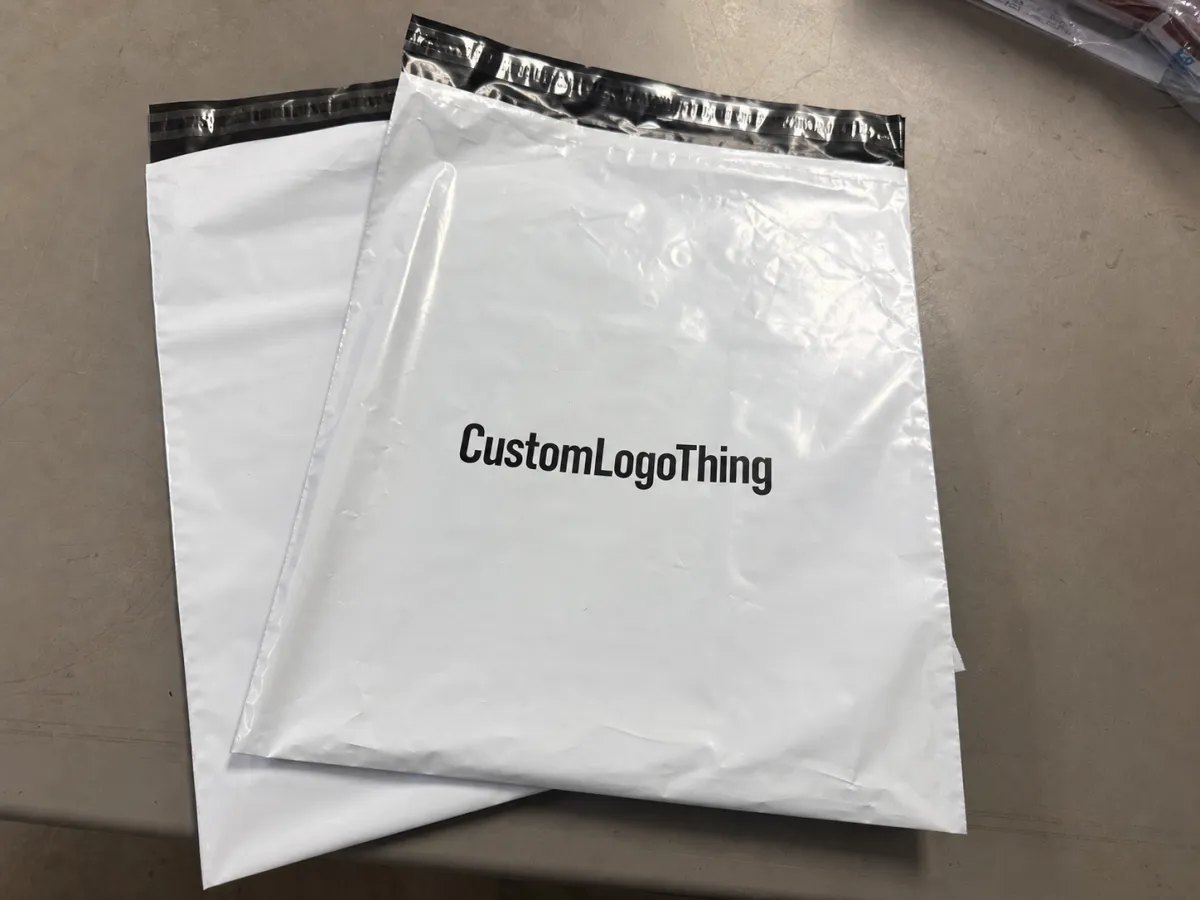
The first quote rarely shows the whole cost. Size, film gauge, print coverage, adhesive strength, freight, and sample revisions all change the final number. A bakery that only compares unit price can end up paying again through reprints, added labels, slower packing, and damaged goods.
Even small inefficiencies add up. If the team has to apply an extra sticker because the print area is too small, or if the seal needs a second pass, that becomes labor the packaging line has to absorb every day. If a thin bag splits at the corner or opens in transit, the packaging cost turns into a service issue.
Printed mailers also affect workflow. They can separate seasonal orders, reduce loose labels, and make outbound parcels easier to sort. That operational value matters because it lowers handling time, not just because it looks more polished at delivery.
Bulk planning matters because changes are costly. If the bag size changes after artwork approval, the proof may need to be rebuilt. If the film color changes, contrast testing may need another round. If the seal style changes, the pack-out process can change too. These are best resolved before the order is placed.
It also helps to think beyond the mailer itself. A cookie box with a sleeve, a kraft tray, or a rigid insert behaves differently inside the same bag. The useful dimension is the packed shape after the product has been boxed, labeled, and closed, not the loose dimensions of the item alone.
Choosing the Right Size, Film, and Closure
Start with the packed item, not the product in isolation. A cookie tin, a brownie box, and a soft merch bundle each take space differently once inserts, tissue, and labels are added. Leave room for the slight bulge that appears when the packer closes the bag quickly.
Flat poly mailers work well for slim bakery shipments with low compression risk. Gusseted styles are better for taller cartons and boxes with sharper corners because they provide more depth without forcing the film to stretch. If the mailer is hard to close, it is too small; if the parcel shifts around after sealing, it is too large for the load.
Closure choice matters just as much. Self-seal closures are standard for fast packing, but adhesive quality still needs checking. In warm packing areas, lower-grade adhesive can seem fine at the bench and fail later in transit. Heavier kits usually need stronger adhesive and a quick pull test on filled samples.
Filled samples are more useful than empty ones. Empty bags hide corner pressure and seal stress. A filled sample shows whether the opening is wide enough, whether the seams press against the box, and whether the finished parcel still feels stable after labeling.
A good sample set usually includes the most common order, the heaviest acceptable order, and the largest or tallest combination the bakery expects to ship. If a mailer only passes the middle case, it is probably too narrow for daily use.
For direct food contact, the outer mailer should not replace the actual food package. Use proper inner packaging for baked goods, especially items that are warm, greasy, or fragile. The mailer is for shipping protection and presentation, not for direct product containment.
Artwork and Print Specs That Stay Clear in Transit
Print issues usually come from predictable problems: thin text on dark film, low-resolution files, or logos with too much detail for the bag size. That is why the proof needs to be reviewed for production, not just approved as a quick mockup.
Whenever possible, provide a vector logo. A JPEG can work for a mockup, but it is a weak production file. Confirm bleed, safe area, and exact print location before the order moves ahead. If the film is colored, test how the artwork reads against that background before approval.
Seam placement is another common mistake. If text sits too close to a fold, gusset, or seal edge, it may disappear once the bag is formed. The same issue shows up when carrier labels cover the best part of the design. A strong mailer can still look awkward if the visible panel was not planned with labeling in mind.
Read proofs at actual size. Zoomed-in artwork hides proportion problems. The key question is whether the logo, web address, or order note stays legible from arm’s length after the parcel has been handled. That is the distance most bakery shipments are seen at.
Printing method also affects cost and lead time. Flexographic printing is common for bulk orders because it scales well on larger runs. One- or two-color artwork is usually cheaper than full coverage. If the design needs a light logo on a dark bag, ask whether an underprint is required and how that changes the schedule.
Good suppliers should explain tolerances clearly: how close artwork can sit to an edge, how much print shift is acceptable, and what contrast is safe on the chosen film. If they cannot describe those limits, the buyer is being asked to absorb the risk instead.
For a wider packaging comparison, our Custom Packaging Products page is a useful reference point, and our Custom Poly Mailers category helps narrow the structure before a quote is requested.
Poly Thickness, Seal Strength, and Unit Cost Drivers
The main pricing drivers are straightforward: size, film gauge, print coverage, adhesive, quantity, and freight. Larger bags use more material. Thicker film uses more resin. More colors and special finishes add setup and production time.
| Mailer Type | Typical Use | Common Thickness | Typical Unit Price at 5,000 Pieces | Tradeoff |
|---|---|---|---|---|
| Flat poly mailer | Thin bakery merch, light boxed treats | 2.5-3 mil | $0.18-$0.30 | Lowest cost, least forgiving on sharp corners |
| Gusseted poly mailer | Boxed cookies, layered pastry packs | 3-4 mil | $0.24-$0.42 | Better capacity, slightly higher material use |
| Heavy-duty printed mailer | Heavier bundles, stronger transit protection | 4 mil+ | $0.30-$0.55 | More durable, higher minimum spend |
These are directional ranges, not fixed quotes. Artwork coverage, resin type, bag size, and freight can move the price. The pattern is still consistent: higher quantities usually lower the per-piece cost because setup gets spread across more units.
Thickness should match the load. Light film can work for flat items with smooth edges and short shipping lanes. Once the bakery ships rigid boxes, stacked sets, or longer-distance parcels, heavier film usually pays off through fewer damaged orders and fewer complaints.
Seal strength deserves separate testing. A bag that opens in transit creates cleanup, replacements, and avoidable service costs. Ask for closure testing on filled samples, including a few drop cycles, compression checks, and hand-pull tests. That is usually enough to show whether the seal can hold up.
Compare landed cost, not just factory cost. Freight, packing changes, storage, sample revisions, and the risk of reprinting should all be included. A cheaper bag that fails under load is not a saving; it is just an expense that shows up later.
If the bakery orders across multiple product lines, Wholesale Programs can make the pricing structure easier to read because the tier breaks are usually clearer. That helps teams plan around real volume instead of guessing where the savings begin.
Packaging testing standards should stay in the discussion as well. ISTA test methods are useful for checking shipping performance, especially for long routes or mixed carriers. For fiber-based inserts or labels, FSC guidance helps keep certified claims aligned with the right paperwork.
Production Steps and Lead Time for Bulk Bakery Orders
The production flow is usually quote, artwork check, proof review, sample approval if needed, production, quality control, and shipment. Delays usually happen at the handoffs. A bakery that treats the proof as a formality often pays for that decision later.
A useful planning range is simple. Clean artwork may be reviewed in one to three business days. Proof approval may take another one to three days if the buyer responds quickly. Production often runs about 10 to 20 business days after approval, with freight added on top.
Complex artwork, multiple print colors, and custom structures usually add time. So do last-minute revisions. Most packaging delays come from incomplete files, slow sign-off, and freight booked too late.
Seasonal peaks need extra room. Holiday cookie runs, subscription launches, and gift-box promotions compress the calendar quickly. A reorder point that works in quiet months can fail during peak season, so a buffer is useful.
The internal approval process matters too. The bakery should know who confirms dimensions, who signs off on artwork, and who approves freight terms. When those decisions bounce between people, the schedule slips even if the supplier stays on pace.
What a Supplier Should Prove Before You Reorder
Repeat orders are where supplier quality becomes visible. A vendor can sound polished on the first run and still miss the next one on dimensions, print placement, or finish. For bakery packaging, consistency matters more than presentation.
Ask for written specs on thickness, dimensions, adhesive type, print method, and MOQ. If the information is vague, the quote is probably vague too. Request sample photos or a physical sample pack if available so the finish, seams, and print quality can be checked directly.
Communication speed matters as well. If a supplier misses basic proof corrections, like the wrong web address or the wrong size callout, that is a warning about how the rest of the order may be handled. Fast, accurate responses usually lead to fewer surprises later.
Ask how revisions are handled. Small artwork changes should not become a long project. A supplier that understands the work should be able to help with file cleanup, version control, and reorders without making the buyer manage every detail.
Quality control should be visible, not assumed. Good vendors check color consistency, trim accuracy, seal integrity, and bag dimensions before shipment. The buyer does not need a factory tour to ask how those checks are done.
For reorders, keep one approved spec sheet and one approved sample reference. That prevents small changes from creeping in silently and causing fit issues on the next run.
Next Steps to Lock In a Bakery Mailer Order Without Delays
The most useful order inputs are still the basics: packed product size, monthly volume, artwork file, print colors, and delivery destination. With those five details, a supplier can build a quote that compares cleanly across options.
Ask for tiered pricing, sample photos, and a production timeline in the same conversation. That keeps the comparison honest. A lower unit price means little if the lead time is too long or the film is too light for the actual shipment.
Set the reorder point from usage, not optimism. A bakery that ships 1,200 mailers a month should not wait until 200 remain if the next run takes weeks to produce and ship. A buffer of four to six weeks of inventory is often enough to absorb damage, a rush promotion, or a freight delay.
Keep the spec sheet simple and current. Bag size, film thickness, adhesive, print colors, artwork version, and approved sample notes should live in one place. The next reorder should not require digging through old emails to reconstruct the spec.
If the bakery is still comparing formats, the broader options on our Custom Packaging Products page and the current Custom Poly Mailers listings can help narrow the structure before a run is approved. For larger recurring volumes, Wholesale Programs usually make the planning math easier because the cost breaks are clearer. If the team needs basic order details first, the site FAQ covers the common setup questions.
Bakery printed poly mailers Bulk Order Planning works best when the spec is settled early, the proof is checked at actual size, and the supply timeline has room for production plus freight. That is the difference between packaging that behaves and packaging that keeps getting in the way.
FAQ
How do I start bakery printed poly mailers bulk order planning?
Start with the packed product size, monthly volume, and shipping use case. Then ask for a quote that includes bag dimensions, thickness, closure type, print colors, and destination so the pricing is comparable. A proof or sample should come before a full run is approved.
What MOQ should I expect for custom bakery poly mailers?
MOQ depends on size, print coverage, and construction, but custom bulk runs commonly start in the low-thousands. Higher quantities usually reduce unit cost because setup gets spread across more units. Smaller test runs are possible, but they often carry a higher per-bag price.
Which size is best for bakery boxes and mixed orders?
Choose based on the packed item after boxing, labeling, and inserts are added. Leave enough room for easy loading, but not so much extra space that the contents shift in transit. A filled sample is the safest way to confirm fit.
How long does a printed poly mailer order usually take?
Clean artwork may be reviewed in one to three business days, with proof approval taking a similar amount of time. Production often takes roughly 10 to 20 business days after approval, depending on quantity and print complexity. Shipping time should be added on top of that.
What files and details do I need for an accurate quote?
Send the logo file, target size, quantity, print colors, and any thickness or closure requirements. Include the delivery zip code or port because freight changes the real cost. If you have a previous sample or spec sheet, include that too so the supplier can match the order faster.
Are poly mailers safe for direct food contact?
They are usually treated as outer shipping packaging rather than the food-contact package itself. Bakery items should already be inside an appropriate inner container or wrapper before going into the mailer. For greasy, warm, or delicate items, the inner packaging matters as much as the mailer.


