Why Event Merch Embroidered Baseball Caps Bulk Order Planning Pays Off After the Booth Closes
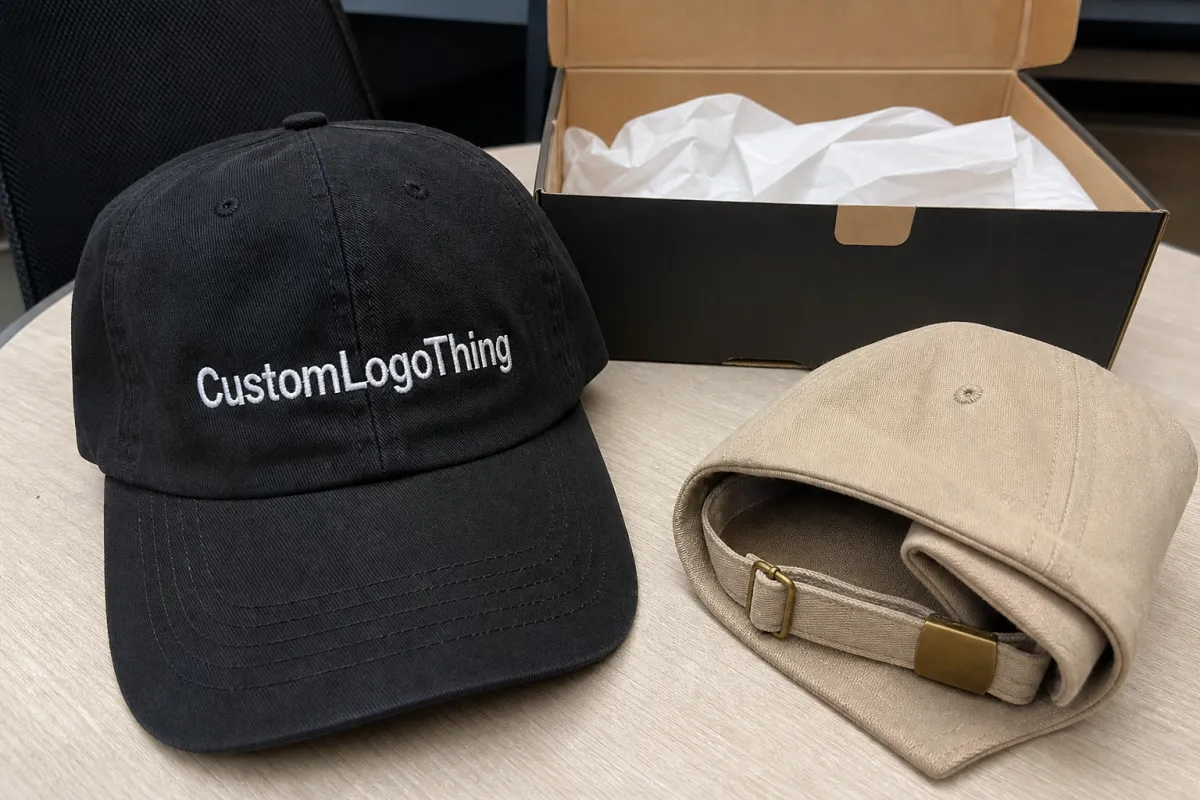
If the event date is fixed and the cartons have to arrive on a specific day, event merch embroidered baseball Caps Bulk Order planning is less a merch task than a production schedule. Caps look simple on the surface. They are not. A good order has to survive artwork cleanup, digitizing, proof approval, stock checks, thread matching, decoration setup, packing, and transit. Miss one of those and the “easy giveaway” becomes a rush job with expensive freight and a logo that looks slightly off in photos.
Caps keep earning space in event budgets because people actually wear them. Not once, not just in the booth, but later: commuting, traveling, mowing the lawn, standing in stadium lines, walking dogs, picking up coffee. That matters. A tote gets stuffed in a drawer. A shirt competes with sizing and taste. A cap has one of the highest practical wear rates in event merch because it solves a visible problem and advertises at the same time.
From a buyer’s perspective, caps also solve a logistical problem that other apparel creates. There are no size curves to forecast across S to 3XL. A standard adjustable cap can cover a wide audience with far less risk than ordering a pile of tees and hoping the mix is right. For mixed groups, that alone can make caps the safer play.
The catch is that the cap itself has to be chosen with more care than many first-time buyers expect. Crown height, panel structure, fabric texture, closure style, and logo shape all affect how the final piece reads. A mark that looks sharp on a flat mockup can sit awkwardly across a seam or collapse on a soft front panel. Once a hundred or five hundred units are involved, small design problems become visible at scale.
Good planning does not start with “How cheap can this be?” It starts with “What will still look intentional after it is worn, packed, photographed, and handled by people who are not thinking about the brand for more than two seconds?” That question changes the brief fast.
Choosing the Right Cap Build, Fit, and Decoration
Structured six-panel caps usually give the most dependable embroidery field. The front panel holds shape, the logo has a predictable surface, and the crown is less likely to buckle when stitches are dense. That makes structured twill a common choice for corporate event merch, staff uniforms, and sponsor giveaways where the cap needs to look neat rather than casual.
Unstructured caps behave differently. They feel softer, sit lower on the head, and often read as more relaxed. That can be a better fit for lifestyle branding or creative events, but the front panel can shift during wear. If the artwork is small or the linework is delicate, the lack of structure can make the final stitch file more sensitive to distortion.
Profile matters almost as much as structure. Low-profile caps sit closer to the head and tend to feel modern, while mid-profile caps offer more front height and more room for logos that have a text line under an icon. If the mark is wide, the profile can also affect how it wraps with the crown seam. What looks balanced in a flat art file may read too tall once it is sewn onto a curved front.
Closure choice changes both comfort and risk. Snapbacks are the most forgiving for mixed audiences because they cover a broad fit range and are easy to assign at check-in. Hook-and-loop closures are fast and practical, though they can feel less refined. Fabric strap and buckle closures give a cleaner finish. Fitted caps can look premium, but they are the least convenient for bulk event planning because they force size splits and increase the chance of leftovers in the wrong size.
Fabric should be chosen with the event environment in mind. Cotton twill gives a traditional look and takes embroidery well. Polyester blends hold color better under sun exposure and can be a better choice for outdoor events. Mesh-backed trucker styles are cooler in hot weather and often cost less, but the mesh changes the visual weight of the logo and can make a dense front design feel oversized. Washed cotton gives a softer, broken-in appearance, though it also makes color matching less predictable because the fabric finish itself is less uniform.
| Cap style | Best use | Typical unit cost at bulk quantity | What to watch |
|---|---|---|---|
| Structured six-panel twill | Corporate giveaways, staff gear, polished event branding | $3.90-$6.80 at 500+ | Cleanest front panel for most embroidery |
| Unstructured low-profile cotton | Casual events, lifestyle branding, softer visual style | $4.20-$7.20 at 500+ | Front panel can shift after wear |
| Mesh snapback | Outdoor events, active teams, wider fit range | $3.75-$6.50 at 500+ | Mesh back changes balance and feel |
| Fitted or performance cap | Premium teams, athletics, controlled size programs | $5.80-$9.50 at 500+ | Size planning is stricter and returns are harder to absorb |
Decoration placement should follow the logo, not the other way around. Center-front remains the default because it is the easiest to see from six feet away and the simplest to pack at scale. Side embroidery and small back marks can help a design feel more complete, but they should support the primary mark instead of crowding it. If the front logo is already dense, adding more artwork rarely improves the result.
Thread choice deserves more attention than most buyers give it. Polyester thread is common because it holds color and resists fading better than some alternatives. Metallic thread can look strong on stage or in a trade show hall, but it also shows tension issues faster and can fray more easily. A matte thread reads differently from a high-sheen thread even when the color name is close. That visual difference is obvious once the cap is under overhead light.
One practical rule: if the logo depends on small type or fine detail, keep the decoration area modest. A large embroidered mark is not automatically better. On caps, smaller and cleaner often looks more expensive because it survives the curve of the crown and the seam placement without fighting the shape of the product.
Artwork and Spec Checks Before Proofing
The cleanest order starts with usable artwork. Vector files are still the best input because they preserve geometry when the design is converted into stitches. SVG, AI, and EPS files usually give the digitizer the most control. A high-resolution PNG or PDF can work in a pinch, but flat images make it harder to preserve thin lines, nested shapes, and small text.
Embroidery has hard limits. Very small letters close up once density is added. Thin serifs can disappear. Sharp angles round off. That is not a defect in production; it is how thread behaves on curved fabric. If a design has to be readable from a distance, simplify it before approval. It is usually better to remove one word than to keep it and lose legibility.
Cap surfaces complicate the stitch map. The front panel curves, the seam interrupts the field, and the bill casts a shadow that can hide the lower edge of the embroidery in low light. A proof that shows only the logo by itself is not enough. The placement has to be shown relative to the seam line, crown height, and bill angle. Otherwise the buyer is approving a floating graphic rather than a finished product.
Thread color matching is another place where judgment matters. Exact Pantone alignment is not always realistic in embroidery, and chasing an exact number can waste time if the chosen cap color is already close to the brand palette. A close match that holds up on the fabric is better than a theoretical match that looks weak in production. Dark thread on dark cloth often reads flatter than expected. Bright thread on a matte cap can look louder than the rest of the program.
Before proofing, lock down four details: logo size, placement, cap color, and thread palette. If those are still moving, every proof revision risks changing stitch count and lead time. A buyer who answers those questions early usually gets a cleaner price and a faster route to production.
What to check before you approve a proof
- Minimum text height stays readable at arm’s length.
- The logo clears seams and sits centered on the crown.
- Thread colors still contrast against the selected cap color.
- The mark fits the cap style without wrapping too far down the sides.
- Any secondary text is large enough to survive stitching and wear.
The cheapest artwork review is the one that catches the issue before stitches are made. After production starts, even a small placement correction can force rework, delays, or both.
Sample review can help, but it should be treated as a production check, not a vanity step. A sew-out sample shows how the stitch density behaves. It also exposes problems that are hard to see in a digital mockup, such as puckering, thread sheen, or the way a dense fill sits near a seam. If the cap is for a major event, that sample is often cheaper than the first rushed complaint after the boxes arrive.
Packaging specs matter too. If caps are going into event kits, the carton count, individual polybagging, and label format need to be decided early. Those details do not change the look of the cap, but they change whether the order can actually be used by the team receiving it.
Pricing, MOQ, and Unit Cost Drivers
Price in this category is driven by quantity, cap style, embroidery size, stitch count, thread colors, and the number of decoration locations. A one-location front logo on a stocked cap is not priced the same way as a three-color mark with side embroidery and rush freight. The quote may look similar at a glance, but the finished invoice will not be.
MOQ matters because setup is not free, even when a supplier does not itemize it clearly. The run has to be digitized, threaded, tested, and queued on the machine. A larger order spreads those costs across more units, which is why 250 or 500 pieces can land noticeably lower per cap than 100 pieces. The price curve usually improves in steps, not smoothly. A 144-unit order can be close to a 100-unit run in effort while still pricing more favorably because it hits a preferred production tier.
For decorated caps, a realistic working range at 250-500 units is often somewhere around $4.50-$9.50 per unit depending on fabric, cap silhouette, and stitch complexity. Simple stock caps with one clean logo can land near the lower end. Performance caps, heavier decoration, or premium closures move the number up. If the order includes a complex emblem, multiple thread colors, or a second decoration location, the cost rises faster than most buyers expect.
Digitizing should be separated from unit price. A simple logo might digitize in the $35-$85 range. More detailed art can run higher because the stitch path takes longer to build and test. Sample fees, revision fees, and freight should also be counted as part of the landed cost. A cheap unit price is not cheap if the order absorbs a series of small add-ons later.
Stitch count deserves a closer look because it is one of the clearest cost drivers. More stitches mean more machine time, and machine time is what the decorator is selling. A logo that looks refined on screen but requires very dense fills can increase unit cost, slow production, and stress the fabric. Reducing unnecessary fill areas or simplifying tiny details often creates a better order than trying to preserve every line.
What usually raises the price fastest
- Dense logos with high stitch counts.
- Additional decoration locations such as a side or back mark.
- Rush production or expedited freight.
- Specialty fabrics like performance blends, washed finishes, or premium wool-look caps.
- Mixed color runs that force multiple stock pulls or split production.
One planning habit helps more than it gets credit for: ask for tiered pricing before finalizing the count. Seeing the difference between 144, 250, and 500 units makes the cost structure obvious. The larger tier sometimes lowers the unit price enough to cover a reasonable overage, which is useful if the event has sponsor additions or late registrants.
Process, Timeline, and Lead Time Planning
The normal flow is quote, artwork review, digital proof, approval, production, and shipping. That sequence sounds straightforward until one step waits on another. A missing file can stop a quote. A proof revision can restart the clock. A cap color that is low on stock can add days before the run even begins. For event merch Embroidered Baseball Caps Bulk Order planning, backward scheduling from the in-hand date is the safest way to keep the order from slipping.
Lead time is variable. A simple stock-cap order with clean vector art may move in roughly 12-15 business days after proof approval. More complex designs, seasonal volume, or special color requests can push that out. If the order needs to be packed into kits or shipped to multiple locations, the transit step should be treated separately rather than folded into production time. That distinction matters when the event date is fixed and the receiving dock closes early.
Peak periods create friction in predictable ways. Trade show season, holiday promotions, and spring event calendars all tighten stock availability. Some cap styles are plentiful in one month and hard to source in the next. A buyer who waits until the order is already urgent can lose the preferred style and end up choosing from the leftovers. That is one reason lead time should be discussed before the design is finalized, not after.
Transit buffer is not optional for hard dates. Carriers misroute boxes. Weather slows trucks. A warehouse may receive the shipment after business hours and not stage it until the next day. None of those problems are dramatic on their own. Together, they are enough to turn a well-made order into an embarrassing near miss. If the event cannot move, the caps should not be scheduled with zero cushion.
The fastest approvals usually come from buyers who have already settled the basics: cap style, color, quantity split, logo file, and destination. That clarity reduces back-and-forth. It also reduces the chance that a proof will come back looking “almost right” while still missing a detail that will matter later.
A practical timeline checklist
- Send quantity, target in-hand date, and ship-to ZIP code with the first request.
- Provide vector artwork, brand colors, and placement notes before the proof stage.
- Review the digital proof the same day if possible, especially for front placement.
- Confirm whether the order needs split shipments, role-based packing, or carton labels.
- Keep at least one extra day in reserve for receiving and inspection before the event.
If a proof is close but not quite right, say so before production begins. A minor adjustment made early rarely causes trouble. The same adjustment after stitching starts can affect the whole schedule.
Common Bulk Order Mistakes That Create Rework
The first mistake is simple undercounting. Buyers plan for attendees and forget staff, volunteers, sponsors, installers, media, and last-minute replacements. Then the event opens and the cap table empties in an hour. It is safer to include overage than to discover that six people with visible roles have no branded headwear while everyone else does.
The second mistake is overcomplicated art. Fine-line logos, tiny taglines, and layered gradients can look sharp on a screen and fall apart in embroidery. Curves soften, counters close, and text can become unreadable once the thread fills the shape. If the design depends on small copy, test it at actual stitch size before approval. Zoomed-in screen proofs can hide the problem.
Another common miss is approving color from the wrong lighting. Monitor light, office light, warehouse light, and outdoor light are not the same. A navy cap with deep green thread can look rich on a laptop and nearly disappear under cool fluorescent lighting. A high-sheen thread can also catch more light than expected, making a logo appear brighter than the rest of the program. The only useful judgment is the one made against the actual cap color.
Fit issues cause more disappointment than buyers expect. A structured cap that feels clean in a mockup may sit too high for the audience. A low-profile cap can look stylish but feel too casual for a formal conference. Fitted styles are especially unforgiving because the wrong size split becomes dead inventory. For bulk event merch, adjustable closures are usually the least risky choice unless the audience is tightly defined.
Packaging mistakes are quieter, but they matter. If caps are packed in bulk without labels and the event team needs role-based distribution, the receiving team has to sort everything by hand. That creates work after the supplier has already shipped. Clear carton counts, SKU labels, and packing notes prevent a lot of avoidable friction.
A cap order gets expensive when the buyer has to solve three problems at once: the wrong size, the wrong proof, and the wrong date.
Ignoring fabric behavior is another source of rework. Performance blends, washed cotton, and mesh-backed caps each react differently to thread density and placement. A logo that sits perfectly on a firm twill front panel may pucker on a softer crown. That is why material choice and decoration choice should be reviewed together. They are not separate decisions.
Next Steps to Finalize the Order and Ship on Time
The cleanest way to move forward is to gather five things before asking for the final quote: quantity, cap style, logo file, target in-hand date, and ship-to ZIP code. Add any color restrictions, packaging needs, or split counts if the order is going to different teams. With those details in hand, the production path becomes much easier to estimate and the quote is far less likely to shift later.
Then check the order logic against the event itself. Who wears the caps? Staff, volunteers, sponsors, speakers, or guests? That answer changes the recommended build. A premium conference gift may justify a better fabric and a cleaner closure. A volunteer cap for outdoor setup crews may need mesh, sun protection, and a lower unit cost. Same category, different job.
Ask for tiered pricing before you settle on a final quantity. The difference between 144, 250, and 500 pieces can reveal the real threshold where unit cost improves. If the larger tier only nudges the budget a little, the extra overage can be useful for replacements, late additions, or post-event shipping.
If the order includes mixed colors or multiple decoration locations, get those details locked before proof approval. The packing plan matters as much as the artwork. A cap that looks right but arrives in the wrong carton mix still creates work at receiving. The final check should be practical, not decorative: does the order arrive on time, count out correctly, and look like it belongs to the event?
That is the point of event merch Embroidered Baseball Caps Bulk Order planning. Not just buying hats. Building a small, controlled production run that holds together from mockup to delivery. The winners are usually not the fanciest orders. They are the ones with the cleanest specs, the fewest surprises, and enough time to fix the small things before they turn into big ones.
How far ahead should I plan embroidered baseball caps for event merch?
Plan backward from the in-hand date, not the ship date. A straightforward order may take about 12-15 business days after proof approval, but artwork changes, seasonal demand, and stock issues can add time. If the event date cannot move, build in extra buffer for transit and receiving.
What cap style works best for bulk embroidered event merch orders?
Structured six-panel caps usually give the cleanest embroidery field and the most polished front presentation. Adjustable closures are the safest fit choice for mixed audiences. If the event is outdoors or more casual, mesh snapbacks can be practical, but the design should be sized with the mesh balance in mind.
What drives the price of a bulk embroidered cap order?
Quantity, cap style, stitch count, thread colors, and decoration locations have the biggest effect on cost. Rush production and specialty fabrics raise the price quickly. Digitizing, sample fees, and freight should be included when comparing quotes so the true landed cost is clear.
What artwork do you need to quote embroidered caps accurately?
A vector logo is preferred because it keeps shapes clean when the file is digitized. Brand colors, cap color, logo placement, quantity, and delivery date all help narrow the quote. If the design includes small type, include that early so the stitch size can be checked before approval.
Can I mix cap colors or sizes in one bulk order?
Often yes, but mixed colors or fitted sizes can change stock availability and pricing. Adjustable styles are easier to split by role or event team. Confirm the mix before proof approval so the production plan and carton counts match how the caps will actually be distributed.


